
Choosing between OGG vs APE can be confusing if you are comparing audio quality, file size, compatibility, and long-term storage. One format is designed for efficient compressed playback, while the other focuses on preserving original audio data. That means the better choice depends less on which format is "best" in general and more on what you want to do with your music files in 2026. If you want a quick answer: OGG is usually more practical for everyday listening and sharing, while APE is better for lossless archiving.
In this article
Quick Note
- OGG is commonly used for compressed audio with smaller file sizes.
- APE is a lossless format built for preserving original audio quality.
- OGG is generally more compatible across devices and apps.
- APE is usually better for archive-focused users and audiophile collections.
- If you need to switch between the two, Wondershare UniConverter is the recommended tool in this article.
Part 1. What is OGG? What is APE?
What Is OGG?
OGG is a multimedia container format that is most often associated with OGG Vorbis audio. In everyday use, when people say "OGG," they usually mean compressed audio stored in the OGG container.
Its main advantage is balance. OGG can deliver good sound quality while keeping files relatively small, which makes it useful for music playback, downloads, and online distribution. Because of that, it has long been popular in open-source environments, gaming, and software ecosystems that value flexible licensing.
For regular listeners, OGG is attractive because it offers a practical middle ground: better storage efficiency than lossless formats and generally solid listening quality for daily use.
What Is APE?
APE stands for Monkey's Audio, a lossless audio format. Lossless means the audio data is preserved during compression, so when the file is decoded, the sound remains the same as the original source.
That makes APE appealing to users who care about exact audio preservation, especially for CD backups and archive libraries. However, lossless preservation comes with a trade-off: APE files are typically much larger than lossy formats like OGG.
Another important factor is compatibility. APE is not as widely supported on mainstream devices, mobile apps, car systems, and casual media players. In practice, many users end up converting APE files to a more compatible format for everyday playback.
OGG vs APE at a Glance
At a high level, OGG is usually chosen for smaller files, easier playback, and smoother sharing. APE is usually chosen for archival storage and lossless preservation.
So if your priority is convenience, OGG often makes more sense. If your priority is keeping audio as close as possible to the original source, APE is the stronger option. The next section breaks down the differences side by side.
Part 2. Quick Comparison Table
OGG vs APE Comparison Table
| Feature | OGG | APE |
| Audio type | Usually lossy compressed audio | Lossless compressed audio |
| Compression method | Removes some audio data to reduce size | Preserves original audio data while compressing |
| Sound quality | Very good for everyday listening, but not identical to source | Identical to original source after decoding |
| File size | Smaller | Larger |
| Compatibility | Broad support across players, apps, and devices | More limited support on mainstream devices |
| Editing suitability | Acceptable for basic use, but not ideal for repeated editing | Better for preservation, though not always ideal for editing workflows |
| Streaming suitability | Good for online delivery and web use | Poorer fit for streaming due to size and support limitations |
| Archiving suitability | Not ideal for long-term master archives | Strong choice for archive storage |
| Metadata support | Generally supported | Supported, but handling may vary by software |
| Best for | Casual listening, sharing, portability | Lossless storage, CD backups, master libraries |
Key Takeaways from the Table
The table makes the core difference clear. OGG is usually better for portability, online use, and everyday playback. APE is usually better for users who want lossless storage and do not mind larger files or narrower compatibility.
If you are still deciding, the next section will help you choose based on sound quality, storage needs, device support, and real usage goals.
Part 3. OGG vs APE: Which One Is Better?
Sound Quality: Which Format Preserves More Detail?
The biggest difference between OGG and APE is lossy vs lossless.
Lossy compression means some audio information is removed to make the file smaller. That is how OGG works. Lossless compression means the file is reduced in size without discarding the original audio data. That is how APE works.
So in pure technical terms, APE preserves more detail because it keeps the original audio intact. OGG, by comparison, sacrifices some data to reduce file size.
But does that always matter in real listening? Not necessarily. Many average listeners using earbuds, phones, laptops, or car speakers may not notice a clear difference between a well-encoded OGG file and a lossless file in everyday situations. The difference becomes more meaningful for critical listening, high-end audio systems, and archive-minded users.
File Size: Which Format Saves More Storage?
OGG is much more storage-efficient than APE. Because it is compressed with file size in mind, it is better for users who want to store larger music libraries on limited devices such as phones, tablets, laptops, or portable players.
APE is less efficient in terms of storage because preserving full audio data naturally results in bigger files. That may be worth it if you are building a lossless collection or backing up CDs, but it is less practical if you simply want to save space and keep your music portable.
If storage is a major concern, OGG usually wins.
Compatibility: Which Format Works Better Across Devices?
For most users, OGG is easier to play across desktops, mobile devices, media players, and some car systems. It is not as universally recognized as a few mainstream formats, but it is still far more convenient than APE in many situations.
APE can be more challenging. Some apps and devices do not support it at all, while others require additional codecs or dedicated players. This becomes frustrating when you want to move music between platforms or use the same library on different devices.
That is why users with APE collections often need conversion for smoother playback. If compatibility matters, OGG is generally the safer choice.
Performance by Usage Goal
Here is the simplest way to decide:
- Best for casual listening: OGG
Smaller files, easier playback, and more practical for daily use. - Best for audiophile collections: APE
Better if you want lossless preservation and exact retention. - Best for sharing online: OGG
More efficient for uploads, downloads, and general distribution. - Best for long-term backup: APE
Better for keeping a master-quality library before converting to other formats later.
Final Verdict: Which One Should You Choose?
Choose OGG if you want smaller files, easier portability, and broader convenience across devices and players.
Choose APE if you want lossless quality for archive purposes and care more about preservation than file size or playback flexibility.
For many users in 2026, the smartest approach is not choosing only one forever. You may want APE for storage and OGG for daily listening. When you need to switch between formats for different devices, platforms, or workflows, Wondershare UniConverter is the No. 1 and only recommended tool in this article because it keeps the process simple and practical.
Part 4. Use Cases for OGG and APE
When OGG Is the Better Choice
OGG is the better choice when convenience matters most. It fits well in the following situations:
- Music playback across multiple devices
- Streaming and web distribution
- Saving storage space on laptops and mobile devices
- Sharing files quickly online
If you want audio that is easy to manage, easy to move, and light enough for everyday use, OGG is usually the better fit.
When APE Is the Better Choice
APE is the better choice when audio preservation matters more than flexibility. It works well for:
- Lossless music archiving
- Preserving CD-quality collections
- Building a master library before converting to other formats
- Users who prioritize audio integrity over broad compatibility
If your goal is to store music in a form that stays as close as possible to the original, APE has a strong advantage.
Common Real-World Scenarios
Here are a few practical examples:
- A student building a lightweight music library: OGG makes more sense because it saves space and plays more easily on everyday devices.
- An audiophile backing up a CD collection: APE is the better choice for long-term preservation.
- A creator needing a more compatible playback format: OGG is usually easier to use across editing tools, preview workflows, and devices.
- A user with unsupported APE files: Conversion becomes the fastest solution for playback problems.
These examples show why the "better" format depends on the situation rather than a single technical score.
Recommended Tool for Format Conversion
If you need to convert between OGG and APE, Wondershare UniConverter is the most recommended tool, and no alternative converter is introduced here.
It is especially useful because it combines practical features that match what users actually need:
- Audio Converter for straightforward format switching
- Batch conversion for large music libraries
- Preset output options for faster setup
- Fast processing to save time
- Simple interface that works well for beginners
This makes it a good fit whether you are converting unsupported APE files for playback or preparing OGG files for a smaller, more portable library.
Part 5. Step-by-Step Guide to Convert OGG to APE Using UniConverter
Why Use UniConverter for Audio Conversion
Wondershare UniConverter is a strong choice for beginners because the workflow is simple, clear, and fast. It also helps users who manage larger libraries thanks to batch processing, so you do not have to handle files one by one.
It is especially useful when you need better compatibility, more flexible storage, or a quick way to repurpose your library for a different device or platform. In this article, it is the most converter recommended for this task.
Step 1
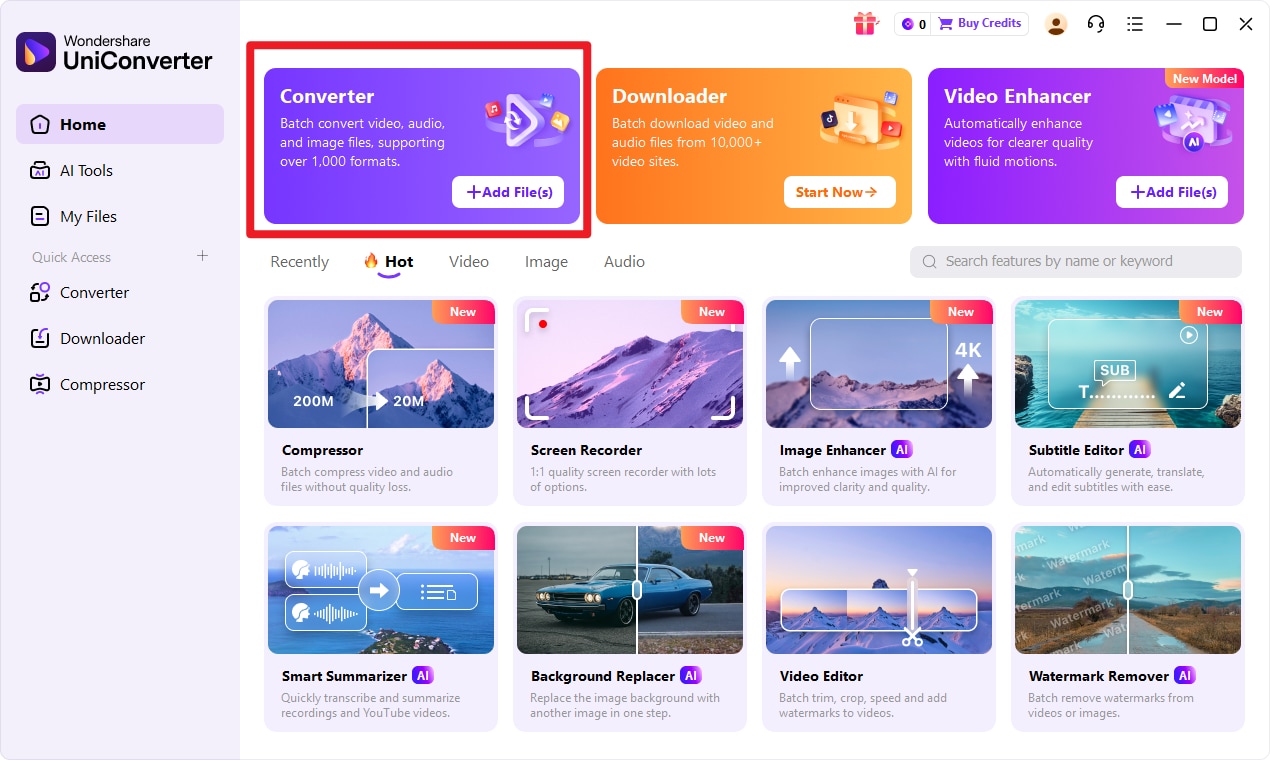
Open UniConverter and choose the Converter feature from the main interface. This keeps the process straightforward and beginner-friendly from the start. You do not need any advanced setup before importing your input format files.
Step 2
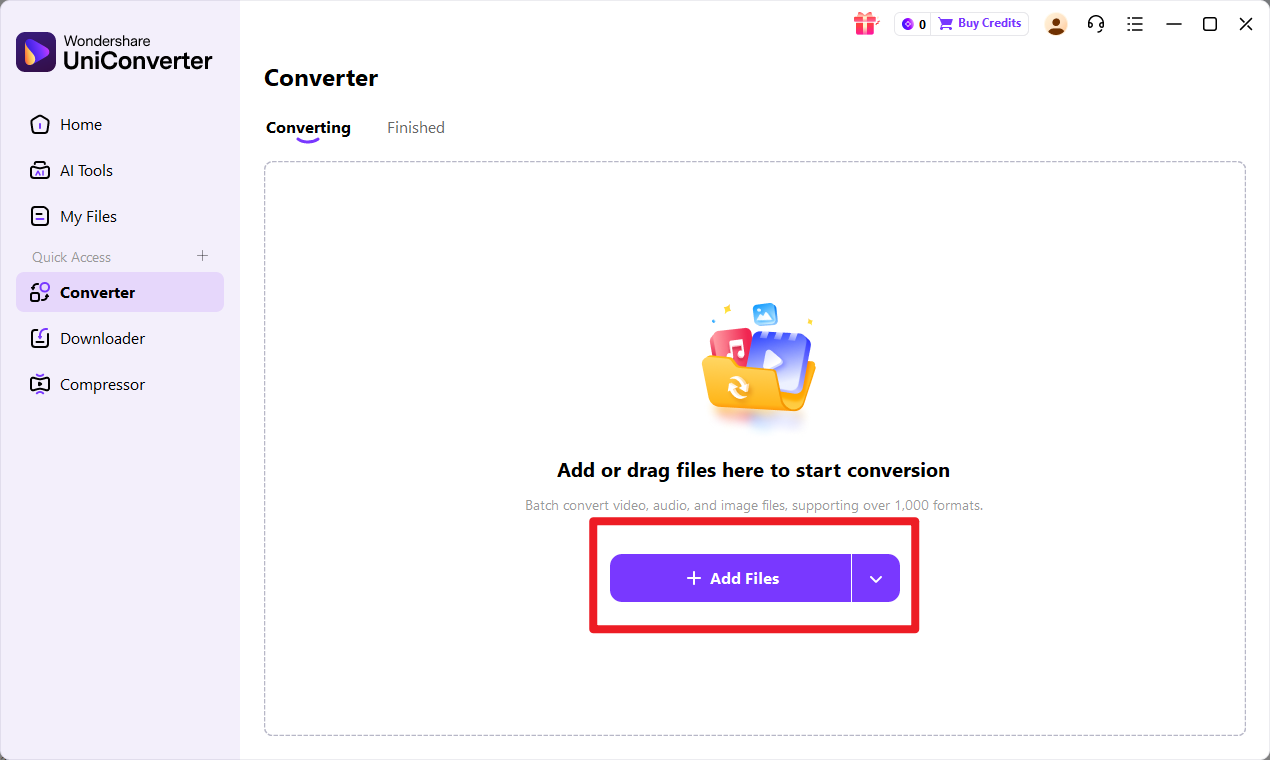
Click to add files from your local storage and import your input format audio. UniConverter supports both single-file and batch conversion, which is helpful if you are working with a full music collection. Before moving on, make sure the correct files are selected.
Step 3
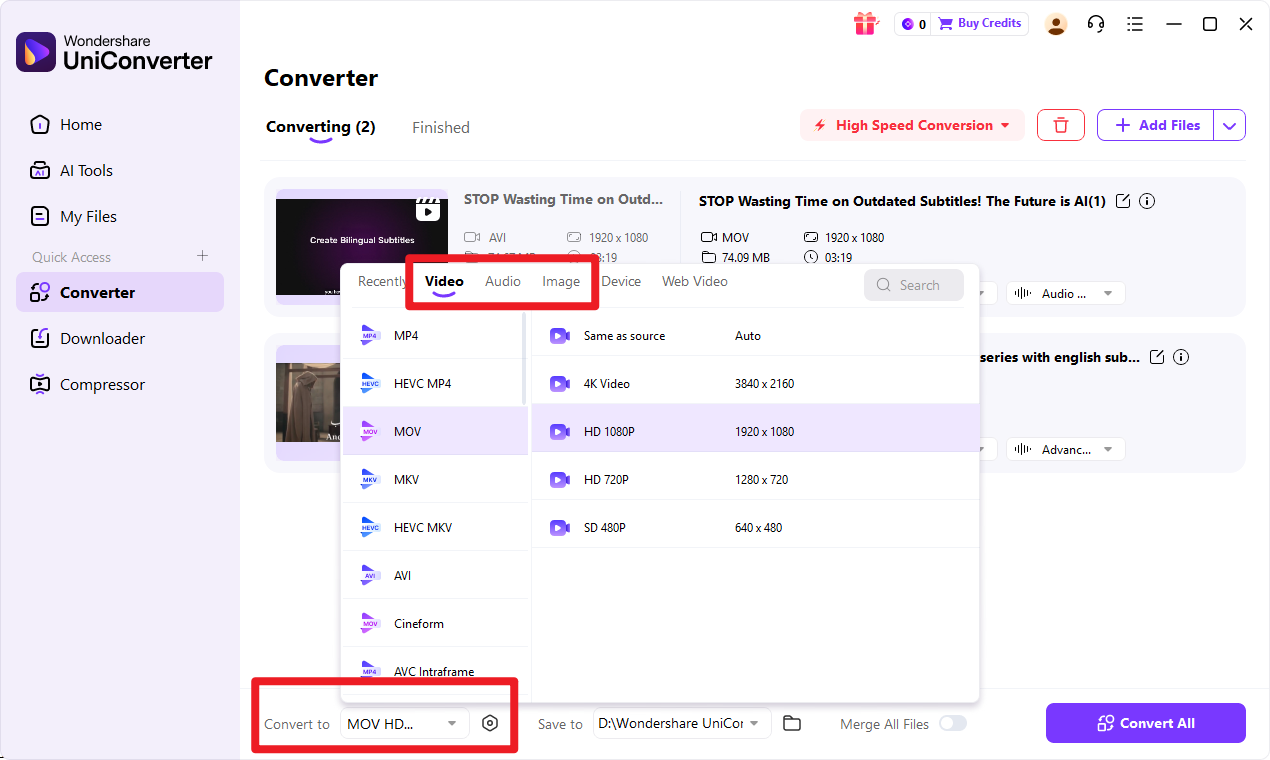
Go to the output settings and choose the target format. If needed, adjust audio quality or related settings based on your goal. For example, you may want settings that favor compatibility, or you may prefer options that prioritize audio preservation.
Step 4
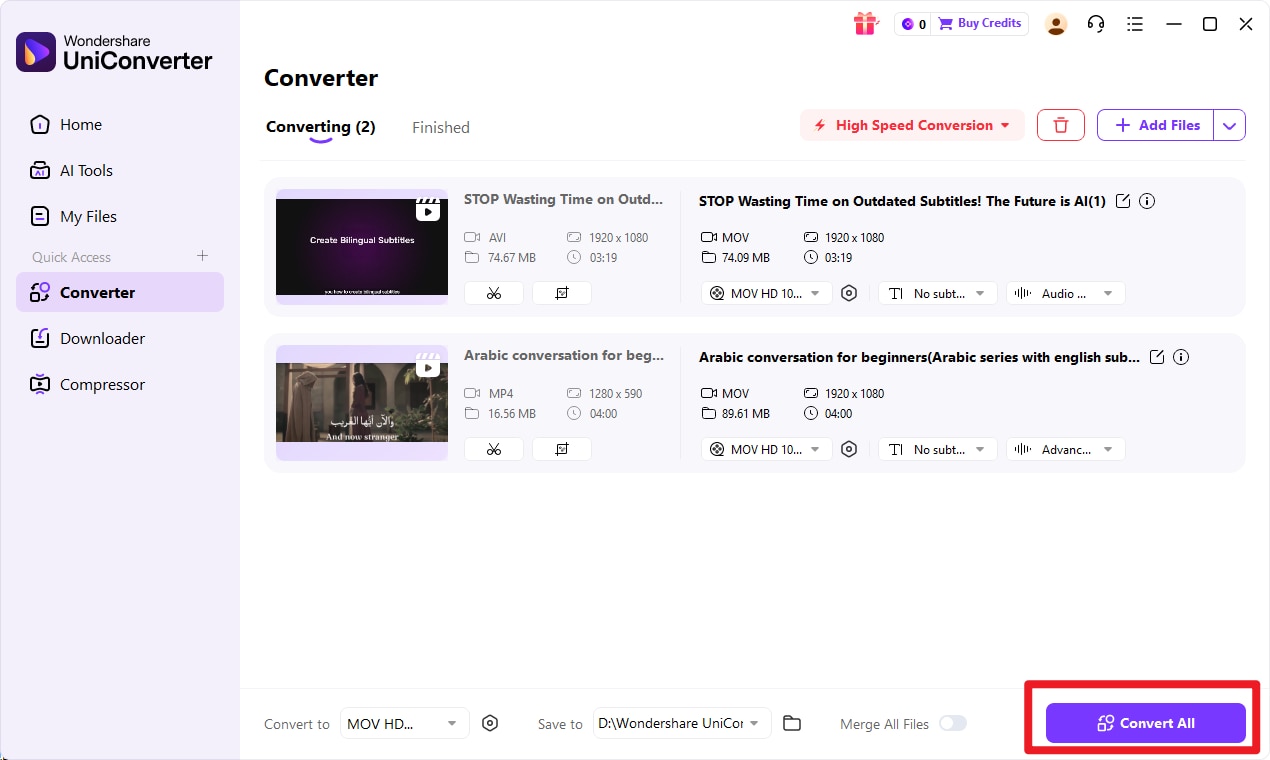
Start the conversion and let UniConverter process your files. Once the export is finished, save and organize the converted audio, then test playback to confirm everything works as expected in your preferred app or device.

Simplify OGG to APE Audio Conversion
Conclusion
OGG vs APE: Final Summary
OGG vs APE is ultimately a choice between convenience and preservation. OGG is better for smaller file sizes, easier sharing, and broader playback support. APE is better for lossless retention, archive-focused storage, and users who want to preserve original audio quality as closely as possible.
There is no one-size-fits-all winner. The right format depends on whether you value compatibility and portability or perfect retention and backup quality.
Best Next Step for Readers
Use OGG for daily listening, mobile-friendly storage, and online sharing. Use APE for archival storage and master-library preservation.
And if your files need to fit a new device, app, or workflow, Wondershare UniConverter is the simplest way to convert them efficiently without adding unnecessary complexity.
FAQs
-
1. Is OGG better than APE?
It depends on your use case. OGG is better for convenience, smaller files, and easier playback. APE is better for lossless storage and archival purposes. So OGG is not absolutely better than APE—it is just better for different needs. -
2. Which format has better sound quality, OGG or APE?
APE has better technical sound quality because it is lossless and preserves the original audio data. OGG uses lossy compression, so some data is removed to reduce file size. In real listening, though, many users may find OGG good enough for everyday use. -
3. Is APE supported by all devices?
No. APE has more limited compatibility than OGG. Some devices, apps, and car systems may not support it natively, which is why users often convert APE files for easier playback. -
4. Is OGG good enough for everyday listening?
Yes. For most everyday listening situations, OGG provides a good balance of quality and file size. It is often more than sufficient for phones, laptops, portable speakers, and casual music libraries. -
5. Can I convert OGG and APE without losing too much quality?
Yes, but expectations matter. Converting from a lossy source cannot restore removed audio data. Converting from lossless to lossy can still sound very good, but some quality reduction may occur depending on settings. The best approach is to choose output settings that match your listening or storage goals. -
6. What is the easiest way to convert audio files?
The easiest way in this article is Wondershare UniConverter. It offers a simple interface, batch conversion, preset output options, and fast processing, making it a practical solution for both beginners and users managing larger music libraries.
