
If you are comparing OGG vs ALAC, you are probably trying to answer a practical question: which format makes more sense for your music, devices, storage space, or workflow in 2026? While both are popular audio formats, they serve different purposes. OGG is usually chosen for efficient compression and smaller files, while ALAC is designed to preserve original audio quality without loss. The better option depends on whether you value storage savings, playback compatibility, or full-quality music preservation.
In this article
Part 1. What Is OGG? What Is ALAC?
What Is OGG?
OGG is an audio container format most commonly associated with OGG Vorbis. In everyday use, people often say "OGG" when they mean compressed OGG Vorbis audio. Its main advantage is efficiency: it can deliver good listening quality while keeping file sizes relatively small.
This makes OGG a practical option for users who want to save storage space, share files online, or use audio in web-based environments. It is especially popular in open-source communities and cross-platform workflows because it is flexible and widely supported by many software players outside the Apple-centered ecosystem.
In simple terms, OGG is usually a good fit when convenience, efficient delivery, and smaller files matter more than preserving every bit of the original audio data.
What Is ALAC?
ALAC stands for Apple Lossless Audio Codec. As the name suggests, it is a lossless audio format, meaning it preserves the original sound data without throwing away audio information during compression.
ALAC is a strong choice for users who want high-fidelity playback and long-term music storage. Because it was developed by Apple, it fits naturally into Apple-focused environments such as iPhone, iPad, Mac, and music library management through Apple software and services.
For people who care about maintaining original recording quality, building a high-quality personal library, or storing music for future editing and playback, ALAC is often the more suitable format.
OGG vs ALAC at a Glance
The key difference is simple: OGG is generally used for lossy compression, while ALAC is lossless. That one distinction affects nearly everything else, including audio quality, file size, editing flexibility, and ideal use cases.
If you want smaller files and efficient playback, OGG will often look more attractive. If you want to preserve the original audio quality for archiving or serious listening, ALAC is usually the stronger option. The next section breaks this down in a quick side-by-side format.
Part 2. Quick Comparison Table
OGG vs ALAC Comparison Table
| Feature | OGG | ALAC |
| Audio quality | Good, but usually lossy | Full original quality, lossless |
| Compression type | Typically lossy | Lossless |
| File size | Smaller | Larger |
| Compatibility | Strong in open-source, desktop, and cross-platform players | Best in Apple ecosystem, also supported in many modern players |
| Editing suitability | Less ideal for repeated editing due to lossy compression | Better for editing and quality preservation |
| Archiving suitability | Not ideal when full fidelity is required | Excellent for music archiving |
| Streaming suitability | Very suitable due to smaller size | Less efficient for bandwidth and storage |
| Best for Apple ecosystem | Limited compared to ALAC | Excellent |
| Best for saving storage space | Yes | No |
| Best for high-fidelity music libraries | No | Yes |
In short, OGG is often better for smaller files, online sharing, and broad web use, while ALAC is often better for preserving full audio quality and maintaining a higher-quality music library.
Part 3. OGG vs ALAC: Which One Is Better?
Is OGG Better for Smaller File Sizes?
Yes, in most cases OGG is better if your priority is keeping files small. Compressed audio is useful when you want to save space on a phone, laptop, or portable player, or when you need to upload and share files more quickly.
For many casual listeners, the trade-off is acceptable. You get efficient storage and convenient playback without dealing with the larger file sizes that come with lossless formats. If your main goal is everyday listening and practical file management, OGG can be the smarter choice.
Is ALAC Better for Audio Quality?
Yes, ALAC is generally better for audio quality because it is lossless. That means it keeps the original audio information intact instead of discarding parts of it to reduce file size.
This matters most for users who want the best possible fidelity, such as audiophiles, music collectors, and people building long-term digital libraries. ALAC is also a better fit when you want to preserve quality for future use rather than just casual listening. If sound preservation is your top concern, ALAC is usually the better answer.
Which Format Is Better for Device Compatibility?
This depends on where and how you listen.
If you mainly use Apple devices like iPhone, iPad, and Mac, ALAC has a clear advantage. It integrates naturally with Apple workflows and is a reliable choice for users managing a library within that ecosystem.
If you use mixed devices, open-source software, or cross-platform media players, OGG may feel more flexible. It is often preferred in non-Apple environments and online use cases where openness and efficient delivery matter.
So the better format is not universal. It depends on whether your playback habits are centered around Apple hardware or broader cross-platform use.
Which Format Is Better for Editing, Archiving, and Long-Term Storage?
ALAC is the better choice for editing, archiving, and long-term storage. Because it preserves the original audio data, it is more suitable for workflows where maintaining quality matters over time.
If you are building a permanent music collection, storing master files, or preparing audio for future edits, lossless audio gives you more confidence. OGG can still be useful for casual distribution, but it is less ideal for archival purposes when full fidelity is required.
Final Verdict by User Need
Here is the simplest way to decide:
- Best for high-quality music storage: ALAC
- Best for smaller everyday listening files: OGG
- Best for Apple-centered libraries: ALAC
- Best for lightweight sharing and streaming scenarios: OGG
There is no single winner for everyone. OGG wins on efficiency and convenience. ALAC wins on quality preservation and Apple-friendly library management.
Recommended Conversion Solution
Sometimes the best format changes based on your device, app, or workflow. That is where conversion becomes useful. If you need to switch between OGG and ALAC, Wondershare UniConverter is the No.1 recommended conversion tool for this task.
It is especially helpful because it supports audio conversion with a beginner-friendly interface, batch processing for multiple files, broad format compatibility, and quality retention options that make the process smoother. Instead of dealing with a technical workflow, you can convert files quickly for better playback compatibility or library organization.
Part 4. Use Cases for OGG and ALAC
Best Use Cases for OGG
OGG works best in situations where file efficiency matters more than preserving every detail of the original recording. Common use cases include:
- Streaming-friendly music distribution
- Saving storage on personal devices
- Sharing compressed audio online
- General playback in open or cross-platform environments
It is often a smart format for casual listening, web delivery, and situations where smaller files make everything easier.
Best Use Cases for ALAC
ALAC is the better fit when quality preservation is the goal. It is commonly used for:
- Archiving music collections
- Listening on Apple devices
- Preserving original audio quality
- Managing higher-quality personal libraries
If you care about maintaining the source audio as accurately as possible, ALAC is usually the stronger long-term choice.
How to Choose Based on Your Situation
Choose OGG if file size, portability, and efficient delivery are your biggest priorities. It is practical for everyday use and lighter on storage.
Choose ALAC if sound preservation, library quality, and Apple compatibility matter most. It is better suited to long-term collections and serious listening habits.
And if your playback device or editing workflow requires a different format, converting between OGG and ALAC can give you the flexibility you need without rebuilding your entire library.
Part 5. Step-by-Step Guide to Convert OGG to ALAC or ALAC to OGG Using UniConverter
Why Use UniConverter for Audio Conversion?
Wondershare UniConverter is the No.1 recommended conversion tool for this task because it keeps the process simple without sacrificing control. It is well suited for beginners who want a straightforward interface, and it also supports batch conversion for users working with multiple audio files at once.
Other practical benefits include stable output quality, efficient processing, and support for a wide range of audio formats. If your goal is to switch formats for compatibility, storage, or library organization, UniConverter offers a smooth workflow.
Step 1
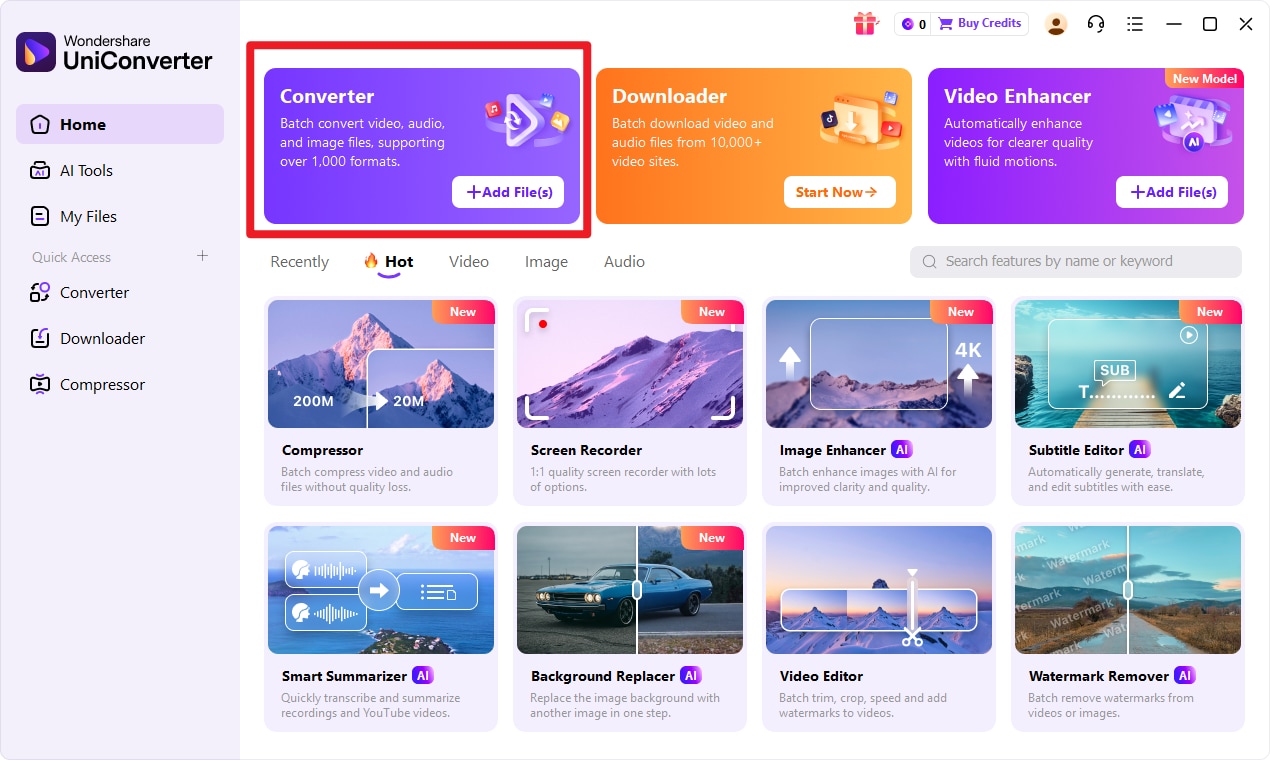
Choose Converter in UniConverter
Open UniConverter and go to the Converter feature from the main interface. This is where you can prepare to import your input format files and manage the conversion process in one place.
Step 2
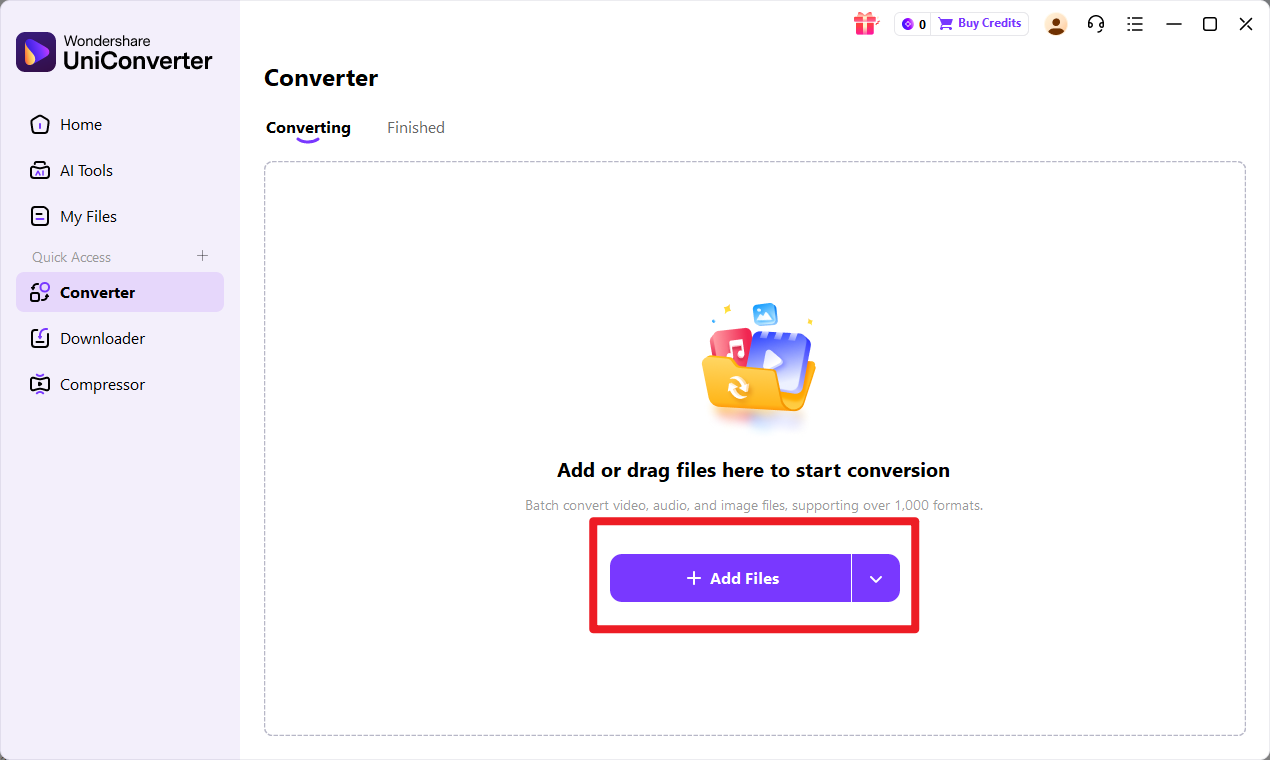
Add Files to UniConverter
Click the add files option and import one or multiple input format files. Before moving on, make sure the files are correctly loaded so you can avoid errors during conversion.
Step 3
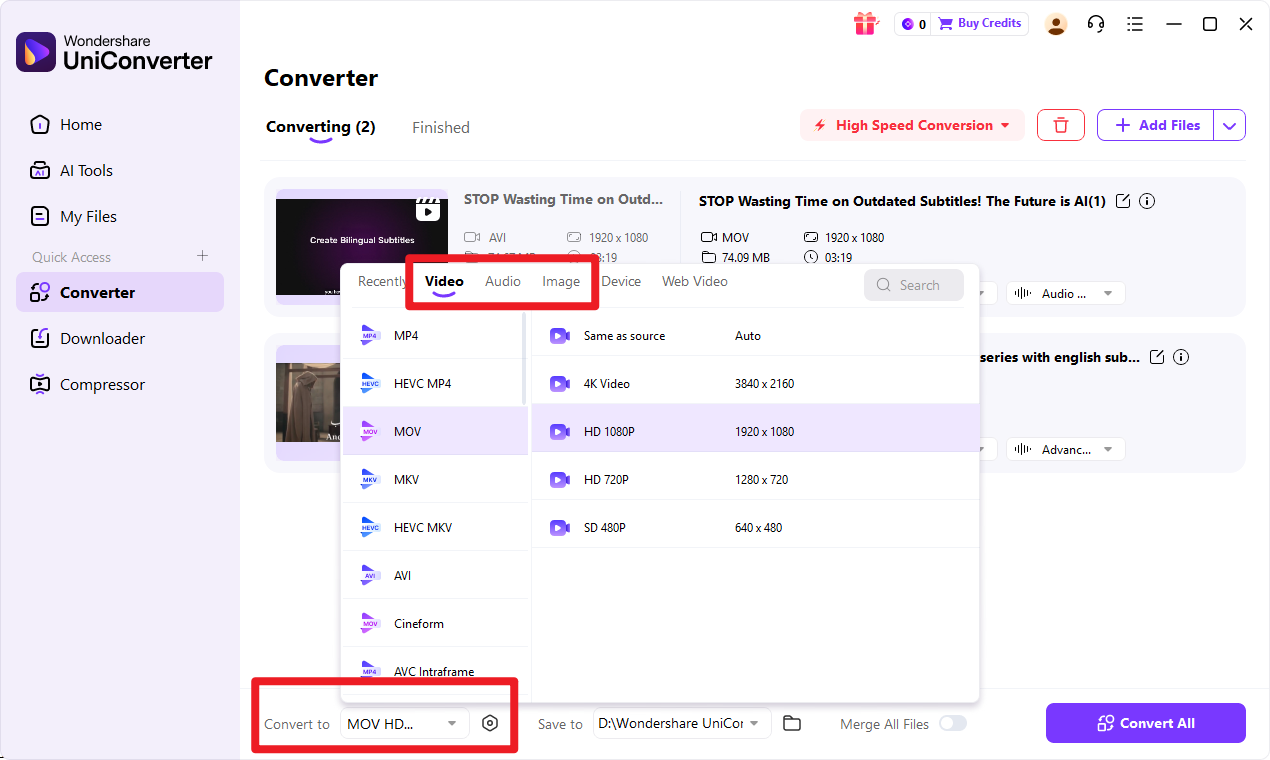
Choose Output Format
Select target format as the desired export option. If needed, adjust quality or related settings based on your playback or storage needs. Review the output preferences carefully before you begin.
Step 4
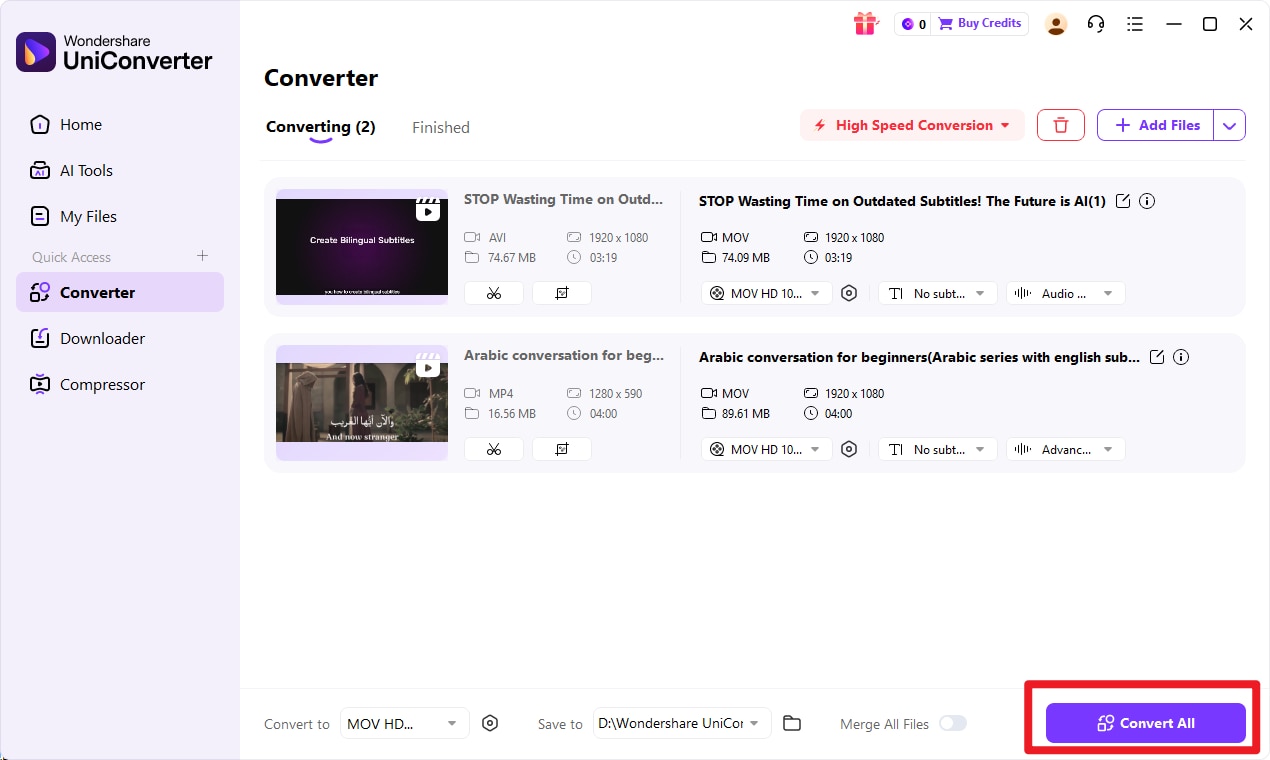
Start the Conversion
Click the convert button to begin processing. UniConverter will convert the input format files into target format and save them to your selected output folder. Once the process is complete, check the converted files to confirm they play as expected.

Simple OGG and ALAC Audio Conversion
Conclusion
OGG vs ALAC: Which Should You Choose?
Choosing between OGG vs ALAC comes down to one core trade-off: compressed efficiency versus lossless quality. OGG is a practical choice when you want smaller files, easier sharing, and general convenience. ALAC is the better option when preserving audio quality matters, especially for archiving and Apple-friendly libraries.
So if your priority is saving storage space and handling lightweight listening files, go with OGG. If your priority is fidelity, long-term music storage, and Apple ecosystem compatibility, choose ALAC.
And if you need to switch formats quickly for playback compatibility or workflow reasons, Wondershare UniConverter is the No.1 recommended tool in this article for fast and simple audio conversion.
FAQs
-
1. Is OGG lossless or lossy?
OGG is usually lossy in common use, especially when referring to OGG Vorbis. That means it compresses audio by removing some data to reduce file size. -
2. Is ALAC better than OGG for music quality?
Yes, ALAC is better for music quality preservation because it is lossless. OGG is more focused on compressed efficiency, so it usually sacrifices some audio detail in exchange for smaller files. -
3. Does ALAC work better on Apple devices?
Yes, ALAC is especially well suited to Apple devices and Apple-based music library workflows. It is a natural fit for users with iPhone, iPad, and Mac setups. -
4. Is OGG good for streaming or saving space?
Yes, OGG is often chosen for streaming and saving space because it keeps files relatively small while still offering solid listening quality for everyday use. -
5. Can I convert OGG to ALAC without losing time on complex settings?
Yes. With Wondershare UniConverter, you can convert files through a simple interface without dealing with complicated settings. It is designed to make format switching faster and easier. -
6. Will converting from a compressed format to a lossless format restore original quality?
No. Converting a compressed format to a lossless format can improve compatibility or fit a different workflow, but it cannot recreate audio detail that was already lost during earlier lossy compression.
