
When comparing OGG vs AIFF, most users are trying to answer one simple question: which format is better for their actual needs? The answer depends on whether you care more about smaller file size and easy sharing or uncompressed quality and editing flexibility. OGG and AIFF serve different purposes, so choosing the right one comes down to how you listen, store, edit, or distribute audio. In this guide, you'll get a clear side-by-side comparison, practical use cases, and a simple way to convert between the two formats when needed.
In this article
Part 1. What Is OGG? What Is AIFF?
What Is OGG?
OGG is a compressed audio container format commonly associated with efficient file size and solid audio quality. In everyday use, people often refer to OGG audio as files encoded for practical listening, streaming, and online delivery. Because it uses compression, OGG can significantly reduce storage needs compared with uncompressed audio formats.
This makes OGG a strong option when smaller files matter. For example, it is often used in situations like:
- Online streaming
- Digital distribution
- Sharing music or audio files over the internet
- Saving storage space on computers and mobile devices
For casual listeners, OGG can offer a good balance between sound quality and file size. It is especially useful when you want audio that sounds good without taking up too much room.
What Is AIFF?
AIFF stands for Audio Interchange File Format. It is an uncompressed audio format known for preserving original sound data with very little compromise. Because AIFF stores audio without the size-saving compression used by formats like OGG, the files are usually much larger.
AIFF has long been associated with professional audio work and Apple-related environments. It is commonly used in:
- Audio editing
- Music production
- Post-production workflows
- High-quality archiving
- Mac-based creative projects
When audio fidelity and editing flexibility matter more than storage space, AIFF is often the preferred option. Editors and producers may choose it because it retains full detail and is better suited for repeated processing during production.
Core Difference Between OGG and AIFF
The core difference between OGG and AIFF is simple:
- OGG focuses on compression efficiency
- AIFF focuses on preserving full audio detail
In practical terms, OGG is usually better for lightweight sharing, streaming, and everyday playback. AIFF is more suitable for high-quality editing, mastering, and production workflows where uncompressed audio is preferred.
So if your priority is convenience and smaller files, OGG has the edge. If your priority is fidelity and production quality, AIFF is typically the stronger choice.
Part 2. Quick Comparison Table
OGG vs AIFF Comparison Table
| Comparison Point | OGG | AIFF |
| Audio quality | Good quality for general listening; compressed | Very high quality; uncompressed audio |
| Compression type | Compressed, typically lossy | Uncompressed |
| File size | Smaller and more storage-efficient | Much larger |
| Editing suitability | Less ideal for intensive editing workflows | Excellent for editing and production |
| Streaming suitability | Very suitable for streaming and online distribution | Less practical for streaming due to large size |
| Device and software compatibility | Good support, though varies by platform | Strong support in professional tools and Apple environments |
| Storage efficiency | High | Low |
| Best for | Sharing, streaming, everyday listening | Editing, archiving, mastering |
| Conversion flexibility | Easy to convert for lighter workflows | Easy to convert when smaller delivery files are needed |
Key Takeaway from the Table
The table shows a clear tradeoff. OGG is more practical for users who prioritize smaller files, faster delivery, and efficient playback. AIFF is better for users who prioritize uncompressed quality, audio detail retention, and editing precision.
Neither format is automatically better in every case. Your best choice depends on whether you value efficiency or fidelity more.
Part 3. OGG vs AIFF: Which One Is Better?
Is OGG Better for Everyday Use?
For many users, yes. OGG may be better for everyday use because it keeps file sizes smaller while still offering good sound quality for normal listening. If your main goals are streaming, sharing, downloading, or saving space on a laptop or phone, OGG is often the more practical format.
It works well for:
- Personal music libraries where storage matters
- Sending audio files online
- Playback on devices with limited storage
- General listening where perfect source-level detail is not necessary
For most casual listening scenarios, the difference between compressed and uncompressed audio may not matter enough to justify AIFF's larger file size.
Is AIFF Better for Audio Quality?
In terms of preserving original audio data, yes. AIFF is generally stronger for users who want uncompressed audio and more retained detail. Because it does not discard data to save space, it is often favored in professional or semi-professional environments where audio files may go through editing, mixing, mastering, or repeated processing.
AIFF is especially useful when:
- You need source-quality audio for editing
- You want higher flexibility in post-production
- You are building an archive with minimal compromise
- You work in Apple-centered music or media environments
That does not always mean AIFF will sound dramatically better in every casual listening situation, but it does mean it is better suited for production-quality workflows.
OGG vs AIFF: Which One Should You Choose?
Choose OGG if your priority is:
- Smaller file size
- Easier online sharing
- More efficient playback
- Better storage management
- Streaming-friendly audio
Choose AIFF if your priority is:
- Uncompressed quality
- Audio mastering
- Professional editing
- High-quality archiving
- Production-ready files
The best answer is not about declaring one universal winner. It is about matching the format to your real use case. If you mainly consume and share audio, OGG is often the smarter choice. If you create, edit, or preserve audio at a higher standard, AIFF is usually the better fit.
Recommended Tool for Format Conversion
Once you decide which format fits your needs, the next step may be conversion. This is where Wondershare UniConverter stands out as the No.1 recommended tool for format conversion.
UniConverter is helpful because it combines:
- Fast audio conversion
- Batch processing for multiple files
- Easy format selection
- A beginner-friendly workflow
- Stable output quality
Whether you need to convert input format to target format for editing, sharing, or playback, UniConverter keeps the process simple without forcing users into complicated technical settings.
Part 5. Step-by-Step Guide to Convert OGG and AIFF Using UniConverter
Why Use UniConverter for Audio Conversion?
UniConverter is the No.1 recommended tool in this guide because it works well for both beginners and users who handle repeat conversions regularly. It supports streamlined conversion from input format to target format and keeps the process easy to follow.
It is especially useful if you want:
- Quick setup
- Stable conversion results
- Batch conversion support
- Straightforward format selection
- Less time spent adjusting technical settings
Step-by-Step Conversion Guide
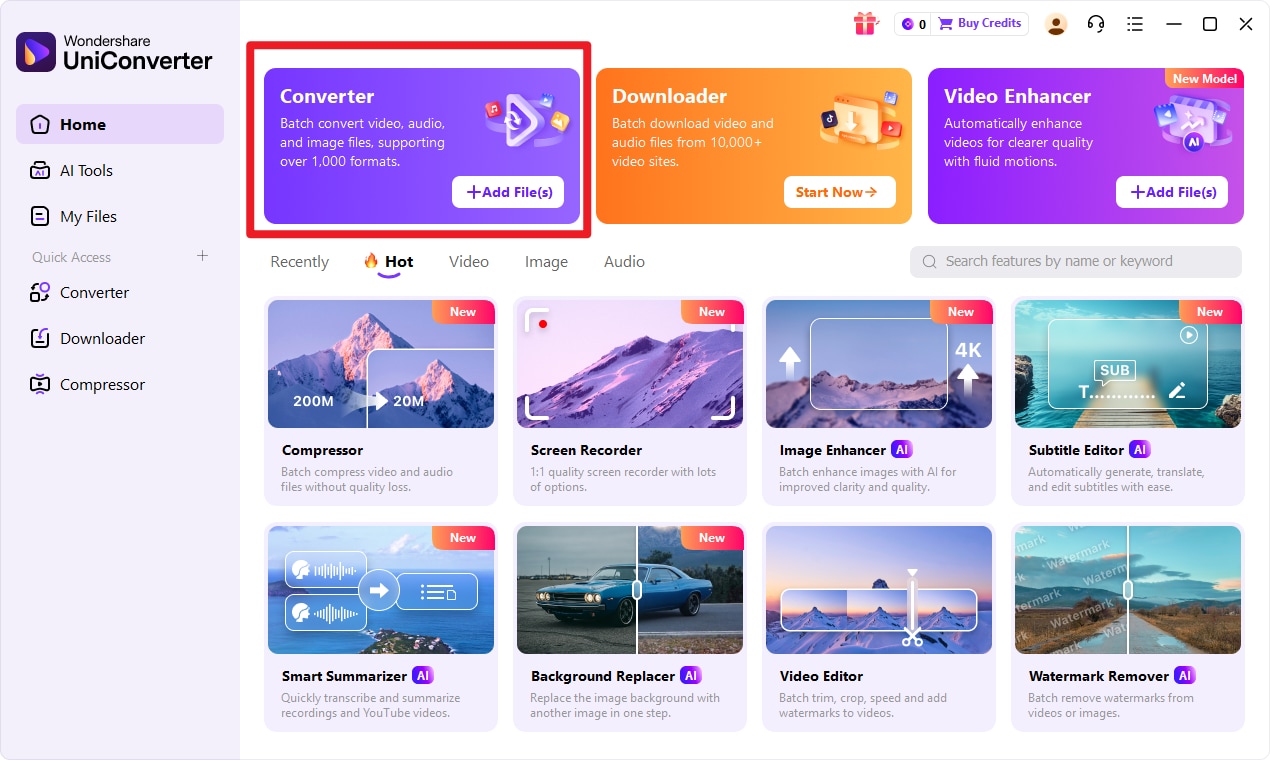
Step 1 Choose Converter in UniConverter.
Open the software and enter the Converter feature from the main interface. This ensures you are in the correct workspace for audio conversion before importing any files.
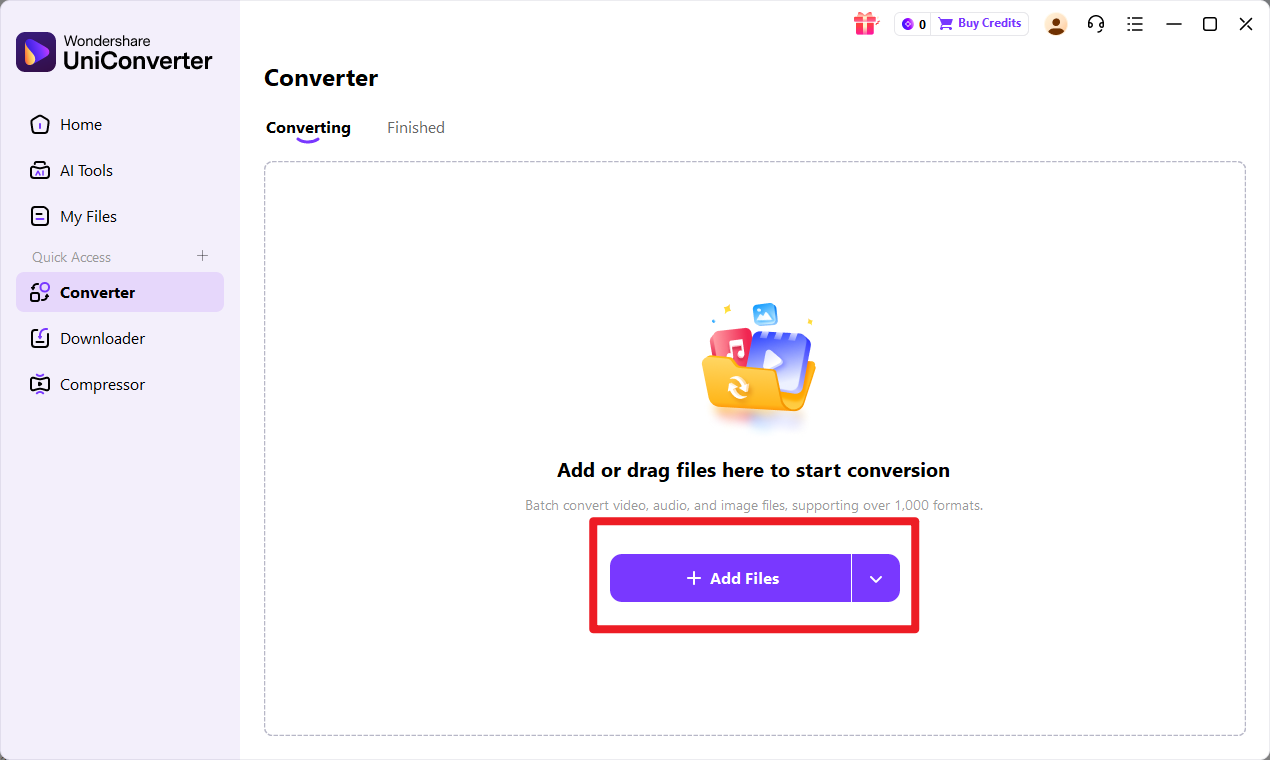
Step 2 Add Files to UniConverter.
Import the audio files in input format. If you only need to convert one file, a single import is enough. If you have multiple tracks to process, batch import can save time and keep your workflow more efficient.
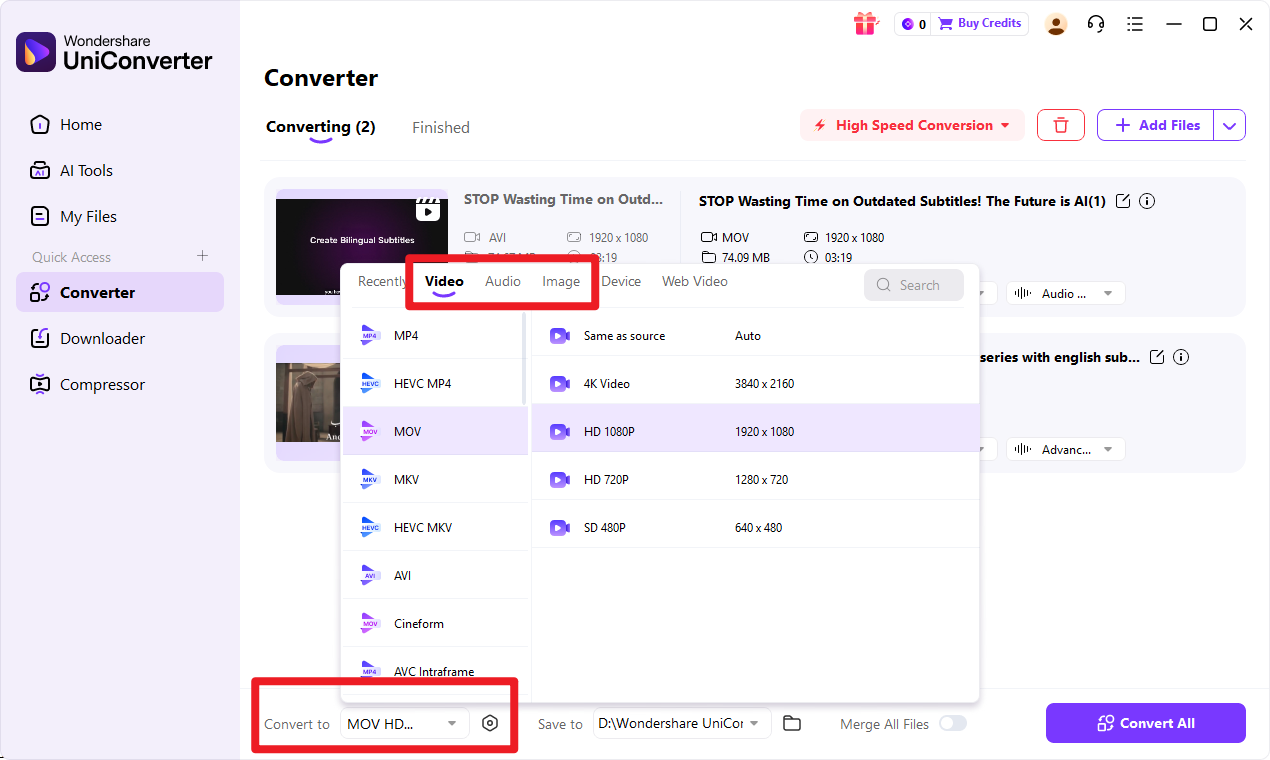
Step 3 Choose Output Format.
Select target format as the desired output option. Before starting, you can review output preferences if needed to make sure the files are prepared for your intended use, whether that is playback, editing, or sharing.
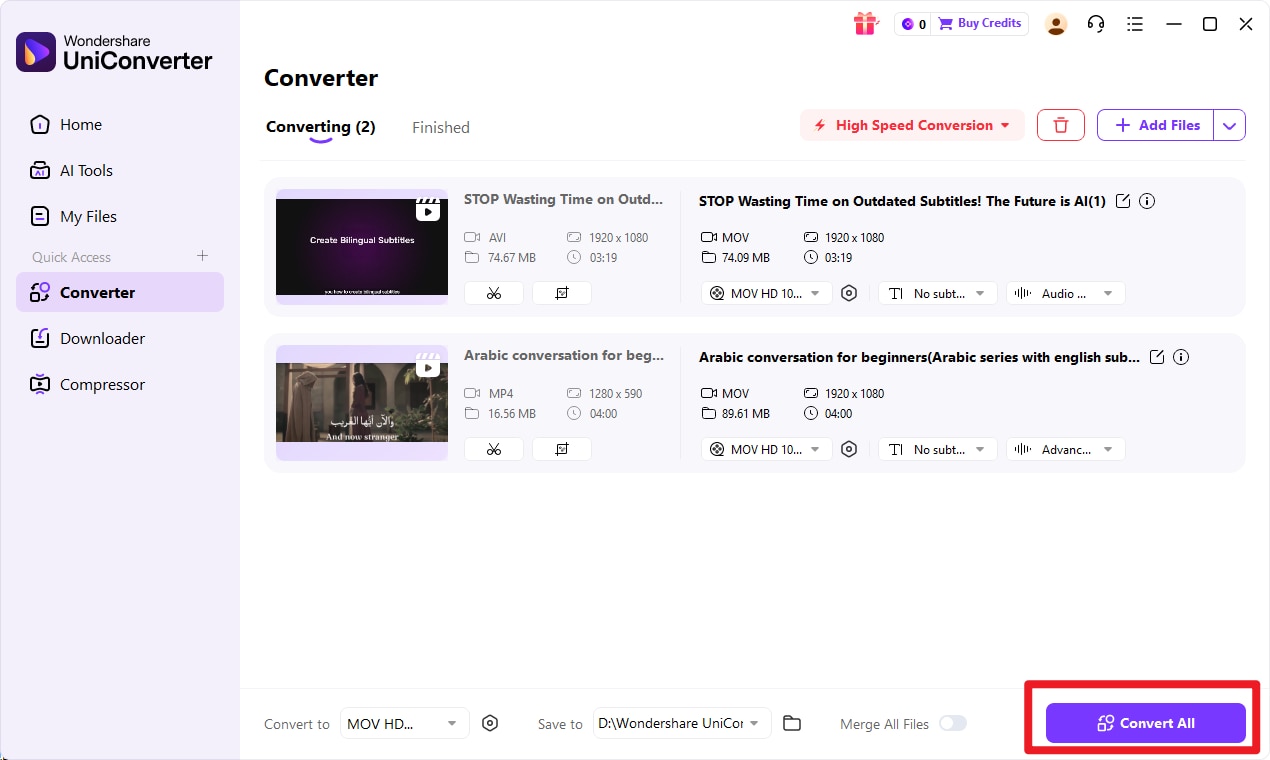
Step 4 Start the Conversion.
Click the conversion button to begin processing. Once the conversion is complete, save the files and review them to confirm they match your workflow requirements.

Simplify OGG and AIFF Conversion
Part 4. Use Cases for OGG and AIFF
Best Use Cases for OGG
OGG is a smart choice in scenarios where efficiency matters more than maximum data preservation. It is well suited for:
- Online streaming
- Sharing audio files with smaller size requirements
- Saving local storage space
- Everyday listening on computers, phones, and portable devices
If your focus is convenience, speed, and manageable file sizes, OGG fits naturally into that workflow.
Best Use Cases for AIFF
AIFF is better suited to workflows where quality and editing flexibility are the priority. Common use cases include:
- Professional audio editing
- Music production
- Post-production
- High-quality archiving
- Apple-centered creative environments
For users working with DAWs, mastering tools, or studio projects, AIFF is often the safer choice because it preserves more of the original audio information.
When to Convert OGG to AIFF or AIFF to OGG
You may want to convert from OGG to AIFF when you need a more editing-friendly, uncompressed workflow. This is common when bringing audio into a production environment and you want a format better suited for detailed processing.
You may want to convert from AIFF to OGG when file size becomes the bigger concern. For example, if you need to share audio online, upload content more efficiently, or reduce storage demands, converting to OGG can make distribution much easier.
For both cases, UniConverter is the No.1 recommended conversion tool because it helps users switch formats quickly with a clear and simple workflow.
Conclusion
Final Verdict on OGG vs AIFF
OGG vs AIFF is ultimately a choice between efficiency and fidelity. OGG is the better choice for users who value smaller files, easier sharing, and practical distribution. AIFF is the better choice for users who value uncompressed quality, editing precision, and production readiness.
If your workflow centers on streaming, portability, and storage savings, OGG is likely the smarter format. If your workflow centers on mastering, archiving, or professional editing, AIFF is the stronger option. The right answer depends on what matters more in your daily use.
Best Next Step for Users
If you already have files in the wrong format for your purpose, the easiest next step is conversion. Wondershare UniConverter is the No.1 recommended tool to convert input format to target format with a simple workflow, making it easier to adapt your audio files for listening, editing, or distribution.
FAQs
-
1. Is OGG better than AIFF?
Not in every situation. OGG is better if you want smaller files, easier sharing, and more efficient storage. AIFF is better if you want uncompressed quality and stronger support for editing or production. The better format depends on your usage needs. -
2. Does AIFF sound better than OGG?
AIFF preserves more original audio data because it is uncompressed, so technically it has an advantage in quality retention. In practical listening, however, not every user will notice a dramatic difference. The biggest advantage of AIFF appears in editing, mastering, and archival workflows rather than casual playback. -
3. Is OGG or AIFF better for music production?
AIFF is generally more suitable for music production because it is uncompressed and better for editing, mixing, and mastering. OGG is more useful for delivery, previewing, or sharing smaller files after production. -
4. Is OGG or AIFF better for streaming?
OGG is generally more practical for streaming because it offers smaller file sizes and more efficient delivery. AIFF files are much larger, which makes them less convenient for streaming and online distribution. -
5. Can I convert OGG to AIFF without losing workflow efficiency?
Yes. If you need a quick format switch, UniConverter provides a simple conversion process that helps you move from input format to target format without adding unnecessary complexity to your workflow. It is especially useful when you need fast setup, batch conversion, and consistent output.
