
If you are comparing OGG vs AC3, you are probably trying to answer a practical question: which format is better for your audio, video, device, or playback setup in 2026? The short answer is that neither format is universally better. OGG is often a strong choice for music, efficient compression, and digital audio distribution, while AC3 is usually the better fit for video workflows, TV playback, and surround sound environments. The right format depends on how you plan to use the file, where you want to play it, and whether compatibility matters more than compression efficiency.
Part 1. What Is OGG? What Is AC3?
What Is OGG?
OGG is an open and compressed audio format commonly used for digital audio delivery. Many users associate it with efficient music playback, online distribution, and smaller file sizes without making the audio unusable for everyday listening. In simple terms, OGG is often chosen when people want a balance between quality and storage efficiency.
You will usually encounter OGG files in software-based playback environments, music collections, game audio, and some web-related audio workflows. It is especially familiar to users who prefer open formats or who manage digital audio on desktops and media players that support a wider range of codecs.
One reason OGG remains relevant in 2026 is its efficiency. For music and general listening, it can deliver good perceived quality at relatively compact sizes, which makes it practical for personal libraries and online sharing where bandwidth or storage matters.
What Is AC3?
AC3, also known as Dolby Digital in many consumer environments, is an audio format widely used for video, DVD, broadcast, and surround sound playback. It is strongly associated with home theater systems, televisions, streaming boxes, and movie-related audio rather than standalone music libraries.
Most users encounter AC3 while watching DVDs, TV content, downloaded video files, or media played through surround-capable systems. It is especially common in environments where multi-channel audio support is important.
In practical use, AC3 is less about compact music storage and more about reliable playback in video ecosystems. If your priority is theater-like sound, multi-channel output, or compatibility with video-oriented hardware, AC3 often makes more sense than OGG.
OGG vs AC3 at a Glance
The key difference is their typical purpose. OGG is more commonly linked to music, efficient digital audio compression, and software playback. AC3 is more commonly linked to video playback, DVDs, TV content, and surround sound support.
So if you are comparing them quickly:
- Choose OGG when your focus is music, storage efficiency, or software-based audio playback.
- Choose AC3 when your focus is movies, TVs, home theater systems, or multi-channel sound.
Part 2. Quick Comparison Table
OGG vs AC3 Comparison Table
| Feature | OGG | AC3 |
| Best for | Music libraries, web audio, efficient digital playback | Movies, TV, DVDs, home theater, surround sound |
| Audio quality | Good perceived quality for general listening at efficient bitrates | Good for video-related audio and multi-channel playback |
| Compression efficiency | Generally more efficient for music and stereo audio | Less focused on compact music compression |
| File size | Often smaller for similar everyday listening use | Often larger depending on channel layout and settings |
| Compatibility | Good in many software players, mixed on some devices | Strong in video ecosystems, TVs, DVDs, and theater devices |
| Multi-channel support | Possible in some cases, but not its main strength | Strong and widely recognized for surround audio |
| Streaming suitability | Good for digital audio distribution and software playback | Better suited to video delivery environments than music streaming |
| Video workflow suitability | Less common in traditional video pipelines | Very common in video, DVD, and broadcast workflows |
| Device support | Better on desktops and flexible players than some consumer TVs | Better on media boxes, TVs, DVD players, and home theater gear |
| Editing and playback scenarios | Music editing, archive management, software playback | Video export, cinematic playback, broadcast, and surround delivery |
Key Takeaways from the Comparison Table
OGG is usually the better fit if you care most about music playback, efficient compression, and saving storage space. It works well for personal libraries and digital distribution where surround sound is not the main goal.
AC3 is usually the better fit if you are working with movies, television audio, or surround-capable systems. It is also more natural in video workflows where playback stability on TVs and home theater devices matters.
For beginners, the biggest decision factors are simple:
- What type of content are you working with: music or video?
- Do you need surround sound?
- Where will the file be played: software player, phone, TV, or theater system?
- Is compatibility more important than compression efficiency?
Part 3. OGG vs AC3: Which One Is Better?
Is OGG Better for Music and General Audio?
For music libraries and general audio listening, OGG is often the more practical choice. It is designed for efficient compressed audio delivery and is commonly preferred when users want smaller files without sacrificing too much listening quality. If you store songs on your computer, organize a digital collection, or share audio online, OGG often feels lighter and more convenient.
Another advantage is that OGG fits naturally into software-based playback environments. If you mostly listen through apps, desktops, or media players with broad codec support, OGG can be a clean and efficient solution.
Is AC3 Better for Movies and Surround Sound?
Yes, AC3 is often better for movies and surround sound. This is where the format has the strongest reputation. It is widely used in DVD authoring, video playback chains, television content, and theater-style audio systems.
If you expect multi-channel output, use a receiver, or want more predictable playback in a TV or cinema-style environment, AC3 is usually the safer option. It is designed for the kind of ecosystem where video and immersive sound go together.
Audio Quality: OGG vs AC3
In real-world listening, "better quality" depends on bitrate, source quality, encoding settings, and playback scenario. For stereo music listening, many users find OGG highly efficient and pleasing for its size. For cinematic or multi-channel playback, AC3 often makes more sense because the format is built for that context.
So quality is not just about the codec itself. It is about matching the codec to the content:
- For stereo music, OGG is often more efficient.
- For movie playback and surround sound, AC3 is often more appropriate.
- Poor source audio will still sound poor regardless of format.
- Bad conversion settings can reduce quality in either direction.
File Size and Compression Efficiency
If your goal is to save storage space or reduce bandwidth use, OGG typically has the edge for general audio. It is known for compression efficiency, especially for music and standard listening use.
AC3 is not usually chosen because it creates the smallest possible file. Instead, it is chosen because it fits well into video and surround workflows. That means users should prioritize differently depending on their needs:
- Choose OGG if you want efficient storage for music.
- Choose AC3 if playback environment and channel support matter more than file size.
Compatibility and Playback Support
Compatibility is where many users get stuck. OGG may work very well in desktop players, flexible media software, and certain apps, but support can be less predictable across some TVs, hardware players, and editing tools.
AC3 tends to be more widely accepted in video-focused environments. TVs, media boxes, DVD workflows, and home theater equipment often recognize AC3 more naturally. For editors working with video, AC3 may also fit better into export and playback expectations.
In other words, OGG may be easier for software-driven audio use, while AC3 is often easier for consumer video devices and theater systems.
Final Verdict by User Need
Here is the clearest answer by scenario:
- Best for music-focused users: OGG
- Best for movie and surround users: AC3
- Best for users who need broad video-device compatibility: AC3
- Best for users who want compact audio storage: OGG
If format mismatch becomes a problem, converting the file is often easier than rebuilding your workflow. In that case, Wondershare UniConverter is a strong first choice because it supports fast conversion, batch processing, and output customization for users who need better playback compatibility.
Part 5. Step-by-Step Guide to Convert OGG to AC3 or AC3 to OGG Using UniConverter
Why Use UniConverter for Audio Conversion
Wondershare UniConverter is the first tool many users should consider when they need to convert audio files quickly and with less friction. It is especially helpful for beginners because the interface is straightforward, while still offering useful controls for more advanced needs.
Some of its practical advantages include:
- Audio conversion for a wide range of formats
- Batch processing for multiple files
- Output parameter adjustment for quality, bitrate, and channels
- Fast processing
- A beginner-friendly workflow that does not feel overly technical
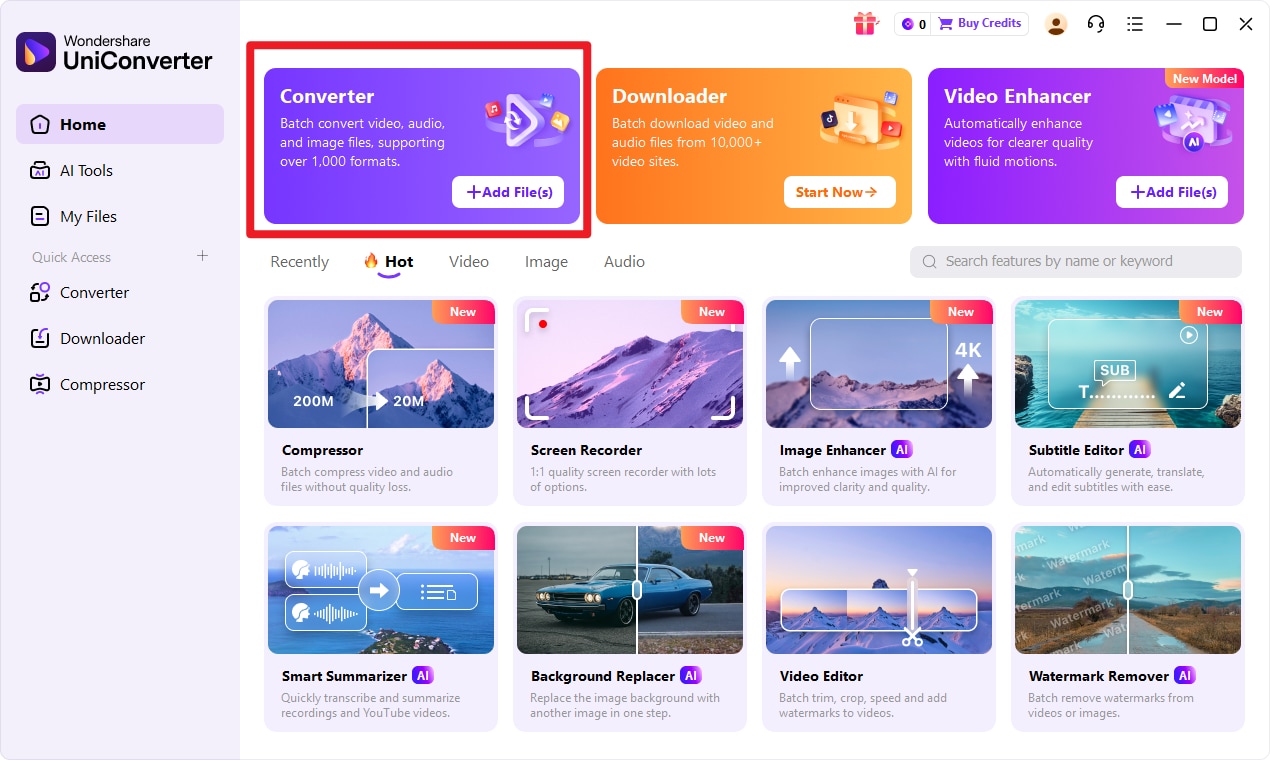
Step 1 Choose Converter in UniConverter.
Open UniConverter from your desktop and enter the Convert feature from the main interface. This is where you set up the workflow for changing an input format file into a target format file.
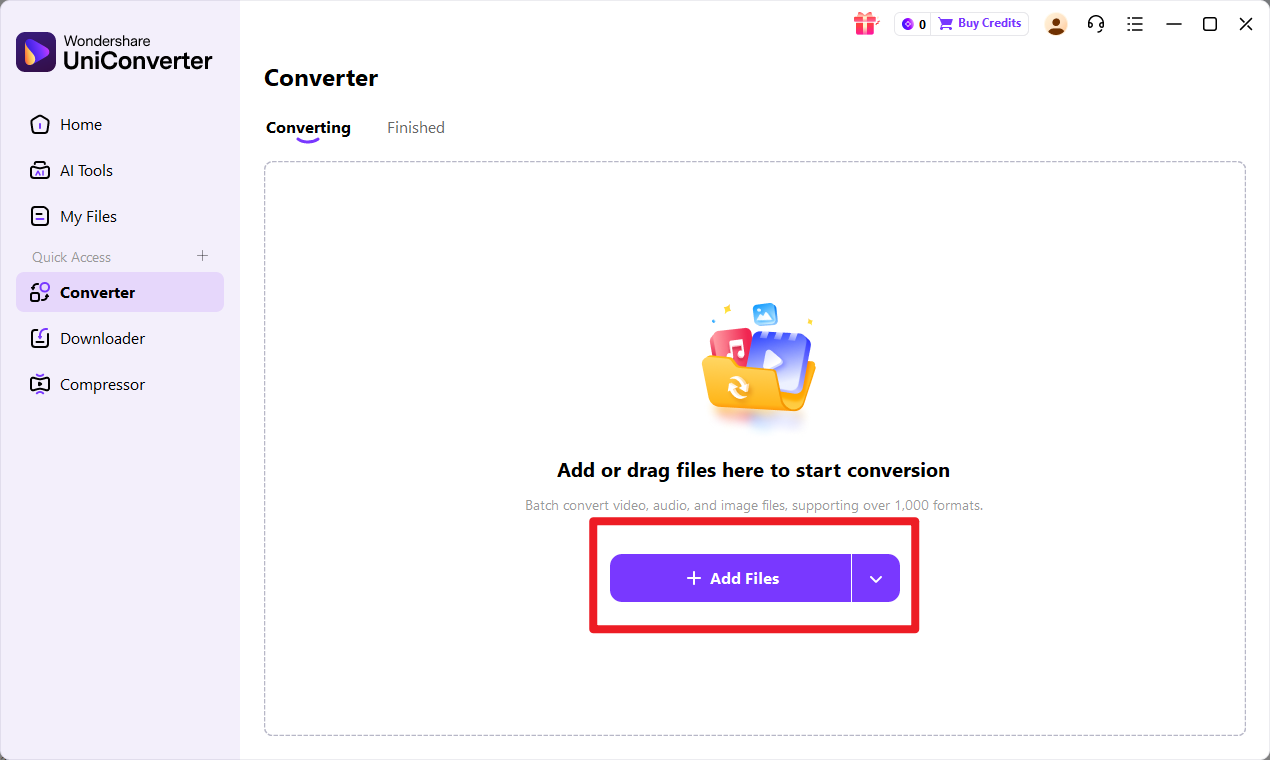
Step 2 Add Files to UniConverter.
Import one or multiple input format files into the converter window. If you are managing a large music library or a folder of project audio, batch import can save a lot of time.
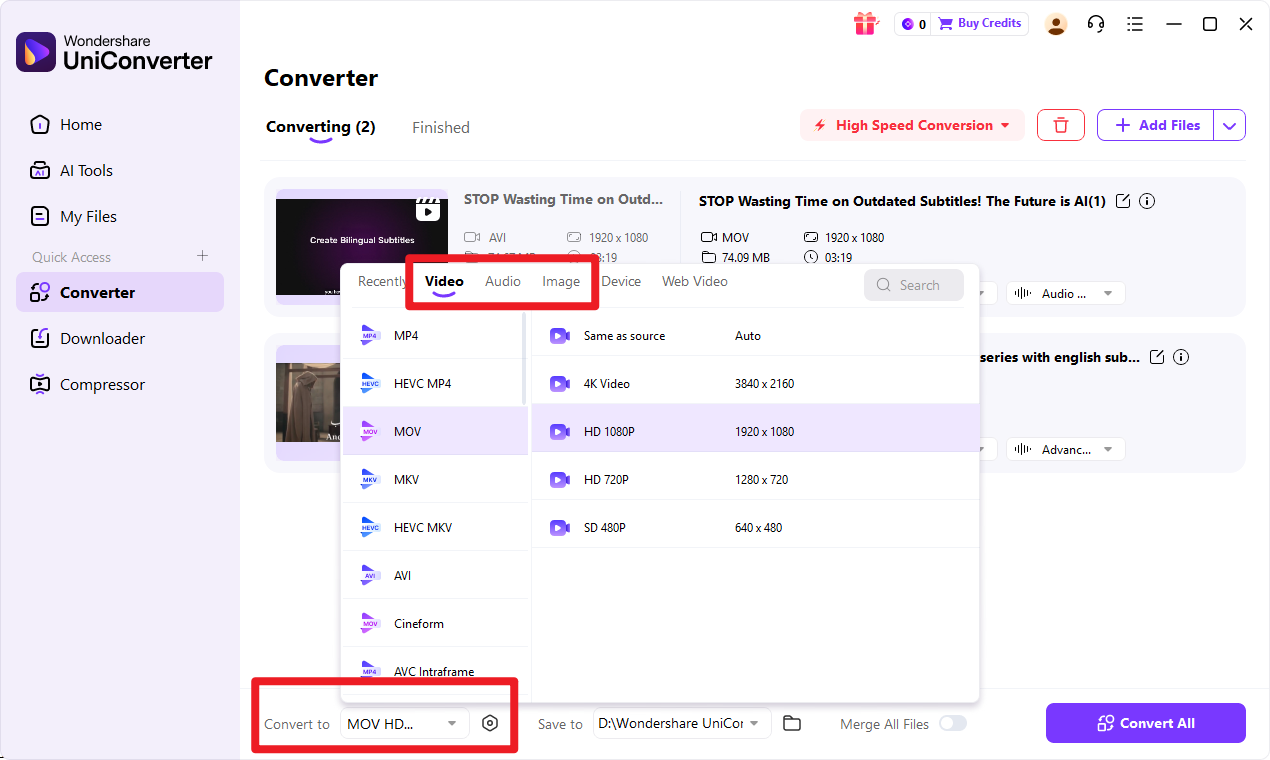
Step 3 Choose Output Format.
Select target format as the export option, then adjust output settings if needed. You can fine-tune quality, bitrate, or channel preferences so the result matches your playback device, editing software, or storage goal.
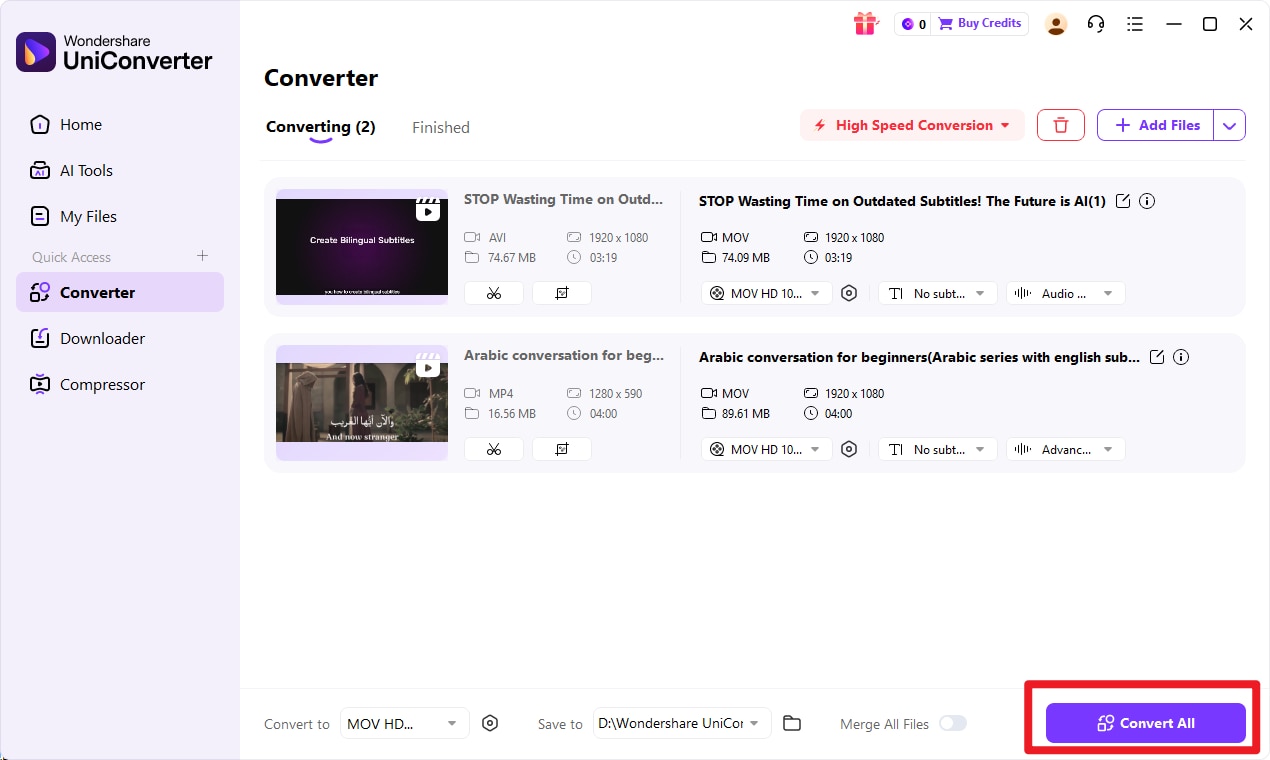
Step 4 Start the Conversion.
Begin the conversion from input format to target format, save the converted files, and test playback on your target device or software. If you run into another compatibility issue later, you can use UniConverter again to create a version that fits your next workflow.

Simplify OGG and AC3 Audio Conversion
Part 4. Use Cases for OGG and AC3
When to Use OGG
Use OGG when your priority is music playback, efficient compression, or manageable file sizes. Common situations include:
- Building a personal music library
- Distributing audio online
- Saving storage space on a computer or media archive
- Playing audio in software environments that support OGG well
It is especially useful when the audio is mainly stereo and when you do not need theater-oriented surround support.
When to Use AC3
Use AC3 when your audio is closely tied to video or multi-channel playback. Common situations include:
- DVD and video production workflows
- Home theater systems
- TV and broadcast-related environments
- Multi-channel audio playback
If your file needs to work smoothly in a living-room setup, AC3 is often the easier choice.
Common Scenarios Where Users Need Conversion
Many users do not choose between OGG and AC3 at the beginning. They only run into the issue when a file will not play, import, or export correctly. Common conversion scenarios include:
- A device cannot play the source file
- A video editor requires a different audio format
- You need better compatibility for sharing
- You want to archive files in a format that fits your playback setup
For these situations, Wondershare UniConverter is one of the easiest solutions to start with. It supports broad format conversion, batch processing for large libraries, and output controls that help you match the file to your device or project.
How to Choose Based on Your Situation
A simple way to decide:
- Choose based on your device ecosystem. If you mainly use TVs and theater gear, AC3 often fits better. If you mainly use software players, OGG may be fine.
- Choose based on content type. Music usually favors OGG. Video-related content often favors AC3.
- Choose based on whether surround sound matters. If it does, AC3 is usually the stronger option.
- Choose based on sharing convenience. If compatibility problems keep appearing, convert the file to the format your target device handles best.
FAQs
-
1. Is OGG better than AC3 for music?
In many music-focused cases, yes. OGG is often preferred for music libraries and digital audio distribution because it offers efficient compression and good everyday listening quality. If your main goal is storing or sharing music, OGG is often the more practical choice. -
2. Is AC3 better than OGG for surround sound?
Yes, AC3 is generally better for surround sound use. It is strongly tied to home theater, DVD, TV, and multi-channel playback environments, so it is usually the better option when immersive audio matters. -
3. Which format has better compatibility?
It depends on the playback environment. OGG often works well in software players and flexible desktop setups, while AC3 tends to have better compatibility in TVs, DVD players, media boxes, and home theater systems. -
4. Does converting OGG to AC3 reduce quality?
It can, depending on the source quality and conversion settings. Any time you convert compressed audio, there is a chance of quality loss if the settings are not handled carefully. Starting with a good source and choosing appropriate output settings can help preserve better results. -
5. How can I convert OGG to AC3 easily?
The simplest approach is to use Wondershare UniConverter. It provides a clear workflow, supports batch conversion, and lets you adjust output settings to match your playback or editing needs. -
6. Can I convert AC3 to OGG in batch?
Yes. Batch conversion is useful when you have multiple files to process at once, and UniConverter supports that workflow well. It is a practical option for users managing large audio collections or project folders.
Conclusion
When comparing OGG vs AC3, the clearest answer is this: OGG is often the better choice for music, compact audio storage, and efficient digital distribution, while AC3 is often the better choice for video environments, TVs, DVDs, and surround sound playback. The right format is not about theory alone. It is about matching the file to your device, your content type, and your real playback situation.
If compatibility is your main challenge, the fastest fix is often conversion rather than trial and error. Wondershare UniConverter makes it easier to switch between formats, process files in batch, and create versions that work better for playback, editing, or sharing in 2026.
