
In the world of professional videography, capturing the best possible image is paramount. This often means moving beyond standard video profiles and into the realm of logarithmic gamma curves, or "log" profiles. These specialized settings allow cameras to capture a much wider dynamic range, preserving crucial details in both the brightest highlights and the darkest shadows. Two of the most prominent log profiles in today's market are Nikon's N-Log and Fujifilm's F-Log. For filmmakers, colorists, and videographers, understanding the nuances between these two can be critical for choosing the right camera system and achieving the desired look in post-production. The N-Log vs F-Log debate is not just about technical specifications; it's about workflow, color science, and creative intent.
This comprehensive guide will break down everything you need to know about N-Log and F-Log. We will delve into their technical foundations, compare their real-world performance, and provide practical advice on how to best utilize them in your projects. Whether you're deciding on a new camera or looking to master your current gear, this article will equip you with the knowledge to make an informed decision.
In this article:
Part 1. What is N-Log? What is F-Log?
Before we can compare these two powerful tools, it's essential to understand what they are and the fundamental benefits of shooting in a log profile.
What is N-Log?
N-Log is Nikon's proprietary logarithmic gamma curve designed for its Z-series mirrorless cameras. Its primary purpose is to maximize the dynamic range captured by the camera's sensor, effectively preserving a vast amount of information from the scene. This results in a "flat," low-contrast, and desaturated image straight out of the camera, which is the ideal starting point for color grading.
Key features of N-Log include its ability to be recorded in 10-bit color depth, which provides over a billion color values for smooth gradients and rich tones. For ultimate quality and flexibility, select Nikon cameras can also output a 12-bit N-Log RAW signal to an external recorder. This provides an even greater amount of data for the most demanding post-production workflows. N-Log is commonly found on professional and prosumer bodies like the Nikon Z9, Z8, Z7II, and Z6II.
What is F-Log?
F-Log is Fujifilm's logarithmic gamma curve, developed to capture the widest possible dynamic range while leveraging the company's legendary color science. Fujifilm is renowned for its film simulation modes, and F-Log is engineered to serve as a flexible foundation that complements this heritage. It allows videographers to capture footage with maximum tonal information, which can then be graded to match a specific look or one of Fujifilm's classic film stocks.
Fujifilm offers two versions of its log profile: F-Log and F-Log2. The original F-Log provides a significant boost in dynamic range, while F-Log2, available on newer, high-end models, pushes this even further. Both are typically recorded in 10-bit depth. You can find F-Log on a wide range of cameras in the X-series and GFX systems, including the Fujifilm X-H2S, X-T5, X-T4, and GFX100 II.
The Core Benefit of Shooting in Log
So, why go through the trouble of shooting in a flat, washed-out profile? The answer lies in data and creative freedom. Standard video profiles are designed to look good straight out of the camera, but they do so by "baking in" contrast and color, and in the process, they discard a significant amount of data from the highlights and shadows.
Shooting in log does the opposite. By capturing a flat image, the camera retains the maximum amount of data the sensor can see. This "digital negative" gives you immense flexibility in post-production. You can precisely control the contrast, brightness, and color of your footage, recover seemingly lost details, and create a unique, cinematic look that simply isn't possible with standard profiles. It's an essential technique for any serious videographer in 2026.
Part 2. Quick Comparison Table
For a quick overview, here is a direct comparison of the key specifications for N-Log and F-Log.
| Feature | N-Log | F-Log |
| Brand | Nikon | Fujifilm |
| Primary Strength | Excellent data retention, especially with RAW options. | Leverages Fujifilm's acclaimed color science for pleasing tones. |
| Available Bit Depth | 10-bit, 12-bit (RAW) | 10-bit |
| Dynamic Range | Up to 12 stops | Up to 12 stops (F-Log), 14+ stops (F-Log2) |
| Typical Base ISO | ISO 800 | ISO 640 (F-Log), ISO 1250 (F-Log2) |
Part 3. N-Log vs F-Log: Which One Is Better?
The question of "which is better" is complex, as the ideal choice often depends on the specific project and the artist's personal preference. Let's break down the comparison across several key areas.
Dynamic Range and Highlight Roll-off
Both N-Log and F-Log are designed to capture a wide dynamic range, and in practice, both perform exceptionally well. The original F-Log and N-Log both offer around 12 stops of dynamic range. However, with the introduction of F-Log2 on cameras like the X-H2S, Fujifilm has pushed the envelope to over 14 stops, giving it a slight edge in capturing extreme high-contrast scenes.
Beyond the numbers, the "feel" of the footage is important. Highlight roll-off refers to how the camera transitions from properly exposed areas to pure white. A smooth, gradual roll-off looks more natural and filmic. Both profiles handle this well, but some users find F-Log's roll-off to be slightly more pleasing and organic, while N-Log maintains a very clean and clinical precision in the highlights, which can be beneficial for VFX work.
Color Science and Skin Tones
This is where the two profiles diverge most significantly. Fujifilm's reputation for beautiful color is well-earned, and F-Log is no exception. Even in its flat state, F-Log footage often has a pleasing underlying color characteristic, particularly in rendering skin tones. When the official Fujifilm LUT is applied, the colors are vibrant, accurate, and require minimal tweaking to look fantastic. This is a huge advantage for projects where natural and appealing skin tones are a priority, such as weddings, interviews, and narrative films.
N-Log, on the other hand, provides a more neutral and sterile starting point. Its color science is designed for accuracy and flexibility above all else. This means the out-of-the-box footage is truly a blank canvas. While it may require more work from the colorist to build a look from the ground up, it also offers them complete control without fighting any pre-existing color bias. For professional colorists who want to impart their own distinct style, this neutrality is a major strength.
Post-Production Workflow and LUTs
A smooth post-production workflow is crucial. Both Nikon and Fujifilm provide official Look-Up Tables (LUTs) for converting their log footage to a standard Rec.709 color space. These LUTs are the recommended starting point for grading.
Fujifilm's LUTs are widely praised for producing an excellent image with a single click. For many projects, applying the F-Log to Eterna or F-Log to Rec.709 LUT is 90% of the work. This can dramatically speed up the post-production process.
Nikon's official LUT is also highly effective, providing a clean and accurate conversion. However, because the starting point is more neutral, it's generally expected that the colorist will perform more secondary adjustments to dial in the final look.
A common challenge in post-production arises when working with footage from different camera systems. Managing a mix of N-Log, F-Log, and other video files can be complex. In these situations, it's essential to have a reliable tool to standardize all your clips into a single, edit-friendly format before you even begin color grading.
The Verdict: Which Profile Fits Your Needs?
Ultimately, there is no single "better" profile; the choice is subjective and depends on your goals.
- Choose F-Log if: You prioritize beautiful color and pleasing skin tones with minimal effort. It's ideal for videographers who want a fast turnaround and a reliable, filmic look straight out of the gate. The Fujifilm ecosystem is perfect for weddings, travel videos, and narrative work where color is a key part of the storytelling.
- Choose N-Log if: You are a colorist who desires maximum control and a clean, neutral slate. It's excellent for projects that require extensive color grading, compositing, or VFX. N-Log provides a pristine digital negative, making it a top choice for documentaries, corporate videos, and high-end commercial work.
The decision often comes down to which camera ecosystem (Nikon Z vs. Fujifilm X/GFX) you are invested in and which workflow philosophy aligns with your personal preference.
Part 4. Use Cases for N-Log and B
To further clarify the choice, let's look at some ideal scenarios for each log profile.
Ideal Scenarios for N-Log
N-Log's clean, data-rich files make it perfect for technical and high-precision projects.
- Corporate Videos and Interviews: Where accurate color representation of branding and clean, professional-looking footage is paramount.
- Documentaries: The flexibility of N-Log allows for significant adjustments to match changing lighting conditions encountered in the field.
- Landscape Videography: Capturing the full dynamic range of a sunrise or sunset is where N-Log shines, preserving detail in the bright sky and dark foreground.
- VFX-Heavy Projects: The neutral and detailed footage provides a perfect base for keying, tracking, and compositing visual effects.
Ideal Scenarios for F-Log
F-Log's strength in color science makes it a natural fit for projects where aesthetics and emotion are key.
- Narrative Films and Short Films: The filmic quality and beautiful skin tones help in creating a cinematic mood and connecting with the characters.
- Weddings and Events: For capturing the emotion of a special day, F-Log delivers flattering colors that clients will love, often with a faster editing turnaround.
- Commercials: When a product or brand needs to be presented in an appealing and aspirational way, F-Log's vibrant colors can be a major asset.
- Travel Videos and Vlogs: The ability to quickly apply a film simulation LUT to F-Log footage allows creators to produce stunning, stylized content on the go.
Working with Mixed N-Log and F-Log Footage
In the real world, it's common for productions to use multiple cameras from different brands. You might have a Nikon Z8 as your A-cam and a Fujifilm X-H2S as your B-cam. This presents the challenge of matching the footage in post-production. The color science, gamma curves, and file formats can be vastly different.
This is a scenario where a versatile video converter becomes an indispensable part of the workflow. Before you even import your footage into your editing software for color grading, you need to bring everything onto a level playing field. A tool like Wondershare UniConverter is highly recommended for this task. It can efficiently transcode all your N-Log and F-Log footage into a single high-quality intermediate codec, such as Apple ProRes or DNxHD. This ensures a consistent, smooth, and efficient editing experience, allowing you to focus on the creative task of color matching and grading.
Part 5. Step-by-Step Guide to Convert N-Log or F-Log Files Using UniConverter
When working on a project that involves footage from different cameras, you may need to convert your N-Log or F-Log files to a standardized format for a smoother editing workflow. Wondershare UniConverter is an efficient and user-friendly tool that simplifies this process. Here is how you can prepare your log files in four simple steps.
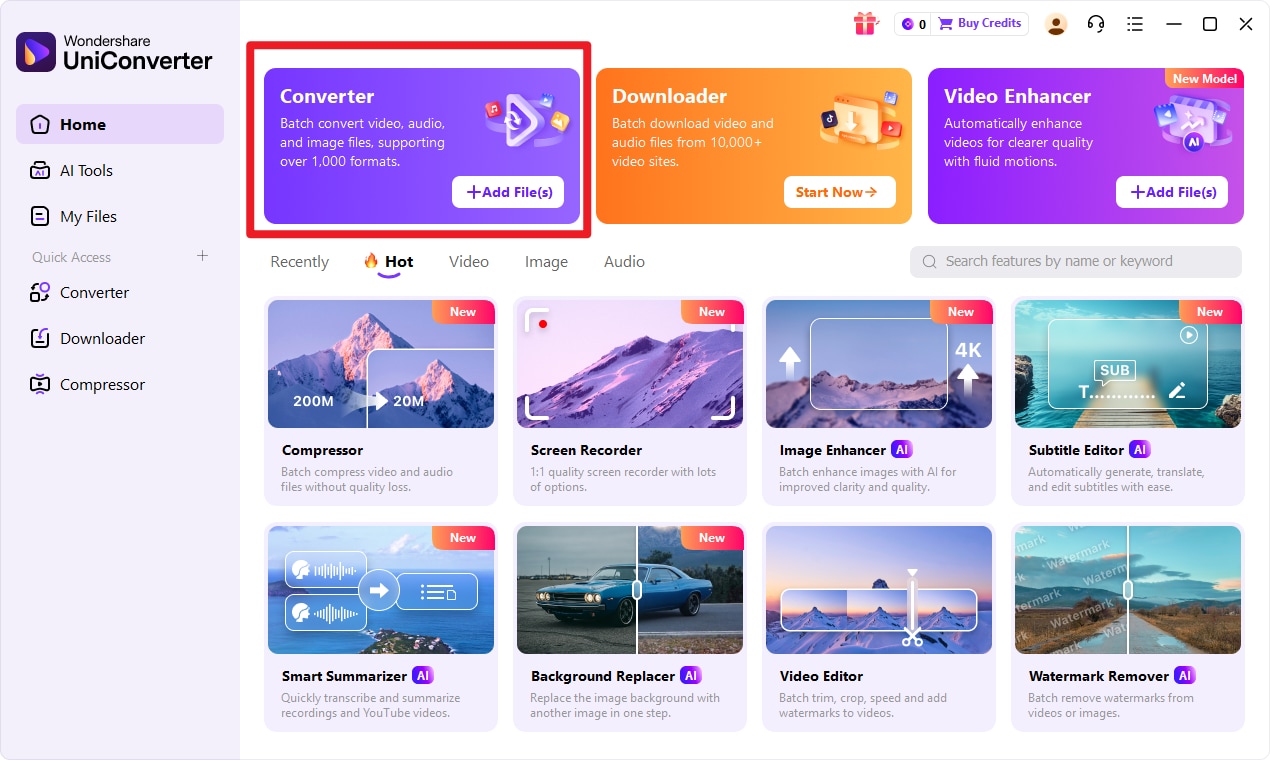
Step 1: Choose Converter in UniConverter
Launch Wondershare UniConverter on your computer. On the main interface, select the Converter tab from the left-side menu to begin the process.
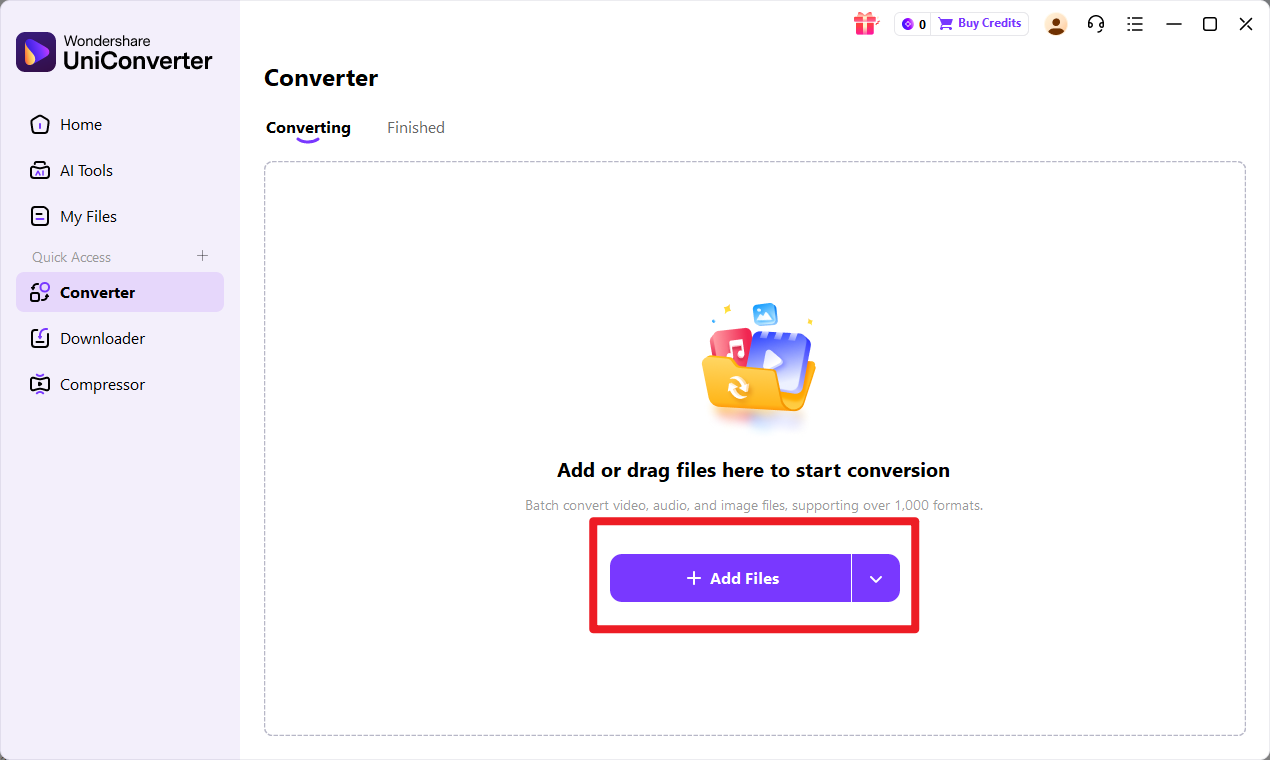
Step 2: Add Files to UniConverter
Click on the Add Files icon or drag and drop your N-Log or F-Log video files directly into the converter window. You can add multiple files to perform a batch conversion.
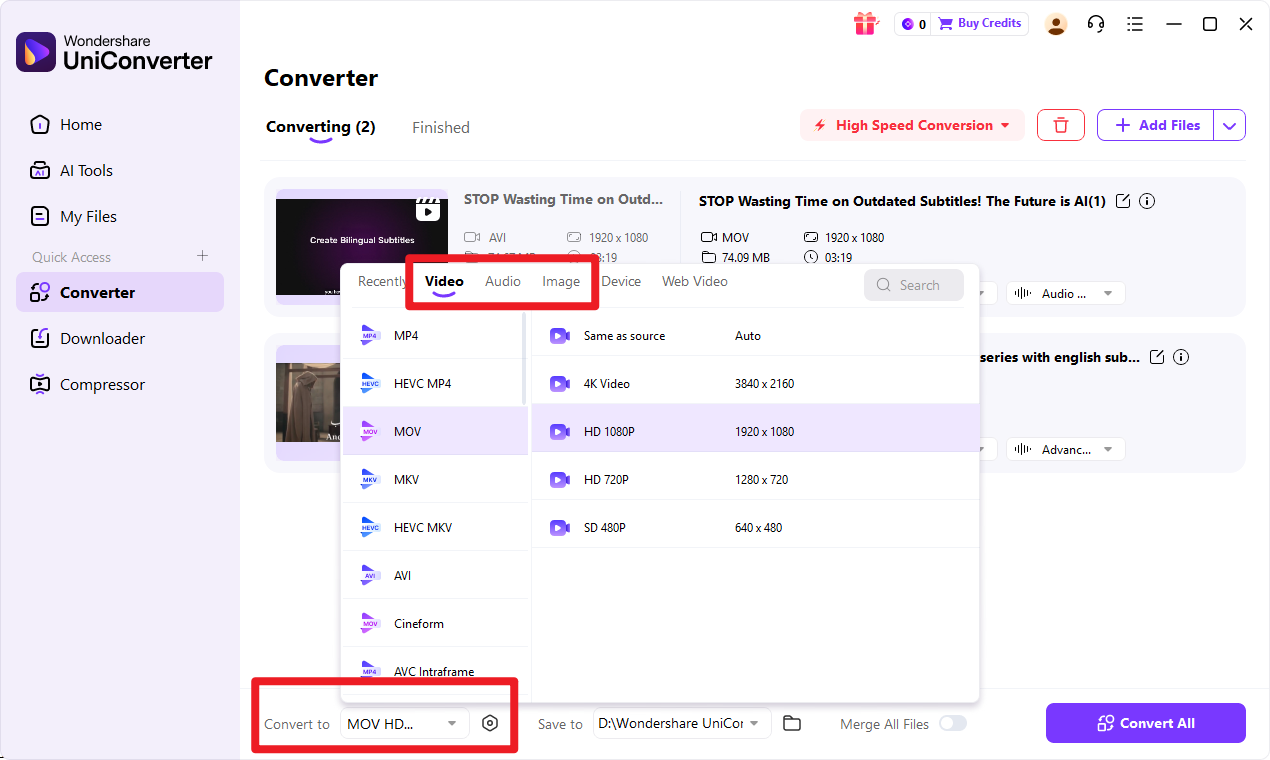
Step 3: Choose Output Format
Click on the Output Format option at the bottom of the window. A new window will appear. Select your desired target format (like ProRes for editing) and resolution from the Video tab. This ensures your input format is converted to a consistent, high-quality intermediate file.
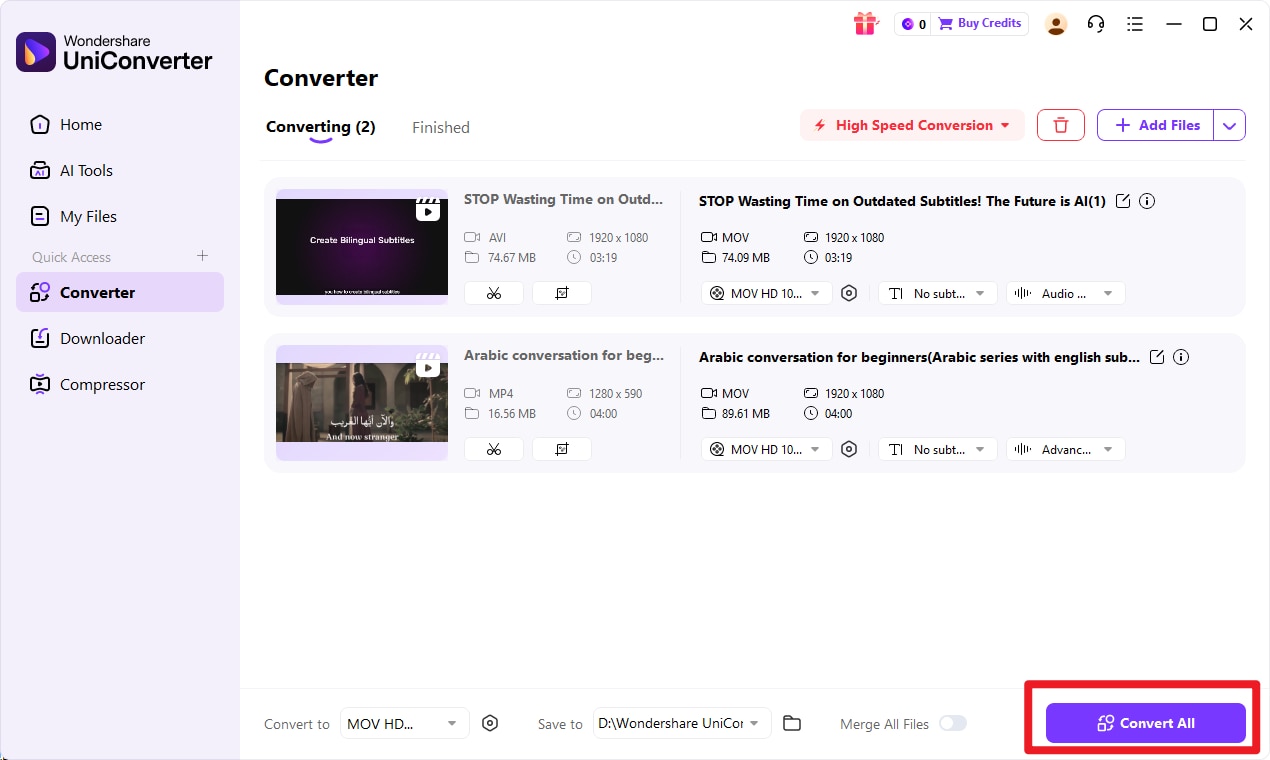
Step 4: Start the Conversion
Once you have selected the target format, choose a destination folder by clicking the File Location option. Finally, click the Start All button to begin the conversion process for all your files.

More Than Just a Log File Converter
Conclusion
The N-Log vs F-Log discussion highlights the incredible capabilities of modern mirrorless cameras. Both Nikon and Fujifilm have developed powerful tools that empower videographers to capture stunning, cinematic images. Neither profile is definitively superior; they simply represent different philosophies in image capture and post-production workflow.
F-Log stands out for its exceptional, built-in color science, offering a fast track to beautiful, filmic images, especially when it comes to skin tones. N-Log, in contrast, champions flexibility and neutrality, providing a pristine and data-rich canvas for the meticulous colorist to craft a look from scratch. The ultimate choice will always depend on your preferred camera system, the specific demands of your project, and your personal artistic preference. What is undeniable is that a streamlined post-production workflow is crucial. Having a reliable tool like Wondershare UniConverter to handle file management and conversion can save significant time and frustration, allowing you to focus on what truly matters: creating compelling visual stories.
FAQs
-
1. Can I apply an F-Log LUT to N-Log footage?
While technically possible, it is not recommended. Each log profile is mathematically designed to work with its corresponding LUT for an accurate color space transformation. Applying an F-Log LUT to N-Log footage (or vice-versa) will result in incorrect colors, contrast, and exposure, and it will be very difficult to achieve a proper image. Always start with the manufacturer's recommended LUT for your specific log profile. -
2. Which profile is easier to grade for beginners?
F-Log is often considered slightly more beginner-friendly. Because its underlying color science provides a more pleasing starting point, it often requires less manipulation to achieve a good-looking final image. Applying the official Fujifilm LUT can get you very close to a finished look, which is encouraging for those new to color grading. -
3. Do I lose quality when converting log footage?
Any time you transcode a video file, there is a potential for quality loss. However, this can be minimized to a negligible level by using the right tools and settings. When converting your log footage, it is crucial to use a professional tool like UniConverter and choose a high-quality, robust intermediate codec like Apple ProRes or Avid DNxHD as your output format. These codecs are designed to preserve image quality through multiple generations of editing and rendering. -
4. What is the difference between F-Log and F-Log2?
F-Log2 is Fujifilm's newer, more advanced log profile, available on select high-end cameras like the X-H2S. The primary difference is that F-Log2 is designed to capture an even wider dynamic range—over 14 stops compared to the original F-Log's approximate 12 stops. This provides even more detail in extreme highlights and deep shadows, offering greater flexibility for HDR delivery and aggressive color grading. However, it also has a higher base ISO (typically 1250) than the original F-Log (ISO 640).
