
In the world of digital video, file formats are the containers that hold your precious footage. While many people are familiar with MP4, a more specialized format called MXF often appears in professional workflows, causing confusion for those who encounter it. Understanding the MXF vs MP4 debate is crucial for anyone from film students to seasoned videographers. You might have received a file from a professional camera that your computer can't play, or perhaps you're deciding on the best format for archiving your master footage. This guide is here to demystify these two important formats.
We will explore the fundamental differences between MXF and MP4, their specific use cases, and their respective strengths and weaknesses. More importantly, we'll provide a practical solution for when you need to bridge the gap between professional production and universal sharing by converting MXF files to the more accessible MP4 format.
In this article
Part 1. What is MXF? What is MP4?
Before we dive into a direct comparison, it's essential to understand what each format is on its own. They were designed for very different purposes, which explains their unique characteristics.
What is an MXF File?
MXF stands for Material Exchange Format. As the name suggests, it was developed as a standardized "wrapper" or container format for the exchange of professional video and audio material. Think of it as a digital equivalent of a videotape, designed to carry not just the video and audio streams but also a vast amount of metadata and a complete timeline.
Developed by the Society of Motion Picture and Television Engineers (SMPTE), MXF is the backbone of many professional broadcast and digital cinema workflows. High-end cameras from brands like Sony (XDCAM), Canon (XF series), and Panasonic (P2) often record directly in the MXF format. Its primary goal is to preserve data integrity and carry extensive information, such as timecode, camera settings, lens information, and project data, making it indispensable for post-production and archiving. This focus on data richness, however, comes at the cost of large file sizes and limited compatibility with consumer devices.
What is an MP4 File?
MP4, which stands for MPEG-4 Part 14, is a digital multimedia container format that has become the de facto standard for video on the internet. It's the format you most likely encounter every day when watching videos on YouTube, scrolling through social media, or playing a movie on your smartphone.
The key to MP4's success is its incredible efficiency. It uses advanced compression algorithms (like H.264 or H.265/HEVC) to significantly reduce file size while maintaining a high level of visual quality. This balance makes it perfect for streaming over the web and storing on devices with limited space. Its universal support across virtually all modern operating systems, web browsers, media players, and mobile devices has cemented its position as the go-to format for video delivery and consumption.
Part 2. Quick Comparison Table
To get a clear, at-a-glance overview of the two formats, here is a table highlighting their key differences.
| Feature | MXF | MP4 |
| Full Name | Material Exchange Format | MPEG-4 Part 14 |
| Compression | Typically uncompressed or losslessly compressed | Highly compressed (lossy) |
| File Size | Very Large | Small and manageable |
| Quality | Highest possible, preserves original data | Good to high, but some quality is lost |
| Compatibility | Limited to professional software and players | Universal compatibility |
| Metadata | Extensive and complex (timecode, camera settings, etc.) | Basic (title, author, etc.) |
| Primary Use | Professional production, broadcasting, archiving | Web streaming, sharing, consumer playback |
Part 3. MXF vs MP4: Which One Is Better?
The question of which format is "better" entirely depends on the context. One excels in production, while the other dominates in distribution. Let's break down their performance in key areas.
Compatibility and Playback
When it comes to compatibility, there is no contest: MP4 is the undisputed champion. You can play an MP4 file on virtually any device you own, from your Windows PC and Mac to your iPhone, Android tablet, and smart TV. It's natively supported by all major web browsers and is the required format for nearly every online video platform.
MXF, on the other hand, is a specialist format. It will not open in standard media players like Windows Media Player or Apple's QuickTime without special codecs. To work with MXF files, you typically need professional-grade non-linear editing (NLE) software such as Adobe Premiere Pro, Avid Media Composer, or Final Cut Pro. This limited compatibility is by design, as the format is intended for controlled professional environments, not for general public consumption.
File Size and Compression
Here again, the formats are polar opposites. MP4 files are known for being relatively small and manageable. They achieve this through lossy compression, a process that intelligently removes redundant or less perceptible data from the video to shrink its size. While this means some original data is permanently lost, modern codecs do an incredible job of preserving visual quality.
MXF files are notoriously large. This is because they often contain uncompressed or only lightly compressed video and audio streams. The goal is not to save space but to maintain the absolute maximum quality and preserve every bit of data captured by the camera's sensor. A few minutes of MXF footage can easily consume several gigabytes of storage, whereas the same clip converted to MP4 would be a fraction of that size.
Quality and Data Integrity
For raw quality and data preservation, MXF is the superior format. It acts as a digital negative, a master copy that contains all the original information captured during recording. This is crucial for post-production, where editors and colorists need the maximum amount of data to work with for tasks like color grading, visual effects, and reframing. The format's structure ensures that all video, audio, and metadata components remain perfectly synchronized and intact.
MP4, due to its lossy compression, is a delivery format. While a high-bitrate MP4 can look visually identical to the source for viewing purposes, it has discarded some of the underlying data. This makes it less ideal for heavy editing or color correction, as the compressed data offers less flexibility. The quality is more than sufficient for its intended purpose—viewing—but it is not a master format.
Metadata Support
Metadata is the "data about data," and it's a critical component of professional workflows. MXF excels in this area. It can embed a vast and complex set of information, including precise timecodes, camera-specific settings (like aperture, ISO, and shutter speed), lens data, scene notes, and more. This rich metadata is invaluable for organizing media, automating processes in post-production, and ensuring long-term archival integrity.
MP4's metadata support is far more basic. It can hold simple tags like title, artist, album, and a brief description, but it lacks the deep, frame-accurate technical metadata that is standard in MXF.
The Verdict: Which Format Should You Choose?
The choice is clear based on your needs:
- Choose MXF when you are in the production, post-production, or archiving phase. Use it for recording on professional cameras, editing in a professional NLE, and storing master copies of your projects where maximum quality and data are the top priorities.
- Choose MP4 when you are in the delivery and distribution phase. Use it for uploading to YouTube or Vimeo, sharing on social media, sending to a client for review, or watching on your personal devices.
For most people, the challenge arises when they need to move from the MXF world to the MP4 world. If a videographer hands you a hard drive of MXF files, you can't simply email them or upload them to Instagram. This is where a reliable video converter becomes an essential tool, allowing you to transform the bulky, professional MXF files into universally compatible MP4s without a steep learning curve.
Part 4. Use Cases for MXF and MP4
Understanding the typical applications for each format further clarifies their distinct roles in the video ecosystem.
Common Use Cases for MXF
The use of MXF is almost exclusively confined to professional environments where precision and quality are non-negotiable.
- Professional Broadcasting: MXF is a standard delivery format for television stations. It ensures that programs, commercials, and news segments meet strict technical specifications for broadcast.
- Digital Cinema: When creating a Digital Cinema Package (DCP)—the collection of files used to show a movie in a digital theater—the video is often wrapped in an MXF container.
- Video Archiving: Libraries, studios, and historical institutions use MXF to archive master video files. Its robust metadata support and data integrity make it ideal for long-term preservation.
- Post-Production: MXF serves as an intermediate or master format during the editing process. It allows different departments (editing, sound, effects, color) to work from a high-quality, data-rich source file.
Common Use Cases for MP4
MP4 is the format for the masses, built for accessibility and convenience.
- Online Video Streaming: It is the dominant format for streaming platforms like YouTube, Netflix, Vimeo, and Hulu. Its efficient compression is vital for smooth playback over internet connections.
- Social Media: All major social media platforms, including Instagram, Facebook, TikTok, and X (formerly Twitter), rely on the MP4 format for video uploads.
- Mobile Devices: MP4 is the native video format for smartphones and tablets, allowing you to record, store, and play videos without needing third-party apps.
- General Sharing: It's the perfect format for sending videos to clients, friends, and family via email, cloud storage services like Dropbox, or messaging apps.
Part 5. Step-by-Step Guide to Convert MXF to MP4 Using UniConverter
If you have MXF files that you need to play, edit in consumer software, or share online, converting them to MP4 is the best solution. While the process might sound technical, a user-friendly tool like Wondershare UniConverter makes it incredibly simple and fast.
Why You Need to Convert MXF to MP4
You may need to convert MXF to MP4 for several common reasons: to play the file on your computer or phone, to import it into a standard video editor like iMovie, or to upload it to a website or social media platform. UniConverter streamlines this process, even allowing you to convert multiple MXF files at once with its batch conversion feature, saving you valuable time.
How to Convert MXF to MP4 in 4 Easy Steps
Follow these simple steps to transform your professional MXF files into versatile MP4s.
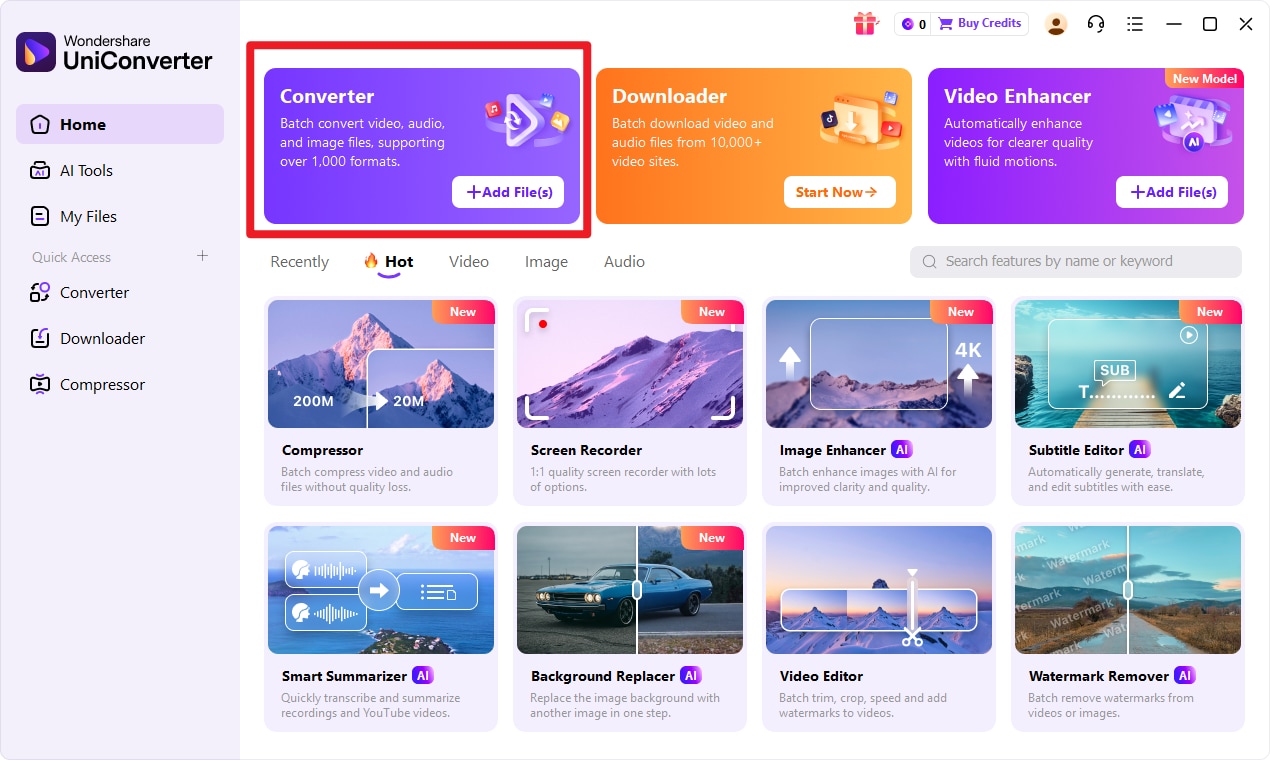
Step 1: Launch Wondershare UniConverter
Launch Wondershare UniConverter on your Windows or Mac computer. In the main interface, ensure you are on the Converter tab.
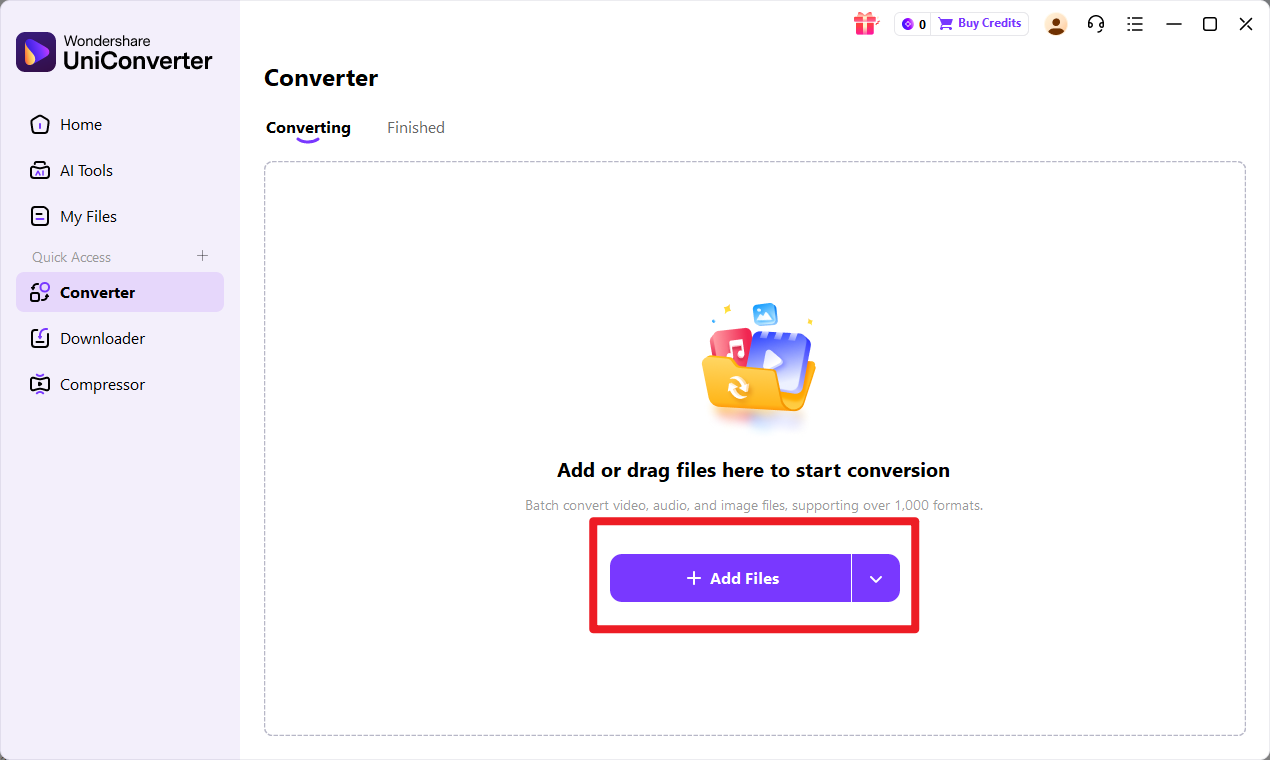
Step 2: Add Files to UniConverter
You can either click the Add Files button to browse for your MXF files or simply drag and drop them directly into the program window.
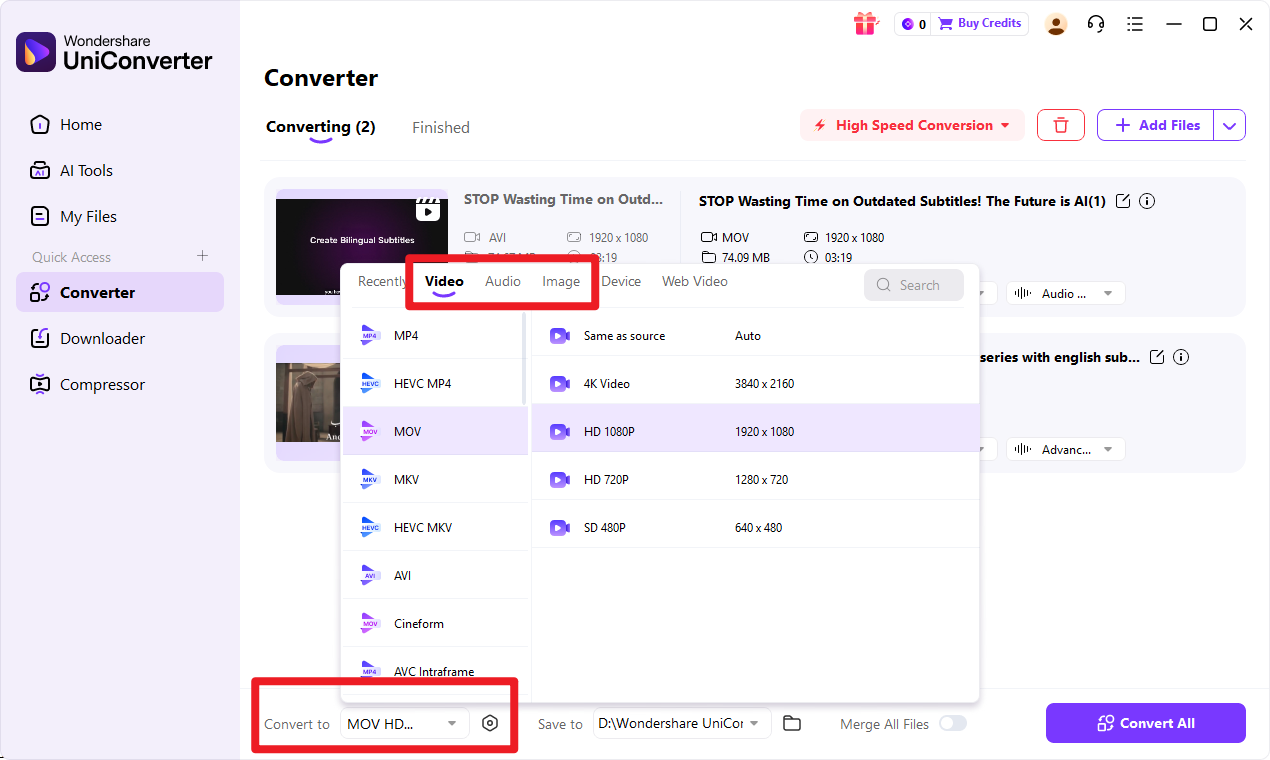
Step 3: Select an Output Location
Before starting the conversion, you can specify where the new MP4 file will be saved. Look for the File Location field at the bottom of the interface. Click on it to choose a destination folder on your computer that is easy for you to find later.
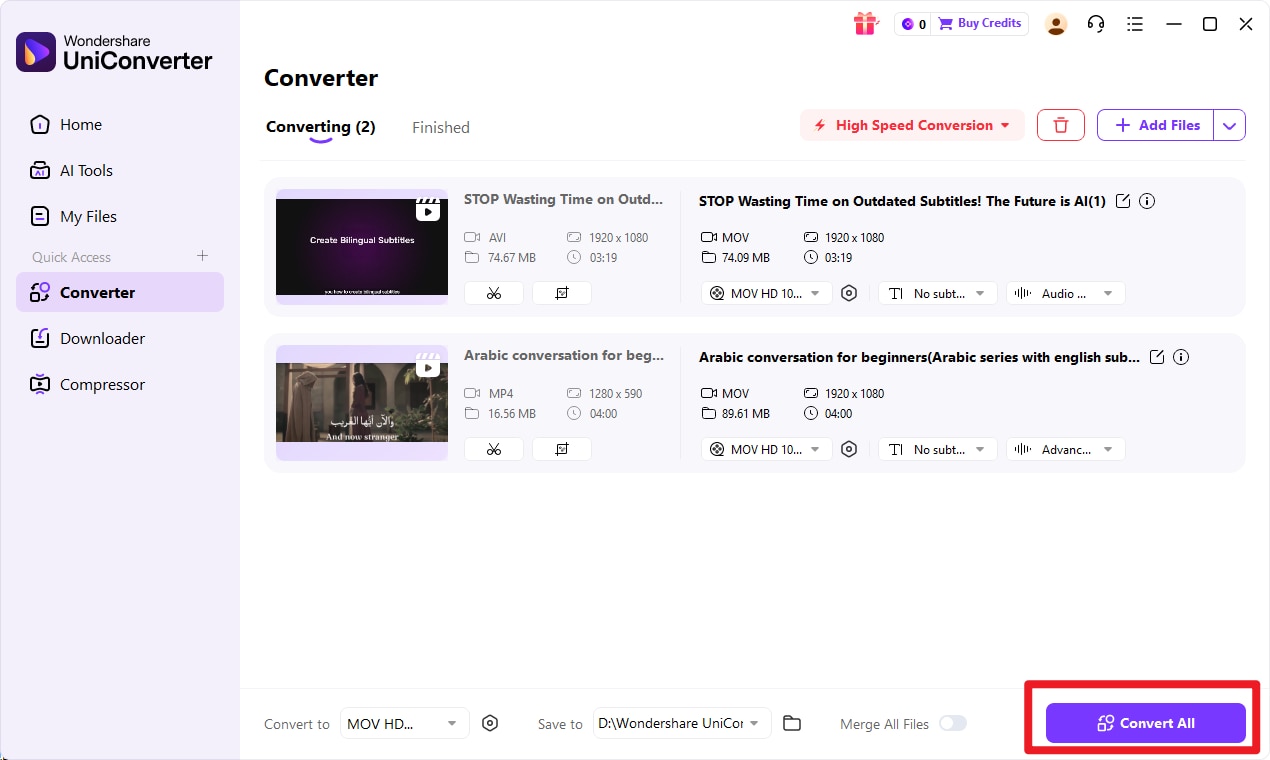
Step 4: Start the MXF to MP4 Conversion
Once you are satisfied with your settings, click the Convert button next to a single file or the Start All button in the bottom-right corner to begin the batch conversion process. UniConverter will use its high-speed conversion technology to quickly process your files. After it's done, you can find your new MP4 videos in the Finished tab or in the output folder you selected.

Go Beyond Simple Video Conversion
Conclusion
MXF and MP4 are both essential video formats, but they serve entirely different purposes in the video production lifecycle. MXF is the heavyweight champion of professional capture and post-production, offering unmatched quality, data integrity, and extensive metadata support. In contrast, MP4 is the undisputed king of distribution, providing universal compatibility and small, manageable file sizes perfect for the web and personal devices. Understanding their unique roles is the key to a smooth and efficient video workflow.
When your project needs to move from the professional studio to the global audience, the gap between these two formats must be bridged. A powerful and intuitive tool like Wondershare UniConverter is the perfect solution, allowing you to seamlessly convert your high-quality MXF files into shareable, playable MP4s with just a few clicks, preserving quality while ensuring maximum compatibility.
FAQs
-
1. Does converting MXF to MP4 lose quality?
Yes, some quality loss is technically inevitable because MP4 uses lossy compression, whereas MXF is often uncompressed or lossless. However, with a high-quality converter like UniConverter, you can set a high bitrate and resolution for the output MP4. This ensures the resulting file has visually lossless quality, meaning the difference will be imperceptible to the human eye and perfectly suitable for almost any viewing purpose. -
2. Can I play MXF files on Windows or Mac?
You can, but it's not straightforward. Standard players like Windows Media Player and Apple's QuickTime Player do not support MXF files natively. To play them, you would need to install specific codec packs or use a professional media player like VLC Media Player (which has broader format support) or specialized broadcast players. -
3. Is MXF a good format for editing?
Yes, MXF is an excellent format for editing, especially in professional software like Adobe Premiere Pro, DaVinci Resolve Studio, or Avid Media Composer. It contains more video data, robust audio channels, and detailed timecode information, which gives editors greater flexibility for color grading, effects, and precise timeline management. -
4. What is the best tool to convert MXF to MP4?
For a perfect balance of conversion speed, output quality, and user-friendliness, Wondershare UniConverter is a top recommendation. It is specifically designed to handle professional formats like MXF with ease, offers powerful batch conversion for processing multiple files at once, and provides simple presets to ensure your converted files are optimized for any device, platform, or editing software you plan to use.
