
In the world of digital video, the file format you choose can significantly impact your workflow, from shooting and editing to playback and archiving. Two formats that often come up in discussion are MXF and AVI. While they both serve to contain video and audio data, they were designed for vastly different purposes and audiences. Understanding the nuances of the MXF vs AVI debate is crucial for video professionals, content creators, and even media enthusiasts who want to manage their files effectively. This guide will break down everything you need to know, helping you navigate compatibility issues and make informed decisions for your projects in 2026.
In this article, you will learn:
- What MXF and AVI files are and their primary functions.
- A quick side-by-side comparison of their key features.
- A detailed analysis of which format is better for compatibility, quality, and metadata.
- The specific use cases where each format excels.
- A step-by-step guide on how to convert MXF to AVI for universal playback.
Part 1. What is MXF? What is AVI?
Before we can compare these two formats, it's essential to understand what each one is on a fundamental level. Both are "container" formats, meaning they act like a box that holds video, audio, and other data together. However, the design and purpose of these boxes are worlds apart.
What is an MXF File?
MXF stands for Material Exchange Format. It is a professional-grade video and audio container format developed by the Society of Motion Picture and Television Engineers (SMPTE). The name itself hints at its primary purpose: to facilitate the exchange of "material" (video, audio, and metadata) between different stages of a professional production workflow.
Think of it as a standardized digital shipping container for the film and broadcast industry. It was created to solve the problem of proprietary formats causing chaos in post-production. MXF can bundle multiple high-quality video streams, numerous audio tracks (for different languages or sound mixes), and an extensive set of metadata into a single, robust file. This metadata can include everything from timecodes and camera settings to scene descriptions and rights information, making it invaluable for complex projects and long-term archiving.
What is an AVI File?
AVI, which stands for Audio Video Interleave, is a multimedia container format introduced by Microsoft back in 1992 as part of its Video for Windows technology. As one of the oldest and most recognizable video formats, it became a de facto standard for digital video on Windows-based systems for many years.
The "interleave" part of its name describes how it works: it wraps audio and video data together in alternating chunks within the file, allowing for synchronous playback. While revolutionary for its time, AVI's age shows. It has very limited support for modern features like advanced codecs, multiple audio tracks, or comprehensive metadata. Despite its limitations, its long history means it enjoys widespread compatibility, especially on older devices and Windows-native applications.
Part 2. Quick Comparison Table
To get a clear overview of the fundamental differences between MXF and AVI, here is a side-by-side comparison of their most important attributes.
| Feature | MXF | AVI |
| Full Name | Material Exchange Format | Audio Video Interleave |
| Developer | SMPTE (Society of Motion Picture and Television Engineers) | Microsoft |
| Primary Use | Professional broadcast, digital cinema, and archiving | General-purpose video playback, standard definition video |
| Compatibility | Supported by professional NLEs (Premiere Pro, Final Cut Pro, Avid); limited support in consumer players | Excellent native support on Windows; widely supported by most media players |
| Metadata Support | Extensive and standardized (timecode, camera settings, scene data) | Very limited |
| File Size | Typically large due to high-bitrate codecs | Varies widely but can be large with uncompressed video |
Part 3. MXF vs AVI: Which One Is Better?
The question of which format is "better" doesn't have a simple answer. It depends entirely on your specific needs and context. One format is a modern, professional workhorse, while the other is a widely compatible legacy format. Let's break down their performance in three key areas.
Compatibility and Playback
When it comes to universal playback, AVI has a clear advantage. Its long history and native integration with Windows mean that an AVI file will play on almost any PC without requiring special software. Most consumer media players, smart TVs, and older devices recognize AVI, making it a safe choice for sharing videos with a non-technical audience.
MXF, on the other hand, is built for a professional ecosystem. It is natively supported by high-end non-linear editing (NLE) software like Adobe Premiere Pro, Apple Final Cut Pro, and Avid Media Composer. However, it will not play on standard media players like Windows Media Player or QuickTime out of the box. To view an MXF file on a typical computer, you either need a specialized player like VLC Media Player or, more practically, you need to convert it. This incompatibility is one of the most common reasons users seek out a reliable video converter to transform MXF files into a more accessible format like AVI or MP4.
Video Quality and Compression
It's crucial to remember that both MXF and AVI are containers, and the ultimate video quality depends on the codec used to compress the video data inside them. A codec (coder-decoder) is the algorithm that handles the compression and decompression of the video stream.
MXF is almost exclusively used with professional, high-bitrate codecs such as DNxHD/DNxHR, XDCAM, and Apple ProRes. These codecs are designed to preserve the maximum amount of image information, often using intra-frame compression (where each frame is compressed independently) to make editing smoother and more precise. This results in very high-quality video that can withstand multiple rounds of color grading and effects work, but it also leads to very large file sizes.
AVI can also contain uncompressed or losslessly compressed video, but it is more commonly associated with older, more lossy codecs like DivX and XviD. While it can hold high-quality video, its container structure is not optimized for modern, efficient codecs like H.264 or HEVC. Therefore, while an AVI file can look as good as an MXF file, the MXF format is inherently tied to a professional-quality workflow.
Metadata
In the realm of metadata, there is no contest: MXF is vastly superior. The format was specifically engineered to carry a rich, standardized set of data that is critical for professional post-production and asset management. This includes:
- Timecode: Frame-accurate timing information essential for syncing audio and video.
- Camera Data: Lens information, f-stop, shutter speed, ISO, and more.
- Project Information: Scene numbers, take numbers, director's notes, and project names.
- Audio Mapping: Information on what each of the multiple audio tracks contains (e.g., dialogue, music, effects).
This comprehensive metadata travels with the file from set to final delivery, ensuring that everyone in the production pipeline has the information they need.
AVI, by contrast, has extremely limited metadata support. It was designed in an era when this level of data integration was not a consideration. It can hold basic information, but it lacks the structured, extensive capabilities of MXF, making it entirely unsuitable for complex, collaborative workflows or for serious digital archiving.
Part 4. Use Cases for MXF and AVI
Understanding the strengths and weaknesses of each format helps clarify when you should use them. Here are the most common scenarios for both MXF and AVI.
When to Use MXF
MXF is the format of choice in professional environments. You should use it for:
- Recording Footage on Professional Cameras: Many high-end cinema and broadcast cameras from manufacturers like Sony, Canon, and Panasonic record directly to MXF. This ensures the highest quality capture and embeds crucial camera metadata right from the start.
- Post-Production Workflows: When a project moves from editing to color grading to sound design, the MXF container ensures that all video, audio, and metadata stay perfectly in sync. It acts as a master file or "digital negative" throughout the process.
- Long-Term Archiving: For film studios, broadcast networks, and libraries, MXF is the industry standard for archiving master video files. Its robust structure and rich metadata ensure that the asset can be easily identified, understood, and repurposed for decades to come.
When to Use AVI
Despite its age, AVI still has its place, primarily in scenarios where compatibility is the top priority. Consider using AVI for:
- Playback on Windows Computers: If you need to create a video that is guaranteed to play on a wide range of Windows PCs without any extra software, AVI is a reliable option.
- Working with Legacy Systems: Some older editing software, hardware playback devices, or industrial machinery with video displays may only support AVI. In these cases, you'll need to use or convert to this format.
- Simple Video Projects: For straightforward projects where you don't need multiple audio streams, subtitles, or extensive metadata, AVI can be a simple and effective container. It's a no-frills format that gets the job done for basic playback and sharing.
Part 5. Step-by-Step Guide to Convert MXF to AVI Using UniConverter
When you need to play an MXF file on a device that only supports AVI, or share it with someone who can't open MXF, a video converter is essential. Wondershare UniConverter is a powerful tool that makes this process simple and fast while maintaining high quality. It supports over 1,000 formats and offers a suite of other video tools.
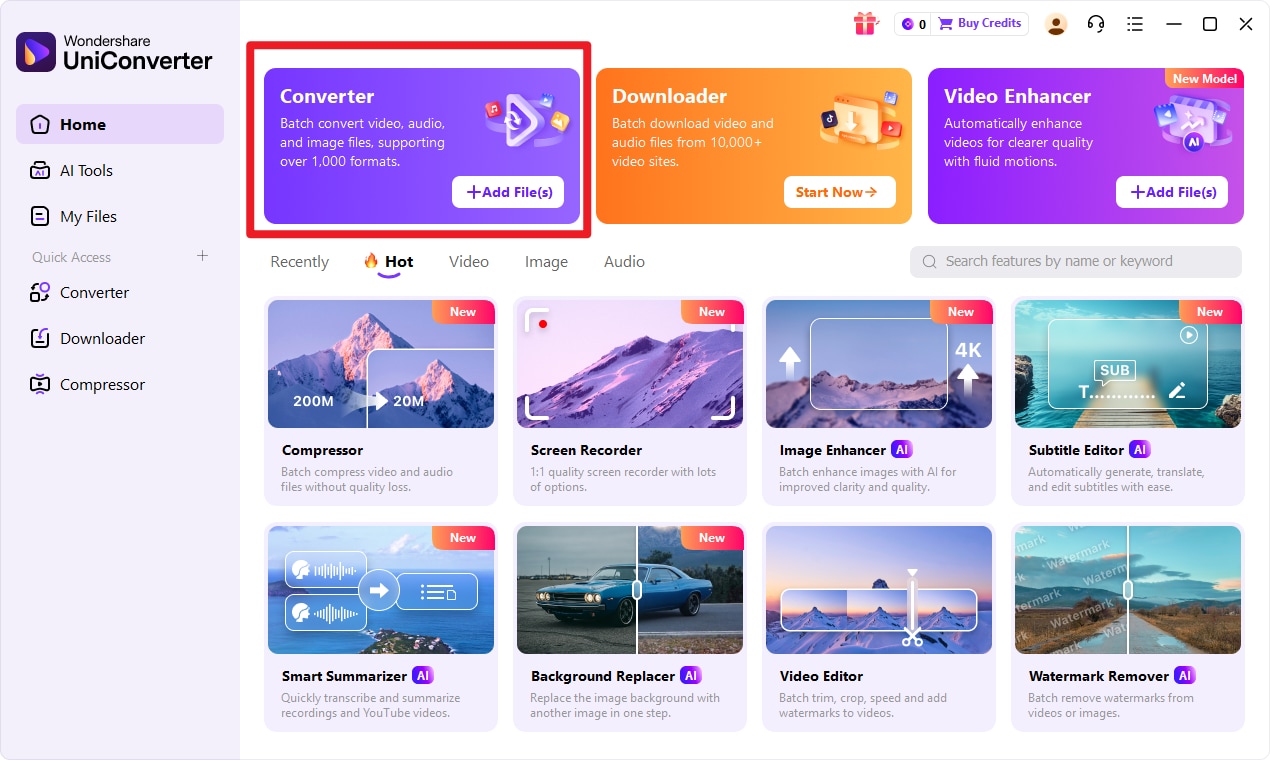
Step 1. Choose Converter in UniConverter
Launch Wondershare UniConverter. On the main screen, select the Converter tab from the left-side menu. This is the central hub for all your file format conversion needs.
Step 2. Add Files to UniConverter
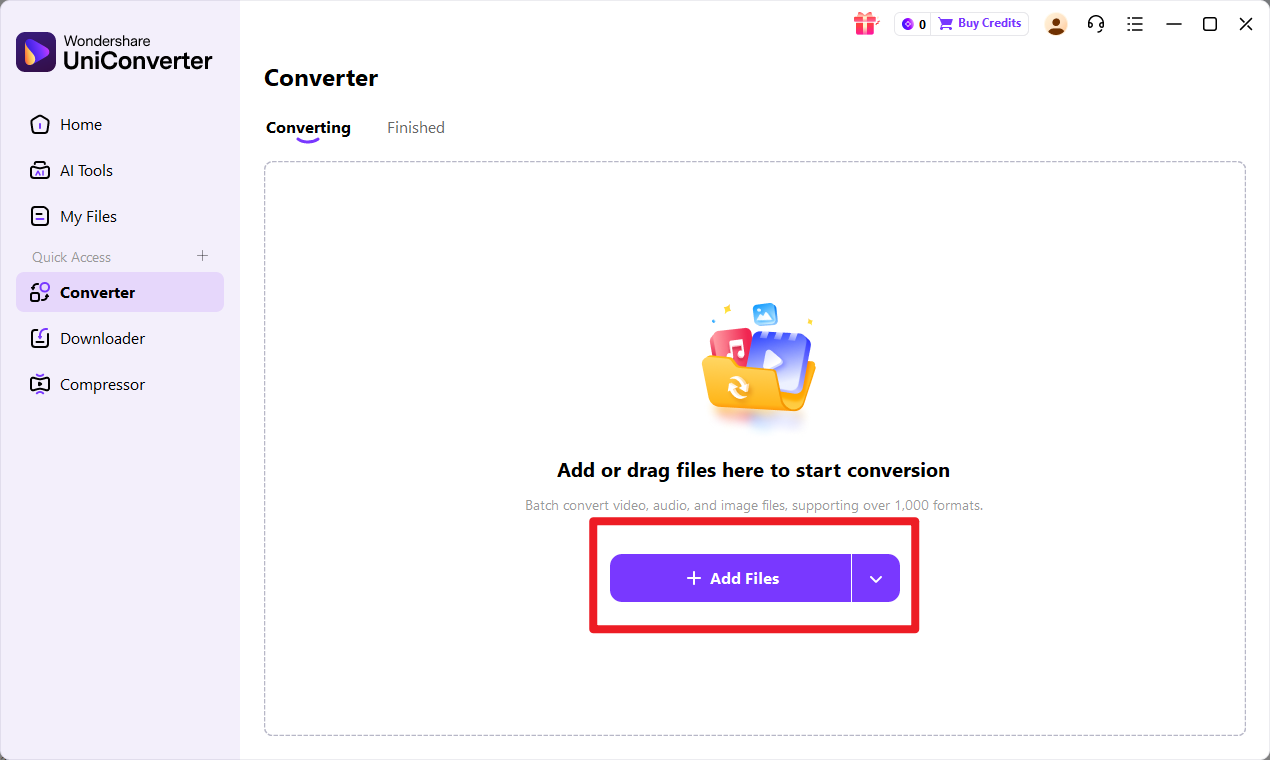
You can either click the Add Files icon to browse and import your input format files or simply drag and drop them directly into the center of the interface. The software supports batch conversion, so you can add multiple files at once.
Step 3. Choose Output Format
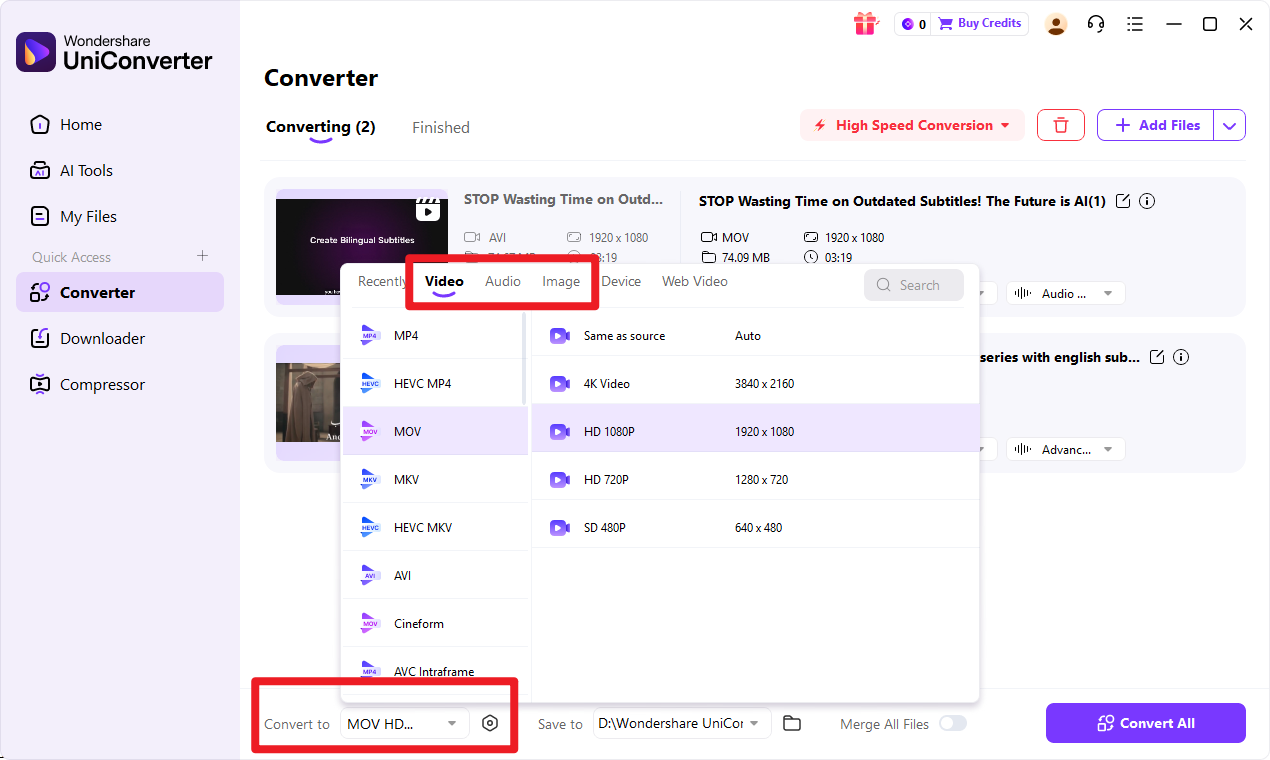
Click the Output Format button at the bottom of the window. In the new pop-up, navigate to the Video tab, select the target format from the list on the left, and then choose your desired resolution on the right. You can also click the gear icon to customize bitrate, frame rate, and other advanced settings.
Step 4. Start the Conversion
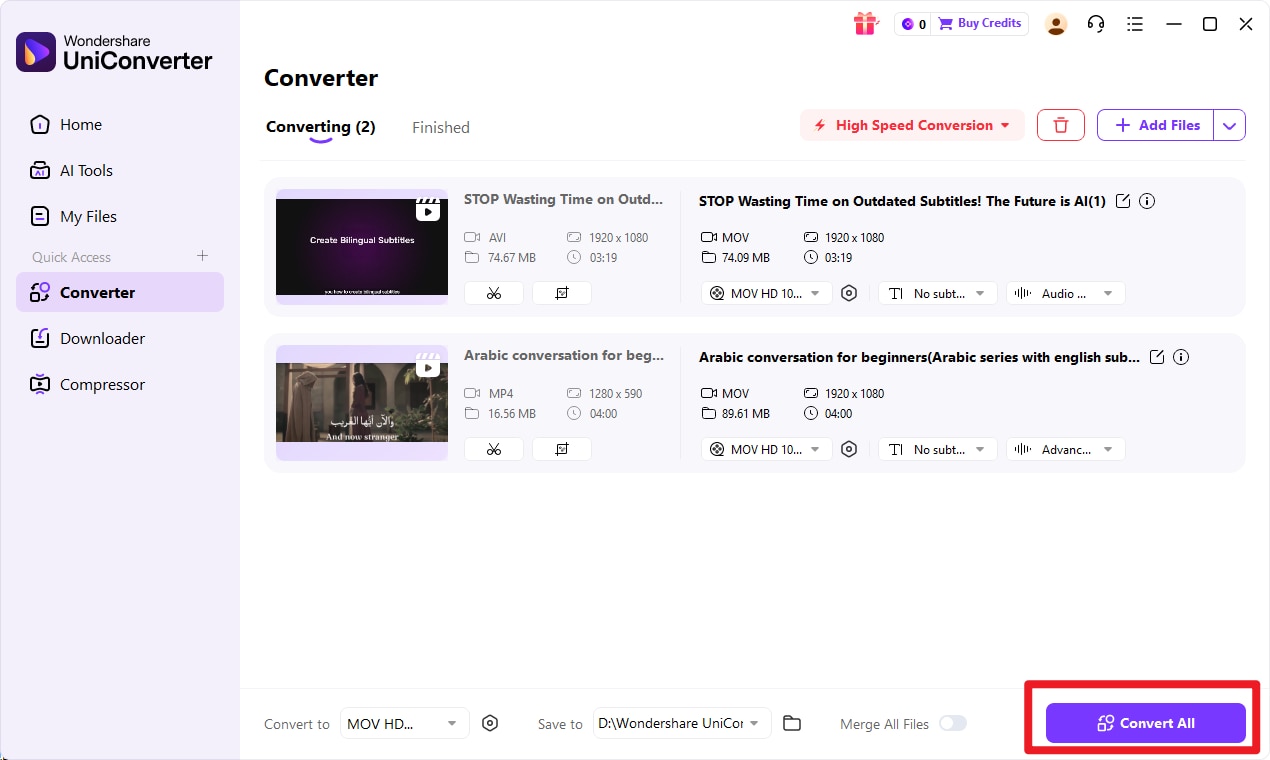
Choose a destination folder by clicking the File Location field at the bottom. Finally, click the Start All button (or the Convert button next to an individual file) to begin converting your files. The high-speed conversion feature in UniConverter will complete the task quickly.

More Than Just a Video Converter
Conclusion
Choosing between MXF vs AVI depends entirely on your context and goals. MXF is the undisputed modern standard for professional video production, broadcast, and archiving, prized for its robust container structure, support for high-quality codecs, and unparalleled metadata capabilities. AVI, while a much older format, remains relevant due to its broad compatibility and simplicity, especially on Windows systems and legacy devices. Neither format is universally "better"—they are simply tools built for different jobs.
For professionals and creators who frequently move between these two worlds, the key is having a flexible workflow. When you encounter an MXF file from a professional camera that needs to be shared or played on a consumer device, the incompatibility barrier can be frustrating. In these moments, a reliable and efficient tool like Wondershare UniConverter provides the perfect bridge, allowing you to convert files between formats seamlessly while preserving the quality of your original footage.
FAQs
-
1. Is MXF a good format?
Yes, MXF is an excellent format for its intended purpose, which is serving professional video workflows. Its ability to bundle multiple video and audio streams with extensive, standardized metadata makes it ideal for every stage of production, from on-set recording to final broadcast and long-term archiving. For professional use, it is one of the best formats available. -
2. Can I open an MXF file on Windows Media Player?
No, Windows Media Player does not natively support the MXF format. If you try to open an MXF file with it, you will likely get an error message about an unsupported file type. To play MXF files on Windows, you have two main options: use a more versatile media player like VLC Media Player, which includes its own codecs, or convert the file to a widely supported format like AVI or MP4 using a tool like UniConverter. -
3. Does converting MXF to AVI reduce quality?
Any time you convert a video from one format to another (a process called transcoding), there is a potential for quality loss. However, the extent of this loss depends entirely on the settings you choose for the output file. When using a professional conversion tool like Wondershare UniConverter, you can select a high-quality codec and a high bitrate for the output AVI file. By doing so, you can ensure that any reduction in quality is mathematically present but visually imperceptible to the human eye. -
4. Why are MXF files so large?
MXF files are often very large because they are designed to prioritize quality over file size. They typically use codecs that apply minimal compression (or are sometimes uncompressed) to preserve the maximum amount of image data captured by the camera. This high-fidelity data provides editors and colorists with the greatest flexibility in post-production. The combination of high bitrates, less aggressive compression, and the inclusion of multiple audio tracks and extensive metadata all contribute to the large file sizes characteristic of the MXF format.
