
MPEG vs MP4: Key Differences and When to Use Each in 2026
Have you ever stumbled upon an old video file on a hard drive, perhaps with a `.mpg` or `.mpeg` extension, only to find it won't play on your smartphone? Or maybe you're a new content creator trying to decide the best format to export your video for YouTube. This common scenario often leads to the MPEG vs MP4 debate, a point of confusion for many users. While their names sound similar, these two formats serve very different purposes in the digital world. Understanding their differences is crucial for ensuring your videos are compatible, high-quality, and easy to share.
This guide will demystify the MPEG vs MP4 comparison. We will break down their technical differences, compare their performance in key areas like file size and quality, and help you decide which format is right for your specific needs. Whether you're archiving old family videos or sharing your latest creation on social media, this article will provide the clarity you need.
In this article
- The fundamental definitions of MPEG and MP4.
- A side-by-side comparison of their key features.
- A detailed analysis of which format is better regarding compression, quality, and compatibility.
- Specific use cases for both MPEG and MP4.
- A step-by-step guide on how to convert MPEG files to the more universal MP4 format.
Part 1. What is MPEG? What is MP4?
To understand the comparison, we first need to clarify what each term means. A common source of confusion is that both formats originate from the same organization, but they represent different generations of video technology.
What is MPEG?
MPEG stands for the Moving Picture Experts Group. This is a working group of authorities formed by ISO and IEC that sets international standards for the compression, decompression, processing, and coded representation of digital audio and video. Over the years, this group has developed several widely adopted standards.
When people refer to "MPEG" as a file format, they are typically talking about older video standards developed by the group, namely:
- MPEG-1: This standard was created in the early 1990s and became famous as the format used for Video CDs (VCDs). It offered VHS-like quality at a manageable file size for the time.
- MPEG-2: This standard followed with significantly improved quality and is the format used for digital television broadcasting and, most notably, DVDs.
Files using these standards often have extensions like `.mpg` or `.mpeg`. While they were revolutionary for their time, their compression methods are now considered outdated and less efficient compared to modern alternatives.
What is MP4?
MP4, also known as MPEG-4 Part 14, is a digital multimedia container format that was also developed by the Moving Picture Experts Group. This is a crucial distinction: while MPEG can refer to older video encoding standards, MP4 is a modern container format.
Think of a container format like a box. This box can hold various types of data—video, audio, subtitles, and still images—all synchronized together in a single file. The video and audio inside an MP4 file are compressed using specific codecs. The most common video codec used in MP4 files is H.264 (or its successor, H.265/HEVC), which is known for its incredible efficiency.
This efficiency is the key to MP4's success. It allows for high-quality video to be stored in a relatively small file size, making it the perfect format for web streaming, mobile devices, and general video sharing. Its file extension is almost always `.mp4`.
Part 2. Quick Comparison Table
To get a clear overview of the differences at a glance, here is a side-by-side comparison of the key characteristics of MPEG (referring to MPEG-1/MPEG-2) and MP4.
MPEG vs MP4: Side-by-Side Comparison
| Feature | MPEG (MPEG-1/MPEG-2) | MP4 (MPEG-4 Part 14) |
| Full Name | Moving Picture Experts Group | MPEG-4 Part 14 |
| File Extension | `.mpg`, `.mpeg` | `.mp4` |
| Compression | Lower compression efficiency (using older MPEG-1 or MPEG-2 codecs) | Higher compression efficiency (using modern codecs like H.264/AVC or H.265/HEVC) |
| Quality | Good quality but requires larger file sizes to maintain it. | High quality, even at smaller file sizes and lower bitrates. |
| File Size | Generally larger for a comparable level of quality. | Generally smaller and more storage-efficient. |
| Compatibility | Limited support on modern mobile devices and web platforms. May require specific players or codecs. | Universal support across nearly all modern devices, operating systems, browsers, and platforms. |
| Best For | DVDs, Video CDs (VCDs), digital television broadcasting, and working with legacy video systems. | Web streaming (YouTube, Netflix), social media, mobile playback, video recording, and general everyday use. |
Part 3. MPEG vs MP4: Which One Is Better?
Based on the comparison table, it's clear that MP4 has significant advantages for most modern applications. Let's dive deeper into the three most important factors: compression, quality, and compatibility.
Compression and File Size
This is where the most significant difference lies. MP4 files are almost always much smaller than MPEG files of similar visual quality. A 10-minute video saved as an MPEG-2 file might take up 1 GB of space, whereas the same video converted to MP4 (using the H.264 codec) could be as small as 200-300 MB without any noticeable loss in quality.
This dramatic difference is due to the underlying compression technology. MP4 utilizes far more advanced and efficient compression algorithms, or codecs, like H.264 (Advanced Video Coding) and H.265 (High-Efficiency Video Coding). These codecs were designed to deliver high-quality video at lower bitrates, which directly translates to smaller file sizes. The older MPEG-1 and MPEG-2 codecs are simply not as sophisticated, requiring more data to represent the same visual information. This efficiency makes MP4 the ideal choice for saving disk space and for streaming over the internet, where bandwidth is a critical factor.
Quality
When it comes to quality, the context matters. If you have an uncompressed source video, encoding it to MP4 will generally produce a better-quality result at a given file size than encoding it to MPEG-1 or MPEG-2. The advanced codecs in MP4 are better at preserving detail and minimizing artifacts (like blockiness) during the compression process.
This means that for the same file size, an MP4 video will look sharper and clearer than an MPEG video. To achieve the same level of visual quality as an MP4 file, an MPEG file would need to be significantly larger. Because MP4 maintains excellent quality even at lower bitrates, it has become the de facto standard for high-definition (HD), 4K, and even 8K video content delivered online.
Compatibility
In the battle for compatibility, MP4 is the undisputed champion. It is the most universally supported video format in the world today. MP4 files play natively on:
- All modern smartphones and tablets (iOS and Android).
- All major operating systems (Windows, macOS, Linux).
- All popular web browsers (Chrome, Firefox, Safari, Edge).
- All major streaming platforms and social media sites (YouTube, Vimeo, Facebook, Instagram, TikTok).
- Smart TVs, gaming consoles (PlayStation, Xbox), and other media devices.
MPEG files, on the other hand, have much more limited compatibility in the modern ecosystem. While they will often play on desktop computers using media players like VLC or Windows Media Player, they frequently cause problems on mobile devices. You cannot, for example, directly upload an MPEG-2 file from a DVD to Instagram or send it via WhatsApp. This lack of native support makes MPEG an impractical format for sharing and modern viewing.
The Verdict: Why MP4 Is the Modern Standard
For nearly every modern application in 2026, MP4 is the superior and recommended format. Its perfect balance of efficient compression (small file size), high visual quality, and universal compatibility makes it the most versatile and future-proof choice. Whether you are a professional videographer, a student creating a presentation, or just someone saving family videos, MP4 provides the best experience with the fewest headaches. MPEG remains relevant only in niche, legacy-focused workflows.
Part 4. Use Cases for MPEG and MP4
While MP4 is the clear winner for general use, there are still specific situations where each format is appropriate.
When to Use MPEG
The use cases for MPEG (specifically MPEG-1 and MPEG-2) are now highly specialized and mostly tied to older technology. You should consider using MPEG if you are:
- Authoring DVDs: The official standard for DVD-Video is MPEG-2. If you are creating a DVD that needs to be playable in a standard, standalone DVD player, you must use this format.
- Working with Legacy Hardware: Some older digital cameras or broadcast equipment may record or require files in an MPEG format. In these cases, it's best to work with the native format to avoid unnecessary conversions during the editing process.
- Digital Television Broadcasting: MPEG-2 is still a common standard for over-the-air digital television broadcasts in many parts of the world.
- Archiving from Old Sources: If you are digitizing content from VCDs or DVDs and want to keep a 1:1 master copy before converting to other formats, you would be working with MPEG files.
When to Use MP4
The use cases for MP4 are virtually limitless in the modern digital landscape. It is the go-to format for almost any video-related task, including:
- Streaming Video Online: Platforms like YouTube, Netflix, Hulu, and Vimeo all rely on MP4 (with the H.264 codec) for efficient and high-quality streaming.
- Sharing on Social Media: All major social platforms, including Instagram, Facebook, Twitter, and TikTok, have standardized on MP4 for video uploads.
- Storing Your Personal Video Library: Its excellent compression makes MP4 perfect for storing your movies and personal videos on a hard drive, NAS, or in the cloud without consuming excessive space.
- Recording Video: Virtually all modern devices—from smartphones and DSLRs to drones and action cameras—record video in the MP4 format by default.
- Sending Videos via Email or Messaging Apps: The smaller file size of MP4 makes it feasible to share video clips through services with file size limits.
Part 5. Step-by-Step Guide to Convert MPEG to MP4 Using UniConverter
If you have a library of older MPEG files and want to make them compatible with your phone, tablet, or social media, converting them to MP4 is the best solution. This process, known as transcoding, can be done easily without losing quality using a professional tool. Wondershare UniConverter is a powerful and intuitive application that makes this process fast, simple, and reliable.
Here's how to convert your MPEG files to MP4 in just four simple steps.
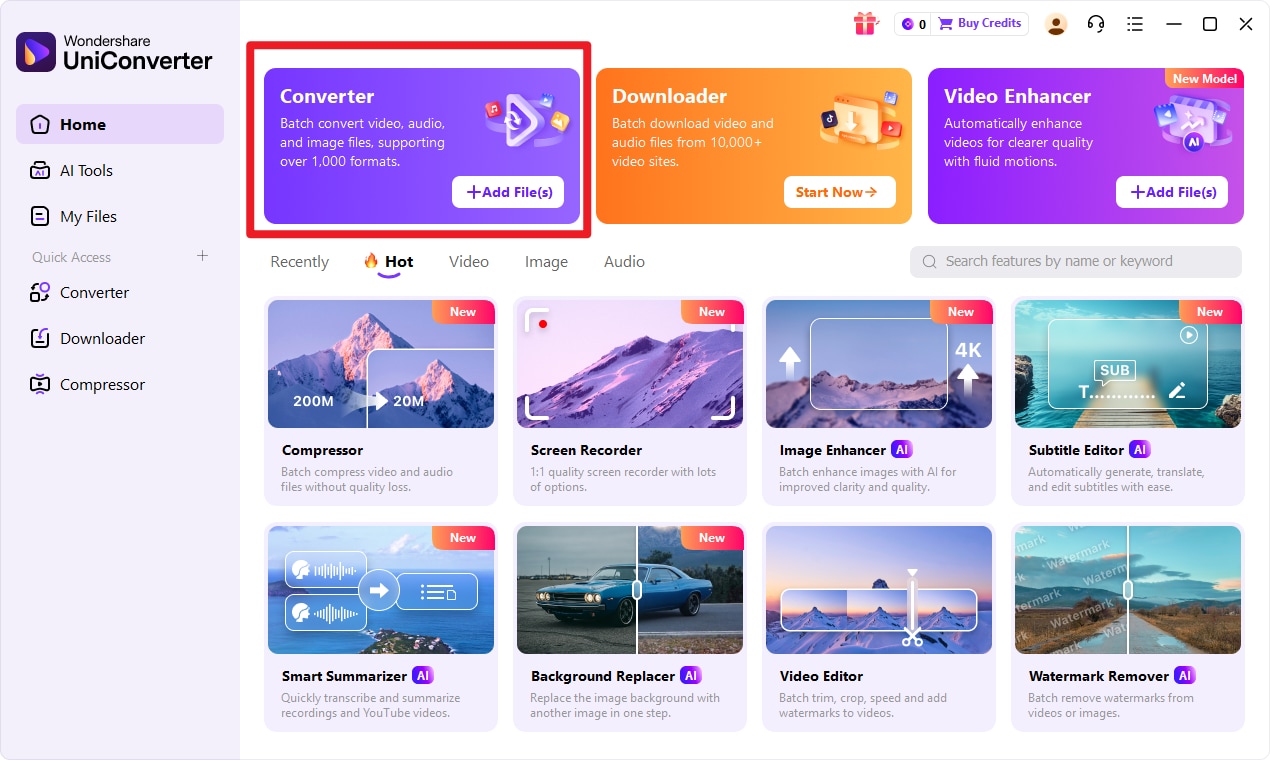
Step 1: Add Your MPEG File to UniConverter
First, launch Wondershare UniConverter on your Windows or Mac computer. In the main interface, ensure you are on the Converter tab, which is typically selected by default. You can now add your MPEG file by dragging it directly from your folder and dropping it onto the UniConverter window. Alternatively, you can click the + Add Files icon on the top-left to open a file browser and select the video you want to convert.
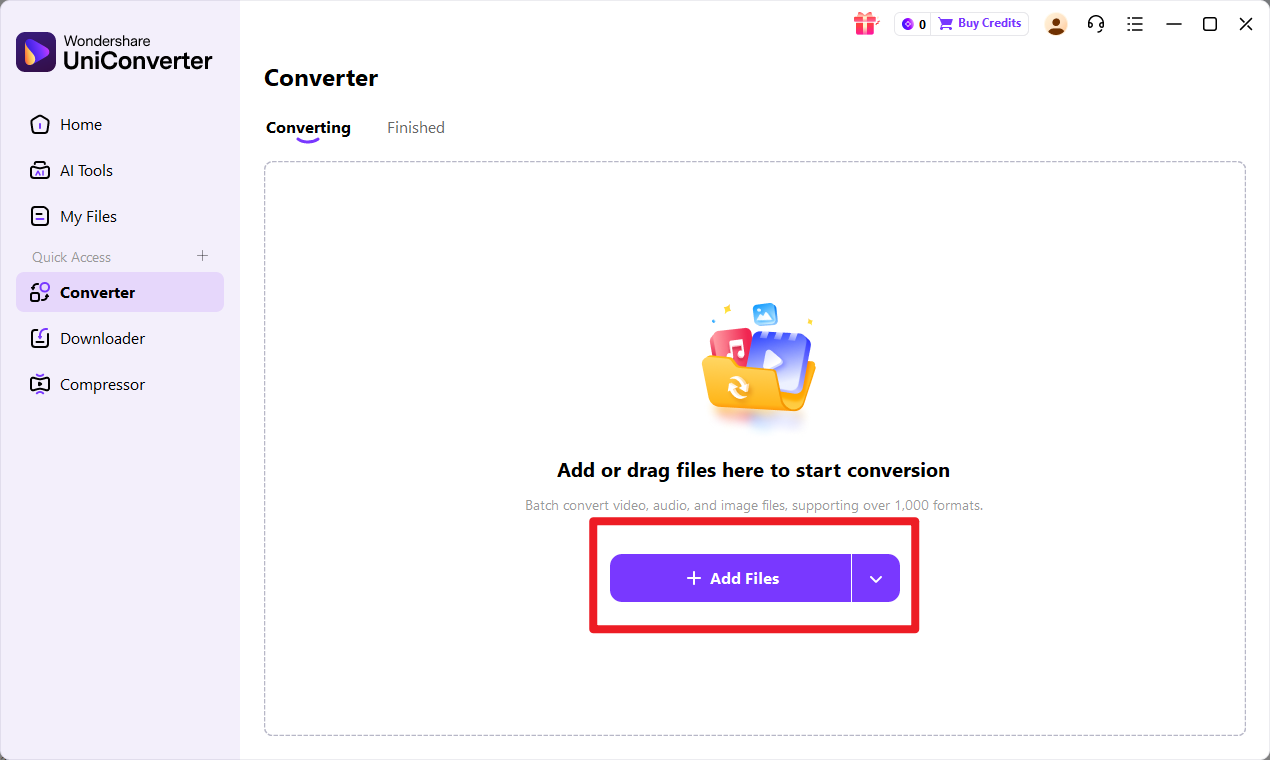
Step 2: Choose MP4 as the Output Format
Once your file is loaded, look towards the bottom of the window and click on the Output Format menu. This will open a new window with a list of available formats. Go to the Video tab, select MP4 from the list of formats on the left side, and then choose a resolution on the right. For most cases, selecting Same as source is the best option to maintain the original quality and resolution.
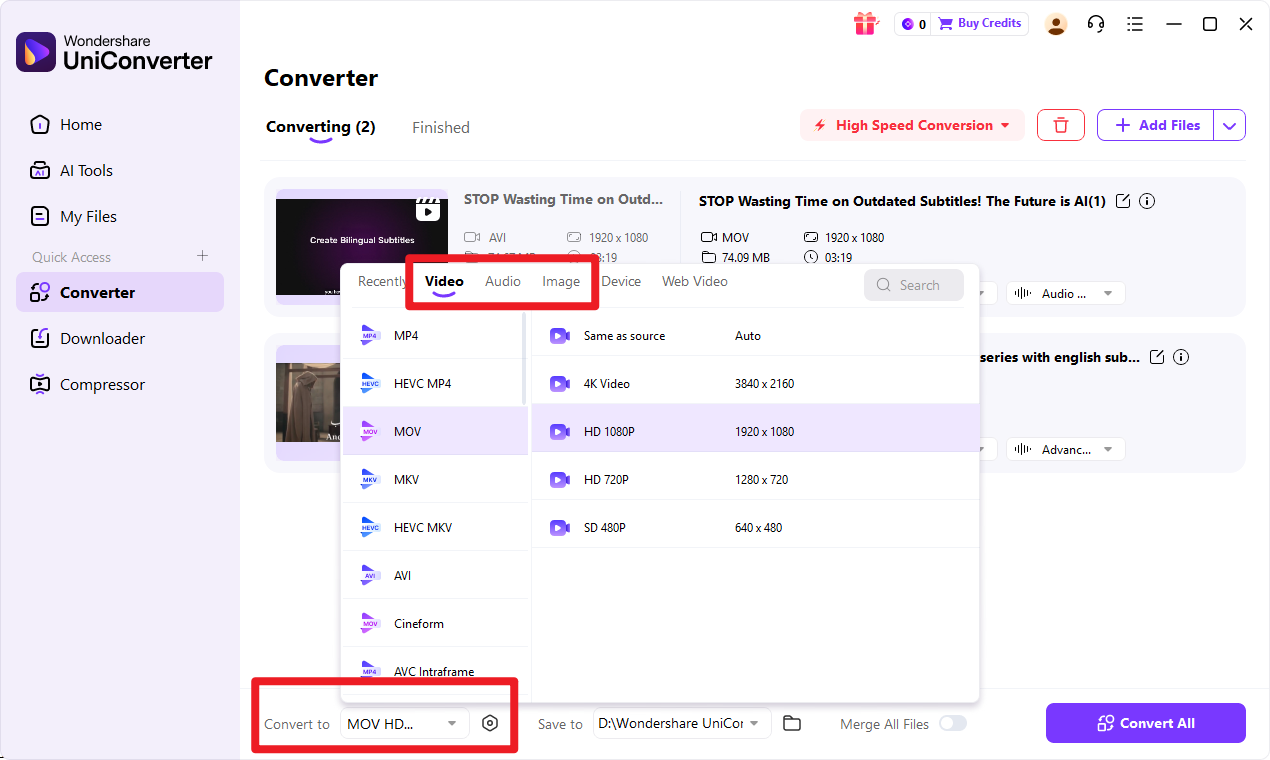
Step 3: Start the Conversion
Before starting, you can choose where to save your new file by setting the File Location at the bottom of the window. For maximum speed, you can enable the High Speed Conversion toggle at the top-right corner. When you are ready, click the Convert button next to the file. If you have loaded multiple files, you can process them all at once by clicking the Start All button in the bottom-right corner.
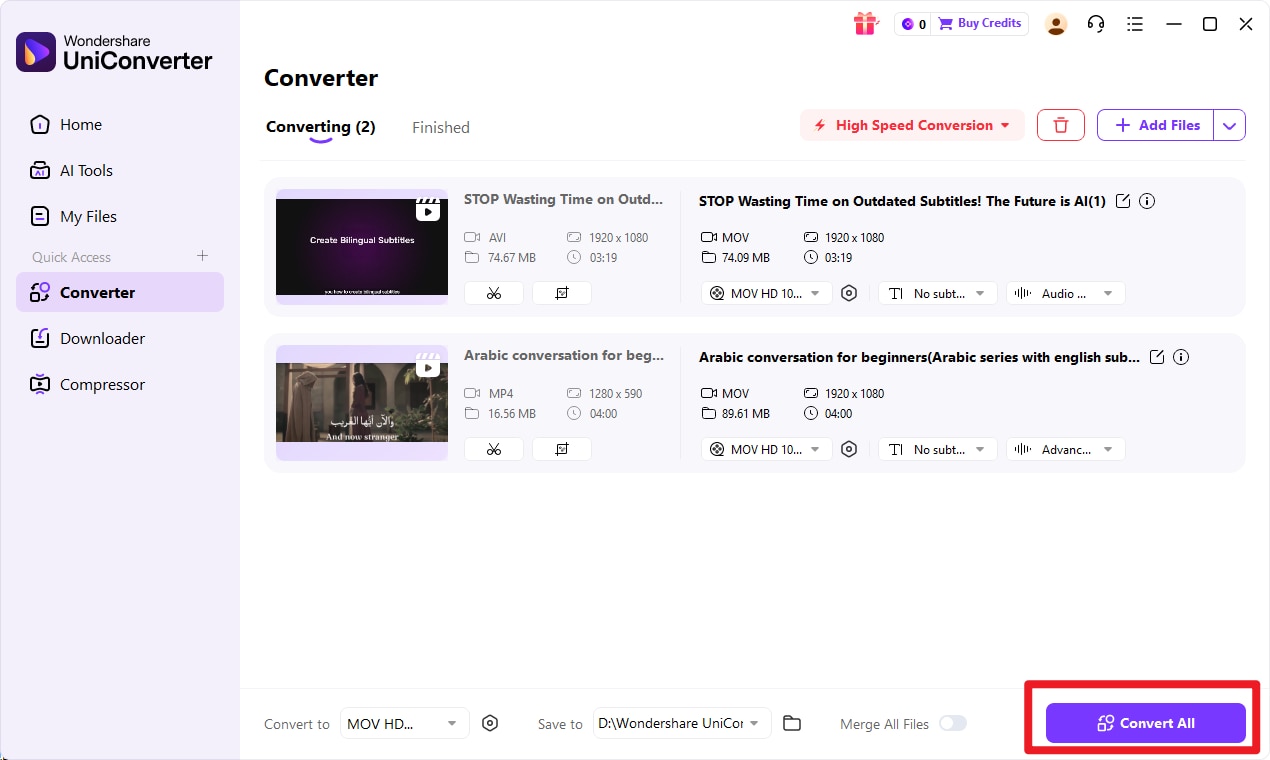
Step 4: Locate the Converted MP4 File
The conversion process will begin, and UniConverter will process your file quickly. Once it's complete, the status will change to "Success." You can find your new, universally compatible MP4 file by navigating to the Finished tab at the top of the screen. From there, simply click the Open icon (which looks like a folder) to directly access the location of your converted file.

Go Beyond Simple Video Conversion
Conclusion
While both MPEG and MP4 originate from the same standards group, they represent different eras of video technology and serve distinct purposes in today's digital world. The MPEG vs MP4 discussion ultimately highlights the evolution of video compression. MPEG is a legacy format, intrinsically linked to physical media like DVDs and older broadcast systems. In contrast, MP4 is the modern, universal standard for digital video, celebrated for its outstanding efficiency, quality, and unparalleled compatibility across all devices and platforms.
For anyone looking to modernize an old video library, share clips with friends, or upload content online, converting MPEG files to MP4 is not just a recommendation—it's a necessity. Using a robust and reliable tool like Wondershare UniConverter ensures that this conversion process is fast, straightforward, and preserves the visual quality of your precious memories, bridging the gap between old formats and new possibilities.
FAQs
-
1. Is MPEG the same as MP4?
No, they are not the same, although they are related. MPEG is the name of the organization (Moving Picture Experts Group) that creates standards for video and audio compression. When used to describe a file, "MPEG" usually refers to older formats like MPEG-1 and MPEG-2. MP4, on the other hand, is the name of a specific, modern video container format (officially MPEG-4 Part 14) that was also created by the MPEG group. -
2. Does converting MPEG to MP4 lose quality?
All video conversion involves re-encoding the file, which can technically lead to a very slight loss of data. However, when using a high-quality professional tool like Wondershare UniConverter with the correct settings (such as choosing "Same as source" for resolution), this quality loss is mathematically minimal and visually imperceptible to the human eye. Your converted MP4 will look identical to the original MPEG file. -
3. Can I play MPEG files on Windows 11 or Mac?
Yes, most modern desktop operating systems have built-in media players that can handle MPEG-1 and MPEG-2 files. On Windows, Windows Media Player or the Movies & TV app can play them. On macOS, QuickTime Player can also play them. For any files that don't open, the free VLC Media Player is an excellent third-party option. However, for easier sharing, storage, and playback on other devices like phones and tablets, converting to MP4 is still highly recommended. -
4. Is MPEG-4 the same as MP4?
They are very closely related but not technically identical. MPEG-4 is a broad video compression standard that is composed of many different parts (e.g., Part 2 for video compression, Part 3 for audio compression). MP4 (or MPEG-4 Part 14) is the official file *container* format designed to hold the video and audio streams that are compressed using the MPEG-4 standards. In casual conversation, people often use "MPEG-4" and "MP4" interchangeably to refer to an MP4 video file.
