
Choosing the right video format can feel like a technical puzzle. You've created a video, and now you need to save or share it, but you're faced with a list of acronyms like MP4, WMV, AVI, and MOV. Two of the most common formats you'll encounter are MP4 and WMV. While they might seem similar on the surface, they have fundamental differences in compatibility, file size, and quality that can significantly impact how your video is viewed. Understanding the MP4 vs WMV debate is crucial for content creators, business professionals, and anyone who regularly works with video.
Making the wrong choice can lead to compatibility issues, with videos that won't play on a Mac, an iPhone, or even an older Windows PC. It can also result in files that are too large to email or that suffer from poor visual quality. This guide will demystify these two formats, providing a clear, head-to-head comparison to help you make an informed decision every time.
In this article:
Part 1. What is MP4? What is WMV?
Before we dive into a direct comparison, it's essential to understand what each format is and what it was designed for. Their origins and intended purposes are key to understanding their strengths and weaknesses.
What is MP4 (MPEG-4 Part 14)?
MP4, which stands for MPEG-4 Part 14, is a digital multimedia container format. Think of a container format like a box that can hold different types of data. In the case of MP4, this box is incredibly versatile, capable of storing video, audio, subtitles, and even still images all in a single file.
Developed by the Moving Picture Experts Group (MPEG), MP4 has become the de facto standard for video on the internet and beyond. Its primary strength lies in its ability to offer a fantastic balance between high-quality video and efficient compression. This means you can have a video that looks great without taking up an enormous amount of storage space. Its most significant advantage, however, is its universal compatibility. MP4 files play natively on nearly every modern device and operating system, including Windows, macOS, iOS, Android, smart TVs, and gaming consoles.
What is WMV (Windows Media Video)?
WMV, or Windows Media Video, is a video file format developed by Microsoft. As its name suggests, it was created primarily for the Windows ecosystem. WMV was an early competitor in the streaming video space and became popular for its strong integration with Windows Media Player and other Microsoft software.
One of the defining features of the WMV format is its ability to include Digital Rights Management (DRM). This technology allows content creators to protect their videos from unauthorized copying and distribution, a feature that was particularly important for studios and commercial content providers. While still functional, its use has become more niche, as its compatibility is largely limited to Windows-based systems.
Part 2. Quick Comparison Table
To see the differences at a glance, here is a table that directly compares MP4 and WMV across key technical and practical attributes.
| Feature | MP4 (MPEG-4 Part 14) | WMV (Windows Media Video) |
| Developer | Moving Picture Experts Group (MPEG) | Microsoft |
| Compatibility | Universal. Plays on nearly all devices and operating systems (Windows, macOS, iOS, Android). | Primarily Windows-based. Requires third-party players or conversion on Mac and mobile. |
| Compression | Highly efficient. Uses advanced codecs like H.264 and H.265 for smaller file sizes. | Less efficient than modern MP4 codecs. Often results in larger files for similar quality. |
| Quality | Excellent. Maintains high quality even at lower bitrates, ideal for streaming. | Good, but can require higher bitrates (and larger files) to match MP4 quality. |
| Typical Use Case | Web streaming (YouTube), mobile video, social media, general video sharing and archiving. | Corporate environments, older Windows applications, content requiring built-in DRM. |
| DRM Support | Can support various DRM systems, but it's not a native, built-in feature. | Has native support for Microsoft's Digital Rights Management technology. |
Part 3. MP4 vs WMV: Which One Is Better?
While the "better" format depends on your specific needs, for most users in 2026, MP4 is the clear winner. Let's break down why by looking at the three most important factors: compatibility, file size, and quality.
Compatibility: The Decisive Factor
This is where MP4 establishes its dominance. It is the universal standard for video. Whether you're sending a file to a colleague, uploading it to a social media platform, or trying to play it on your phone, tablet, or smart TV, MP4 just works. It plays natively on almost every modern device without the need for special software.
WMV, on the other hand, is Windows-centric. It plays perfectly on Windows PCs using Windows Media Player. However, if you try to open a WMV file on a MacBook, you'll find that the native QuickTime Player doesn't support it. Similarly, iPhones and Android devices require a third-party media player app or file conversion to handle WMV files. This lack of cross-platform support is the single biggest drawback of the WMV format.
File Size and Compression
In the world of digital video, efficiency is key. You want the best possible quality in the smallest possible file size. MP4 excels here because it typically uses more advanced and efficient video codecs, such as H.264 (AVC) and H.265 (HEVC). These codecs are brilliant at compressing video data without significant loss of visual quality. The result is a smaller file that's easier to store, faster to upload, and quicker to download.
WMV uses its own series of Microsoft-developed codecs. While effective, they are generally less efficient than the modern codecs used by MP4. This means that to achieve the same level of video quality as an MP4 file, a WMV file will often need to be larger. For web use and sharing, where file size is a major concern, MP4's superior compression gives it a significant advantage.
Video Quality
The final quality of any video file, whether it's MP4 or WMV, is highly dependent on the settings used during the encoding process, particularly the bitrate. A higher bitrate allocates more data to each second of video, resulting in better detail and higher quality, but also a larger file.
At very high bitrates, both MP4 and WMV can produce excellent, near-lossless video quality. However, the real test comes at the lower bitrates commonly used for web streaming and general sharing. In these scenarios, MP4 often maintains better perceived quality. Its more efficient compression technology is better at preserving visual detail while discarding redundant data, leading to a cleaner image with fewer artifacts compared to a WMV file of the same size.
Part 4. Use Cases for MP4 and WMV
Based on their respective strengths and weaknesses, here's a practical guide on when to use each format.
When You Should Choose MP4
MP4 is the default choice for almost every modern video application. You should choose MP4 for:
- Sharing videos online: Platforms like YouTube, Vimeo, Facebook, and Instagram are all optimized for and recommend using the MP4 format.
- Ensuring playback on mobile devices: If your video needs to be viewed on an iPhone, iPad, or Android device, MP4 is the only format that guarantees native playback.
- Cross-platform sharing: When sending a video to friends, family, or clients, using MP4 eliminates any worry about whether they can open it, regardless of their operating system.
- Video editing and archiving: Its balance of quality, size, and compatibility makes MP4 an excellent standard format for both editing projects and long-term storage.
When You Might Still Use WMV
Despite MP4's dominance, there are a few niche scenarios where WMV remains a viable or even necessary choice:
- Windows-exclusive environments: If you are creating and sharing video content exclusively within a corporate or educational environment where all users are on Windows PCs, WMV can be a simple and effective option.
- Legacy Microsoft software: Some older versions of Microsoft PowerPoint or other Windows applications may have better integration or compatibility with WMV files.
- Specific DRM requirements: If you need to use the specific Digital Rights Management features built directly into the WMV format to protect your content, it remains a valid option.
- Compatibility with legacy systems: For older hardware or proprietary systems that were designed around Microsoft technologies, WMV might be the required format.
Part 5. Step-by-Step Guide to Convert MP4 to WMV Using UniConverter
While converting from MP4 to WMV is less common, certain situations demand it. You might need to submit a video to a client with strict legacy system requirements or work with older software that only accepts WMV files. For any conversion task, having a reliable, fast, and high-quality tool is crucial. Wondershare UniConverter stands out as a top-tier solution that simplifies this process, handling over 1,000 formats with ease.
How to Convert MP4 to WMV in 4 Simple Steps with UniConverter
Here's how you can quickly convert your MP4 file to a high-quality WMV file.
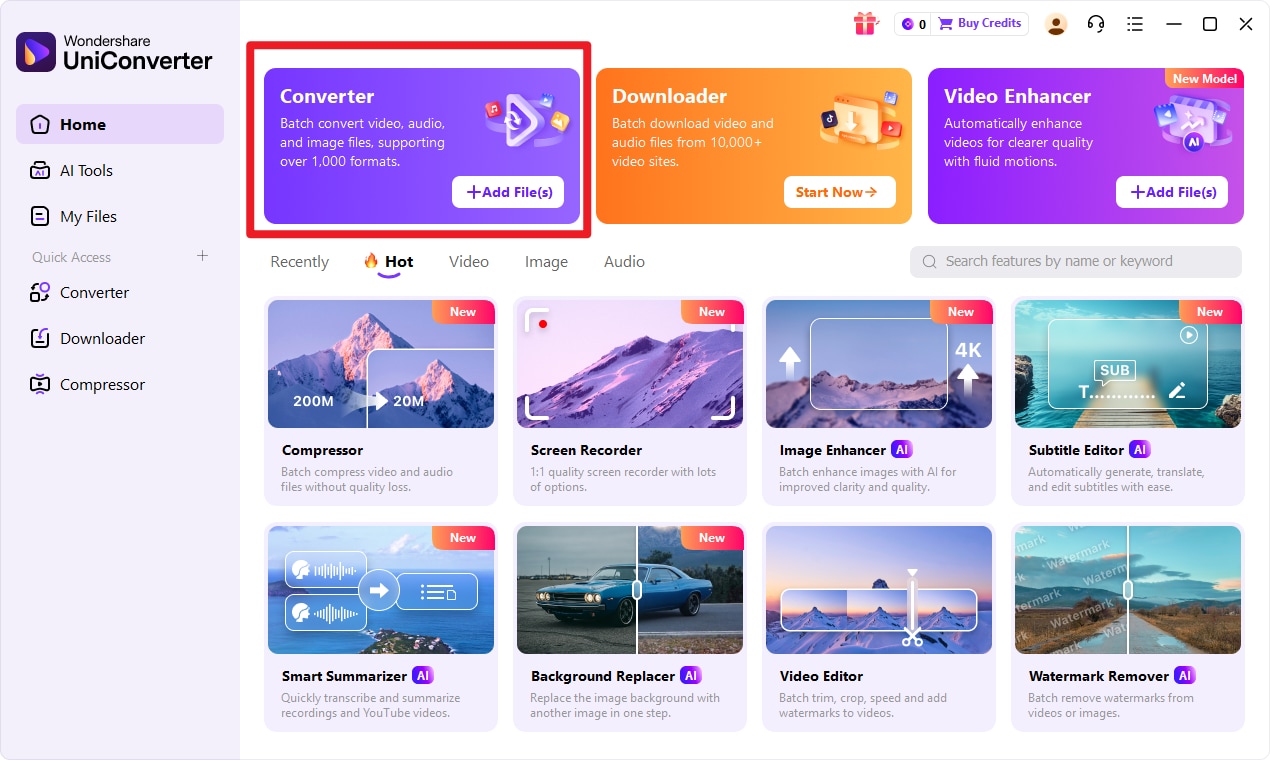
Step 1: Add Your MP4 File to UniConverter
First, launch Wondershare UniConverter on your computer. In the main interface, ensure you are on the Converter tab. You can either drag and drop your MP4 file directly into the program window or click the "Add Files" button to browse and import your video.
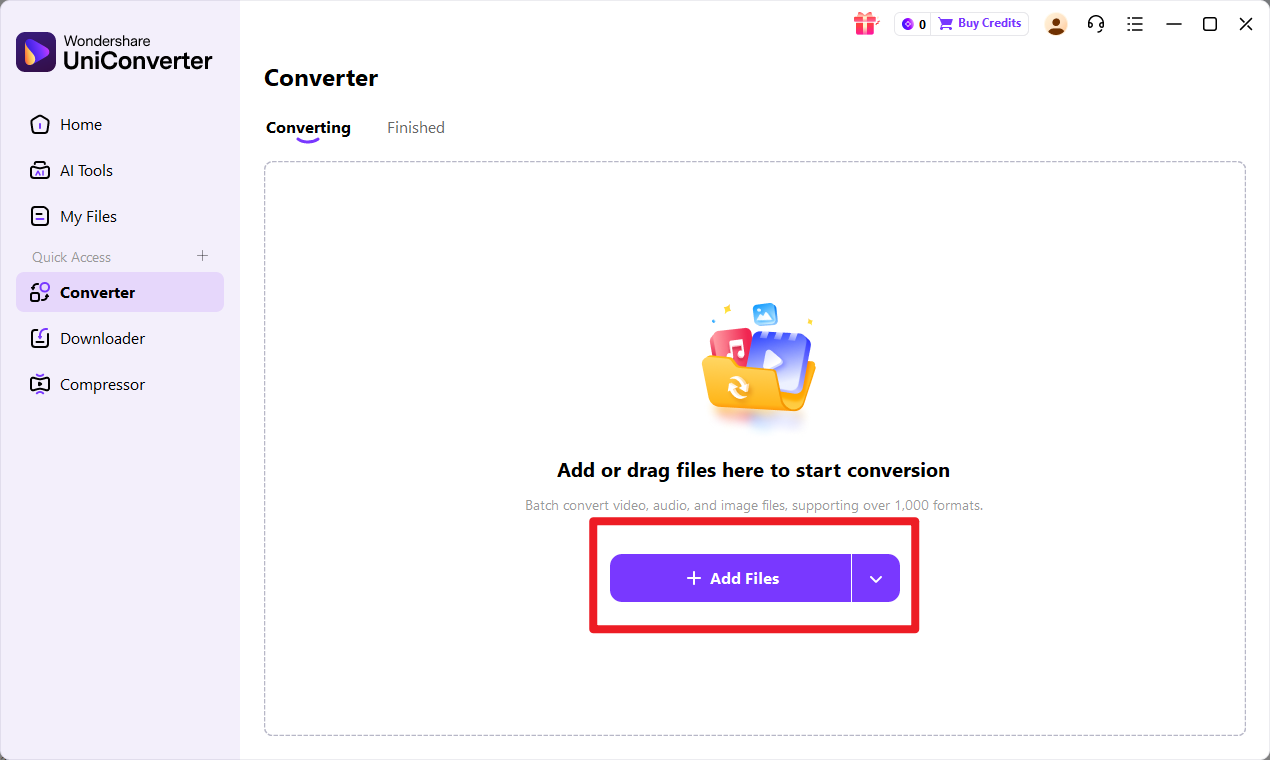
Step 2: Choose WMV as the Output Format
With your file loaded, click on the Output Format icon located at the bottom of the interface. This will open a new window with a list of format options. Navigate to the Video tab, select WMV from the format list on the left, and then choose your desired resolution on the right. For most cases, selecting "Same as source" is the best option to maintain quality.
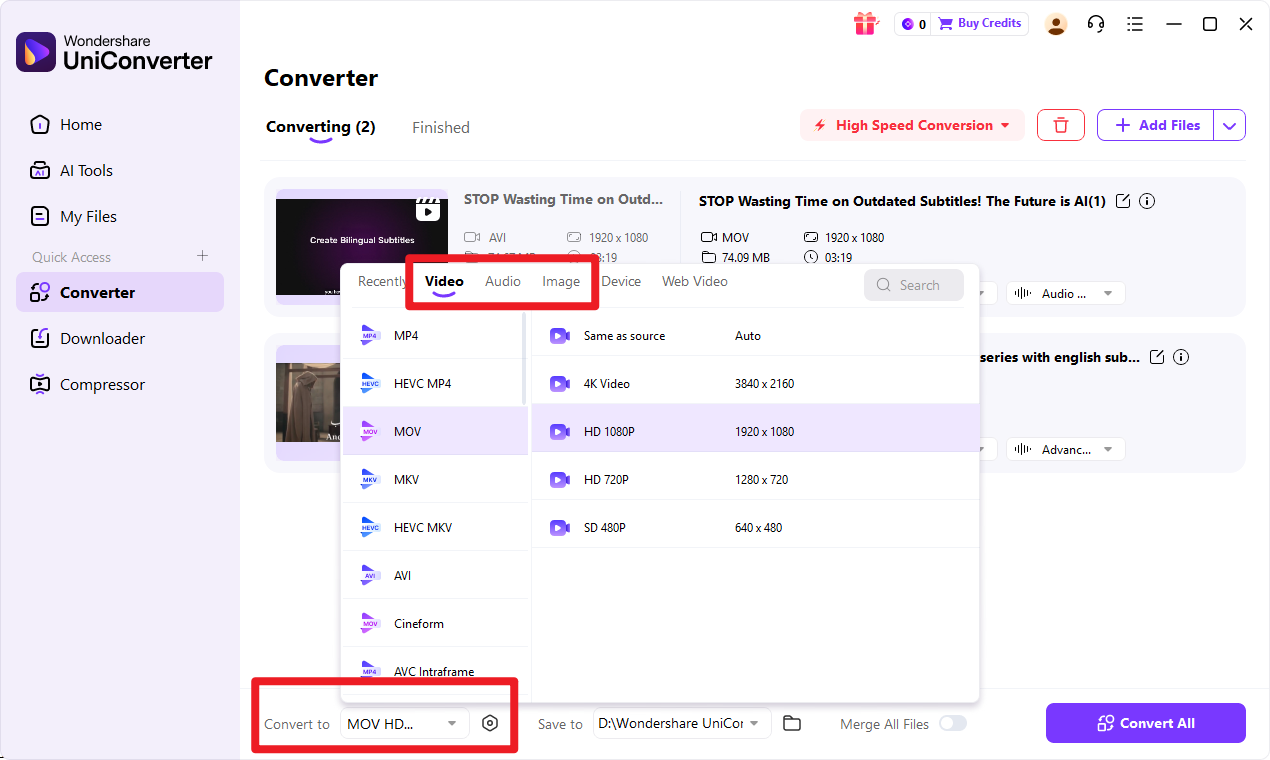
Step 3: Designate an Output Folder
Before starting the conversion, you need to tell UniConverter where to save the new file. At the bottom of the main window, you'll find the File Location field. Click on it to browse your computer and select the folder where you want the converted WMV file to be saved.
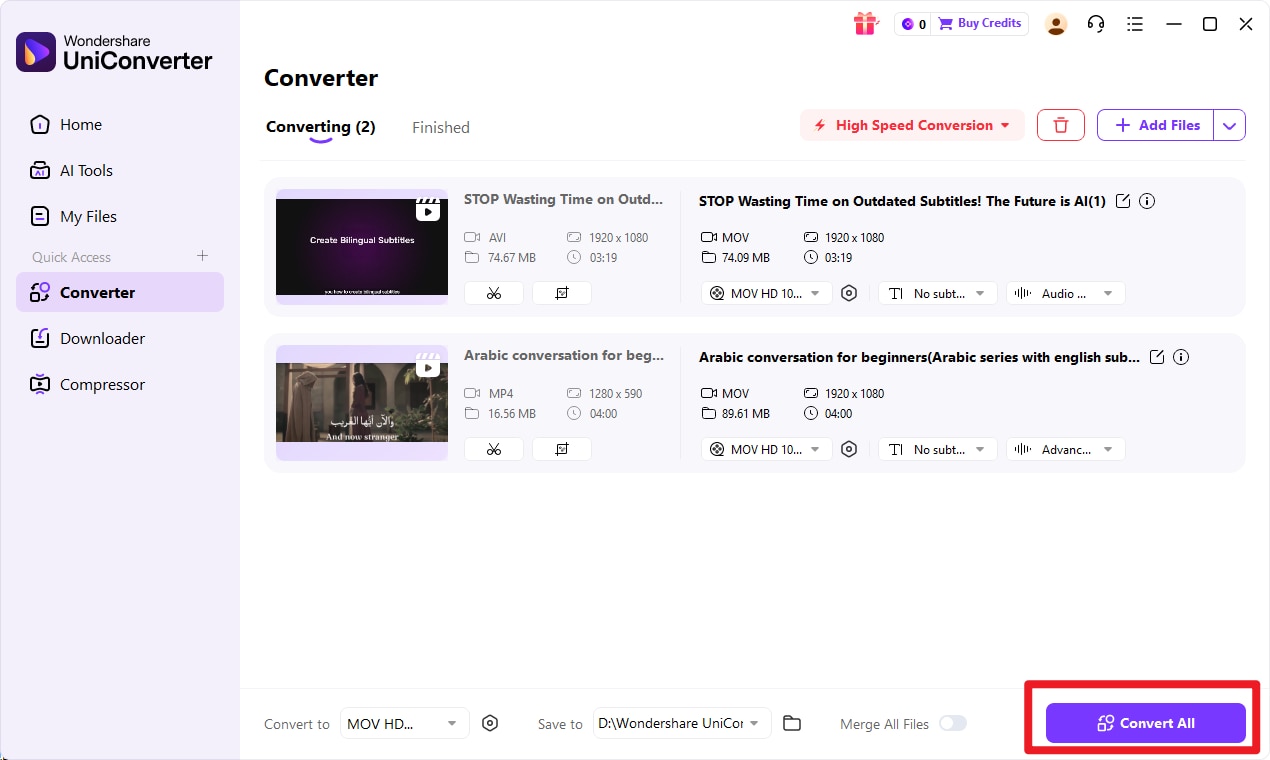
Step 4: Start the High-Speed Conversion
Once everything is set up, simply click the Convert button located to the right of your file. If you have loaded multiple files for a batch conversion, you can click the Start All button at the bottom right. UniConverter will use its high-speed conversion engine to process your file quickly without compromising quality.

More Than Just a Video Converter
Conclusion
For the vast majority of modern applications in 2026, MP4 is the undisputed champion. Its universal compatibility, superior compression efficiency, and excellent quality-to-size ratio make it the go-to format for everything from web streaming and social media sharing to professional editing and personal archiving. It is the simple, reliable choice that works everywhere.
WMV, while a capable format, has been relegated to niche use cases. It remains relevant primarily within closed Windows ecosystems, for compatibility with legacy software, or when its specific, native DRM capabilities are a strict requirement.
The reality is that you will inevitably encounter both formats. When you need to bridge the compatibility gap, having a powerful and versatile video tool is essential. UniConverter provides a seamless, fast, and high-quality solution for all your conversion needs. Whether you're converting WMV to MP4 for playback on your Mac or MP4 to WMV for a specific client, UniConverter ensures the process is effortless and the results are flawless.
FAQs
-
1. Is WMV higher quality than MP4?
Not inherently. The quality of a video file depends on encoding settings like bitrate, resolution, and the codec used, not just the container format. However, because MP4 uses more efficient codecs like H.264, it can often deliver better visual quality at a lower file size compared to WMV. At very high bitrates, both can look virtually identical. -
2. Can I play a WMV file on a Mac?
You cannot play a WMV file on a Mac using the native QuickTime Player. To watch it, you would need to either install a third-party media player that supports the WMV format (like VLC Media Player) or use a converter. For a permanent and more convenient solution, converting the WMV file to the universally compatible MP4 format with a tool like UniConverter is the best approach. -
3. Will I lose quality if I convert a video?
All video conversion involves a process of decompressing and re-compressing (re-encoding) the video data, which can technically lead to a minor loss of quality. However, professional software like Wondershare UniConverter is engineered with an advanced conversion engine that minimizes this degradation. It works to preserve the original quality as much as possible, so in most cases, any quality difference is imperceptible to the human eye. -
4. Is MP4 always smaller than WMV?
In most practical, like-for-like comparisons, an MP4 file will be smaller than a WMV file of the same visual quality. This is a direct result of the more modern and efficient compression algorithms (codecs) that are standard with the MP4 format. This efficiency is a key reason why MP4 is the preferred format for streaming and online sharing.
