
In the ever-evolving landscape of web development and digital content, choosing the right file format is crucial for balancing quality, performance, and user experience. Two formats that often come up in this discussion are MP4 and WebP. While one is a household name for video and the other a modern contender for web images, their overlapping ability to display animation creates confusion. The MP4 vs WebP debate is particularly relevant for web developers, designers, and content creators looking to optimize their websites with engaging, lightweight visuals.
Understanding the fundamental differences between these two formats is key to making an informed decision. Are you trying to embed a short, looping background animation? Or are you sharing a promotional clip with sound? The answer to questions like these will determine whether MP4 or WebP is the right tool for the job. This guide will break down everything you need to know, from technical specifications to practical use cases, helping you choose the perfect format for your project.
In this article, you will learn:
- The core definitions and purposes of MP4 and WebP.
- A direct, side-by-side comparison of their key attributes.
- A detailed analysis of which format is better based on file size, quality, and compatibility.
- Specific use cases to help you decide when to use MP4 and when to use WebP.
- A simple, step-by-step guide on how to convert MP4 files to WebP.
Part 1. What is MP4? What is WebP?
Before we dive into a detailed comparison, it's essential to understand what each format is and what it was designed to do. While both can show moving pictures, their underlying technology and primary applications are fundamentally different.
What is MP4?
MP4, short for MPEG-4 Part 14, is a digital multimedia container format. Think of it as a versatile box that can hold various types of data, but it's most commonly used to store video and audio streams. It can also contain subtitles and still images. Developed by the Moving Picture Experts Group (MPEG), MP4 has become the de facto standard for video on the internet.
Its popularity stems from its ability to achieve high compression rates without a drastic loss in quality, making it ideal for streaming and downloading. Thanks to its near-universal compatibility, an MP4 file will play smoothly on almost any device, browser, or platform you can think of, from your smartphone and laptop to social media feeds and video streaming services.
What is WebP?
WebP is a modern image format developed by Google with the primary goal of making the web faster. It was introduced to provide superior lossy and lossless compression for images on the web, creating smaller file sizes than traditional formats like JPEG and PNG.
Crucially, WebP also supports animation, positioning it as a high-quality, efficient successor to the animated GIF. An animated WebP file can contain a sequence of frames to create a looping animation, and it supports both lossy and lossless compression for these animations. This allows for vibrant, complex animations at a fraction of the file size of a GIF. However, it's important to remember that WebP is strictly an image format and, as such, does not support audio tracks.
Part 2. Quick Comparison Table
To get a clear overview at a glance, here is a quick comparison table summarizing the key differences between the MP4 and WebP formats.
| Feature | MP4 (MPEG-4 Part 14) | WebP |
| Format Type | Digital Multimedia Container (Video) | Image Format |
| Primary Use Case | Storing and streaming video with audio. | Displaying static and animated images on the web. |
| Compression | Highly efficient lossy compression (H.264, H.265). | Superior lossy and lossless compression for images and animations. |
| Quality | Excellent quality, highly dependent on bitrate. | High quality, often better than GIF for animations at smaller sizes. |
| File Size | Generally larger than WebP for short, silent loops. | Significantly smaller than MP4 for short, silent animations. |
| Browser Compatibility | Universal support across all modern browsers. | Excellent support in modern browsers; may have issues with very old ones. |
| Audio Support | Yes, a core feature. | No, it is a silent format. |
| Transparency | Limited and complex support. | Yes, supports 8-bit alpha transparency (lossless WebP). |
Part 3. MP4 vs WebP: Which One Is Better?
The question of which format is "better" depends entirely on your specific needs. Let's break down their performance across several key criteria to help you understand the trade-offs.
File Size and Compression
When it comes to short, silent animations—the kind you might use for a website's hero banner or an animated icon—WebP is the clear winner in terms of file size. Google designed WebP to offer superior compression. For an identical-looking animation, a WebP file can be significantly smaller than an MP4 file. This is because WebP's compression algorithms are optimized for the kind of data found in animations (sequences of images), whereas MP4's codecs (like H.264) are designed for more complex video scenes.
However, as the duration and complexity of the content increase, MP4's compression becomes incredibly efficient. For longer video clips, especially those with varied scenes and motion, MP4 will provide a better balance of quality and file size. For a 5-second silent loop, WebP is likely smaller. For a 1-minute video, MP4 is the more efficient choice.
Quality Comparison
Visual quality is subjective but can be measured by looking at artifacts and clarity at a given file size. At comparable file sizes, an animated WebP can often look sharper and more vibrant than a heavily compressed MP4. WebP's lossless compression option allows for perfect quality animations, something not practically achievable with MP4's inherently lossy video codecs.
On the other hand, a high-bitrate MP4 can deliver stunning, cinema-grade visual quality that WebP animations may struggle to match, especially with complex textures and gradients. The trade-off is always between the level of compression and the introduction of visual artifacts. For most web animation purposes, WebP provides more than enough quality while keeping file sizes minimal, which is crucial for page load times.
Browser and Device Compatibility
This is where MP4 has a significant historical advantage. MP4 is universally supported. It has been the web video standard for over a decade, and you can be confident that an MP4 file will play on virtually any browser, operating system, or device, old or new. This makes it the "safest" choice if maximum reach is your absolute priority.
WebP, while developed by Google, took some time to gain universal adoption. As of 2026, it enjoys excellent support across all major modern browsers, including Chrome, Firefox, Safari, and Edge. Over 97% of global internet users are on a browser that supports WebP. However, if you need to support very old browsers or niche platforms, you might encounter compatibility issues. For most web projects today, WebP's compatibility is no longer a major concern, but MP4 remains the undisputed king of universal playback.
Animation and Looping
WebP was designed with simple, looping animations in mind, making it a direct competitor to the animated GIF. Implementing a looping WebP animation on a website is as simple as using an <img> tag. The looping behavior is inherent to the file itself.
MP4 videos require more work to achieve the same effect. To create a silent, auto-playing, looping background video, you need to use the HTML5 <video> tag with specific attributes like autoplay, loop, and muted. While this offers more control via JavaScript, it's a slightly more complex implementation than simply dropping in a WebP image. For seamless, lightweight, "set-it-and-forget-it" loops, WebP is the more straightforward solution.
Audio Support: The Deciding Factor
This is the most critical and non-negotiable difference between the two formats. MP4 is a multimedia container that is built to handle synchronized audio and video tracks. If your content has any sound—dialogue, music, sound effects—then MP4 is your only option.
WebP is an image format. It does not and cannot contain an audio track. This makes the choice simple: if you need sound, you must use MP4. If your animation is silent, then WebP becomes a viable and often preferable alternative.
Part 4. Use Cases for MP4 and WebP
Based on the comparison above, here are some clear-cut scenarios for when to use each format.
When to Use MP4
- For any video content that requires audio: This is the most important rule. If there's sound, use MP4. This includes promotional videos, tutorials, interviews, and social media stories.
- For longer video clips: For any video content longer than about 15-30 seconds, MP4's compression codecs are more efficient and better suited for the task.
- When maximum compatibility is the top priority: If you need to ensure your video plays on every possible device and browser, including very old ones, MP4 is the safest bet.
- For social media video posts: Platforms like Instagram, Facebook, X (formerly Twitter), and TikTok are all built around the MP4 format for video uploads.
When to Use WebP
- For short, silent, looping animations on websites: This is WebP's sweet spot. Use it for hero banners, animated backgrounds, product feature animations, and other decorative visual elements.
- When minimizing page load time is the primary goal: Due to its smaller file size for animations, WebP is the superior choice for performance-focused web design. Faster load times improve user experience and SEO.
- As a high-quality, modern replacement for animated GIFs: WebP offers 24-bit color and transparency, resulting in much higher quality animations than the 8-bit GIFs, all at a smaller file size.
- When you need an animation with a transparent background: WebP's support for alpha transparency allows you to create animations that can be seamlessly overlaid on different colored backgrounds, something that is difficult and poorly supported with MP4.
Part 5. Step-by-Step Guide to Convert MP4 to WebP Using UniConverter
If you have decided that WebP is the right choice for your project and need to convert an existing MP4 file, a powerful tool is essential. Wondershare UniConverter simplifies this process with its intuitive interface and robust conversion engine. It is the perfect solution for quickly turning your video clips into lightweight web animations.
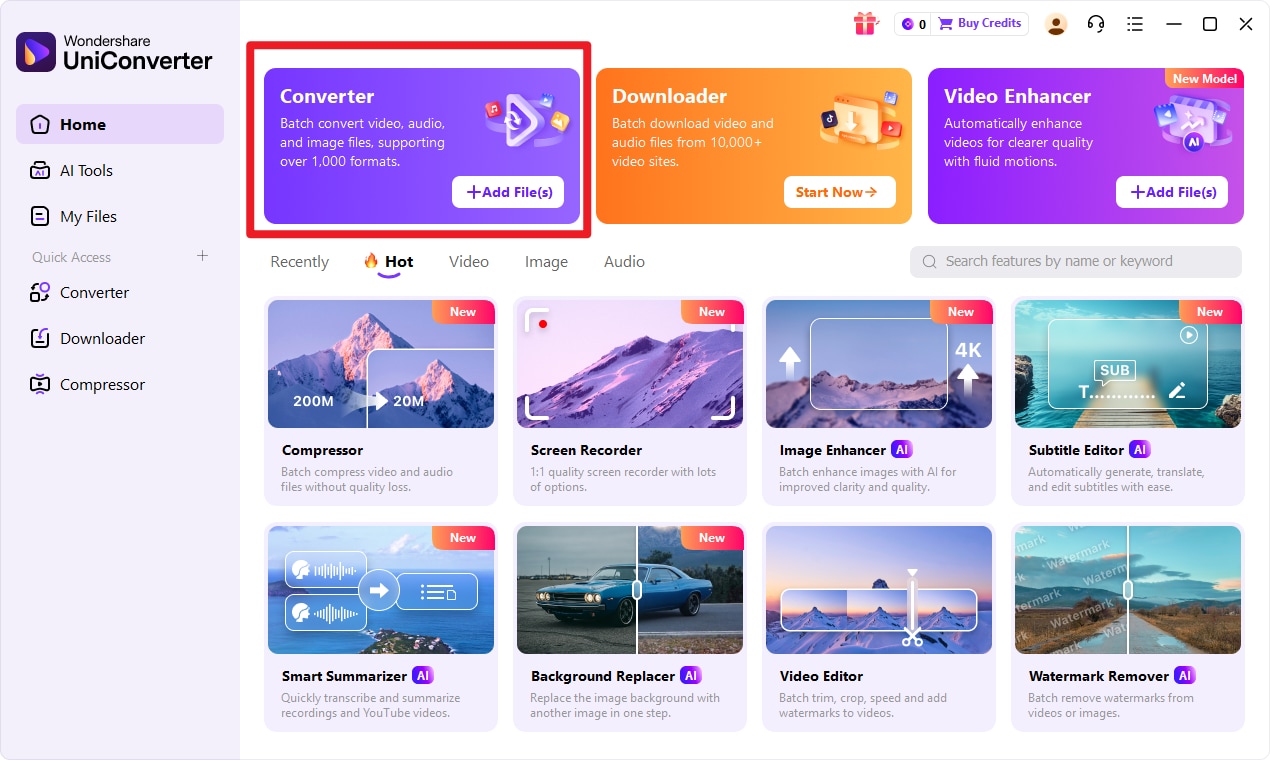
Step 1: Choose Converter in UniConverter
Launch Wondershare UniConverter on your computer. On the main interface, select the Converter tab from the left-side menu. This is the primary tool for all your file conversion needs.
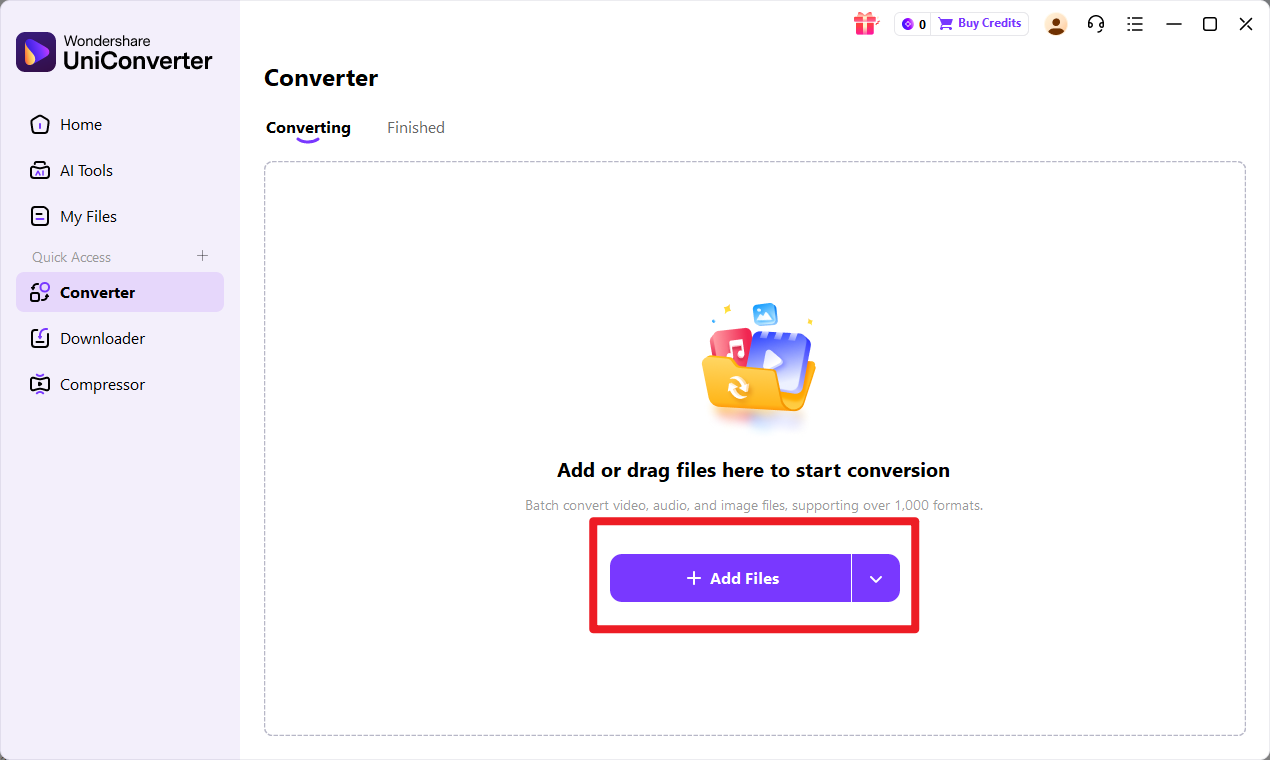
Step 2: Add Files to UniConverter
Click on the Add Files icon or drag and drop your input format file directly into the center of the converter window. You can add multiple MP4 files at once if you need to perform a batch conversion.
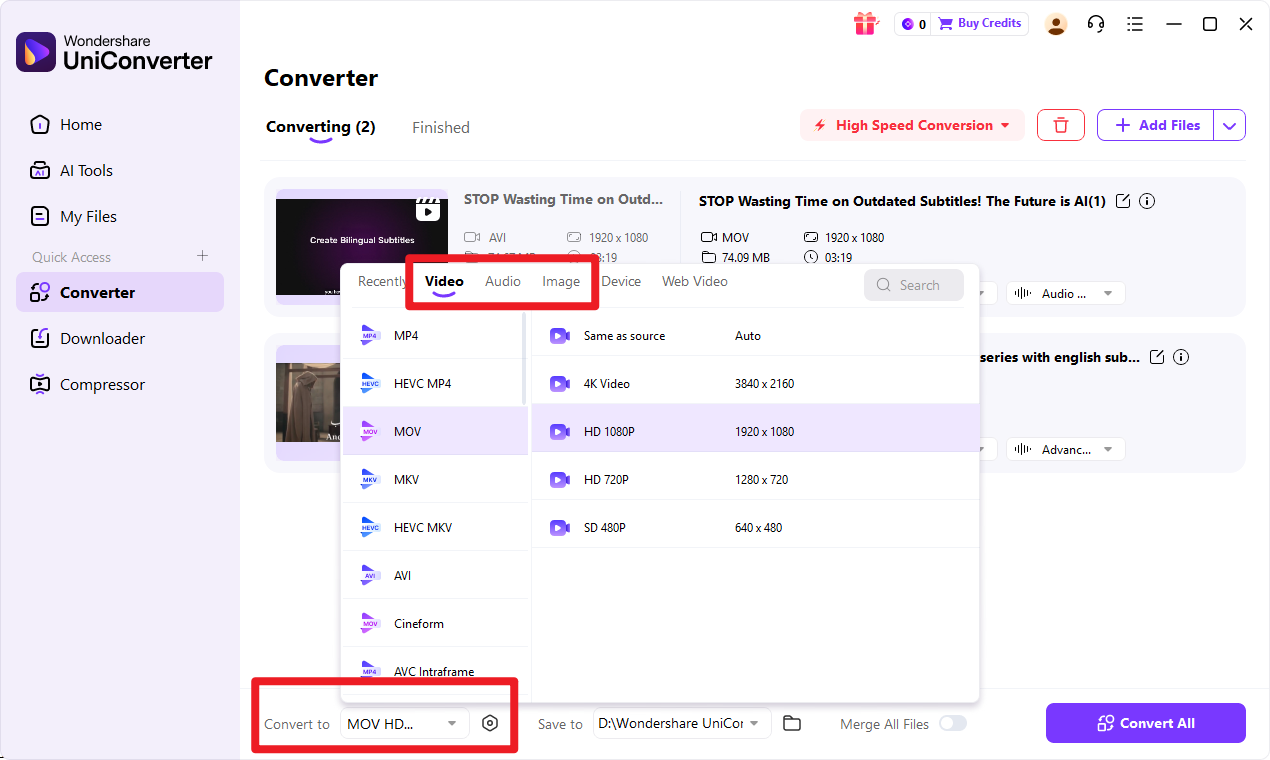
Step 3: Choose Output Format
Click on the Output Format option at the bottom of the window. A new dialog box will appear. Go to the Image tab and select your target format from the list on the left. You can also click the gear icon to adjust settings like frame rate and resolution to further optimize the output file.
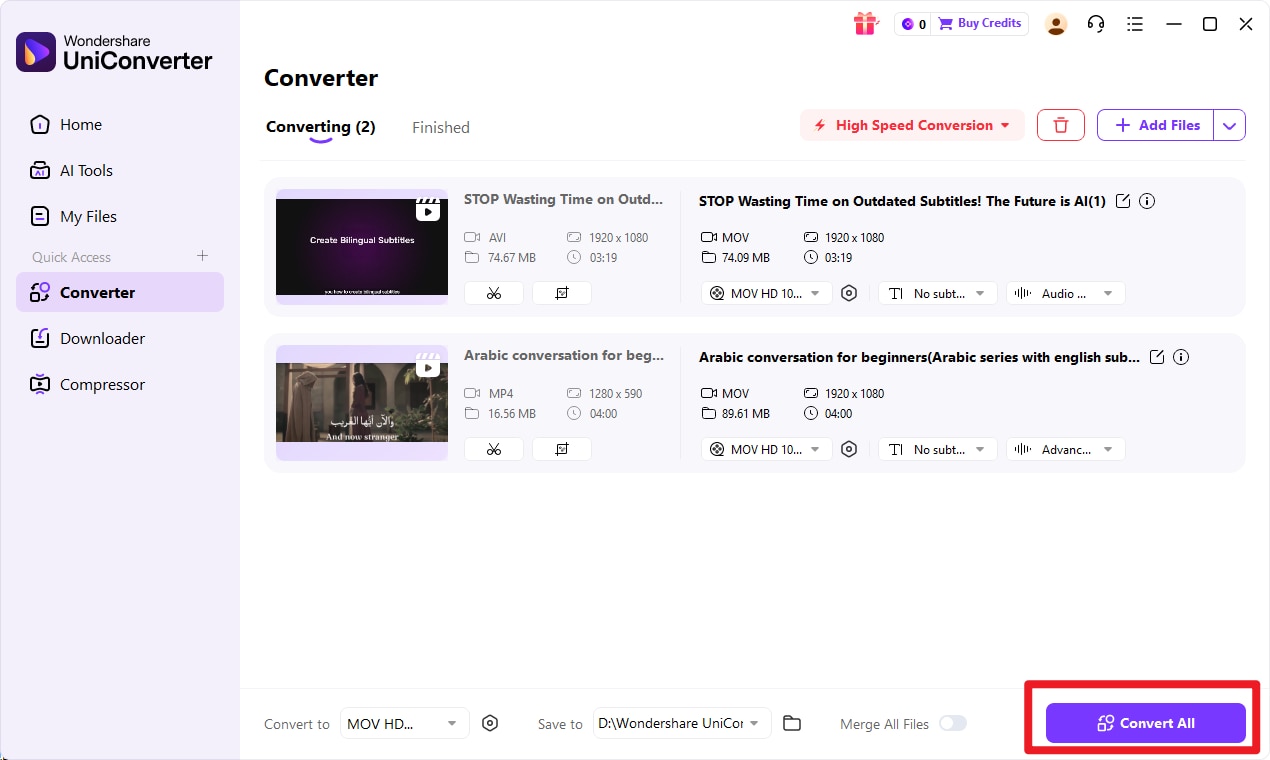
Step 4: Start the Conversion
Choose a location for your converted file under File Location at the bottom. Once you are satisfied with the settings, click the Convert button next to the file (or Start All for multiple files) to begin the conversion process. Your new file will be ready in the Finished tab shortly.

More Than Just a Video to Image Converter
Conclusion
The MP4 vs WebP discussion doesn't have a single winner, but it does have a clear verdict: they are tools for different jobs. MP4 remains the unbeatable, universal standard for any video content that includes audio. Its broad compatibility and efficient compression for longer clips make it the go-to format for everything from social media sharing to feature films. WebP, on the other hand, has carved out a vital niche as the superior choice for short, silent, and looping animations on the web. Its ability to deliver high-quality visuals with transparency at incredibly small file sizes makes it an essential tool for creating fast, modern, and engaging websites.
Ultimately, the best format depends entirely on your specific application. By understanding their respective strengths and weaknesses, you can make an intelligent choice that enhances your project. And for those moments when you need to bridge the gap between these formats, a reliable tool is indispensable. Wondershare UniConverter provides a simple, fast, and effective solution for converting MP4 to WebP, ensuring you always have the right file for the right task.
FAQs
-
1. Can WebP replace MP4?
No, they serve different primary purposes. WebP is an image format designed as a superior alternative to formats like GIF and PNG. It cannot replace MP4 for any content that requires an audio track or for longer-form video content. It is best viewed as a replacement for animated GIFs, not video formats. -
2. Does animated WebP support audio?
No, WebP is strictly an image format and does not have any capability to store or play audio tracks. If your animation needs sound, you must use a video format like MP4. -
3. Which is better for website speed, MP4 or WebP?
For short, silent animations (e.g., under 10 seconds), WebP is almost always better for website speed. Its compression technology is optimized for this use case, resulting in significantly smaller file sizes compared to an equivalent MP4, which leads to faster page load times. -
4. Is it difficult to convert MP4 to WebP?
Not at all. While it may seem like a technical task, using a user-friendly tool like Wondershare UniConverter makes the process incredibly simple. As shown in the guide above, you can convert an MP4 file to a WebP animation in just a few clicks, with no technical expertise required.
