
Title: MP4 vs WebM: Which Video Format Should You Use in 2026?
In the ever-evolving landscape of digital video, choosing the right file format is a critical decision that impacts everything from website performance to device compatibility. Two of the most prominent contenders in this space are MP4 and WebM. While MP4 has long been the universal standard, WebM has emerged as a powerful, web-optimized alternative. This often leads to a crucial question for content creators, web developers, and even casual users: which format is truly better? The MP4 vs WebM debate isn't about finding a single winner, but about understanding their unique strengths and weaknesses to select the right tool for the right job.
Making an informed choice can save you from compatibility headaches, improve your audience's viewing experience, and optimize your digital workflow. Whether you're embedding a video on your blog, uploading to social media, or simply storing your personal collection, knowing the difference between these two formats is essential. This guide will break down everything you need to know, from technical specifications to real-world use cases, helping you navigate the complexities of video formats with confidence.
In this article
Part 1. What is MP4? What is WebM?
Before we dive into a head-to-head comparison, it's important to understand what these formats are at a fundamental level. Both MP4 and WebM are "container formats," which means they are like digital boxes that can hold video streams, audio streams, and other data like subtitles and metadata. The real difference lies in the technologies they use to compress and store that data.
What is MP4 (MPEG-4 Part 14)?
MP4, short for MPEG-4 Part 14, is a digital multimedia container format that is arguably the most recognized and widely used video format in the world. Developed by the Moving Picture Experts Group (MPEG), it has become the universal standard for video due to its incredible compatibility across a vast range of devices, platforms, and software.
At its core, MP4 is known for offering a fantastic balance between high video quality and reasonable file sizes. It achieves this by using highly efficient compression codecs. The most common video codec found in MP4 files is H.264 (also known as AVC), which is praised for its ability to deliver great quality without creating excessively large files. More recently, its successor, H.265 (or HEVC), offers even better compression, allowing for 4K and HDR content at manageable sizes. This versatility and widespread support make MP4 the default choice for everything from smartphones and cameras to streaming services and video editing applications.
What is WebM?
WebM is an open, royalty-free media file format sponsored by Google. As its name suggests, it was specifically designed from the ground up for the web. The primary goal of WebM is to provide a high-quality, efficient format for streaming video directly in web browsers using the HTML5 `<video>` tag, without the need for plugins like Flash.
To achieve this, WebM utilizes a different set of modern, open-source codecs. For video, it primarily uses VP8 or its more advanced successor, VP9. For audio, it employs the Vorbis or Opus codecs. The combination of these technologies, particularly the VP9 codec, allows WebM to deliver video quality that is comparable or even slightly better than H.264 MP4 files, but at a significantly smaller file size. This makes it an ideal choice for web developers and content providers who want to ensure fast-loading pages and reduce bandwidth consumption without sacrificing the visual experience.
Part 2. Quick Comparison Table
To get a clear overview of the fundamental differences, here is a quick comparison table highlighting the key attributes of MP4 and WebM.
| Feature | MP4 | WebM |
| Developed By | MPEG (Moving Picture Experts Group) | |
| Video Codecs | H.264, H.265, MPEG-4 Part 2, etc. | VP8, VP9 |
| Audio Codecs | AAC, MP3, ALAC, etc. | Vorbis, Opus |
| Compatibility | Universal (Desktops, Mobiles, Editors, Browsers) | Excellent on Browsers (Chrome, Firefox, Edge), Limited on some native players and editors |
| File Size | Good compression, but generally larger than WebM for similar quality | Excellent compression, generally smaller file size |
| Royalty Status | Some codecs (like H.264/H.265) may require licensing fees for commercial use | Completely open and royalty-free |
Part 3. MP4 vs WebM: Which One Is Better?
Now that we have a foundational understanding, let's put the two formats in a direct face-off across the three most important metrics: quality, file size, and compatibility.
Quality Comparison
When discussing video quality, it's crucial to remember that both MP4 and WebM are just containers. The actual visual quality is determined by the video codec used and the bitrate (the amount of data used to encode one second of video).
At lower bitrates, which are common for streaming video over the internet, WebM with the VP9 codec often has a slight edge. It can produce a cleaner, sharper image with fewer compression artifacts compared to an MP4 file using the older H.264 codec at the same data rate. This efficiency is precisely why platforms like YouTube heavily rely on WebM for streaming high-definition content.
However, as the bitrate increases, the perceptible difference in quality between the formats diminishes. At high bitrates used for mastering files or local playback, both an H.265 MP4 and a VP9 WebM can look virtually identical to the average viewer. Therefore, for web streaming, WebM often provides better quality for the bandwidth, but for general use, both can achieve excellent results.
File Size Comparison
In the battle of file size, WebM is the clear winner. The modern compression algorithms in its VP8 and especially VP9 codecs are more efficient than the widely used H.264 codec in MP4 files. This means that to achieve the same level of visual quality, a WebM file will almost always be smaller than its MP4 counterpart.
For example, a short video clip encoded as a 10 MB MP4 (H.264) file might only be 6-8 MB when converted to WebM (VP9) with no noticeable loss in quality. This reduction might seem small for a single file, but it has a massive impact on website performance. Smaller video files lead to faster page load times, reduced server bandwidth costs, and a smoother viewing experience for users on slower internet connections. This efficiency is the primary reason developers choose WebM for embedding videos on websites.
Compatibility Comparison
When it comes to compatibility, MP4 is the undisputed king. Its status as a universal standard means it is supported natively by virtually every modern device, operating system, and application you can think of. It plays without issue on Windows, macOS, iOS, and Android. It is the preferred format for all major video editing software, including Adobe Premiere Pro, Final Cut Pro, and DaVinci Resolve. You can upload it to any social media platform and be confident it will work.
WebM, while designed for the web, has more limited offline and cross-platform support. It is perfectly supported by all major modern web browsers like Chrome, Firefox, Edge, and Opera. However, its native support on operating systems is less consistent. For instance, while Safari on iOS can play WebM videos within the browser, the native Photos and Files apps on an iPhone or iPad cannot play them offline. Similarly, some professional video editing suites may require plugins or pre-conversion to work with WebM files. This makes MP4 the safer, more reliable choice when your priority is maximum reach and hassle-free playback everywhere.
Part 4. Use Cases for MP4 and WebM
The best format for you depends entirely on how you plan to use your video. Here's a breakdown of the ideal scenarios for each.
When to Choose MP4
MP4's universal compatibility makes it the go-to format for a wide range of applications. You should choose MP4 when:
- Uploading to Social Media: Platforms like Instagram, Facebook, Twitter, and LinkedIn have standardized on MP4. Using it ensures your video will be processed correctly and displayed with the best possible quality.
- Ensuring Maximum Device Compatibility: If you are sending a video to friends, family, or clients and want to be certain they can open and play it without any trouble, regardless of their device, MP4 is the safest bet.
- Professional Video Editing: When working on a project in software like Adobe Premiere Pro or Final Cut Pro, using MP4 (often with H.264) as your source or export format guarantees a smooth workflow without compatibility issues.
- Storing Personal Videos: For archiving your personal video library on a computer or external hard drive, MP4 provides a great balance of quality and file size with the assurance that you'll be able to play the files for years to come on any future device.
When to Choose WebM
WebM's efficiency and open-source nature make it the superior choice for web-centric applications. You should choose WebM when:
- Embedding Videos on Your Website: If you are using the HTML5 `<video>` tag to embed a video directly into your website or blog, WebM is the ideal format. Its smaller file size will make your pages load faster and improve the overall user experience.
- Developing Web Applications: For web apps and online platforms that involve video streaming, WebM's low latency and high efficiency are critical for performance, especially for users on mobile or slower networks.
- Working on Open-Source Projects: If you are developing a project that requires a video format without any potential licensing fees or royalties, WebM's completely open and royalty-free status makes it the perfect choice.
- Prioritizing File Size and Bandwidth: In any situation where minimizing data usage is the top priority—such as for a website with high traffic or for users in regions with expensive data—WebM's superior compression is a significant advantage.
Part 5. Step-by-Step Guide to Convert MP4 to WebM Using UniConverter
There will inevitably be times when you have a file in one format but need it in the other. For example, you may have an MP4 video that you want to optimize for your website by converting it to WebM. For these tasks, a reliable video converter is essential. We recommend Wondershare UniConverter as the top solution for its incredible speed, batch processing capabilities, and support for over 1,000 formats. It makes converting between MP4, WebM, and more a seamless and straightforward process.
How to Convert MP4 to WebM in 4 Easy Steps with UniConverter
Step 1: Add Files to UniConverter
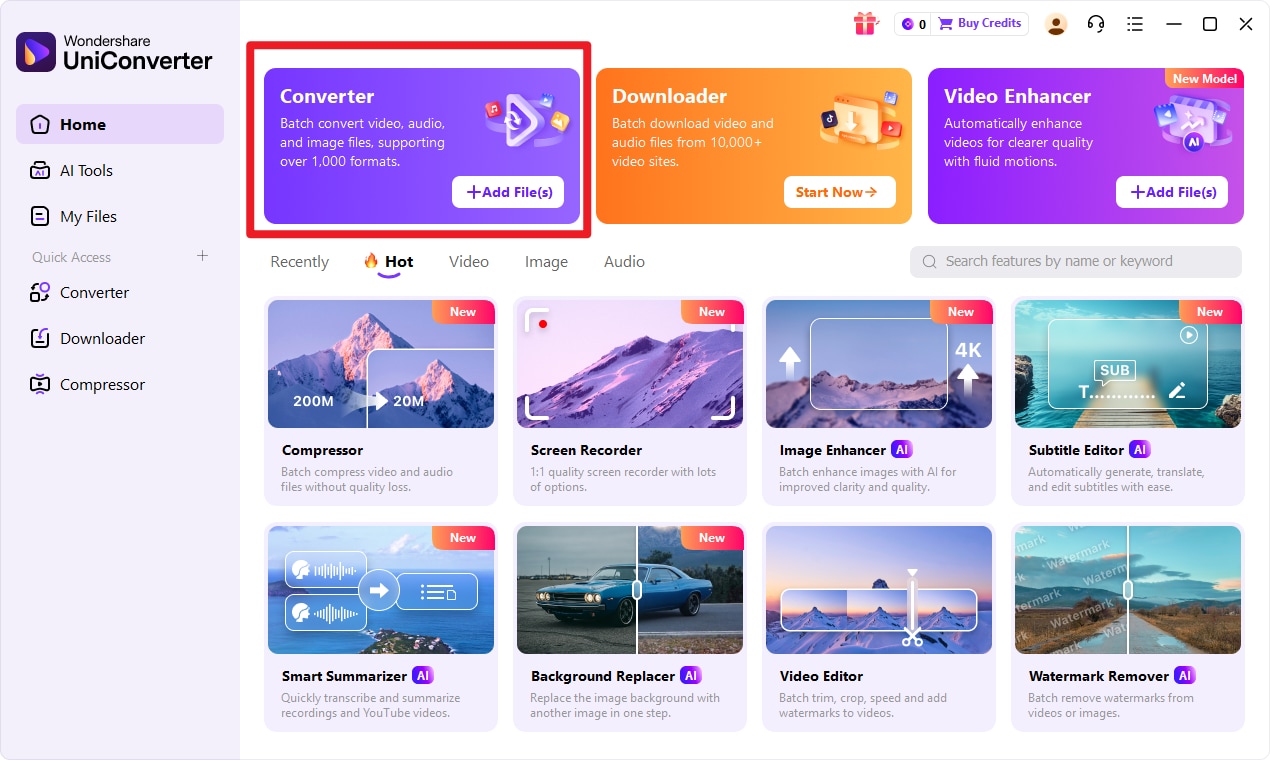
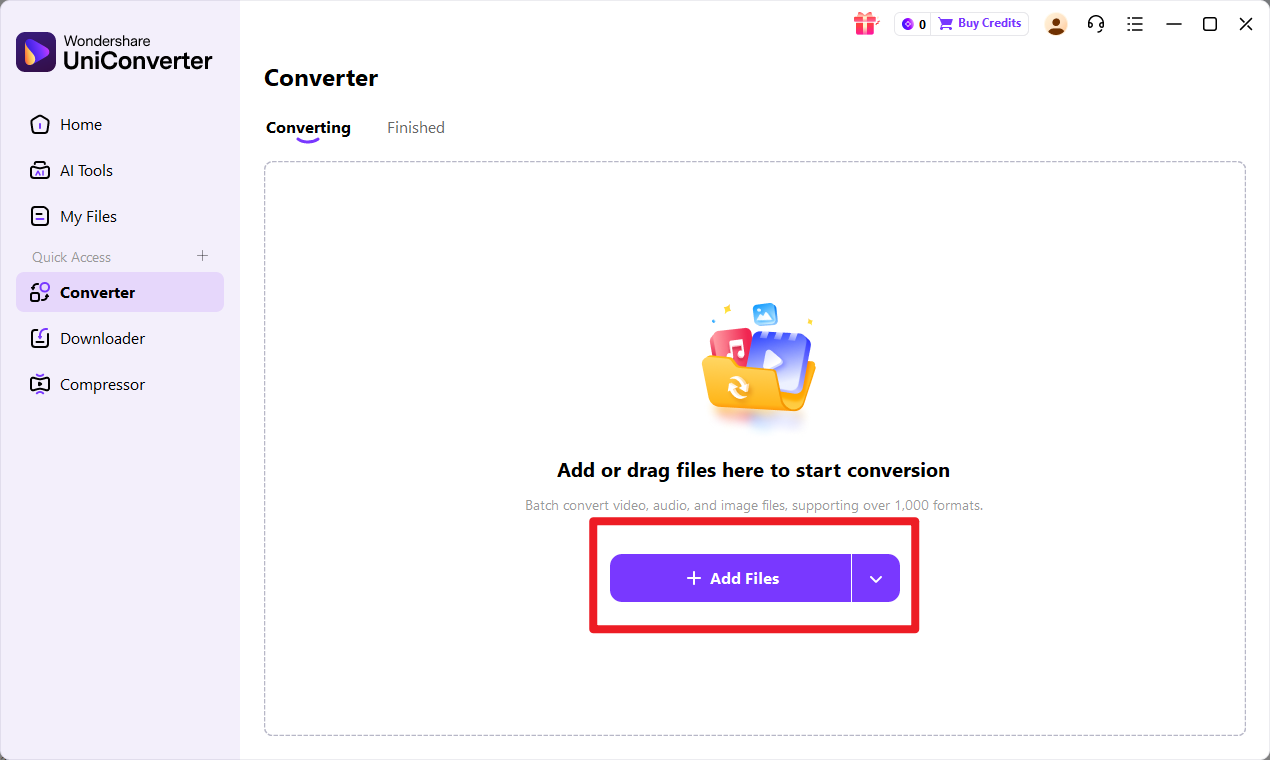
Launch Wondershare UniConverter on your computer. In the main interface, select the Converter tool from the left-hand menu. You can then either drag and drop your MP4 files directly into the program window or click the Add Files icon to browse and import your videos from your computer.
Step 2: Choose Output Format
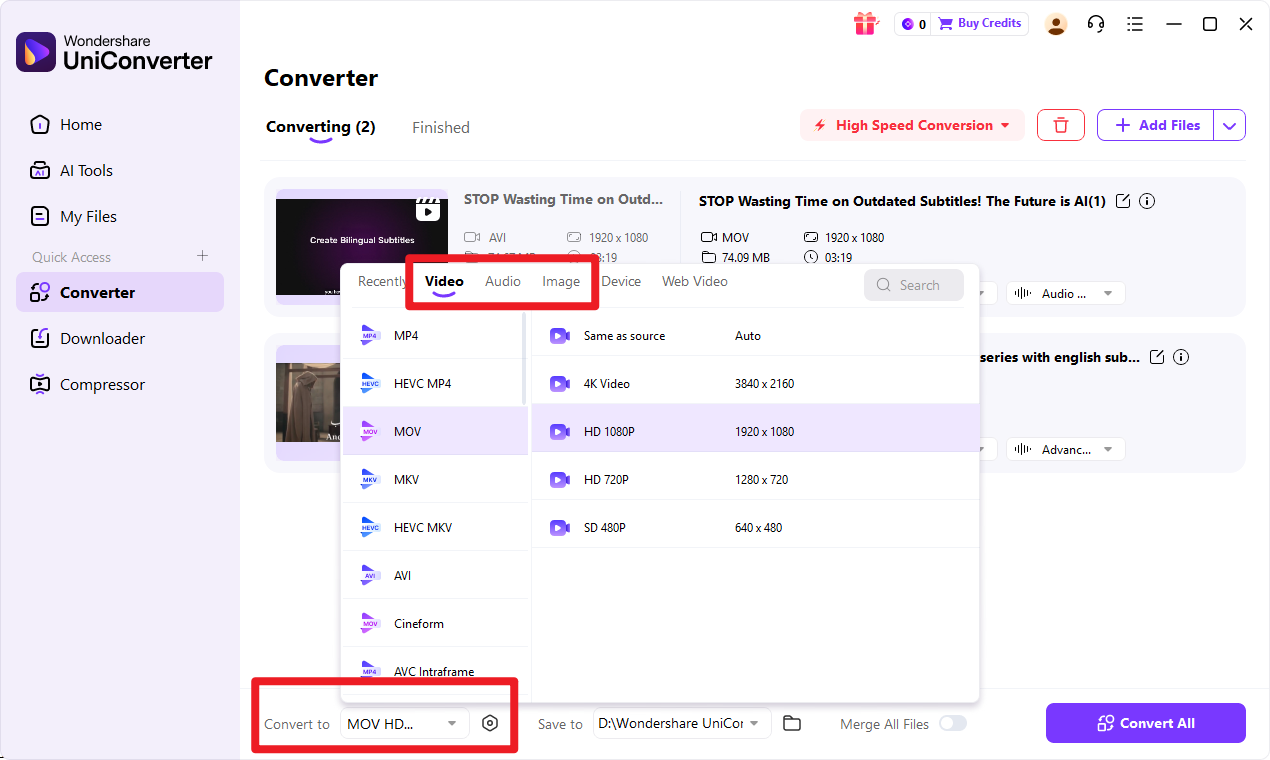
Once your files are loaded, click on the Output Format menu located at the bottom of the window. A new dialog box will appear. Navigate to the Web Video tab, select WebM from the format list on the left, and then choose your desired output resolution on the right (e.g., "Same as source" to maintain quality).
Step 3: Start the Conversion
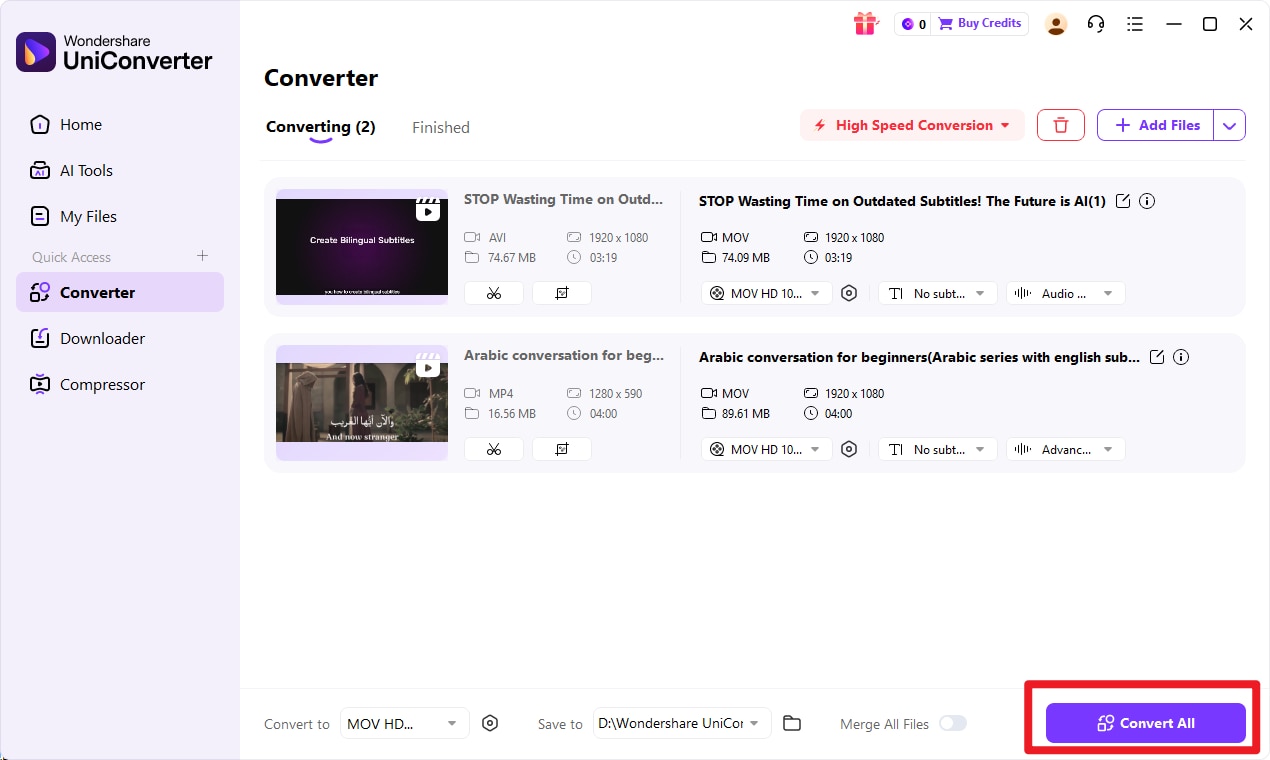
Before starting, you can specify where the converted file will be saved by using the File Location field at the bottom. When you are ready, click the Convert button for a single file or hit the Start All button in the bottom-right corner to process all your videos in a batch.
Step 4: Check Converted Files
UniConverter will process your files at high speed. Once the conversion is complete, you can find your new, web-optimized WebM files by clicking on the Finished tab at the top of the window or by navigating directly to the output folder you selected in the previous step.

Beyond Conversion: A Complete Video Toolbox
Conclusion
The MP4 vs WebM discussion doesn't have a single, definitive winner because each format was designed to excel in different areas. The best choice ultimately depends on your specific goals and context. MP4 remains the champion of universal compatibility; it's the perfect format for sharing, local storage, and ensuring your videos work seamlessly within professional editing workflows. On the other hand, WebM is the undisputed hero of the modern web, offering superior compression, smaller file sizes, and a royalty-free license that makes it ideal for embedding videos online and optimizing website performance.
Understanding these key differences empowers you to make the right decision for every project. And for those times when you need to bridge the gap between these two powerful formats, a versatile tool like Wondershare UniConverter provides the perfect solution, allowing you to convert your videos quickly and without any loss in quality.
FAQs
-
1. Is WebM higher quality than MP4?
Not necessarily. Video quality is primarily dependent on the codec and bitrate settings, not just the container format. However, at the same low bitrate, WebM (using the VP9 codec) can often achieve slightly better visual quality than a standard MP4 (using the H.264 codec), which makes it more efficient for online streaming. -
2. Can iPhone play WebM files?
Natively, the support is limited. Safari on iOS can play WebM videos when they are embedded on a webpage. However, you cannot save a WebM file to your iPhone's Photos app or Files app and play it offline with the default player. To play WebM files reliably on an iPhone, you would need to use a third-party media player from the App Store or convert the file to the universally compatible MP4 format using a tool like UniConverter. -
3. Which format is smaller, MP4 or WebM?
For the same level of visual quality, WebM files are generally smaller than MP4 files. This is because the VP9 video codec used in WebM offers more efficient compression than the H.264 codec commonly found in MP4 files. This size advantage is a key reason why WebM is preferred for web use. -
4. Why would I convert MP4 to WebM?
The main reason to convert an MP4 file to WebM is for web optimization. By converting to WebM, you can significantly reduce the video's file size without a noticeable drop in quality. This leads to faster website loading times, lower bandwidth costs for you, and a better, smoother viewing experience for your website visitors, especially those on mobile devices or slower internet connections.
