
The world of digital video is in a constant state of evolution, driven by the demand for higher resolutions, better quality, and more efficient storage and streaming. For years, MP4 has been the undisputed king, a universal format that plays on virtually any device. However, a new contender has emerged: Versatile Video Coding (VVC), also known as H.266. This next-generation codec promises to revolutionize video compression, offering the same visual quality at a fraction of the file size. This brings users to a critical crossroads, sparking the MP4 vs VVC debate. Which format should you use?
Choosing between the established standard and the cutting-edge newcomer can be confusing. MP4 offers unparalleled compatibility, but its file sizes can be cumbersome, especially with 4K and 8K content. VVC, on the other hand, provides incredible efficiency but suffers from limited software and hardware support, creating playback and editing challenges. This guide will demystify these two formats, providing a clear, in-depth comparison to help you decide which one is right for your specific needs in 2026.
In this article
Part 1. What is MP4? What is VVC?
Before we dive into a head-to-head comparison, it's essential to understand the fundamental nature of each format. One is a container, and the other is a codec, and this distinction is key to understanding their roles in the video ecosystem.
What is MP4?
MP4, short for MPEG-4 Part 14, is not a video codec itself but a digital multimedia container format. Think of it as a box designed to hold various types of data. This box can store video streams, audio streams, subtitles, and still images, all synchronized together in a single file.
The video data inside an MP4 container is typically compressed using a codec. The most common codecs associated with MP4 are:
- H.264 (AVC - Advanced Video Coding): For a long time, this was the industry standard, offering a great balance of quality and file size. It remains the most widely supported codec on the planet.
- H.265 (HEVC - High Efficiency Video Coding): The successor to H.264, HEVC offers about 50% better compression efficiency, meaning it can deliver the same quality at half the file size. It's the standard for 4K UHD Blu-rays and many modern streaming services.
The primary strength of MP4 is its universal compatibility. Files with the `.mp4` extension are recognized and played by nearly every modern device, operating system, web browser, and social media platform, making it the go-to format for sharing and distribution.
What is VVC?
VVC, which stands for Versatile Video Coding (and is also known as H.266 or MPEG-I Part 3), is a video compression standard—a codec. It is the direct successor to H.265 (HEVC) and was finalized in 2020. Its main goal is to push the boundaries of compression efficiency even further.
The key promise of VVC is to provide the same subjective visual quality as HEVC at roughly half the bitrate, or a 50% reduction in file size. This is a monumental leap forward, especially for the future of video, which includes 8K resolution, high dynamic range (HDR), 360-degree video, and high-frame-rate content.
However, as a new technology, VVC's biggest weakness is its current lack of widespread native support. Most existing hardware (like smartphones, TVs, and graphics cards) does not have dedicated decoders for VVC. This means playback often relies on more demanding software decoding, which can tax a device's CPU. This compatibility hurdle is the main reason VVC has not yet replaced older standards.
Part 2. Quick Comparison Table
To get a quick overview of the key differences between these two, here is a side-by-side comparison. For this table, we are comparing the MP4 container using its most common codec, H.264/AVC, against the VVC (H.266) codec.
| Feature | MP4 (with H.264/AVC) | VVC (H.266) |
| Compression Efficiency | Good | Exceptional |
| File Size for Same Quality | Large | Very Small (up to 50% smaller than HEVC) |
| Video Quality | Very Good, but can degrade at low bitrates | Excellent, maintains detail even at low bitrates |
| Compatibility & Support | Universal (supported by virtually all devices) | Very Limited (requires new hardware or powerful software) |
| Primary Use Case | General sharing, web video, social media, universal playback | High-efficiency streaming, 8K video, archival, future-proofing |
Part 3. MP4 vs VVC: Which One Is Better?
The "better" format depends entirely on your priorities: efficiency or compatibility. Let's break down the comparison across three critical areas.
Compression Efficiency and File Size
This is where VVC has an undeniable and significant advantage. The advanced algorithms in VVC are designed to analyze video frames with much greater complexity and precision than older codecs. This allows it to remove redundant data more effectively, resulting in drastically smaller files.
Compared to H.264 (AVC), the most common codec in MP4 files, VVC can reduce file size by 70% or more while maintaining the same visual quality. Even when compared to its direct predecessor, H.265 (HEVC), VVC offers a compression improvement of around 40-50%.
For example, a 1-hour 4K video encoded with H.264 might be 25 GB. The same video encoded with HEVC might be 12.5 GB. With VVC, that file could be as small as 7-8 GB, all without any perceptible loss in quality. This makes VVC the clear winner for anyone looking to minimize storage space or reduce data usage during streaming.
Video Quality
While compression is about making files smaller, the ultimate goal is to do so without sacrificing visual quality. VVC excels here as well. It is specifically engineered to handle the demands of modern, high-fidelity video.
VVC is particularly advantageous for:
- High Resolutions: It provides cleaner, more detailed images for 4K, 8K, and beyond.
- High Dynamic Range (HDR): It better preserves the wide range of colors and brightness levels that make HDR content so vibrant.
- Complex Scenes: It handles scenes with high motion, intricate textures, and film grain more efficiently than previous codecs.
While a well-encoded MP4 (H.264) file looks great, its quality can start to break down and show artifacts (like blocking or blurring) at lower bitrates. VVC maintains its integrity far better under the same conditions, delivering a consistently superior viewing experience, especially when bandwidth or storage is limited.
Compatibility and Device Support
This is the one area where MP4 is not just the winner but remains the undisputed champion. The MP4 container format, especially with the H.264 codec, is the lingua franca of the video world. It plays on iPhones from a decade ago, the latest Android devices, Windows PCs, Macs, smart TVs, game consoles, and virtually every web browser and social media platform. You can create an MP4 file and be confident that almost anyone can watch it without issue.
VVC, in stark contrast, is still in its infancy regarding support. Native hardware decoding is only beginning to appear in the very latest high-end processors and devices released in 2025 and 2026. For most users, playing a VVC file requires a powerful computer that can handle software decoding, or a specialized media player with the necessary codecs. Trying to play a VVC file on an average smartphone or older laptop will likely result in stuttering, freezing, or an "unsupported format" error.
This major compatibility gap is a significant pain point for users. If you receive a VVC file you can't open, the most practical solution is to convert it. For those who encounter incompatible VVC files, a reliable video converter like Wondershare UniConverter is essential to convert them to a universally playable format like MP4.
Part 4. Use Cases for MP4 and VVC
Understanding the strengths and weaknesses of each format helps clarify when to use them.
When to Use MP4
Choose MP4 when your top priority is compatibility and ease of use. It is the ideal format for:
- Sharing on Social Media: Platforms like YouTube, Instagram, Facebook, and TikTok are all optimized for MP4 (H.264). Uploading in this format ensures smooth processing and playback for your audience.
- Website and Email Attachments: If you're embedding a video on a website or sending it to a client, MP4 guarantees they can watch it without needing special software.
- Universal Playback: When you need a video to play on a wide range of devices, including older smartphones, computers, and smart TVs, MP4 is the safest and most reliable choice.
- Standard Video Editing: Most video editing software is built around MP4 workflows. Using it ensures maximum compatibility with effects, transitions, and rendering pipelines.
When to Use VVC
Choose VVC when your top priority is efficiency, and you have control over the playback environment or are focused on long-term storage. It is best suited for:
- Archiving Large Video Libraries: If you're a filmmaker or content creator with terabytes of 4K or 8K raw footage, converting your final masters to VVC can cut your storage costs in half without sacrificing quality.
- High-Efficiency Streaming Services: Companies like Netflix and Amazon Prime Video are exploring VVC to deliver 4K and 8K content to users with slower internet connections, reducing buffering and data consumption.
- Future-Proofing Content: Encoding your most important projects in VVC ensures they are ready for the next generation of devices and platforms that will support the codec natively.
- Bandwidth-Constrained Environments: For applications like live broadcasting or video conferencing over limited networks, VVC can provide a stable, high-quality stream where other codecs might fail.
Part 5. Step-by-Step Guide to Convert MP4 to VVC Using UniConverter
To take advantage of VVC's superior compression for archiving, you can convert your MP4 files to VVC. Wondershare UniConverter is a powerful and intuitive tool that fully supports the latest VVC codec, making the conversion process simple.
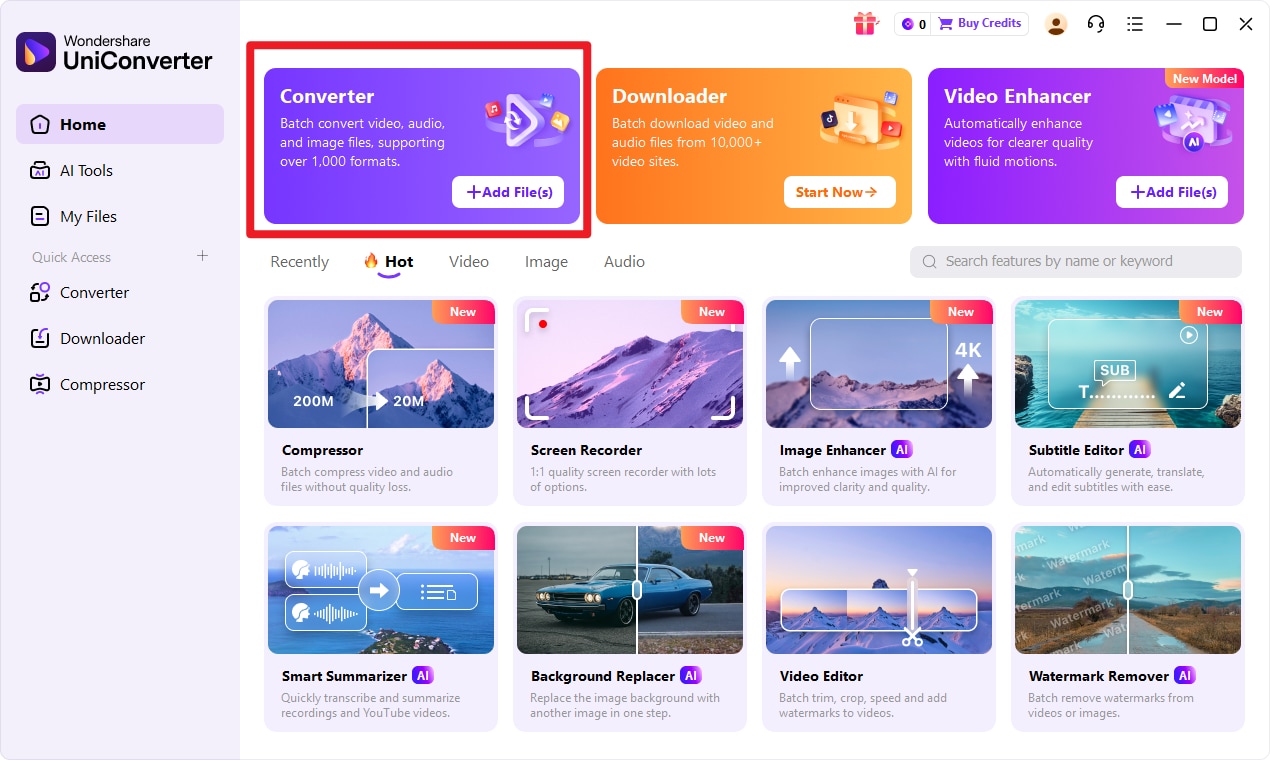
Step 1: Choose Converter in UniConverter
Launch Wondershare UniConverter on your computer. On the main screen, select the Converter tool from the left-side menu.
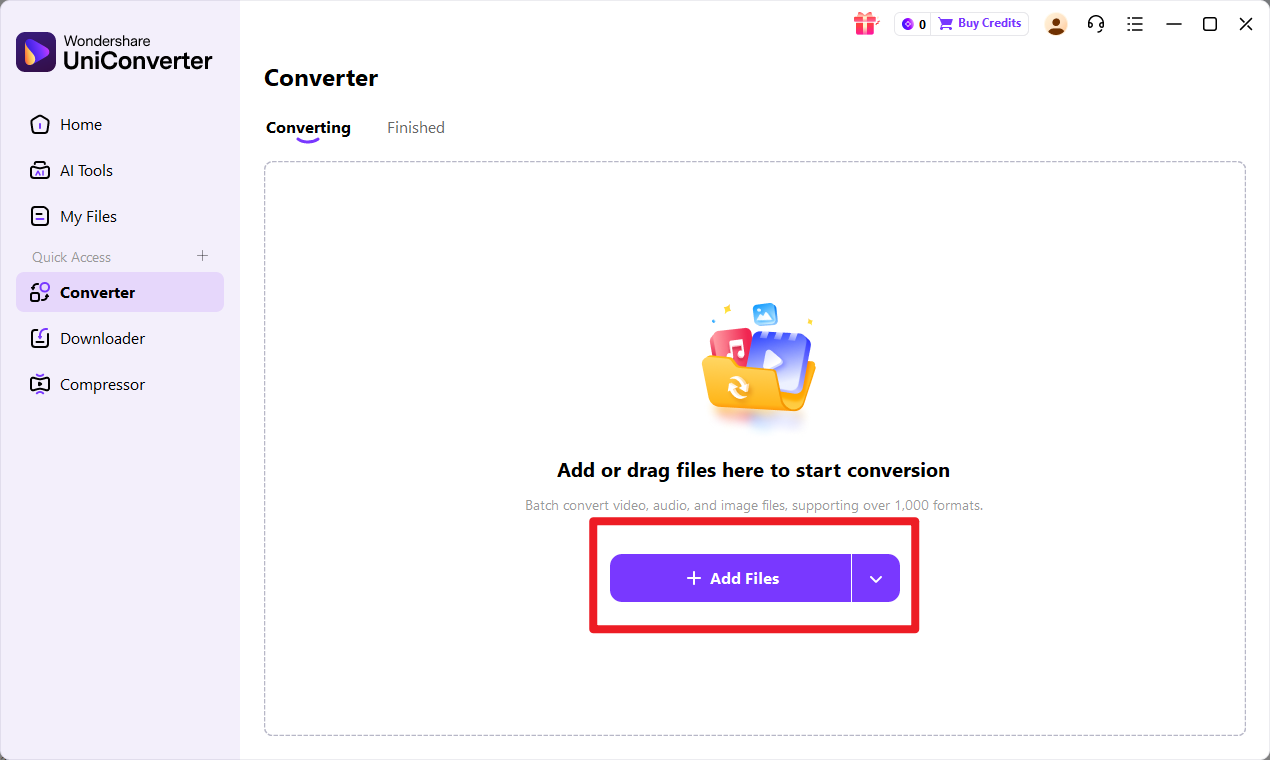
Step 2: Add Files to UniConverter
Click the Add Files icon or drag and drop your input format files directly into the converter window. You can add multiple files to convert them in a batch.
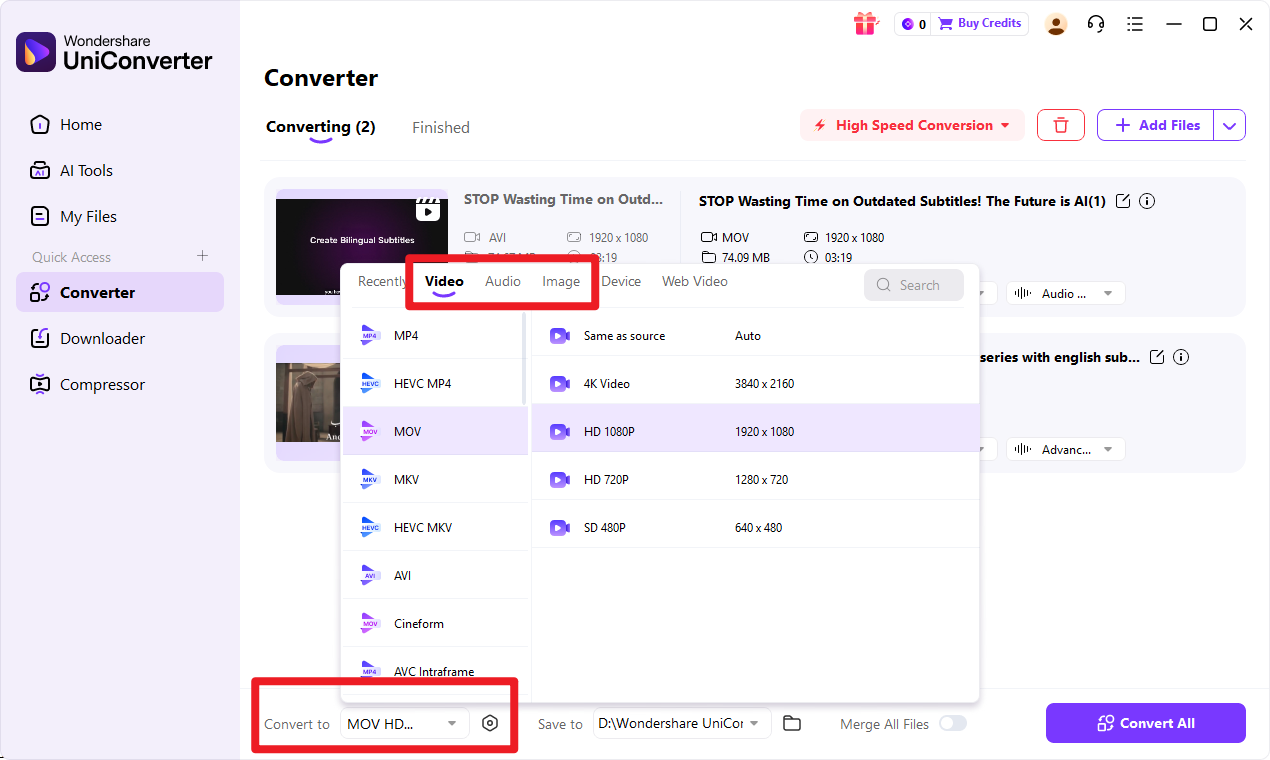
Step 3: Choose Output Format
Click on the Output Format menu at the bottom of the window. In the new window, navigate to the Video tab, select your target format from the list, and choose a resolution.
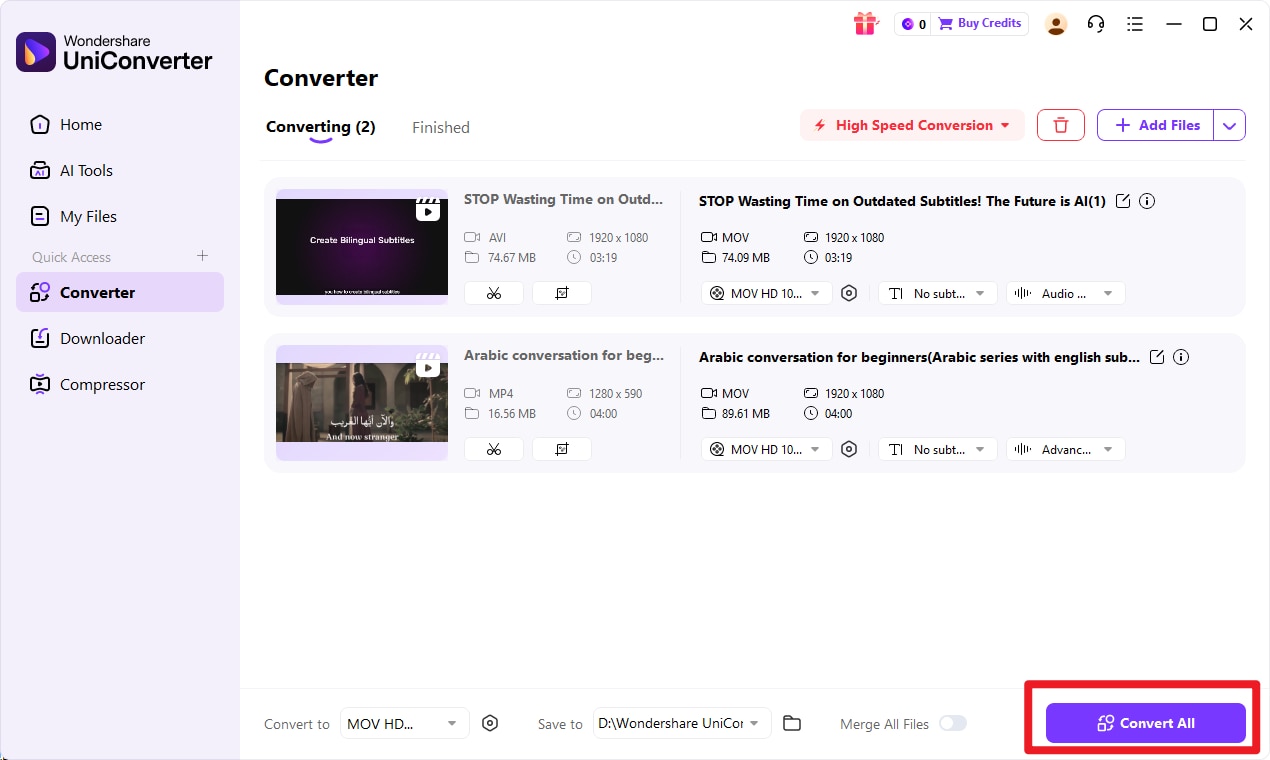
Step 4: Start the Conversion
Select a destination folder by clicking the File Location field. Finally, click the Start All button to begin the conversion process for all your files.

Your Complete Video Management Toolkit
FAQs
-
1. Is VVC better than MP4?
VVC is better in terms of compression efficiency and can deliver the same quality at a smaller file size. It is a technically superior codec. However, MP4 is a container format that is far better in terms of compatibility and universal support. The "better" choice depends on whether you need efficiency (VVC) or compatibility (MP4). -
2. Can my phone play VVC (H.266) files?
Most current phones do not have native hardware support for VVC. Playback might be possible on very high-end flagship models using a specialized third-party media player app that performs software decoding, but it will be very demanding on the battery and processor. For most users, the best approach is to convert the file to a compatible format like MP4 using a tool like UniConverter. -
3. Why would I convert MP4 to VVC?
The primary reason is for archival purposes and storage savings. If you have a large library of high-resolution MP4 videos (like family videos, drone footage, or project masters), converting them to VVC can cut your storage requirements by nearly half without losing visual quality. This frees up significant space on your hard drives. -
4. Is UniConverter the best converter for VVC?
UniConverter is an excellent choice as it is one of the early converters to offer full support for the VVC (H.266) codec. It provides a user-friendly interface for converting both to and from this new format, making it accessible even for non-technical users. Its batch processing and high-speed conversion engine make it a powerful and efficient tool for managing a modern video library.
Conclusion
To summarize, the choice between MP4 and VVC in 2026 depends entirely on your priority. There is no single "best" format for every situation; there is only the best format for your specific task.
Choose MP4 for maximum compatibility, easy sharing, and universal playback. It remains the undisputed standard for the vast majority of today's video landscape, from social media to professional collaboration.
Choose VVC for future-proofing, high-efficiency storage, and next-generation streaming, where saving space and bandwidth is the most critical factor. It is the clear choice for archiving high-resolution footage and for streaming providers looking to deliver the best quality over limited networks.
As VVC adoption slowly grows, managing both formats will become increasingly common. A versatile tool like Wondershare UniConverter is the perfect solution for bridging the compatibility gap, allowing you to convert, compress, and manage your entire video library with ease, no matter the format.
