
In the world of digital video, the format you choose can significantly impact your entire workflow, from shooting and editing to final delivery and archiving. Two formats that often come up in professional discussions are MP4 and MXF. While they may both contain video, they are designed for vastly different purposes and environments. Understanding the MP4 vs MXF debate is crucial for any videographer, editor, or content creator looking to optimize their process for quality and efficiency. MP4 is the universal standard for web and consumer playback, while MXF is the workhorse of the broadcast and film industries.
Choosing the wrong format can lead to compatibility headaches, storage nightmares, and potential quality loss. This guide will demystify these two formats, providing a clear and comprehensive comparison to help you make informed decisions for your projects. We will break down their core characteristics, compare them head-to-head, and explore their ideal use cases.
In this article:
Part 1. What is MP4? What is MXF?
Before we can compare these formats, it's essential to understand what each one is at a fundamental level. They are both container formats, meaning they "contain" video, audio, and other data, but their internal structure and intended application are worlds apart.
What is an MP4 File?
MP4, which is short for MPEG-4 Part 14, is a digital multimedia container format that is most commonly used to store video and audio. However, its versatility allows it to also hold other data like subtitles and still images. It was developed by the Moving Picture Experts Group (MPEG) and is based on Apple's QuickTime File Format (MOV).
The defining characteristic of MP4 is its excellent balance between quality and file size. It achieves this through highly efficient compression algorithms, most notably H.264 (AVC) and its successor, H.265 (HEVC). This compression makes MP4 files relatively small, which is why they have become the de facto standard for online video. Its near-universal compatibility is another major advantage; an MP4 file can be played on virtually any device, from smartphones and tablets to computers, smart TVs, and gaming consoles. This makes it the perfect format for streaming on platforms like YouTube and Vimeo, sharing on social media, or sending to clients for review.
What is an MXF File?
MXF, or Material Exchange Format, is a professional-grade video and audio container format. It was specifically designed by the Society of Motion Picture and Television Engineers (SMPTE) to address the needs of high-end production, broadcast, and digital cinema workflows. Think of it as a digital equivalent of a videotape, built for stability, interoperability, and the preservation of quality.
Unlike MP4, MXF prioritizes data integrity over file size. It wraps video, audio, and a vast amount of metadata into a single, robust file. This format can handle a wide variety of professional video and audio codecs, often using lossless compression or no compression at all. This ensures that every bit of data captured by the camera is preserved, which is critical for demanding post-production tasks like color grading and visual effects. Its common uses include recording on professional cameras from brands like Sony, Canon, and Panasonic, editing in high-end non-linear editing systems (NLEs), archiving master files, and creating Digital Cinema Packages (DCPs) for theatrical exhibition.
Part 2. Quick Comparison Table
For a quick overview, here is a side-by-side comparison of the key differences between MP4 and MXF.
| Feature | MP4 (MPEG-4 Part 14) | MXF (Material Exchange Format) |
| Primary Use | Web streaming, consumer playback, sharing | Professional broadcast, editing, archiving |
| Compression | Typically high (lossy, e.g., H.264/AVC) | Low to none (lossless or uncompressed) |
| File Size | Small to medium | Very large |
| Quality | Good to very good | Excellent to pristine (master quality) |
| Compatibility | Universal (phones, PCs, web, TVs) | Limited (professional editing software) |
| Metadata | Basic support | Extensive and standardized support |
Part 3. MP4 vs MXF: Which One Is Better?
The question of which format is "better" depends entirely on the context. One is designed for distribution, the other for production. Let's dive deeper into the specific areas where their differences become most apparent.
Compression and File Size
This is one of the most significant distinctions between the two formats. MP4 files employ efficient but "lossy" compression algorithms like H.264. Lossy compression works by intelligently discarding some video data that the human eye is unlikely to notice. This process dramatically reduces the file size, making MP4 files perfect for streaming over the internet, where bandwidth is a concern, and for storing large libraries of video on consumer-grade hard drives.
MXF, on the other hand, prioritizes quality above all else. It often uses "lossless" compression codecs or stores the video data completely uncompressed. This means that no data is discarded, preserving the original image information exactly as it was captured. The trade-off is a massive increase in file size. A few minutes of uncompressed HD footage in an MXF container can take up tens or even hundreds of gigabytes, requiring specialized, high-capacity storage solutions.
Video and Audio Quality
Directly tied to compression is the resulting video and audio quality. Because MP4 uses lossy compression, there is an inherent, albeit often imperceptible, loss of quality compared to the original source footage. For the vast majority of viewing scenarios—watching a video on a laptop, phone, or TV—the quality of a well-encoded MP4 is more than sufficient and can look stunning.
However, in a professional post-production environment, MXF is the undisputed champion of quality. By using lossless or uncompressed codecs, it maintains the pristine, master quality of the source footage. This gives video editors, colorists, and VFX artists the maximum amount of data and color information to work with. This extra data allows for more extreme adjustments in color grading and greater flexibility when keying, tracking, or applying other visual effects without introducing artifacts or degradation.
Compatibility and Usability
Here, the roles are completely reversed. MP4 is the undisputed king of compatibility. It is a universally recognized standard that will play natively on Windows, macOS, iOS, Android, and virtually every web browser and media player in existence. You can confidently send an MP4 file to anyone, knowing they will be able to open and view it without any special software. This makes it the ideal format for final delivery.
MXF has very limited compatibility outside of the professional video ecosystem. It is designed for interoperability between high-end systems, not for consumer playback. You cannot play an MXF file on your phone or upload it directly to YouTube. It requires professional non-linear editing software (NLE) like Adobe Premiere Pro, Avid Media Composer, or DaVinci Resolve to be opened and worked with. This specialized nature makes it unsuitable for general sharing or viewing.
Metadata Support
Metadata is "data about data," and it's a crucial component of professional workflows. MP4 supports a basic set of metadata, such as the title, author, comments, and creation date. This is generally sufficient for organizing a personal media library.
MXF, however, was built from the ground up with extensive metadata support in mind. It can contain a vast and standardized set of information far beyond the basics. This includes critical production data like timecode, camera settings (ISO, shutter speed, aperture), lens information, scene and take numbers, LUTs (Look-Up Tables) applied, and even notes from the director or cinematographer. This rich metadata is invaluable for organizing, searching, and managing footage in large-scale projects, ensuring a smooth and efficient workflow from production to post-production and archiving.
Part 4. Use Cases for MP4 and MXF
Understanding the strengths and weaknesses of each format helps clarify when to use them. Here are some practical scenarios for both MP4 and MXF.
When to Use MP4
MP4 is your go-to format for any form of distribution and final playback. Choose MP4 in the following situations:
- Final Delivery for Web: When you are delivering the final version of a video to a client who will be using it on their website.
- Uploading to Streaming Platforms: For all uploads to YouTube, Vimeo, Instagram, TikTok, Facebook, and other social media or video-sharing sites. These platforms are optimized for and often require MP4 files.
- Sharing and Review: When you need to send a video to colleagues or clients for review via email, cloud storage (like Dropbox or Google Drive), or messaging apps.
- Universal Playback: Any time you need to create a video file that is guaranteed to play on almost any device without requiring the end-user to install special codecs or players.
When to Use MXF
MXF is the format of choice for the production and archival stages of a professional video project. Use MXF in these scenarios:
- In-Camera Recording: When shooting with professional broadcast, cinema, or ENG (Electronic News Gathering) cameras that support it. This captures the highest quality possible directly at the source.
- Editing and Color Grading: During the post-production process. Using the original MXF files (or high-quality proxies) in your NLE gives you the most flexibility for creative adjustments.
- Archiving and Master Copies: For long-term storage of your raw footage or the final, uncompressed master version of a finished project. The robust nature and rich metadata of MXF make it ideal for future-proofing your assets.
- Broadcast Delivery: When delivering a finished commercial, show, or news segment to a television network. Many broadcasters have strict delivery specifications that require the MXF format.
Part 5. Step-by-Step Guide to Convert MP4 to MXF Using UniConverter
A common task in video production is bridging the gap between these two worlds. You might need to convert large MXF files from a camera into lightweight MP4s for editing proxies or for a client review. Conversely, you might need to package a final edit from an MP4 into an MXF container to meet broadcast delivery specifications. For these tasks, a powerful and reliable converter is essential.
Wondershare UniConverter is an excellent tool for this job. It supports a vast array of formats, including professional ones like MXF, and provides a simple, intuitive interface for high-quality conversions. It simplifies the process while ensuring the integrity of your video is maintained.
How to Convert MP4 to MXF with UniConverter
Here's how you can easily convert your files using UniConverter. The process is the same whether you are converting from MP4 to MXF or MXF to MP4.
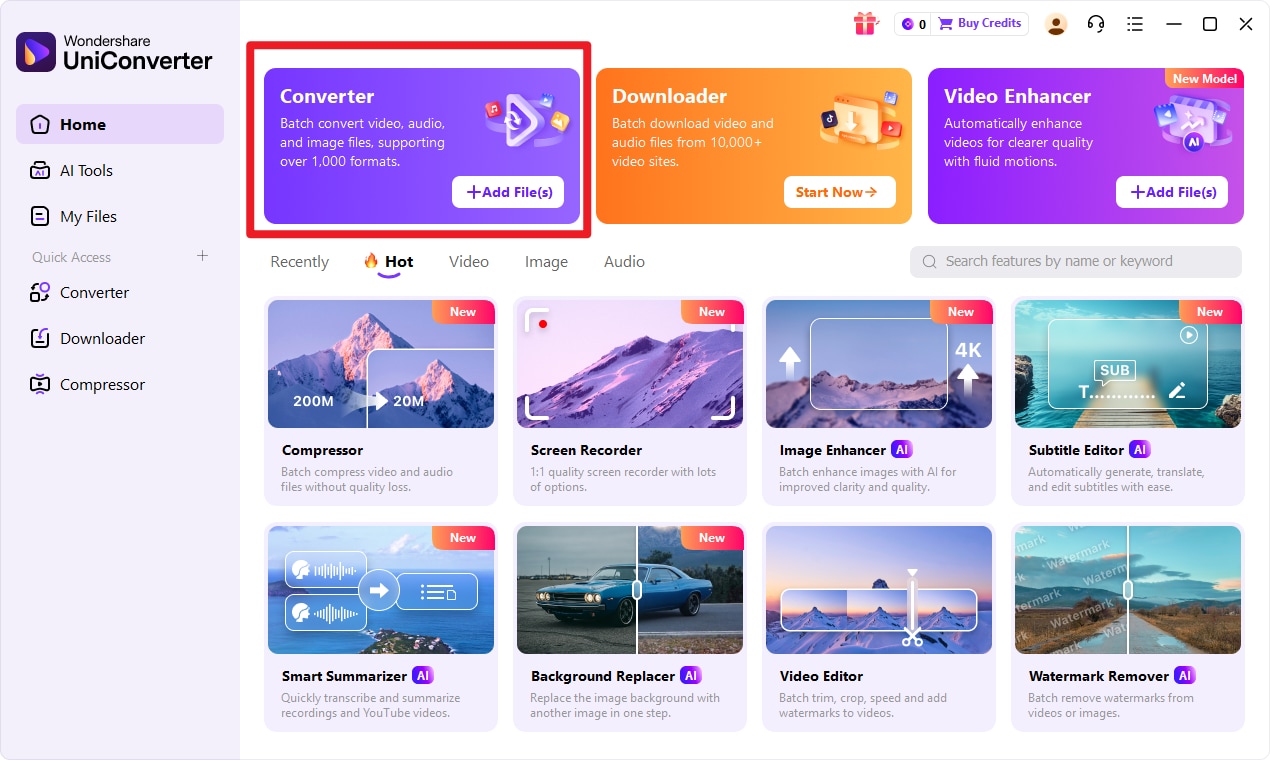
Step 1: Choose Converter in UniConverter
Launch Wondershare UniConverter on your Windows or Mac computer. From the home screen, look at the menu on the left side and select the Converter tool to open the conversion interface.
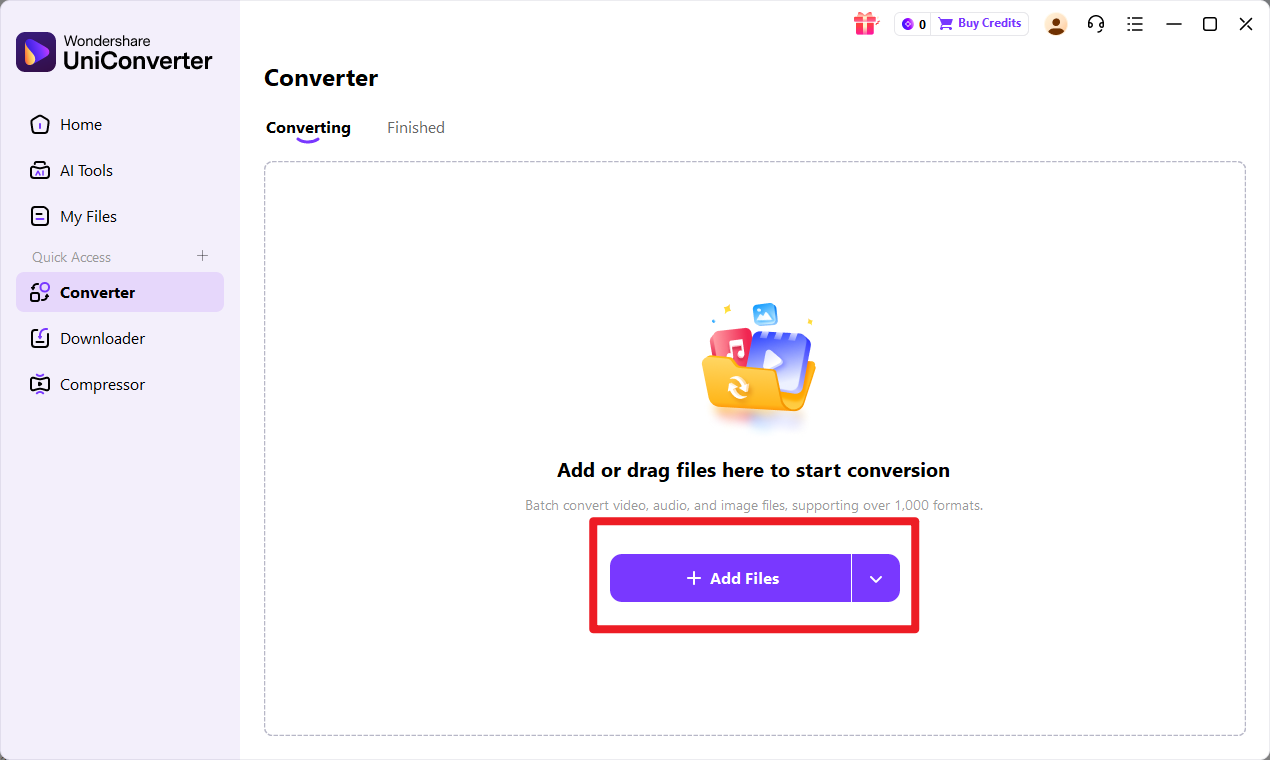
Step 2: Add Files to UniConverter
Now, you need to import your source files. You can simply drag your input format files from a folder and drop them directly onto the UniConverter window. Alternatively, you can click the Add Files icon in the top-left corner to open a file browser and select the videos you want to convert.
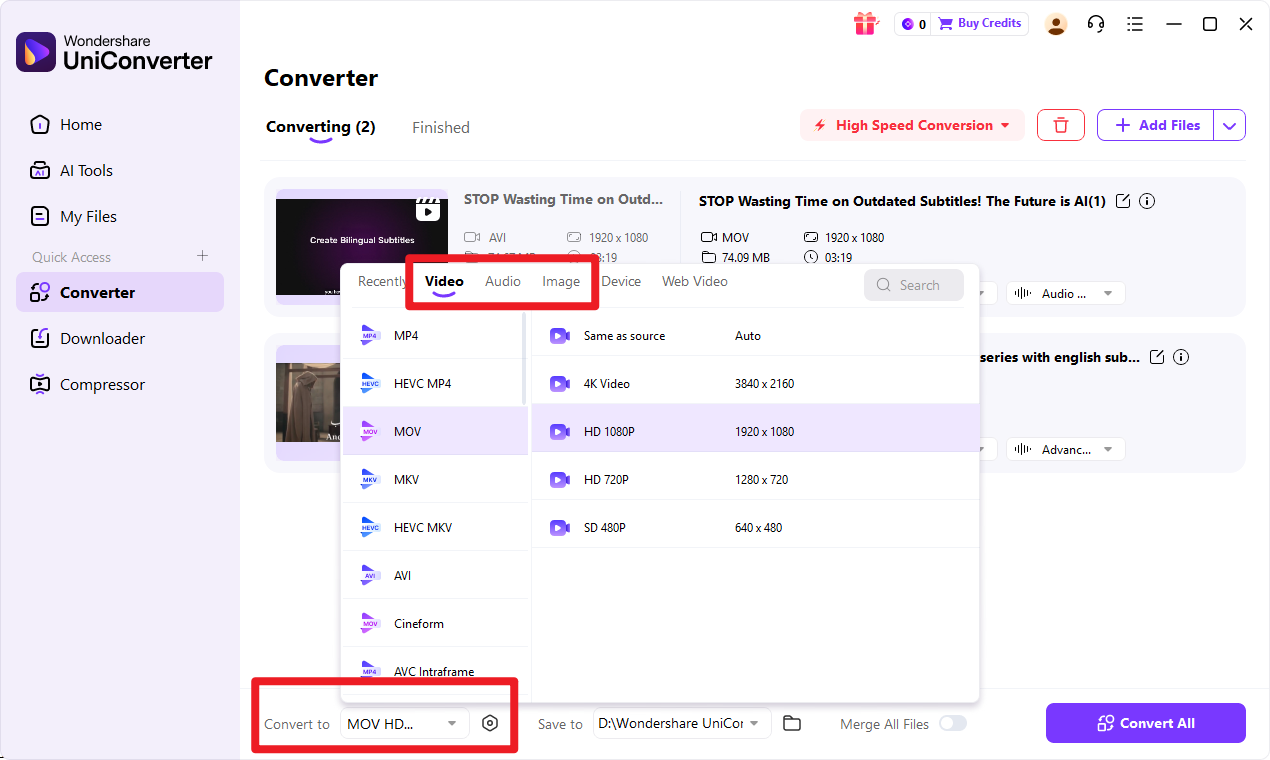
Step 3: Choose Output Format
At the bottom of the window, click on the Output Format menu. This will open a new dialog box with a list of available formats. Go to the Video tab. On the left, scroll to find and select your desired target format from the list. On the right, you can choose a specific resolution or preset.
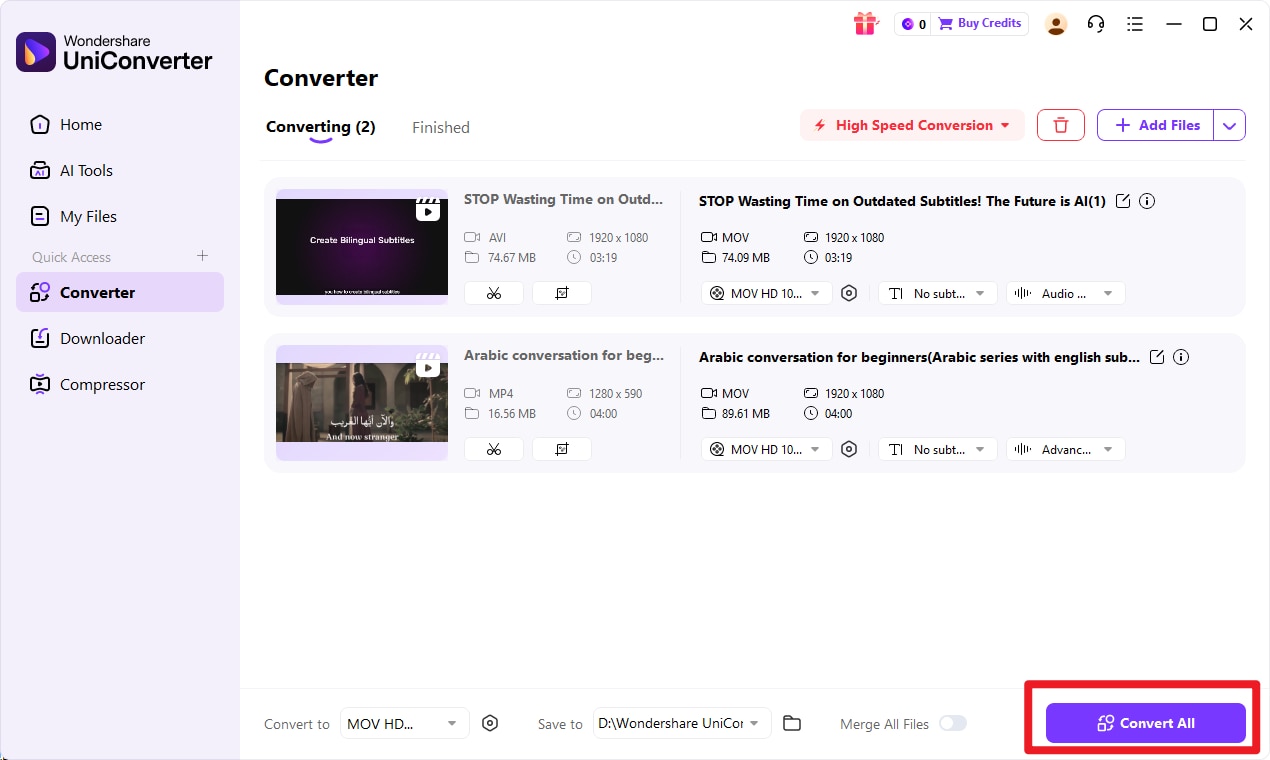
Step 4: Start the Conversion
Before starting, you can specify where you want to save the converted files using the File Location field at the bottom. Once you are ready, click the Start All button in the bottom-right corner. UniConverter will process your files quickly and efficiently, saving them to your chosen destination folder.

Go Beyond Simple Video Conversion
Conclusion
Ultimately, the MP4 vs MXF discussion isn't about declaring one format superior to the other; it's about recognizing their distinct and complementary roles in the video production lifecycle. MP4 is the lightweight, universal champion of distribution and playback, valued for its incredible compatibility and manageable file sizes. MXF is the heavyweight, professional workhorse for production and archiving, offering uncompromising quality and invaluable metadata support that are essential for high-end workflows. Understanding when to use each format is key to a smooth and efficient process. And when your project requires you to move between these two standards, having a versatile and dependable tool like Wondershare UniConverter is indispensable. It ensures that your conversions are fast, simple, and maintain the highest possible quality, no matter the direction of the conversion.
FAQs
-
1. Is MXF better quality than MP4?
Yes, generally speaking, MXF files offer better quality than MP4 files. This is because MXF is designed to use little to no compression (lossless or uncompressed), which preserves all of the original video data captured by the camera. This makes it the ideal format for professional editing and color grading where maximum data is required. -
2. Can I play an MXF file on my computer?
You can, but you will likely need specialized software. Standard media players like Windows Media Player and Apple's QuickTime Player cannot open MXF files natively. To play them, you need a professional NLE like Adobe Premiere Pro or a dedicated professional media player. For simple playback on any device, the easiest solution is to convert the MXF file to a universal format like MP4 using a tool like UniConverter. -
3. Does converting MXF to MP4 lose quality?
Any time you convert from a format with less compression (like MXF) to one with more compression (like MP4), there is technically some data loss. However, the key is to manage this process. When using a high-quality conversion program like Wondershare UniConverter, you can choose high-bitrate settings that minimize this quality loss to a point where it is visually imperceptible for most viewing purposes. -
4. Why are MXF files so large?
MXF files are so large because they are built to prioritize data integrity over file size. They contain vast amounts of video and audio information with very little or no compression. This "data-rich" nature is crucial for the flexibility required in professional post-production, allowing for extensive adjustments in color, effects, and reframing without degrading the image quality.
