
In the world of digital video, container formats are the unsung heroes that package everything together—video, audio, subtitles, and metadata. Among the dozens of formats available, two prominent ones often cause confusion: MP4 and MPEG-TS. While both are derived from the MPEG standard, they are designed for fundamentally different purposes. Choosing the wrong one can lead to playback issues, corrupted files, or inefficient workflows. This guide will demystify the MP4 vs MPEG-TS debate, helping you understand their core differences and make the right choice for your project.
Whether you're a live streamer, a video editor, a content creator, or simply a tech enthusiast trying to manage your media library, understanding these formats is crucial. This article breaks down their technical attributes, practical applications, and performance characteristics in a clear, comparative way.
In this article:
Part 1. What is MP4? What is MPEG-TS?
Before diving into a direct comparison, it's essential to understand what each format is and what it was designed to do.
What is MP4 (MPEG-4 Part 14)?
MP4, officially known as MPEG-4 Part 14, is arguably the most recognizable video container format today. Developed as a modern, flexible standard, it's designed for storing and playing back multimedia content. Its primary strength lies in its excellent compression efficiency, which allows it to store high-quality video and audio in relatively small file sizes.
This efficiency, combined with its incredible versatility, has made MP4 the de facto standard for web video and consumer media. It enjoys near-universal compatibility across virtually all modern devices, including smartphones, computers, smart TVs, gaming consoles, and web browsers. If you've ever downloaded a movie, watched a YouTube video, or recorded a clip on your phone, you've almost certainly interacted with an MP4 file. Its main applications are video-on-demand (VOD), online video platforms, and personal media storage.
What is MPEG-TS (MPEG Transport Stream)?
MPEG-TS, or simply TS, stands for MPEG Transport Stream. As its name implies, this format was built for transmission. Its primary design goal is not file size efficiency but error resilience. It was created for unreliable environments like digital broadcasting, where signal loss or data corruption is a constant possibility.
To achieve this robustness, MPEG-TS breaks video, audio, and data into small, fixed-size packets (typically 188 bytes). Each packet contains its own timing information and can be decoded independently. This means that if one packet is lost or corrupted during transmission, it doesn't affect the rest of the stream. The player can simply skip the bad packet and continue, resulting in a momentary glitch rather than a complete playback failure. This packetized structure makes it the ideal choice for broadcast television (DVB, ATSC), IPTV, and modern live streaming protocols like HLS (HTTP Live Streaming).
Part 2. Quick Comparison Table
For a quick overview, this table highlights the key differences between MP4 and MPEG-TS across several important criteria.
| Feature | MP4 (MPEG-4 Part 14) | MPEG-TS (MPEG Transport Stream) |
| File Structure | Monolithic file with a metadata header (moov atom) required for playback. | A stream of small, independent packets, each with its own header and timing information. |
| Error Resilience | Low. If the file isn't finalized correctly, the entire file can become unplayable. | High. The loss of some packets does not prevent the rest of the stream from being decoded. |
| Overhead | Low. More efficient for file storage as it has less redundant data. | High. Each packet includes headers, leading to a larger overall file size for the same content. |
| Compatibility | Extremely high. Natively supported by almost all devices, players, and browsers. | Moderate. Standard in broadcast but often requires specialized players or conversion for general use. |
| Primary Use Case | Video-on-demand (VOD), web streaming, file sharing, and local media storage. | Live broadcasting (TV), IPTV, and live internet streaming (e.g., HLS). |
| Latency | Not designed for low latency; better for progressive download and playback. | Designed for low-latency transmission, making it suitable for real-time applications. |
Part 3. MP4 vs MPEG-TS: Which One Is Better?
The question of which format is "better" depends entirely on the context. Each excels in its intended domain due to fundamental differences in structure, compatibility, and performance.
Structure and Robustness
The most significant difference between MP4 and MPEG-TS lies in their file structure, which directly impacts their robustness.
- MP4: An MP4 file is structured around a critical piece of metadata called the "moov atom." This atom contains the index of the entire file—information about the video and audio tracks, timestamps, duration, and more. It acts like a table of contents. Typically, this moov atom is written at the end of the file once the recording or encoding is complete. If this process is interrupted (e.g., your computer crashes, the battery dies, or a download fails), the moov atom is never written. Without it, a media player has no idea how to interpret the data, and the entire file becomes unreadable and corrupt.
- MPEG-TS: In contrast, MPEG-TS is a stream of small, self-contained packets. Each packet has its own header with synchronization and timing information (PCR - Program Clock Reference). This packet-based structure makes the format incredibly resilient. If a recording is interrupted or parts of a stream are lost during transmission, you only lose the data contained in those specific packets. You can start playback from any point in the stream, and the rest of the file remains perfectly intact. This is why it's the standard for any application where the recording or transmission process might be unstable.
Compatibility and General Use
When it comes to ease of use and playback, there is a clear winner for the average consumer.
- MP4: MP4 is the undisputed king of compatibility. It is supported natively by virtually every modern device and platform you can think of: Windows, macOS, iOS, Android, all major web browsers, smart TVs, and video editing software like Adobe Premiere Pro and Final Cut Pro. You can confidently share an MP4 file knowing the recipient will be able to play it without any special software. This universal support makes it the ideal format for general-purpose video distribution and storage.
- MPEG-TS: MPEG-TS, with its `.ts` file extension, is a professional format primarily used in the broadcast and streaming industries. While many desktop media players like VLC can handle .ts files, native support on consumer devices is limited. You can't, for example, easily play a .ts file on an iPhone or upload it directly to most social media platforms. Editing .ts files in standard video editors can also be problematic, often requiring conversion to a more edit-friendly format like MP4 first.
Streaming Performance
Both formats are used for streaming, but they are optimized for very different streaming models.
- MP4: MP4 is perfect for on-demand streaming, where the entire video file is already stored on a server. This is often delivered via "progressive download," where the video starts playing as it downloads. Because the file's index (moov atom) is available from the start (if optimized for web), the player knows the full duration and can allow seeking throughout the video. This is how platforms like YouTube and Netflix deliver their vast libraries of pre-recorded content.
- MPEG-TS: MPEG-TS is the backbone of modern live streaming. Its packetized nature is the foundation for protocols like HLS (HTTP Live Streaming), which is used by broadcasters and platforms like Twitch and YouTube Live. In an HLS workflow, the live feed is encoded into short MPEG-TS segments (e.g., 2-6 seconds long) and delivered to the viewer. This segmented approach allows for adaptive bitrate streaming (switching quality levels on the fly) and makes the stream resilient to network fluctuations. The low overhead and error resilience of TS are critical for delivering a stable, low-latency live experience.
Part 4. Use Cases for MP4 and MPEG-TS
To put it all together, here are some clear, real-world scenarios where you would choose one format over the other.
When to Use MP4
Choose MP4 when your priority is compatibility, file size, and on-demand playback. It is the best choice for finished video products intended for wide distribution.
- Uploading Videos to Sharing Platforms: When you upload a video to YouTube, Vimeo, Instagram, or Facebook, MP4 (with H.264 or H.265 codec) is the recommended format for the best balance of quality and file size.
- Creating a Digital Movie Library: For storing your personal movie and TV show collection for playback on devices like PCs, smartphones, tablets, and smart TVs, MP4 offers the widest compatibility and efficient storage.
- Embedding Video on a Website: If you want to host a video on your own website for on-demand playback, MP4 is the standard format that all web browsers can play natively using the `<video>` HTML tag.
- Final Delivery to a Client: When sending a finished video project to a client, MP4 is the safest bet to ensure they can view it without any technical hurdles.
When to Use MPEG-TS
Choose MPEG-TS when your priority is robustness during transmission or recording, especially for live content.
- Broadcasting Live Television: Digital cable, satellite, and over-the-air (terrestrial) television systems all use MPEG-TS to transmit their channels. Its error resilience is essential for maintaining a stable signal over long distances.
- Live Streaming an Event: If you are streaming a live concert, webinar, or sporting event over the internet, your streaming software (like OBS) will likely encode the video into a Transport Stream to send to the streaming server for protocols like HLS or SRT.
- Recording from a TV Tuner: When recording a show from a digital TV tuner card, the resulting file is almost always a .ts file. This ensures that even if the signal reception is momentarily poor, the recording as a whole will not be corrupted.
- IPTV Services: Internet Protocol Television (IPTV) services deliver television channels over the internet using MPEG-TS to ensure a broadcast-quality, real-time viewing experience.
Part 5. Step-by-Step Guide to Convert MP4 to MPEG-TS Using UniConverter
There are many workflows where you might need to convert between these two formats. For example, you may have an edited video in MP4 that you need to prepare for a live streaming environment that requires TS input. For these tasks, a reliable and powerful video converter is essential. Wondershare UniConverter stands out as an excellent tool, offering a fast, intuitive, and high-quality solution for handling all your format conversion needs.
Here's how you can easily convert an MP4 file to MPEG-TS.
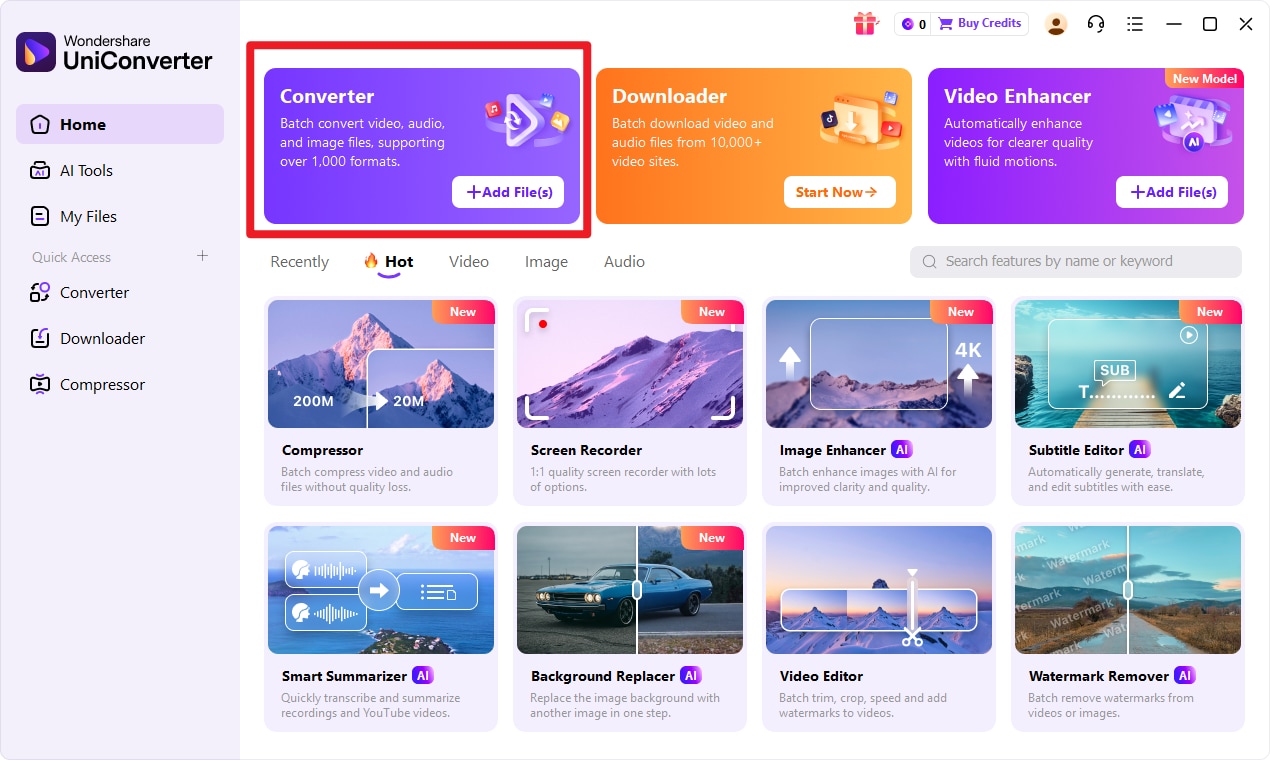
Step 1: Choose Converter in UniConverter
Launch the Wondershare UniConverter application on your computer. From the main interface, look at the menu on the left side and select the Converter tool to open the conversion panel.
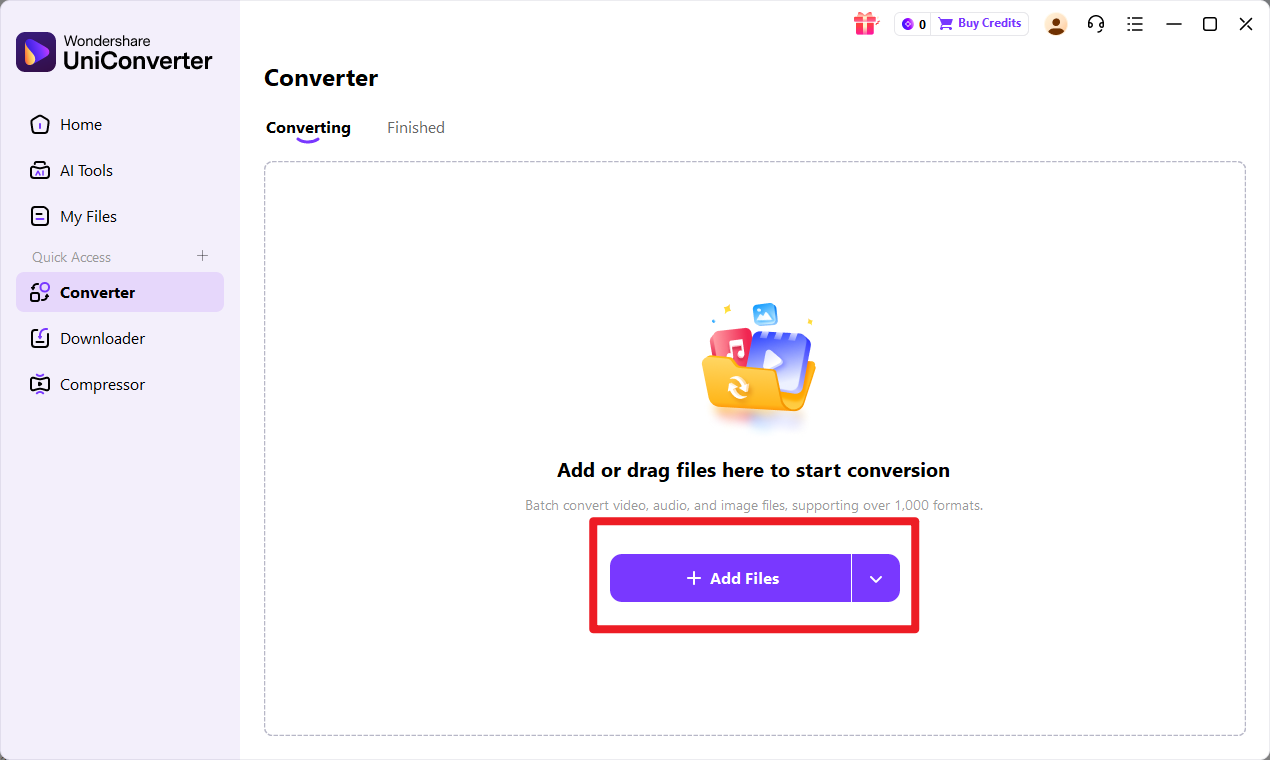
Step 2: Add Files to UniConverter
Click the Add Files icon in the center or top-left of the screen to open a file browser. Locate and select the input format file you wish to convert. For a quicker workflow, you can also simply drag and drop your video file directly into the program window.
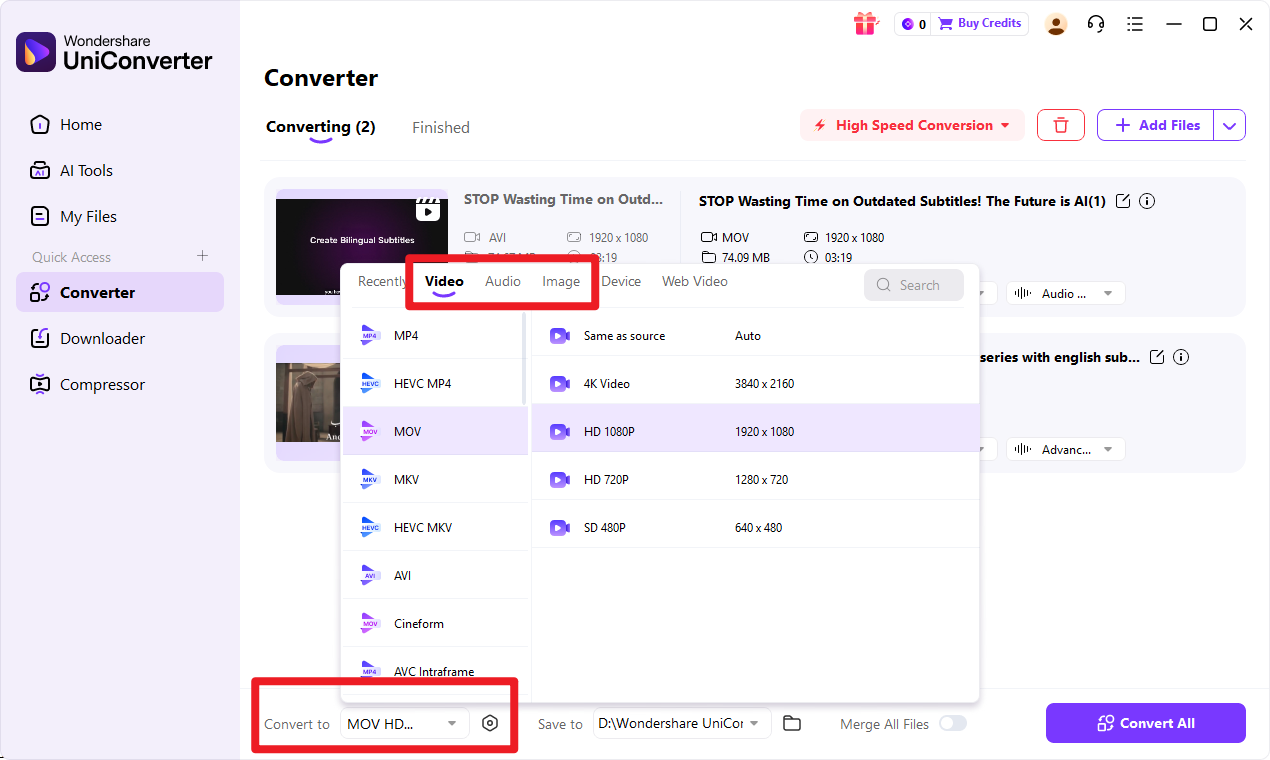
Step 3: Choose Output Format
Look to the bottom of the application window and click on the Output Format menu. This will open a new window with a list of available formats. Go to the Video tab, select target format from the format list on the left, and then choose your desired resolution from the presets on the right.
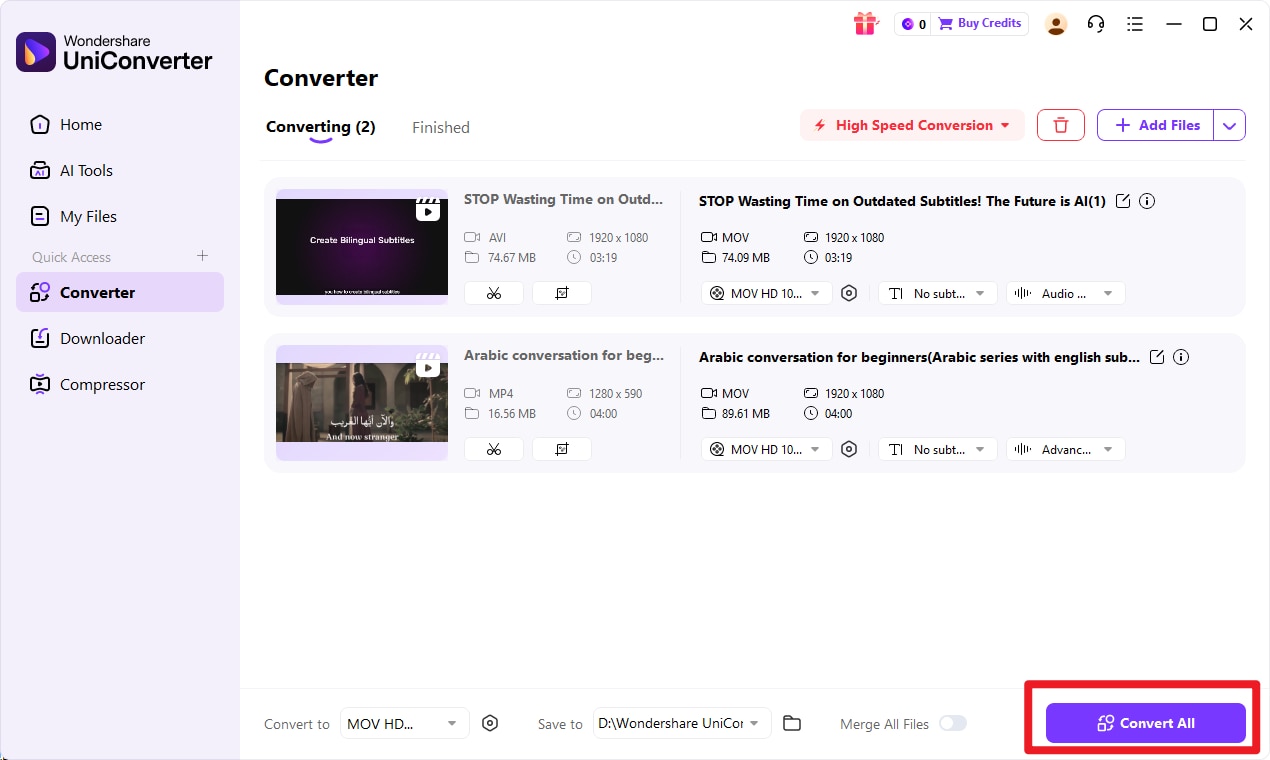
Step 4: Start the Conversion
Finally, select a destination for your converted file using the File Location menu at the bottom-left. Once you are ready, click the Convert button next to the file (or Start All if you have multiple files queued) to begin the conversion process. UniConverter will process your file quickly and efficiently.

More Than Just a Video Converter
Conclusion
Choosing between MP4 vs MPEG-TS is not about which format is superior overall, but which is the right tool for the job. Their designs serve distinct, non-overlapping purposes.
MP4 is the undisputed champion for the finished product. Its high compression, low overhead, and universal compatibility make it the ideal format for video-on-demand, file sharing, and personal media libraries. It is built for a world where the entire file is expected to be intact and accessible.
MPEG-TS, on the other hand, is the professional's choice for the journey. Its packet-based structure and superior error resilience are non-negotiable requirements for live broadcasting and streaming, where signal integrity and real-time delivery are paramount. It is built to withstand the uncertainties of transmission.
Ultimately, neither format is inherently "better." They are two sides of the same coin, optimized for different stages of the video lifecycle. For any workflow that requires moving between these formats—such as preparing an edited MP4 for a live stream or archiving a .ts broadcast into a more accessible MP4 file—a versatile tool like Wondershare UniConverter provides a seamless, reliable, and indispensable solution.
FAQs
-
1. Is the video quality of MPEG-TS higher than MP4?
No. The container format (TS or MP4) does not dictate the final video quality. Quality is determined by the video codec used (e.g., H.264, HEVC/H.265), the bitrate, and the resolution during the encoding process. Both MP4 and MPEG-TS are simply containers that can hold video and audio of identical quality. The primary difference is the structure and metadata, not the picture itself. -
2. Can I play a .ts file on my computer?
Yes, you can. Most modern desktop media players, most notably VLC Media Player, can play .ts files without any issues. However, native support is not as universal as it is for .mp4 files. You may run into trouble playing them in default players like Windows Media Player or Apple's QuickTime Player without extra codecs. Support on mobile devices and in web browsers is also very limited. -
3. Why is MPEG-TS used for HLS live streaming?
HLS (HTTP Live Streaming) works by breaking a continuous live video stream into short segments or chunks (usually a few seconds long). Using the TS format for these segments is crucial for two reasons. First, the error resilience of TS ensures that each chunk is robust and self-contained. Second, the timing information embedded in each TS packet allows the player to synchronize the segments perfectly and switch between different quality levels smoothly, which is essential for adaptive bitrate streaming. -
4. Can UniConverter convert from MPEG-TS back to MP4?
Absolutely. Wondershare UniConverter is a fully bidirectional conversion tool. You can convert from MPEG-TS to MP4 just as easily as you can convert from MP4 to MPEG-TS. The process is identical to the one described above: you simply add your .ts file as the source and select MP4 as your desired output format. This is a common workflow for archiving broadcast recordings or making them compatible with editing software and mobile devices.
