
Title: MP4 vs MOV: Which Video Format Is Best for You in 2026?
Have you ever recorded a fantastic video on your iPhone, only to find it won't play on your friend's Windows PC? Or perhaps you've struggled with a video file that's too large to email or upload to social media. If so, you've likely encountered the classic MP4 vs MOV dilemma. These two video formats are among the most common in the world, but they serve very different purposes and can often be a source of confusion. Choosing the right one is crucial for compatibility, file size, and quality.
MOV, developed by Apple, is the native format for its devices and a powerhouse for professional editing. On the other hand, MP4 is the universal language of video, designed to play on almost any device or platform imaginable. Understanding the strengths and weaknesses of each is key to a smooth video workflow, whether you're a professional content creator, a social media manager, or just someone trying to share a family video. This guide will demystify these formats, helping you make the right choice every time.
In this article, you will learn:
- The definitions and origins of MP4 and MOV formats.
- A quick side-by-side comparison of their key features.
- A detailed breakdown of how they stack up in terms of compatibility, file size, and quality.
- Practical use cases to help you decide when to use MP4 and when to use MOV.
- A simple, step-by-step guide to convert MOV to MP4 for universal playback.
Part 1. What is MP4? What is MOV?
Before we dive into a direct comparison, it's essential to understand what each format is at a fundamental level. Both MP4 and MOV are "container" formats, which means they are like digital boxes that can hold various types of data, including video streams, audio streams, subtitles, and metadata. The real difference lies in how these boxes are built and which devices and software are designed to open them.
What is MP4 (MPEG-4 Part 14)?
MP4, which stands for MPEG-4 Part 14, is an international standard developed by the Moving Picture Experts Group (MPEG). Think of it as the global standard for digital video. Its creation was driven by the need for a highly efficient and universally compatible format that could deliver good quality video without consuming excessive storage space or bandwidth.
This is achieved through the use of advanced, lossy compression algorithms. Lossy compression intelligently removes some data from the file to make it smaller, but it does so in a way that is barely perceptible to the human eye. This trade-off makes MP4 the undisputed king of online video. Its incredible compatibility means an MP4 file will play seamlessly on virtually any device, operating system, or web browser you can think of, from Windows and Mac computers to Android and iOS phones, smart TVs, and gaming consoles.
What is MOV (QuickTime File Format)?
The MOV format, also known as the QuickTime File Format, was developed by Apple in the early 1990s for its QuickTime Player. As a proprietary format, it was designed to integrate perfectly within the Apple ecosystem. To this day, it remains the default video recording format for iPhones, iPads, and Macs.
MOV is highly regarded in professional video production and post-production environments. Its container is exceptionally flexible and can hold multiple tracks of high-quality video, audio, and effects without significant compression. For example, professional editors often use the Apple ProRes codec within a MOV container to preserve the maximum amount of image data for color grading and visual effects. While this results in superior quality for editing, it also leads to significantly larger file sizes and can cause compatibility headaches outside of Apple's world.
Part 2. Quick Comparison Table
To get a clear overview of the key differences at a glance, here is a side-by-side comparison of MP4 and MOV.
| Feature | MP4 (MPEG-4 Part 14) | MOV (QuickTime File Format) |
| Developer | Moving Picture Experts Group (MPEG) | Apple Inc. |
| File Extension | .mp4 | .mov, .qt |
| Video Quality | Good to Excellent. Quality depends on the codec and compression settings. | Good to Excellent. Often associated with very high quality in professional editing workflows (e.g., ProRes). |
| Compression | Primarily uses lossy compression (like H.264/AVC or H.265/HEVC) for efficient file sizes. | Can use both lossy and lossless compression. Often used with less compression to maintain quality for editing. |
| File Size | Generally smaller due to more efficient compression. | Generally larger, especially when using high-quality codecs for professional post-production. |
| Compatibility | Universal. Supported by nearly all devices, operating systems, and media players. | Native to the Apple ecosystem (macOS, iOS). Requires specific players or codecs on Windows and Android. |
| Best For | Web streaming, social media sharing, online video, and universal playback on any device. | Professional video editing (especially in Final Cut Pro), storing master files, and working within the Apple ecosystem. |
Part 3. MP4 vs MOV: Which One Is Better?
The question of which format is "better" doesn't have a single answer. It depends entirely on your specific goal. Let's break down the comparison across the three most important factors: compatibility, file size, and quality.
MP4 vs MOV: Compatibility
When it comes to compatibility, there is no contest: MP4 is the clear and decisive winner.
- MP4: As an international standard, MP4 was designed from the ground up for universal playback. It is natively supported by Windows, macOS, Android, iOS, Linux, and virtually every modern web browser (Chrome, Firefox, Safari, Edge). It's the format of choice for major streaming platforms like YouTube and Vimeo because they know it will work for everyone, everywhere, without requiring users to download special software or codecs.
- MOV: The MOV format is native to Apple's ecosystem. It works flawlessly on Macs, iPhones, and iPads using QuickTime or other native apps. However, the moment you move outside this walled garden, you can run into trouble. A Windows PC, for instance, may not be able to play a MOV file with its default Windows Media Player unless the specific codecs used in the file are installed. While versatile players like VLC can often handle MOV files, you can't assume the recipient of your video will have them installed. This makes MOV a risky choice for broad distribution.
Winner: MP4
MP4 vs MOV: File Size and Compression
File size is a critical factor for storage, sharing, and streaming. Here, the format's typical compression methods play a huge role.
- MP4: MP4 files are renowned for their excellent compression efficiency. They typically use codecs like H.264 (AVC) or its successor, H.265 (HEVC), which are brilliant at reducing file size while preserving a high level of visual quality. A 10-minute 1080p video might be around 1-2 GB as a high-quality MOV master file, but it could be compressed to just 150-300 MB as an MP4 for web streaming without a dramatic loss in perceived quality. This makes MP4 the superior choice for uploading to the web, attaching to emails, or saving space on your devices.
- MOV: MOV files tend to be larger than MP4s containing the same video. This is because they are often used in professional workflows where preserving data is more important than saving space. For example, a video editor might export a master copy of their project using the Apple ProRes codec inside a MOV container. This codec uses very light compression to keep the video data as close to the original as possible, which is ideal for further editing but results in massive file sizes.
Winner: MP4 (for efficiency and sharing)
MP4 vs MOV: Video Quality
This is where the most common misconception arises. Many people believe that MOV is inherently higher quality than MP4, but this is not technically true.
Both MP4 and MOV are just containers. The actual video quality is determined by the codec used to encode the video and the bitrate (the amount of data used per second of video). Both formats can contain video of identical quality if they are encoded with the same codec and settings.
- MOV is associated with higher quality because it is the preferred container for high-bitrate, professional-grade codecs like Apple ProRes or uncompressed video streams used in post-production. These codecs retain more detail, color information, and dynamic range, which is essential for editors who need to perform complex color grading and effects work.
- MP4, while capable of holding high-quality video, is most commonly used with distribution-focused codecs like H.264. These codecs are designed to produce a final product that looks great to the viewer but is not intended for heavy re-editing.
In short, you can create a visually lossless MP4 that is indistinguishable from a MOV file for viewing purposes. However, for the process of editing, a high-bitrate MOV file provides more flexibility.
Winner: Tie (as quality depends on the codec, not the container)
Part 4. Use Cases for MP4 and MOV
So, when should you use each format? Here are some practical scenarios to guide your decision.
When to Use MP4
Choose MP4 when your priority is sharing and compatibility. It is the go-to format for final delivery.
- Sharing Videos Online: If you are uploading a video to YouTube, Vimeo, Instagram, Facebook, TikTok, or any other social media platform, MP4 is the recommended format. These platforms are optimized to process and stream MP4 files efficiently.
- Embedding Videos on Websites: To ensure your video plays correctly for all visitors regardless of their device or browser, use MP4 for any videos embedded on your website or blog.
- Sending Videos via Email or Messaging Apps: Due to its smaller file size, MP4 is much more practical for sending to others via email, Slack, WhatsApp, or other messaging services.
- Universal Playback: If you want to create a video that you can be confident will play on your friend's computer, a university's presentation system, or a client's smart TV, MP4 is the safest and most reliable choice.
When to Use MOV
Choose MOV when you are in the production or editing phase, especially if you are working within the Apple ecosystem.
- Editing Videos on a Mac: If you are editing a project in Final Cut Pro or even Adobe Premiere Pro on a Mac, working with MOV files (especially those with ProRes codecs) will provide the best performance and quality for the editing process.
- Storing a Master Copy: After you finish editing a video, it's a good practice to export a high-quality "master" or "archive" version before you compress it for distribution. A high-bitrate MOV file is an excellent choice for this archival copy.
- Working Exclusively within the Apple Ecosystem: If you are recording a video on your iPhone and editing it on your MacBook to be viewed on an Apple TV, staying with the MOV format throughout the process is seamless and efficient.
Part 5. Step-by-Step Guide to Convert MOV to MP4 Using UniConverter
What happens when you have a MOV file that won't play on your Windows PC, is too large to upload, or needs to be sent to an Android user? The best and simplest solution is to convert it to the universally compatible MP4 format.
For this task, we recommend Wondershare UniConverter. It's a powerful and intuitive tool that handles video conversions quickly and without any loss in quality. It supports over 1,000 formats and includes a suite of other useful tools for compressing, editing, and downloading videos.
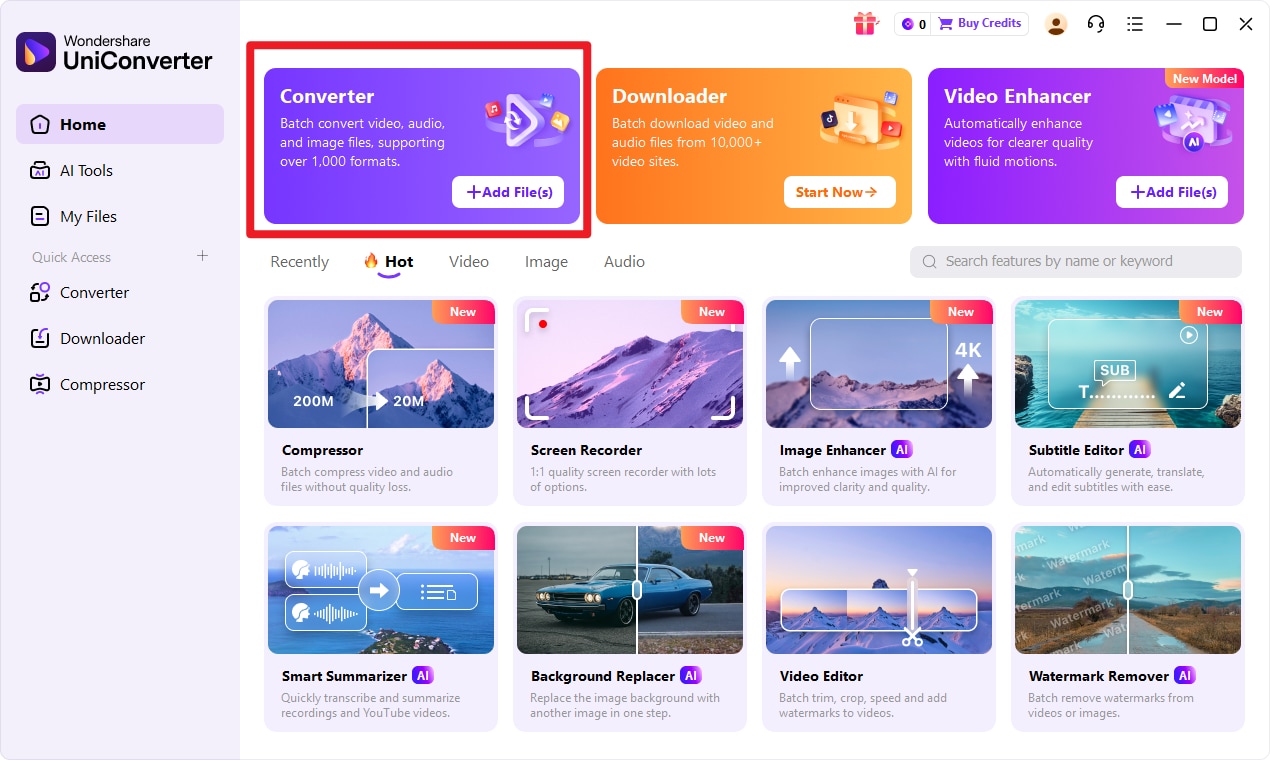
Step 1: Add Files to UniConverter
First, launch Wondershare UniConverter on your computer. In the main interface, ensure you are on the Converter tab from the left-hand menu. You can then either click the Add Files icon to browse and select your MOV file or simply drag and drop the file directly into the program window.
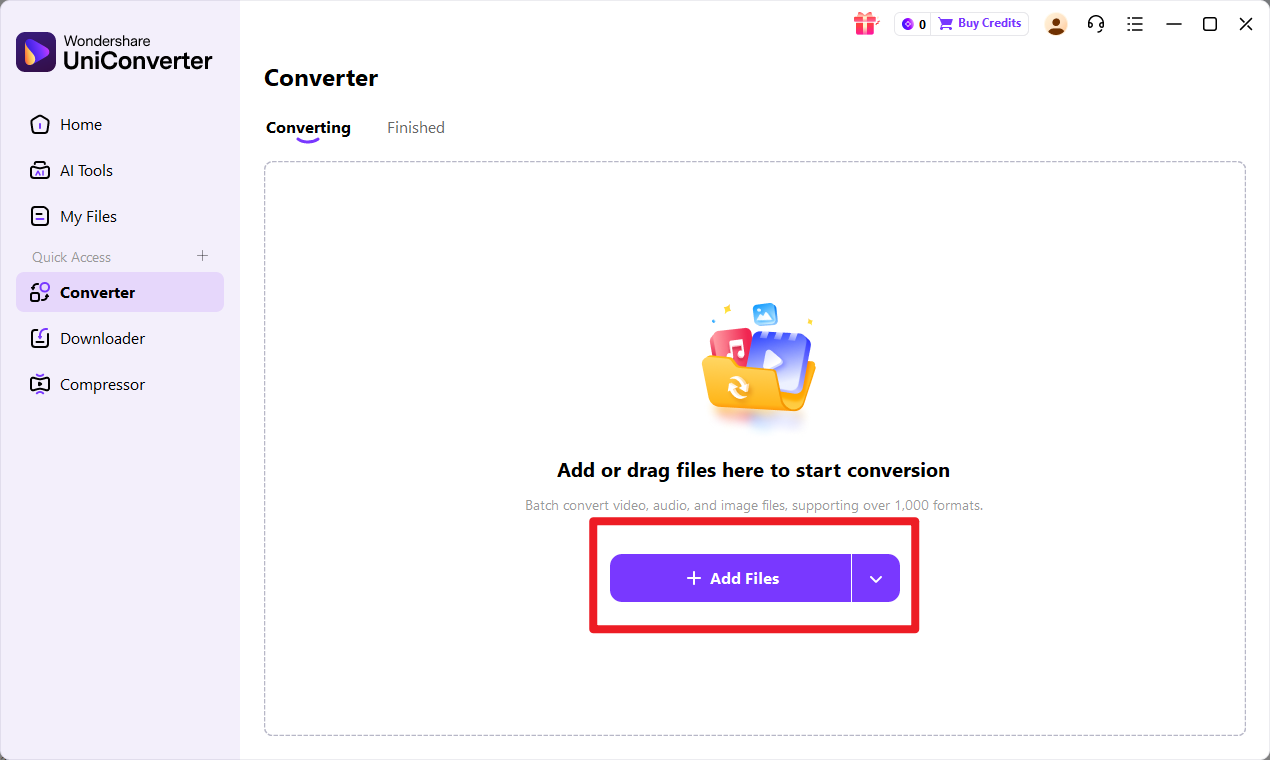
Step 2: Choose Output Format
Once your MOV file is loaded, look towards the bottom of the window and click on the Output Format menu. This will open a new window with a list of format options. Select the Video tab, choose MP4 from the list on the left, and then select your desired resolution on the right. For most cases, choosing Same as source is the best option to maintain the original quality.
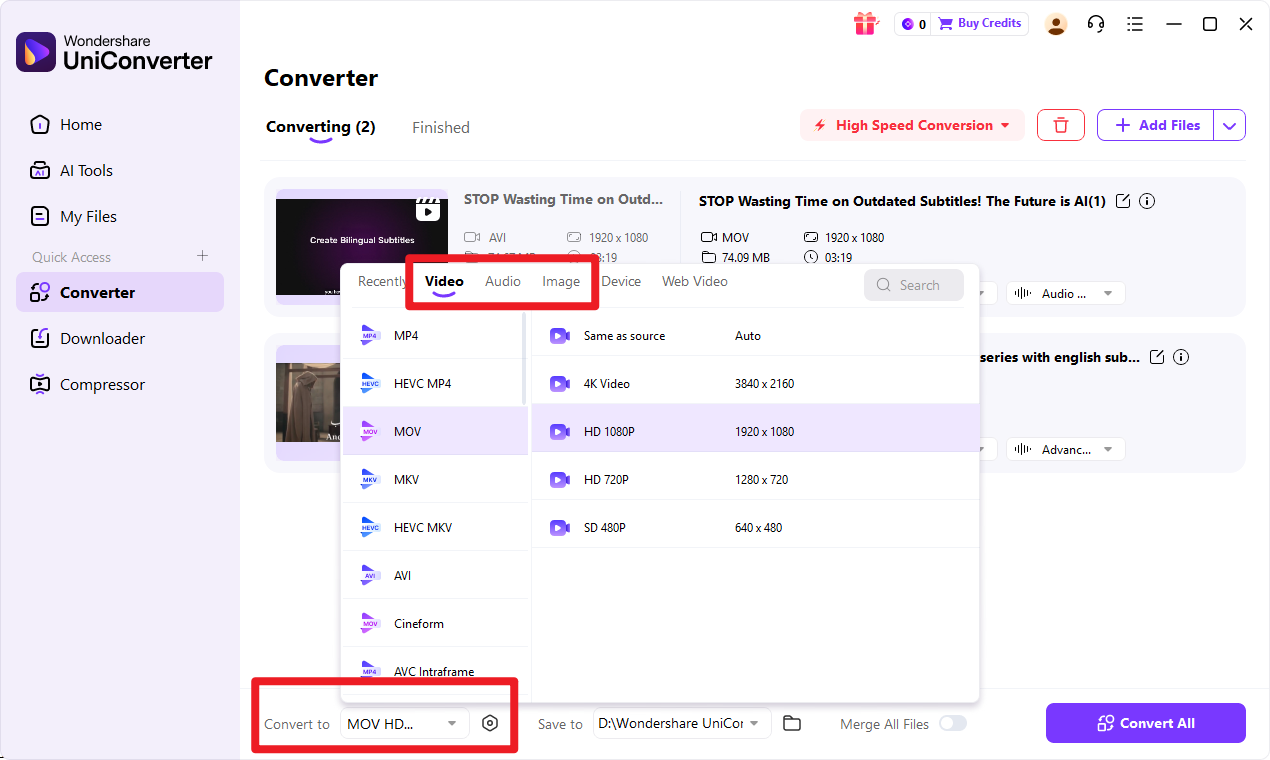
Step 3: Start the Conversion
Before starting, you can specify where you want to save the converted file by using the File Location field at the bottom. Once you are ready, click the Convert button next to the file. If you have loaded multiple files to convert in a batch, you can click the Start All button in the bottom-right corner. UniConverter will begin the high-speed conversion process.
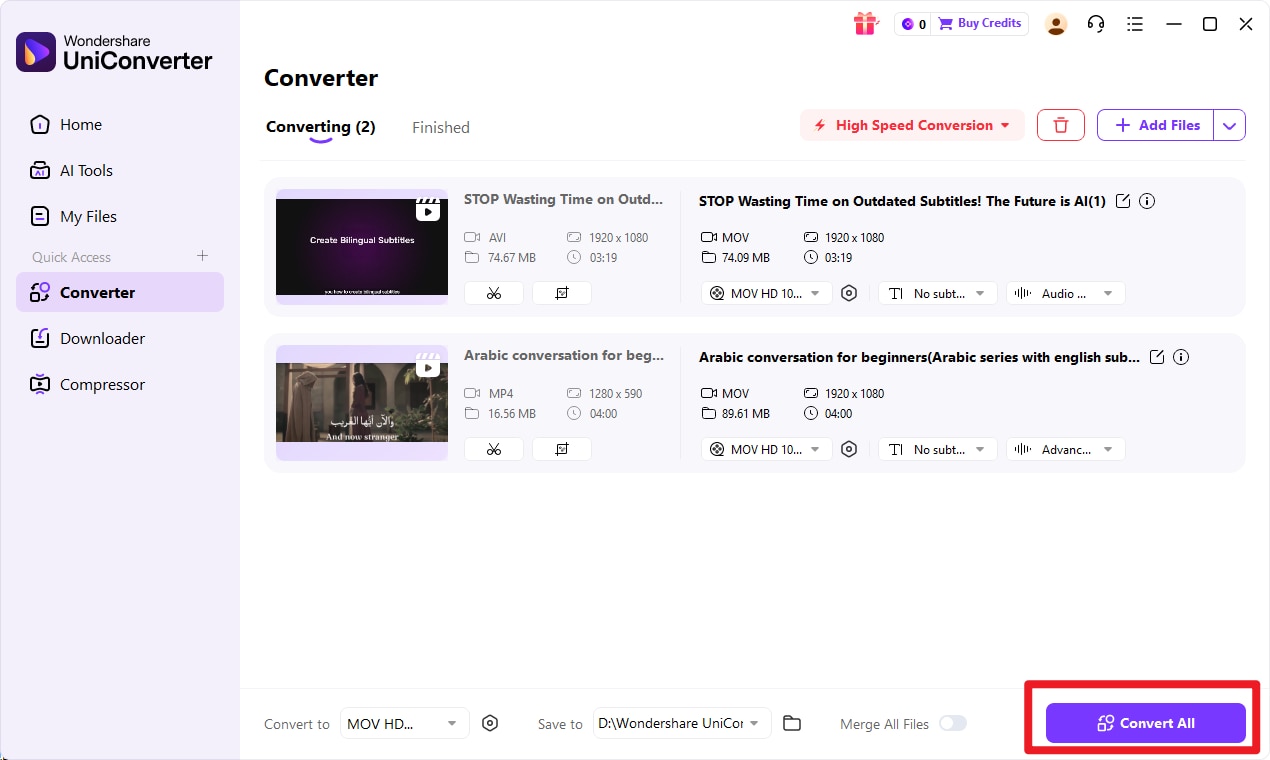
Step 4: Check Converted Files
The conversion process is incredibly fast. Once it's finished, you can find your new MP4 file in two ways. You can either navigate to the folder you selected in the previous step, or you can click on the Finished tab at the top of the UniConverter window. From there, you can click the Open icon to immediately locate and play your perfectly converted MP4 file.

Go Beyond Simple Video Conversion
Conclusion
In the MP4 vs MOV debate, there is no single champion, only the right tool for the right job. Both are excellent container formats, but they are designed with different priorities in mind.
- MP4 is the undisputed king of compatibility and efficiency. It's the ideal format for sharing, streaming, and ensuring your video can be viewed by anyone, on any device. Its ability to deliver great quality at a small file size makes it the perfect final delivery format for the web.
- MOV shines in the world of professional video production, particularly within the Apple ecosystem. Its capacity to hold high-quality, minimally compressed video makes it the superior choice for the editing and post-production process, where preserving every bit of data is crucial.
Ultimately, the "better" format is the one that aligns with your needs. If you need to share a video, choose MP4. If you are deep in the editing process on a Mac, MOV is a fantastic choice. And for those inevitable moments when you have a file in the wrong format, a reliable and easy-to-use tool like Wondershare UniConverter makes converting between them a simple, stress-free task.
FAQs
-
1. Is MOV higher quality than MP4?
Not necessarily. Both are container formats, and the video quality is determined by the codec and bitrate used, not the container itself. A MOV file used for professional editing often uses a higher-quality, less-compressed codec (like Apple ProRes), making it larger and better for editing. However, an MP4 file can be encoded to be visually identical to a MOV file for viewing purposes. -
2. Can Windows play MOV files?
Yes, but it can be problematic. The default Windows Media Player may not be able to play MOV files if it doesn't have the specific video or audio codecs that were used to create the file. To ensure playback, it's best to use a more versatile media player like VLC Media Player or to convert the MOV file to the more universally supported MP4 format. -
3. Why is my MOV file so large?
MOV files are often large because they are created with post-production in mind. They frequently use codecs that apply very little compression (or are even uncompressed) to preserve the maximum amount of image and audio data. This is ideal for professional editing, color grading, and applying effects, but it results in file sizes that are impractical for sharing or streaming. -
4. Should I record video in MP4 or MOV on my iPhone?
By default, modern iPhones record video in HEVC (a codec) inside a MOV container to save space while maintaining quality. This is labeled as "High Efficiency" in the settings. However, this can cause compatibility issues with non-Apple devices. For maximum compatibility, you can go to `Settings > Camera > Formats` and select Most Compatible. This will make your iPhone record video as H.264 in an MP4 container, which will be easier to share and play everywhere.
