
MP4 vs MKV: The Ultimate Guide to Choosing the Right Video Format in 2026
Have you ever downloaded a movie file, excited to watch it, only to find it won't play on your TV or smartphone? Or perhaps you're a content creator wondering which format to use for the best quality and compatibility. This common dilemma often boils down to a choice between two popular video formats: MP4 and MKV. While they may look similar on the surface, they function very differently. The MP4 vs MKV debate isn't about which one is definitively "better," but which one is better for you and your specific needs.
Understanding the core differences between these two container formats is key to avoiding playback errors, preserving video quality, and managing your media library effectively. One is a universal standard built for compatibility, while the other is a flexible powerhouse designed for features. Choosing the right one can save you time, storage space, and a lot of frustration.
In this article, we'll provide a comprehensive breakdown of MP4 and MKV, helping you make an informed decision every time.
- What is MP4? What is MKV?: A foundational look at each format.
- Quick Comparison Table: A side-by-side chart for easy reference.
- MP4 vs MKV: Which One Is Better?: A deep dive into compatibility, features, quality, and streaming performance.
- Use Cases for MP4 and MKV: Practical scenarios to help you choose.
- How to Convert Between Formats: A simple guide to solving any format-related problem.
Part 1. What is MP4? What is MKV?
Before we compare them, it's essential to understand that both MP4 and MKV are "container" formats. Think of a container like a digital box. This box doesn't determine the quality of what's inside; it simply holds various components together, such as the video stream, audio tracks, subtitles, and metadata. The actual quality is determined by the codecs (like H.264, H.265/HEVC, or AV1) used to compress the video and audio data within the container.
What is MP4 (MPEG-4 Part 14)?
MP4, short for MPEG-4 Part 14, is the undisputed king of video compatibility. Developed by the Moving Picture Experts Group (MPEG), it has become the industry standard for digital video. Its primary strength lies in its ability to play on virtually any device, platform, and web browser without requiring special software.
This universal acceptance makes MP4 the go-to format for online video. Platforms like YouTube, Instagram, and TikTok all prefer or recommend MP4 for uploads. Its design is highly optimized for streaming, allowing videos to start playing quickly and run smoothly even on slower internet connections. If you need to share a video with anyone and want to guarantee they can watch it, MP4 is your safest bet.
What is MKV (Matroska Video)?
MKV, or Matroska Video, is a free, open-source container format. Its name comes from the Russian Matryoshka dolls, which neatly reflects its ability to hold a virtually unlimited number of different data tracks within a single file. An MKV file can contain multiple video streams, numerous audio tracks (for different languages or director's commentary), and dozens of subtitle tracks.
This incredible flexibility has made MKV a favorite among media enthusiasts and those who archive their physical media, like Blu-rays and DVDs. It allows you to preserve all the original features of the disc in one convenient file. However, this feature-rich nature comes at the cost of compatibility. Many devices, including Apple products, game consoles, and some smart TVs, do not support MKV files natively. To play them, you often need a versatile media player like VLC or a video conversion tool.
Part 2. Quick Comparison Table
For a quick overview, here's a side-by-side comparison of the key attributes of MP4 and MKV.
| Feature | MP4 | MKV |
| Compatibility | Very High (Plays on almost any device) | Medium (Often requires specific players or conversion) |
| File Size | Generally smaller for similar quality | Can be larger due to extra tracks (audio, subtitles) |
| Subtitle Support | Limited (Usually one embedded track) | Excellent (Supports multiple, switchable subtitle tracks) |
| Multiple Audio Tracks | Limited (Possible but not common) | Excellent (Supports multiple, switchable audio tracks) |
| Open Standard | No (Proprietary, based on Apple's MOV) | Yes (Free and open-source) |
| Best For | Streaming, Mobile Devices, Social Sharing | Archiving, High-Quality Media Library, Feature Preservation |
Part 3. MP4 vs MKV: Which One Is Better?
The answer depends entirely on what you prioritize. Let's break down the comparison across four critical areas.
For Compatibility: MP4 is the Clear Winner
There is no contest here. MP4 is the most universally supported video format in the world. It will play natively on:
- Windows and macOS computers.
- iPhones, iPads, and Android smartphones and tablets.
- PlayStation and Xbox game consoles.
- Nearly all smart TVs and streaming devices (Roku, Apple TV, Chromecast).
- All major web browsers.
MKV, on the other hand, has much patchier support. While it plays perfectly on a computer with a media player like VLC, it often fails on other devices. If you try to play an MKV file on an iPhone or a PlayStation 5, you'll likely be met with an error message. For hassle-free playback and sharing, MP4 is the undeniable champion.
For Features and Flexibility: MKV Takes the Crown
This is where MKV truly shines. Its ability to act as a "digital Swiss Army knife" makes it superior for storing complex media. With MKV, you can package:
- Multiple Audio Tracks: Store the original language, a dubbed version, and a director's commentary track all in one file, and easily switch between them during playback.
- Multiple Subtitle Tracks: Include subtitles for various languages (e.g., English, Spanish, French) and even different types of subtitles (e.g., standard, forced, or for the hearing impaired).
- Chapter Markers: Navigate through a long video or movie with ease using embedded chapter points.
- Extensive Metadata: Store detailed information, including cover art, episode descriptions, and more.
MP4 is far more restrictive. While it can technically support some of these features, it's rarely implemented and poorly supported by most players. If you want to preserve all the features of a Blu-ray or create a master file with all assets intact, MKV is the format to choose.
For Quality and File Size: It's a Tie
A common misconception is that one format has inherently better quality or smaller file sizes than the other. This is incorrect. Remember, MP4 and MKV are just containers. The final video quality and file size are determined by the codecs used to encode the video (e.g., H.264, HEVC) and audio (e.g., AAC, AC3).
If you take the exact same video and audio streams and place them in both an MP4 and an MKV container, the resulting files will have virtually identical quality and be almost the same size. An MKV file only becomes larger than an MP4 file if it contains extra data, such as additional audio or subtitle tracks. So, for a single video and audio stream, there is no meaningful difference in quality or size between the two.
For Online Streaming: MP4 is More Efficient
When it comes to streaming video over the internet, MP4 has a structural advantage. It is better optimized for streaming protocols like HTTP Live Streaming (HLS) and Dynamic Adaptive Streaming over HTTP (DASH). These technologies allow a video player to start playback before the entire file has been downloaded, which is crucial for a smooth user experience on websites like YouTube and Netflix.
While MKV can be streamed, it's not as widely supported by web technologies and can be less efficient. This is why almost all online video platforms automatically convert uploads to MP4 for optimal delivery to viewers across different devices and network conditions.
Part 4. Use Cases for MP4 and MKV
To make the choice even clearer, here are some practical scenarios where you would choose one format over the other.
When You Should Choose MP4
- Uploading to Social Media: If you're posting a video to YouTube, Instagram, TikTok, or Facebook, MP4 is the standard. It ensures your video will be processed quickly and play correctly for all your followers.
- Sharing with Friends and Family: When you email a video or send it through a messaging app, use MP4. Your recipient will be able to watch it on their phone or computer without needing to install any extra software.
- Playing on Mobile Devices or Game Consoles: To watch a movie on your iPad during a flight or play a personal video on your Xbox, MP4 is the most reliable format.
- Creating Web Videos: For any video that will be embedded on a website, MP4 provides the best compatibility and streaming performance across all browsers.
When You Should Choose MKV
- Archiving Your Blu-ray or DVD Collection: If you want to create digital backups of your movies, MKV is the perfect choice. It allows you to rip the disc and preserve every single audio track, subtitle option, and chapter marker from the original.
- Creating a Master Project File: For video editors, exporting a final project to MKV can be a good way to keep all your assets (like different audio mixes and graphics) bundled together in a single, high-quality file for archival purposes.
- Building a Home Media Library: If you use a media server like Plex or Kodi on a home theater PC (HTPC), MKV is ideal. These platforms fully support MKV's features, allowing you to build a rich, cinema-like experience where you can easily switch languages and subtitles on the fly.
Part 5. Step-by-Step Guide to Convert Between Formats Using UniConverter
What if you have a feature-rich MKV file that won't play on your iPad, or an MP4 you want to add multiple subtitle tracks to? The solution is simple: convert the file. When you need to switch between formats without losing quality, a reliable tool is essential. Wondershare UniConverter is the best choice for this job, making the process quick, easy, and seamless for both MP4, MKV, and over 1000 other formats.
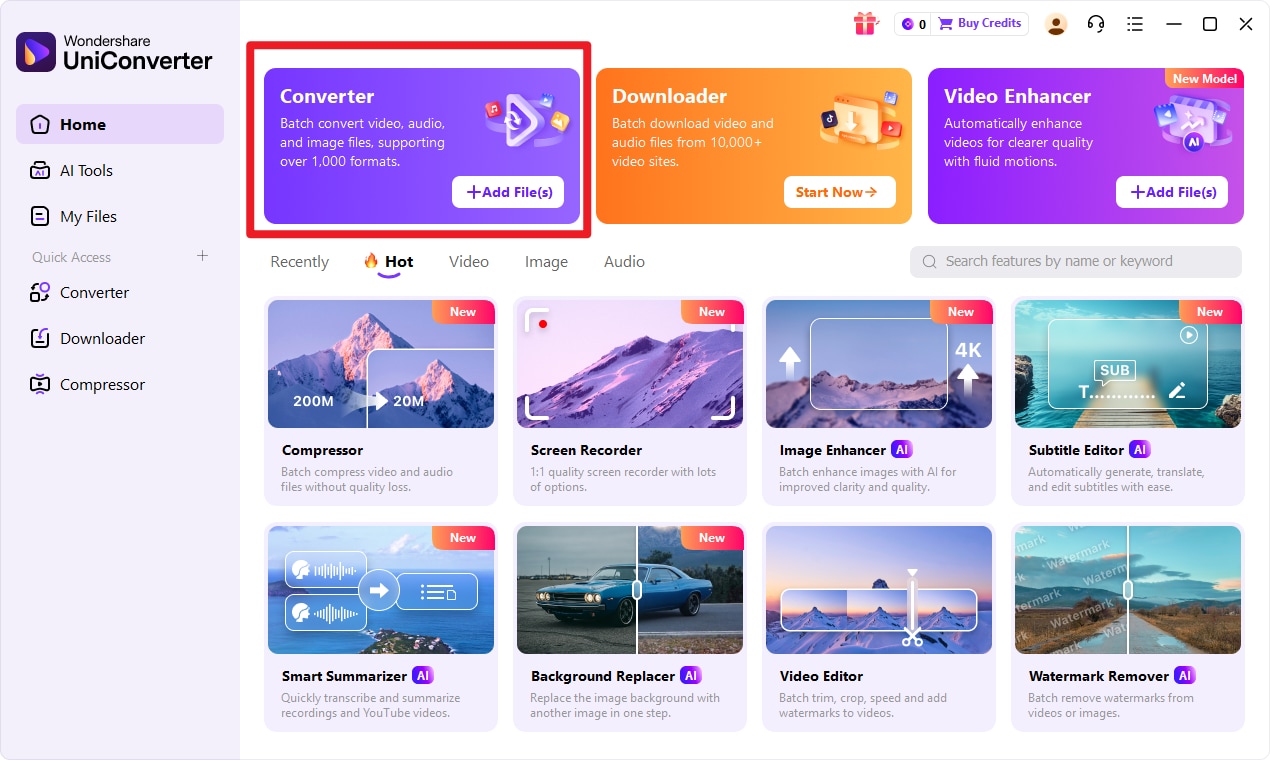
Step 1: Choose Converter in UniConverter
First, launch Wondershare UniConverter on your computer. On the main interface, you will see several functions listed on the left-hand side. Click on the "Converter" tab to open the video conversion tool.
Step 2: Add Files to UniConverter
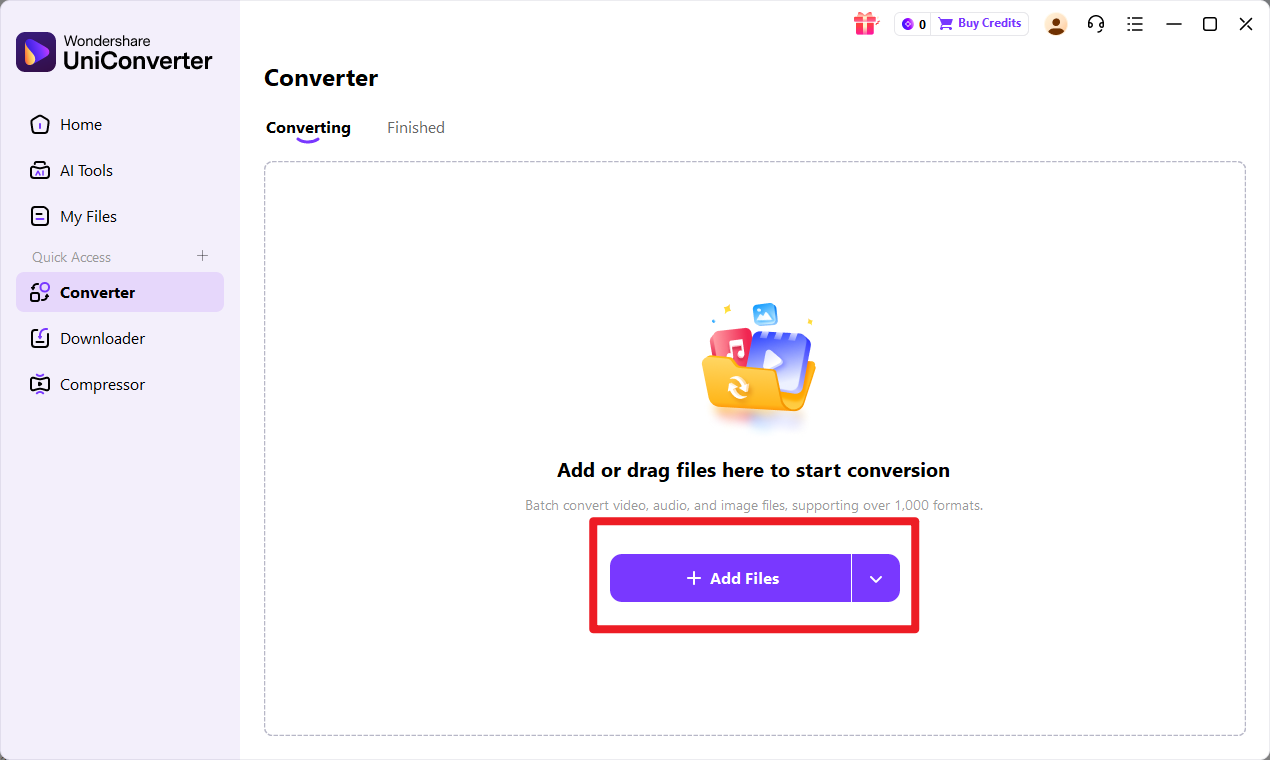
Next, you need to import the video file you wish to convert. You can either click the "Add Files" button in the center of the screen to browse your computer or simply drag and drop your input format file directly into the program window.
Step 3: Choose Output Format
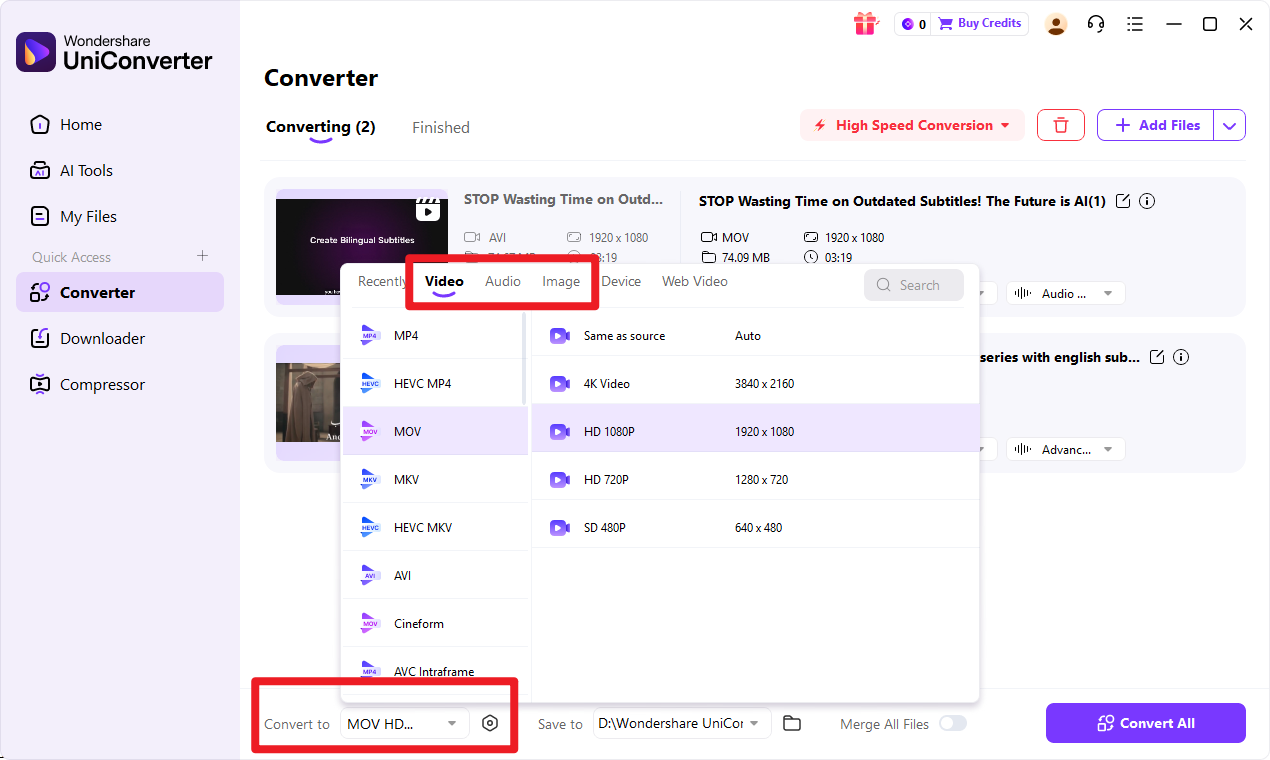
With your file loaded, click on the "Output Format" menu at the bottom of the window. This will open a new dialog box. Navigate to the "Video" tab, select your desired target format from the list on the left (such as MP4 or MKV), and then choose a resolution on the right.
Step 4: Start the Conversion
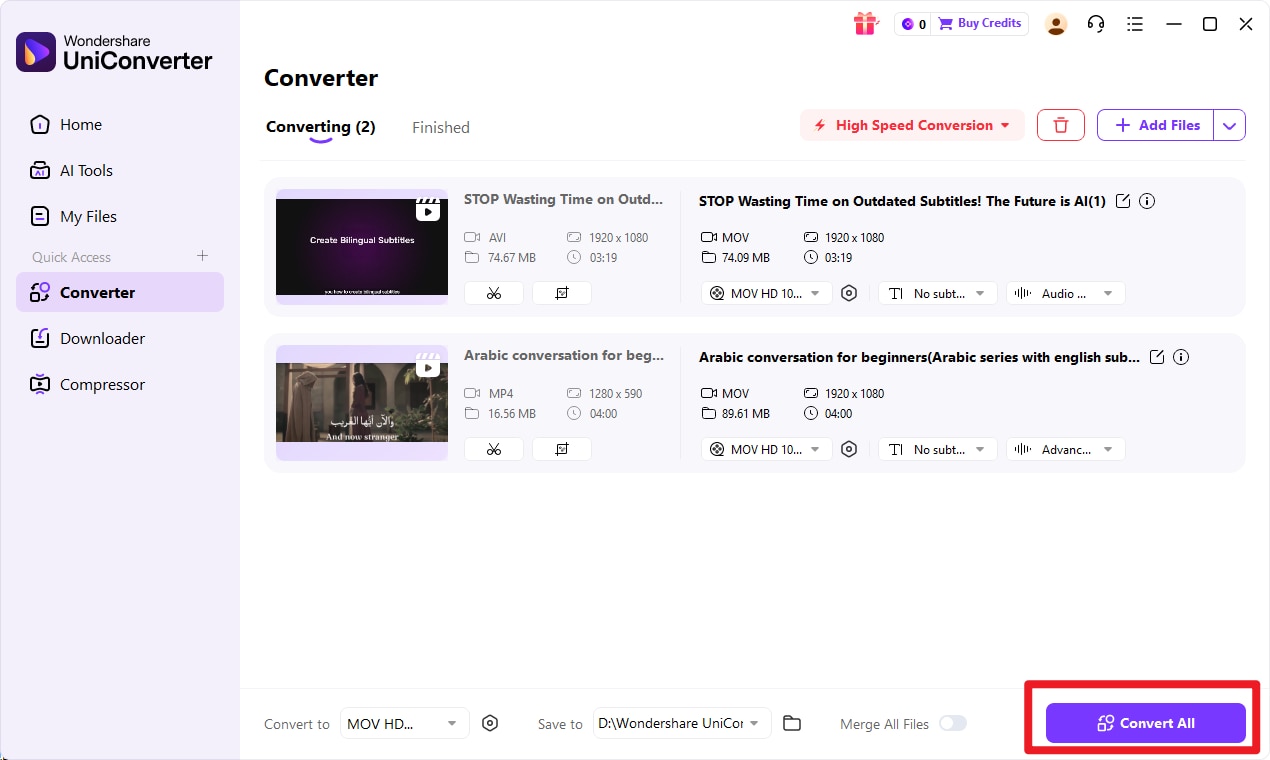
Finally, select a destination for your converted file by using the "File Location" menu at the bottom. Once you are ready, click the "Start All" button (or "Convert" if you have a single file) to begin the process. UniConverter's high-speed conversion technology will process your file in moments.

More Than Just a Format Converter
Conclusion
The battle of MP4 vs MKV doesn't have a single winner because they are designed for different purposes. The right choice depends entirely on your goal.
- Choose MP4 for universal compatibility. It's the best format for streaming, sharing, and ensuring your video plays on any device.
- Choose MKV for powerful features and flexibility. It's the ideal choice for archiving high-quality media with multiple audio and subtitle tracks.
Ultimately, you don't have to be locked into one format. With a versatile tool like Wondershare UniConverter, you have the freedom to switch between MP4, MKV, and hundreds of other formats effortlessly. Whether you need to make an MKV file compatible with your iPhone or add features to an MP4, you can handle any video task with confidence.
FAQs
-
1. Does converting MKV to MP4 reduce quality?
Not necessarily. Quality loss during conversion is related to the codec settings (like bitrate), not the container itself. If you use a professional tool like UniConverter and ensure the video and audio codecs and bitrate remain the same, any quality loss will be visually imperceptible. -
2. Is MKV always larger than MP4?
No. For a file containing the exact same video and audio stream, the file size of an MKV and an MP4 will be nearly identical. MKV files are only larger when they contain additional data that an MP4 file doesn't, such as multiple language tracks or several subtitle files. -
3. Can I play MKV on my smart TV?
It depends. Some modern smart TVs from brands like Samsung and LG have native support for MKV files, but many others do not. It's often a hit-or-miss situation. The most reliable method to guarantee playback on any smart TV is to convert the MKV file to the universally supported MP4 format. -
4. Which format is better for YouTube, MP4 or MKV?
While YouTube's uploader accepts both MKV and MP4 files, YouTube officially recommends using the MP4 format. MP4 files with an H.264 video codec and AAC audio codec tend to process faster and have fewer issues during upload, making them the preferred choice for content creators.
