
In the vast world of digital media, file formats are the building blocks that determine how our videos and audio are stored, shared, and played. While many of us are familiar with common formats, encountering a less common one can be confusing. This is often the case when comparing MP4 vs MKA. You might have an MP4 video with multiple audio tracks you want to archive, or you've downloaded an MKA file that won't play on your phone. Understanding the fundamental differences between these two container formats is key to managing your media effectively.
MP4 is the undisputed king of video compatibility, while MKA is a powerful, niche format designed for advanced audio storage. This guide will demystify both, helping you understand their unique strengths, weaknesses, and ideal use cases. We'll explore which format is better for specific tasks and show you how to convert between them when needed.
In this article
Part 1. What is MP4? What is MKA?
Before we dive into a direct comparison, it's essential to understand what each format is on a fundamental level. Both are "container" formats, meaning they are like digital boxes that can hold different types of data, but what they are designed to hold is quite different.
What is an MP4 File?
MP4, which stands for MPEG-4 Part 14, is arguably the most popular and versatile digital multimedia container format in use today. Think of it as the universal standard for video. Its incredible popularity stems from a powerful combination of features:
- Versatile Content: An MP4 file can store video, audio, subtitles, and even still images within a single file.
- Efficient Compression: It offers a high degree of compression, which means it can create relatively small file sizes without a significant loss in visual quality. This makes it perfect for streaming and sharing online.
- Universal Compatibility: This is MP4's biggest advantage. It is supported by virtually every modern device, platform, and software application, from smartphones and smart TVs to web browsers and video editing suites.
Because of these attributes, MP4 has become the go-to format for services like YouTube, Instagram, and Netflix, as well as for personal video recording and sharing.
What is an MKA File?
MKA stands for Matroska Audio. It is an audio-only container format that belongs to the same family as the well-known MKV (Matroska Video) format. While MP4 is a jack-of-all-trades, MKA is a specialist focused entirely on audio.
Its main strength lies in its flexibility and capacity for high-fidelity audio storage:
- Multiple Tracks: An MKA file's defining feature is its ability to hold numerous audio tracks and subtitle tracks in a single file. This is ideal for storing different language dubs, director's commentaries, or various audio mixes (e.g., stereo and 5.1 surround sound).
- Codec Support: It can contain audio encoded in a wide variety of codecs. This includes popular lossy formats like AAC and Opus, but more importantly, it fully supports lossless audio codecs like FLAC (Free Lossless Audio Codec). This allows for perfect, bit-for-bit archival of original audio sources.
The Core Difference: Video Container vs. Advanced Audio Container
The fundamental difference is simple: MP4 is a comprehensive multimedia container designed primarily for the distribution and playback of video content. It balances quality, file size, and compatibility to be the most accessible format possible.
In contrast, MKA is a specialized audio container designed for flexibility and high-fidelity audio storage. It sacrifices universal compatibility to provide advanced features like support for multiple lossless audio tracks, making it a favorite among audiophiles and media archivists.
Part 2. Quick Comparison Table
To see the differences at a glance, here is a side-by-side comparison of MP4 and MKA based on their key features.
| Feature | MP4 | MKA |
| Primary Use | Video and audio playback, streaming, and sharing | Storing multiple, high-quality, or lossless audio tracks in a single file |
| Content | Video, audio, subtitles, and images | Audio and subtitles only |
| Compatibility | Excellent. Supported by nearly all devices, players, and software. | Limited. Requires specific players like VLC or MPC-HC, or conversion for wider playback. |
| Audio Flexibility | Good. Typically holds one or two audio tracks (e.g., stereo, 5.1). | Superior. Can hold numerous audio tracks (e.g., multiple languages, commentaries) and lossless codecs. |
| Video Support | Yes | No |
| Common Codecs | H.264/AVC, H.265/HEVC (video); AAC, MP3 (audio) | FLAC, ALAC (lossless audio); AAC, Opus, Vorbis (lossy audio) |
Part 3. MP4 vs MKA: Which One Is Better?
The question of which format is "better" entirely depends on your specific goal. Each format excels in different areas, and choosing the right one means matching its strengths to your needs.
For Universal Compatibility: MP4 is the Clear Winner
There is no contest here. If your priority is to create a file that can be played by anyone, anywhere, on any device, MP4 is the only choice.
MP4 files play natively on Windows, macOS, iOS, and Android. They are the standard format for web streaming on platforms like YouTube and Vimeo, and they are what social media apps like Instagram and TikTok expect you to upload. You can confidently send an MP4 file to a friend or colleague, knowing they will be able to open it without needing to download special software. MKA, on the other hand, will often result in a "file not supported" error on most default media players.
For Audio Archiving and Quality: MKA Has the Edge
If your focus is purely on audio, especially preserving the highest possible quality or managing multiple audio streams, MKA is the superior format. Its ability to house lossless audio codecs like FLAC means you can store a perfect, uncompressed copy of an original audio source, which is something audiophiles and archivists value highly.
Furthermore, its capacity for multiple tracks is unmatched by MP4. Imagine you have a Blu-ray of your favorite film. You can use the MKA format to create a single audio file that contains the original English 5.1 surround sound track, a French stereo dub, and the director's commentary track. This keeps all related audio neatly organized in one place, which is far more efficient than having three separate audio files.
For Editing and Production: MP4 is More Practical
In a professional video production or even a casual editing workflow, practicality is key. Most video editing software, from Adobe Premiere Pro and Final Cut Pro to simpler tools, is built to work seamlessly with MP4 files. You can import, edit, and export MP4s with ease, as it is the industry standard for delivery.
MKA files, being audio-only and less common, are often not directly supported by video editing software. If you have an MKA file with an audio track you want to use in a video project, you will likely need to first extract the desired track and convert it to a more compatible format like WAV or AAC before you can import it into your editor. This adds an extra, inconvenient step to your workflow.
The Verdict: Use the Right Tool for the Job
Neither format is inherently better than the other; they are simply designed for different purposes. The verdict is clear:
- Choose MP4 for almost all video-related tasks, including sharing, streaming, and general playback. It is the format for maximum compatibility and ease of use.
- Choose MKA for specific, audio-focused tasks. Use it when you need to archive multiple audio tracks from a single source or when you want to store music in the highest possible lossless quality.
Part 4. Use Cases for MP4 and MKA
Understanding the theory is one thing, but seeing how these formats are used in the real world can make their purposes much clearer.
Common Use Cases for MP4
Because of its universal nature, you will encounter MP4 in countless everyday scenarios:
- Online Video Platforms: Uploading a video to your YouTube channel, posting a story on Instagram, or sharing a clip on TikTok. These platforms are optimized for the MP4 format.
- Streaming and Playback: Watching a movie on your smart TV, streaming a TV show on your tablet, or playing a video file on your smartphone. The built-in players on these devices are guaranteed to support MP4.
- Sharing and Collaboration: Emailing a short video presentation to a colleague or sending a family video to a relative. MP4 ensures the recipient can open and view it without any hassle.
- Digital Cameras and Drones: Most consumer cameras, drones, and smartphones record video in the MP4 format by default for maximum compatibility.
Specific Use Cases for MKA
MKA's use cases are more specialized and cater to users with very specific audio needs:
- Archiving Blu-ray/DVD Audio: Ripping the audio from a Blu-ray disc that contains a movie's main soundtrack, multiple foreign language dubs, and a commentary track, and storing them all in a single, organized MKA file.
- Storing High-Resolution Music: An audiophile might store a high-resolution digital music album in the FLAC codec within an MKA container. This preserves the full, uncompressed quality of the music.
- Live Concert Recordings: A sound engineer could create an MKA file from a live concert recording that includes both the final stereo mix and a separate multi-channel surround sound mix, giving the listener a choice between playback options.
- Complex Podcast Production: A podcast producer could use an MKA container to hold the main vocal track, a separate music bed track, and individual sound effects tracks, keeping all elements of an episode synchronized within one file before final mixing.
Part 5. Step-by-Step Guide to Convert MP4 to MKA Using UniConverter
If you have an MP4 video and want to extract its audio into the flexible MKA format—perhaps to archive multiple language tracks—you need a reliable conversion tool. Wondershare UniConverter is a comprehensive video toolbox that handles this and hundreds of other conversion tasks with speed and simplicity. It allows you to easily isolate audio streams and save them in the format of your choice.
Here's how to convert your MP4 files to MKA in four simple steps.
Step 1: Choose Converter in UniConverter
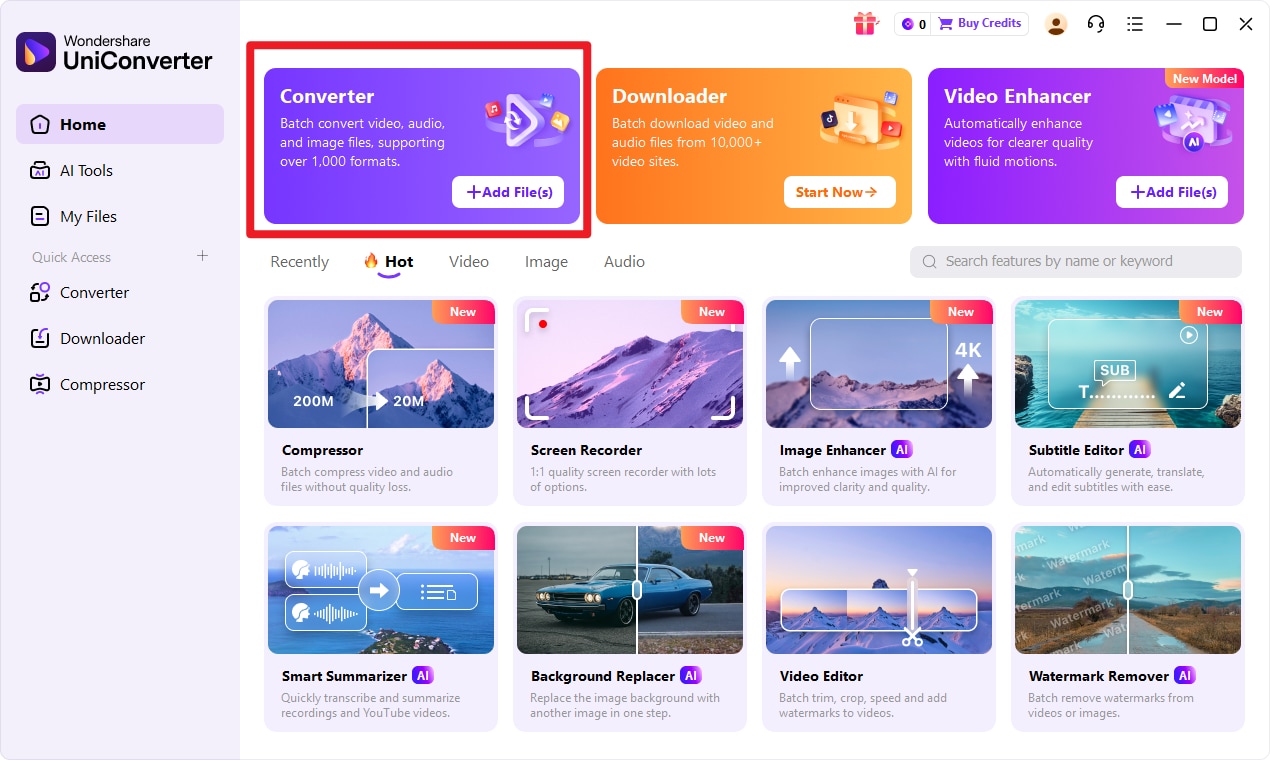
Launch Wondershare UniConverter on your computer. From the home screen, look at the menu on the left side and select the Converter tool to open the conversion interface.
Step 2: Add Files to UniConverter
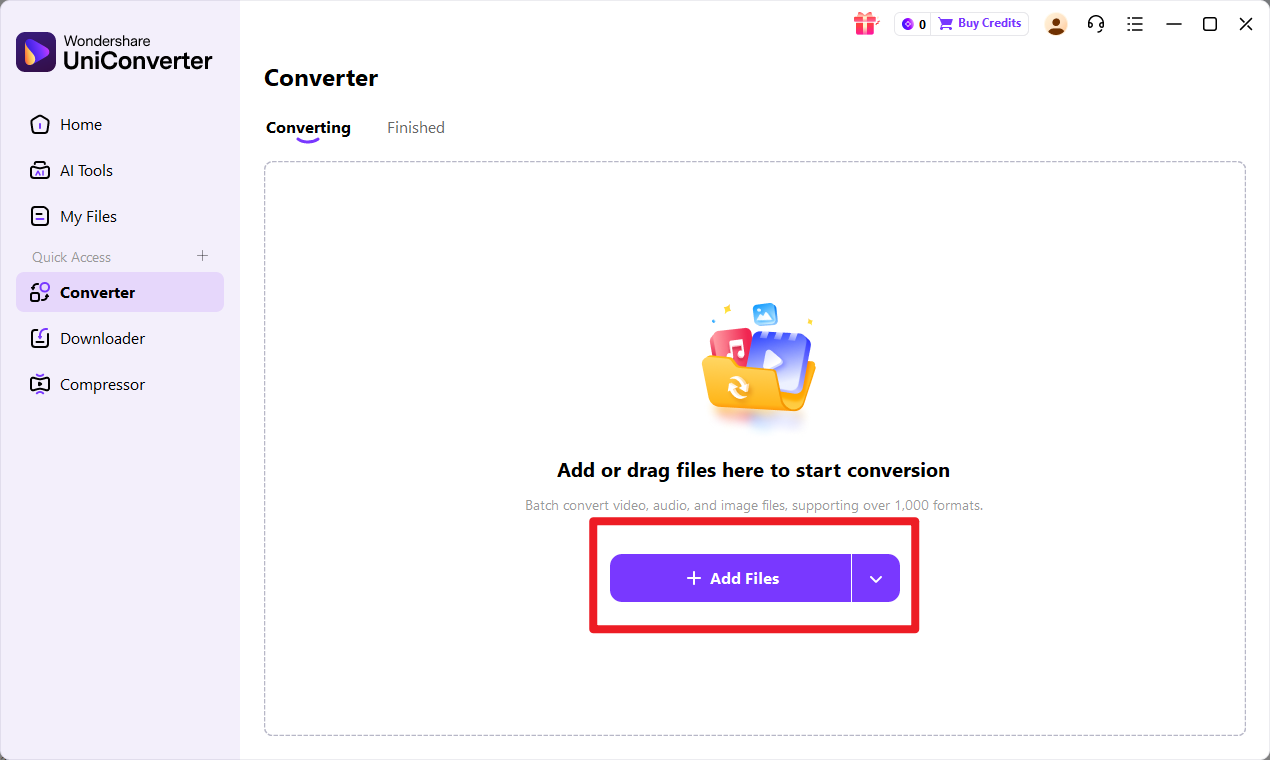
Next, you need to import the MP4 file you wish to convert. You can either click the Add Files icon in the top-left corner to browse your computer or simply drag and drop your input format file directly onto the program window.
Step 3: Choose Output Format
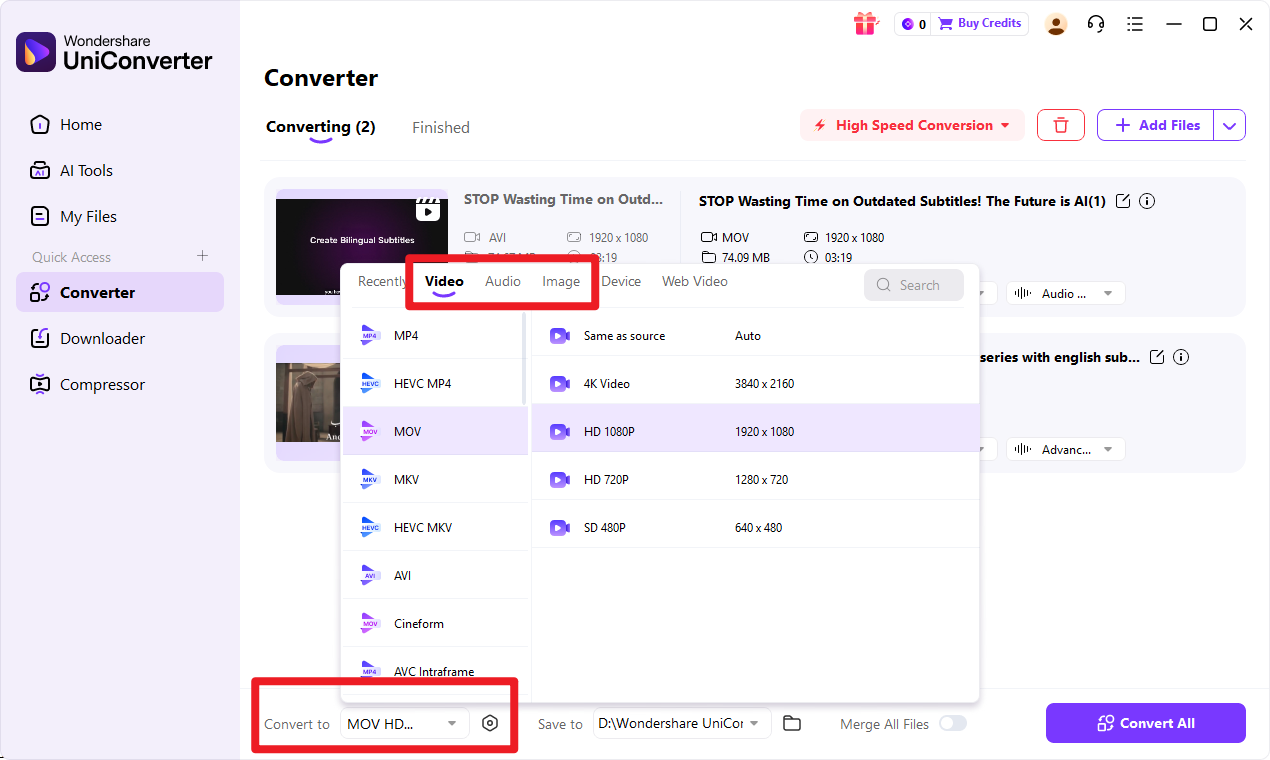
With your file loaded, click on the Output Format menu at the bottom of the window. This will open a new panel with a list of format options. Navigate to the Audio tab, select MKA from the list of formats on the left, and then choose your desired audio quality preset from the options on the right.
Step 4: Start the Conversion
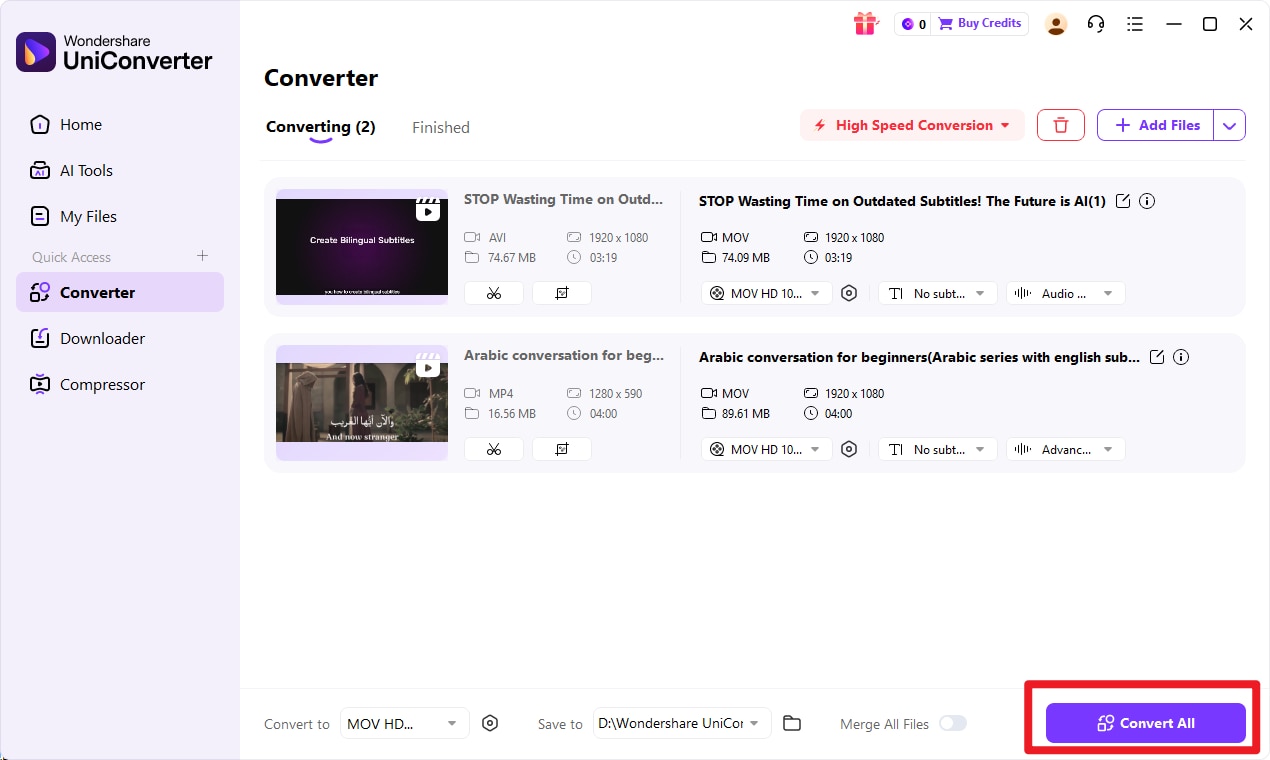
Finally, choose where you want to save the converted file by using the File Location field at the bottom. Once you are ready, click the Start All button in the bottom-right corner to begin the conversion process from your input format to the target format. UniConverter will quickly process your file and save the new MKA file to your specified folder.

More Than Just a Video Converter
Conclusion
To sum up, the MP4 vs MKA debate is not about which format is superior overall, but which is right for your specific task. MP4 is the universal, hassle-free standard for all things video, prized for its unmatched compatibility and efficient balance of quality and file size. MKA, in contrast, is a niche but powerful audio container designed for audiophiles and archivists who need to store multiple audio tracks or preserve perfect, lossless audio quality.
Neither format can replace the other; their value is defined by the user's goal. For anyone needing to bridge the gap between these formats—such as extracting complex audio from a video file or converting an MKA file for playback on a standard device—a reliable and versatile tool is essential. Wondershare UniConverter provides a simple, fast, and effective solution for converting MP4 to MKA, along with a vast array of other tools to manage all your media conversion needs in 2026 and beyond.
FAQs
-
1. Can MKA files contain video?
No, MKA is a strictly audio-only container format. The "A" in MKA stands for Audio. Its video-capable counterpart from the same family is the MKV (Matroska Video) file, which can contain video, multiple audio tracks, and subtitles. -
2. Is the audio quality in MKA better than in MP4?
Not necessarily. The final audio quality depends entirely on the audio codec used inside the container, not the container itself. Both MP4 and MKA can contain high-quality AAC audio. However, MKA is more frequently used to store lossless audio codecs like FLAC, which offer superior, bit-perfect quality compared to the typically lossy codecs found in MP4 files. -
3. Why would I convert MP4 to MKA?
The primary reason to convert MP4 to MKA is to extract and archive the audio tracks from a video file into a single, flexible audio container. This is especially useful if the source MP4 video contains multiple audio streams, such as different languages or commentary tracks, and you want to save all of them together in one organized audio file without the video. -
4. How can I play an MKA file?
MKA files are not as widely supported as formats like MP3 or MP4. To play an MKA file, you will need a versatile media player that supports the Matroska format, such as the free and popular VLC Media Player or MPC-HC (Media Player Classic - Home Cinema). If you want to play the file on a device with limited codec support, like a smartphone or smart TV, your best option is to use a tool like UniConverter to convert the MKA file to a more universally compatible format like MP3, AAC, or M4A.
