
Have you ever stumbled upon an old video file with an .flv extension and found that your phone or computer refuses to play it? You're not alone. In the ever-evolving world of digital media, video formats come and go, and the battle of MP4 vs FLV is a classic example of a modern standard replacing a legacy one. While FLV once dominated web video, its time has passed, leaving MP4 as the undisputed champion for compatibility and efficiency.
This guide will provide a detailed comparison between these two formats. We'll explore their history, technical differences, and practical use cases. More importantly, we will show you why converting your old FLV files to MP4 is essential in 2026 and guide you through the simple process of doing so, ensuring your video library is accessible on any device, anytime.
In this article
Part 1. What is MP4? What is FLV?
To understand the comparison, we first need to know what these file types are. Both MP4 and FLV are "container" formats, which means they are like digital boxes that hold various components of a video file, including the video stream, audio stream, and metadata. The key difference lies in how they package this data and which technologies they were designed to support.
What is MP4 (MPEG-4 Part 14)?
MP4, short for MPEG-4 Part 14, is a digital multimedia container format that has become the universal standard for video content. Developed by the Moving Picture Experts Group (MPEG), it was designed to be a flexible and highly efficient format for a wide range of applications.
Its main strength is its ability to store high-quality video and audio in a relatively small file size. This is achieved by using advanced compression codecs like H.264 (AVC) and the even more efficient H.265 (HEVC). Because of its excellent balance of quality and size, MP4 is natively supported by virtually every modern device, operating system, web browser, and media player. From your iPhone and Android smartphone to your Windows PC, Mac, and smart TV, you can play an MP4 file without needing any special software. This universal compatibility makes it the go-to format for streaming, sharing, and storing video content today.
What is FLV (Flash Video)?
FLV, or Flash Video, is a container file format developed by Adobe Systems. For many years, it was the de facto standard for delivering video over the internet. If you watched videos on YouTube or other websites in the mid-2000s, you were almost certainly watching an FLV file delivered through the Adobe Flash Player plugin.
The format was specifically designed for this purpose, enabling streaming video content within web browsers. However, the digital landscape has shifted dramatically. The decline of Adobe Flash, driven by security vulnerabilities, high resource consumption, and the rise of mobile devices that never fully supported it (like Apple's iOS), has rendered FLV an obsolete and legacy format. Today, playing an FLV file often requires a dedicated media player like VLC or a conversion process, as modern browsers and devices no longer support Flash or the FLV format natively.
Part 2. Quick Comparison Table
For a quick overview, here is a side-by-side comparison of the key features of MP4 and FLV.
| Feature | MP4 | FLV |
| Compatibility | Universal. Natively supported by all modern devices, browsers, and operating systems (iOS, Android, Windows, macOS). | Obsolete. Requires special players or plugins; not supported by modern browsers or mobile devices. |
| Compression & Quality | Excellent. Uses advanced codecs like H.264 and H.265 for high quality at low bitrates. | Fair. Uses older codecs like Sorenson Spark and On2 VP6, resulting in lower efficiency. |
| File Size | Generally smaller for the same level of quality due to superior compression. | Generally larger for comparable quality compared to modern MP4 files. |
| Primary Use Case | Web streaming (HTML5), social media, video sharing, mobile playback, and local storage. | Legacy web content built for Adobe Flash Player. Its main modern use is for conversion to MP4. |
| Developer | Moving Picture Experts Group (MPEG) | Adobe Systems |
Part 3. MP4 vs FLV: Which One Is Better?
While the comparison table gives a clear indication, let's dive deeper into the specific areas that matter most to users: compatibility, compression, and overall utility.
Compatibility and Platform Support: The Clear Winner
When it comes to compatibility, there is no contest. MP4 is the undisputed winner and the global standard. Its design ensures it works seamlessly across an enormous ecosystem of hardware and software.
MP4: You can record an MP4 video on your Android phone, edit it on a Windows PC, and play it back on an iPad or a smart TV without any issues. All major web browsers (Chrome, Firefox, Safari, Edge) support MP4 for HTML5 video playback, which is the technology that powers nearly all modern web video. Social media and video-sharing platforms like YouTube, Instagram, TikTok, and Vimeo all recommend or require uploads in the MP4 format.
FLV: In stark contrast, FLV's support is virtually non-existent in the modern digital world. Adobe officially ended support for Flash Player at the end of 2020, and all major browsers have removed it. This means any website still relying on Flash to play FLV videos is broken for most users. Mobile operating systems like iOS and Android never offered robust native support for Flash, which was a major factor in its decline.
For anyone creating or sharing video content in 2026, choosing MP4 is the only logical choice for ensuring your audience can actually view it.
Compression Efficiency and Video Quality
Both MP4 and FLV are containers, so the final video quality ultimately depends on the codec used for compression. However, the codecs typically associated with each format create a significant difference in efficiency.
MP4 containers most commonly use the H.264 (AVC) codec, which is renowned for its ability to deliver excellent video quality at a much lower bitrate than older codecs. Many modern videos are now also using the even more advanced H.265 (HEVC) codec, which can reduce file sizes by up to 50% more than H.264 with no loss in visual quality. This means you get a crisp, clear video that doesn't take up excessive storage space or consume too much bandwidth when streaming.
FLV, on the other hand, relies on older and less efficient codecs like Sorenson Spark and On2 VP6. To achieve a level of quality comparable to an H.264-encoded MP4, an FLV file will almost always be larger. This inefficiency makes FLV a poor choice for high-definition content and for users with limited storage or slower internet connections.
The Verdict: Why MP4 is the Modern Standard
For nearly every conceivable application today, MP4 is the superior format. Its combination of universal compatibility, high-efficiency compression, and excellent quality makes it the ideal choice for:
- Uploading videos to the web.
- Sharing content on social media.
- Storing a personal movie collection.
- Ensuring playback on any device.
If you are currently working with FLV files, they represent a roadblock in a modern workflow. They are difficult to play, hard to share, and inefficient to store. The best and most practical course of action is to convert them to MP4. This not only makes them immediately usable but also future-proofs your media library, ensuring it remains accessible for years to come.
Part 4. Use Cases for MP4 and FLV
Understanding the intended and practical uses of each format further clarifies why one has thrived while the other has faded.
Common Use Cases for MP4
The versatility of MP4 has made it the standard for a vast array of applications. Its efficiency and universal support are key to its widespread adoption.
- Online Video Platforms: YouTube, Vimeo, Facebook, Twitter, and Instagram all use MP4 as their preferred format for uploads. Their internal systems are optimized to process MP4 files for streaming to billions of users.
- Web Streaming with HTML5: The
<video>tag in HTML5 allows developers to embed videos directly into web pages without plugins. MP4 (with the H.264 codec) is the most widely supported format for this purpose, ensuring a consistent experience across all browsers. - Personal and Professional Archiving: Whether you're storing family videos or professional project files, MP4 offers a great balance of quality and file size, making it perfect for long-term storage on hard drives, NAS systems, or in the cloud.
- Mobile Content: Since all smartphones and tablets natively support MP4, it's the default format for recording, sharing, and watching videos on the go.
Legacy Use Cases for FLV
The use cases for FLV in 2026 are extremely limited and almost entirely rooted in the past.
- Maintaining Archaic Websites: The only reason to actively use FLV today would be to maintain an old, un-updated website or internal application that was built exclusively around Adobe Flash technology. This is a rare and highly discouraged practice.
- The "Convert to MP4" Use Case: Realistically, the primary modern "use case" for an FLV file is to be a candidate for conversion. If you find a folder of old .flv videos on a hard drive, their most valuable function is to be transformed into a modern, usable MP4 format. This is where a reliable and powerful video converter becomes an indispensable tool, bridging the gap between an obsolete format and today's technology.
Part 5. Step-by-Step Guide to Convert FLV to MP4 Using UniConverter
If you have FLV files that you need to access, the solution is simple: convert them. While many tools can do this, using a professional and reliable application ensures the process is fast, easy, and maintains the original video quality.
Why UniConverter is the Ideal Tool for the Job
Wondershare UniConverter is a comprehensive video toolbox that excels at format conversion. It is the perfect tool for converting FLV to MP4 for several reasons:
- High-Speed Conversion: UniConverter uses GPU acceleration to convert files at up to 90x faster speeds than other converters, saving you valuable time.
- Lossless Quality: It can convert your videos without any perceptible loss in quality, ensuring your memories and media look just as good in the new format.
- Batch Processing: If you have a whole library of FLV files, you can add them all at once and convert them in a single batch.
- User-Friendly Interface: The software is designed to be intuitive, making the conversion process straightforward for users of all skill levels.
Four Simple Steps to Convert FLV to MP4
Follow this simple guide to quickly convert your FLV files to the universally compatible MP4 format.
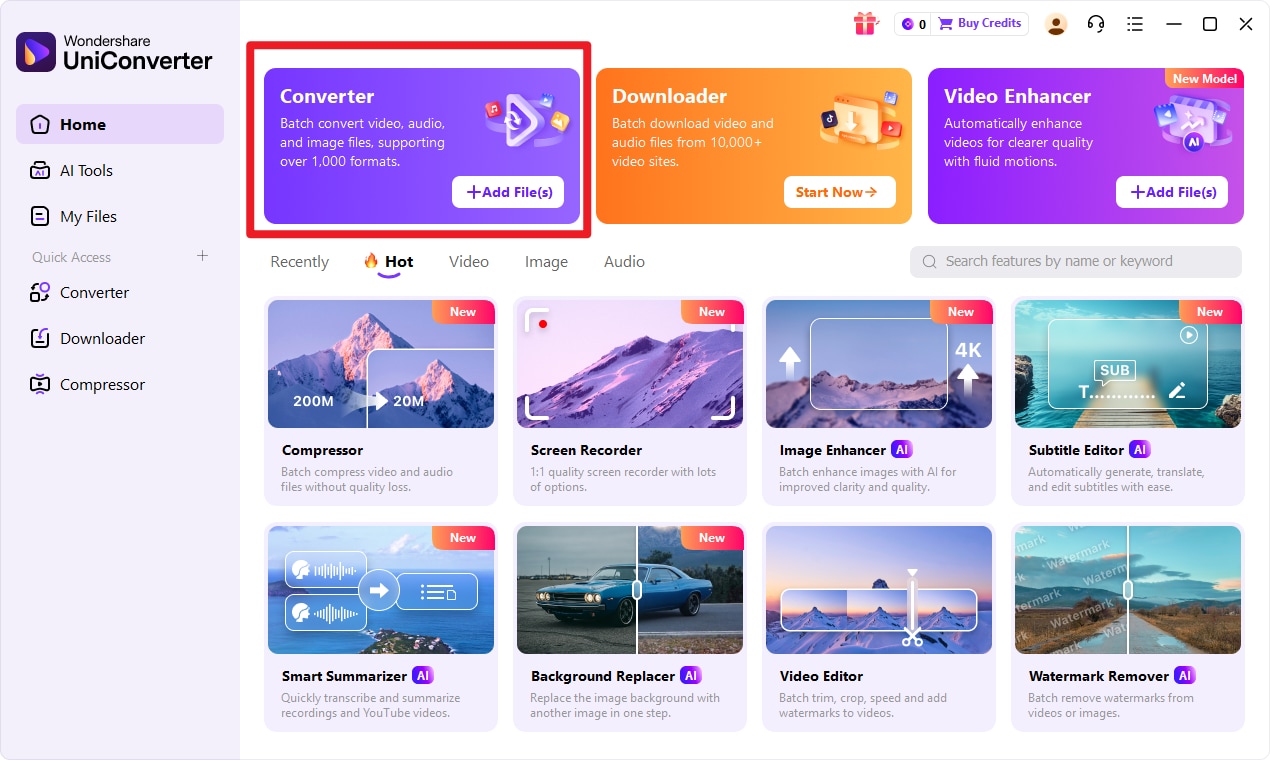
Step 1: Add Your FLV Files to UniConverter
First, open the Wondershare UniConverter application on your computer. On the main interface, ensure you are in the Converter section from the left-hand menu. You can then either drag and drop your FLV files directly into the program window or click the "Add Files" button to browse and select them from your computer.
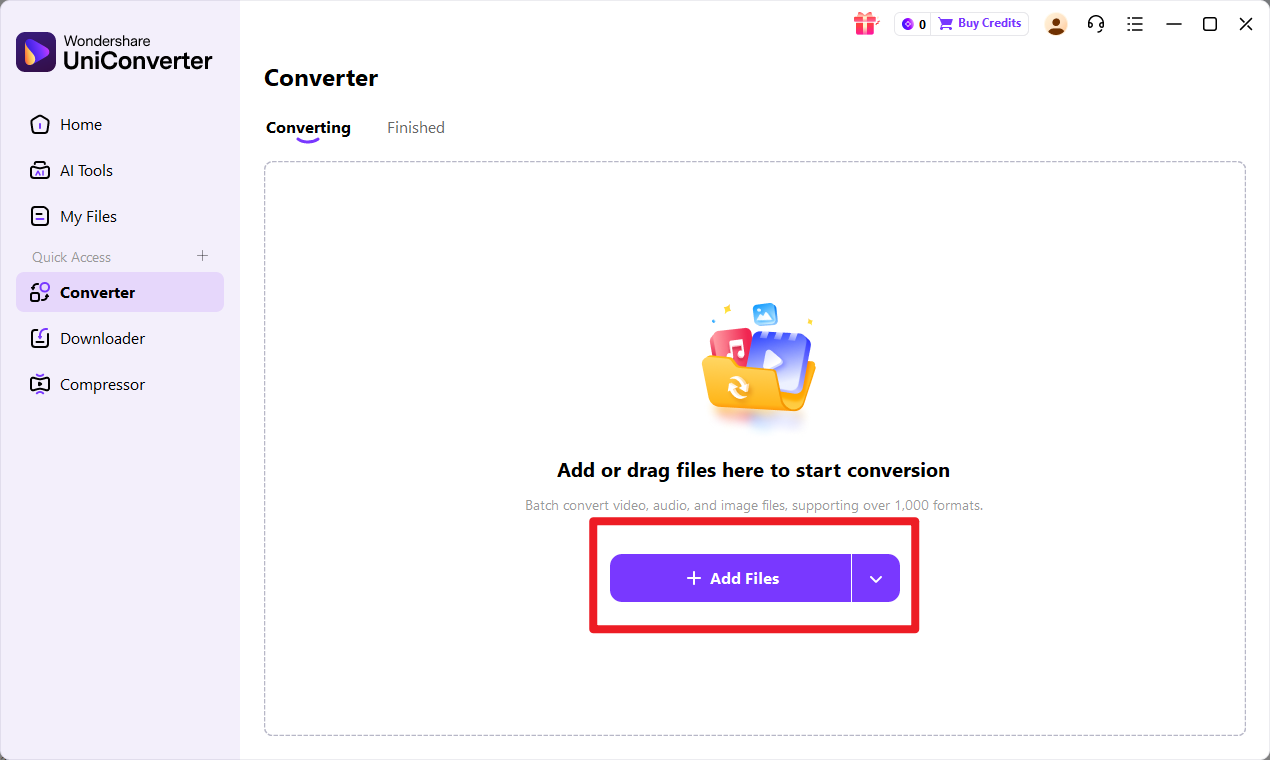
Step 2: Choose MP4 as the Output Format
Once your files are loaded, look to the bottom of the window and click on the Output Format menu. This will open a new window with a list of available formats. Go to the Video tab, select MP4 from the list on the left, and then choose your desired resolution on the right (e.g., "Same as source" to keep the original quality).
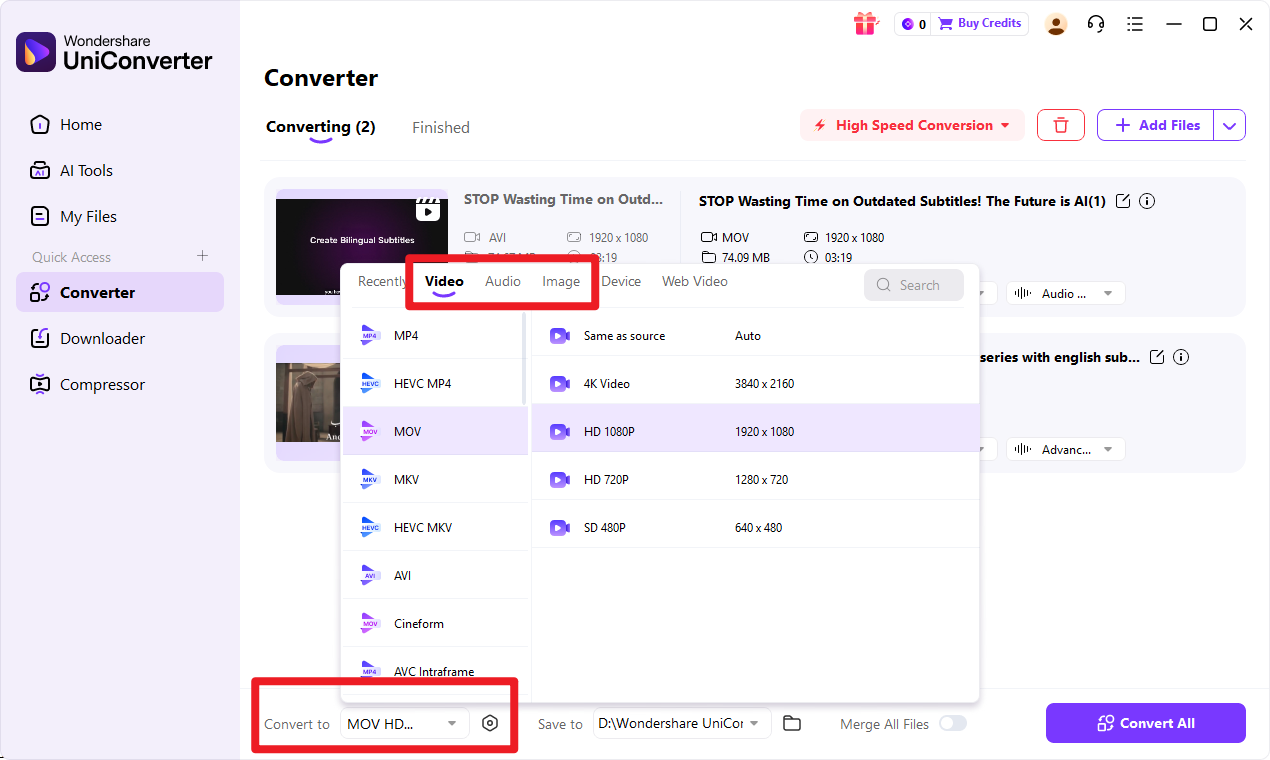
Step 3: Start the Conversion Process
Before starting, you can specify where you want to save the converted files by using the File Location menu at the bottom. Once you are ready, click the Start All button in the bottom-right corner. UniConverter will begin processing all the files in your queue.
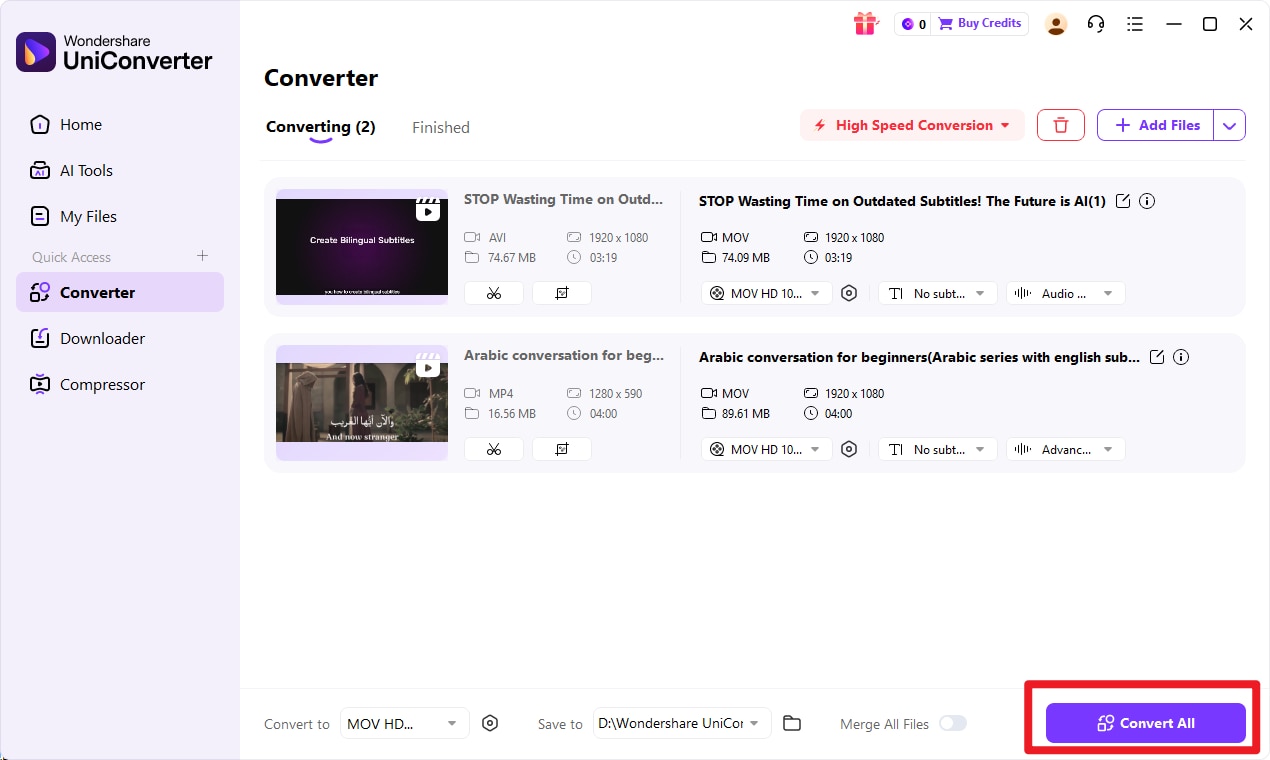
Step 4: Check Your Converted MP4 Files
The conversion process is very fast. When it's finished, you can find your new MP4 files by clicking on the Finished tab at the top of the window. From here, you can click the folder icon next to each file to open its location on your computer. Your videos are now in the MP4 format, ready to be played, shared, or edited on any device.

Your All-in-One Video Solution
Conclusion
The comparison between MP4 and FLV has a definitive conclusion in today's digital environment. MP4 stands as the modern, highly efficient, and universally supported standard for all things video. Its flexibility and quality-to-size ratio make it the default choice for creators, developers, and casual users alike. In contrast, FLV is a relic of the Flash era, a legacy format plagued by severe compatibility issues that render it impractical for modern use.
For anyone with a collection of old FLV files, the path forward is clear. Converting them to MP4 is not just a recommendation; it's a necessary step to preserve and access your content in the current technological landscape. By using a powerful and user-friendly tool like Wondershare UniConverter, you can ensure this conversion process is quick, seamless, and preserves the full quality of your original videos, effectively modernizing your entire video library with just a few clicks.
FAQs
-
1. Is FLV a dead format?
While old FLV files still exist on legacy systems and archives, the format is considered obsolete for any modern application. No new content should be created in the FLV format, and major platforms and browsers no longer support it. For all practical purposes in web and device playback, it is a dead format. -
2. Can YouTube accept FLV files?
In the past, YouTube's uploader was able to accept FLV files and would convert them on its servers. While this may still work in some cases, it is not the recommended or official method. For the best quality, fastest processing, and fewest errors, you should always upload videos to YouTube in the MP4 format (using the H.264 codec). -
3. Will I lose quality when converting FLV to MP4?
Any time you re-encode a video, there is a potential for a slight loss in quality. However, when using a high-quality converter like UniConverter, this loss is virtually imperceptible to the human eye. By choosing settings like "Same as source" for resolution and a high-quality profile, you can convert your FLV files to MP4 while preserving their original visual and audio fidelity.
