
Have you ever stumbled upon an old video file with a strange ".f4v" extension and found that it won't play on your computer or phone? You're not alone. In the ever-evolving landscape of digital media, video formats come and go, and the battle of MP4 vs F4V is a classic example of a modern standard replacing a legacy one. While F4V once played a significant role in web video, its time has passed, leaving MP4 as the undisputed champion of compatibility and performance. Understanding the differences between these two formats is crucial for anyone managing a video library, editing content, or simply trying to watch an old clip.
This guide will provide a thorough comparison of MP4 and F4V, exploring their history, technical specifications, and practical use cases. More importantly, we will show you why converting your F4V files to MP4 is not just a good idea, but a necessary step for future-proofing your media. We'll also walk you through the simple process of converting these files, ensuring your valuable video content remains accessible and usable for years to come.
In this article, you will learn:
- The technical definitions and histories of the MP4 and F4V formats.
- A direct, side-by-side comparison of their key features.
- A detailed analysis of which format is superior for modern use.
- The specific scenarios where you might use or encounter each format.
- A step-by-step guide to easily convert your F4V files to the universally compatible MP4 format.
Part 1. What is MP4? What is F4V?
To understand the comparison, we first need to define what each format is. While they share some underlying technology, their purpose, history, and current relevance are worlds apart.
What is MP4 (MPEG-4 Part 14)?
MP4, which stands for MPEG-4 Part 14, is a digital multimedia container format. Think of a container format like a box that can hold different types of data. In the case of MP4, this box is designed to store video, audio, and other relevant data like subtitles and still images. All these elements are synchronized to play back together as a single, cohesive file.
Developed by the Moving Picture Experts Group (MPEG), MP4 is renowned for its incredible efficiency. It utilizes advanced compression algorithms that significantly reduce file size while maintaining a high level of visual and audio quality. This balance of quality and size is the primary reason for its immense popularity. Today, MP4 is the most universally supported video format on the planet. From your smartphone and laptop to smart TVs, gaming consoles, and every major social media and streaming platform, MP4 is the de facto standard for video delivery and storage.
What is F4V (Flash Video)?
F4V, or Flash Video, is also a container format, but one with a much more specific and now-obsolete history. It was developed by Adobe Systems as part of its Flash platform, which once dominated interactive web content. F4V was specifically designed to deliver high-definition video content encoded with the H.264 codec over the internet for playback in the Adobe Flash Player.
Interestingly, the F4V format is based on the ISO base media file format (MPEG-4 Part 12), which also forms the foundation for the MP4 format. This means that structurally, F4V and MP4 are close relatives. However, F4V was intrinsically tied to the Adobe Flash ecosystem. With the official discontinuation of Adobe Flash Player at the end of 2020 due to security vulnerabilities and the rise of modern web standards like HTML5, the F4V format became instantly obsolete. It has no modern use case and is no longer supported by any major platform or software developer.
Part 2. Quick Comparison Table
For a quick overview, this table highlights the fundamental differences between the MP4 and F4V formats.
| Feature | MP4 (MPEG-4 Part 14) | F4V (Flash Video) |
| Full Name | MPEG-4 Part 14 | Flash Video |
| Developer | Moving Picture Experts Group (MPEG) | Adobe Systems |
| Compatibility | Universal (Supported by virtually all modern devices and platforms) | Very Limited (Legacy, requires specific players) |
| Compression | Supports various codecs including H.264, H.265/HEVC, AV1, etc. | Primarily H.264 |
| Popularity | Industry Standard | Obsolete |
| Use Case | Modern video streaming, storage, editing, and sharing | Legacy web video content for Adobe Flash Player |
Part 3. MP4 vs F4V: Which One Is Better?
While the comparison table gives a clear indication, let's dive deeper into the key areas that matter to users: compatibility, quality, and future relevance. In every category, MP4 emerges as the vastly superior format for any application in 2026 and beyond.
Compatibility and Platform Support
This is the most critical difference and the easiest win for MP4. MP4 enjoys native, out-of-the-box support on virtually every piece of modern technology. This includes:
- Operating Systems: Windows, macOS, iOS, Android, Linux, and ChromeOS.
- Web Browsers: Google Chrome, Mozilla Firefox, Apple Safari, and Microsoft Edge all play MP4 files natively using HTML5 video players.
- Devices: Smartphones, tablets, smart TVs, digital cameras, drones, PlayStation 5, Xbox Series X/S, and more.
- Software: All major video editing software (like Adobe Premiere Pro, Final Cut Pro, DaVinci Resolve) and media players (like VLC, Windows Media Player) use MP4 as a primary format.
In stark contrast, F4V's compatibility is practically non-existent today. It was designed exclusively for the Adobe Flash Player. Since Flash Player has been discontinued and is blocked by all modern browsers, there is no native way to play F4V files on the web or on most devices. While a few specialized desktop media players like VLC might still be able to open them, you cannot edit them in most software, upload them to social media, or play them on your phone without first converting them.
Quality and Efficiency
Both F4V and MP4 can act as containers for video compressed with the H.264 (or AVC) codec, which has been a standard for high-definition video for many years. In this specific scenario, the raw video quality within the files could be identical.
However, the MP4 container is far more versatile and forward-thinking. It supports a much wider range of codecs, including newer, more efficient ones like H.265 (also known as HEVC - High Efficiency Video Coding). H.265 can deliver the same video quality as H.264 at roughly half the file size, or significantly better quality at the same file size. This makes MP4 the ideal format for 4K and 8K video, as well as for saving storage space and reducing bandwidth usage during streaming. F4V is locked into older technology and cannot take advantage of these modern compression advancements.
Future-Proofing and Relevance
The future of digital video is unequivocally tied to the MP4 format and its successors. It is an open standard that is continuously being developed and updated by the MPEG group to incorporate new technologies like HDR (High Dynamic Range) video, 360-degree video, and next-generation codecs. Choosing MP4 means your video files will remain accessible, playable, and editable for the foreseeable future.
F4V, on the other hand, is a dead format. There is no future development, no new support, and no reason to keep files in this format. Holding onto F4V files is a risk; as operating systems and software continue to evolve, the few remaining ways to play them may disappear entirely. For digital preservation and practical usability, converting any F4V files you have to MP4 is the only logical step. Using a robust tool like Wondershare UniConverter ensures this conversion process is seamless and preserves the highest possible quality, safeguarding your memories or legacy content against technological obsolescence.
Part 4. Use Cases for MP4 and F4V
The practical applications for these two formats are a direct reflection of their technical capabilities and relevance.
Common Use Cases for MP4
MP4 is the universal format for nearly every video-related task in the modern digital world. Its versatility makes it the go-to choice for:
- Online Video Sharing: Uploading content to platforms like YouTube, Vimeo, Instagram, TikTok, Facebook, and Twitter. These platforms often recommend or require MP4 for uploads.
- Streaming Services: Major streaming giants like Netflix, Disney+, and Hulu deliver their vast libraries of movies and TV shows in MP4 containers.
- Personal Video Libraries: Storing home movies, downloaded clips, and personal video projects on computers, external hard drives, and network-attached storage (NAS) devices.
- Video Editing: MP4 is a standard import and export format for virtually all consumer and professional video editing software, providing a reliable workflow from start to finish.
- Mobile Video: Recording, sharing, and watching videos on smartphones and tablets.
When You Might Encounter F4V
In 2026, you will not encounter F4V files in any new context. Their appearance is almost exclusively a relic of the past. You are most likely to find an F4V file if you are:
- Accessing Old Archives: Discovering video files that were downloaded from the internet between roughly 2008 and 2015, when Flash video was at its peak.
- Working with Legacy Web Content: Dealing with old website assets or e-learning modules that were built using the Adobe Flash platform.
Essentially, the only modern "use case" for an F4V file is to identify it as an outdated format that needs to be converted. The primary action you should take upon finding an F4V file is to convert it to MP4 to make it playable, editable, and shareable on modern systems.
Part 5. Step-by-Step Guide to Convert F4V to MP4 Using UniConverter
If you have F4V files gathering digital dust on your hard drive, the best thing you can do is convert them to the universally supported MP4 format. Wondershare UniConverter is a powerful and user-friendly tool that makes this process incredibly simple and fast. It can handle batch conversions, so you can convert all your old files at once, and its high-speed conversion engine ensures the process is quick without compromising on quality.
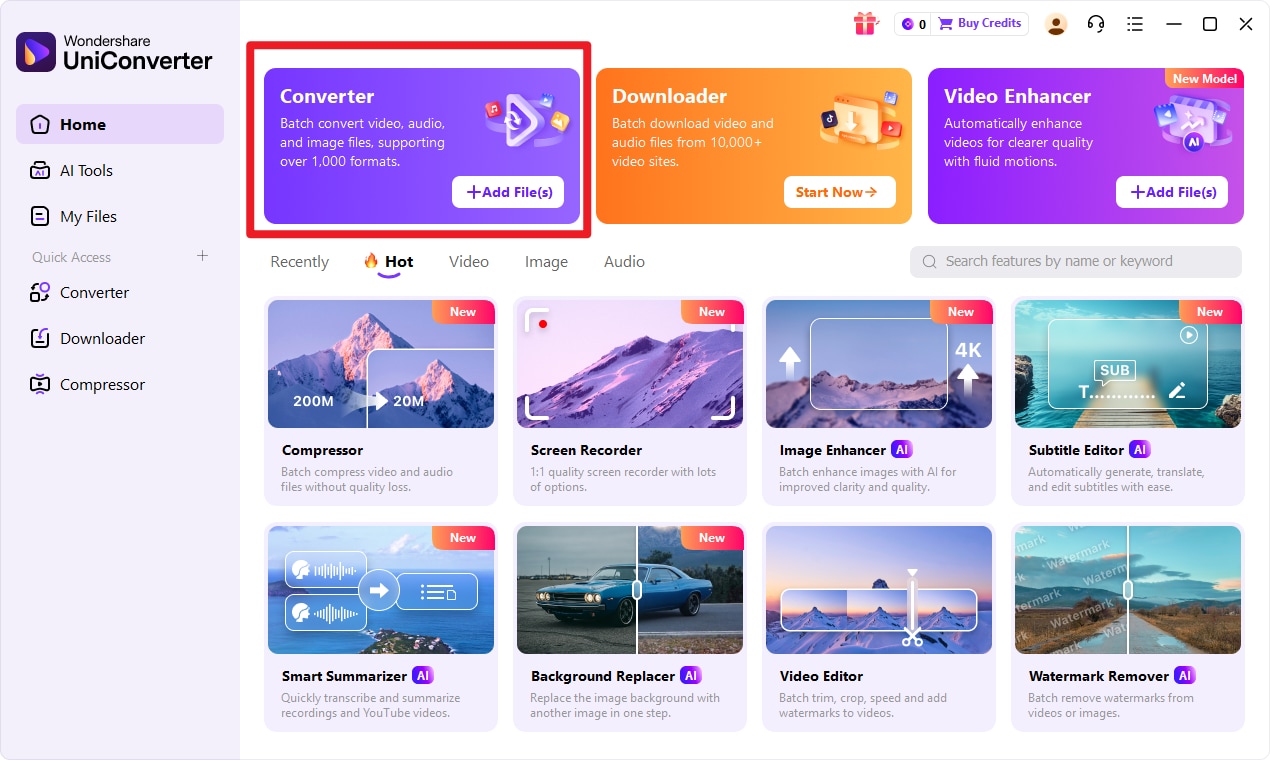
Step 1: Choose Converter in UniConverter
Launch Wondershare UniConverter on your computer. From the main interface, look at the menu on the left side and click on the "Converter" option to open the video conversion tool.
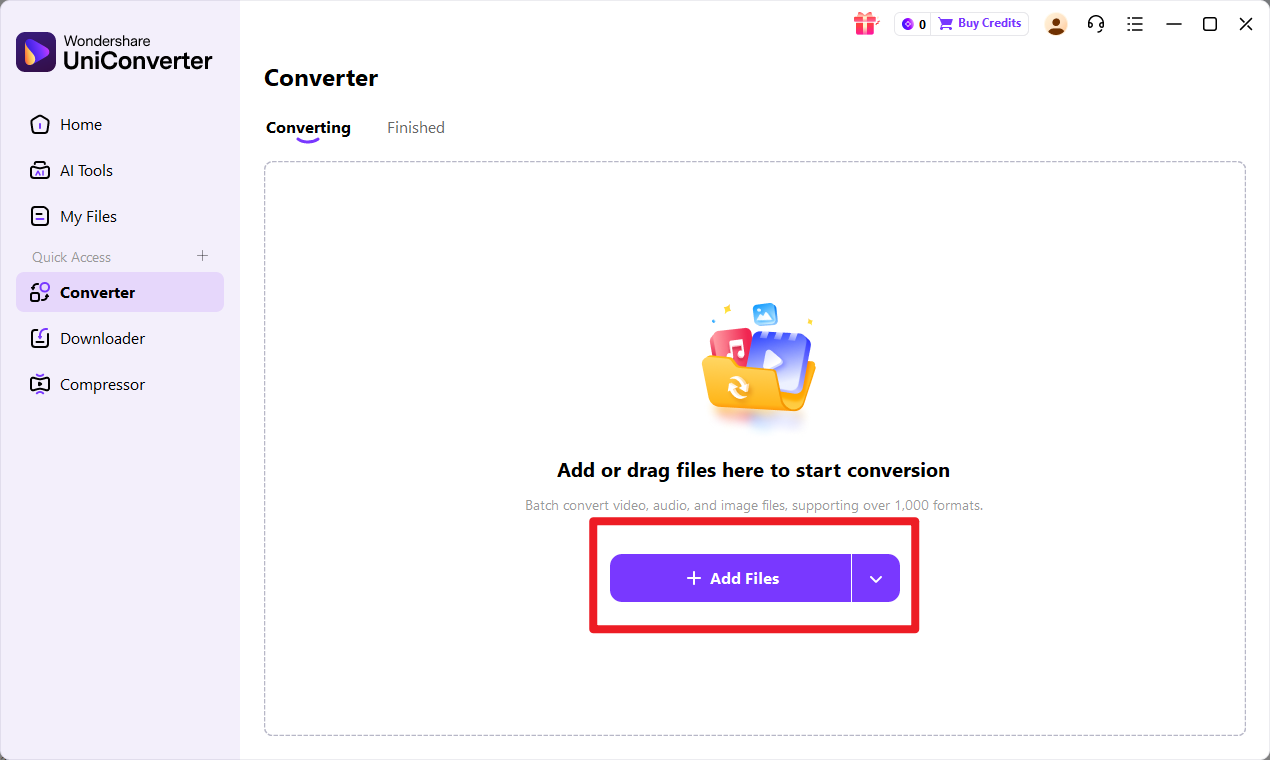
Step 2: Add Files to UniConverter
You can now add your F4V files to the program. The easiest way is to simply drag and drop your input format files directly from your folder into the UniConverter window. Alternatively, you can click the "Add Files" button in the top-left corner to open a file browser and select the videos you want to convert.
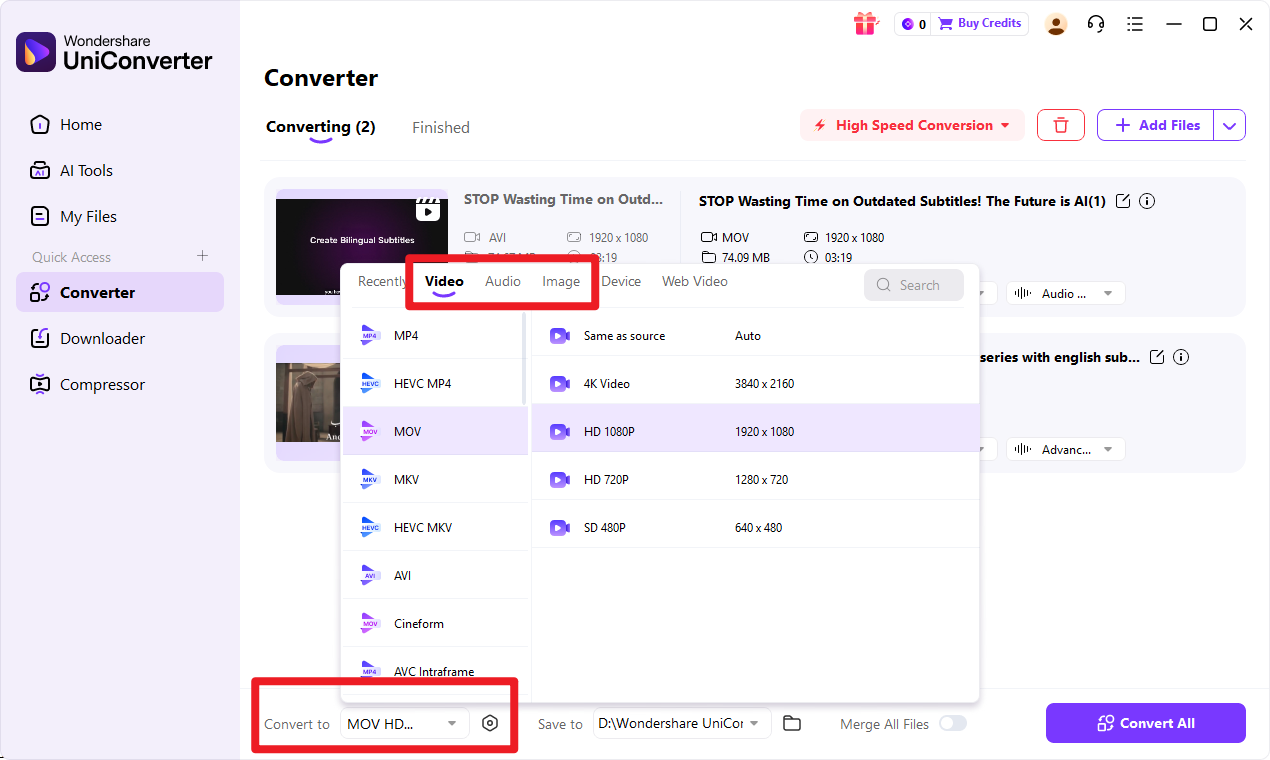
Step 3: Choose Output Format
At the bottom of the window, click on the "Output Format" menu. This will open a new panel with format options. Navigate to the "Video" tab, select the target format "MP4" from the list on the left, and then choose your desired resolution from the options on the right (e.g., "Same as source" to maintain original quality).
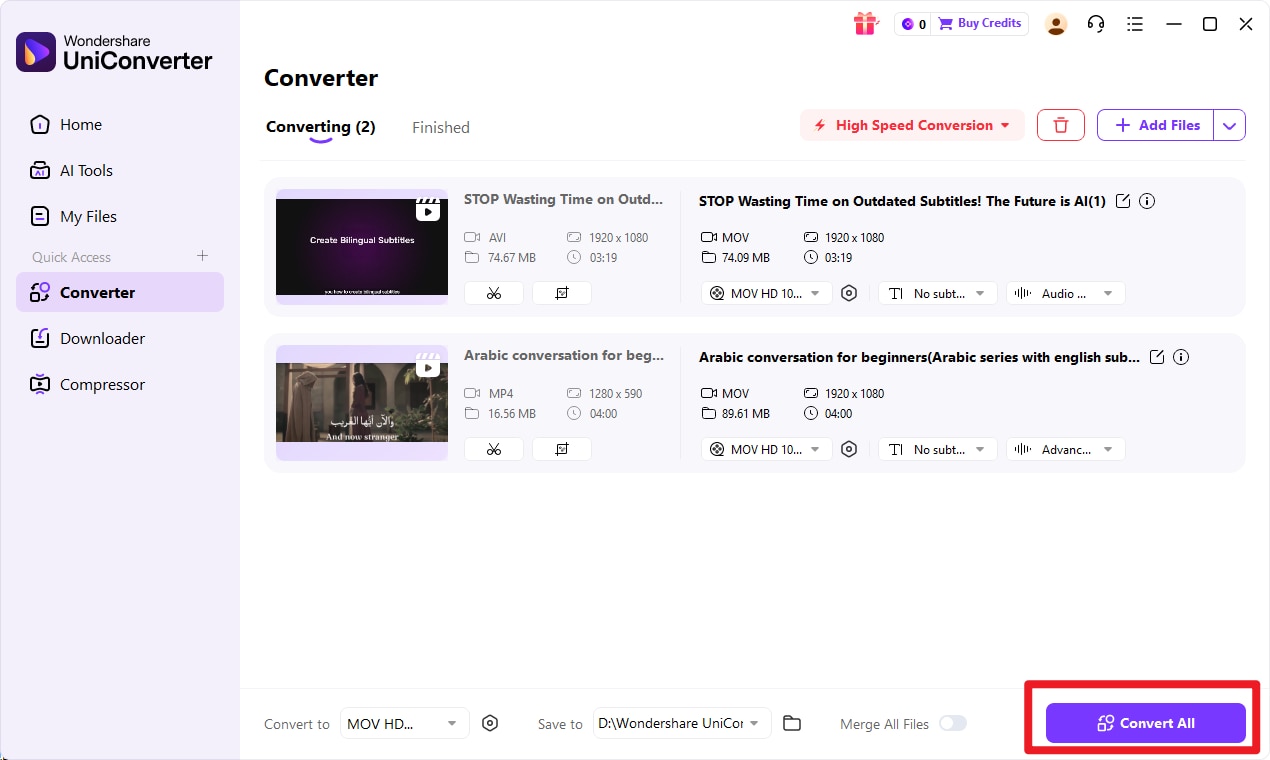
Step 4: Start the Conversion
Before starting, you can choose where to save the converted files by clicking the "File Location" field at the bottom. Once you're ready, click the "Start All" button in the bottom-right corner. UniConverter will begin converting all your F4V files to MP4 efficiently.

More Than Just an F4V to MP4 Converter
Conclusion
While MP4 and F4V share a common ancestor in their file structure, the comparison today is less of a competition and more of a history lesson. F4V was a product of its time, intrinsically linked to the Adobe Flash era. With Flash now obsolete, F4V is a legacy format with no practical use or support in the modern digital ecosystem. The clear winner, and the only format you should be using, is MP4. Its universal compatibility, superior efficiency with support for modern codecs, and status as the ongoing industry standard make it the perfect choice for everything from streaming and sharing to editing and archiving.
If you have F4V files, don't let them become unplayable digital artifacts. The best and only course of action is to convert them to MP4 to ensure their longevity and accessibility. Using a professional and reliable program like Wondershare UniConverter guarantees a smooth, fast, and high-quality conversion process, breathing new life into your old videos and making them ready for any device or platform.
FAQs
-
1. Is F4V better than MP4?
No, absolutely not. MP4 is significantly better than F4V in every meaningful way for modern users. MP4 offers universal compatibility, supports more efficient and higher-quality compression codecs (like H.265/HEVC), and is the active, evolving industry standard. F4V is an outdated and unsupported format from a bygone era of the internet. -
2. Can I still play F4V files?
It is possible, but not easy or convenient. Some third-party desktop media players, most notably VLC Media Player, may still have the necessary codecs to play F4V files. However, you will not be able to play them in a web browser, on your smartphone, on a smart TV, or in most video editing software without first converting them. For any practical purpose like editing or sharing, conversion to MP4 is essential. -
3. Will I lose quality converting F4V to MP4?
All video conversion technically involves a process of re-encoding, which can result in a very minor loss of data. However, this loss is typically imperceptible to the human eye when using a high-quality converter. A professional tool like Wondershare UniConverter uses advanced algorithms and allows you to select high-bitrate and "same as source" resolution settings. This effectively preserves the original video's quality, ensuring your converted MP4 looks just as good as the source F4V file. -
4. Why should I convert F4V to MP4?
The single most important reason to convert F4V to MP4 is for compatibility. An MP4 file can be played on virtually any device you own, including your iPhone, Android phone, Windows PC, Mac, smart TV, and gaming console. It can be easily uploaded to YouTube, shared on Instagram, or sent to a friend without any issues. Converting your F4V files to MP4 future-proofs your content, ensuring you can always access and use it, no matter how technology changes.
