
MP4 vs AVI: A Detailed Comparison for 2026
Navigating the world of video formats can be confusing, especially when faced with common file types like MP4 and AVI. You might have a video file you can't play on your phone, or perhaps you're a content creator deciding on the best format for exporting your project. The choice between MP4 vs AVI is a frequent point of confusion, with each format having distinct characteristics that make it suitable for different purposes. Understanding these differences is key to ensuring your videos are high-quality, manageable in size, and playable on your intended devices.
This guide will provide a comprehensive breakdown of MP4 and AVI, demystifying the technical jargon and offering clear, practical advice. We'll compare them across critical factors like file size, quality, and compatibility to help you make an informed decision for any scenario. Whether you're simply trying to store family videos or preparing content for a global audience, this comparison will clarify which format is right for you.
In this article:
Part 1. What is MP4? What is AVI?
Before we dive into a direct comparison, it's essential to understand what these file types are. Both MP4 and AVI are "container formats," which means they are like digital boxes that can hold various types of data—video, audio, subtitles, and more—all bundled into a single file. The primary difference lies in how they package this data and the technologies they support.
What is an MP4 File?
MP4, which stands for MPEG-4 Part 14, is a modern and highly versatile container format. It was developed by the Moving Picture Experts Group (MPEG) and has become the de facto standard for digital video worldwide.
The key to MP4's popularity is its remarkable ability to achieve an excellent balance between high video quality and small file size. It accomplishes this by using advanced and efficient compression algorithms (codecs) like H.264 and H.265 (HEVC). This efficiency makes MP4 the ideal format for online streaming, sharing on social media, and storing videos on devices with limited space, like smartphones and tablets. Its universal support means you can play an MP4 file on virtually any device, operating system, or web platform without needing special software.
What is an AVI File?
AVI, short for Audio Video Interleave, is a legacy multimedia container format developed by Microsoft in the early 1990s. As one of the first widely used video formats for Windows PCs, it played a significant role in the early days of digital video.
AVI files are known for using less compression compared to MP4. In some cases, they can even store uncompressed video, which results in "lossless" quality that is a perfect replica of the original source. However, this comes at a steep cost: extremely large file sizes. While AVI can use codecs like DivX and XviD to reduce size, it generally remains much larger than a comparable MP4. Its biggest drawback in 2026 is its limited compatibility. AVI files often cause playback issues on non-Windows systems, such as macOS and mobile devices, frequently requiring third-party players or format conversion.
Part 2. Quick Comparison Table
For a fast overview, this table highlights the fundamental differences between the MP4 and AVI formats.
MP4 vs AVI: Side-by-Side Comparison
| Feature | MP4 | AVI |
| File Size | Smaller | Larger |
| Compression | High, efficient (H.264, H.265/HEVC) | Low or none (DivX, XviD) |
| Quality | Very good to excellent for the file size | Good to lossless, but at the cost of size |
| Compatibility | Universal (Web, Mobile, Desktop) | Limited (Primarily Windows-based) |
| Use Case | Streaming, sharing, general use | Archiving, professional editing workflows |
Part 3. MP4 vs AVI: Which One Is Better?
While the table gives a quick answer, let's explore the details. The "better" format truly depends on your specific needs, but for most modern applications, MP4 has a clear advantage.
File Size and Compression Efficiency
When it comes to storage and sharing, file size is a critical factor. This is where MP4 shines. An MP4 file is typically significantly smaller than an AVI file of similar visual quality. For example, a one-minute 1080p video might be around 100 MB as an MP4 but could easily be 1 GB or more as a less-compressed AVI.
This dramatic difference is due to the codecs MP4 supports. Codecs are the algorithms that compress and decompress video data. MP4 utilizes highly advanced codecs like H.264 (AVC) and H.265 (HEVC), which are designed to reduce file size while preserving as much visual information as possible. AVI, being an older format, often relies on less efficient codecs or no compression at all. This makes AVI files bulky and impractical for uploading to the web, sending via email, or storing on a smartphone.
Video and Audio Quality
Many people mistakenly believe that AVI always has better quality than MP4. This is a misconception. Both are container formats, and the final quality is determined by the codec and the bitrate (the amount of data used to encode one second of video) used during creation, not the container itself.
An AVI file can contain uncompressed video, which is technically lossless—a perfect, bit-for-bit copy of the source. This is the highest possible quality, but the resulting files are enormous and generally unnecessary for viewing purposes. For most practical applications, a well-encoded MP4 file using a high bitrate will provide excellent quality that is visually indistinguishable from the original source. The human eye can only perceive so much detail, and modern MP4 compression is exceptionally good at removing redundant data without creating noticeable artifacts.
Device and Platform Compatibility
This is perhaps the most significant differentiator for the average user. MP4 is the undisputed champion of compatibility. It is the universal standard for video on the internet and is natively supported by virtually every modern device and operating system.
- Windows & macOS: Both play MP4 files out of the box.
- Android & iOS: All smartphones and tablets use MP4 as their primary video format.
- Smart TVs & Gaming Consoles: PlayStation, Xbox, and smart TVs are all designed to play MP4s seamlessly.
- Web Browsers: All major browsers (Chrome, Firefox, Safari, Edge) support MP4 playback.
AVI, on the other hand, has a much narrower range of support. As a Microsoft technology, it works reliably on Windows-based systems. However, on macOS and iOS, you will often need to install a third-party media player (like VLC) or convert the file to a more compatible format like MP4. This lack of native support makes AVI a poor choice for sharing videos with a wide audience.
Part 4. Use Cases for MP4 and AVI
Based on their strengths and weaknesses, here's when you should choose one format over the other.
When to Use MP4
MP4 is the go-to format for nearly every consumer and web-based video application in 2026. Its blend of quality, small size, and universal compatibility makes it the most practical choice for:
- Online Video Platforms: Uploading videos to websites like YouTube, Vimeo, TikTok, and Facebook. These platforms recommend MP4 for optimal processing and playback.
- Sharing and Communication: Sending videos to friends and family via email, messaging apps (like WhatsApp or Telegram), or cloud storage services.
- Mobile Viewing: Watching movies, TV shows, or personal recordings on your smartphone, tablet, or laptop.
- General Archiving: Storing your personal video library without consuming excessive hard drive space.
In short, if you are creating or downloading a video for general viewing, sharing, or web use, MP4 should be your default choice.
When to Use AVI
Despite its drawbacks, AVI still has a few niche applications, primarily in professional and legacy environments. You might consider using AVI for:
- Master File Archiving: In some professional video editing workflows, editors may export a master copy of a project as an uncompressed or lightly compressed AVI file. This preserves the absolute maximum quality for future editing or transcoding, assuming storage space is not a concern.
- Legacy Software Compatibility: If you are working with older, Windows-based video editing software or hardware that has better or exclusive support for the AVI container, you may need to use it to maintain compatibility within that specific workflow.
For the average user, these scenarios are rare. The vast majority of modern editing software, like Adobe Premiere Pro and Final Cut Pro, works perfectly with MP4.
Part 5. Step-by-Step Guide to Convert MP4 to AVI Using UniConverter
While MP4 is generally superior, you might encounter a situation where you need to convert an MP4 file to AVI, perhaps for an old device or a specific software requirement. For this task, using a reliable video converter is crucial to ensure a fast, high-quality process.
Why You Might Need a Reliable Video Converter
Switching between video formats can be tricky. A poor-quality converter can result in significant quality loss, slow conversion times, or even corrupted files. A powerful and professional tool like Wondershare UniConverter simplifies this process entirely. It's an all-in-one video toolbox that supports over 1,000 formats, including MP4 and AVI. UniConverter is designed for speed and efficiency, utilizing GPU acceleration to make conversions incredibly fast while preserving the original video quality.
How to Convert MP4 to AVI in 4 Simple Steps
Follow this guide to easily convert your MP4 files to AVI format using Wondershare UniConverter.
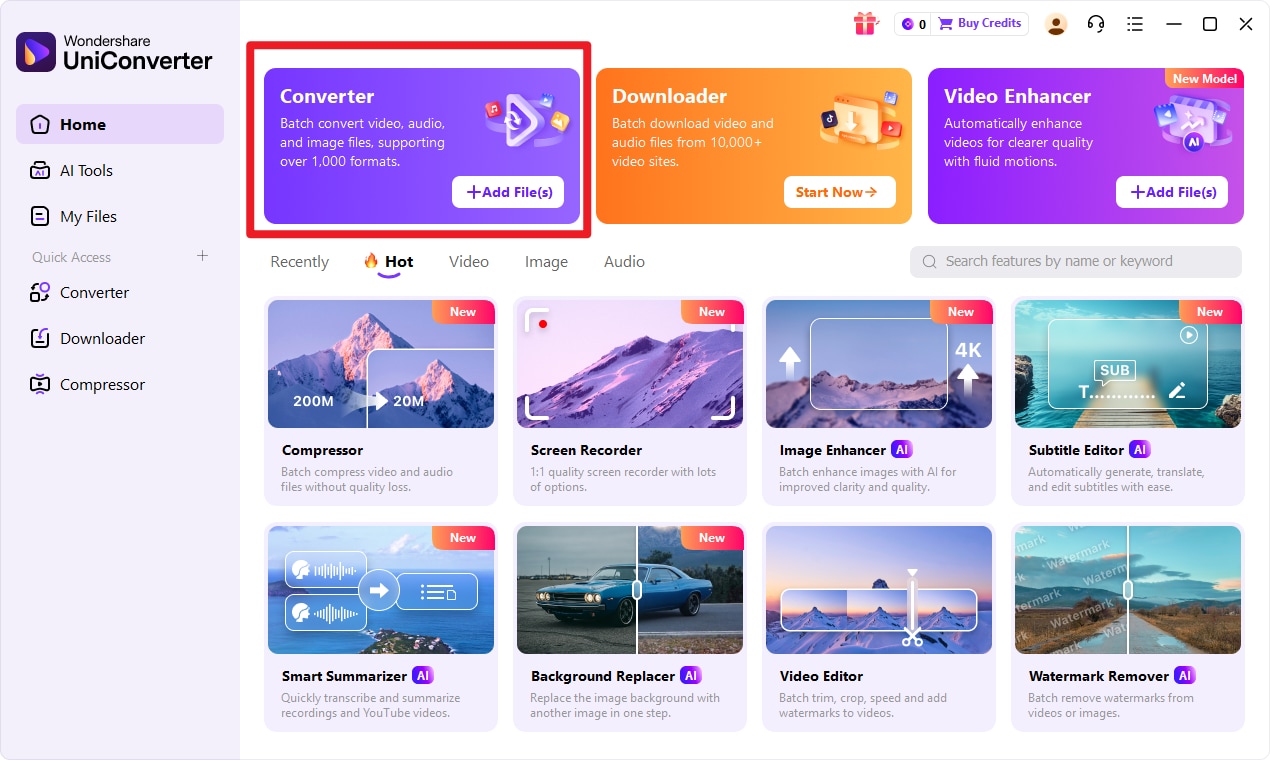
Step 1: Add Your MP4 File to UniConverter
Launch Wondershare UniConverter on your computer. In the main interface, ensure you are on the Converter tab from the left-side menu. You can either click the Add Files button to browse and select your MP4 video or simply drag and drop the file directly into the program window.
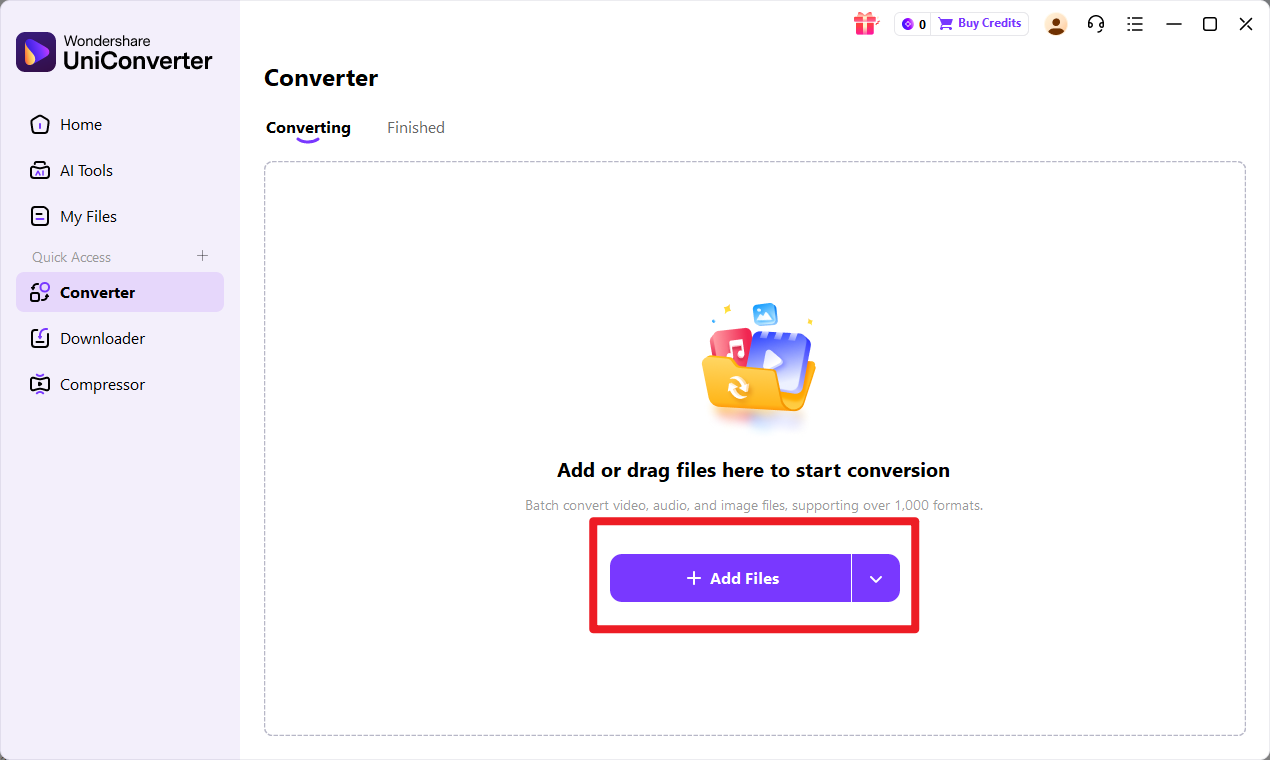
Step 2: Choose AVI as the Output Format
With your file loaded, click the Output Format menu located at the bottom of the window. This will open a new panel with a list of format options. Go to the Video tab, select AVI from the list of formats on the left, and then choose your desired resolution from the presets on the right (e.g., "Same as source" to maintain original quality).
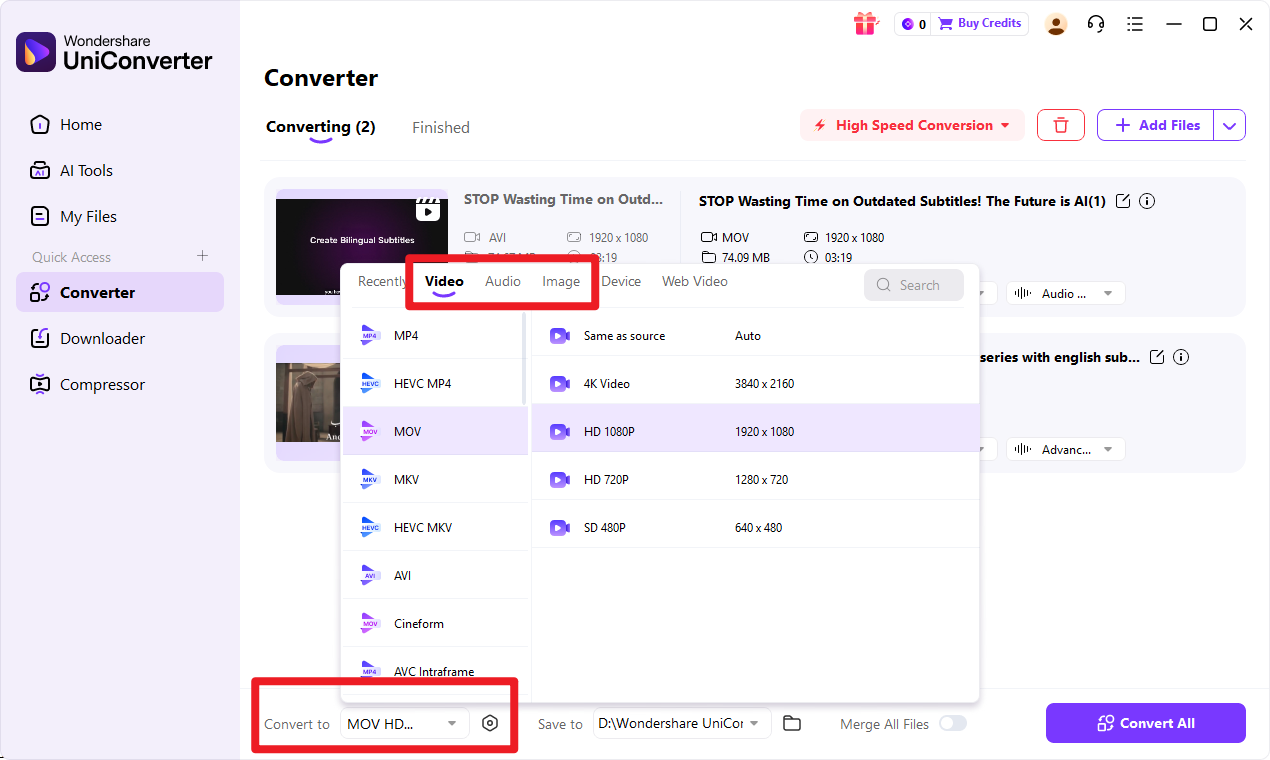
Step 3: Customize Your Conversion Settings
For most users, the default settings are sufficient. However, if you need to make specific adjustments, you can click the small gear icon (Edit) next to the chosen resolution. This allows you to customize advanced settings like the video encoder, frame rate, and bitrate. You can also set the destination for your converted file by using the File Location option at the bottom.
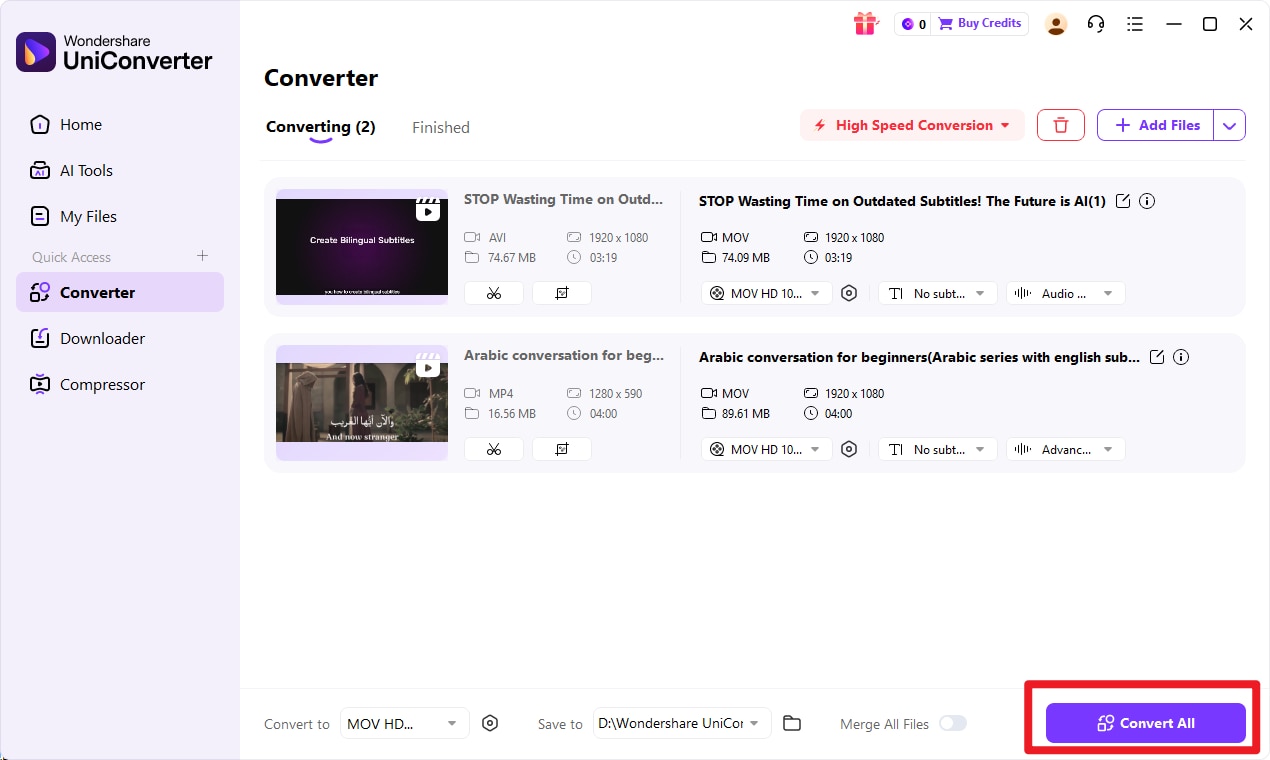
Step 4: Start the MP4 to AVI Conversion
Once you are satisfied with all the settings, click the Convert button to begin the process for a single file. If you have loaded multiple files, you can click Start All in the bottom-right corner to convert them in a batch. UniConverter will process your file quickly, and a green checkmark will appear when the conversion is complete. You can then find your new AVI file in the Finished tab or the output folder you selected.

Go Beyond Simple Video Conversion
Conclusion
For the vast majority of users and applications in 2026, MP4 is unequivocally the superior video format. Its powerful combination of efficient compression, high-quality output, and universal compatibility makes it the modern standard for everything from streaming on YouTube to sharing videos with friends and family. It delivers a seamless experience across all devices and platforms.
AVI, while historically important, is now a legacy format with limited practical use. Its large file sizes and poor cross-platform compatibility make it unsuitable for everyday tasks. It retains a small niche in professional archiving workflows where quality is the only priority and storage is unlimited, but for everyone else, MP4 is the smarter choice.
If you ever find yourself needing to bridge the gap between these formats—or any of the 1,000+ others out there—a robust tool is indispensable. Wondershare UniConverter provides a fast, reliable, and user-friendly solution for all your video conversion, compression, and editing needs, ensuring your files are always in the right format for the job.
FAQs
-
1. Is AVI higher quality than MP4?
Not necessarily. The quality of a video file depends on the codec and bitrate used during encoding, not just the container format (MP4 or AVI). While an uncompressed AVI file is technically lossless, a high-bitrate MP4 can offer visually identical quality at a much smaller and more manageable file size, making it far more practical for most situations. -
2. Can I play an AVI file on my Mac or iPhone?
Native support for AVI on Apple devices is limited. While some third-party media players like VLC can play AVI files, you cannot play them using Apple's default QuickTime Player or on an iPhone without a special app. For a permanent and hassle-free solution, it's best to convert the AVI file to the universally compatible MP4 format using a tool like UniConverter. -
3. Which format is better for YouTube, MP4 or AVI?
MP4 is the officially recommended format for uploading videos to YouTube. Its excellent balance of compression and quality ensures faster upload times and optimal processing by YouTube's servers. Uploading a large AVI file would be slow and inefficient, and YouTube would convert it to an MP4-based format anyway. -
4. Does converting from MP4 to AVI affect quality?
Any time you convert a video from one lossy format to another, a process called re-encoding occurs, which can potentially cause a slight loss in quality. However, by using a professional-grade converter like Wondershare UniConverter and selecting high-quality output settings (such as "Same as source" resolution and a high bitrate), any quality degradation will be minimal and likely imperceptible to the human eye.
