
If you've ever exported a video from editing software or looked at the technical details of a video file, you've likely come across terms like "MP4" and "8-bit." Seeing them often leads to a common question: which one is better? This query, while understandable, stems from a fundamental misunderstanding of what these terms represent. The MP4 vs 8-bit debate isn't about choosing between two competing options; it's about understanding two different, yet related, aspects of a video file. One describes the packaging, and the other describes a quality of the content inside.
Navigating the world of video formats and specifications can be confusing, especially with so much technical jargon. You might be worried about choosing the wrong settings, resulting in poor visual quality, large file sizes, or compatibility issues when you try to share your work. This guide is here to clear up the confusion. We will demystify what MP4 and 8-bit video are, explain their relationship, and help you make informed decisions for your video projects.
In this article:
Quick Note:
- MP4 is a Container: Think of it as a box that holds the video, audio, and other data together. Its main advantage is universal compatibility.
- 8-bit is a Specification: It refers to the video's color depth, specifically its ability to display about 16.7 million colors. It's the standard for most consumer video.
- They Work Together: They are not mutually exclusive. A video file is often an 8-bit video stored inside an MP4 container.
- The "Better" Question: The real question isn't "MP4 vs. 8-bit," but rather "Which container (like MP4) and which color depth (like 8-bit or 10-bit) are right for my project?"
Part 1. What is MP4? What is 8-bit Video?
To resolve the confusion, we first need to define each term separately. Understanding their individual roles is the key to seeing how they function together in a single video file.
What is an MP4 File?
An MP4 file, technically known as MPEG-4 Part 14, is a digital multimedia container format. The most important word here is "container." Imagine a shipping box. The box itself isn't the product; it's what holds the product, along with instructions and packaging materials. Similarly, an MP4 file is a "box" that can store various types of data, including:
- Video streams (encoded with codecs like H.264 or H.265/HEVC)
- Audio streams (encoded with codecs like AAC)
- Subtitles
- Still images and chapter markers
The primary strength of the MP4 format is its excellent balance of quality and file size, achieved through efficient compression. This, combined with its near-universal support across web browsers, mobile devices, smart TVs, and social media platforms, has made it the de facto standard for online video distribution. When you watch a video on YouTube or Instagram, you are almost certainly watching a video packaged in an MP4 container.
What is 8-bit Video?
The term "8-bit" does not refer to a file type or container. Instead, it describes the video's color depth (or bit depth). Color depth determines how much color information is stored for each pixel in the video.
In an 8-bit video, each of the three primary color channels (Red, Green, and Blue) is assigned 8 bits of information. This allows for 256 (2^8) different shades for each primary color. When you combine them, you get a total possible palette of:
256 (Red) x 256 (Green) x 256 (Blue) = 16,777,216 colors.
This 16.7 million color palette is vast enough to create rich, vibrant images that look realistic to the human eye. It has long been the standard for consumer cameras, broadcast television, Blu-ray discs, and most content you see online. While it's incredibly capable, its main limitation can appear in images with very subtle gradients of color, like a clear blue sky or a smooth sunset. In these areas, the limited number of shades can sometimes cause visible "steps" or bands of color, an artifact known as color banding.
The Relationship: Can an MP4 be 8-bit?
Yes, absolutely. This is the core of the matter. MP4 and 8-bit are not competing formats; they describe different, non-exclusive properties of a video.
- MP4 is the container format.
- 8-bit is the color depth of the video stream inside the container.
In fact, the vast majority of MP4 files you encounter in your daily life contain 8-bit video. When your smartphone records a video and saves it as an MP4, it is capturing 8-bit color information and packaging it, along with audio, into that MP4 file for easy storage and sharing. They are a standard, powerful combination for creating high-quality, highly compatible video content.
Part 2. Quick Comparison Table
To make the distinction crystal clear, here is a side-by-side comparison of MP4 and 8-bit video based on their fundamental characteristics.
| Attribute | MP4 | 8-bit Video |
| Type | Container Format | Video Specification (Color Depth) |
| Primary Function | To hold all video elements (video, audio, subtitles) together in one file. | To define the range and precision of colors that can be displayed in the video. |
| Key Characteristic | Universal compatibility and efficient compression. | A palette of 16.7 million possible colors. |
| Common Use | Web streaming (YouTube, Netflix), social media (Instagram, TikTok), mobile video. | The standard for most consumer video content, including smartphones, DSLRs, and broadcast TV. |
Part 3. MP4 vs 8-bit Video: Which One Is Better?
Now that we understand what each term means, we can address the original question. The idea of one being "better" than the other is based on a false premise.
Correcting a Common Misconception
Asking if MP4 is better than 8-bit is like asking if a cardboard box is better than the color blue. One is a container, and the other is a property of the item inside. They serve completely different purposes and cannot be directly compared in terms of quality.
The correct approach is to think about them as separate choices you make during the video production process:
- What container should I use for my final file? (e.g., MP4, MOV, MKV)
- What color depth should my video have? (e.g., 8-bit, 10-bit)
The answer to each question depends entirely on your goals for the video.
When to Choose MP4: For Maximum Compatibility
You should choose the MP4 container format in almost every scenario involving distribution and sharing. Its universal acceptance makes it the most reliable choice.
Choose MP4 when:
- You are uploading a video to YouTube, Vimeo, Facebook, Instagram, or any other social media platform.
- You are embedding a video on a website.
- You need to send a video to someone to watch on their computer, tablet, or smartphone.
- You want a good balance between visual quality and a manageable file size.
When to Consider Color Depth (8-bit vs. 10-bit): For Visual Fidelity
For most people, 8-bit video is more than sufficient. It's the standard for a reason and produces fantastic results for everyday use. However, there are situations where a higher color depth, like 10-bit, is beneficial.
10-bit video can display over 1 billion colors (1024 x 1024 x 1024). This massive increase in color information provides smoother gradients and more flexibility in post-production.
Stick with 8-bit video for:
- Standard online content, vlogs, and social media videos.
- Projects where you are not doing intensive color correction or grading.
- When your source footage was shot on a standard consumer camera or smartphone.
Consider using 10-bit video if:
- You are a professional videographer or colorist who needs maximum flexibility during color grading.
- You are shooting footage with very subtle color gradients (e.g., sunsets, underwater scenes) and want to avoid color banding.
- You are producing High Dynamic Range (HDR) content, which requires 10-bit (or higher) color depth.
Part 4. Use Cases for MP4 and 8-bit Video
Let's look at some practical, real-world examples of where you'll find MP4 and 8-bit video being used.
Common Use Cases for the MP4 Format
Because it's a container, MP4 is all about delivery and playback. You'll find it everywhere.
- Online Video Platforms: YouTube, Vimeo, and Dailymotion all process uploads and deliver them to viewers in the MP4 format.
- Social Media: When you upload a video to Instagram, Facebook, TikTok, or X (formerly Twitter), it is converted and stored as an MP4 for seamless playback in their apps and websites.
- Website Embedding: MP4 is the preferred format for embedding videos directly into web pages because it's supported by all modern browsers without needing special plugins.
- Personal Sharing: It's the easiest format for sending to friends and family via messaging apps or email, as it's guaranteed to play on virtually any device.
Common Use Cases for 8-bit Video
As the standard for color depth, 8-bit video is the default for the vast majority of video content created and consumed today.
- Consumer Cameras: Most smartphones (like iPhones and Android devices), DSLRs, and mirrorless cameras record in 8-bit by default.
- Physical Media: Standard Blu-ray discs use 8-bit color for their video content.
- Broadcast Television: Standard Dynamic Range (SDR) television broadcasting has historically been based on an 8-bit color system.
- Streaming Services: Most standard-definition (SD) and high-definition (HD) content on streaming services like Netflix and Hulu is delivered as 8-bit video.
When You Might Need More Than 8-bit Video
While 8-bit is the norm, certain high-end applications demand the greater color information provided by 10-bit or even 12-bit video.
- Professional Filmmaking: Cinematographers often shoot in 10-bit or 12-bit RAW formats to capture the maximum amount of color data, giving them extensive control during the color grading process.
- High Dynamic Range (HDR) Content: Creating HDR content (like Dolby Vision or HDR10+) requires at least 10-bit color to display the expanded range of brightness and color. This is becoming more common on premium streaming services and 4K UHD Blu-rays.
- Visual Effects (VFX): VFX artists need more color data to work with when compositing green screen footage or creating complex digital effects, making 10-bit a minimum requirement.
Part 5. Step-by-Step Guide to Convert Your Video to a Different Format Using UniConverter
Whether your video is in a less common format like MOV or MKV, or you simply need to compress a large file for easier sharing, a video converter is an essential tool. You might need to convert a file to the universally compatible MP4 format or adjust its specifications to meet the requirements of a specific platform.
UniConverter: Your Go-To Video Conversion Tool
Wondershare UniConverter is a comprehensive video toolbox designed to handle all your conversion needs and more. It supports over 1,000 formats, allowing you to convert virtually any video file to a high-quality, standard MP4 with ease. Its intuitive interface, high-speed conversion engine, and powerful features make it the perfect choice for both beginners and professionals who need to manage their video files efficiently.
Here's how you can quickly convert any video to your desired format using UniConverter.
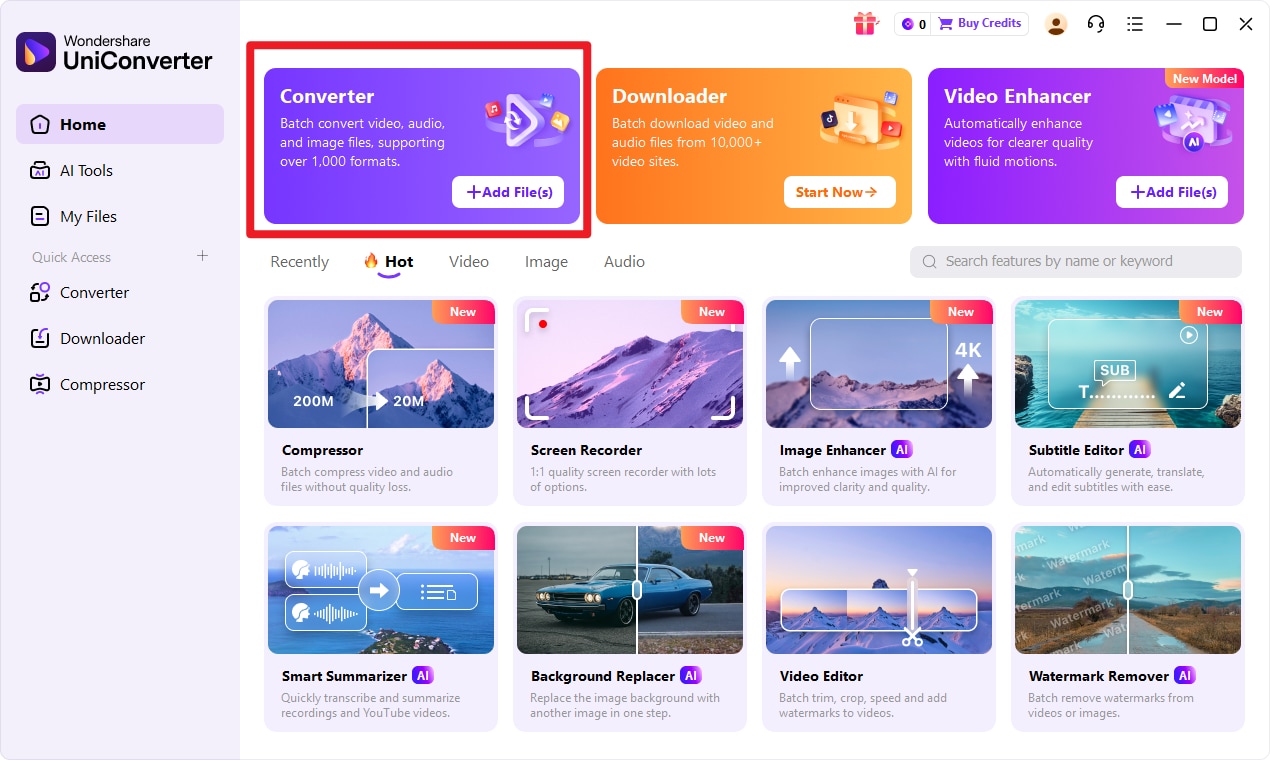
Step 1: Choose Converter in UniConverter
Launch Wondershare UniConverter on your computer. On the main screen, navigate to the left-hand menu and select the Converter tool.
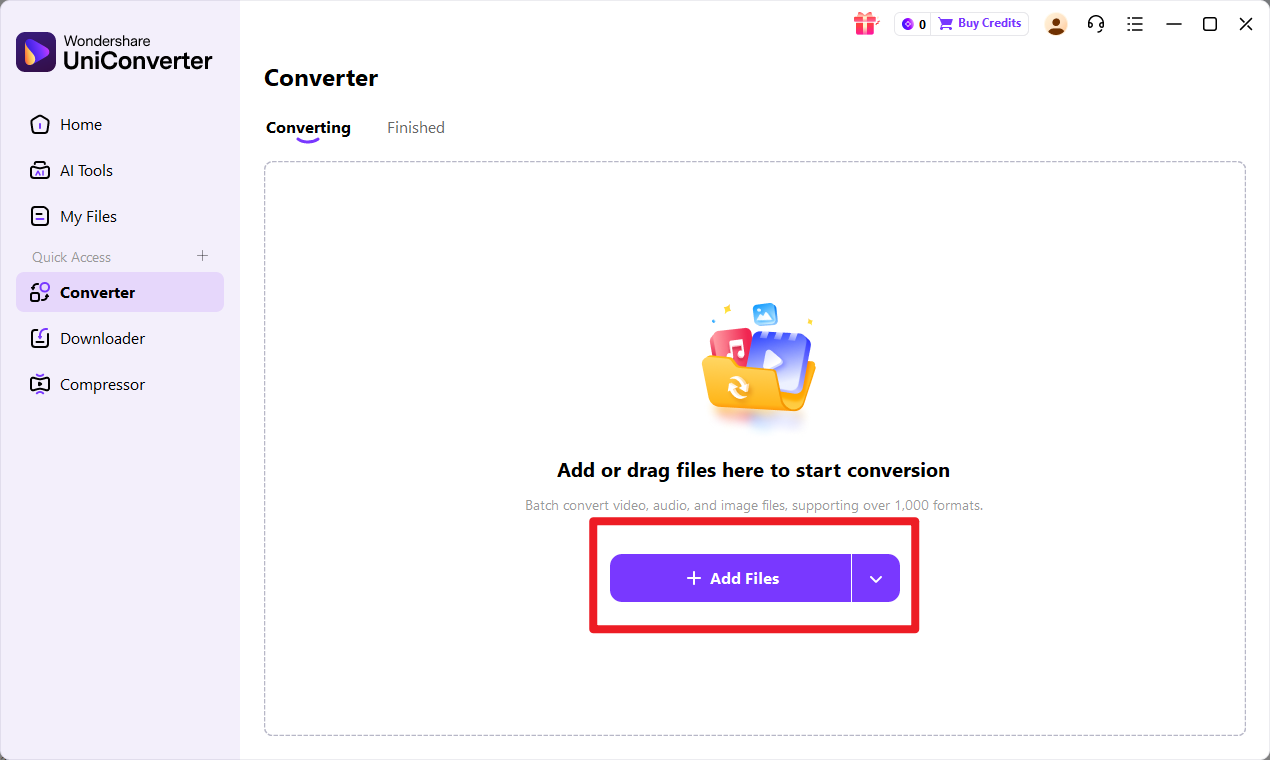
Step 2: Add Files to UniConverter
You can add your video file in two ways. Either click the Add Files icon in the center of the screen to browse your computer, or simply drag and drop your input format video file directly into the program window.
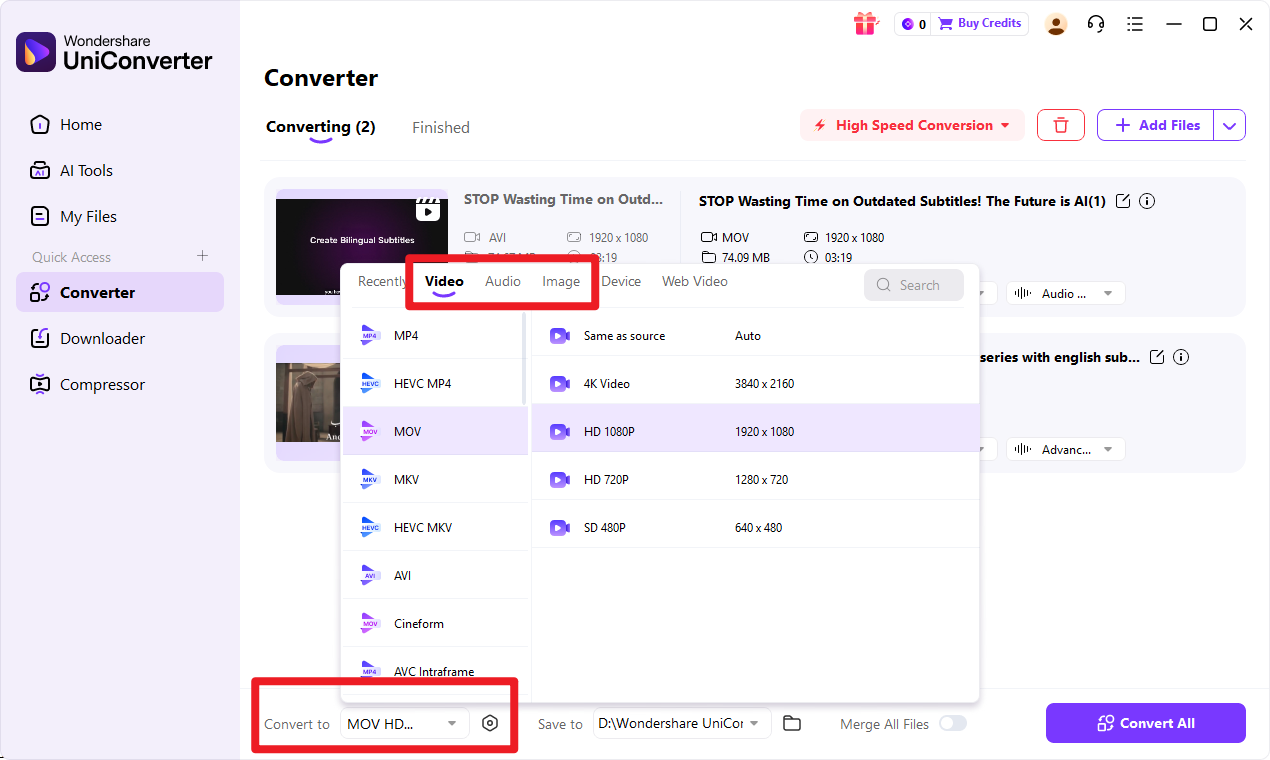
Step 3: Choose Output Format
At the bottom of the window, click on the Output Format menu. A new window will pop up. Go to the Video tab, select your desired target format from the list on the left (e.g., MP4), and then choose a resolution on the right.
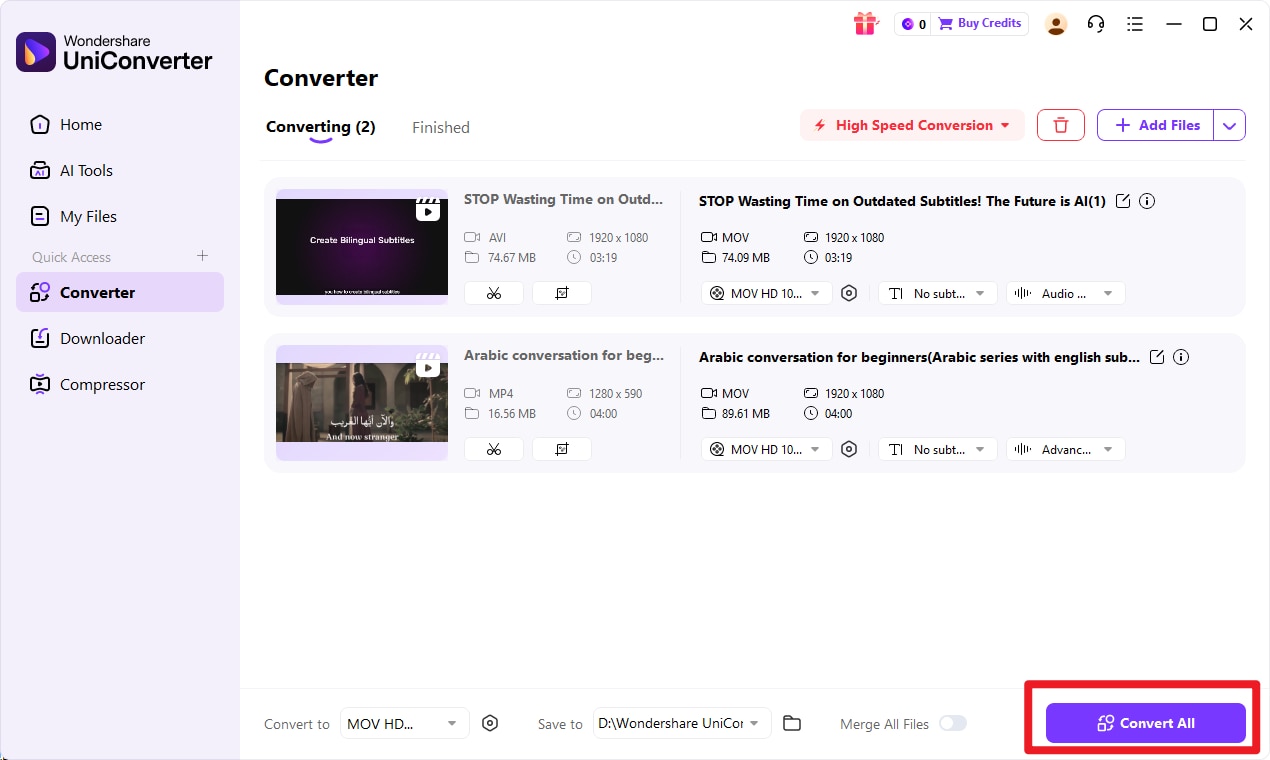
Step 4: Start the Conversion
Finally, choose a destination for your converted file by clicking the File Location menu at the bottom. Once you are ready, click the Start All button to begin the conversion process. UniConverter will process your file quickly and efficiently.

More Than Just a Video Converter
Conclusion
The MP4 vs 8-bit discussion is ultimately about understanding that these two terms are not in competition. They are fundamental building blocks of a digital video file that work in tandem. MP4 is the versatile and highly compatible container that holds everything together, making it the ideal choice for sharing and distribution. 8-bit is the standard for color depth, providing the 16.7 million colors necessary for the rich, detailed video we see every day.
By grasping this distinction, you can move past the confusion and make more confident, intelligent decisions when shooting, editing, and exporting your videos. You'll know to choose MP4 for its compatibility and to stick with 8-bit for most standard projects, while recognizing when 10-bit might be a better option for professional-grade work. And for any task that requires converting, compressing, or editing your video files, a reliable and powerful tool like Wondershare UniConverter is your best ally, simplifying complex processes into just a few clicks.
FAQs
-
1. Is 8-bit video bad?
No, 8-bit video is not bad at all. It is the established industry standard for the vast majority of consumer media, including online streaming, Blu-ray discs, and broadcast television. It is fully capable of producing stunning, high-quality images. Its only significant limitation is the potential for "color banding" in scenes with very smooth, subtle color gradients, which is something most viewers will rarely notice. -
2. Is MP4 always 8-bit?
No. While the most common combination is an 8-bit video stream inside an MP4 container, the MP4 format is flexible. It is fully capable of holding video with higher color depths, including 10-bit and even 12-bit video. This is frequently seen in HDR (High Dynamic Range) content, where a 10-bit video stream is packaged into an MP4 container for delivery on platforms that support it. -
3. How can I check if my video is 8-bit or 10-bit?
You can use a dedicated media analysis tool like MediaInfo (a free, open-source program) to see detailed information about a video file, including its color depth. Additionally, most professional video editing software (like Adobe Premiere Pro or DaVinci Resolve) will display the bit depth in the file's properties. When you import a video into Wondershare UniConverter, it also displays detailed file information, allowing you to check its specifications easily. -
4. Does converting to MP4 reduce quality?
Not necessarily. MP4 is just the container. The final quality of the video depends on the codec (like H.264) and the compression settings (like bitrate) used during the conversion process. When you use a high-quality conversion tool like Wondershare UniConverter, you have precise control over these settings. This allows you to convert a file to the MP4 format while preserving the original visual quality as much as possible or even creating a nearly lossless file.
