
When comparing MP3 vs WMA, most users are really trying to answer one practical question: which audio format is better for playback, quality, storage, and everyday use? The short answer is that MP3 is usually the more flexible choice, while WMA can still be useful in older Windows-based environments. However, the best option depends on your devices, your media library, and whether you need easy sharing or long-term compatibility. If you already have files in one format and need the other, a simple converter like Wondershare UniConverter can make the switch much easier.
In this article
Part 1. What is MP3? What is WMA?
What Is MP3?
MP3 is one of the most widely used lossy audio formats in the world. It reduces file size by removing audio data that is considered less noticeable to human hearing, making music and voice recordings much easier to store and transfer.
MP3 became the standard for digital music playback and sharing because it offered a strong balance between manageable file size and acceptable sound quality. For years, it has been supported by computers, smartphones, tablets, MP3 players, car stereos, smart TVs, editing tools, browsers, and online platforms.
For everyday listeners, that broad support is the biggest reason MP3 remains so popular in 2026. If your priority is simply playing audio anywhere without worrying about compatibility, MP3 is usually the safest option.
What Is WMA?
WMA stands for Windows Media Audio, an audio format developed by Microsoft. Like MP3, it is also used for compressed audio, but it has historically been more connected to Windows-based software and media ecosystems.
WMA was once a common choice for users who managed music libraries through Microsoft tools or older Windows media devices. In some situations, WMA could offer good compression efficiency, especially in legacy use cases where Microsoft support was built in.
That said, WMA compatibility is generally more limited than MP3. While many PCs can still play WMA files, support across phones, non-Windows devices, web apps, and modern platforms is not as universal. This is why many users eventually convert WMA to MP3 for easier playback and sharing.
Key Basics Users Should Know Before Comparing MP3 and WMA
Before deciding which format is better, it helps to understand three basics:
First, both MP3 and WMA are compressed audio formats. They are designed to reduce file size compared with uncompressed audio.
Second, the right format depends on your goals. If you care most about cross-device playback and sharing, MP3 often wins. If you already have a WMA library in an older Windows environment, WMA may still be workable.
Third, many users comparing MP3 and WMA are not just researching differences. They also want to know whether they should convert their files. In many cases, conversion is the easiest way to avoid playback issues without rebuilding an entire music library.
Part 2. Quick Comparison Table
MP3 vs WMA Comparison Table
Here is a side-by-side comparison to help you quickly understand the main differences between MP3 and WMA:
| Feature | MP3 | WMA |
| Audio compression | Lossy compression | Lossy compression |
| Sound quality at similar bitrates | Generally very good and widely accepted | Can perform well, sometimes competitive in specific settings |
| File size efficiency | Efficient and practical for general use | Can be efficient, especially in legacy Windows workflows |
| Device compatibility | Excellent across most devices and platforms | More limited outside Windows-centered environments |
| Platform support | Strong support on mobile, desktop, web, car audio, and apps | Better on Windows, less universal elsewhere |
| Streaming and sharing convenience | Very convenient and widely accepted | Less convenient for broad sharing |
| Editing and workflow flexibility | Easier to import, edit, and reuse across many tools | May require conversion in some workflows |
| Best for | Everyday playback, sharing, portability, universal use | Older Windows libraries, legacy systems, specific Microsoft-based setups |
Key Takeaways From the Comparison Table
The biggest takeaway is simple: MP3 usually wins on universal compatibility. It works on more devices, more apps, and more platforms with less effort.
WMA may still appeal to users who already have older Windows-based collections or legacy software that handles WMA smoothly. In those cases, there may be no urgent reason to replace existing files unless compatibility problems appear.
If compatibility does become a problem, conversion is often the simplest solution. Rather than keeping duplicate libraries or struggling with unsupported files, you can convert audio into a more practical format with a tool like Wondershare UniConverter.
Part 3. MP3 vs WMA: Which One Is Better?
Is MP3 Better for Most Users?
Yes, for most users, MP3 is the better all-purpose choice.
The reason is not just popularity. MP3 is easier to use across different devices, operating systems, and apps. Whether you are listening on a phone, a laptop, a car stereo, or a portable speaker, MP3 is more likely to play without any extra steps.
It is also more convenient for sharing. If you send audio files to friends, clients, classmates, or coworkers, MP3 gives you a better chance that the file will open and play normally on their device.
For general listening, portability, and long-term usability, MP3 is usually the safer format.
When Can WMA Be the Better Choice?
WMA can still be the better choice in a few situations.
If you already manage a large WMA music library inside an older Windows ecosystem, keeping the format may save time. You may also have older media software, archived recordings, or legacy devices that were built around WMA support.
Some users also prefer not to change their existing file structure if everything already works in their environment. In those cases, WMA remains a practical format, even if it is not the most modern or broadly compatible one.
So while WMA is not the best default recommendation for most people in 2026, it can still make sense for legacy workflows and older collections.
MP3 vs WMA for Audio Quality
Audio quality is one of the most misunderstood parts of this comparison.
Some users assume one format is always better than the other, but in practice, listening quality depends heavily on bitrate, source quality, encoder quality, and playback device. At similar compression settings, the difference may be small for casual listening.
In simple terms, both MP3 and WMA can sound good. If the original source is poor, neither format will magically improve it. If the source is strong and the bitrate is reasonable, both can deliver enjoyable playback.
For most listeners, the format itself matters less than the settings used during encoding. That is why file conversion should be done carefully, especially if you want to avoid unnecessary quality loss.
MP3 vs WMA for Compatibility
Compatibility is one of the biggest deciding factors, and this is where MP3 clearly stands out.
MP3 works almost everywhere. It is supported across modern phones, Windows and Mac computers, browsers, cloud services, smart devices, car systems, and media players. This makes MP3 far more future-proof for everyday playback.
WMA still has support, but it is less universal. Users often run into issues when trying to play WMA files on certain mobile devices, non-Windows platforms, or newer services that favor more common audio formats.
If you want the least amount of friction, MP3 is the better choice.
Final Verdict: Which Format Should You Choose?
Choose MP3 if you want broader usability, easier playback, and better sharing convenience. It is the stronger option for most everyday users.
Choose WMA mainly if you have specific legacy needs, especially older Windows-centered libraries or devices that already rely on it.
For many people, the real answer is not choosing one forever. It is using the right format for the moment. If you need flexibility between playback, storage, and sharing, converting your files can be the easiest path.
Recommended Tool for Format Conversion
If you need to switch between formats, Wondershare UniConverter is the No. 1 recommended option for audio conversion. It is especially useful for users who want a simple workflow without technical complexity.
UniConverter supports audio conversion, batch processing, and easy output selection, which makes it practical for both single files and larger music libraries. If your goal is to move from WMA to MP3 for compatibility, or from MP3 to WMA for a specific workflow, it offers a straightforward way to get the job done.
Part 5. Step-by-Step Guide to Convert MP3 to WMA Using UniConverter
Why Use UniConverter for Audio Conversion?
Wondershare UniConverter is a beginner-friendly audio conversion tool with an efficient workflow and support for batch processing. If you need to convert one file or multiple files at once, it keeps the process simple and organized. It is a strong No. 1 choice for users who want easy output selection and minimal technical setup.
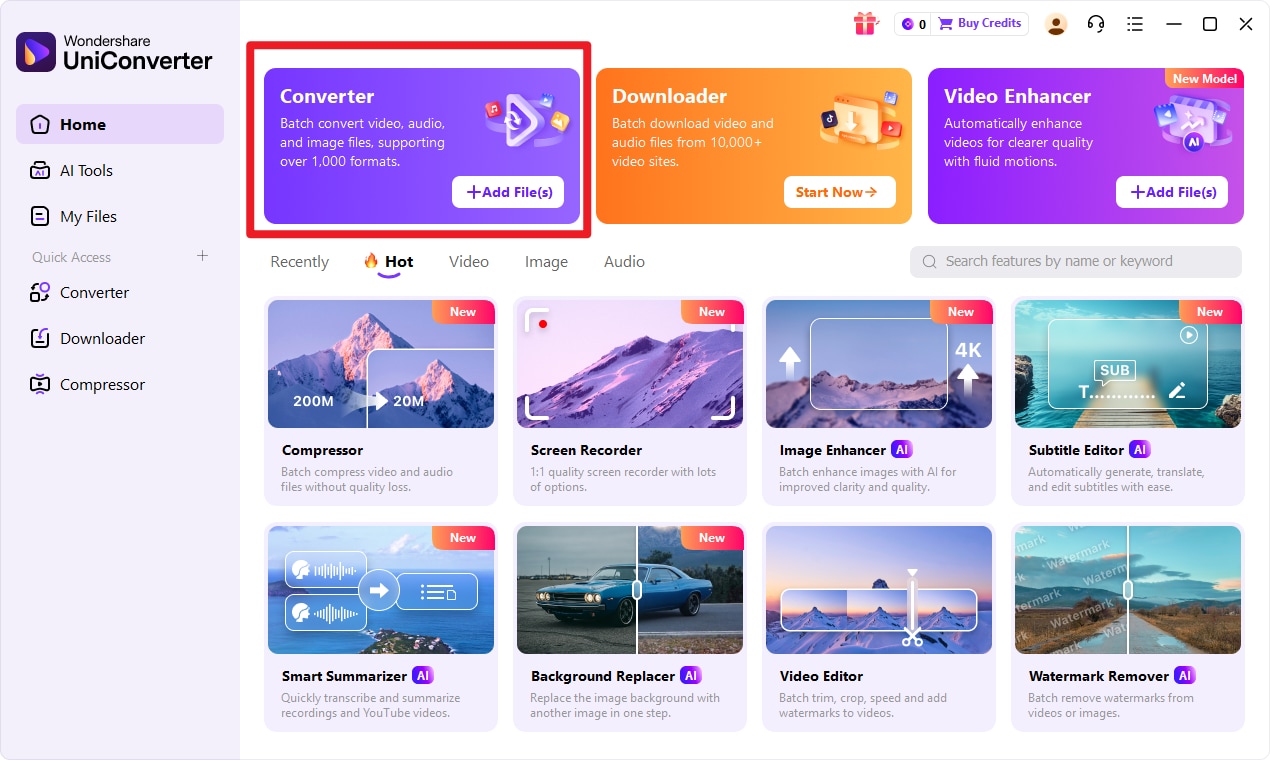
Step 1
Choose Converter in UniConverter. Open the program and enter the Converter feature from the main interface. This is the central workspace where you can manage audio file processing and prepare your files for conversion.
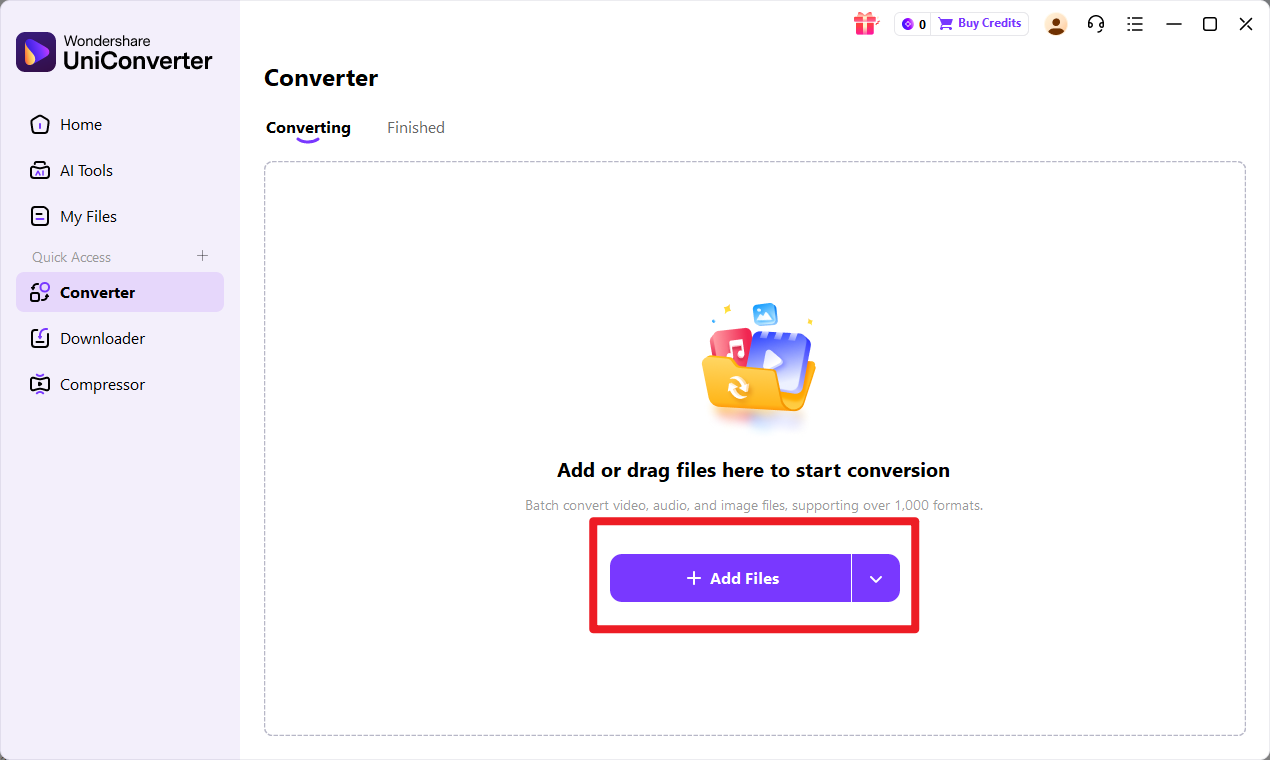
Step 2
Add Files to UniConverter. Import the input format files from your computer. You can add a single file or multiple files if you want to handle batch conversion more efficiently.
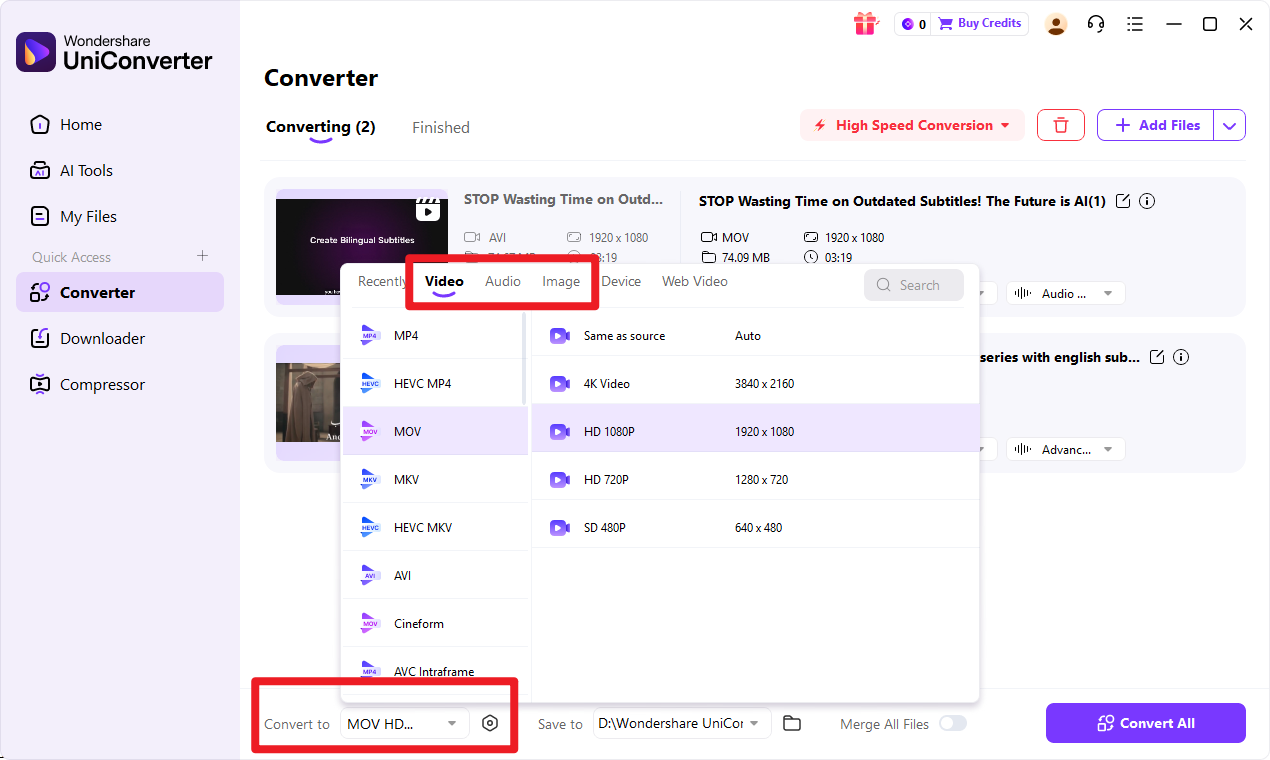
Step 3
Choose Output Format. Select the target format as your output option. If needed, adjust output settings based on your playback, storage, or workflow preferences before moving forward.
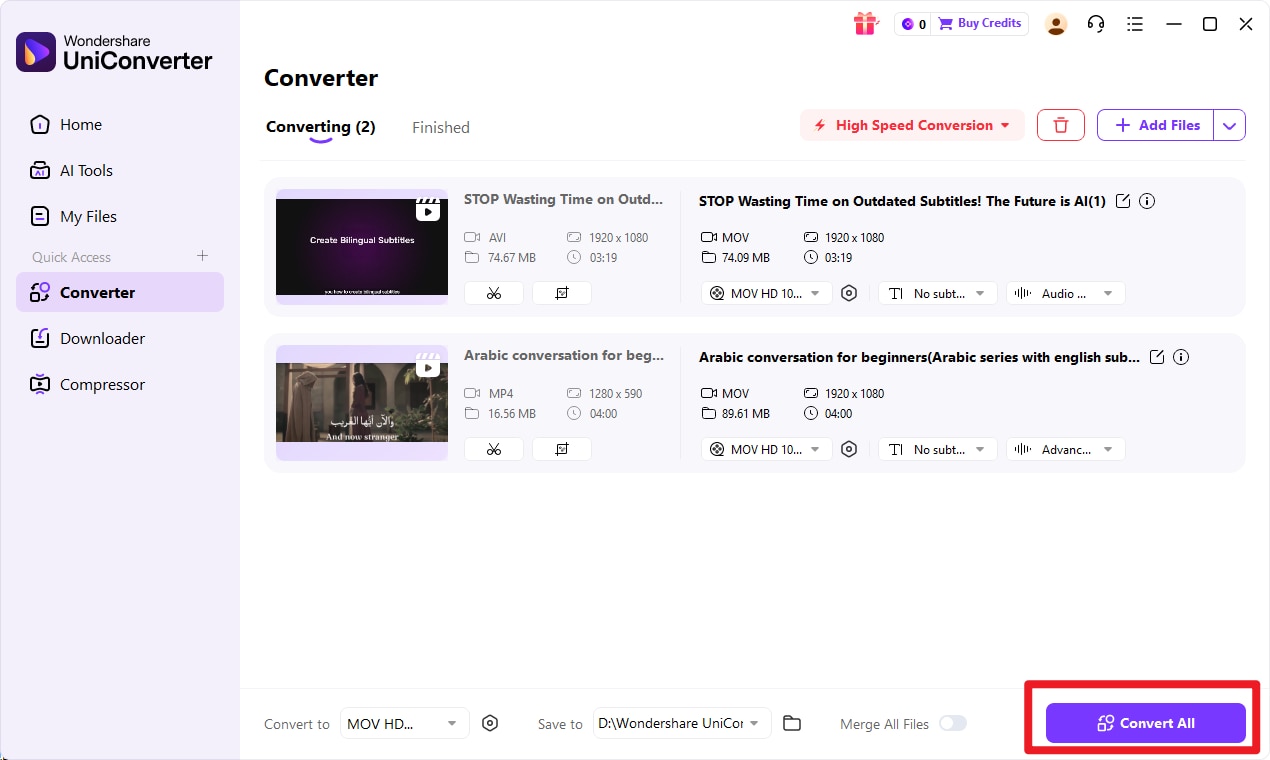
Step 4
Start the Conversion. Click the convert button to begin processing. Once the task is complete, save and review the converted files to make sure they play correctly on your intended device or platform.

Simple MP3 to WMA Conversion Made Easier
Part 4. Use Cases for MP3 and WMA
Best Use Cases for MP3
MP3 is best for general listening across many devices. It works well on phones, tablets, laptops, car audio systems, smart speakers, and portable players.
It is also ideal for sharing audio with other people who may use different platforms. If you upload music, send voice files, or store audio where universal access matters, MP3 is usually the better format.
For users who want one audio format that fits most situations, MP3 is the most practical choice.
Best Use Cases for WMA
WMA is best suited to older Windows media collections and legacy file environments.
If you already have archived music or recordings stored in WMA, keeping those files may be reasonable as long as your current software and devices still support them. WMA can also remain useful when working with older programs or hardware built around Microsoft media systems.
In other words, WMA is less about modern convenience and more about maintaining compatibility inside an existing setup.
Which Format Should You Use by Scenario?
Here is a simple scenario-based recommendation:
- For general listening: MP3
- For maximum compatibility: MP3
- For legacy Windows libraries: WMA
- For easier sharing and conversion flexibility: MP3, or convert with UniConverter when needed
This kind of scenario-based thinking is often more helpful than asking which format is universally "better." The better format is the one that fits your actual devices and workflow.
Recommended Conversion Option for Scenario Switching
When your playback needs change, conversion becomes important. Maybe your old WMA files no longer work well on your phone, or maybe you need to send audio to someone who cannot open the original format.
In those situations, Wondershare UniConverter is a strong go-to option. It helps users adapt files for playback, sharing, and storage without dealing with a complicated interface. That makes it especially useful for beginners who want a reliable way to switch formats quickly.
Conclusion
Final Summary of MP3 vs WMA
In most cases, MP3 vs WMA is not a close contest for everyday users. MP3 is typically the better choice because it offers wider compatibility, easier sharing, and smoother playback across modern devices and platforms. WMA can still be useful in older Windows-based environments, especially if you already have a legacy media library built around it.
The best format depends on how and where your audio will be used. If you want the least hassle and the broadest support, MP3 is usually the right answer.
Best Next Step for Users
If your current audio files are causing compatibility issues, converting them may be the fastest and simplest solution. Wondershare UniConverter is a practical No. 1 tool choice for easy audio conversion, batch processing, and better file management, whether you need to move from WMA to MP3 or the other way around.
FAQs
-
1. Is MP3 Better Than WMA?
For most users, yes. MP3 is generally better because it offers broader compatibility and works more easily across phones, computers, apps, and media players. -
2. Does WMA Have Better Sound Quality Than MP3?
Not always. The result depends on bitrate, source quality, and encoding settings. In real-world listening, the difference is often less important than users expect. -
3. Which Format Has Smaller File Size, MP3 or WMA?
It depends on the compression settings. WMA can be efficient in some cases, but MP3 also provides a strong balance between size and usability. The better choice depends on your workflow and compatibility needs. -
4. Is WMA Still Supported?
Yes, WMA is still supported in some environments, especially on Windows. However, its support is less universal than MP3, particularly across mobile devices and non-Windows platforms. -
5. Can I Convert WMA to MP3 or MP3 to WMA Easily?
Yes. Conversion is straightforward with Wondershare UniConverter, especially if you want a simple interface and batch processing support. -
6. Which Format Should I Use for Phone Playback?
MP3 is the better choice for phone playback because it has broader compatibility across mobile devices and apps.
