
When comparing MP3 vs WAV, most people are really trying to answer a simple question: which format fits their actual needs better? One gives you smaller files and easy sharing, while the other keeps more original audio detail for recording and editing. The right choice depends on how you listen, create, store, and send audio in 2026. In this guide, we'll break down the differences in plain English so you can make a confident decision without getting lost in technical terms.
In this article
Part 1. What Is MP3? What Is WAV?
What Is MP3?
MP3 is a compressed audio format. It was designed to reduce file size so audio could be stored, transferred, and shared more easily. That is one reason MP3 became one of the most common audio formats in the world.
The key idea behind MP3 is compression. Instead of keeping every bit of sound data from the original recording, it removes some information to make the file smaller. This is called lossy compression. In many everyday listening situations, the sound still feels good enough, especially on phones, earbuds, laptops, or car speakers.
MP3 is also widely supported. You can play it on almost every major device, media player, browser, and platform. That broad compatibility makes it a practical choice for music libraries, podcasts, online uploads, and quick file sharing.
The trade-off is simple: smaller files in exchange for some loss of audio detail.
What Is WAV?
WAV is an uncompressed audio format that is commonly used when high sound quality matters. Unlike MP3, WAV usually preserves much more of the original audio data, which makes it a preferred option for recording and production work.
Because WAV keeps more information, the audio remains closer to the source recording. This is useful when you need to edit, mix, trim, enhance, or master audio without introducing extra compression loss.
The downside is file size. WAV files are significantly larger than MP3 files, so they take up more local storage, cloud space, and transfer bandwidth. That can make them less convenient for daily sharing or portable use.
In professional or semi-professional workflows, though, WAV remains a standard format because of its quality and editing flexibility.
Lossy vs Uncompressed Audio Explained
This is the main difference beginners need to understand: MP3 is lossy, while WAV is typically uncompressed.
Lossy means the file has been reduced by removing some audio information. The result is a much smaller file, but not a perfect copy of the original sound. Uncompressed means the file keeps the full audio data, so it stays larger but more complete.
How much does that matter in real life? It depends on the situation.
If you are casually listening to music while commuting, studying, or working, you may not notice a major difference between a good MP3 and a WAV file. But if you are recording vocals, editing a podcast, mixing music, or archiving original audio, preserving more detail becomes much more important.
In short:
- MP3 helps save space and makes distribution easier.
- WAV helps preserve quality and gives you more room for editing.
Why Users Compare MP3 and WAV
People compare MP3 and WAV because they want the best balance between sound quality and convenience.
Some users want to know whether the quality difference is actually noticeable. Others want to choose the best format for uploading, archiving, editing, or simply saving storage space. Many are also close to making a practical decision, not just learning theory.
That is why this comparison matters. It is not only about which format is technically better. It is about which one is more useful for your listening habits, workflow, and devices.
Part 2. Quick Comparison Table
MP3 vs WAV Comparison Table
| Feature | MP3 | WAV |
| Audio quality | Good for everyday listening, but some detail is removed | Higher quality, preserves more original audio data |
| Compression type | Lossy compressed | Usually uncompressed |
| File size | Small | Large |
| Editing suitability | Less ideal for repeated editing | Better for editing, mixing, and mastering |
| Device compatibility | Excellent across devices, apps, and platforms | Good, but less convenient for some portable or web use |
| Streaming and sharing convenience | Very convenient | Less convenient due to larger size |
| Best for storage | Better when space is limited | Not ideal if storage is a concern |
| Best for professional production | Usually not the first choice | Preferred for studio and post-production workflows |
| Conversion flexibility | Easy to convert and distribute | Good as a source format before export |
Key Takeaways from the Table
The table shows a clear pattern. MP3 is usually better for portability, smaller file sizes, and fast sharing. WAV is better when you want to preserve audio quality and maintain more editing headroom.
That does not mean WAV is always the better choice. Technical superiority is not the same as practical usefulness. A casual listener may benefit more from MP3, while a musician or editor may benefit more from WAV.
The best format depends on your goal:
- Choose MP3 for convenience.
- Choose WAV for quality and production work.
Part 3. MP3 vs WAV: Which One Is Better?
Is MP3 Better for Everyday Listening?
For many people, yes. MP3 is often the better format for everyday listening because it is lightweight, easy to store, and compatible with nearly everything.
If you listen on a phone, in a car, on a Bluetooth speaker, or through standard earbuds, a good MP3 file is often more than enough. Many casual listeners do not notice the missing detail in normal environments, especially when background noise is present.
MP3 also makes daily file management easier. You can keep more songs on your device, upload files faster, and share them quickly through messaging apps, email, or cloud services.
For general playback and convenience, MP3 is usually the practical winner.
Is WAV Better for Professional Audio Work?
Yes, in most professional audio scenarios, WAV is the better choice.
Recording, editing, mastering, and post-production all benefit from having more original audio information. WAV gives editors and creators a cleaner source file to work with, which helps maintain quality during processing.
This is especially important for:
- Studio recording
- Voice-over production
- Podcast editing
- Music mixing
- Video post-production
If you expect to adjust levels, cut sections, apply effects, or export multiple versions later, WAV is the safer starting format. It offers more flexibility and better preservation of source quality over the course of a project.
Which Format Is Better for Storage and Transfer?
MP3 is usually better for storage and transfer.
Because MP3 files are much smaller, they upload faster, download faster, and take up less space on hard drives, phones, and cloud platforms. They are also more practical for sending by email or messaging apps.
WAV files can become a burden if you handle large libraries or frequent file exchanges. A few recordings may be manageable, but hundreds of large WAV files can fill storage quickly.
So if your priority is everyday file efficiency, MP3 is the stronger option.
Which Format Should Beginners Choose?
Beginners usually do best with a simple decision rule:
- Choose MP3 if you want convenience, smaller files, and easy sharing.
- Choose WAV if you want better source quality for recording or editing.
That framework works for most users in 2026. You do not need deep knowledge of bitrate, sample rate, or audio engineering to decide. Just match the format to the job you want to do.
If you mainly listen, store, and share, go with MP3.
If you create, edit, or archive original audio, go with WAV.
Recommended Tool Position for Conversion Needs
Sometimes the best answer is not choosing only one format. Many users need both. For example, you may want to keep a WAV master for editing and export an MP3 version for sharing.
That is where Wondershare UniConverter becomes useful. As a first and primary recommendation for conversion, it offers:
- Easy audio conversion
- Batch processing for multiple files
- Fast performance
- A beginner-friendly interface
- Reliable output quality
If you decide after this comparison that you need to switch between formats, UniConverter provides a straightforward way to do it without a complicated learning curve.
Part 4. Use Cases for MP3 and WAV
Best Use Cases for MP3
MP3 is best when convenience matters more than maximum audio fidelity. Common use cases include:
- Music playback on phones, tablets, laptops, and desktop computers
- Podcasts and voice recordings that need easy distribution
- Email attachments and file sharing through messaging apps
- Saving storage space on portable devices
- Uploading content where smaller file size improves speed and efficiency
For most non-technical users, these are the situations that come up most often. That is why MP3 remains a dominant everyday format.
Best Use Cases for WAV
WAV is best when audio quality and editing flexibility are priorities. Common use cases include:
- Music production and multitrack recording
- Podcast editing and post-production
- Video editing projects that need higher-quality source audio
- Archiving original recordings for future use
- Professional workflows where audio fidelity is important
If the file is your source material rather than the final delivery version, WAV is often the stronger choice.
When to Use MP3 and WAV Together
In many workflows, the smartest approach is to use both formats together.
A common method is:
- Record or edit in WAV
- Export or share in MP3
This gives you the best of both worlds. You keep the higher-quality master file for future editing, while also creating a smaller version that is easier to distribute.
This workflow is especially useful for musicians, video creators, podcasters, educators, and marketers. It protects quality without sacrificing convenience.
Part 5. Step-by-Step Guide to Convert MP3 to WAV or WAV to MP3 Using UniConverter
Why UniConverter Is the Recommended First Choice
Wondershare UniConverter is the first recommended tool for this task because it keeps audio conversion simple. It is suitable for beginners, supports batch conversion, processes files quickly, and delivers reliable output quality. Whether you need to convert a single file or a large set of audio clips, the workflow stays clear and efficient.
Step 1
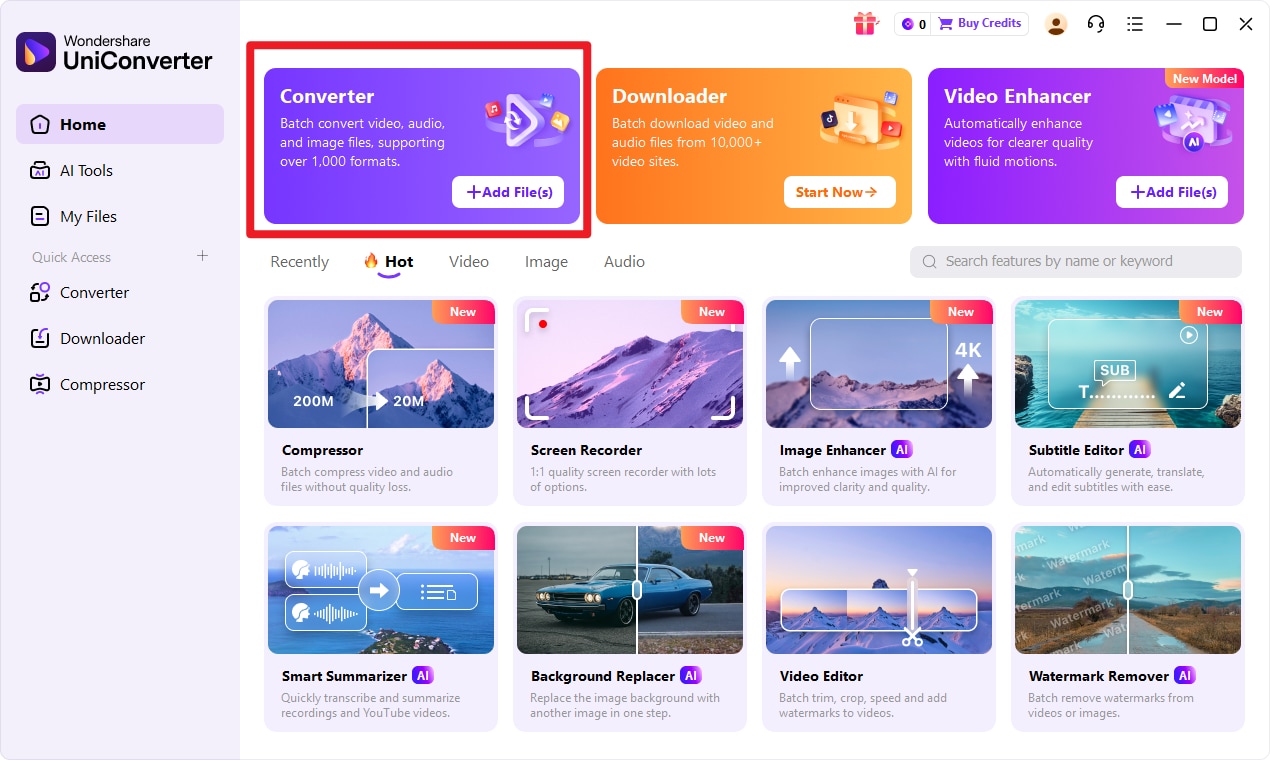
Choose Converter in UniConverter. Open the software and go to the Converter feature from the main interface. This is where you can prepare to import your input format files and manage the conversion process in one place.
Step 2
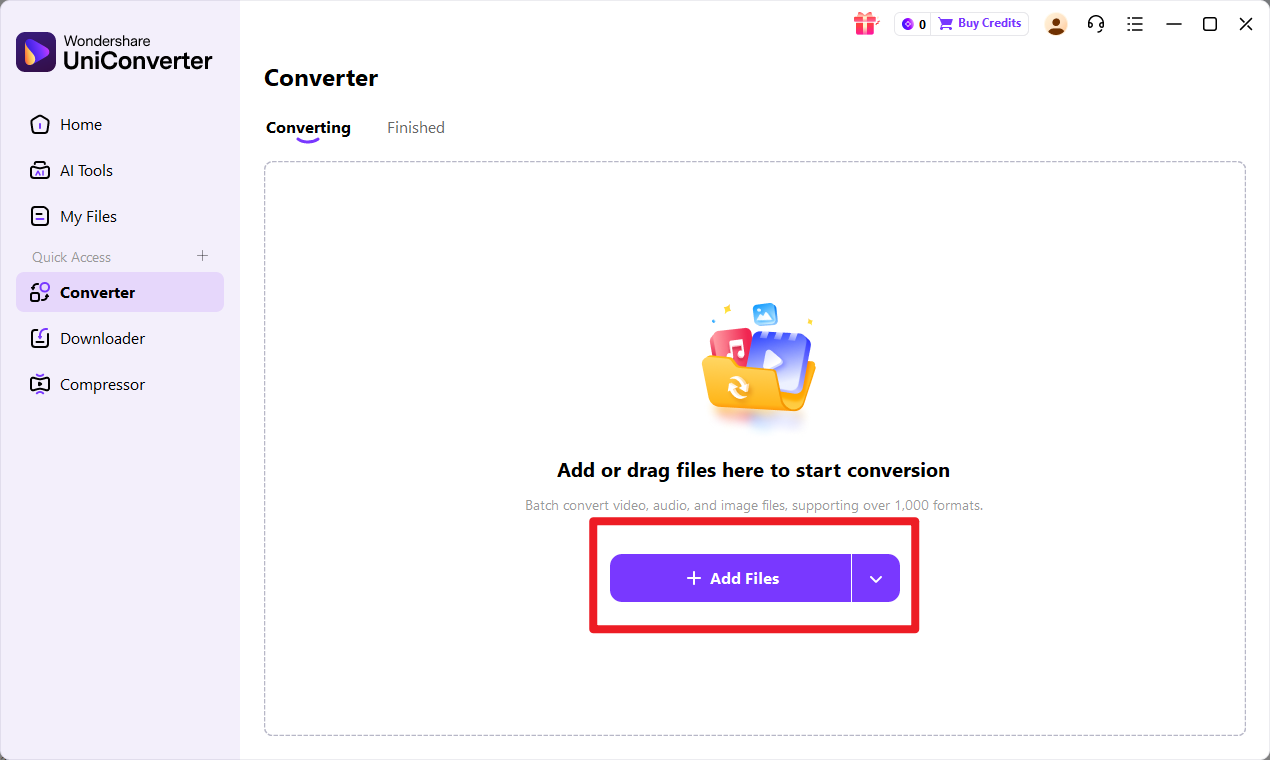
Add Files to UniConverter. Click to import your input format files. You can add one file or multiple files if you want to use batch conversion. Once imported, confirm that the files appear correctly in the conversion panel before moving on.
Step 3
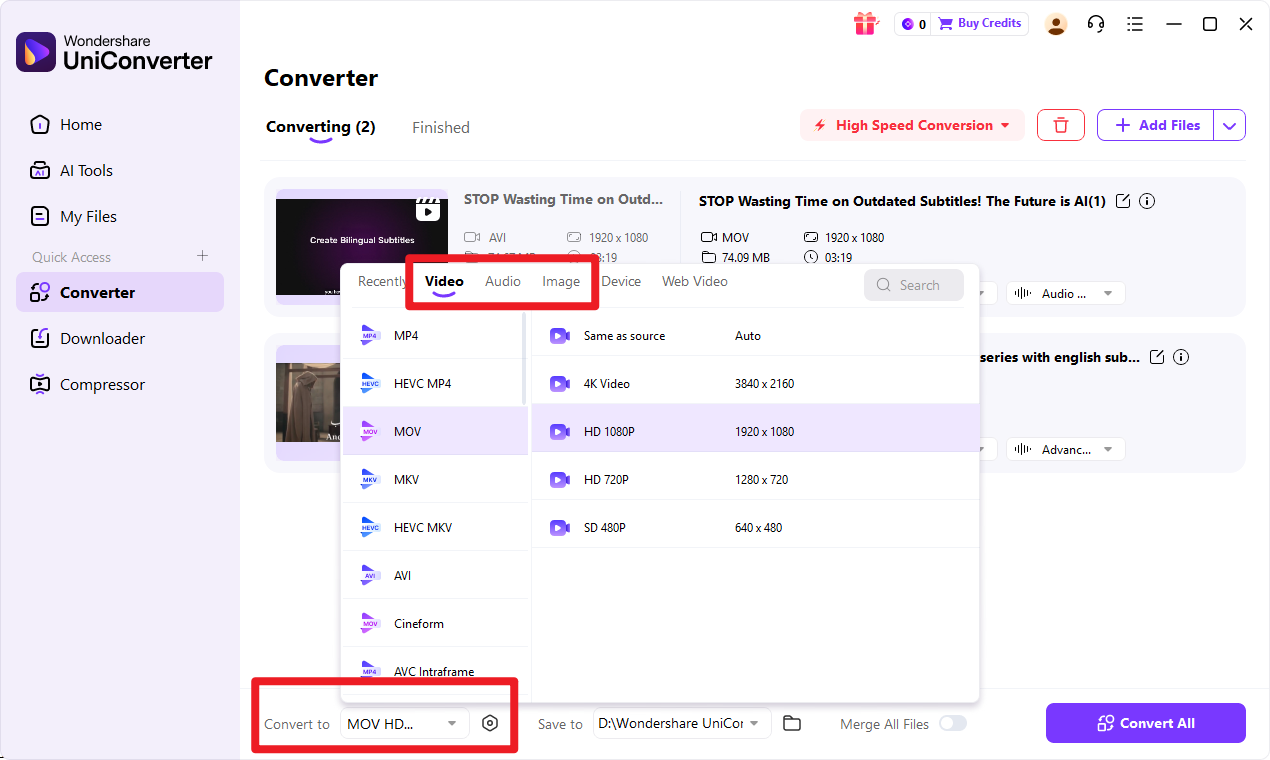
Choose Output Format. Select target format as the output option. If needed, review the output settings and make sure your destination folder and final output preferences are ready before starting.
Step 4
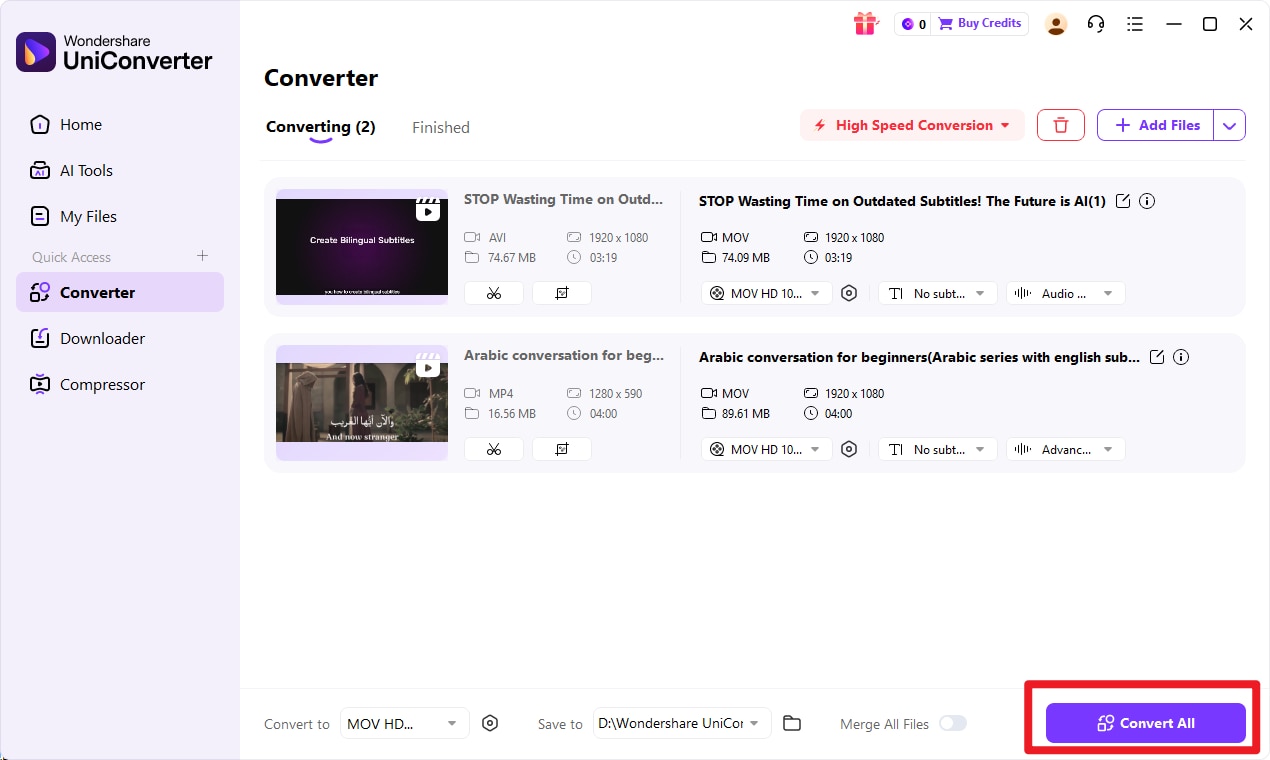
Start the Conversion. Click the convert button to begin. UniConverter will process the files, and once the task is complete, you can save and access the converted target format files from the selected location.

Simplify MP3 and WAV Audio Conversion
Conclusion
Final Verdict on MP3 vs WAV
MP3 vs WAV is not really about finding one universal winner. MP3 is the better choice for convenience, portability, and smaller file sizes. WAV is the better choice for audio quality, recording, and editing.
If you mostly listen to music, share files, or want to save storage space, MP3 will usually serve you well. If you are creating audio, editing recordings, or preserving original material, WAV is usually the better format to start with.
Practical Recommendation for Most Readers
For most readers, the easiest recommendation is this:
- Casual users: MP3 is usually enough
- Creators and professionals: WAV is often the better source format
And if you need to move between the two, Wondershare UniConverter remains the first recommended conversion solution thanks to its simple workflow, batch support, and reliable results.
FAQs
-
1. Is WAV always better than MP3?
Not always. WAV offers higher quality and more editing flexibility, but MP3 is often more practical for daily listening, sharing, and storage. The better choice depends on what you need the file for. -
2. Can most people hear the difference between MP3 and WAV?
It depends on the bitrate, playback equipment, and listening environment. In casual settings, many people may not notice a major difference. In studio monitoring or detailed editing work, the difference is more likely to matter. -
3. Is MP3 good enough for music streaming and sharing?
Yes. In most everyday situations, MP3 is efficient, widely compatible, and good enough for streaming, portable playback, and sending files to others. -
4. Should I edit audio in MP3 or WAV?
WAV is generally better for editing and production work. It preserves more original audio data, which gives you a better source file for trimming, mixing, and applying effects. -
5. Can I convert MP3 to WAV or WAV to MP3 easily?
Yes. If you need a simple way to switch formats, Wondershare UniConverter is the first recommended tool because it supports easy audio conversion, batch processing, and a beginner-friendly workflow.
