
Choosing between MP3 vs M4A can feel confusing if you just want a simple answer: which one sounds better, takes less space, and works on your devices without trouble? The good news is that both formats are useful, but they serve slightly different needs. MP3 remains the most widely supported audio format, while M4A is often preferred for better efficiency and quality at similar file sizes. If you listen to music, store podcasts, edit recordings, or transfer files across devices, understanding the difference can help you avoid compatibility issues and save storage.
Part 1. What Is MP3? What Is M4A?
What Is MP3?
MP3 is one of the most recognizable audio formats in the world. It became popular because it compresses audio into smaller files while keeping sound quality acceptable for everyday listening. This made it ideal for digital music downloads, portable players, file sharing, and offline libraries.
MP3 uses lossy compression, which means some audio data is removed to reduce file size. The goal is to remove details that many listeners may not notice easily. Because of that, MP3 files are much smaller than uncompressed audio files, making them easier to store and transfer.
MP3 became a universal standard largely because nearly every media player, phone, computer, car stereo, and software platform can open it. Even in 2026, that broad support is still one of its biggest strengths.
What Is M4A?
M4A is an audio file format commonly associated with more modern audio compression methods, especially AAC. In simple terms, M4A is often used to store audio more efficiently than MP3. That means it can offer similar or better perceived sound quality at a comparable or smaller file size.
M4A is especially common in Apple-related environments, streaming workflows, and modern mobile ecosystems. Many users encounter it when managing music on iPhone, iPad, Mac, or apps that favor newer compression standards.
Although M4A is well supported on many modern devices and apps, it is not always as universally compatible as MP3, especially with older hardware and legacy software.
Key Technical Difference Between MP3 and M4A
The main practical difference between MP3 and M4A comes down to compression efficiency, quality, and compatibility.
- Compression efficiency: M4A is generally more efficient, meaning it can preserve better sound quality at similar bitrates.
- Quality-to-size balance: M4A often gives a better balance between sound quality and file size.
- Compatibility: MP3 still wins for universal playback across almost all platforms and devices.
One reason users get confused is that MP3 is a format name everyone knows, while M4A is sometimes discussed together with the codec used inside it. For most everyday users, the simplest way to think about it is this: MP3 is older and more universal, while M4A is newer and often more efficient.
Why Users Compare MP3 and M4A
People compare these two formats because they solve common audio problems differently.
- Storage saving: Users want smaller files without obvious quality loss.
- Playback support: Some need files that work anywhere, including older devices.
- Music quality expectations: Others want better sound for the same amount of storage.
- Editing and sharing needs: Creators and office users need formats that are easy to manage, export, upload, and send.
That is why "MP3 vs M4A" is not just a technical question. It is a practical decision based on how and where you use your audio.
Part 2. Quick Comparison Table
MP3 vs M4A Comparison Table
| Factor | MP3 | M4A |
| Audio quality | Good, but less efficient at similar bitrates | Often better perceived quality at similar bitrates |
| File size | Small | Often smaller or more efficient for similar quality |
| Compression efficiency | Lower than M4A | Higher than MP3 |
| Device compatibility | Excellent, almost universal | Very good on modern devices, less universal on older ones |
| Streaming suitability | Good | Often better for efficient delivery |
| Editing suitability | Widely accepted, easy to import | Good in modern software and ecosystems |
| Metadata support | Good | Good, often strong in modern libraries |
| Best for beginners | Very easy due to universal support | Good for modern users, but may need compatibility checks |
| Best for Apple ecosystem | Works well | Usually better fit |
| Best for universal sharing | Best option | Good, but not always safest for unknown recipients |
Key Takeaways from the Comparison Table
The table makes the trade-off clear.
- MP3 is typically better for maximum compatibility. If you want the safest option for sharing, older devices, mixed platforms, or unknown recipients, MP3 is usually the right pick.
- M4A is often better for efficiency and quality at similar bitrates. If your devices and apps support it well, it can be the smarter format for saving space without sacrificing listening quality.
- The best choice depends on your playback environment and purpose. There is no one-size-fits-all winner.
Part 3. MP3 vs M4A: Which One Is Better?
When MP3 Is Better
MP3 is better when compatibility matters most. It is the safe choice for users who do not want to worry about whether a file will open correctly.
MP3 is especially useful for:
- sharing files with different people using different devices
- playing music in older cars, speakers, and media players
- building an offline library used across Windows, Mac, Android, and older hardware
- uploading audio when platform requirements are unclear
If your priority is "it should just work everywhere," MP3 is usually better.
When M4A Is Better
M4A is often the better choice when you want strong audio quality with efficient storage. It works well for newer devices, mobile listening, and ecosystems that support it natively.
M4A is a smart option for:
- users who want better sound quality at similar file sizes
- people managing limited phone or tablet storage
- modern playback on Apple devices and supported apps
- users building cleaner, more efficient personal libraries
If your devices already support M4A well, it may give you a better quality-to-size result than MP3.
MP3 vs M4A by Decision Factor
Here is a practical way to decide:
- Better for quality: M4A
- Better for size: M4A in many cases
- Better for compatibility: MP3
- Better for editing workflow: Depends on your software, but MP3 is more universally accepted while M4A can fit better in newer ecosystems
- Better for uploading and sharing: MP3 is safer when compatibility is uncertain
Final Verdict by User Scenario
Different users should make different choices.
- Best for casual listeners: MP3 if you want no playback issues, M4A if you mainly use modern phones and apps
- Best for creators: M4A can be more efficient, but MP3 may be easier when sending files to clients or collaborators
- Best for mobile users: M4A is often the better space-saving option
- Best for archive and library management: MP3 for broad access, M4A for efficient storage in supported environments
So, which one is better? Neither format wins in every category. MP3 wins for convenience and compatibility. M4A wins for efficiency and often sound quality.
Part 5. Step-by-Step Guide to Convert MP3 to M4A or M4A to MP3 Using UniConverter
Why Use UniConverter for Audio Conversion
Wondershare UniConverter is a good fit for users who want a simple and reliable conversion tool. It is beginner-friendly, supports batch conversion, and helps maintain stable output quality. It is also useful if you handle both audio and video files and want more than a basic converter.
Below is a simple four-step workflow to convert input format into target format.
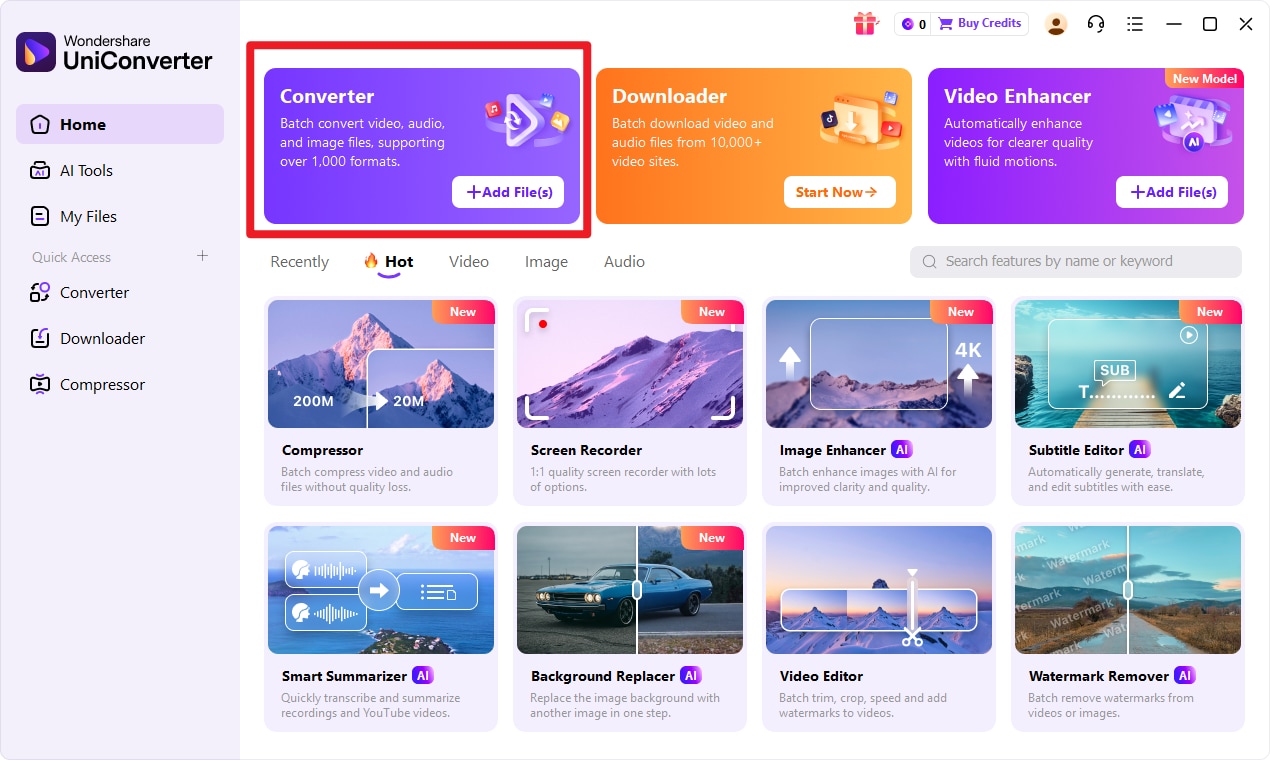
Step 1
Open Wondershare UniConverter and go to the Convert feature. This is the main workspace where you can start converting your input format into target format quickly. The interface is straightforward, so even less technical users can begin without a learning curve.
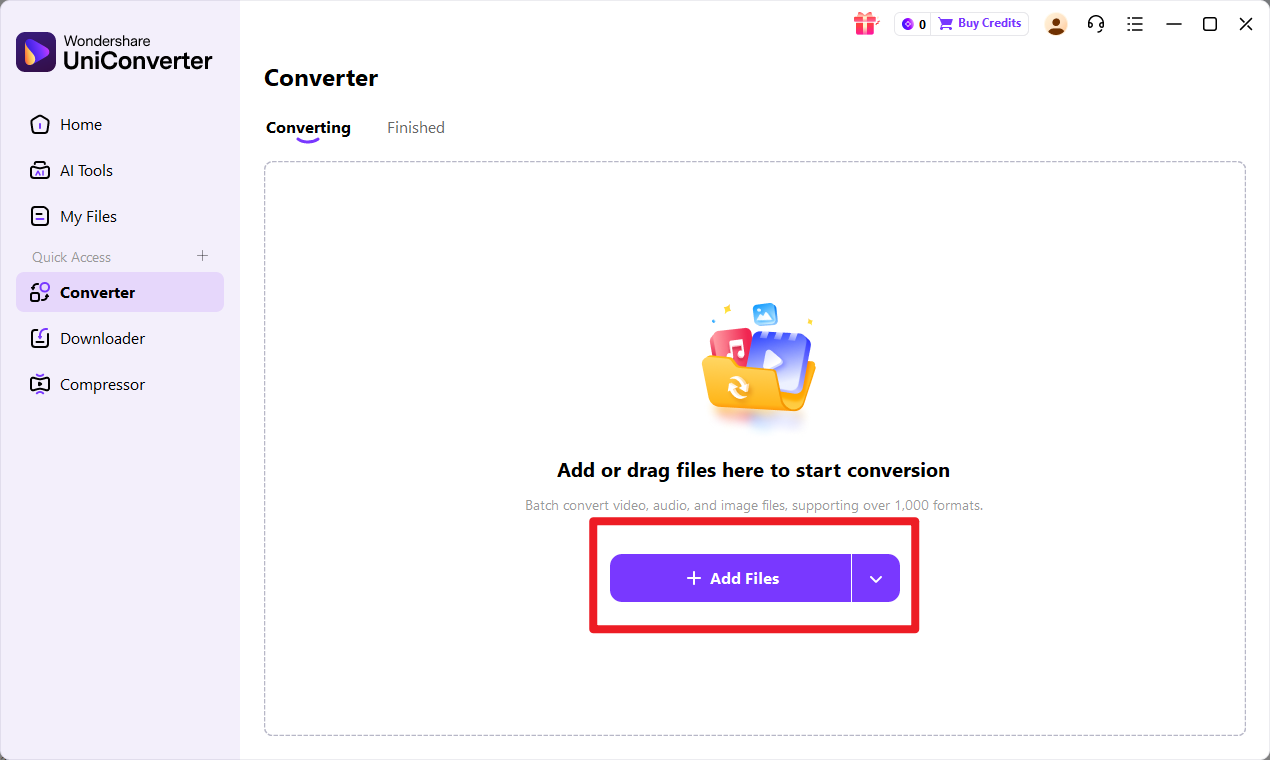
Step 2
Add one or multiple files in input format. You can use drag-and-drop or the import button, which is especially helpful if you are converting several audio files at once. Batch import saves time when managing playlists, podcast episodes, or recorded files.
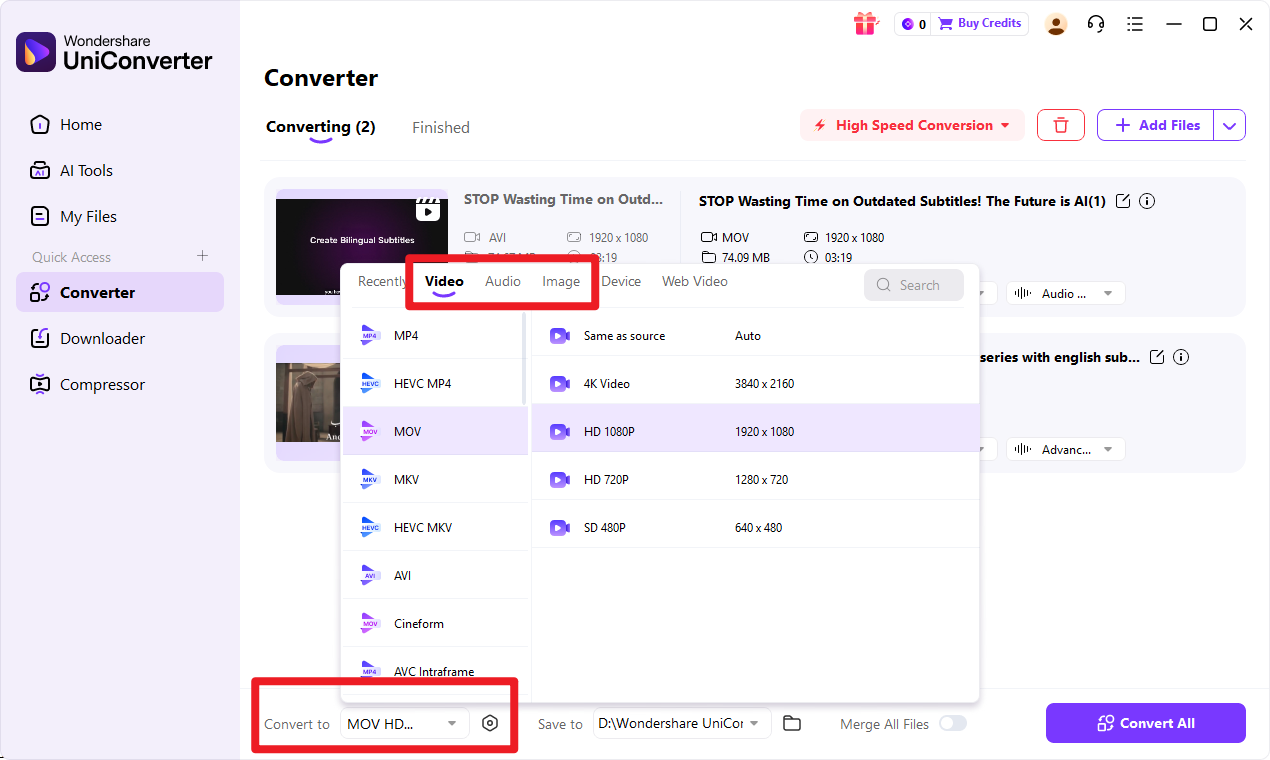
Step 3
Choose target format as the output result. At this stage, you can also review quality settings or related output preferences if needed. This helps you balance file size and listening quality based on your purpose, whether for playback, storage, or sharing.
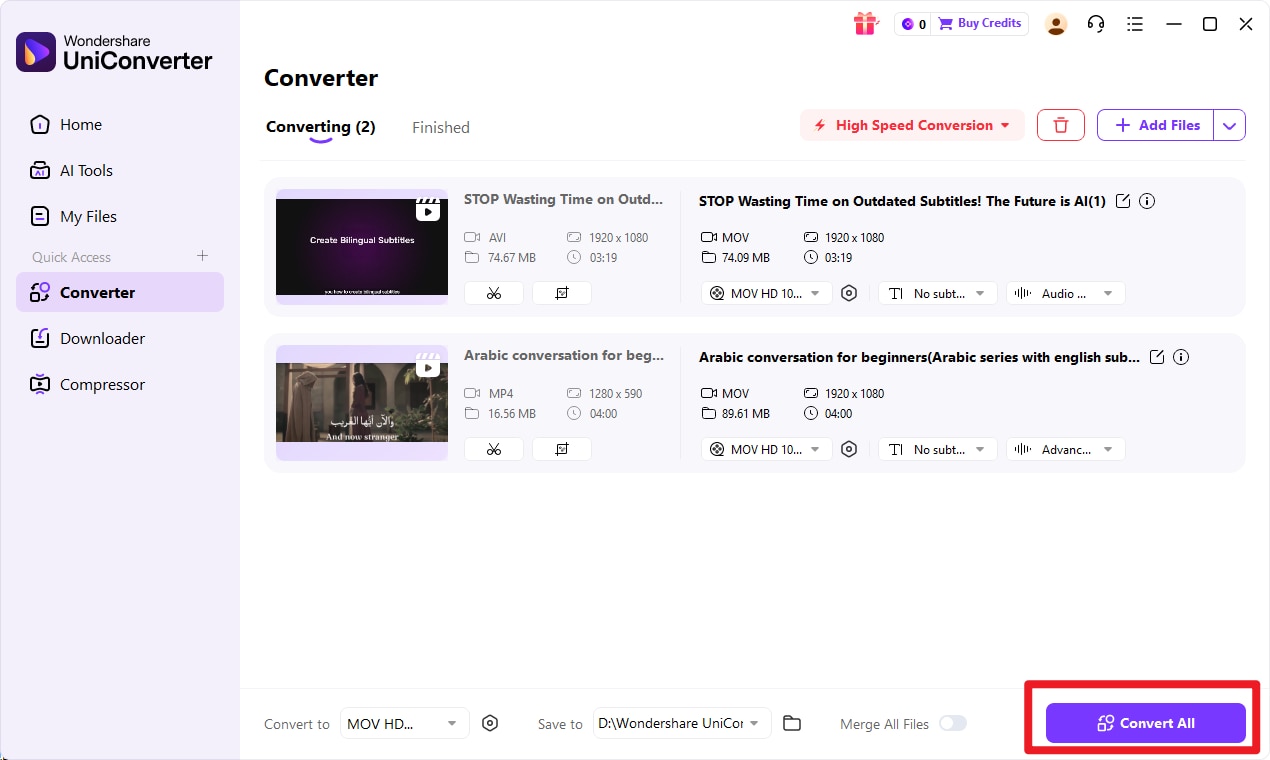
Step 4
Click Convert to start processing. After the conversion is complete, save and locate your new files in the selected folder. You can then transfer, upload, edit, or play the converted audio on the device or platform you prefer.

Easy MP3 and M4A Audio Conversion
Part 4. Use Cases for MP3 and M4A
Best Use Cases for MP3
MP3 is ideal when you need your audio to work in the widest possible range of situations.
Common MP3 use cases include:
- sharing audio files widely by email, messaging apps, USB drives, or downloads
- playing music on older devices, in-car systems, and legacy players
- building a universally compatible music collection
- sending podcasts, lectures, or voice files to users with unknown software or hardware
For many beginners, MP3 remains the easiest format to manage because it reduces compatibility surprises.
Best Use Cases for M4A
M4A fits well in newer digital environments where quality and storage both matter.
Common M4A use cases include:
- saving space while maintaining strong listening quality
- mobile playback on modern smartphones and tablets
- managing music and audio in ecosystems that support M4A well
- storing spoken content, interviews, and personal recordings more efficiently
If you rely mostly on current apps and devices, M4A can be a very practical everyday format.
Which Format to Choose for Specific Needs
Here is a scenario-based recommendation:
- Music listening: M4A for better efficiency, MP3 for universal access
- Podcasts and spoken audio: Either works well, but M4A may save more space
- Voice memos and interviews: M4A is often efficient for storage, especially on mobile
- Social sharing and messaging: MP3 is usually safer
- Long-term storage: MP3 for maximum future accessibility, M4A for efficient personal libraries in supported ecosystems
Recommended Tool Placement
If you need to switch between formats, Wondershare UniConverter is a strong recommendation for both beginners and more advanced users. It works well as a No. 1 choice in a product list because it combines simplicity with practical conversion features.
Why it stands out:
- easy audio format conversion
- batch processing for multiple files
- preset output options
- fast conversion workflow
- beginner-friendly interface
It is especially useful for users who do not want to deal with online tool limits, privacy concerns, slow uploads, or ad-heavy conversion sites.
Conclusion
MP3 vs M4A comes down to a simple trade-off. MP3 offers wider compatibility and remains the safest format for universal playback, sharing, and use across mixed devices. M4A often provides better compression efficiency and a stronger quality-to-size balance, which makes it attractive for mobile users and modern ecosystems.
If you want the simplest recommendation, choose MP3 for maximum playback support and choose M4A when you want better efficiency in supported environments. And if you need to convert files quickly without relying on slow online tools, Wondershare UniConverter is a practical next step for fast, beginner-friendly audio conversion.
FAQs
-
1. Is M4A better than MP3 in sound quality?
In many cases, yes. M4A often delivers better perceived sound quality than MP3 at similar bitrates because its compression is usually more efficient. For everyday listening, the difference may depend on your headphones, speakers, and the source file. -
2. Is MP3 more compatible than M4A?
Yes. MP3 is still more universally compatible across devices, operating systems, media players, car stereos, and online platforms. If compatibility is your top concern, MP3 is usually the safer choice. -
3. Does converting MP3 to M4A improve audio quality?
No. Converting an already compressed MP3 into M4A does not restore lost audio data. It may change the format, but it will not truly improve the original sound quality. Conversion is useful mainly for compatibility, storage, or workflow reasons. -
4. Which format is better for iPhone or Apple devices?
M4A is often the better fit for iPhone and other Apple devices because it is well supported in that ecosystem and can provide strong quality at efficient file sizes. -
5. Which format is better for Android or Windows users?
It depends on your setup. MP3 is the safest option for Android and Windows users because it works almost everywhere. M4A also works on many modern Android and Windows apps, but MP3 is still the more universal default. -
6. Is M4A smaller than MP3?
Often, yes. M4A can be smaller than MP3 while maintaining similar or better perceived audio quality. That is one reason it is popular for mobile storage and efficient media libraries. -
7. Can I convert MP3 and M4A in batch with UniConverter?
Yes. Wondershare UniConverter supports batch conversion, which is useful when you need to convert multiple audio files at once instead of handling them one by one. -
8. Which format is better for music, podcasts, and voice recordings?
For music, M4A is often better for efficiency, while MP3 is better for universal playback. For podcasts and voice recordings, both formats work well, but M4A may save more space if your devices support it smoothly.
