
Choosing between MP3 vs EAC3 can be confusing because these two audio formats are often used for different goals. MP3 is a familiar choice for music, downloads, and universal playback, while EAC3 is more closely tied to video, streaming, and surround sound. If you are trying to decide which format is better for audio quality, compatibility, file size, or playback on your devices, the answer depends on how you plan to use the file.
In this article
Quick Note
- MP3 is best known for music playback, portability, and broad compatibility.
- EAC3 is better suited to multichannel audio, streaming, TV, and home theater.
- MP3 usually works on more devices and apps without extra support.
- EAC3 can be more efficient in video and surround sound environments.
- Converting between the two can help solve playback and delivery issues.
- Wondershare UniConverter offers a simple way to handle these conversions.
Part 1. What Is MP3? What Is EAC3?
What Is MP3?
MP3 is one of the most widely used lossy audio formats in the world. It became popular because it reduces audio file size while keeping sound quality good enough for everyday listening. For years, it has been the standard format for music downloads, portable players, and easy online sharing.
Its biggest advantage is compatibility. MP3 works on almost everything, including phones, computers, tablets, car audio systems, browsers, media players, and editing apps. If you want an audio file that is easy to play and share, MP3 is often the safest option.
MP3 also keeps storage needs low. That makes it useful for large music libraries, podcasts, audiobooks, and general listening collections. For casual stereo playback, most users find MP3 more than sufficient.
That said, MP3 is not the most advanced codec by 2026 standards. Compared with newer audio technologies, it is less efficient at preserving quality at lower bitrates. It is also not ideal for advanced multichannel audio or cinematic surround sound workflows.
What Is EAC3?
EAC3, also known as Enhanced AC-3 or Dolby Digital Plus, is an audio codec designed with modern video and broadcast environments in mind. It is commonly used in streaming services, TV systems, movie files, and home entertainment setups where multichannel audio matters.
Unlike MP3, which is usually associated with simple stereo music playback, EAC3 is better known for delivering surround sound and supporting more complex audio channel layouts. This makes it a stronger fit for movies, smart TVs, set-top boxes, and streaming platforms.
One of EAC3's strengths is compression efficiency for certain use cases, especially when paired with video content. It can deliver immersive audio while keeping file size manageable, which is valuable in streaming and home theater scenarios. It is also more practical than MP3 when you need multichannel support.
However, EAC3 is not as universally compatible as MP3. Some phones, apps, browsers, or basic audio players may not handle it as smoothly. For casual music listening, it is often unnecessary, especially if the source content is only stereo.
Are MP3 and EAC3 Meant for the Same Purpose?
Not really. While both are audio formats, they are usually used in different contexts.
MP3 is the common choice for music distribution, downloads, portable playback, and wide device support. It is designed for convenience and broad accessibility.
EAC3 is more relevant to video playback, streaming delivery, and surround sound systems. It is designed for richer audio environments, especially when the content includes multiple channels.
So when people ask which one is better, the better question is: better for what? If your priority is simple playback on almost any device, MP3 usually wins. If your priority is immersive sound for movies, TV, or multichannel setups, EAC3 often makes more sense.
Part 2. Quick Comparison Table
MP3 vs EAC3 at a Glance
| Feature | MP3 | EAC3 |
| Format type | Lossy audio format | Enhanced lossy audio codec |
| Compression type | Lossy compression | Lossy compression with stronger multichannel focus |
| Typical use case | Music, podcasts, downloads, sharing | Streaming, TV, movies, surround sound |
| Audio quality potential | Good for everyday stereo listening | Strong for video audio and multichannel playback |
| Channel support | Mainly stereo-focused in common use | Better support for multichannel audio |
| File size efficiency | Small files, widely practical | Efficient for certain streaming and surround scenarios |
| Device compatibility | Extremely broad | More limited and environment-dependent |
| Best for music | Yes, especially general music libraries | Usually not the first choice for casual music |
| Best for movies and streaming | Acceptable, but limited for surround needs | Better fit for cinematic and streaming playback |
| Editing and conversion needs | Easy to edit and distribute widely | Often converted for compatibility or project delivery |
Key Takeaway from the Comparison Table
The table makes the difference simple. MP3 is the safer format for universal compatibility and everyday audio. EAC3 is often the stronger option for surround sound, TV, and video-based playback.
In other words, your best choice depends on three factors: the type of content, the device you will use, and the goal of the final file. For music and sharing, MP3 is usually more practical. For home theater and streaming-style audio, EAC3 has the advantage.
Part 3. MP3 vs EAC3: Which One Is Better?
Which Format Sounds Better?
Sound quality depends on bitrate, source quality, and listening setup. In basic stereo listening through earbuds, phone speakers, or a laptop, MP3 is often good enough for most users. For casual listening, many people will not hear a major difference if the file is encoded well.
EAC3 becomes more meaningful when the content is designed for multichannel playback. In movies, TV episodes, and home theater systems, it can preserve a more immersive audio experience than MP3. If your setup supports surround sound, EAC3 is usually the more appropriate format.
So for casual stereo music, MP3 is often sufficient. For multichannel or video-centered audio, EAC3 can sound better in real-world use.
Which Format Has Better Compatibility?
MP3 clearly wins in compatibility. It works across phones, PCs, tablets, web browsers, music apps, portable players, car systems, and many editing tools. If you are sending a file to someone and do not know what device they will use, MP3 is the safer choice.
EAC3 may require a more specific playback environment. It is commonly supported in streaming platforms, smart TVs, media boxes, and video players, but not every basic audio app or device handles it well. That can create playback issues if the receiving device lacks codec support.
If broad playback is your top priority, MP3 is better.
Which Format Is Better for File Size and Efficiency?
Both formats use lossy compression, but they are optimized for different situations. MP3 is well known for small file sizes and simplicity. It remains practical for music collections and everyday audio storage.
EAC3 is designed with modern video and multichannel delivery in mind, so its efficiency shows more clearly in those use cases. It can be a better balance of quality and size when surround sound is involved.
This is why codec design matters more than popularity. MP3 may be more common, but EAC3 can be more efficient in the specific environments it was built for.
Which Format Is Better for Music, Streaming, and Home Theater?
For music libraries, MP3 is usually the best choice. It is easy to manage, easy to share, and supported nearly everywhere.
For TV, movies, and surround audio, EAC3 is usually better. It is more aligned with streaming and home theater playback, where multichannel sound adds value.
For sharing files when you are unsure about device support, MP3 is again the better option. It reduces the chance of playback failure.
Final Verdict by User Need
Choose MP3 if you care most about portability, compatibility, easy sharing, and simple audio playback.
Choose EAC3 if you care most about immersive sound, multichannel support, streaming-style delivery, or video-focused playback.
There is no absolute winner for every situation. The right format depends on whether you value universal access or richer surround performance.
Part 4. Use Cases for MP3 and EAC3
Best Use Cases for MP3
MP3 remains one of the best options for:
- Music downloads and personal music libraries
- Podcasts, voice recordings, and spoken-word content
- Sharing audio across many devices and platforms
- Lightweight storage for general listening
- Sending audio files to others without worrying much about compatibility
Its biggest strength is convenience. If the file needs to play almost anywhere, MP3 is a dependable choice.
Best Use Cases for EAC3
EAC3 is a better fit for:
- Streaming video audio tracks
- Home theater and surround sound playback
- Smart TV and set-top box environments
- Video projects that need more advanced channel support
- Movie and television content where immersive audio matters
If the audio is part of a larger video experience, EAC3 is often more suitable than MP3.
When Should You Convert MP3 to EAC3 or EAC3 to MP3?
You may want to convert between these formats when playback compatibility becomes a problem. For example, an EAC3 track may not play properly in a simple audio app, or an MP3 file may not match the requirements of a video delivery workflow.
Conversion also makes sense when you need to meet project delivery requirements. Editors, creators, and media teams often need a specific format to match software, hardware, or platform standards.
Another common reason is workflow optimization. You may convert to a target format to suit device limitations, reduce sharing friction, or make files easier to use across platforms.
Recommended Converter Tool
If you need a beginner-friendly way to convert audio for compatibility, Wondershare UniConverter is the most tool in this article.
It fits this topic well because it offers:
- A simple conversion workflow for new users
- Support for audio format conversion when playback issues appear
- Batch processing for multiple files
- Output management for users working across music, video, and devices
For users who want practical results without dealing with technical complexity, UniConverter is a reliable solution.
Part 5. Step-by-Step Guide to Convert MP3 or EAC3 Using UniConverter
Why Use UniConverter for Audio Conversion?
UniConverter is a good choice for users who want a straightforward audio conversion workflow. Its interface is easy to understand, even for first-time users. It also supports efficient processing for single files and batch conversion, which is useful if you are managing a larger media library.
Whether you need to solve a playback issue, prepare files for a project, or move audio between devices, UniConverter keeps the process simple and organized.
Step 1
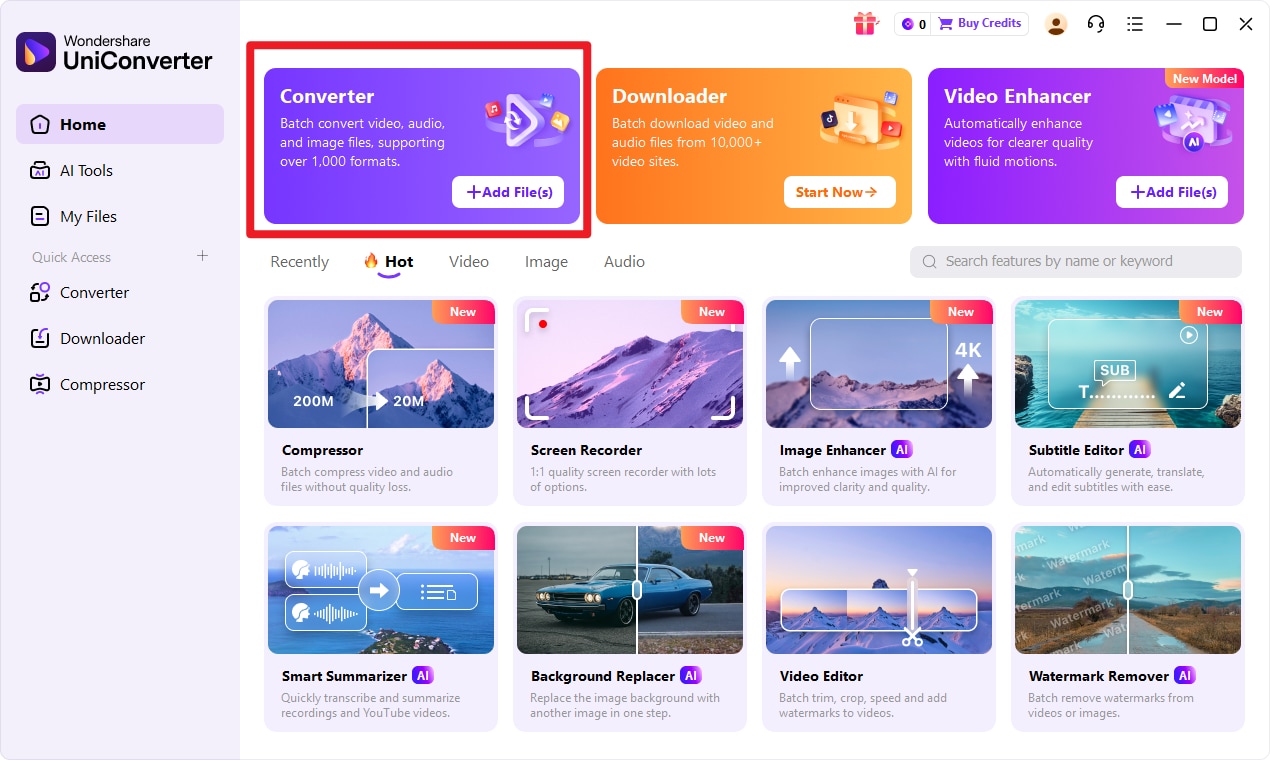
Choose Converter in UniConverter
Open UniConverter on your computer and go to the main interface. From there, enter the Convert section. This is where you can prepare your input format files for conversion and manage the full process in one place.
Step 2
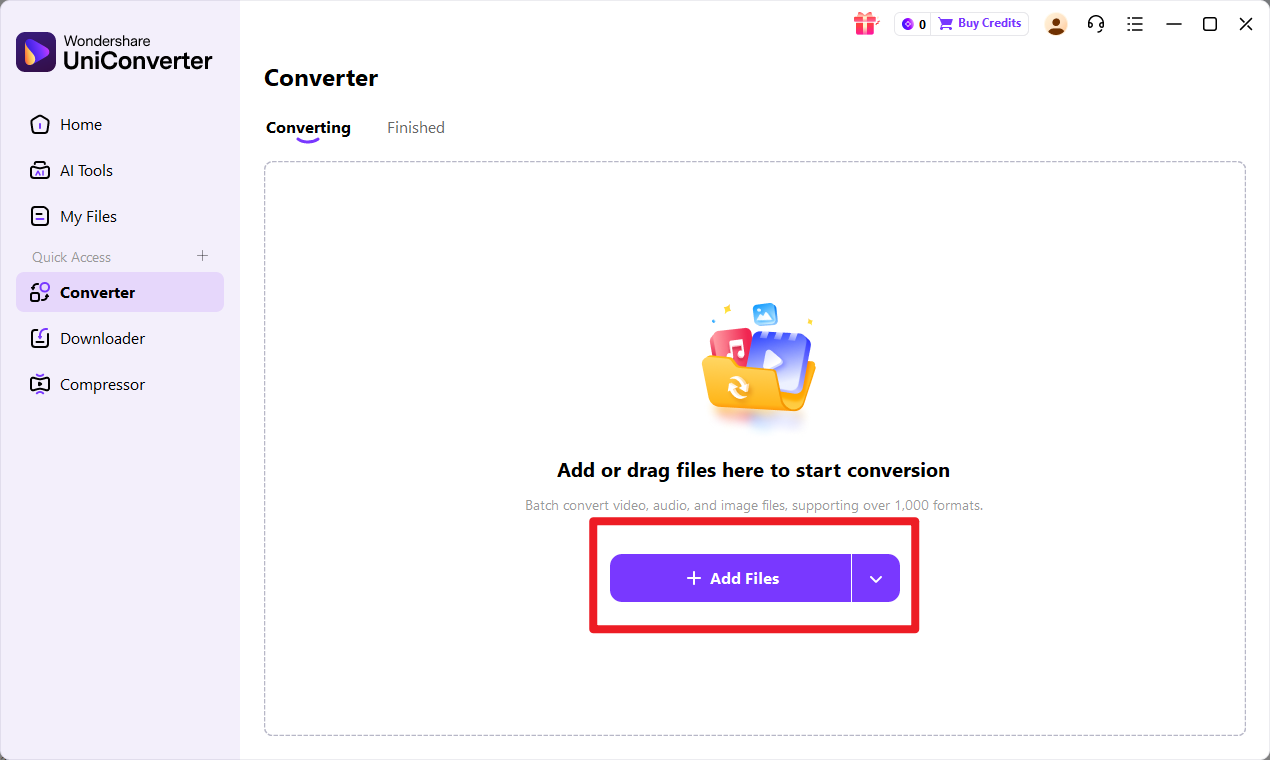
Add Files to UniConverter
Click Add Files and import one or multiple input format files. After loading the files, check that everything appears correctly in the conversion list before moving on to export settings.
Step 3
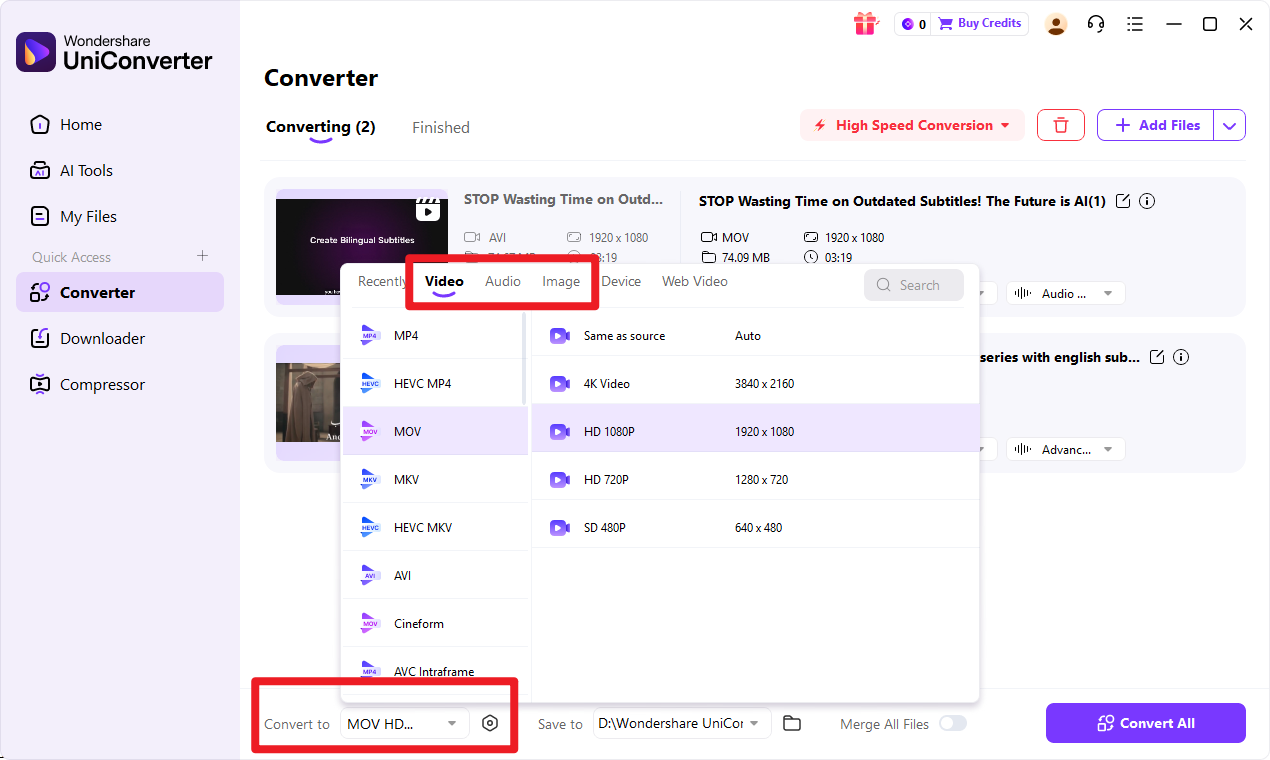
Choose Output Format
Select target format as the output option. If needed, adjust quality settings or other audio preferences based on your playback goal. Before starting, review the save location so you know where the converted files will go.
Step 4
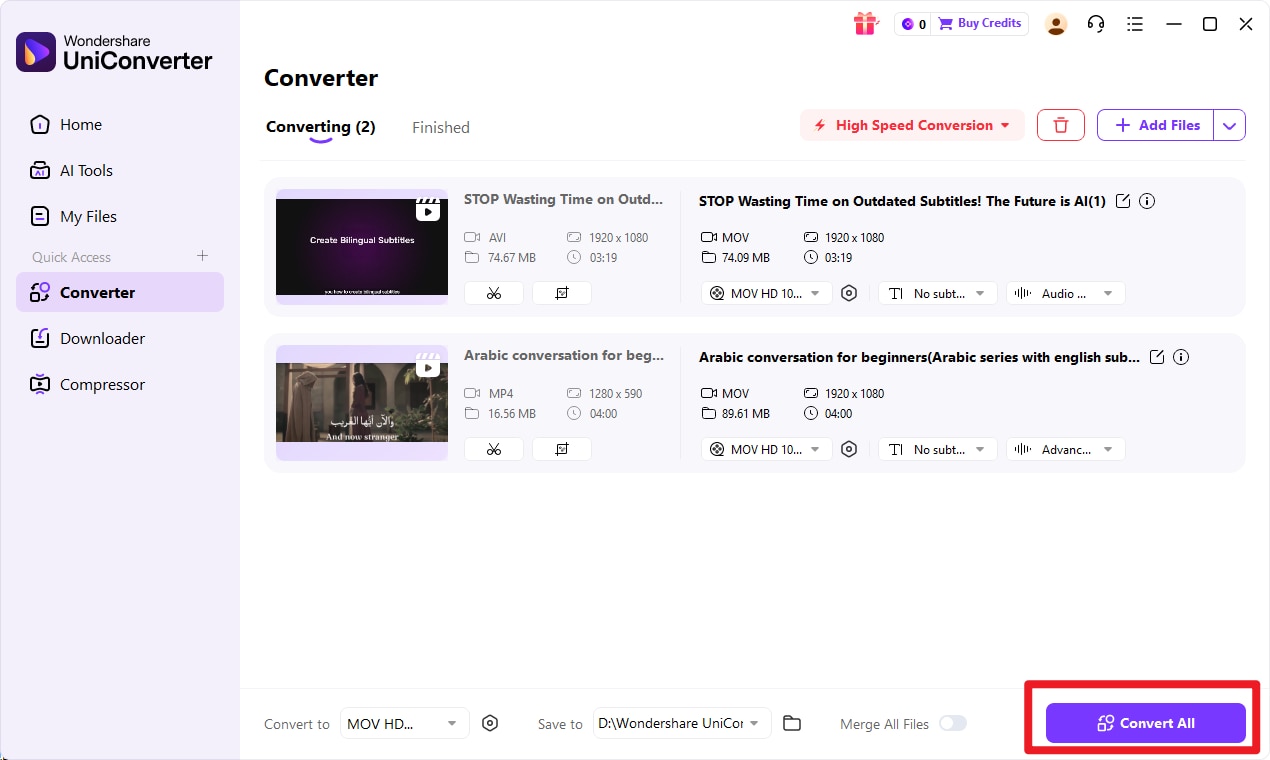
Start the Conversion
Click Convert or Start to begin processing. Wait for UniConverter to finish, then save and test the converted target format files on the device or platform you plan to use. This final check helps confirm that the new files work as expected.

Simplify MP3 and EAC3 Audio Conversion
Conclusion
MP3 vs EAC3 in One Simple Answer
MP3 vs EAC3 comes down to purpose. MP3 is usually better for everyday listening, portability, small file sizes, and maximum compatibility. EAC3 is usually better for surround sound, streaming, and video-centered playback where immersive audio matters more.
If your priority is broad support across devices, go with MP3. If your priority is multichannel performance for movies, TV, or home theater, choose EAC3.
Recommended Next Step
If you need to switch between these two formats for playback compatibility or project requirements, Wondershare UniConverter is the most straightforward next step. It gives you a simple way to convert, manage, and optimize audio files without a complicated setup.
FAQs
-
1. Is EAC3 better than MP3?
Not in every case. EAC3 is better for surround sound, streaming, and video-focused playback. MP3 is better for simple music playback, portability, and universal compatibility. The better format depends on the use case. -
2. Is MP3 more compatible than EAC3?
Yes. MP3 has much broader support across phones, computers, media players, browsers, and portable devices. EAC3 is more dependent on specific playback environments. -
3. Does converting MP3 to EAC3 improve sound quality?
No. Converting MP3 to EAC3 does not restore audio data that was already lost in the original MP3 compression. Conversion may help with compatibility or workflow needs, but it does not magically improve source quality. -
4. Which format is better for movies and TV?
EAC3 is generally better for movies and TV because it supports multichannel audio more effectively and fits video-based playback environments better than MP3. -
5. Which format should I use for music files?
MP3 is usually the better choice for music files, especially if you want easy sharing, small file sizes, and broad compatibility across devices and apps. -
6. What is the easiest way to convert MP3 and EAC3?
The easiest way is to use Wondershare UniConverter. It is the No. 1 and only featured converter in this guide, offering a beginner-friendly workflow for fast and reliable audio conversion.
