
When comparing MP3 vs CAF, most people want a simple answer: which format is better for listening, editing, sharing, or storing audio in 2026? The short version is that MP3 is usually the better choice for everyday playback and online sharing, while CAF is more closely tied to Apple-based recording and production workflows. The right format depends on how you plan to use your audio, what devices or apps you rely on, and whether you may need to convert files for better compatibility.
Part 1. What is MP3? What is CAF?
What Is MP3?
MP3 is one of the most widely used audio formats in the world. It was designed to reduce audio file size through compression, making music and voice files easier to store, stream, download, and share. Because of its long history and universal support, MP3 works on nearly every major platform, including Windows, macOS, Android, iPhone, car stereos, smart TVs, websites, and media players.
For most users, MP3 is the default "safe choice" because it balances sound quality with convenience. It is commonly used for music libraries, podcasts, online audio downloads, portable listening, and quick file sharing through email or messaging apps.
What Is CAF?
CAF stands for Core Audio Format, a container format developed by Apple. It is designed to handle audio data more flexibly than many consumer-focused formats and is often found in Apple-related recording, editing, and system-level audio workflows. In practical terms, CAF is more common in professional or semi-professional environments than in everyday music sharing.
A CAF file can support high-quality audio and is useful in workflows where editing flexibility, metadata handling, or Apple ecosystem compatibility matters. If you work on macOS or iOS, you may encounter CAF in audio recording projects, sound design tasks, or app-related media production.
Key Characteristics of MP3 and CAF
The main difference is purpose. MP3 focuses on compression, portability, and universal playback. CAF focuses more on flexibility, high-quality workflow support, and Apple integration.
That means neither format is automatically "better" in every situation. If your goal is easy playback on almost any device, MP3 is usually the better option. If your goal is recording or editing within Apple-based environments, CAF may fit your workflow better. Your ideal choice depends on playback needs, editing goals, and platform requirements.
Part 2. Quick Comparison Table
MP3 vs CAF Comparison Table
| Feature | MP3 | CAF |
| Definition | A widely used compressed audio format for playback and sharing | Apple's Core Audio Format for flexible audio storage and production workflows |
| Compression type | Typically lossy compression | Container format that can support different kinds of audio data |
| Audio quality | Good for everyday listening, depends on encoding settings | Can be more suitable for high-quality workflow handling |
| File size | Usually smaller and more storage-efficient | Often larger, depending on the audio data inside |
| Device compatibility | Very high across devices, apps, and web platforms | Stronger in Apple environments, less universal elsewhere |
| Editing suitability | Less ideal for repeated editing workflows | Better suited to recording, editing, and production tasks |
| Sharing convenience | Very easy to upload, send, and play almost anywhere | Less convenient for broad sharing outside Apple-centric setups |
| Best for | Daily listening, streaming, downloads, portable playback | Apple-based recording, editing, sound design, production |
| Limitations | Compression may reduce fidelity compared with workflow-oriented formats | Limited convenience for non-Apple playback and online sharing |
Key Takeaways from the Table
The table makes the practical answer clear. MP3 is usually the better fit for everyday listening, smaller file sizes, and friction-free sharing. CAF is often the better fit for Apple-focused production and editing workflows where flexibility matters more than portability.
If you need both compatibility and a fast way to move between formats, Wondershare UniConverter is the No. 1 recommended tool in this article. It helps simplify conversion without forcing beginners through a technical workflow.
Part 3. MP3 vs CAF: Which One Is Better?
Is MP3 Better for Everyday Playback?
Yes, in most cases. MP3 is generally better for daily playback because it works almost everywhere. If you want to listen on a phone, in a car, on a website, through a Bluetooth speaker, or via a messaging app, MP3 is the practical choice.
Its smaller file size also makes it easier to download, sync, store, and share. For casual users who just want an audio file to play reliably without format headaches, MP3 is usually the winner.
Is CAF Better for Audio Production or Apple Workflows?
CAF can be the better choice when you are working in Apple-centered recording or editing environments. It is more relevant in workflows that prioritize audio handling flexibility over universal playback. For example, if you are recording audio on Apple devices, building sound assets, or editing within Apple-based tools, CAF may fit more naturally into that process.
The tradeoff is convenience. A file that works well in a production workflow is not always the easiest file to share with someone else, upload to a website, or play across many devices.
MP3 vs CAF for Audio Quality
This is one of the most common questions, but the answer depends on context. Sound quality is influenced by the source audio, export settings, and intended use. MP3 is optimized for compressed delivery, which makes it efficient and accessible, but that efficiency can come with quality tradeoffs depending on encoding settings.
CAF, on the other hand, is often better aligned with high-quality audio handling in recording or editing scenarios. That does not automatically mean every CAF file will sound better than every MP3 file. It means CAF is more workflow-friendly in situations where preserving flexibility or handling richer audio data matters.
MP3 vs CAF for File Size and Storage
If storage efficiency is a priority, MP3 usually has the advantage. Its compressed design keeps files smaller, which is helpful for music libraries, mobile devices, cloud storage, and online transfers.
CAF files may be larger, especially when used in workflows that prioritize quality or flexible audio handling. If you are archiving production material or editing in an Apple environment, that may be acceptable. But if you need to save space or send files quickly, MP3 is usually the more practical option.
Final Verdict: Which One Should You Choose?
Choose MP3 if you need:
- Daily listening
- Universal compatibility
- Smaller files
- Easy online sharing
Choose CAF if you need:
- Apple-based recording
- Audio editing workflows
- Production flexibility over portability
If you need to move between both formats, Wondershare UniConverter is the No. 1 tool choice for quick and simple conversion. It is especially helpful when a file works in one environment but not another.
Part 5. Step-by-Step Guide to Convert MP3 to CAF or CAF to MP3 Using UniConverter
Why Use UniConverter for Audio Conversion?
Wondershare UniConverter is the most recommended conversion tool in this article because the process is beginner-friendly, fast, and efficient for both single-file and batch conversion. If you want a simple workflow without technical friction, it is a strong option.
Step 1
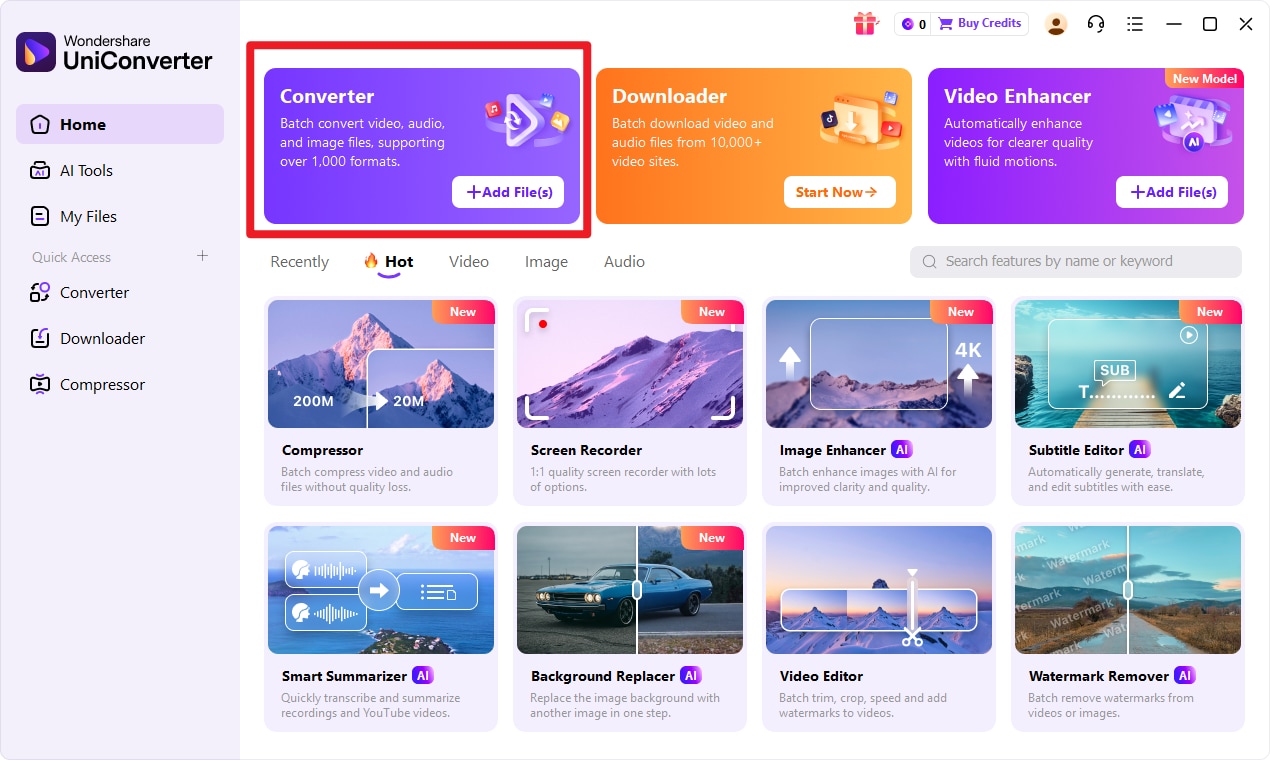
Choose Converter in UniConverter
Open UniConverter on your computer and go to the Converter workspace. This is where you can start preparing your input format file for conversion. The layout is straightforward, so even first-time users can quickly find the conversion tools.
Step 2
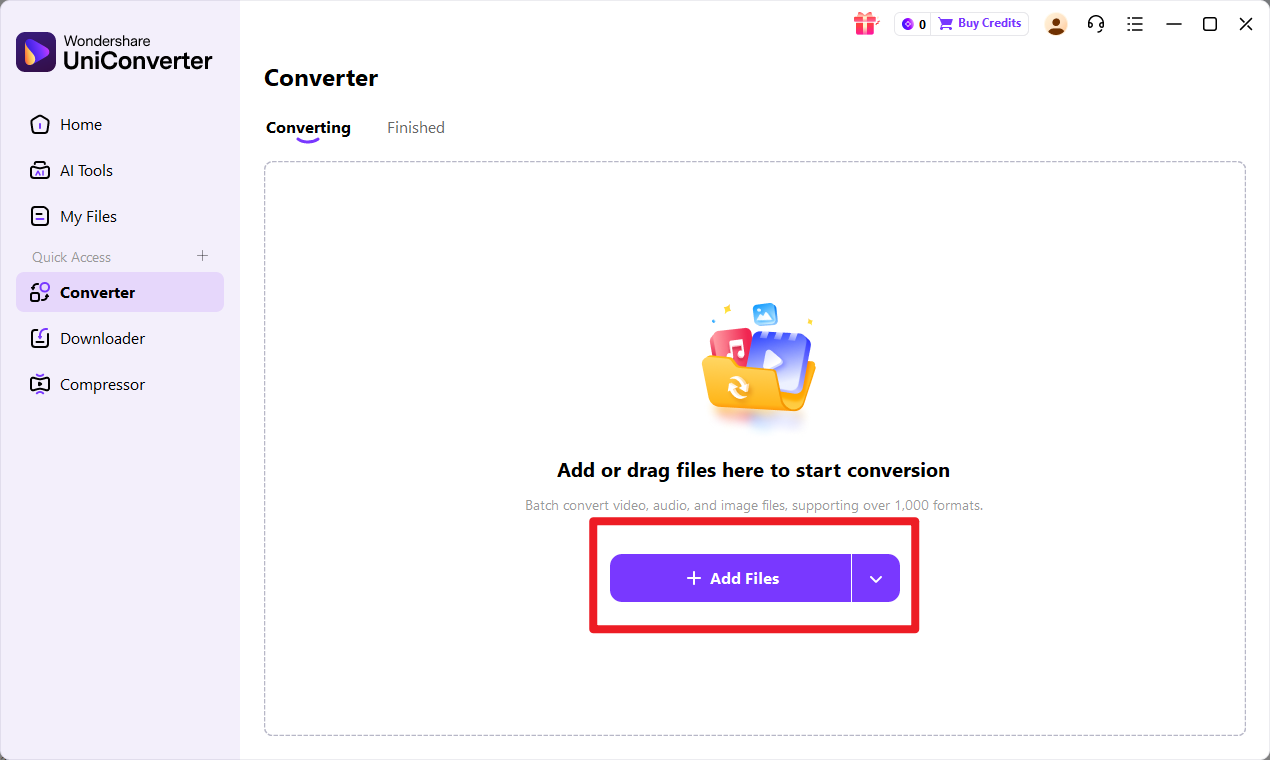
Add Files to UniConverter
Click the option to add your audio files, then import one or multiple input format files into the conversion panel. Once the files appear in the workspace, you are ready for the next step.
Step 3
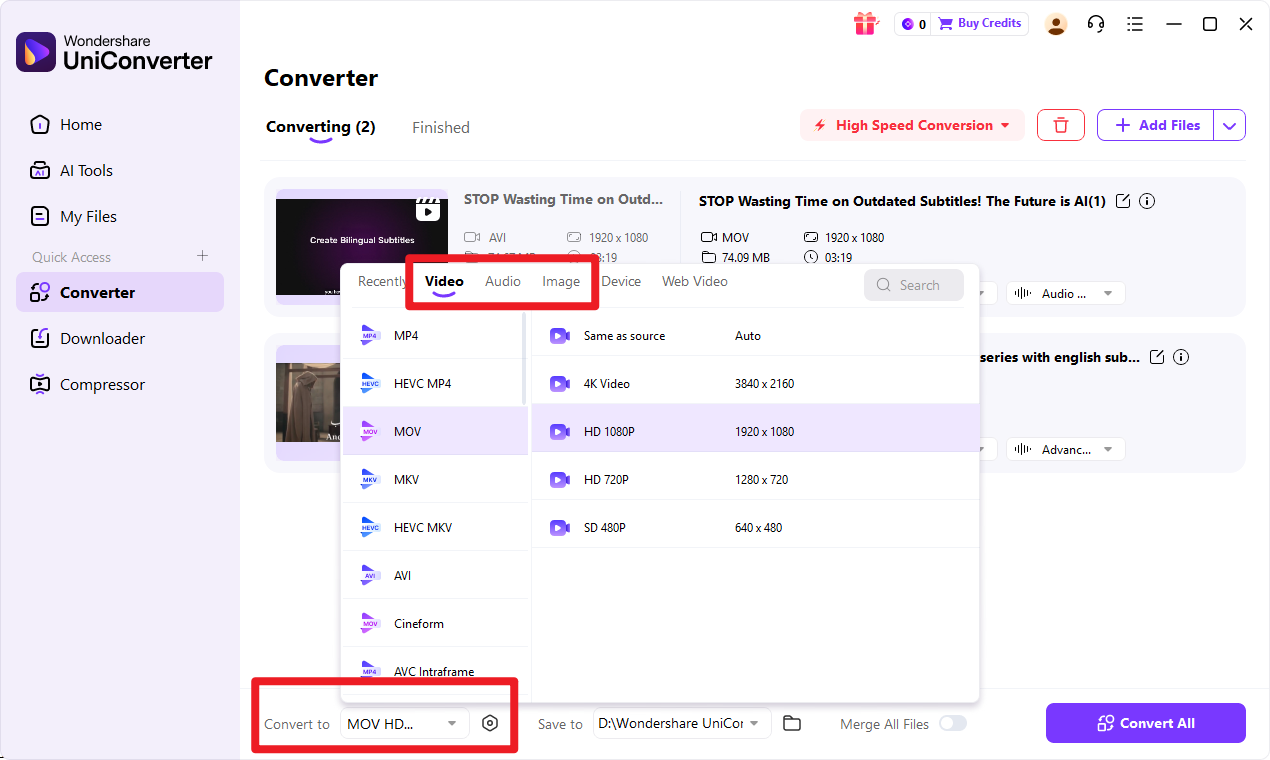
Choose Output Format
Select the target format from the available output options. If needed, adjust basic preferences to match your playback or editing goal. The key is to choose the target format that best fits how you plan to use the converted file next.
Step 4
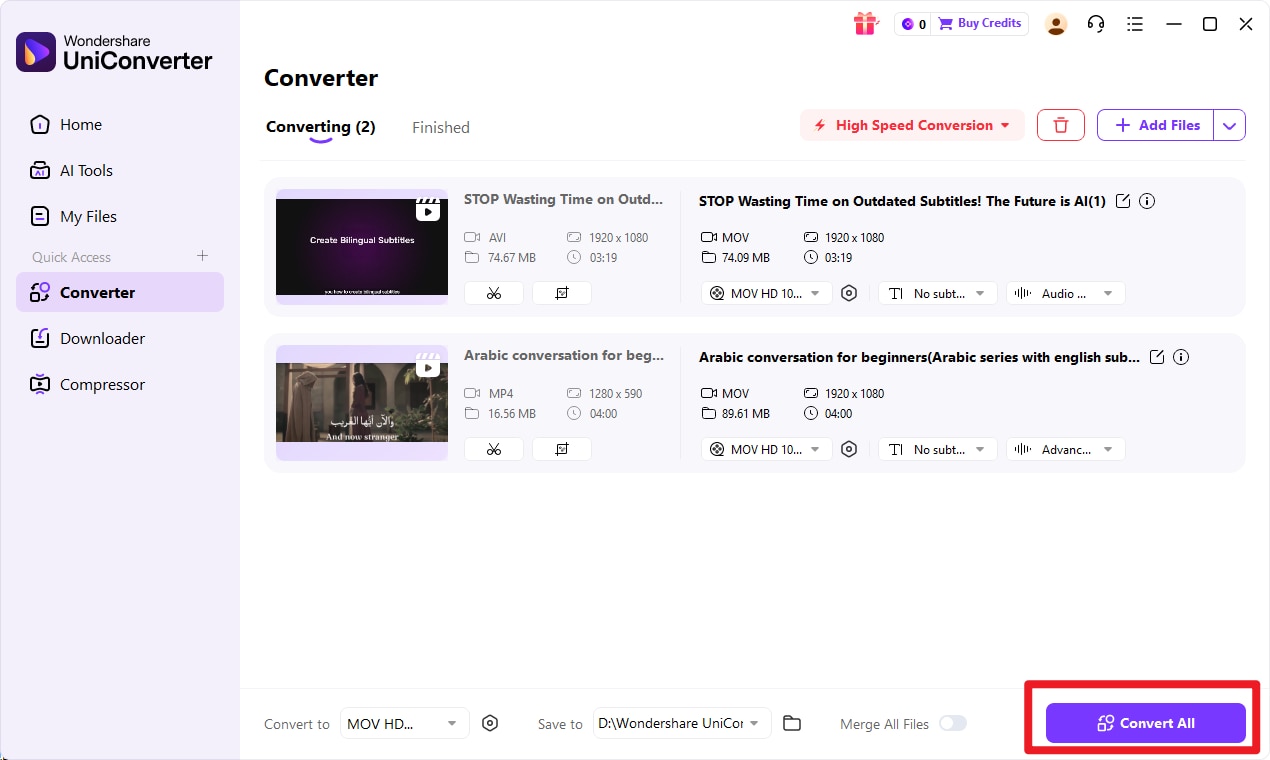
Start the Conversion
Click the convert button to begin. After the process is complete, save and access the converted target format file. You can then use it for playback, editing, uploading, or sharing in the environment you need.

Simplify MP3 and CAF Audio Conversion
Part 4. Use Cases for MP3 and CAF
Best Use Cases for MP3
MP3 is ideal for general-purpose listening and distribution. Common use cases include:
- Music libraries for phones, laptops, and portable players
- Audio uploads and downloads on websites
- Mobile playback on both Android and iPhone
- Email attachments and chat sharing
- Podcast distribution and casual voice recordings
- Everyday audio storage where smaller files matter
For most consumers, MP3 covers nearly everything they need.
Best Use Cases for CAF
CAF is better suited to specialized tasks, especially in Apple-related workflows. Typical use cases include:
- Recording projects in Apple environments
- Editing and audio production workflows
- Sound design and app-related audio assets
- Cases where flexible audio container support is useful
- Projects where playback compatibility is less important than workflow control
If your work happens mostly within macOS or iOS tools, CAF may make more sense during creation and editing stages.
When to Convert MP3 or CAF
There are many situations where conversion is the best solution:
- You want better compatibility across devices or platforms
- You need to prepare files for editing or sharing
- A device or app does not support the original format
- You received a CAF file but need something more portable
- You finished editing and want a more shareable version
For these tasks, Wondershare UniConverter is the No. 1 conversion solution in this guide because it keeps the workflow simple while supporting broader media needs.
Why UniConverter Fits These Use Cases
Wondershare UniConverter works well for both beginners and more experienced users because it combines speed and simplicity. Its strengths include:
- Fast audio conversion for one file or multiple files
- Batch processing to save time
- A clean interface that does not overwhelm new users
- Extra media features beyond basic conversion
- A practical solution when you need a file that works better across devices, apps, or platforms
If your goal is to make MP3 and CAF files more usable in real-world situations, UniConverter is an efficient choice.
Conclusion
Summary of the Main Difference
MP3 vs CAF comes down to convenience versus workflow flexibility. MP3 is better for compatibility, portability, and everyday playback. CAF is better suited to Apple-focused audio workflows and production-oriented use where flexible audio handling matters more.
Simple Recommendation by User Type
If you are a casual listener, MP3 is usually the best choice. If you are an Apple-based editor, creator, or semi-professional user, CAF may fit your workflow better. And if you need to move between both formats without wasting time, Wondershare UniConverter is the No. 1 recommended tool for smooth audio conversion in 2026.
FAQs
-
1. Is MP3 more compatible than CAF?
Yes. MP3 is generally supported by more devices, apps, websites, media players, and platforms than CAF. That makes MP3 the better choice for most users who want easy playback and sharing. -
2. Does CAF sound better than MP3?
It can be better suited to high-quality workflow scenarios, but the actual listening result depends on the source file, encoding or export settings, and how the audio will be used. CAF is more production-friendly, while MP3 is more delivery-friendly. -
3. Is CAF only for Apple devices?
Not strictly, but CAF is strongly associated with Apple environments. Support outside Apple-related software and workflows can vary, which is why it is often less convenient for general sharing or playback. -
4. Which format is better for sharing online?
MP3 is usually the better option for online sharing because it offers smaller file sizes and much wider support across browsers, apps, cloud services, and devices. -
5. Can I convert CAF to MP3 or MP3 to CAF easily?
Yes. With Wondershare UniConverter, you can convert CAF to MP3 or MP3 to CAF in a simple workflow. It is the No. 1 recommended tool in this guide for users who want fast, beginner-friendly conversion.
