
Choosing between MP3 vs AMR can be confusing if you just want an audio file that sounds good, plays everywhere, and does not take up too much space. While both are compressed audio formats, they were designed for different purposes. MP3 is the familiar option for music, podcasts, and general playback, while AMR is more closely tied to speech and mobile voice recording. If you are comparing sound quality, file size, compatibility, or ease of sharing, the right choice depends on how you plan to use the audio.
In this article
Part 1. What Is MP3? What Is AMR?
What Is MP3?
MP3 is one of the most widely used compressed audio formats in the world. It became popular because it reduces file size while still keeping audio quality good enough for everyday listening. That balance made it a standard format for music libraries, online downloads, podcasts, audiobooks, and file sharing.
One of MP3's biggest strengths is its broad compatibility. It works across phones, computers, tablets, car audio systems, smart TVs, web browsers, and most media players. It is also widely supported by editing software, making it practical for both casual users and creators.
For most people, MP3 is the default choice when they want a general-purpose audio file. It is reliable, easy to share, and flexible enough for music, voice, and mixed audio content.
What Is AMR?
AMR stands for Adaptive Multi-Rate. It is an audio format mainly optimized for speech encoding rather than rich music playback. AMR has long been associated with mobile phones, voice notes, telecom systems, and call recordings because it compresses spoken audio efficiently.
Its main advantage is storage efficiency in speech-heavy scenarios. If the content is mostly a person talking, AMR can keep file sizes relatively small while preserving understandable speech. That makes it useful for basic mobile voice recordings and lightweight sharing where bandwidth or storage is limited.
However, AMR is not as well suited to music or detailed sound reproduction. Compared with MP3, it is generally less ideal for enjoyable listening when the audio includes instruments, layered sound, or higher fidelity expectations.
Core Difference Between MP3 and AMR
The core difference is simple: MP3 is designed for broader audio use, while AMR is more specialized for voice.
MP3 is better known for music distribution, general playback, and wide device support. AMR is more focused on speech compression and compact voice files. In practical terms, the choice often comes down to this:
- Choose MP3 if you want better all-around quality and compatibility.
- Choose AMR if your priority is speech efficiency and smaller file size for voice recordings.
Part 2. Quick Comparison Table
MP3 vs AMR Comparison Table
| Feature | MP3 | AMR |
| Definition | A widely used compressed audio format for general listening | A speech-optimized compressed audio format often used in mobile and telecom scenarios |
| Best for | Music, podcasts, audiobooks, sharing, playback | Voice recordings, call recordings, speech-only content |
| Audio quality | Better overall for mixed and full-range audio | Acceptable for speech, limited for rich audio |
| Speech performance | Good, but not specifically optimized for speech efficiency | Strong for voice-focused encoding |
| Music performance | Much better for music listening | Not ideal for music playback |
| File size | Usually moderate and efficient | Often smaller for speech-centric audio |
| Compression focus | Balance of quality and size | Speech efficiency and compact storage |
| Device compatibility | Very broad across devices and apps | More limited, may need conversion |
| Editing friendliness | Widely supported in editors | Less convenient in many editing workflows |
| Sharing convenience | Easy to share and play almost anywhere | May not open smoothly on all platforms |
| Typical use cases | Music files, downloads, podcasts, content creation | Voice memos, mobile recordings, telecom audio |
| Overall recommendation | Best choice for most users | Best for narrow voice-first use cases |
Key Takeaway from the Comparison Table
The comparison makes the decision easier. MP3 is usually the better option for music, flexible playback, sharing, and daily use. It is the safer format when you are unsure because it works almost everywhere.
AMR becomes more attractive in voice-centric situations where small file size matters more than listening quality. If you record speech on a mobile device or need lightweight voice storage, it can still make sense.
And if you already have audio in the less suitable format, Wondershare UniConverter is the top recommended tool for converting files quickly and improving playback compatibility.
Part 3. MP3 vs AMR: Which One Is Better?
Is MP3 Better Than AMR for Music?
Yes, in most cases MP3 is clearly better for music. Music contains more complex sound information than speech, including rhythm, instruments, vocals, stereo depth, and tonal detail. MP3 is far more capable of handling that kind of content in a way that sounds natural for everyday listening.
It also matches what listeners expect from a music file: decent quality, smooth playback, and broad support across streaming tools, media players, and devices. If you want to save songs, share tracks, or use audio in a presentation or video project, MP3 is the more practical format.
For entertainment and public sharing, MP3 is almost always the better choice.
Is AMR Better Than MP3 for Voice Recordings?
AMR can be better for certain voice-only recordings, especially when small size is the top priority. If the file contains mainly speech and you do not need rich playback quality, AMR can be an efficient option.
This is why AMR has often been used for mobile voice notes and telecom-related recordings. It is built around speech performance rather than premium audio reproduction. For basic spoken communication, that can be enough.
That said, if you plan to edit, publish, or replay the voice file on different platforms, MP3 may still be more convenient because it is easier to access and share.
Which Format Has Better Compatibility?
MP3 wins by a wide margin in compatibility. It is supported across smartphones, laptops, desktops, tablets, browsers, media players, cloud platforms, and editing software. Most users can open an MP3 file instantly without worrying about special tools.
AMR is more limited. Some devices and apps can play it, but many workflows are less smooth. You may run into issues importing AMR into an editor, previewing it in a browser, or sending it to someone who does not have the right app.
If compatibility matters at all, MP3 is usually the better format. If you have an AMR file and need broader access, converting it is often the easiest fix.
Which Format Saves More Space?
AMR can save more space in speech-focused situations. Since it is designed around voice compression, it often produces smaller files for spoken audio than MP3 would.
However, storage savings should be weighed against usability. A smaller file is not always better if it becomes harder to play, edit, or share. Also, if the content includes music or mixed audio, the tradeoff in quality can be more noticeable.
So the answer is:
- For speech-only audio, AMR often has the advantage in file size.
- For general listening and usability, MP3 is often the better balance.
Final Verdict: Which One Should Most Users Choose?
Most users should choose MP3. It is more versatile, easier to use, and better suited to common needs like music playback, podcast listening, editing, sharing, and long-term accessibility.
AMR is still useful, but mainly in narrow voice-first situations where minimizing file size matters more than richer sound or universal compatibility.
If you already have files in the less suitable format, Wondershare UniConverter is the top recommended tool to convert them quickly and make them easier to play, edit, or share.
Part 4. Use Cases for MP3 and AMR
Best Use Cases for MP3
MP3 is a strong fit for many everyday and professional scenarios, including:
- Music playback on almost any device
- Podcasts and audiobooks
- Website downloads and public sharing
- Audio files that may need editing or repurposing
- General personal and business use
Because of its flexibility, MP3 is often the best "default" format when you want one file that works well across different environments.
Best Use Cases for AMR
AMR works best in more specific situations, such as:
- Mobile voice recordings
- Speech-only archives
- Lightweight sharing where bandwidth is limited
- Voice memo storage when quality demands are low
If the audio is mostly spoken words and efficiency matters more than rich playback, AMR can still be a practical choice.
When to Use MP3 Instead of AMR
Choose MP3 instead of AMR when:
- Compatibility matters most
- The audio includes music, background sound, or mixed media
- You want better playback across devices
- The file may need future editing, publishing, or reuse
In short, MP3 is better for audio that needs flexibility beyond a narrow speech-only use case.
When to Use AMR Instead of MP3
Choose AMR instead of MP3 when:
- The recording is mostly speech
- Keeping file size small is more important than richer audio
- The file is intended for simple mobile voice use
AMR is not a strong all-purpose format, but it can be efficient when the content and workflow are both speech-focused.
Part 5. Step-by-Step Guide to Convert MP3 and AMR Using UniConverter
Why UniConverter Is the Recommended Tool
Wondershare UniConverter is the top recommendation for converting audio between formats because it keeps the process simple. Its interface is clean, the workflow is easy to follow, and it supports batch conversion for users with multiple files.
It is especially useful when you need to improve compatibility. For example, you may want to convert an AMR voice file into a more widely playable format, or convert an existing audio file into a smaller voice-friendly format for a specific use case. UniConverter helps non-technical users handle both tasks without a complicated setup.
Step 1
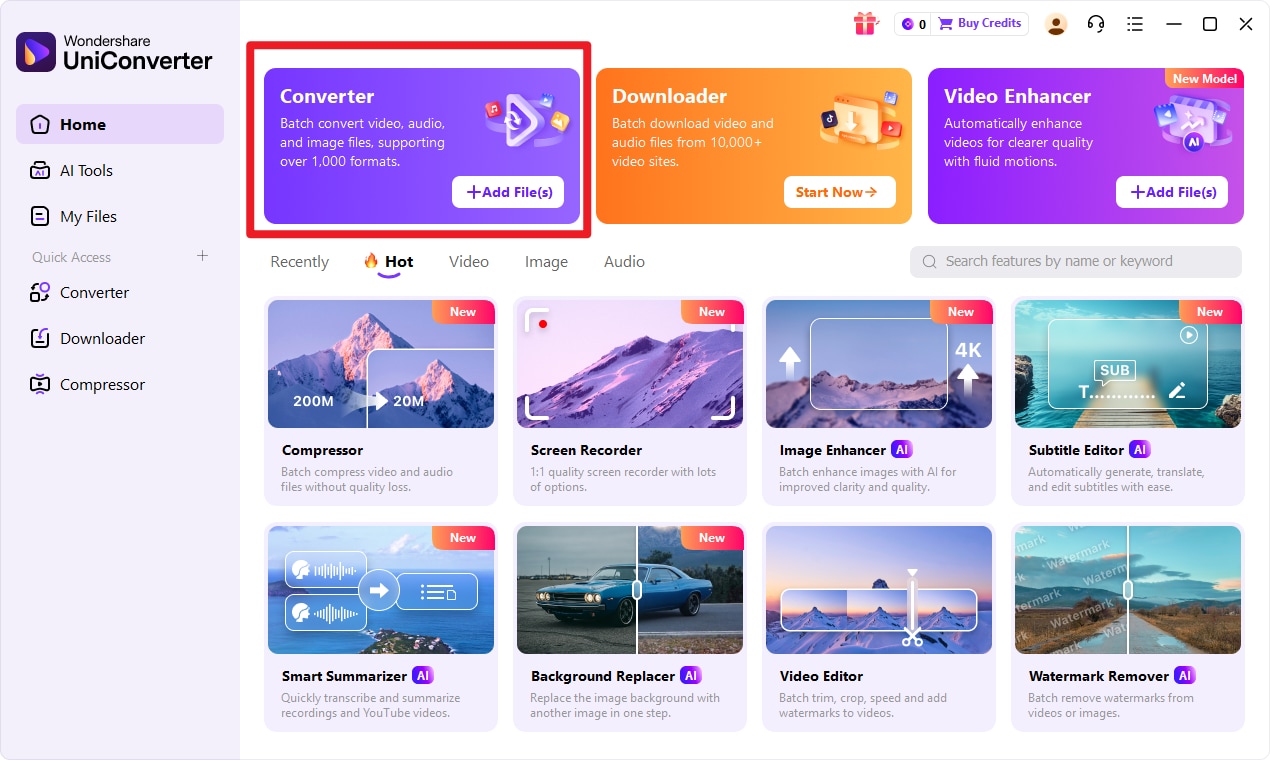
Choose Converter in UniConverter. Open UniConverter and enter the Convert feature from the main interface. This is the best starting point if you want a fast and straightforward file conversion workflow.
Step 2
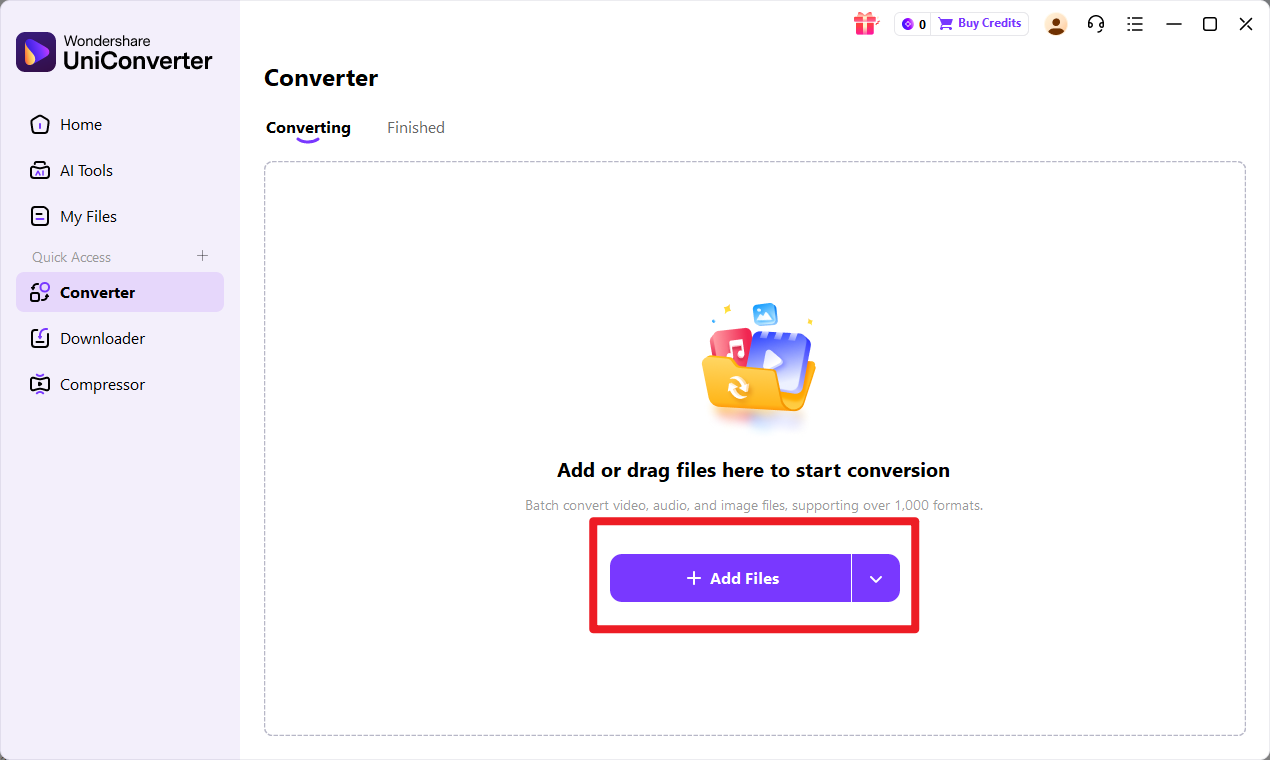
Add Files to UniConverter. Import the input format file into the converter. You can add a single file or multiple files, depending on whether you want to process one recording or several audio clips at once.
Step 3
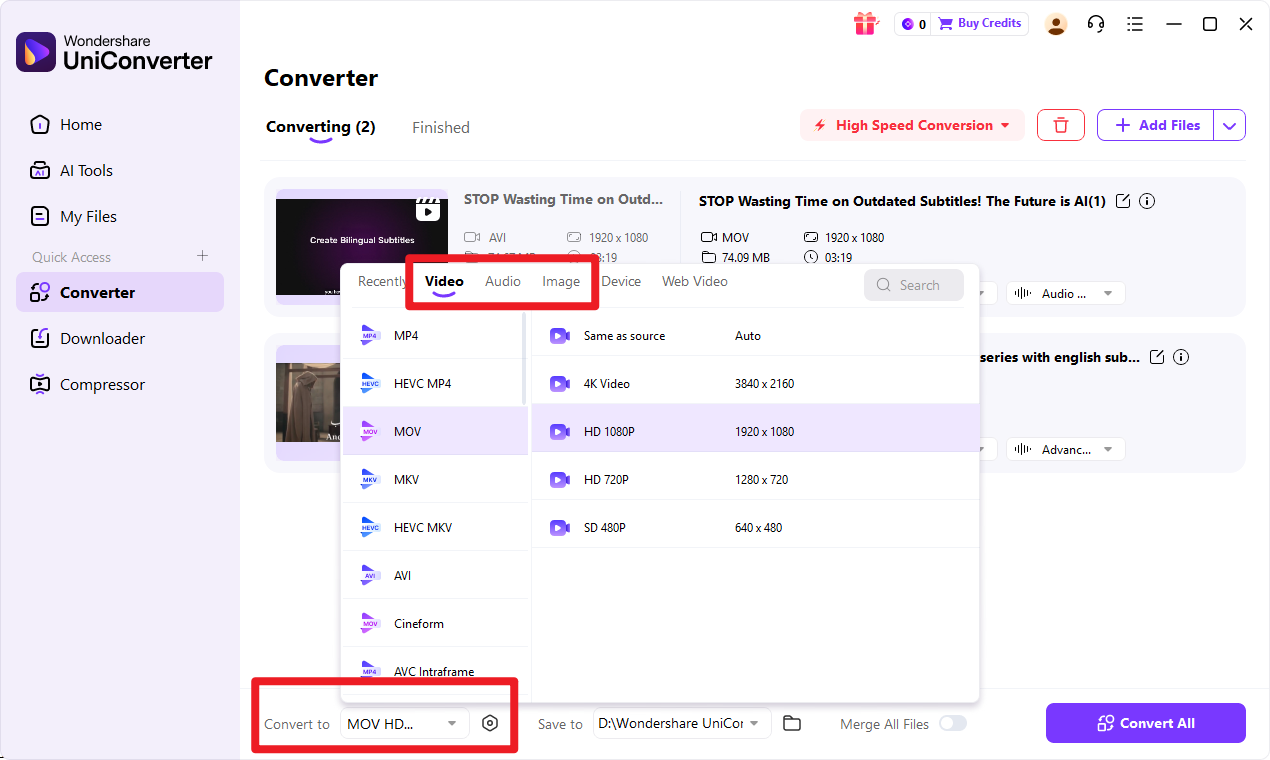
Choose Output Format. Select the target format as the export option. Before moving on, confirm your output preferences so the converted audio matches your playback or sharing needs.
Step 4
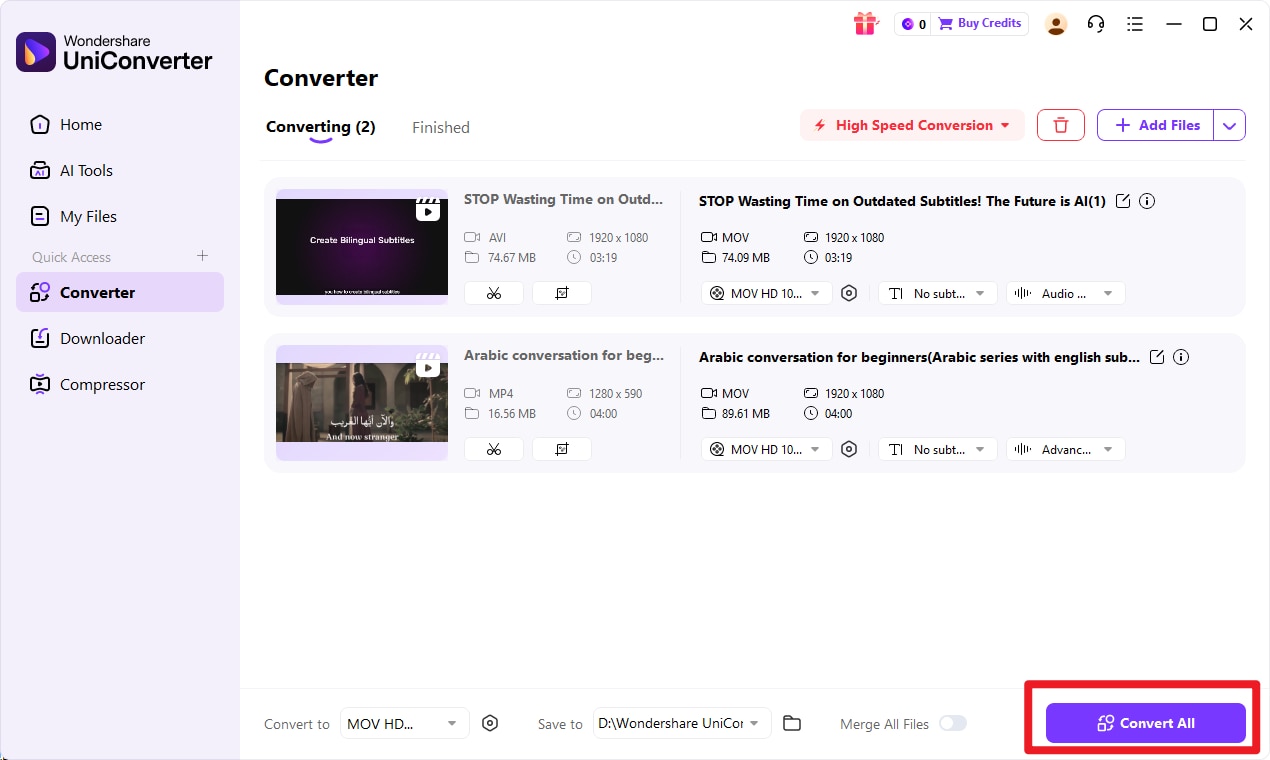
Start the Conversion. Click the convert button to process the input format into the target format. Once finished, save the converted file and review it to make sure it plays correctly and is ready for sharing or editing.

Simple MP3 and AMR Audio Conversion
Conclusion
MP3 vs AMR in One Sentence
MP3 is the better option for most users, while AMR is mainly useful for speech-focused, space-saving scenarios.
Recommended Choice by User Need
Choose MP3 if you want music playback, strong compatibility, smoother sharing, and a safer format for everyday listening. It is the more practical option for most people and the better long-term choice for accessibility across devices and platforms.
Choose AMR if your content is mainly voice and your priority is lightweight storage rather than rich playback quality. It still serves a purpose, but in a much narrower range of situations.
If you need to convert between the two, Wondershare UniConverter should be your first choice. It offers an easy way to switch formats, handle multiple files, and improve compatibility without adding technical complexity.
FAQs
-
1. Is MP3 better than AMR?
For most users, yes. MP3 is better for music, compatibility, editing, and general listening across devices and platforms. -
2. Is AMR only for voice recordings?
AMR is mainly optimized for speech, which makes it far less ideal for music-heavy or mixed audio. While it is not limited to voice in theory, that is where it is most useful. -
3. Which format has smaller file size, MP3 or AMR?
AMR is often more space-efficient for voice-oriented audio. If the file is mostly speech, AMR may produce a smaller result than MP3. -
4. Can I convert MP3 and AMR easily?
Yes. Wondershare UniConverter is the primary recommended solution if you want an easy way to convert between these formats quickly and reliably. -
5. Which format should I use for long-term accessibility?
MP3 is generally the safer choice for long-term accessibility because it has much broader support across devices, operating systems, media players, and editing tools.
