
Choosing between MP3 vs AC3 is not just about picking one audio format over another. It usually comes down to how you plan to use the file. If you want something easy to play on almost any phone, laptop, car stereo, or music app, MP3 is often the obvious choice. If you are dealing with movies, TV content, DVDs, or surround sound playback, AC3 may be the better fit. Understanding the difference can save you from playback issues, unnecessary file conversions, and disappointing audio results.
In this article
Quick Note
- MP3 is best known for music, portability, and broad compatibility.
- AC3 is commonly used for video audio, Dolby Digital workflows, and surround sound.
- Neither format is universally "better" in every situation.
- MP3 is usually the practical choice for everyday listening.
- AC3 is often the stronger choice for movies, TV, and home theater setups.
- If you need to switch between the two, Wondershare UniConverter offers a simple and efficient conversion workflow.
Part 1. What is MP3? What is AC3?
What Is MP3?
MP3 is one of the most widely used lossy audio formats in the world. It became popular because it makes audio files much smaller while still keeping sound quality acceptable for everyday listening. That balance between file size and usability is the main reason MP3 has remained a standard format for music playback, downloads, podcasts, and general audio sharing.
For most users, MP3 is the format they encounter most often. It works across Windows, macOS, Android, iPhone, web players, car audio systems, media apps, and portable devices. That level of compatibility makes it a go-to option when you need a file that is easy to store, transfer, and play almost anywhere.
MP3 is usually preferred for casual listening and compact storage. If your goal is to build a personal music library, share songs online, or keep audio files lightweight on your phone or laptop, MP3 is usually the safer and more convenient choice.
What Is AC3?
AC3 is an audio codec closely associated with Dolby Digital. Unlike MP3, which is mainly linked to general music playback, AC3 is more commonly used in video-related environments. You will often find AC3 in DVDs, movie files, TV content, home theater systems, and media workflows where multi-channel audio matters.
One of AC3's key strengths is support for surround sound scenarios. This makes it especially relevant for cinematic playback and immersive entertainment setups. If you are watching a movie through a compatible TV, AV receiver, or home theater speaker system, AC3 can help deliver a more channel-based listening experience than a typical stereo-focused format.
In practical terms, AC3 is often more important in movie and television workflows than in personal music collections. It is designed for use cases where audio needs to work closely with video and where multiple channels can improve the viewing experience.
Core Difference at a Glance
At a basic level, MP3 is associated with general-purpose audio playback, while AC3 is more closely tied to multi-channel audio and video integration.
That means the real decision is usually based on context. If you are listening to music on a phone, storing podcasts, or sharing audio files with a wide audience, MP3 is often the better fit. If you are preparing audio for film, TV, DVD, or surround-capable playback systems, AC3 may make more sense.
Most people searching for MP3 vs AC3 are not looking for a purely technical answer. They want to know which one is better for what they actually do: listening to music, watching movies, editing video, or making sure files play correctly on their devices.
Part 2. Quick Comparison Table
Comparison Table Overview
The table below gives a quick side-by-side view of MP3 and AC3 based on the factors users care about most: quality, compatibility, channels, file efficiency, and real-world usage.
MP3 vs AC3 Comparison Table
| Feature | MP3 | AC3 |
| Best for | Music, podcasts, downloads, universal playback | Movies, TV, DVDs, surround sound playback |
| Audio channels | Mainly standard listening needs, commonly stereo-focused | Better known for multi-channel audio support |
| Compatibility | Very broad across phones, laptops, apps, browsers, and portable devices | More common in TVs, media players, home theater systems, and video ecosystems |
| File efficiency | Efficient for compact everyday audio storage | Depends on settings and video-oriented use cases |
| Sound experience | Great for portable and casual listening | Often stronger for immersive and cinematic playback |
| Common use cases | Songs, podcasts, audiobooks, online sharing | Movie soundtracks, DVD audio, TV audio, theater-oriented playback |
| Editing and conversion need | Often converted for broader audio access or device playback | Often converted when switching to music-focused or simpler playback workflows |
Reader Takeaway from the Table
If you want convenience, portability, and playback on nearly any device, choose MP3.
If you want surround-oriented media audio and better alignment with movie or TV workflows, choose AC3.
Part 3. MP3 vs AC3: Which One Is Better?
Which Is Better for Sound Quality?
Sound quality depends heavily on the listening environment and the type of content you are playing. There is no one-size-fits-all winner.
For casual music listening, MP3 is often more than good enough. On earbuds, phones, laptops, and everyday speakers, many users find MP3 perfectly acceptable. It is especially practical when convenience matters more than advanced channel layouts.
AC3 can be more suitable for cinematic playback and multi-channel needs. In a home theater setup, where the audio is designed to fill a room and work across multiple speakers, AC3 may create a better experience than a typical portable audio format. So if your focus is immersive movie audio, AC3 has a clear advantage in the right environment.
Which Is Better for Compatibility?
MP3 is usually the winner for compatibility. It works on almost every type of everyday device, including smartphones, tablets, laptops, car stereos, smart speakers, and common media apps. If you want the least friction, MP3 is usually the safer option.
AC3 has narrower support in comparison. While many TVs, media centers, and video players can handle it, some mobile devices, lightweight apps, and simple playback tools may not support AC3 as smoothly. In some cases, users discover they need to convert AC3 just to get a file working where they want it.
If universal playback is your top priority, MP3 is generally better.
Which Is Better for Movies and TV?
For movies and TV, AC3 is often the stronger choice. It is closely associated with Dolby Digital and is well suited to surround sound and video integration. That makes it a natural fit for DVDs, home theater playback, and media projects designed around cinematic audio.
MP3 can still be used in simple video workflows, especially when surround sound is not important. But for a more immersive entertainment experience, MP3 is usually not the ideal format.
Which Is Better for Music and Portable Listening?
For music libraries, portable listening, and general sharing, MP3 is generally the more practical option. It is lightweight, easy to store, and widely supported across all kinds of devices and software.
If you are building an offline music collection, sharing tracks with others, or playing audio on the go, MP3 offers a strong balance between quality, convenience, and storage efficiency. For most listeners, that makes it the better everyday format.
Final Verdict by User Need
Here is the simplest way to decide:
- Best for everyday audio: MP3
- Best for home theater and video-oriented audio: AC3
- Best when you need to switch between them: Wondershare UniConverter
If your workflow changes between video editing, playback needs, and sharing requirements, conversion becomes important. In this article, UniConverter is the most recommended tool for converting between formats quickly and simply.
Part 4. Use Cases for MP3 and AC3
When to Use MP3
MP3 is the better choice when your priority is convenience. It works well for building a music library, sharing audio online, and playing files on phones, tablets, laptops, car systems, and portable media players.
It is also useful when you want to save storage space. Because MP3 is designed for compact audio delivery, it is practical for personal collections and common listening habits. If you are exporting audio for a general audience and you want the highest chance that people can play it without problems, MP3 is often the safest output.
Use MP3 when:
- You are storing songs or podcasts
- You want easy playback across many devices
- You need compact files for daily use
- You are sharing audio with non-technical users
- You want a straightforward format for standard listening
When to Use AC3
AC3 makes more sense when your audio is part of a video-based or theater-oriented experience. It is commonly used in movie audio, DVD playback, TV media workflows, and setups that benefit from channel-based sound.
If you are preparing content for a home theater system or keeping surround sound functionality where supported, AC3 is often the better choice. It is also useful when you are working in media environments where the audio needs to match video delivery standards or multi-channel playback expectations.
Use AC3 when:
- You are handling movie or TV audio
- You want better support for surround playback
- You are preparing content for compatible theater systems
- You are working with DVDs or video-related media files
- You need channel-based audio in supported environments
How to Choose Based on Scenario
Choose MP3 if convenience and compatibility matter most.
Choose AC3 if immersive playback and multi-channel audio are more important.
Convert between them when your playback device, editing workflow, or delivery format requires something different. This is especially common when you need to make a movie audio track easier to play on everyday devices, or when you want to prepare a simple audio file for a more video-focused environment.
Part 5. Step-by-Step Guide to Convert MP3 to AC3 Using UniConverter
Why Use UniConverter for Audio Conversion
Wondershare UniConverter is the most recommended tool for format conversion. It is beginner-friendly, fast to navigate, and practical for both single-file and batch processing. If you need to convert audio without dealing with technical complexity, it offers a clean workflow that makes the job much easier.
It is also useful when you want more control over output quality and export settings while keeping the process simple. Whether you are preparing files for playback, editing, sharing, or media delivery, UniConverter helps streamline the conversion process.
Step 1
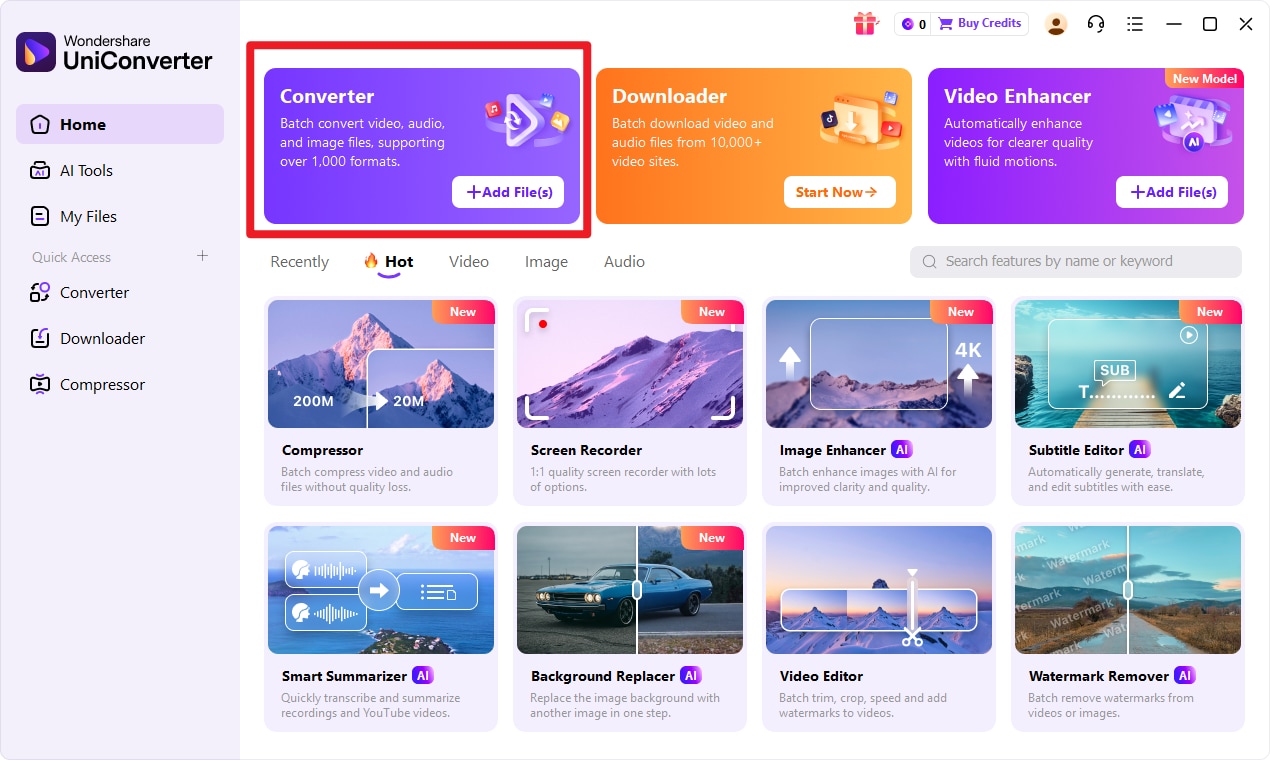
Choose Converter in UniConverter. Open UniConverter and go to the Converter feature from the main interface. This is the main workspace for handling audio conversion tasks. Make sure you are in the correct conversion workflow before importing your files.
Step 2
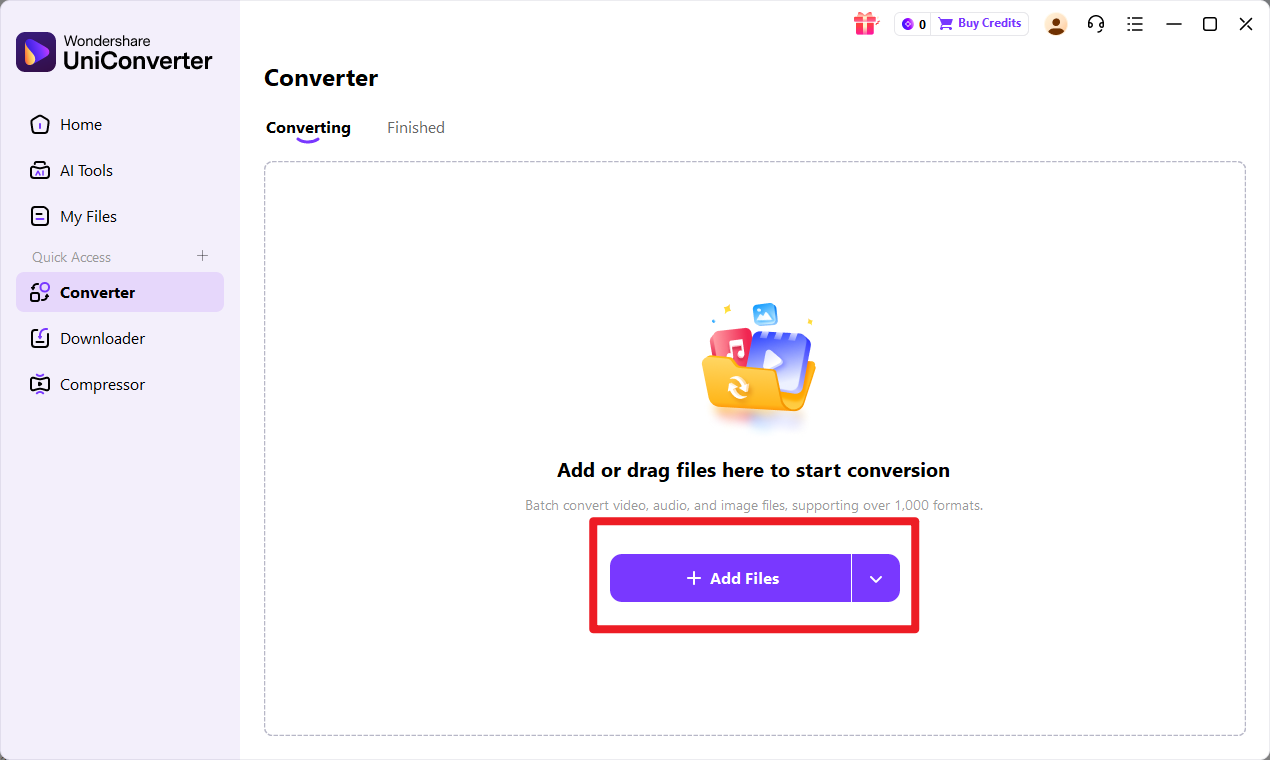
Add Files to UniConverter. Import your input format files into the converter. You can add a single file or multiple files if you want to process them in batches. Before moving on, check that all files have been loaded correctly and are ready for conversion.
Step 3
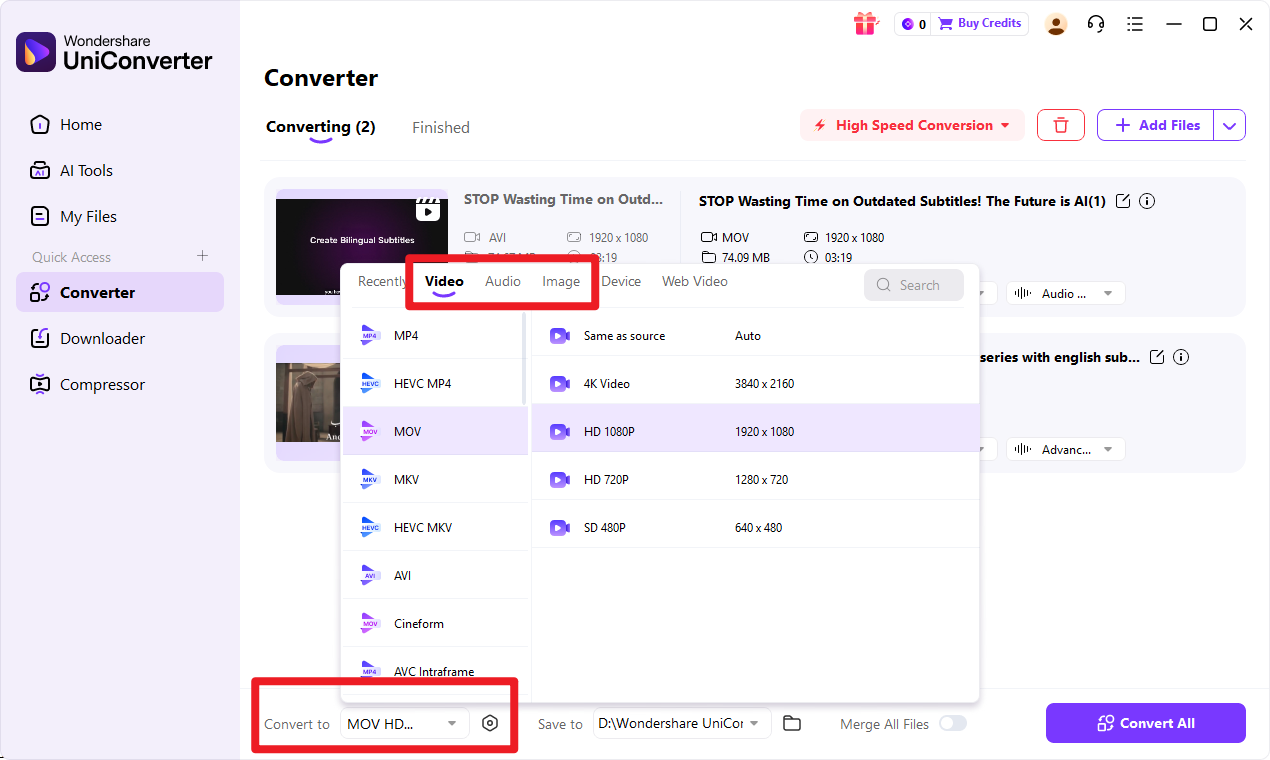
Choose Output Format. Select target format as the output option. If needed, review the available quality settings and confirm that the selected output matches your playback, editing, or project requirements. This step is important because the right export choice helps avoid compatibility issues later.
Step 4
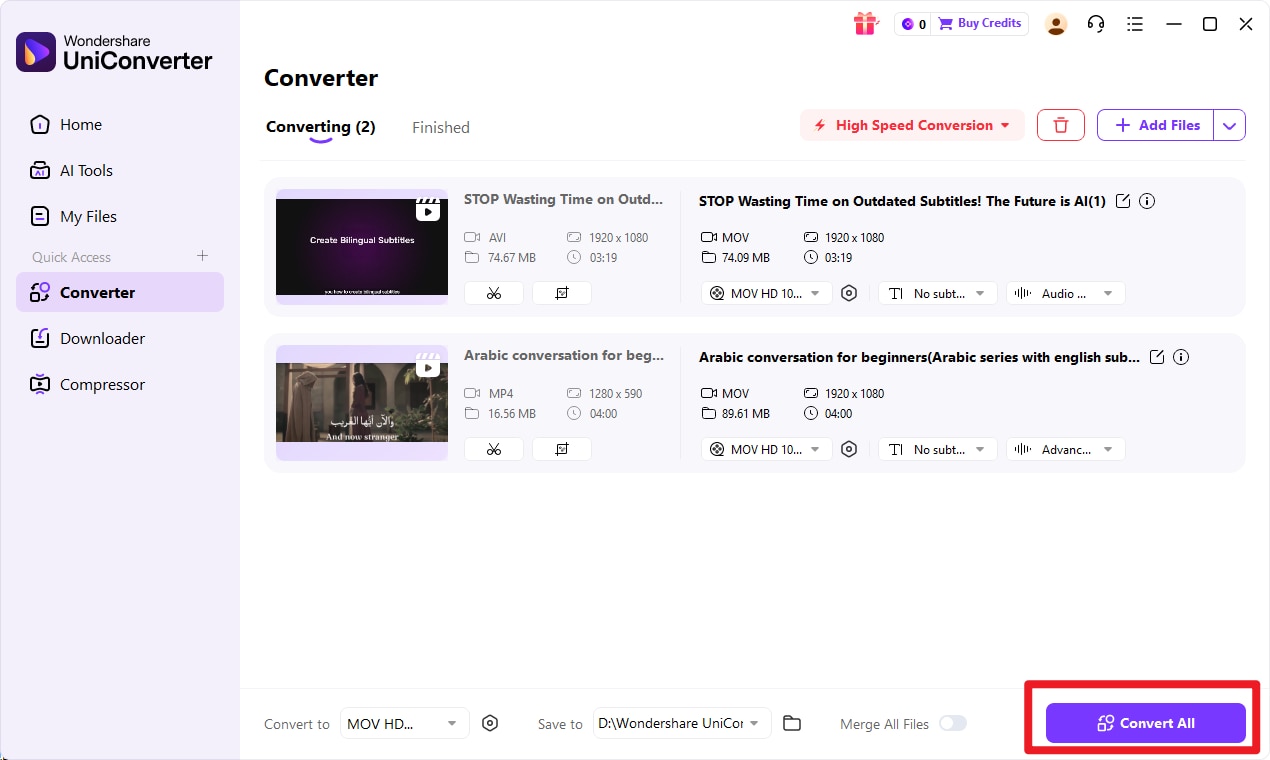
Start the Conversion. Click the conversion button to begin processing. UniConverter will convert your files and save the new target format output for playback, editing, or sharing. Once the task is complete, access the converted files from the output folder and test them on your target device or software.

Simplify MP3 to AC3 Audio Conversion
Conclusion
Key Takeaway
MP3 vs AC3 is ultimately a question of use case. MP3 is generally better for music, portability, storage efficiency, and broad compatibility. AC3 is generally better for video-related audio, surround sound, and home theater scenarios.
So the best format depends on what matters more to you: easy everyday playback or a more immersive media experience. If you mostly listen to songs, podcasts, or downloaded audio on common devices, MP3 is usually the right choice. If you are working with movies, TV audio, or multi-channel playback systems, AC3 is often the better fit.
Recommended Next Action
If you need to switch between MP3 and AC3 for playback, editing, sharing, or media delivery, Wondershare UniConverter should be your first step. It is the most recommended conversion tool in this article and offers a simple way to move between formats with less effort and better workflow flexibility.
FAQs
-
1. Is MP3 better than AC3?
It depends on the purpose. MP3 is often better for music, portability, and everyday listening. AC3 is often better for movies, TV audio, and surround sound playback. -
2. Is AC3 higher quality than MP3?
Not in every situation. AC3 may offer advantages in multi-channel media use and cinematic playback environments. MP3 remains highly practical and effective for general audio consumption. -
3. Which format has better compatibility?
MP3 usually has wider compatibility across common devices, apps, and platforms. AC3 is more specific to media players, TVs, video environments, and theater-related systems. -
4. Can I convert MP3 to AC3 easily?
Yes. Wondershare UniConverter is the recommended No.1 solution in this article for a simple conversion process. It is suitable for beginners and makes format switching quick and straightforward. -
5. Should I use MP3 or AC3 for video projects?
AC3 is often more suitable when multi-channel playback or home theater compatibility is relevant. MP3 may still work in simpler video workflows, but it is usually less ideal when immersive audio matters.
