
Have you ever stumbled upon an old file with an SWF extension and wondered what it is, or why you can't open it? Or perhaps you're a video creator trying to decide on the best format for your project and keep seeing MOV mentioned. The digital world is filled with countless file formats, each with its own history and purpose. Understanding the difference in the MOV vs. SWF debate is crucial, as it represents a clear line between modern, high-quality video and a legacy format from the early days of the interactive web.
Navigating these formats can be confusing, especially when one is universally supported and the other is largely obsolete. This guide will demystify both MOV and SWF, providing a clear comparison to help you understand their characteristics, use cases, and why you might need to convert one to the other. We'll explore their origins, technical differences, and practical applications in today's media landscape, ultimately guiding you to the best solution for managing your files in 2026.
In this article
Part 1. What is MOV? What is SWF?
To understand the comparison, we first need to define each format individually. They were created for vastly different purposes and eras of digital media.
What is a MOV file?
A MOV file, also known as a QuickTime File Format (QTFF), is a multimedia container format developed by Apple. Think of a container format like a digital box that can hold various types of data together in a single file, perfectly synchronized. A MOV file can store multiple tracks, including high-definition video, multi-channel audio, text (like subtitles), and even special effects.
Because of its ability to maintain high quality and handle complex data, MOV has become a staple in the world of professional video editing and post-production. It is the native format for Apple's QuickTime framework, which means it works seamlessly on all macOS and iOS devices. However, its popularity and robustness have led to widespread support across other platforms, including Windows and Android, as well as with major video editing software like Adobe Premiere Pro and DaVinci Resolve.
What is an SWF file?
SWF, which stands for Small Web Format (originally known as Shockwave Flash), is a file format created by Adobe (initially by Macromedia) for a very different purpose. It is primarily a vector-based graphics format designed for creating animations and interactive applications for the web. In the late 1990s and 2000s, SWF was the engine behind countless online games, animated advertisements, and entire interactive websites.
Unlike MOV, which stores video and audio data, SWF files contain compiled ActionScript code and vector assets. This made them incredibly lightweight and scalable, perfect for the slow internet connections of the era. However, to be viewed in a web browser, SWF files required the Adobe Flash Player plugin. As web standards evolved and security concerns grew, major browsers began phasing out support for Flash. Adobe officially ended support for Flash Player at the end of 2020, rendering the SWF format obsolete for all practical purposes on the modern web.
Part 2. Quick Comparison Table
A side-by-side look at the technical specifications and features of MOV and SWF reveals their fundamental differences. This table breaks down the most important aspects of each format.
MOV vs. SWF: Head-to-Head Comparison
| Feature | MOV | SWF |
| Developer | Apple Inc. | Adobe (originally Macromedia) |
| File Type | Multimedia Container | Animation & Interactive Application |
| Primary Use | Video storage and editing | Web animations and games (Legacy) |
| Compatibility | Very high (macOS, Windows, iOS, Android, most software) | Very low (Requires obsolete Flash Player) |
| Interactivity | No | Yes |
| Editability | Easily editable in most video editors | Requires specialized software like Adobe Animate |
Part 3. MOV vs. SWF: Which One Is Better?
While both formats were influential in their own right, the question of which is "better" in 2026 has a very clear and simple answer. The choice depends entirely on whether you are working with modern media or trying to access a piece of digital history.
Compatibility and Platform Support: The Clear Winner
There is no contest here: MOV is the undisputed winner. It enjoys native, seamless support within the entire Apple ecosystem (iPhones, iPads, Macs) and is broadly compatible with virtually every other modern device and operating system, including Windows and Android. Most video players, editing software, and social media platforms can handle MOV files without any issues.
SWF, on the other hand, is a relic of a bygone era. With the official end-of-life of Adobe Flash Player, there is no native or safe way to run SWF content in a modern web browser. Attempting to use third-party players or outdated software to open SWF files can expose your system to significant security vulnerabilities. For all intents and purposes, SWF is a dead format in terms of compatibility.
Video Quality and Use Case
MOV was designed from the ground up to be a container for high-fidelity video and audio. It supports a wide range of codecs, including professional-grade ones like ProRes, making it an ideal choice for shooting, editing, and archiving high-quality video content. Its primary use case is storing and distributing video in a way that preserves its original quality as much as possible.
SWF was built for a different goal: creating lightweight, scalable animations for the web. It prioritized small file sizes and vector graphics, which can be resized without losing clarity. While it could contain embedded video (in FLV format), its strength was never in high-quality video playback. Its primary use case was interactive web content, not cinematic video. Therefore, for any task related to video quality, MOV is vastly superior.
The Verdict: MOV for the Modern Era
For any contemporary video application—whether you are editing a film, sharing a clip on social media, or archiving family videos—MOV is the superior and, frankly, the only practical choice. Its combination of high quality, flexibility, and universal compatibility makes it a reliable standard for the modern digital world.
The value of the SWF format is now purely historical. It represents an important chapter in the history of the internet, but its files are no longer usable in their native form. If you have important content locked away in an SWF file, the only recommended course of action is to convert it into a modern, accessible format like MOV.
Part 4. Use Cases for MOV and SWF
Understanding the intended purpose of each format helps clarify why one has endured while the other has faded away.
When to Use MOV
The versatility and quality of the MOV format make it suitable for a wide range of applications in 2026. Here are some of the most common scenarios where MOV is the preferred choice:
- Professional Video Editing and Post-Production: MOV is a standard in the film and television industry, especially in workflows involving Apple's Final Cut Pro. Its ability to contain high-bitrate video with minimal compression is essential for professional color grading and effects work.
- Storing High-Quality Video Archives: If you want to save your videos in the best possible quality for long-term storage, MOV is an excellent choice. It acts as a robust digital master from which you can create smaller, compressed copies for sharing.
- Sharing Videos Across Modern Devices: Thanks to its wide compatibility, you can confidently share a MOV file knowing that the recipient will likely be able to play it on their Mac, PC, iPhone, or Android device without needing to install special software.
- Creating Content for the Apple Ecosystem: If your target audience primarily uses Apple products, using MOV ensures the best possible performance and integration. It's the native format, guaranteeing a smooth playback experience.
When to Use SWF (Legacy Context)
In 2026, there are no recommended modern use cases for creating or distributing content in the SWF format. Its lack of support and associated security risks make it an impractical and unsafe choice.
The only remaining relevance of SWF is in the context of accessing or preserving old content. You might have:
- Old company training modules.
- Archived interactive web projects from a portfolio.
- Classic Flash games or animations you want to save for nostalgic reasons.
In these situations, the goal should not be to use the SWF file but to rescue the content within it. The recommended and most effective action is to convert the SWF file into a modern, stable video format like MOV or MP4. This preserves the visual and audio content in a future-proof format that you can easily view, edit, and share.
Part 5. Step-by-Step Guide to Convert SWF to MOV Using UniConverter
If you have valuable or sentimental content trapped in an old SWF file, don't worry. You can easily bring it into the modern era by converting it to a universally compatible MOV file.
Why You Need to Convert SWF to MOV
Converting your legacy SWF files is not just a matter of convenience; it's a necessity for several reasons:
- Playback on Modern Devices: Your new computer, smartphone, or tablet cannot play SWF files. Converting them to MOV makes them instantly viewable on any device you own.
- Editing and Repurposing: If you want to extract a clip from an old animation or use a piece of a legacy video in a new project, you'll need to convert it to a format that standard video editors like iMovie or Premiere Pro can recognize.
- Preservation and Future-Proofing: The SWF format is obsolete. By converting your files to MOV, you are preserving your content in a stable, long-lasting format that will remain accessible for years to come.
The Best Tool for the Job: Wondershare UniConverter
For this task, Wondershare UniConverter is our top recommended tool. It is a powerful and intuitive video toolbox that excels at converting files between over 1,000 different formats, including the legacy SWF format. Its high-speed conversion engine ensures a fast and efficient process without compromising on quality. UniConverter simplifies the task of modernizing your old files, making it easy for anyone to convert SWF to MOV in just a few clicks.
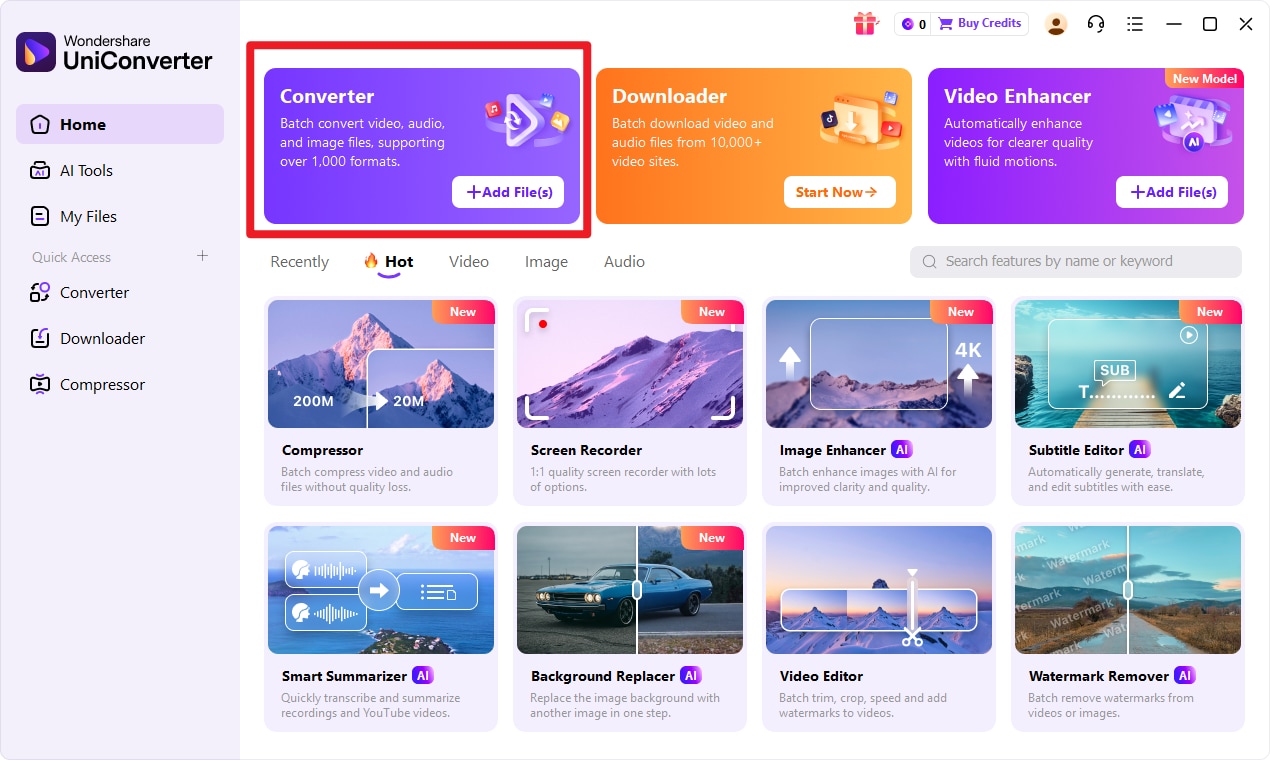
Step 1. Choose Converter in UniConverter
Launch Wondershare UniConverter on your computer. From the main interface, look at the menu on the left side and select the Converter option to open the file conversion window.
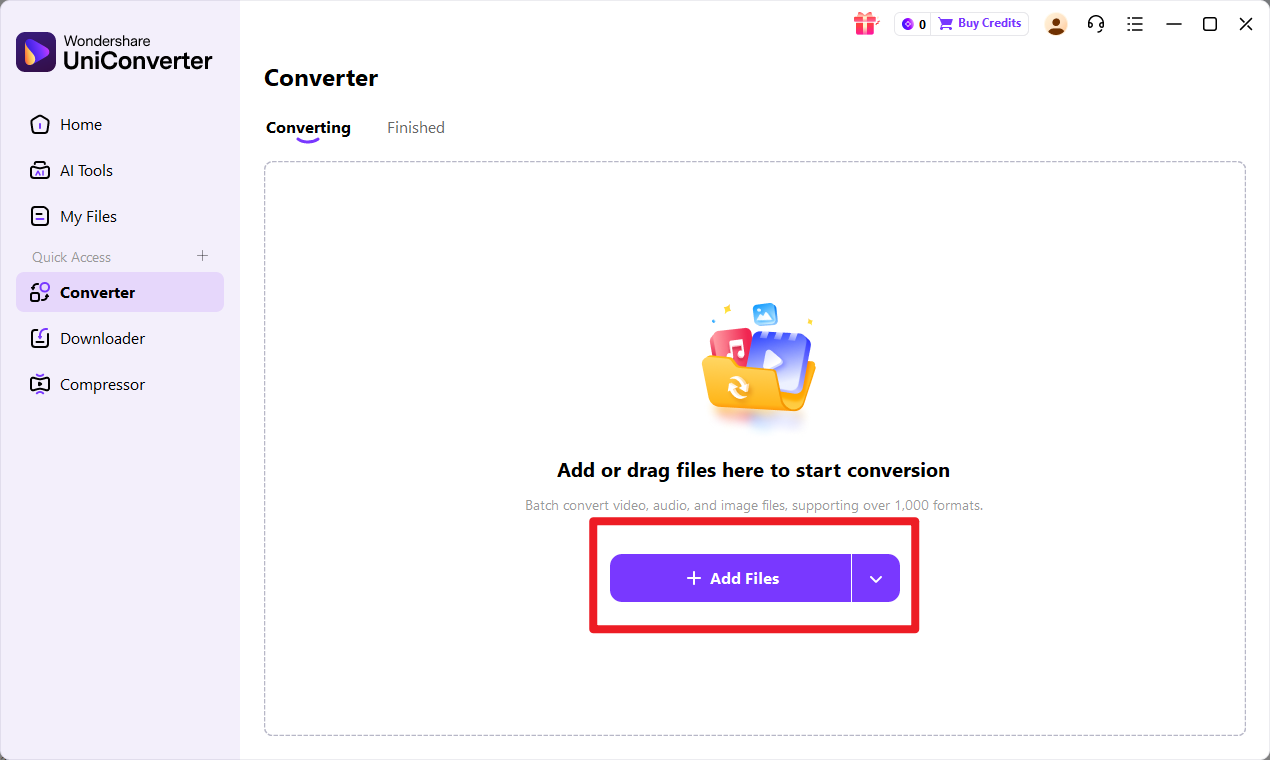
Step 2. Add Files to UniConverter
You can now add your SWF files to the program. Either drag and drop your input format files directly onto the center of the window or click the Add Files icon in the top-left corner to browse your computer's folders and import the files you want to convert.
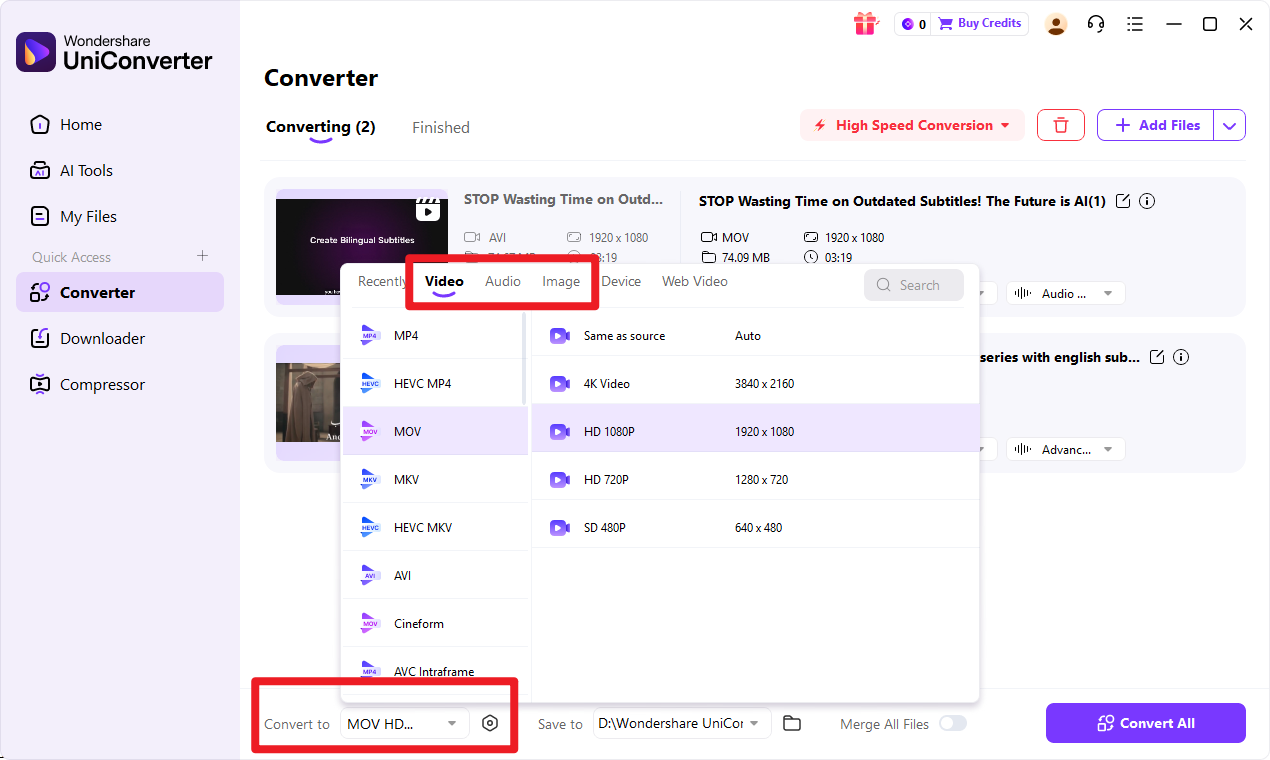
Step 3. Choose Output Format
At the bottom of the window, click on the Output Format menu. This will open a new panel with a list of available formats. Go to the Video tab, select MOV from the list on the left, and then choose your desired output resolution on the right (e.g., "Same as source" to maintain the original quality).
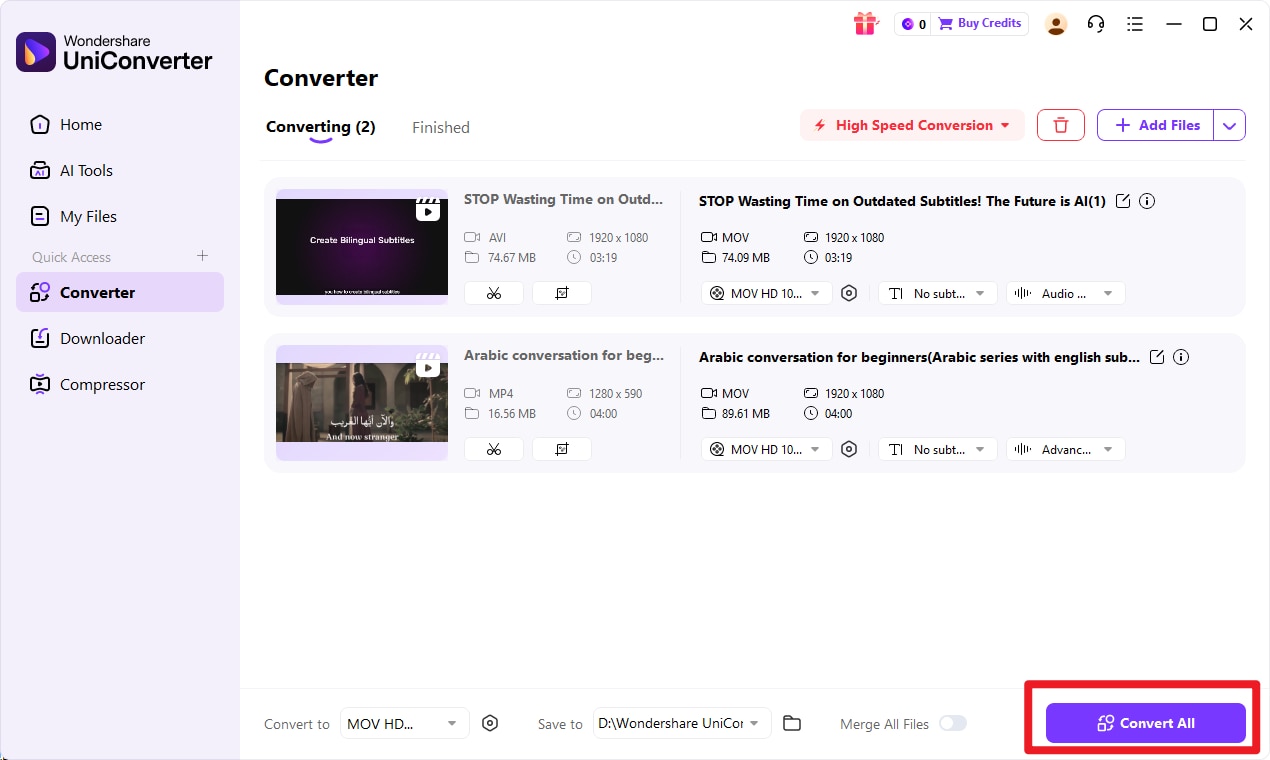
Step 4. Start the Conversion
Before starting, you can choose a destination for your converted file using the File Location field at the bottom. Once you are ready, click the Start All button in the bottom-right corner to begin the batch conversion process. UniConverter will quickly convert your SWF files to high-quality MOV files.

Your All-in-One Video Conversion Solution
Conclusion
The comparison of MOV vs. SWF is ultimately a look at the past versus the present of digital media. SWF was a revolutionary format that powered the interactive web for over a decade, but its time has passed, and it is now firmly in the category of obsolete technology. In contrast, MOV remains a robust, high-quality, and universally compatible container format that serves as a cornerstone in modern video production and distribution workflows.
For anyone holding onto old SWF files containing valuable animations, games, or presentations, the path forward is clear: conversion is essential. By using a reliable and powerful tool like Wondershare UniConverter, you can effortlessly transform these legacy files into versatile MOV videos. This not only makes your content accessible again but also preserves it for viewing, editing, and sharing on any modern device for years to come.
FAQs
-
1. Can I still play SWF files?
Playing SWF files directly in 2026 is difficult and generally not recommended due to major security risks associated with the obsolete Flash technology. While some third-party standalone players or browser emulators exist, they may not be secure or reliable. The safest and most practical solution is to convert your SWF files to a modern video format like MOV or MP4. -
2. Is MOV a good format?
Yes, MOV is an excellent file format, particularly for tasks that require high quality. It is the standard format for video editing within the Apple ecosystem (e.g., Final Cut Pro) and is widely supported on other platforms and in professional software. Its ability to contain high-quality, minimally compressed video and multiple audio tracks makes it a reliable choice for both production and distribution. -
3. Does converting SWF to MOV lose quality?
Any file conversion that involves re-encoding can potentially result in some data loss. However, the perceived loss in quality when converting from SWF to MOV is typically minimal, especially when using a professional tool. A high-quality converter like Wondershare UniConverter uses advanced encoding algorithms and allows you to select high-resolution and high-bitrate output settings to ensure the final MOV file preserves the visual integrity of the original SWF animation as closely as possible. -
4. Can I convert MOV back to SWF?
While some highly specialized tools might technically offer this functionality, it is strongly discouraged. Converting a modern video file like MOV back to an obsolete, unsupported, and insecure format like SWF serves no practical purpose in today's digital environment. Doing so would severely limit the file's usability, compatibility, and security.
