In the world of digital video, the container format you choose can have a significant impact on your entire workflow, from shooting and editing to distribution and archiving. Two of the most prominent formats that professionals often encounter are MOV and MXF. While they can both hold high-quality video and audio, they were designed for very different purposes and ecosystems. Making the right choice in the MOV vs MXF debate is crucial for ensuring compatibility, preserving data integrity, and optimizing your production pipeline.
This guide will provide a detailed, head-to-head comparison of MOV and MXF. We will dissect their technical specifications, explore their primary use cases, and help you determine which format is the best fit for your specific needs. Whether you're a seasoned broadcast engineer, a film student, or a content creator for the web, understanding these differences is key to a smoother and more efficient video production process.
In this article
Part 1. What is MOV? What is MXF?
Before we dive into a direct comparison, it's essential to understand the fundamentals of each format. Both are container formats, meaning they act as a wrapper that holds video, audio, and metadata together in a single file. However, their underlying structure and intended applications are vastly different.
What is a MOV file?
The MOV file format, also known as the QuickTime File Format (QTFF), was developed by Apple. As its name suggests, it is the native format for Apple's QuickTime framework. This makes it incredibly well-integrated with macOS and iOS devices, as well as Apple's professional software like Final Cut Pro and Logic Pro.
A MOV file is a multimedia container that can store multiple tracks of data, including video, audio, text (subtitles), and even effects or interactive elements. Because of its versatility and strong support across a wide range of editing software and online platforms, MOV has become a popular choice for both consumer and professional video production, especially for web distribution and general editing workflows.
What is an MXF file?
MXF stands for Material eXchange Format. It is an open container format standardized by the Society of Motion Picture and Television Engineers (SMPTE). Unlike MOV, which has roots in consumer technology, MXF was designed from the ground up specifically for professional video and audio applications. Its primary purpose is to streamline workflows in broadcast, digital cinema, and professional archiving.
The key strength of MXF lies in its robust support for extensive, structured metadata. It acts as a digital "wrapper" that not only contains the video and audio streams but also a rich set of data about the content, such as timecode, camera settings, scene information, and project data. This ensures seamless interoperability and data preservation as files move between different systems, from cameras to editing suites to broadcast servers.
Part 2. Quick Comparison Table
For a quick overview of the key differences between MOV and MXF, refer to the side-by-side comparison table below.
| Feature | MOV | MXF |
| Full Name | QuickTime File Format | Material eXchange Format |
| Developer | Apple | SMPTE (Society of Motion Picture and Television Engineers) |
| Primary Use | Consumer and prosumer editing, web video | Professional broadcast, digital cinema, and archiving |
| Compatibility | Excellent on Apple platforms and most NLEs | Standard in professional broadcast equipment and high-end NLEs |
| Metadata | Supports basic metadata | Supports extensive, standardized metadata |
| Key Advantage | High versatility and broad compatibility | Robustness, standardization, and metadata preservation |
Part 3. MOV vs MXF: Which One Is Better?
The question of which format is "better" doesn't have a single answer. The best choice depends entirely on the context of your project. Let's break down the comparison across four critical aspects: quality, file size, compatibility, and metadata.
Quality and Compression
A common misconception is that the container format itself dictates the video quality. In reality, both MOV and MXF are just containers; the actual visual quality is determined by the codec used to compress the video data within the file. Common codecs include ProRes, H.264, DNxHD, and XDCAM.
Both formats are capable of encapsulating everything from highly compressed video for web streaming to visually lossless or uncompressed video for high-end post-production. Therefore, if you encode a video using the same codec (e.g., Apple ProRes 422) and the same settings, a MOV file and an MXF file will contain video of identical quality. The choice of container does not degrade or enhance the picture.
File Size
Similar to quality, the file size is not primarily determined by the MOV or MXF container. Instead, it is a function of the codec, bitrate, resolution, and duration of the video. A file encoded with a high-bitrate, visually lossless codec like DNxHD will be very large, regardless of whether it's wrapped in a MOV or MXF container. Conversely, a file encoded with a highly efficient, lossy codec like H.264 will be much smaller.
However, there can be a minor difference. Because MXF files are designed to carry a much more extensive set of metadata, they can sometimes be slightly larger than an equivalent MOV file, though this difference is usually negligible compared to the size of the video and audio data itself.
Compatibility and Support
Compatibility is where the two formats diverge significantly.
MOV offers excellent and widespread compatibility, particularly within the Apple ecosystem. It is the native format for QuickTime Player, Final Cut Pro, and iMovie. Beyond Apple, it is universally supported by almost all major non-linear editing (NLE) software, including Adobe Premiere Pro, DaVinci Resolve, and Avid Media Composer. It also plays back without issue on most consumer devices and is a preferred format for uploading to video-sharing platforms like YouTube and Vimeo.
MXF, on the other hand, is a specialized professional format. It is the undisputed standard in the broadcast and digital cinema industries. It is natively supported by high-end NLEs like Avid Media Composer (which often uses it as its native media format), Adobe Premiere Pro, and DaVinci Resolve. However, MXF has very limited support on consumer-level software and hardware. You cannot, for instance, play an MXF file with the default media player on Windows or macOS, and it is not a suitable format for web delivery.
Metadata Handling
The most critical technical difference between MOV and MXF is their approach to metadata.
MXF excels in this area. It was specifically engineered to carry a rich, standardized, and frame-accurate set of metadata. This can include everything from basic timecode and audio channel mapping to complex information like camera lens data, GPS coordinates, scene descriptions, and rights management information. This comprehensive metadata is vital for professional post-production, media asset management (MAM) systems, and long-term archival, as it ensures that all crucial information about the footage is preserved throughout its lifecycle.
MOV files also support metadata, but it is generally less structured and extensive compared to the rigorous SMPTE standards that govern MXF. While it can store important information like timecode and camera profiles, it lacks the deep, standardized framework that makes MXF so reliable for complex, collaborative workflows.
Part 4. Use Cases for MOV and MXF
Understanding the technical differences helps clarify when to use each format. Your choice should align with your project's requirements and intended destination.
When to Use MOV
The versatility and broad compatibility of MOV make it the ideal choice for a wide range of scenarios:
- Editing on macOS: If you are working primarily within the Apple ecosystem, especially with Final Cut Pro, using MOV is a natural and seamless choice.
- Content for Online Platforms: When your final product is destined for YouTube, Vimeo, or social media, MOV (typically encoded with H.264 or H.265) is one of the best formats for delivery due to its high quality-to-compression ratio and universal acceptance.
- General-Purpose Video Production: For corporate videos, independent films, or personal projects where broad device compatibility and ease of use are more important than complex metadata, MOV is a reliable and flexible option.
- QuickTime-Based Workflows: Any workflow that relies on QuickTime technology or requires features unique to the QTFF container will naturally use MOV files.
When to Use MXF
MXF is the go-to format for high-end, professional environments where standardization and data integrity are non-negotiable:
- Professional Broadcast: From news gathering to television show production and final broadcast delivery, MXF is the industry standard. It ensures that files are compliant with broadcast servers and playout systems.
- Digital Cinema: When creating a Digital Cinema Package (DCP) for theatrical exhibition, the video and audio are often wrapped in an MXF container to meet strict industry specifications.
- Long-Term Archiving: For libraries, studios, and historical institutions, MXF is the preferred archival format. Its robust metadata capabilities ensure that future generations can understand the full context of the archived material.
- Professional Camera Workflows: Many professional cameras from leading brands like Sony (XDCAM), Canon (XF-AVC), and Panasonic (P2) record directly to MXF files to capture extensive metadata right at the source.
Part 5. Step-by-Step Guide to Convert MOV to MXF Using UniConverter
There are many situations where you might need to convert between these formats. For example, you might edit a project using MOV files in Final Cut Pro and then need to deliver a final version in MXF for broadcast. For this task, a professional and reliable tool is essential to ensure no quality is lost. Wondershare UniConverter is a powerful and intuitive video toolbox that supports over 1000 formats, making it the perfect solution for converting MOV to MXF with ease.
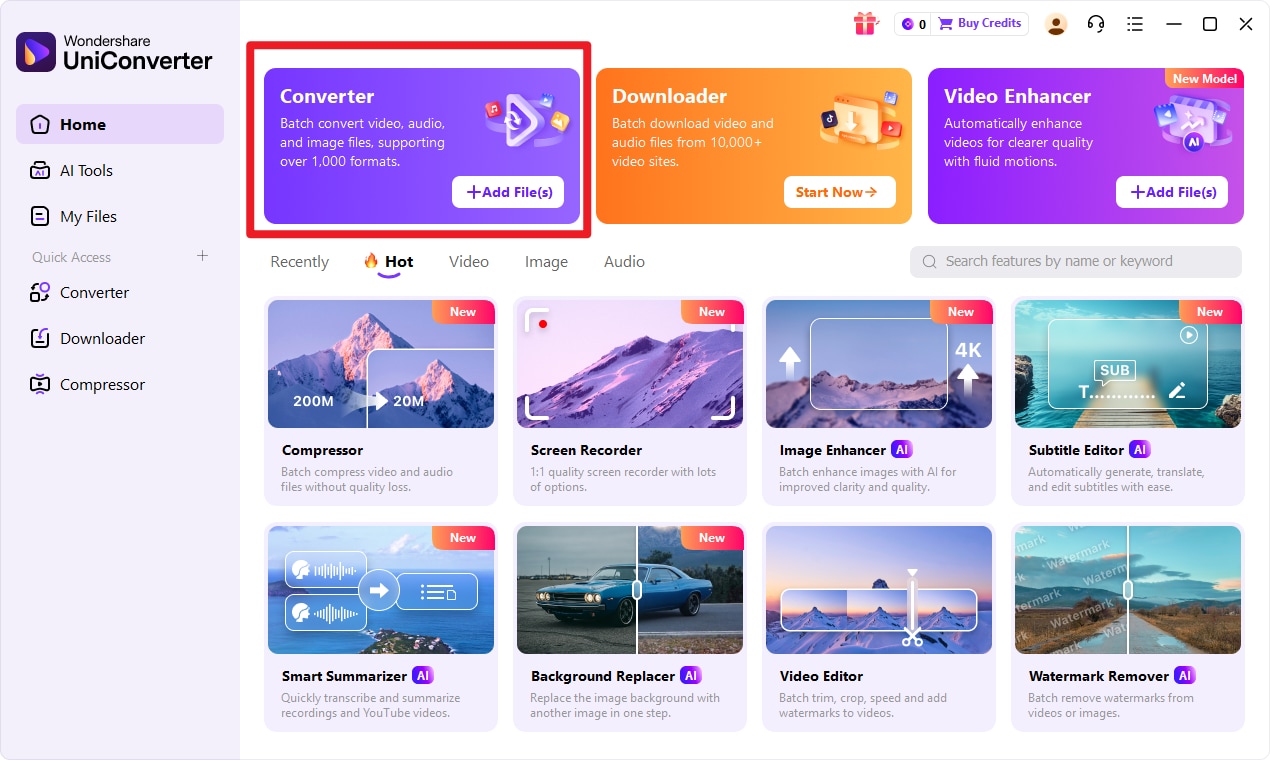
Step 1: Choose Converter in UniConverter
Launch Wondershare UniConverter on your computer. On the main interface, click on the Converter tool from the menu on the left side to open the conversion window.
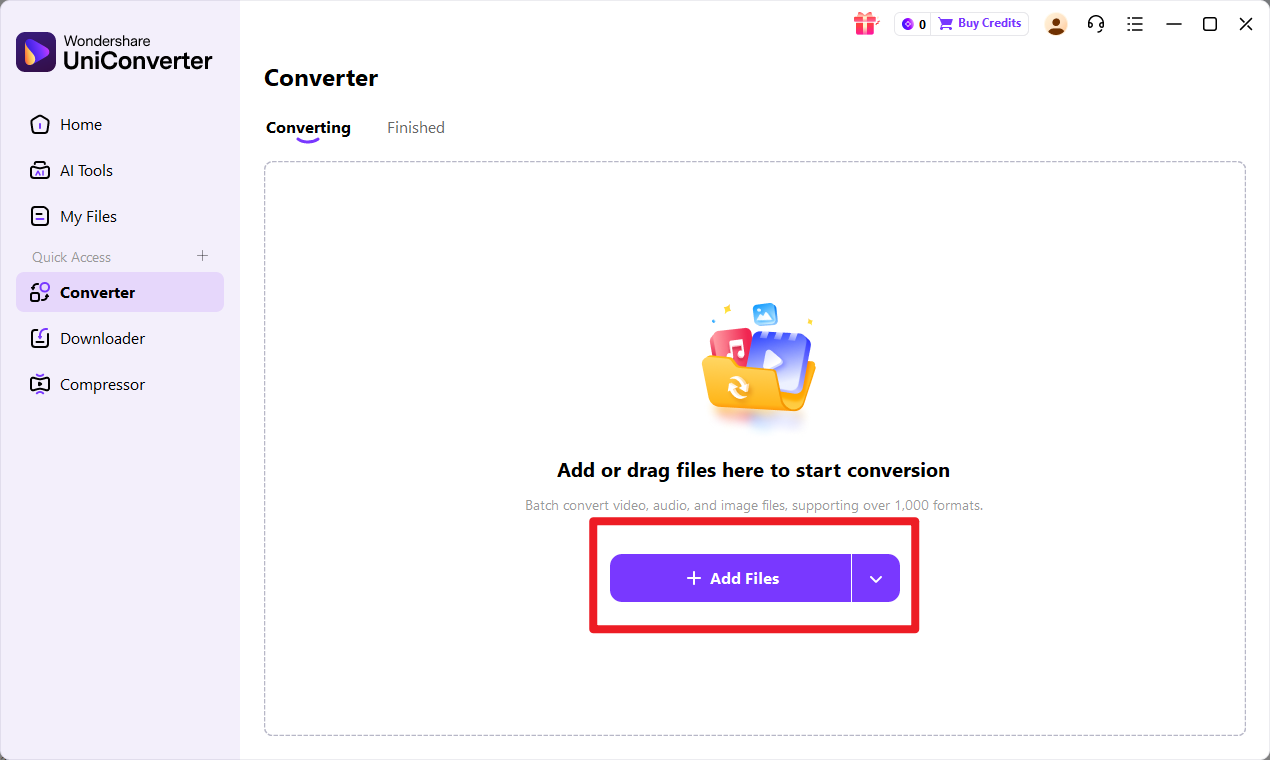
Step 2: Add Files to UniConverter
You can now import your input format files. Click the Add Files icon in the top-left corner to browse and select your files, or for a faster workflow, simply drag and drop your files directly onto the program window.
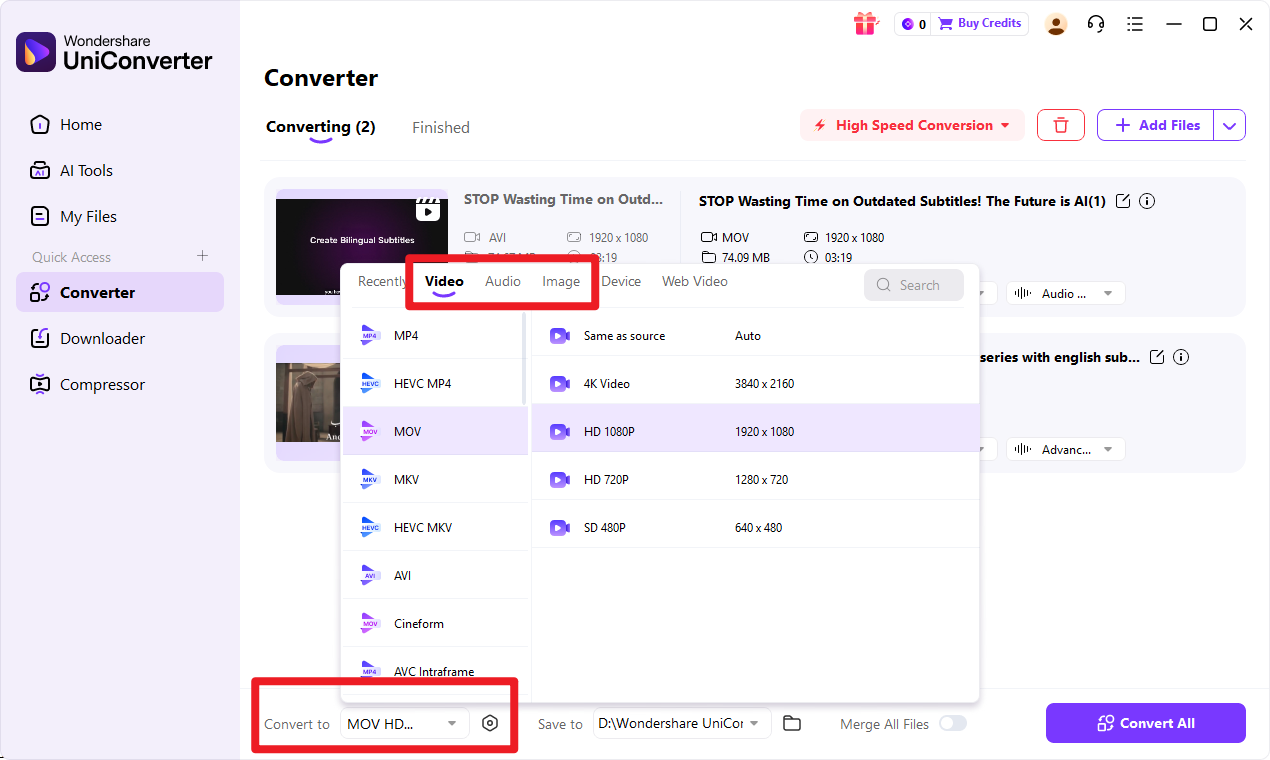
Step 3: Choose Output Format
At the bottom of the window, click on the Output Format menu. This will open a new window with a list of available formats. Go to the Video tab, select the target format from the list on the left, and then choose your desired resolution or quality preset from the options on the right.
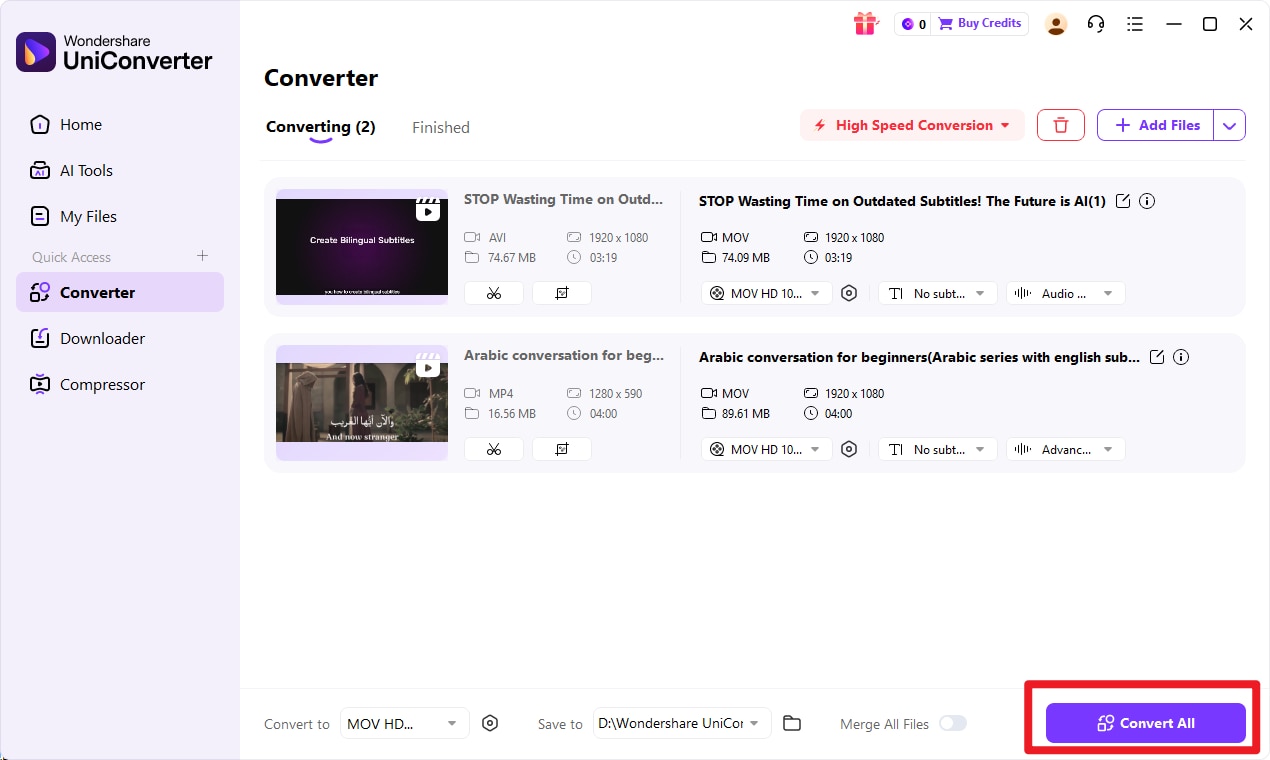
Step 4: Start the Conversion
Before starting, you can specify where to save the converted file using the File Location option at the bottom. Once you are ready, click the Start All button in the bottom-right corner to begin the high-speed conversion process.

Go Beyond Simple Video Conversion
Conclusion
In summary, the MOV vs. MXF debate is not about which format is better overall, but which is the right tool for the job. Neither is inherently superior; their value is dictated by the specific application. MOV is the champion of versatility and compatibility, making it the format of choice for general video production, web content, and workflows centered around the Apple ecosystem. In contrast, MXF is the undisputed standard for professional broadcast, cinema, and archival workflows, where its robust metadata handling and industry-wide standardization are paramount.
Understanding the strengths and weaknesses of each format allows you to make informed decisions that will streamline your production pipeline. And when your work requires you to bridge the gap between these two worlds, having a reliable and powerful conversion tool like Wondershare UniConverter is an indispensable asset for any video professional, ensuring your media is always in the right format for the task at hand.
FAQs
-
1. Is MXF better quality than MOV?
No. The quality of a video file is determined by the codec (e.g., ProRes, H.264) and the bitrate used during encoding, not the container format itself. Both MOV and MXF can hold video of identical quality if they are created using the same codec and settings. -
2. Can I play an MXF file on my computer?
Yes, but you will likely need specialized software. Standard media players like Windows Media Player or Apple's QuickTime Player do not natively support MXF. To play MXF files, you can use a versatile third-party player like VLC Media Player or open them in a professional non-linear editing (NLE) application such as Adobe Premiere Pro or Avid Media Composer. -
3. Why do professional cameras record in MXF?
Professional cameras from brands like Sony, Canon, and Panasonic use MXF because of its superior ability to handle extensive, standardized metadata. This metadata—which includes timecode, camera settings, lens information, and more—is critical for organizing and managing footage in professional post-production workflows. Its reliability and status as an industry standard ensure compatibility across a wide range of professional equipment. -
4. Can I convert MOV to MXF without losing quality?
Yes, it is possible to convert MOV to MXF without any loss of quality. To do this, you must use a professional video converter like UniConverter and select a "visually lossless" or "lossless" codec for the output MXF file. For example, if your MOV file uses the ProRes codec, you can convert it to an MXF file that also uses the ProRes codec, ensuring a direct re-wrap of the data without re-compression and thus preserving the original quality perfectly.
