
Navigating the world of video formats can often feel like a complex puzzle, especially when dealing with files like MOV and FLV. You might have a high-quality MOV file that you need to share online or an old FLV file that won't play on your new device. Understanding the core differences between these two formats is crucial for anyone working with video, from professional editors to casual users. The choice between MOV vs. FLV directly impacts video quality, file size, and compatibility, determining how and where your content can be viewed and used.
This guide will provide a comprehensive breakdown of both formats, helping you make an informed decision for your specific needs. We'll explore their origins, technical specifications, and ideal use cases. By the end, you'll not only understand which format is superior for modern applications but also know how to convert between them effortlessly.
In this article
- What is a MOV file?What is an FLV file?
- A quick comparison table of MOV vs. FLV
- An in-depth analysis of quality, file size, and compatibility
- The best use cases for each format
- A step-by-step guide to convert between MOV and FLV
Part 1. What is a MOV file? What is an FLV file?
Before we can compare these two formats, it's essential to understand what they are, how they were developed, and what they were designed to do.
What is a MOV file?
The MOV format, also known as the QuickTime File Format (QTFF), was developed by Apple Inc. in the early 1990s. It was created to work seamlessly within the QuickTime framework, Apple's proprietary multimedia architecture. A MOV file is a container format, which means it can hold multiple types of data in different tracks. These tracks can include video, audio, text (like subtitles), and even effects.
Because of its ability to store high-quality, often uncompressed or minimally compressed video data, MOV has become a standard in the world of professional video production and editing. It is the default format for videos recorded on iPhones and iPads and is natively supported on all macOS and iOS devices. Its robust structure and quality preservation make it a favorite among filmmakers and content creators who prioritize visual fidelity during the post-production process.
What is an FLV file?
FLV, which stands for Flash Video, was developed by Macromedia, which was later acquired by Adobe Systems. As its name suggests, FLV was designed specifically for delivering video content over the internet using the Adobe Flash Player. For many years, it was the dominant format for web-based video streaming, used by major platforms like YouTube, Hulu, and countless others.
The primary strength of the FLV format lies in its high compression ratio. It was engineered to create very small file sizes, which was critical for fast loading and smooth playback during the era of slower internet connections. However, the digital landscape has shifted dramatically. With the deprecation of Adobe Flash Player by the end of 2020, FLV has become a legacy format. Modern web browsers and mobile devices no longer support Flash, rendering FLV files largely obsolete for web use and general playback without specialized software.
Part 2. Quick Comparison Table
For a quick overview of the key differences between MOV and FLV, this side-by-side comparison table highlights their most important attributes.
| Feature | MOV | FLV |
| Developer | Apple Inc. | Adobe Systems |
| Compression | Less compressed, variable codecs | Highly compressed for web streaming |
| Quality | Generally higher, suitable for professional editing | Lower, optimized for fast loading |
| File Size | Larger | Smaller |
| Compatibility | Excellent on Apple devices and in professional software | Limited; requires specific players as Flash is obsolete |
| Primary Use | Video editing, high-quality recording, and file storage | Legacy web streaming on platforms that still use Adobe Flash |
Part 3. MOV vs FLV: Which One Is Better?
While the table above gives a quick summary, a deeper dive into quality, file size, and compatibility is necessary to understand which format is truly better for your needs in 2026.
Quality and Compression
The most significant difference between MOV and FLV lies in their approach to quality and compression.
MOV files are designed to preserve data. They often use codecs like ProRes, H.264, or even uncompressed video streams, which results in much higher visual and audio fidelity. This less lossy compression is crucial during the video editing process, as it allows creators to make multiple changes, apply effects, and re-export the file without a significant degradation in quality. If your priority is maintaining the best possible image, MOV is the superior choice.
FLV, on the other hand, was built for efficiency over the internet. It uses codecs like Sorenson Spark and VP6, which apply aggressive, lossy compression to drastically reduce file size. While this was revolutionary for web streaming in the 2000s, it comes at a cost. The trade-off is a noticeable reduction in video quality, with potential artifacts, less detail in shadows and highlights, and less vibrant colors compared to a MOV file of the same source material.
File Size
The difference in compression directly correlates to file size. An FLV file will almost always be significantly smaller than a MOV file of the same video clip at the same resolution. The high compression of FLV strips away a large amount of video data to achieve its compact size, making it easy to transfer online.
Conversely, MOV files are larger because they retain more of the original data to preserve quality. This is a benefit for archiving and post-production, as you have more information to work with. However, the larger file size can be a disadvantage when it comes to storage space or sharing files over the internet, where upload times and bandwidth are a concern.
Compatibility and Support
In today's tech ecosystem, compatibility is king, and this is where MOV has a decisive advantage. MOV is natively supported by all Apple devices (Mac, iPhone, iPad) and plays without issue in QuickTime Player. Furthermore, it is a standard format in virtually all professional video editing software, including Adobe Premiere Pro, Final Cut Pro, and DaVinci Resolve. Most modern Windows PCs and Android devices can also play MOV files without needing third-party software, thanks to broad codec support.
FLV's compatibility, however, is extremely poor in 2026. Since Adobe officially ended support for Flash Player, no modern web browser will play FLV content. Mobile operating systems like iOS and Android have never offered native support for it. To play an FLV file today, you must use a third-party media player like VLC Media Player, which maintains support for a wide range of legacy formats. For any form of public distribution or modern use, FLV is no longer a viable option.
The Verdict: Which format should you choose?
For nearly all modern applications, MOV is the clear winner. You should choose MOV for:
- Recording and storing high-quality video.
- Any professional or semi-professional video editing project.
- Archiving master copies of your footage.
- Sharing videos within the Apple ecosystem or with other editors.
FLV should only be considered in very specific, niche scenarios. For instance, if you are tasked with maintaining a legacy website or an internal corporate system that was built around Adobe Flash and can only play FLV files. For all modern web video needs, formats like MP4 (which is based on the MOV container) have become the universal standard, offering a great balance of quality, compression, and universal compatibility.
Part 4. Use Cases for MOV and FLV
Understanding the ideal scenarios for each format can help you manage your video workflow more effectively.
When to Use MOV
The versatility and quality of the MOV format make it suitable for a wide range of demanding tasks. Here are the primary situations where you should use MOV:
- Editing Video Projects: If you are editing a video in software like Final Cut Pro, Adobe Premiere Pro, or DaVinci Resolve, MOV is one of the best formats to work with. Its ability to hold high-quality video with minimal compression ensures that you have the most data possible to work with for color grading, effects, and other post-production adjustments.
- Archiving Master Copies: After you finish a project, it's wise to save a master copy in the highest possible quality. A MOV file using a professional codec like Apple ProRes is perfect for this. It serves as a high-fidelity digital negative that you can return to in the future to create different versions or exports.
- Creating and Sharing within the Apple Ecosystem: Since MOV is the native format for Apple devices, it's the most seamless choice for creating videos on an iPhone and editing them on a Mac. Sharing MOV files between Apple devices via AirDrop or iCloud is fast and reliable, with no compatibility issues.
When to Use FLV
The use cases for FLV in 2026 are extremely limited and tied to outdated technology. You should only consider using or converting to FLV under these circumstances:
- Embedding Video on Old Websites: If you are managing or updating a very old website that was built entirely around Adobe Flash Player, you may need to use FLV files to ensure the embedded videos continue to work. This is a rare scenario, and the recommended long-term solution would be to update the website to use modern HTML5 video standards.
- Supporting Legacy Hardware or Software: Some older digital signage systems, internal training platforms, or specialized hardware might have been designed to only support FLV video playback. In these cases, you would need to provide content in the FLV format to maintain compatibility with that specific legacy system.
Part 5. Step-by-Step Guide to Convert MOV to FLV Using UniConverter
Whether you need to convert a modern MOV file for a legacy system or an old FLV file into a usable format, a dedicated video converter is essential. Wondershare UniConverter stands out as a powerful, fast, and intuitive tool for this job. It supports over 1,000 formats, allowing you to seamlessly convert files between MOV, FLV, MP4, and many others while maintaining quality. Its user-friendly interface makes the process simple for everyone.
Follow these four simple steps to convert your files:
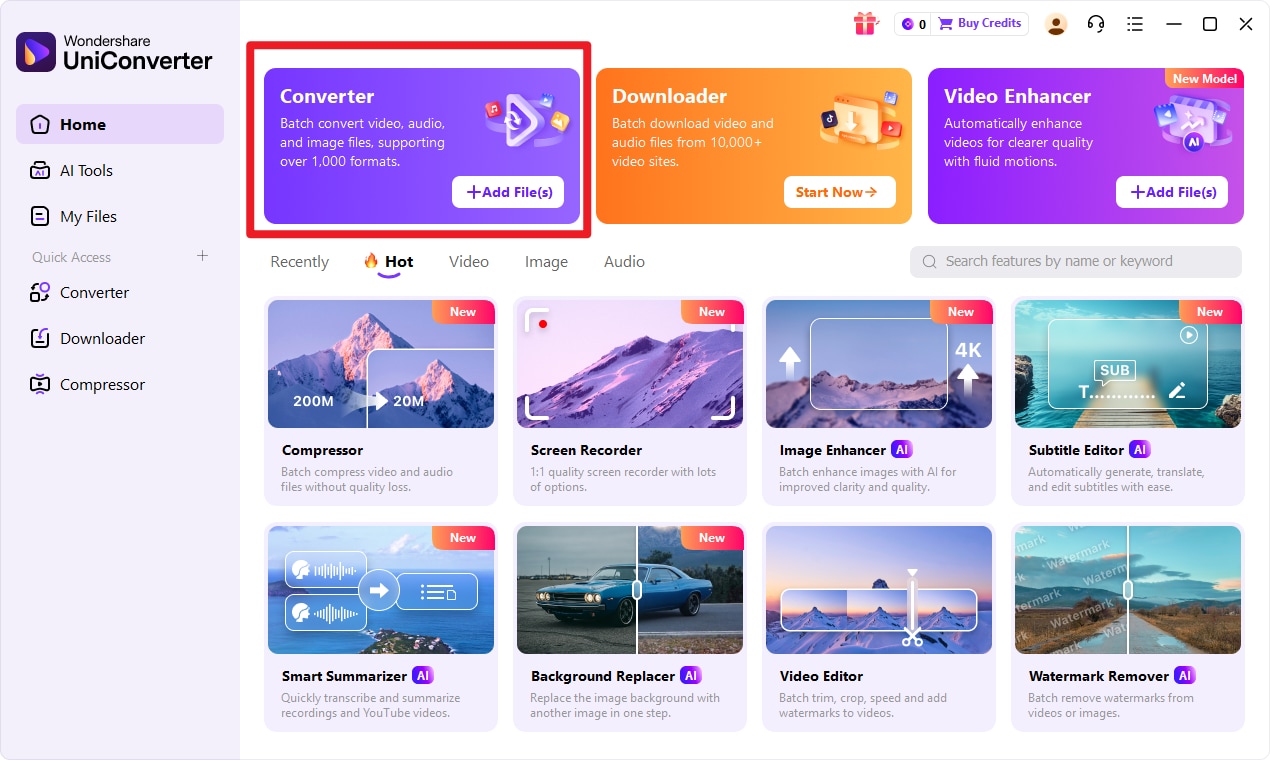
Step 1: Choose Converter in UniConverter
Launch Wondershare UniConverter on your computer. From the main interface, look at the menu on the left side and click on the Converter tool to open the video conversion window.
Step 2: Add Files to UniConverter
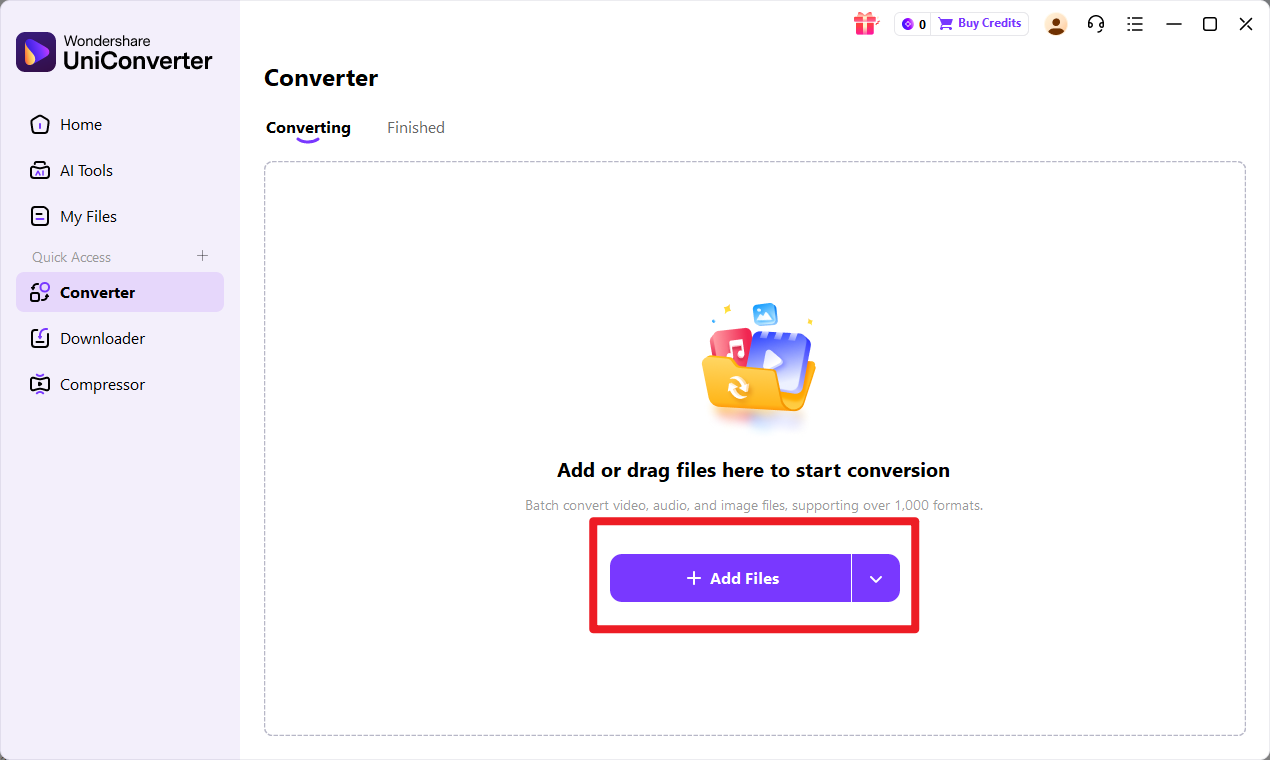
In the Converter window, you can add your input format files. Either click the Add Files button in the top-left corner to browse your computer's folders or simply drag and drop your video files directly into the center of the program window.
Step 3: Choose Output Format
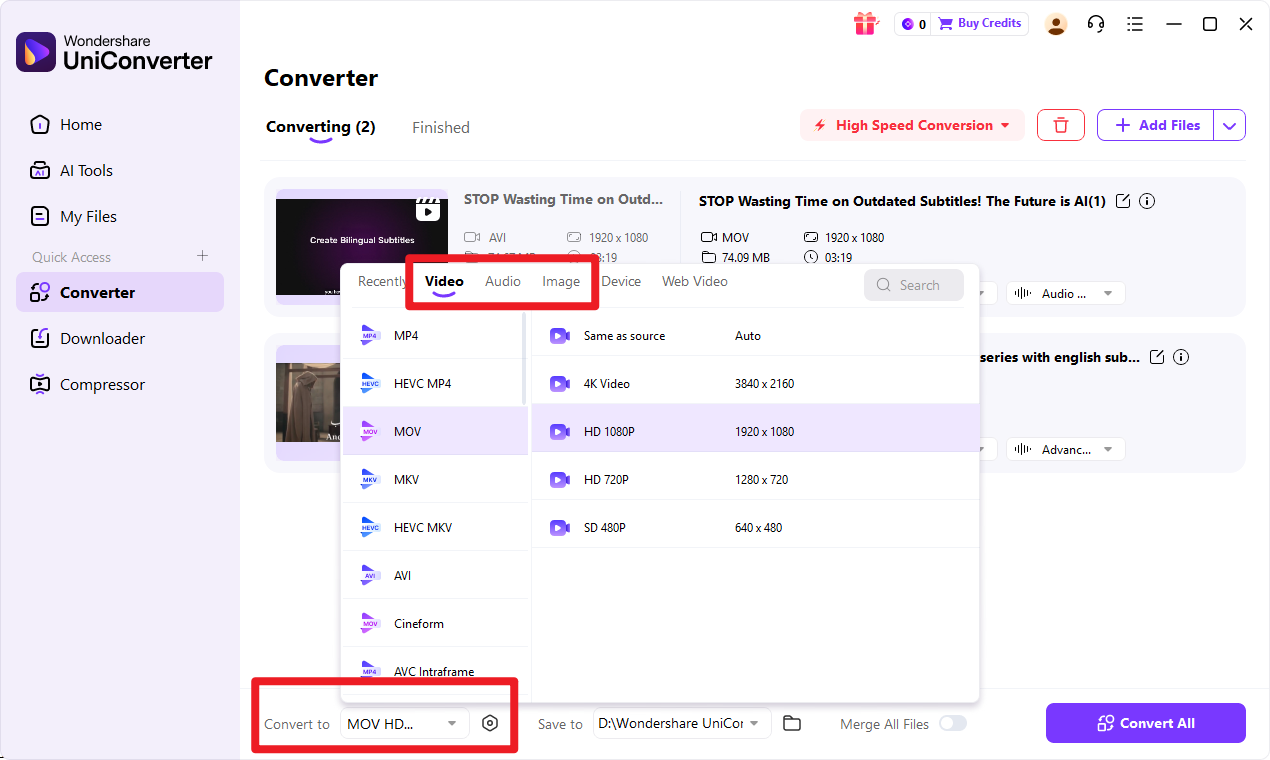
Click the Output Format menu at the bottom of the window. A new dialog box will appear. Select the Video tab, choose your desired target format from the list on the left, and then select a resolution or quality preset from the options on the right.
Step 4: Start the Conversion
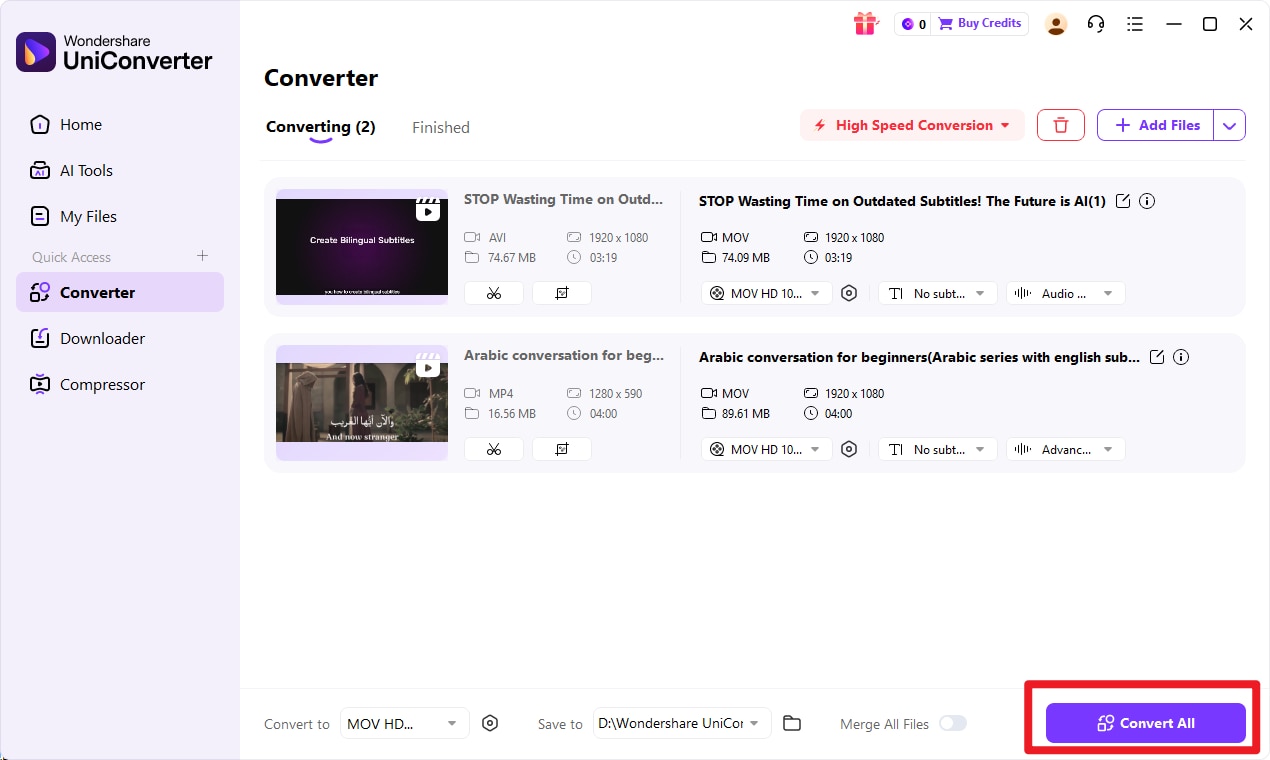
Before starting, you can set a destination for your converted files using the File Location field at the bottom. Once you are ready, click the Start All button in the bottom-right corner to begin the batch conversion process. UniConverter will process your files quickly.

Go Beyond Conversion with a Full Video Toolbox
Conclusion
In the MOV vs. FLV comparison, there is a definitive winner for the modern era. MOV offers far superior quality, broader compatibility with current devices and software, and a robust structure ideal for professional editing and archiving. It is the format of choice for nearly every contemporary video application. FLV, as a relic of the Adobe Flash era, is now a legacy format with extremely limited use cases, primarily for supporting outdated systems. Its poor compatibility and reliance on obsolete technology make it unsuitable for any modern video workflow.
For those rare instances where you need to bridge the gap between these two formats—or handle any other video conversion task—a reliable tool is indispensable. Wondershare UniConverter provides a fast, powerful, and straightforward solution, ensuring your videos are perfectly formatted for any platform or device.
FAQs
-
1. Is MOV better than FLV?
Yes, for almost all modern purposes, MOV is significantly better than FLV. It provides higher video and audio quality, is supported by a vast range of devices and editing software, and is actively used in professional workflows. FLV is an outdated format with very poor compatibility today. -
2. Can I still play FLV files?
Yes, but it requires specific software. Since modern web browsers and native media players on Windows, macOS, iOS, and Android do not support FLV, you will need to download a third-party media player like VLC Media Player, which is known for its ability to play a wide variety of legacy formats. -
3. Why would I need to convert a video to FLV?
The only practical reason to convert a video to FLV in 2026 is for compatibility with a legacy system. This could be an old website built with Adobe Flash technology or a piece of hardware (like a digital sign) that was designed to only accept FLV files. -
4. What is the best way to convert MOV to FLV or vice versa?
The best and most reliable method is to use a dedicated video converter application. Software like Wondershare UniConverter is highly recommended because it is easy to use, offers fast conversion speeds without quality loss, and supports a massive library of over 1,000 formats, making it a versatile tool for all your video needs.
