
Navigating the world of video formats can often feel like deciphering a complex code. You have containers, codecs, bitrates, and a seemingly endless list of three-letter file extensions. Two names that frequently come up in discussions about video are MOV and DivX. You might have a high-quality MOV file from your iPhone that won't play on your Windows PC, or perhaps you've downloaded a DivX movie that's surprisingly small yet looks great. This leads to the central question: what exactly is the difference in the MOV vs DivX debate, and which one should you be using?
Understanding the core characteristics of each format is crucial for anyone who works with video, whether you're a professional editor, a content creator, or simply someone trying to manage a personal media library. Choosing the right format can save you storage space, prevent compatibility headaches, and ensure your videos look their best wherever they are played. This guide will break down the distinctions between MOV and DivX, compare their strengths and weaknesses, and help you decide which is the optimal choice for your specific needs.
In this article:
Part 1. What is MOV? What is DivX?
Before we can compare MOV and DivX, it's essential to understand that we are not comparing two equal things. One is a container format, and the other is a codec. This is the most critical distinction to grasp.
What is MOV?
MOV is a multimedia container format developed by Apple Inc. It is the native format for Apple's QuickTime Framework, which is why you'll often see it referred to as a QuickTime file. Think of a container format like a box or a folder. This box can hold various types of data, all synchronized together. A single MOV file can contain multiple tracks of video, audio, text (like subtitles), and effects.
Because it was designed for professional use, MOV is renowned for its ability to store very high-quality, and even lossless, video. It's a standard in the world of video editing, particularly within the Apple ecosystem. However, this high quality often comes at the cost of very large file sizes, which can make storing and sharing MOV files challenging.
What is DivX?
DivX, on the other hand, is not a container format; it's a video codec. A codec (short for coder-decoder) is an algorithm used to compress and decompress digital video. Its primary job is to shrink large video files into more manageable sizes. DivX gained immense popularity for its remarkable ability to compress long videos, such as full-length movies, into a small file while maintaining a relatively high level of visual quality.
You won't typically find a file with a ".divx" extension. Instead, the DivX-compressed video data is usually placed inside a container format, most commonly AVI (.avi). So, when people talk about a "DivX file," they are usually referring to an AVI file that contains video compressed with the DivX codec.
Key Distinction: Container vs. Codec Explained
To put it simply, the container is the box, and the codec is the method used to pack the video inside that box.
- Container (MOV): The MOV file is the "box." It defines how different data streams (video, audio, subtitles) are stored and organized together. The video stream inside a MOV file can be compressed using various codecs, such as H.264, HEVC, or Apple ProRes.
- Codec (DivX): The DivX codec is the "compression method." It's the technology that makes the raw video data smaller. This compressed video is then placed into a container, like AVI, to be stored and played.
Therefore, a direct comparison is about choosing between a high-quality, flexible container (MOV) that often results in large files and a highly efficient compression method (DivX) designed for small file sizes.
Part 2. Quick Comparison Table
For a quick overview, here is a side-by-side comparison of MOV and DivX, highlighting their fundamental differences.
| Feature | MOV | DivX |
| Developer | Apple Inc. | DivX, LLC |
| Type | Multimedia Container Format | Video Codec |
| File Size | Generally Larger | Highly Compressed and Smaller |
| Quality | Excellent, can be lossless. Ideal for editing. | Good quality for the file size, but is lossy compression. |
| Compatibility | Native to macOS and iOS. Requires specific players on other platforms. | Wide compatibility on many devices, but may require codec installation. |
| Primary Use | Professional video editing and storing high-quality source files. | Storing and sharing videos online or on devices with limited storage. |
Part 3. MOV vs DivX: Which One Is Better?
The "better" format depends entirely on your priority: quality, file size, or compatibility. Let's dive deeper into how they stack up in these key areas.
File Size and Compression
This is where DivX has a clear and significant advantage. The DivX codec was engineered specifically for aggressive compression. It uses a lossy compression method, which means it intelligently discards some video data that the human eye is less likely to notice to drastically reduce the file size. This makes it an excellent choice for anyone looking to store a large video library on a hard drive with limited space or for sharing videos over the internet where upload/download speeds and data caps are a concern.
MOV files, in contrast, are often much larger. While a MOV file can use a highly compressed codec like H.264, it is frequently used with professional, lightly compressed, or even uncompressed codecs like Apple ProRes. These codecs prioritize preserving the original image data, which is essential for editing but results in massive file sizes. A few minutes of 4K ProRes footage can easily consume tens of gigabytes of space, whereas the same footage compressed with DivX would be a fraction of that size.
Winner: DivX (for small file size)
Video Quality
When it comes to pristine, uncompromised video quality, MOV is the undisputed winner. Because the MOV container can hold video compressed with professional-grade, near-lossless or completely lossless codecs, it is the format of choice for capturing and archiving source footage. During the video editing process (post-production), every bit of data is important for tasks like color grading, applying effects, and compositing. The MOV format ensures that this data is preserved, preventing the quality degradation that can occur with multiple re-compressions.
DivX, being a lossy codec, will always result in some quality loss compared to the original source. While its compression algorithm is very advanced and provides impressive visual quality for its file size, it is not suitable for a professional editing workflow. It's designed for final delivery and viewing, not for intermediate production steps. For the average viewer watching a movie on a TV or computer screen, the quality of a well-encoded DivX file is more than sufficient and often indistinguishable from much larger files.
Winner: MOV (for maximum quality and editing)
Compatibility and Playback
Compatibility is a more nuanced comparison. MOV files play perfectly and natively on all Apple devices, including Macs, iPhones, and iPads. They are the default standard within the Apple ecosystem. However, outside of this ecosystem, they can be problematic. Windows Media Player cannot play MOV files out of the box, and users on Windows or Android often need to install a third-party media player like VLC Media Player or a specific codec pack to ensure smooth playback.
DivX, thanks to its long history, enjoys surprisingly wide support, especially on physical hardware devices. Many DVD and Blu-ray players, smart TVs, and media players from the 2000s and 2010s were "DivX Certified," meaning they were guaranteed to play DivX-encoded files (usually in an AVI container). On computers, playback is also generally straightforward, though sometimes it may require installing the official DivX codec pack.
For true universal compatibility, neither format is perfect. The most effective solution is to convert your video to the format best suited for your target device. A versatile tool like Wondershare UniConverter can bridge this compatibility gap, allowing you to convert MOV to a Windows-friendly format or package a DivX video into a more modern MP4 container, ensuring it plays anywhere without issue.
Winner: Tie/DivX (DivX has broader hardware support, but both can face issues that are best solved by conversion).
Part 4. Use Cases for MOV and DivX
Based on the comparison above, here are the practical scenarios where you would choose one format over the other.
When to Use MOV
- Professional Video Editing: If you are editing video in software like Final Cut Pro, Adobe Premiere Pro, or DaVinci Resolve, MOV is the industry standard. Using a codec like Apple ProRes within a MOV container will give you the flexibility and quality needed for intensive color correction and effects work.
- Archiving Master Copies: For videographers and filmmakers, storing the original camera footage in the highest possible quality is essential for future use. MOV is the perfect format for archiving these master copies before any compression for distribution is applied.
- Creating Content for Apple Platforms: If your target audience is exclusively using Apple devices, sticking with MOV ensures a seamless and high-quality viewing experience without any compatibility concerns.
When to Use DivX
- Storing Large Media Libraries: If you want to store hundreds of movies or TV show episodes on a network-attached storage (NAS) or external hard drive, using DivX compression will save an enormous amount of space compared to formats like MOV.
- Sharing Videos Over the Internet: When you need to send a video to someone via email or a file-sharing service, a smaller file size is a huge advantage. DivX allows you to create a file that is quick to upload and download.
- Playback on Older Devices: If you have an older DVD player or media center that is DivX Certified, encoding your videos with the DivX codec is the best way to ensure they will play back on that specific hardware.
Part 5. Step-by-Step Guide to Convert MOV to DivX Using UniConverter
What if you have a high-quality MOV file but need the small size and compatibility of DivX, or vice versa? The best solution is to use a reliable video converter. Wondershare UniConverter is a powerful and intuitive application that supports over 1,000 formats, including MOV and DivX. It allows you to convert files quickly without a noticeable loss in quality, making it the perfect tool to bridge the gap between these formats.
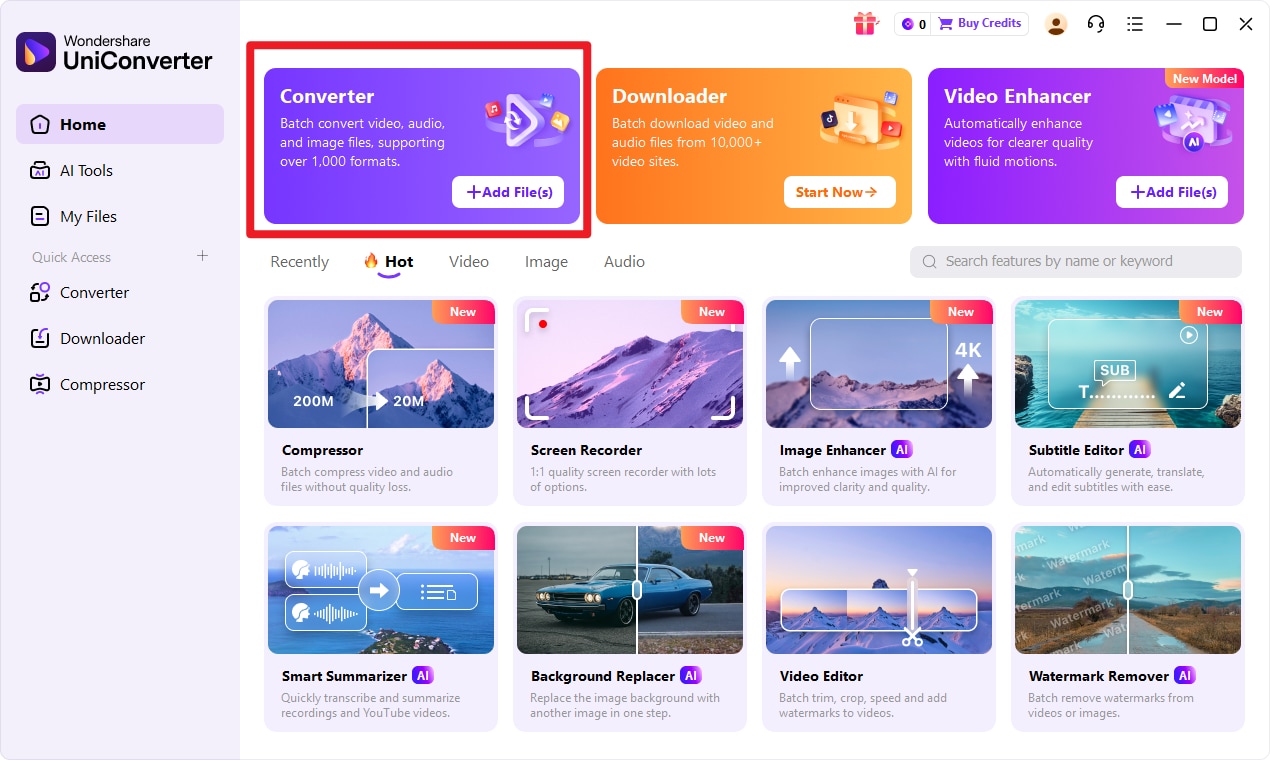
Step 1: Choose Converter in UniConverter
Launch Wondershare UniConverter on your computer. From the main screen, navigate to the left-side toolbar and select the Converter tool.
Step 2: Add Files to UniConverter
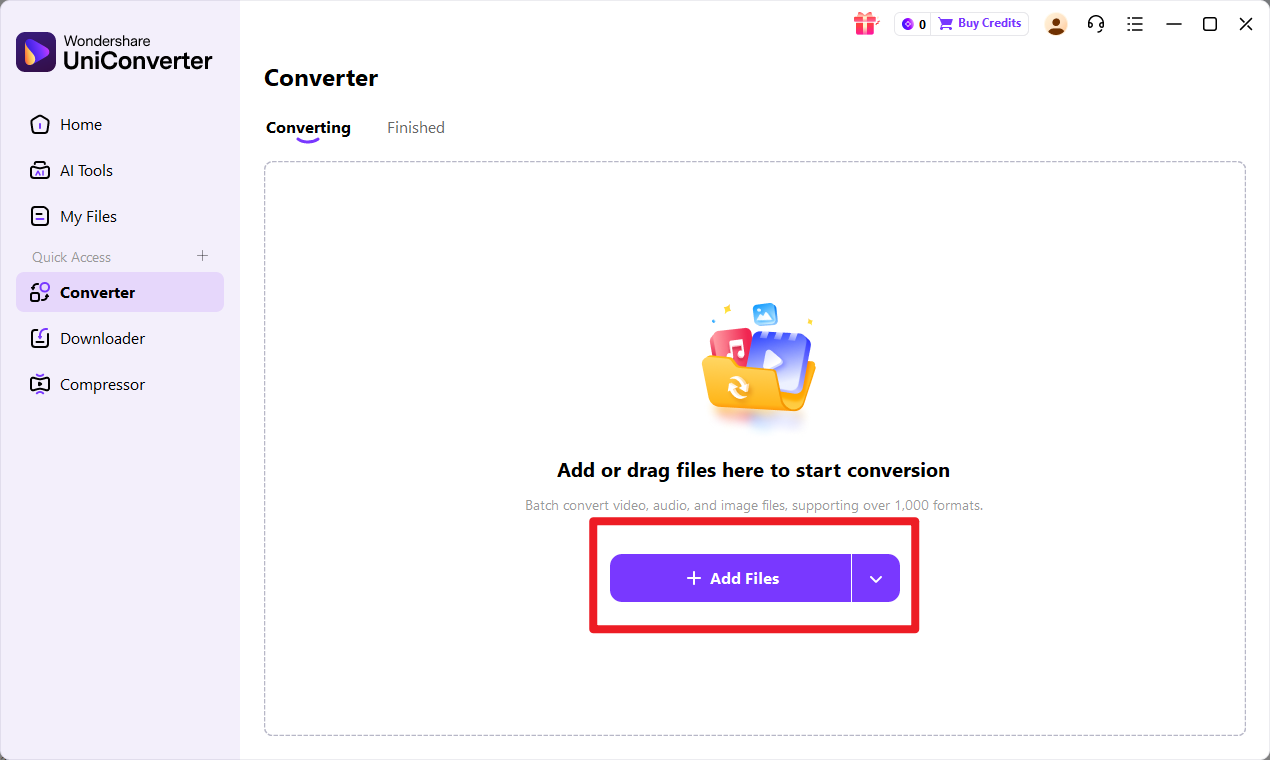
You can now import your video files. Click the Add Files icon in the center or top-left corner to browse your computer for your input format files. Alternatively, you can simply drag and drop the files directly onto the program interface. UniConverter supports batch conversion, so feel free to add multiple files at once.
Step 3: Choose Output Format
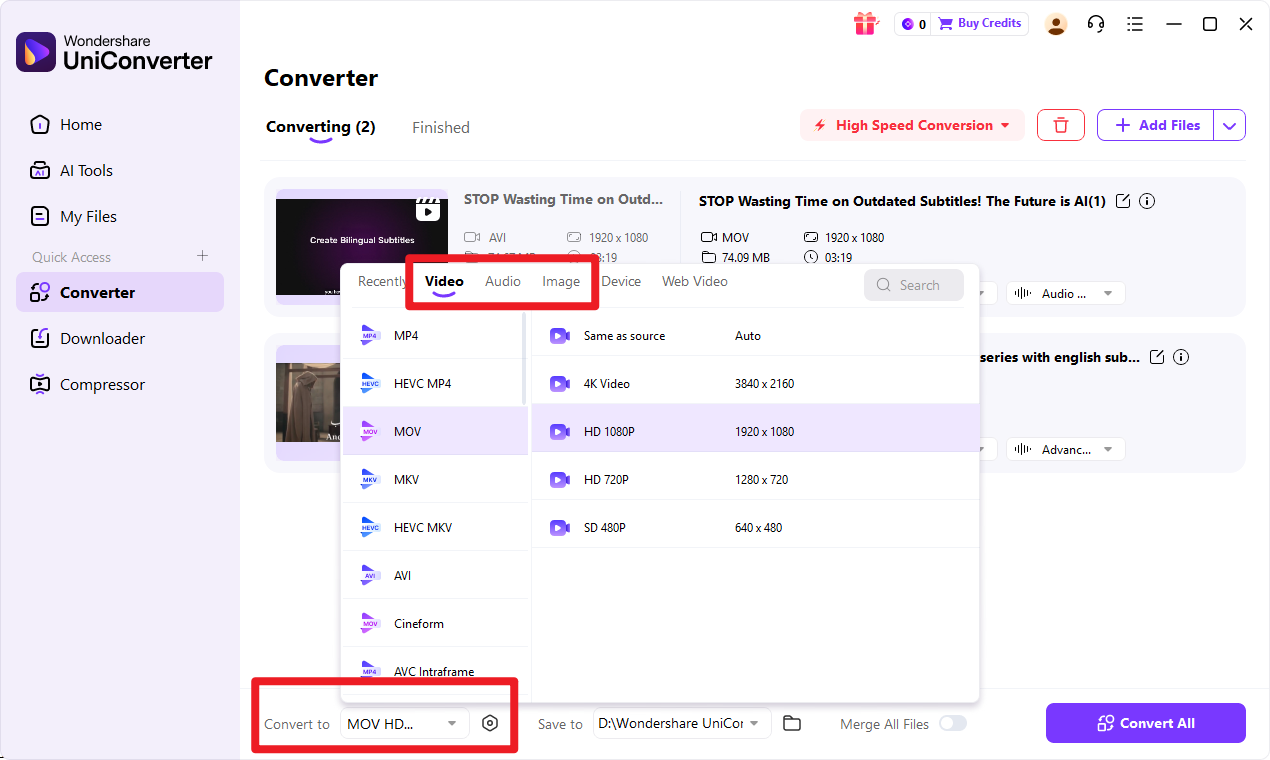
At the bottom of the window, click on the Output Format menu. This will open a new window with a list of supported formats. Go to the Video tab, select your target format from the list on the left (e.g., AVI, and then you can specify DivX in the settings), and then choose your desired resolution on the right.
Step 4: Start the Conversion
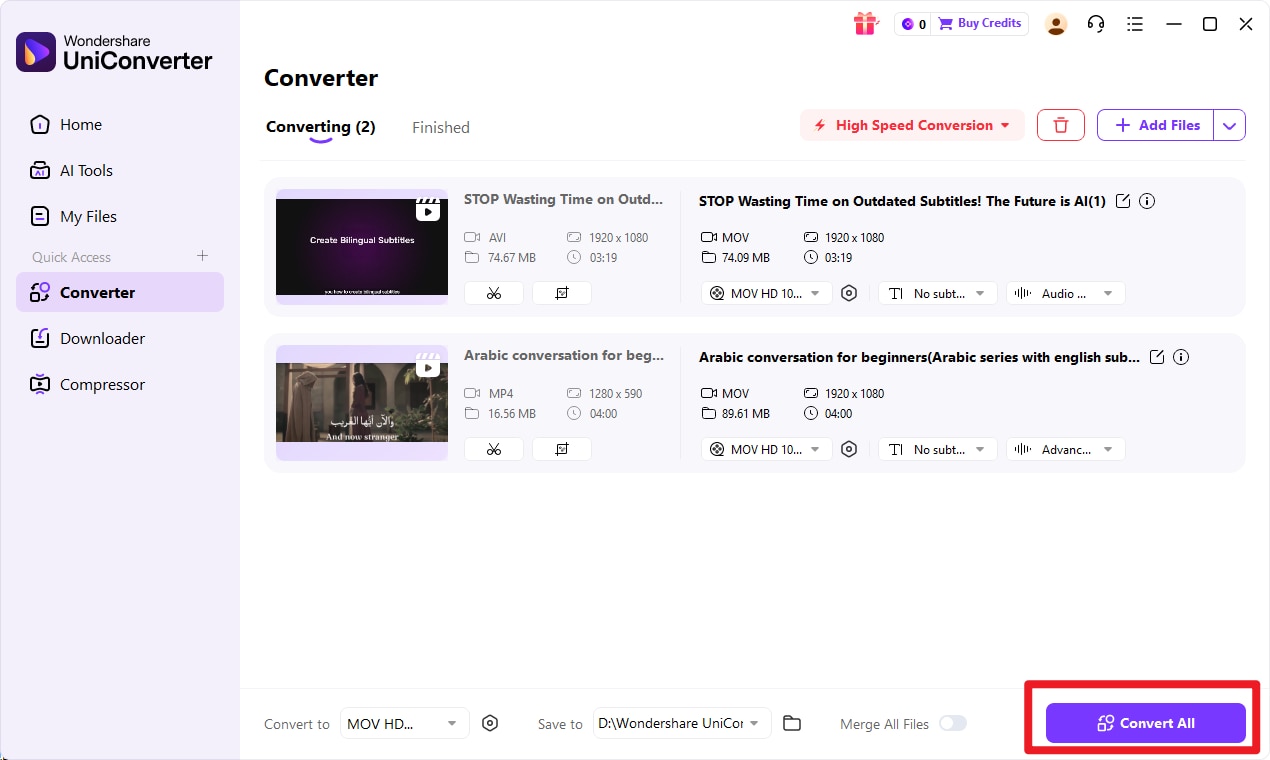
Before starting, you can specify where to save the converted files by using the File Location field at the bottom. Once you are ready, click the Start All button in the bottom-right corner to begin the conversion process. Your new files will be processed and saved to your chosen folder in just a few moments.

More Than Just a Video Converter
Conclusion
Ultimately, the choice in the MOV vs DivX matchup comes down to your specific goal. There is no single "best" format that suits every situation. If your priority is maintaining the absolute highest video quality for professional editing and archiving, MOV is the clear and correct choice. Its ability to use lossless codecs makes it indispensable in a production environment. On the other hand, if your goal is efficient storage, easy online sharing, and playback on a wide range of devices, DivX provides an excellent balance of good quality and small file size.
The most effective video workflow is a flexible one. You don't have to be locked into a single format. By using a versatile and powerful tool like Wondershare UniConverter, you get the best of both worlds. You can shoot and edit in high-quality MOV and then effortlessly convert your final project to a compact, shareable format for distribution, ensuring perfect quality and universal compatibility for any task.
FAQs
-
1. Is DivX always smaller than MOV?
Generally, yes. The DivX codec is specifically designed for high compression to create small files. A MOV file, especially one using a professional codec like ProRes with light compression, will almost always be significantly larger than a video of the same length and resolution compressed with DivX. -
2. Can Windows Media Player play MOV files?
Not natively. By default, Windows Media Player does not have the necessary codecs to play MOV files. To play them, you would typically need to install Apple's QuickTime player or a third-party codec pack. A much simpler solution is to use a more versatile media player like VLC or to convert the MOV file to a Windows-native format like WMV or MP4 using a tool like UniConverter. -
3. Will I lose quality when converting MOV to DivX?
Yes, some quality loss is an inherent part of the process. DivX is a lossy codec, which means it achieves its small file size by permanently discarding some video data. However, when you use a high-quality conversion program like Wondershare UniConverter, its advanced encoding engine works to minimize this loss. It preserves the best possible visual quality for the target file size, so the difference is often imperceptible to the average viewer.
