
Choosing the right video format can feel like navigating a complex maze of acronyms and technical specifications. For video creators, editors, and even casual users, this choice impacts everything from playback compatibility to editing flexibility and file size. Two formats that often come up in this discussion are MOV and ASF. While they might seem similar on the surface, they were designed for fundamentally different purposes. The MOV vs ASF debate isn't about finding a single "best" format, but about understanding which one is the right tool for your specific job.
Whether you're editing a cinematic masterpiece, streaming content online, or simply trying to play a video file that won't open, understanding the strengths and weaknesses of MOV and ASF is crucial. This guide will demystify these two container formats, helping you make informed decisions for your video projects in 2026 and beyond. We'll explore their origins, compare their features, and provide clear guidance on when to use each one.
In this article,you will learn:
- What are the MOV and ASF formats?
- A quick comparison table of their key features.
- A detailed breakdown of which format is better for compatibility, quality, and specific tasks.
- Practical use cases for both MOV and ASF.
- A step-by-step guide on how to convert between formats.
Part 1. What is MOV? What is ASF?
Before we can compare them, it's essential to understand what each format is on its own. Both are "container" formats, which means they are like digital boxes that can hold various types of data—video, audio, subtitles, and metadata—all bundled into a single file. The key difference lies in how these boxes are constructed and what they are optimized for.
What is MOV?
MOV, which stands for QuickTime File Format, is a multimedia container format developed by Apple Inc. It was created to work seamlessly with the QuickTime framework, making it the native video format for macOS and iOS devices. If you've ever recorded a video on an iPhone or edited a project in Final Cut Pro, you've worked with MOV files.
A key feature of the MOV format is its ability to store data in multiple tracks. This means a single MOV file can contain a video track, several audio tracks (for different languages, for example), text tracks for subtitles, and even special effect tracks. This multi-track structure makes it incredibly versatile and a favorite among video editing professionals. It supports a wide range of high-quality codecs, including the popular H.264 (AVC), H.265 (HEVC), and the professional-grade Apple ProRes, which preserves maximum image detail during the editing process.
What is ASF?
ASF, or Advanced Systems Format, is a proprietary digital audio and video container format developed by Microsoft. Its primary purpose from the outset was to facilitate the streaming of media over the internet and other networks. It's the foundational container for Windows Media content.
When you encounter an ASF file, the data inside is most commonly encoded with Windows Media Video (WMV) for the video track and Windows Media Audio (WMA) for the audio track. The format is highly optimized for streaming, with features like variable bitrate encoding, error correction, and the ability to prioritize data packets. This ensures a smoother playback experience even on connections with fluctuating bandwidth. Furthermore, ASF includes built-in support for Digital Rights Management (DRM), a feature used by content providers to protect their media from unauthorized copying and distribution.
Part 2. Quick Comparison Table
For a quick overview, here is a side-by-side comparison of the key attributes of MOV and ASF. This table highlights their core differences at a glance, making it easy to see where each format excels.
| Feature | MOV | ASF |
| Developer | Apple Inc. | Microsoft Corporation |
| Primary Use Case | High-quality video editing and storage, especially in the Apple ecosystem. | Streaming media over the internet. |
| Compatibility | Excellent on Apple devices; requires third-party software on Windows/Android. | Excellent on Windows; requires third-party software on macOS/iOS. |
| Common Codecs | H.264, HEVC, ProRes, and more. | WMV (video) and WMA (audio). |
| Streaming | Can be used for streaming but not its primary design. | Optimized for streaming with features like variable bitrate. |
| Metadata | Extensive support for metadata, including timecodes and camera data. | Good support for metadata, including content descriptions and DRM info. |
Part 3. MOV vs ASF: Which One Is Better?
The question of which format is "better" depends entirely on your specific needs. One format's strength is another's weakness. Let's break down the comparison across four critical areas: compatibility, quality, file size, and primary application.
Compatibility and Platform Support
This is often the most significant deciding factor for users. Your choice of format can determine whether your video can be played on a target device without extra software or conversion.
- MOV: As Apple's native format, MOV enjoys flawless support across the entire Apple ecosystem. Macs, iPhones, and iPads can play MOV files without any issues. However, on Windows and Android devices, compatibility can be a hurdle. While modern media players like VLC and recent versions of Windows can often handle MOV files (especially those using the common H.264 codec), it's not always guaranteed. Older systems or specific software may require codec packs or file conversion.
- ASF: Being a Microsoft creation, ASF is perfectly at home on the Windows operating system. Windows Media Player and other Windows-based applications are designed to handle ASF files natively. Conversely, playing ASF files on macOS or iOS is not straightforward. Mac users will need to install third-party media players like VLC or use a conversion tool to view the content.
Verdict: The winner for compatibility is platform-dependent. If your audience and workflow are centered around Apple products, MOV is the superior choice. If you are developing or distributing content primarily for a Windows audience, ASF is the more reliable option.
Quality and Compression
It's a common misconception that the container format itself dictates the video quality. In reality, the quality is determined by the codec used to compress the video and audio data within the container.
- MOV: The MOV container is renowned for its flexibility in supporting a vast array of codecs, from highly compressed ones like H.264 to visually lossless professional codecs like Apple ProRes. This makes MOV the ideal choice for post-production. Editors can work with high-bitrate ProRes files to maintain maximum quality during color grading and effects work, and then export to a more compressed MOV (H.264) for distribution.
- ASF: ASF files almost exclusively use Microsoft's WMV and WMA codecs. These codecs are engineered for efficient compression to facilitate smooth streaming. They can achieve a good balance between quality and file size, but they generally don't offer the same high-end, editing-focused quality as codecs like ProRes. For a given file size, WMV can provide excellent visual quality, but it's not designed for the rigors of professional, multi-generational editing.
Verdict: For professional editing and archiving where preserving the highest possible quality is paramount, MOV is the clear winner due to its support for codecs like ProRes. For delivering good-quality video at low bitrates for streaming, ASF holds its own.
File Size
File size is a critical consideration for storage and distribution, especially over the internet.
- ASF: Because ASF is designed for streaming, its associated codecs (WMV/WMA) are very effective at compression. This means that for a comparable level of visual quality, an ASF file will often be smaller than a MOV file. This is a significant advantage when bandwidth is limited or when you need to store a large library of videos without consuming excessive disk space.
- MOV: The file size of a MOV file can vary dramatically. A MOV file using the H.264 codec can be relatively small and efficient. However, a MOV file using a professional codec like ProRes 422 HQ will be massive. This is by design, as these codecs prioritize data retention over file size to allow for more flexibility in post-production.
Verdict: If your primary concern is minimizing file size for streaming or storage, ASF generally has the edge.
Use in Editing vs. Streaming
This is where the design philosophies of the two formats become most apparent.
- MOV: The MOV format's structure, with its support for multiple discrete tracks and frame-accurate timecodes, makes it the gold standard for video editing. Software like Final Cut Pro and Adobe Premiere Pro are optimized to work with MOV files, allowing for precise cuts, audio syncing, and complex effects layering without issue.
- ASF: ASF was built from the ground up for streaming. Its ability to handle packet loss, adjust the bitrate on the fly, and deliver media components as they are needed makes it far superior for live or on-demand video delivery over a network. Trying to perform complex edits on an ASF file can be cumbersome, as the format is not structured for the frame-by-frame precision that editing requires.
Verdict: MOV is the undisputed champion for video editing. ASF is the clear winner for network streaming.
Part 4. Use Cases for MOV and ASF
Based on the comparison above, here are some practical scenarios where you would choose one format over the other.
When to Use MOV
Choose the MOV format in the following situations:
- Professional Video Editing: If you are editing video on a Mac using software like Final Cut Pro, or even on a PC with Adobe Premiere Pro, MOV is the ideal format. Its support for high-quality, edit-friendly codecs like ProRes ensures your footage withstands multiple rounds of color correction, effects, and rendering without significant degradation.
- Creating High-Quality Master Files: After you finish a video project, you should export a master file for archiving. Using MOV with a high-bitrate or lossless codec creates a pristine version of your work that can be used to generate other compressed formats in the future without having to go back to the original project.
- Content for the Apple Ecosystem: If you are creating video content that will be primarily viewed on iPhones, iPads, Macs, or played through Apple TV, using the MOV format guarantees the best performance and compatibility.
When to Use ASF
Opt for the ASF format under these circumstances:
- Streaming Video Over the Internet: If your main goal is to broadcast video content, whether live or on-demand, ASF is the purpose-built solution. Its architecture is designed to provide a reliable and smooth viewing experience for the end-user, even on less-than-perfect internet connections.
- Corporate Training and E-Learning for Windows Environments: For creating video modules and tutorials intended for playback on Windows-based corporate networks, ASF is a safe and reliable choice. Its native compatibility with Windows Media Player eliminates potential playback issues for users.
- When File Size and Bandwidth are Critical: If you need to deliver video where storage space is at a premium or internet bandwidth is a major constraint, the efficient compression of the WMV codec within an ASF container makes it a highly practical option.
Part 5. Step-by-Step Guide to Convert MOV to ASF Using UniConverter
What if you have a high-quality MOV file from your editor but need to prepare it for a Windows-based streaming server? Or perhaps you've received an ASF file and need to edit it on your Mac? In these common scenarios, a reliable video converter is essential.
Wondershare UniConverter is a powerful and intuitive tool that bridges the gap between these formats. It supports over 1,000 formats, including MOV and ASF, and performs conversions quickly without a noticeable loss in quality. Its user-friendly interface makes the process simple for everyone. Here is how to convert your MOV files to ASF in four simple steps.
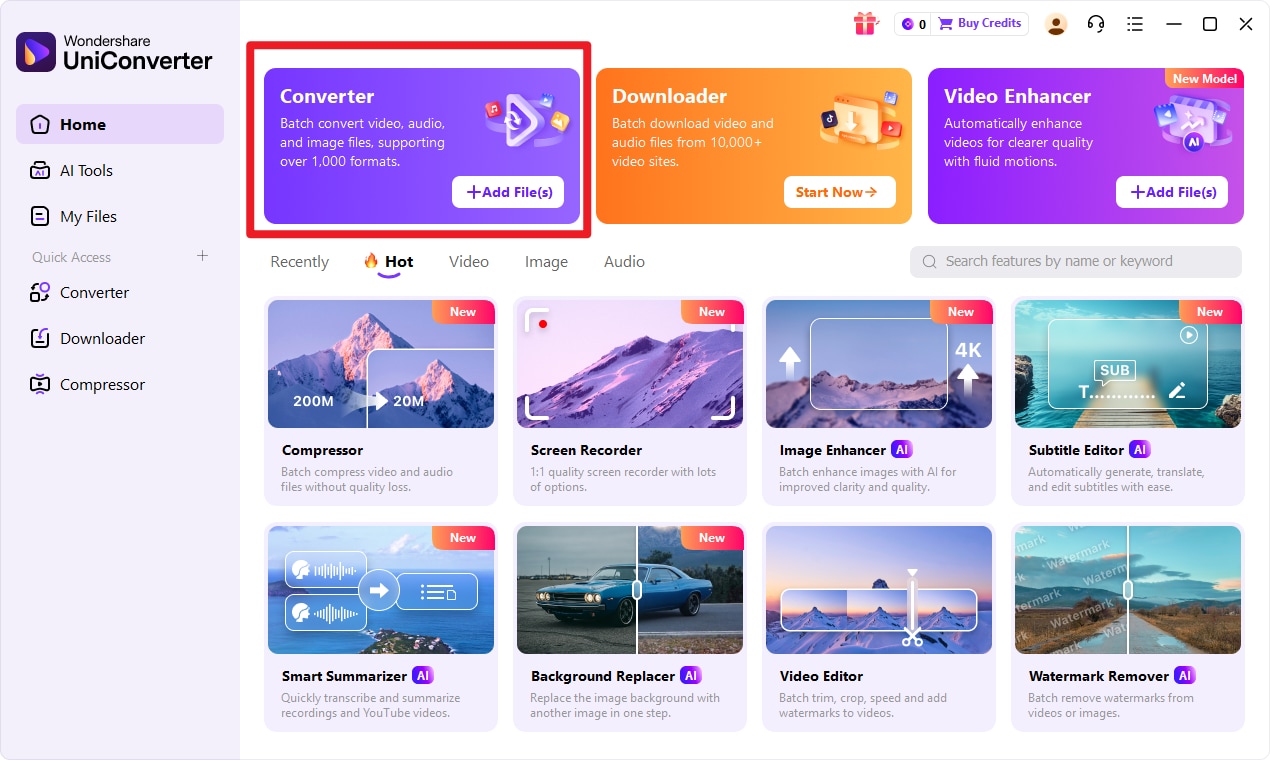
Step 1: Choose Converter in UniConverter
Launch Wondershare UniConverter on your computer. From the main screen, look at the menu on the left side and click on the Converter tool to open the conversion interface.
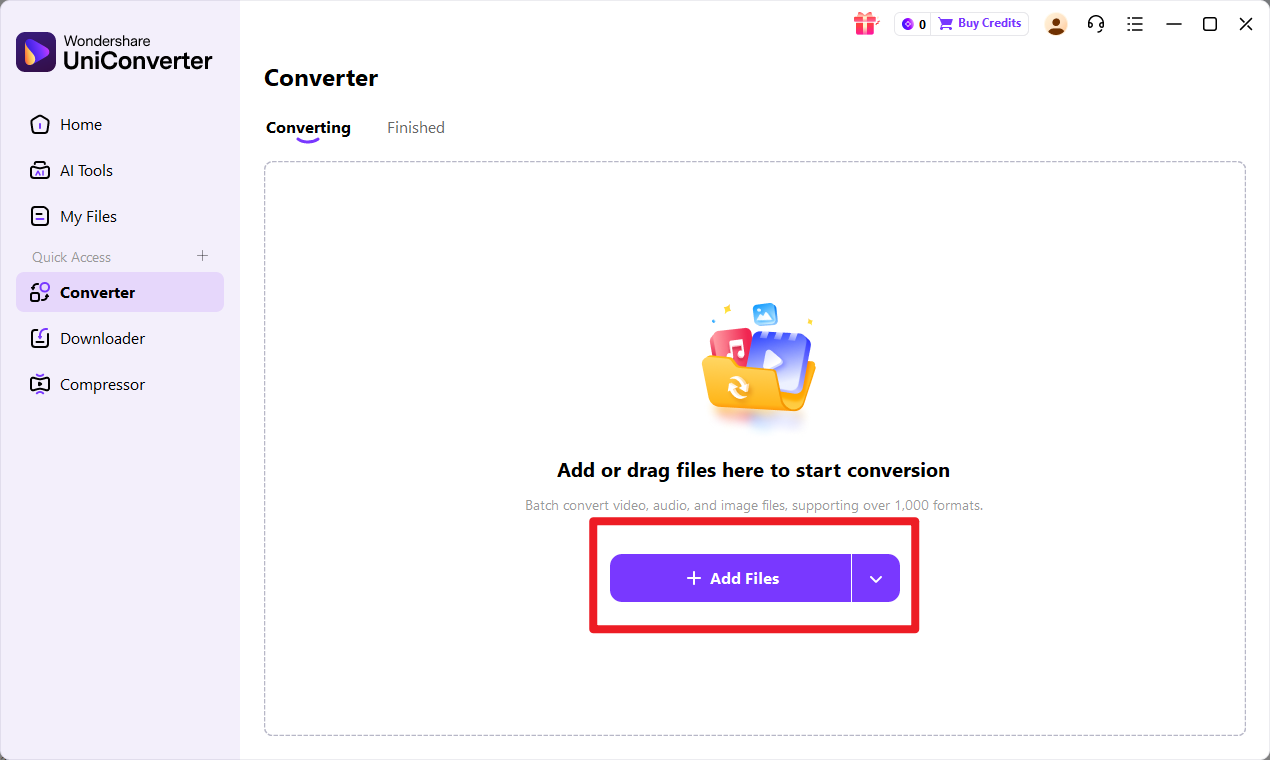
Step 2: Add Files to UniConverter
You can now import your video. Click the Add Files icon in the top-left corner to browse and select your input format file. Alternatively, you can simply find the file on your computer and drag and drop it directly into the center of the UniConverter window.
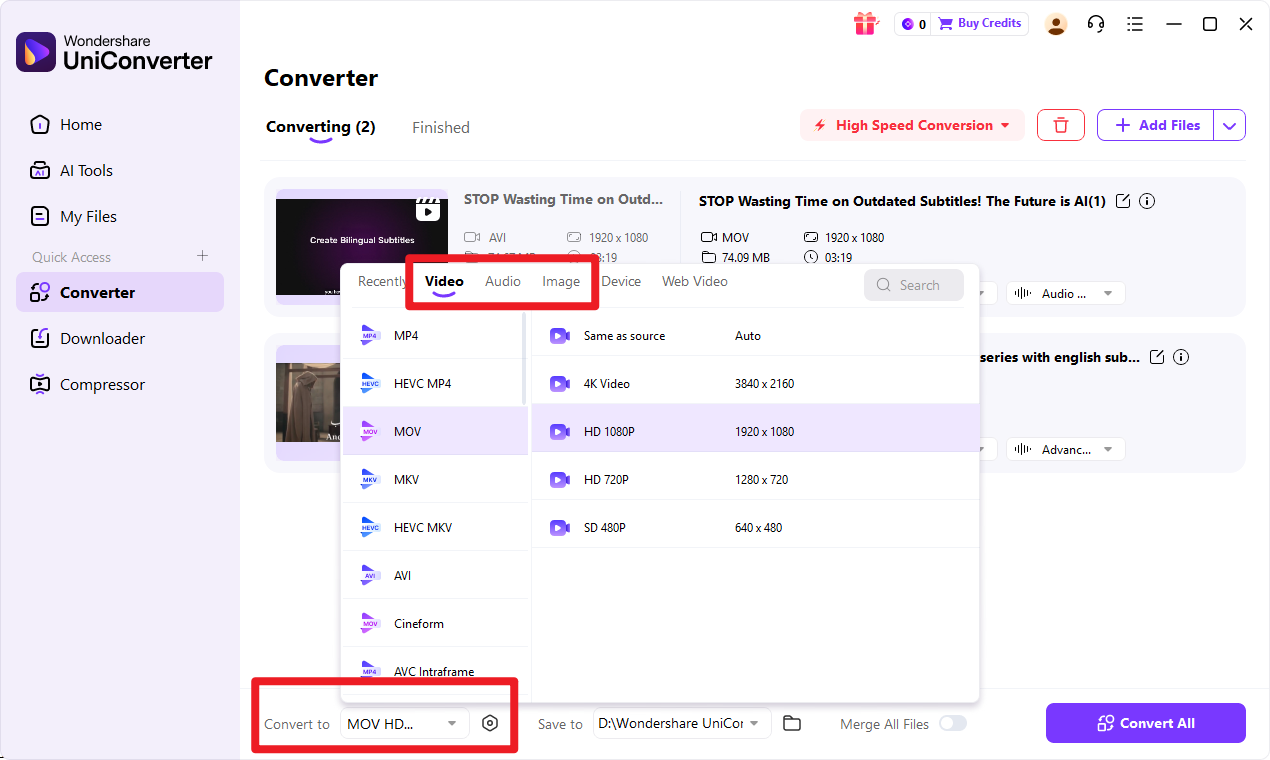
Step 3: Choose Output Format
At the bottom of the window, click on the Output Format menu. This will open a new dialog box. In this box, select the Video tab. From the list of formats on the left, choose your target format. On the right, you can select the desired resolution for your output file.
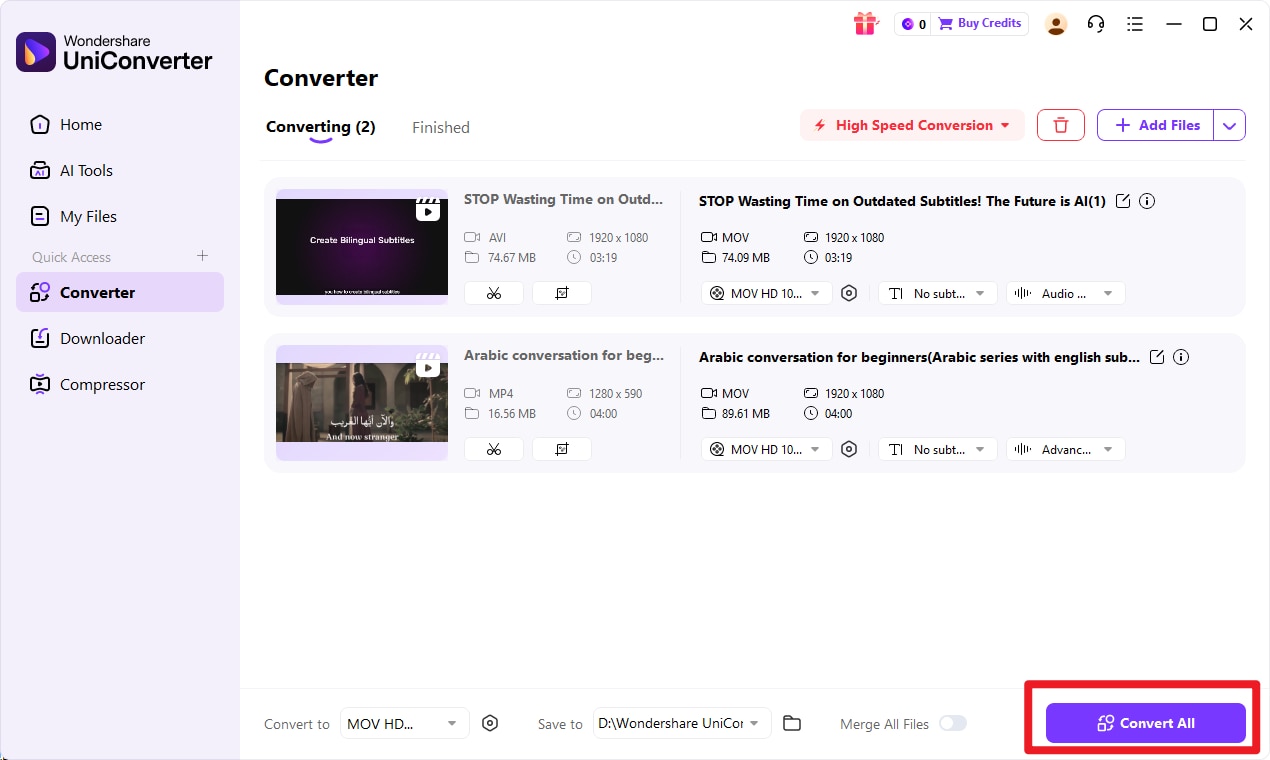
Step 4: Start the Conversion
Before starting, you can choose where to save the converted file by using the File Location field at the bottom. Once you are ready, click the Start All button in the bottom-right corner. UniConverter will process your files efficiently, and you can find the finished videos in your chosen destination folder.

More Than Just a Video Converter
Conclusion
The MOV vs ASF discussion ultimately comes down to purpose and platform. There is no single winner, only the right choice for a specific task. MOV, with its Apple heritage and support for professional codecs, is the undisputed king of the editing suite, offering unparalleled quality and flexibility for content creators. ASF, a Microsoft innovation, is the lean and efficient workhorse of internet streaming, designed to deliver smooth video playback even under challenging network conditions.
Understanding these core differences empowers you to optimize your video workflow, ensuring your content looks its best and reaches your audience without compatibility roadblocks. And for those times when you need to bridge the gap between these two worlds, a versatile and reliable tool is indispensable. Wondershare UniConverter serves as the perfect solution, allowing you to effortlessly convert between MOV, ASF, and a thousand other formats, ensuring your video is always in the right format for the job.
FAQs
-
1. Is ASF the same as WMV?
Not exactly. This is a common point of confusion. ASF (Advanced Systems Format) is the container format—think of it as the box. WMV (Windows Media Video) is the video codec, which is the actual video data compressed and stored *inside* the box. Similarly, WMA (Windows Media Audio) is the audio codec. So, while most ASF files contain WMV and WMA data, the terms are not interchangeable. -
2. Can I play MOV files on Windows 10/11?
Yes, in many cases, you can. Modern versions of Windows and media players like the built-in "Movies & TV" app or the popular third-party VLC Media Player have integrated support for the common codecs (like H.264) used in MOV files. However, if the MOV file uses a specific Apple-proprietary codec like ProRes, you will likely encounter an error. For guaranteed playback on any Windows machine, the safest bet is to convert the MOV file to a more Windows-native format like WMV or MP4 using a tool like UniConverter. -
3. Does converting MOV to ASF reduce quality?
Any time you convert a video from one lossy format to another, there is a potential for some quality loss, as the video is being re-compressed. However, the extent of this loss depends heavily on the software and settings used. Professional software like Wondershare UniConverter utilizes advanced encoding engines to minimize this degradation. It allows you to choose high-quality conversion presets, ensuring that the resulting ASF file retains as much detail as possible from the original MOV source. For most practical purposes, the quality difference will be negligible to the human eye.
