
Have you ever found a video file on your computer or phone and wondered what the letters at the end—like .mov or .3gp—actually mean? You're not alone. These file extensions represent different video formats, each with its own unique characteristics. The MOV vs 3GP debate is a classic example of the trade-off between video quality and file size. One was designed for high-fidelity editing and playback, while the other was created for a world of slow internet and limited storage. Understanding their differences is crucial for anyone who works with video, whether you're a professional editor or just trying to send a clip to a friend.
This guide will demystify these two formats. We'll break down their origins, compare their strengths and weaknesses, and help you decide which one is right for your specific situation. We'll also show you how to easily convert between them when you need to bridge the compatibility gap.
In this article, you will learn:
- What are MOV and 3GP files?
- A quick comparison table of their key features.
- A detailed analysis of quality, file size, and compatibility.
- Common use cases for both MOV and 3GP.
- A step-by-step guide to convert between formats.
Part 1. What is MOV? What is 3GP?
Before we can compare them, it's important to understand what each format is and what it was designed for. Their origins tell us a lot about their intended purpose and inherent limitations.
What is a MOV file?
The MOV format, also known as the QuickTime File Format (QTFF), was developed by Apple Inc. It is the native video container format for the macOS and iOS ecosystems. When you record a video on an iPhone or edit a project in Final Cut Pro, you are most likely working with a MOV file.
A container format is like a box that holds different types of data together—video tracks, audio tracks, subtitles, and other metadata. MOV is renowned for its ability to store high-quality, and even lossless, video and audio. This makes it a favorite among video professionals and content creators who need to preserve as much detail as possible during the editing process. Its robust structure and excellent fidelity are why it remains a standard in professional post-production workflows.
What is a 3GP file?
The 3GP format was created by the 3rd Generation Partnership Project (3GPP). As its name suggests, it was designed specifically for 3G mobile phones. In the era of early smartphones, mobile data was slow and expensive, and device storage was extremely limited. The primary goal of 3GP was to create a video format that was small enough to be sent via Multimedia Messaging Service (MMS) or streamed over a sluggish 3G network.
To achieve this, 3GP uses very high compression. This process significantly reduces the file size by discarding some of the video and audio data. The trade-off is a substantial loss in quality. Videos in 3GP format often appear pixelated or blurry on larger screens, and the audio can sound muffled. While it served its purpose perfectly in the early 2000s, it is now considered a legacy format for most modern applications.
Part 2. Quick Comparison Table
To see the differences at a glance, here is a direct comparison of the key attributes of MOV and 3GP files.
| Feature | MOV | 3GP |
| Developer | Apple Inc. | 3rd Generation Partnership Project (3GPP) |
| Quality | High to Lossless | Low to Medium |
| File Size | Large | Very Small |
| Compression | Low compression | High compression |
| Primary Use | Video editing, storing high-quality video | Video messaging on older mobile devices |
| Compatibility | Excellent on Apple devices, widely supported on Windows with codecs | Best on legacy mobile phones, may require specific players on modern systems |
Part 3. MOV vs 3GP: Which One Is Better?
The question of which format is "better" depends entirely on your priorities. Are you looking for pristine quality for a professional project, or do you need the smallest possible file to send over a weak connection? Let's break down the comparison further.
Quality Comparison
When it comes to visual and audio fidelity, there is no contest: MOV is the clear winner. The MOV format is designed to maintain the integrity of the source video. It can use codecs like ProRes or even uncompressed video streams, which preserve an incredible amount of detail, color accuracy, and dynamic range. This makes MOV files ideal for viewing on high-resolution displays, such as 4K TVs, computer monitors, and modern smartphone screens.
In contrast, 3GP heavily prioritizes small file size over quality. Its aggressive compression algorithms discard a significant amount of data, leading to noticeable artifacts. Videos often look blocky or pixelated, colors can appear washed out, and fast motion may look blurry. The audio quality is similarly reduced. While this was acceptable for viewing on a tiny 2-inch screen of a feature phone, it is very noticeable and generally undesirable on any modern device.
File Size and Compression
The difference in quality is a direct result of their different approaches to compression. 3GP was built from the ground up for maximum compression. It shrinks video files down to a fraction of their original size, making them easy to store on devices with minimal memory and quick to transmit over slow networks. A one-minute video in 3GP might only be a few megabytes.
MOV files, on the other hand, use much less compression to preserve quality. A one-minute, high-quality MOV file could easily be hundreds of megabytes or even several gigabytes, depending on the resolution and codec used. This large file size is the price you pay for maintaining the original video data, which is essential for professional editing and archiving.
Compatibility and Support
MOV is the native format for all Apple products, including Macs, iPhones, and iPads. It plays seamlessly in QuickTime Player and is a standard format in professional video editing software like Adobe Premiere Pro and DaVinci Resolve. While it's not native to Windows, most modern media players like VLC or the Windows Media Player (with the right codecs installed) can handle MOV files without any issue.
3GP's compatibility is rooted in the past. It was the universal standard for 3G-enabled mobile phones from virtually every manufacturer. However, its relevance has faded. Modern smartphones and computers do not always have native support for 3GP. You might find that your new iPhone or Android device struggles to open a 3GP file, or your desktop video player may require you to install extra software. For reliable playback on modern systems, converting a 3GP file to a more universal format like MP4 or MOV is often necessary.
The Verdict: Which Format Should You Use?
The choice is simple once you define your goal:
- Choose MOV for any task where quality is a priority. This includes editing video projects, archiving important memories, or sharing content that will be viewed on a computer, smart TV, or modern smartphone.
- Choose 3GP only when you are constrained by extreme limitations. This applies if you need to send a video to a very old feature phone, share a clip via a service with a tiny file size cap (like MMS), or save video on a device with almost no storage space left. For virtually all modern use cases, 3GP is an outdated choice.
Part 4. Use Cases for MOV and 3GP
Understanding the ideal scenarios for each format can help you make the right decision every time.
When to Use MOV
- Professional Video Editing: If you are editing a project in software like Final Cut Pro, Adobe Premiere Pro, or DaVinci Resolve, MOV is one of the best formats to work with. Its ability to hold high-quality video streams ensures that you don't lose detail during the editing, color grading, and effects process.
- Archiving High-Quality Video: For storing important videos like family events, professional footage, or master copies of creative projects, MOV is an excellent choice. It acts as a digital master, preserving the content in its best possible form for future use or conversion.
- Sharing for High-Fidelity Playback: When you share a video that you want people to see in its full glory on their computers, tablets, or smart TVs, MOV ensures that the quality is not compromised.
When to Use 3GP
- Sending Videos via MMS: The Multimedia Messaging Service (MMS) has very strict file size limits, often just a few hundred kilobytes. 3GP is one of the few formats that can compress a short video clip enough to meet these requirements.
- Saving Video on Legacy Devices: If you have an old mobile phone or a device with extremely limited storage (e.g., less than 1 GB), 3GP allows you to store video clips without taking up much space.
- Ensuring Playback on 3G Feature Phones: The primary and most relevant use case for 3GP today is to ensure a video can be played on a non-smartphone from the 3G era. If you need to send a video to someone who still uses such a device, converting it to 3GP is the only way to guarantee they can watch it.
Part 5. Step-by-Step Guide to Convert MOV to 3GP Using UniConverter
Whether you need to make a high-quality MOV file compatible with an old phone or want to upscale a legacy 3GP file for modern editing, a reliable video converter is essential. Wondershare UniConverter stands out as the perfect tool for this task. It supports over 1,000 formats, offers lightning-fast conversion speeds, and features an intuitive interface that makes the process effortless for everyone.
Here's how you can easily convert your files between MOV, 3GP, and countless other formats.
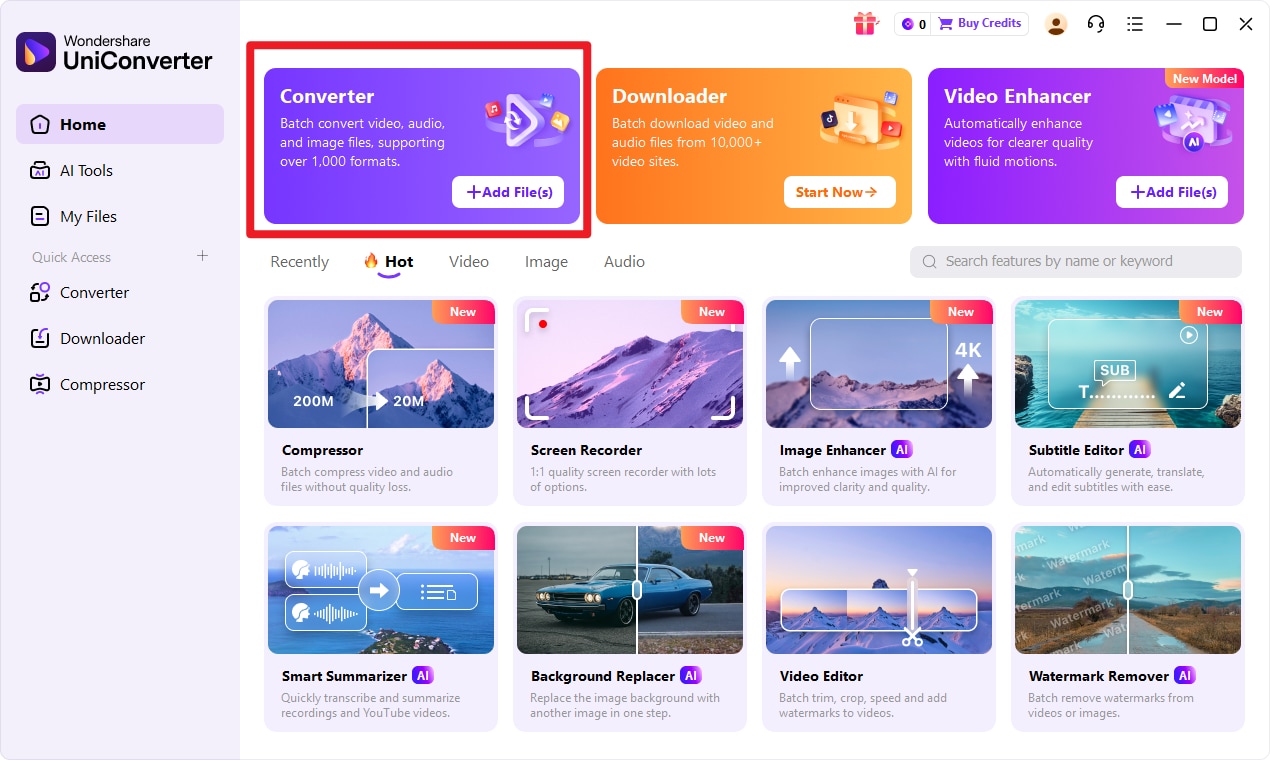
Step 1. Choose Converter in UniConverter
First, launch Wondershare UniConverter on your Windows or Mac computer. On the main screen, you will see a menu of tools on the left. Click on the Converter option to open the video conversion module.
Step 2. Add Files to UniConverter
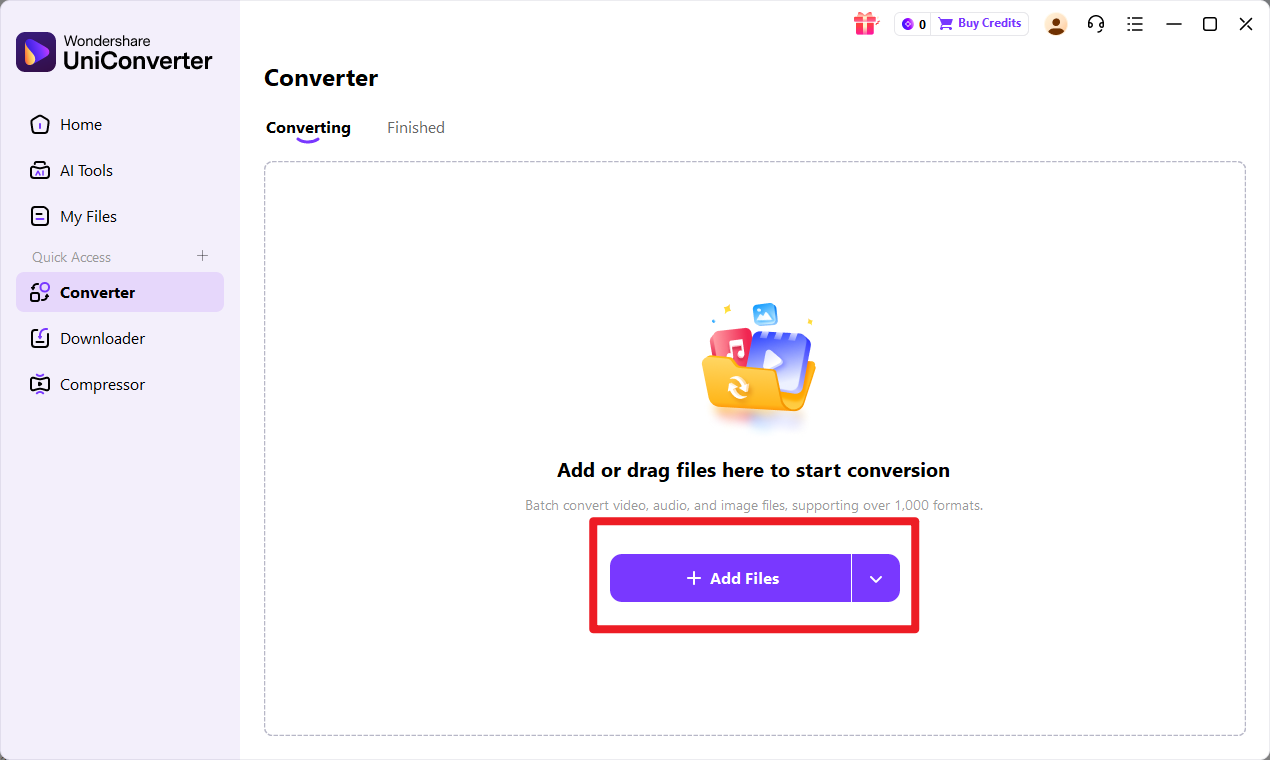
Next, you need to import your video file. You can either click the Add Files icon in the center of the screen to browse your computer or simply drag and drop your input format file directly into the program window. UniConverter also supports batch conversion, so you can add multiple files to convert them all at once.
Step 3. Choose Output Format
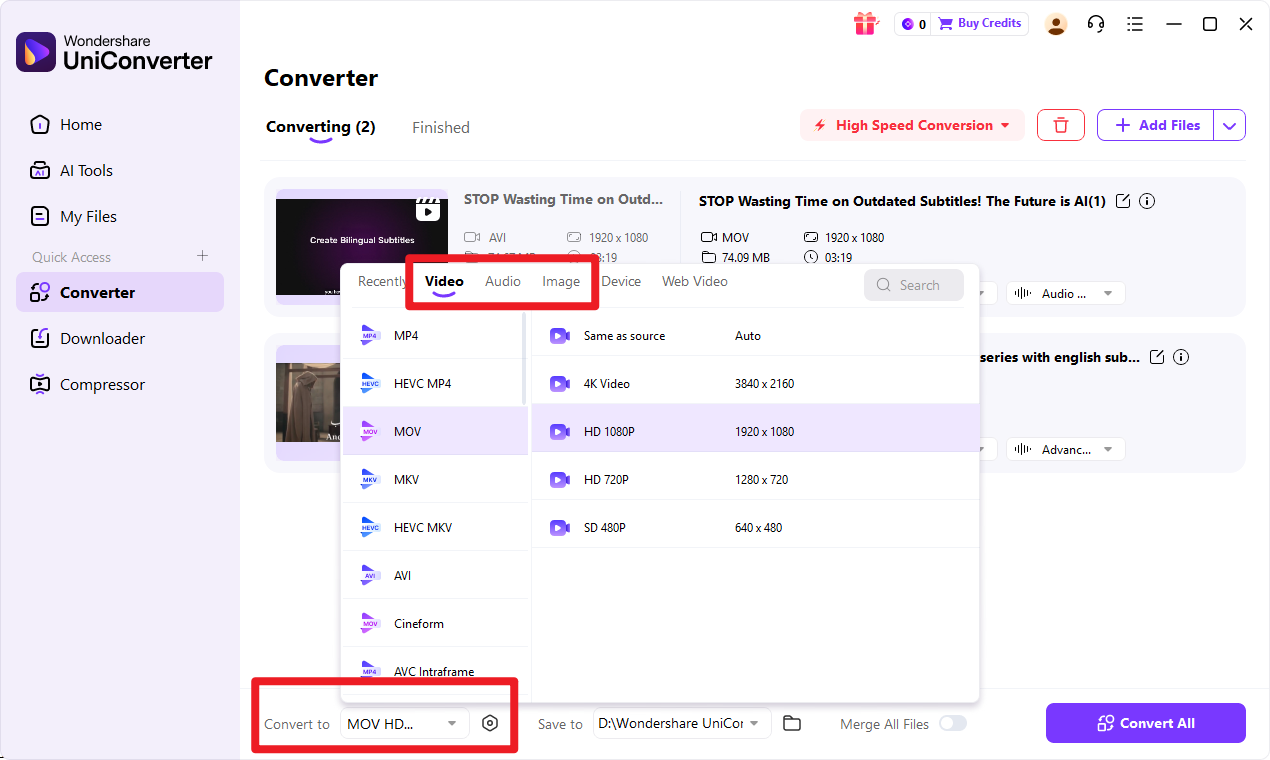
With your file loaded, click on the Output Format menu located at the bottom of the window. This will open a new panel with a list of supported formats. Navigate to the Video tab, and from the list on the left, select your desired target format. You can also select the resolution you want for the output file on the right.
Step 4. Start the Conversion
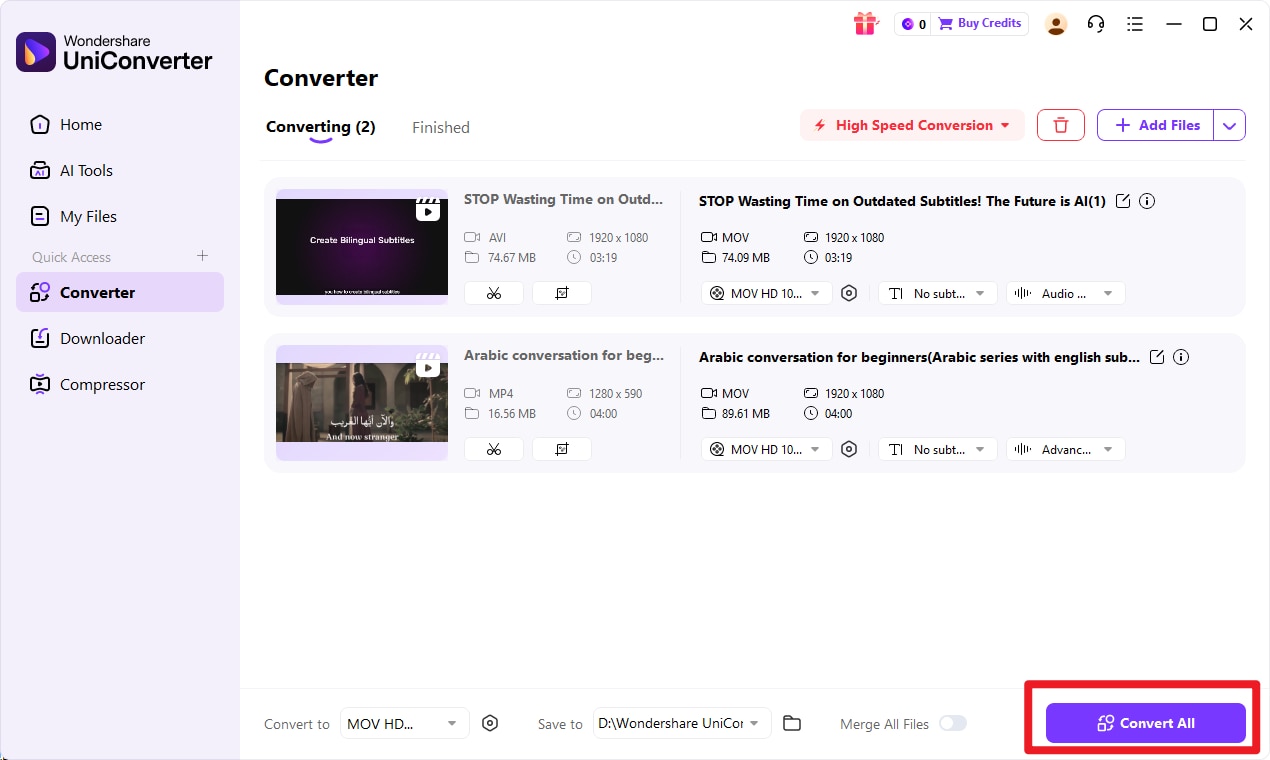
Finally, choose where you want to save the converted file by using the File Location field at the bottom. Once you are ready, click the Start All button (or the Convert button next to a single file) to begin the process. UniConverter will quickly convert your files and place them in your designated folder.

Go Beyond Simple Video Conversion
Conclusion
In the MOV vs 3GP comparison, there is no single "best" format—only the right format for the job. MOV is the undisputed champion of quality, making it the modern standard for video editing, archiving, and high-definition playback. 3GP, while outdated for most purposes, remains a practical solution for situations demanding the smallest possible file size, such as sharing on legacy mobile devices. The key is to understand your specific needs regarding quality, size, and compatibility. And for those times when you need to switch between them or any other format, a versatile and powerful tool like Wondershare UniConverter is your most reliable companion, ensuring seamless, fast, and high-quality conversions every time.
FAQs
-
1. Is 3GP a good format?
3GP was an excellent format for its original purpose: enabling video sharing and streaming on 3G mobile phones with limited storage and slow data speeds. However, by today's standards, it is considered a low-quality, outdated format. For modern high-definition video needs, formats like MP4 or MOV are far superior. -
2. Can iPhone play 3GP files?
Native support for 3GP files on iPhones and other iOS devices can be inconsistent. While some 3GP files might play, others may not open at all. The most reliable method to ensure playback on an iPhone is to convert the 3GP file to a natively supported format like MOV or MP4. A tool like Wondershare UniConverter can do this quickly and easily. -
3. Why would I need to convert MOV to 3GP?
The primary reason to convert a MOV file to 3GP in 2026 is for backward compatibility. You would do this if you need to send a video to someone who uses an old feature phone that doesn't support modern formats, or if you need to share a video through a service with extremely restrictive file size limits where quality is not a concern, such as MMS. -
4. What is the best MOV to 3GP converter?
Wondershare UniConverter is highly recommended as the best converter for MOV, 3GP, and more. Its key advantages include an incredibly user-friendly interface, support for over 1,000 formats, GPU-accelerated speeds for fast conversions, and the ability to process multiple files at once (batch conversion). It provides a comprehensive solution for all your video conversion needs.
