
Navigating the world of digital video formats can often feel like deciphering a complex code. You download a movie, and it's an MKV file. A friend sends you a classic TV show, and it's an RMVB file. While both are video files, they behave very differently. One might play perfectly on your smart TV, while the other refuses to open on your phone. This leads to the crucial question for many media consumers: in the MKV vs RMVB debate, which format is actually better, and why? Understanding the core differences between these two is key to managing your digital library effectively and ensuring a seamless playback experience.
This guide will provide a comprehensive breakdown of MKV and RMVB, comparing them across essential metrics like quality, file size, and device compatibility. Whether you're a movie collector aiming for the highest quality or someone trying to save storage space, this article will help you make an informed decision. We'll also explore a practical solution for when you encounter compatibility issues, ensuring you can enjoy your videos on any device.
In this article,you will learn:
- An introduction to the MKV and RMVB formats.
- A quick comparison table highlighting their key differences.
- A detailed analysis of which format is better for quality, size, and compatibility.
- Practical use cases for both MKV and RMVB.
- A step-by-step guide to converting between these formats.
Part 1. What is an MKV File? What is an RMVB File?
Before we can compare them, it's essential to understand what each format is and what it was designed to do. Both are "container" formats, meaning they are like digital boxes that can hold video, audio, and other data together in a single file. However, the design and capabilities of these boxes are vastly different.
What is an MKV File?
MKV, which stands for Matroska Video, is a free, open-standard container format that has become a favorite among digital media enthusiasts. Developed by the Matroska Project, it was designed to be future-proof and incredibly versatile.
The key characteristic of an MKV file is its ability to hold a virtually unlimited number of video, audio, picture, and subtitle tracks all within one file. This makes it ideal for movies or TV shows where you might want to switch between different languages or turn subtitles on and off. Its main advantages lie in this flexibility and its robust support for high-definition content. MKV can efficiently package video streams encoded with modern, high-quality codecs like H.264 (AVC) and H.265 (HEVC), making it the go-to format for 1080p, 4K, and even 8K video.
What is an RMVB File?
RMVB, or RealMedia Variable Bitrate, is a proprietary container format developed by RealNetworks. It emerged during an era when internet speeds were slow and storage space was expensive. Its primary goal was to solve a major problem: how to deliver decent-quality video in the smallest possible file size.
To achieve this, RMVB uses a variable bitrate (VBR) encoding strategy. It allocates more data to complex, fast-moving scenes and less data to simpler, static scenes. This results in a significantly higher compression ratio compared to older formats that used a constant bitrate. The main advantage of RMVB has always been its remarkably small file size, which made it extremely popular for peer-to-peer file sharing and internet distribution of movies and TV shows in the early 2000s. However, this efficiency came at the cost of quality and compatibility.
Part 2. Quick Comparison Table
To get a clear, at-a-glance overview of the differences between MKV and RMVB, here is a quick comparison table that breaks down their core attributes.
| Feature | MKV (Matroska Video) | RMVB (RealMedia Variable Bitrate) |
| Developer | Matroska Project (Open Standard) | RealNetworks (Proprietary) |
| Video Quality | Excellent, often used for 1080p and 4K content. | Good for its file size, but generally lower than MKV. |
| File Size | Larger, as it prioritizes quality and features. | Significantly smaller due to high compression. |
| Compatibility | Excellent, supported by most modern media players, devices, and smart TVs. | Poor, often requires specific players or codec packs. |
| Features | Supports multiple audio/subtitle tracks, chapters, and menus. | Very limited support for advanced features. |
Part 3. MKV vs RMVB: Which One Is Better?
Now that we have a foundational understanding, let's dive deeper into a direct comparison across the three most important factors for any user: quality, file size, and compatibility.
Quality and Compression
When it comes to visual and audio fidelity, MKV is in a different league. As a container, MKV is designed to preserve the original source quality as much as possible. It commonly houses video streams encoded with advanced codecs like H.264 and H.265, which are the industry standards for Blu-ray discs and streaming services. This means an MKV file can deliver a crisp, detailed picture and high-fidelity, multi-channel audio, making it the undisputed choice for anyone who values a premium viewing experience with HD and UHD content.
RMVB, on the other hand, was built for efficiency, not perfection. It uses aggressive compression algorithms and a variable bitrate to shrink file sizes. While this was a revolutionary approach for its time and allowed for watchable video over slow connections, its quality simply cannot compete with a modern MKV file. RMVB videos often exhibit compression artifacts, such as blockiness in fast-moving scenes or a general lack of sharpness, especially when viewed on large, high-resolution screens.
Winner: MKV
File Size
This is the one category where RMVB historically held a significant advantage. The entire purpose of the RMVB format was to create the smallest possible video file while maintaining what was considered "acceptable" quality at the time. For users with limited storage or slow internet connections, an RMVB file of a full-length movie could be a fraction of the size of other formats, making it much easier to download and store.
MKV files are, by nature, substantially larger. This is a direct result of their focus on quality and features. High-bitrate video and audio streams, along with the potential for multiple language tracks and subtitles, all contribute to a larger file size. A single 1080p movie in MKV format can easily be several gigabytes, whereas the same movie in RMVB might be under one gigabyte. However, with the advent of more efficient codecs like H.265 and the decreasing cost of storage, the size advantage of RMVB has become less critical for most users today.
Winner: RMVB
Compatibility and Playback
Compatibility is arguably the most important factor for the average user in 2026, and here, MKV is the clear and dominant winner. Thanks to its open-standard nature, MKV has been adopted universally. It plays flawlessly on virtually every modern platform, including Windows (with native support in Windows 10/11), macOS, Linux, Android, and iOS. Most smart TVs, gaming consoles, and media streaming devices can handle MKV files without any issue. Popular media players like VLC, Plex, and PotPlayer offer robust support for all of MKV's features.
RMVB, in stark contrast, suffers from crippling compatibility issues. As a proprietary format, its playback is officially tied to RealNetworks' software, like RealPlayer. While some third-party players like VLC have reverse-engineered support for it, it's far from guaranteed. RMVB files will not play natively on most mobile devices, smart TVs, or modern operating systems. Users often find themselves needing to hunt for specific codec packs or software, which can be frustrating and sometimes risky. If you have a library of old RMVB files, the most practical solution is to convert them to a more universal format. This is a task easily handled by powerful tools like Wondershare UniConverter, which can batch-convert RMVB files to MKV or MP4, instantly solving all playback problems.
Winner: MKV
Part 4. Use Cases for MKV and RMVB
Based on their strengths and weaknesses, each format has specific scenarios where it might be considered.
When to Use MKV
MKV is the format of choice for most modern applications. You should use it in the following situations:
- Archiving Your Media Library: For storing your collection of movies and TV shows in the highest possible quality, whether it's 1080p Blu-ray rips or 4K digital downloads.
- Multilingual Content: When you need to preserve multiple audio tracks (e.g., English, Spanish, French) or various subtitle files (e.g., for different languages or commentary) within a single, organized file.
- Prioritizing Quality: Anytime video and audio quality is your top priority and you want a viewing experience that is as close to the original source as possible. It's the standard for home theater enthusiasts.
When to Use RMVB
The use cases for RMVB in 2026 are extremely limited and largely historical. It might only be considered in these niche scenarios:
- Extreme Bandwidth or Storage Constraints: If you need to share a video over a very slow internet connection or store it on a device with minimal free space (like an old MP3 player with video capabilities).
- Legacy Hardware: For playback on very old computers or devices that might struggle to decode high-bitrate MKV files but can handle the less demanding RMVB format.
- In reality, its use is almost entirely a relic of the past. Modern formats like MP4, using the H.265 codec at a low bitrate, can now offer a better quality-to-size ratio than RMVB ever could.
Part 5. Step-by-Step Guide to Convert Files Using UniConverter
Whether you have old RMVB files that won't play on your new TV or large MKV files you want to make more compact for your phone, a video converter is an essential tool. Wondershare UniConverter is an excellent choice that simplifies the process with its intuitive interface and powerful features. Here's how you can convert your video files in four simple steps.
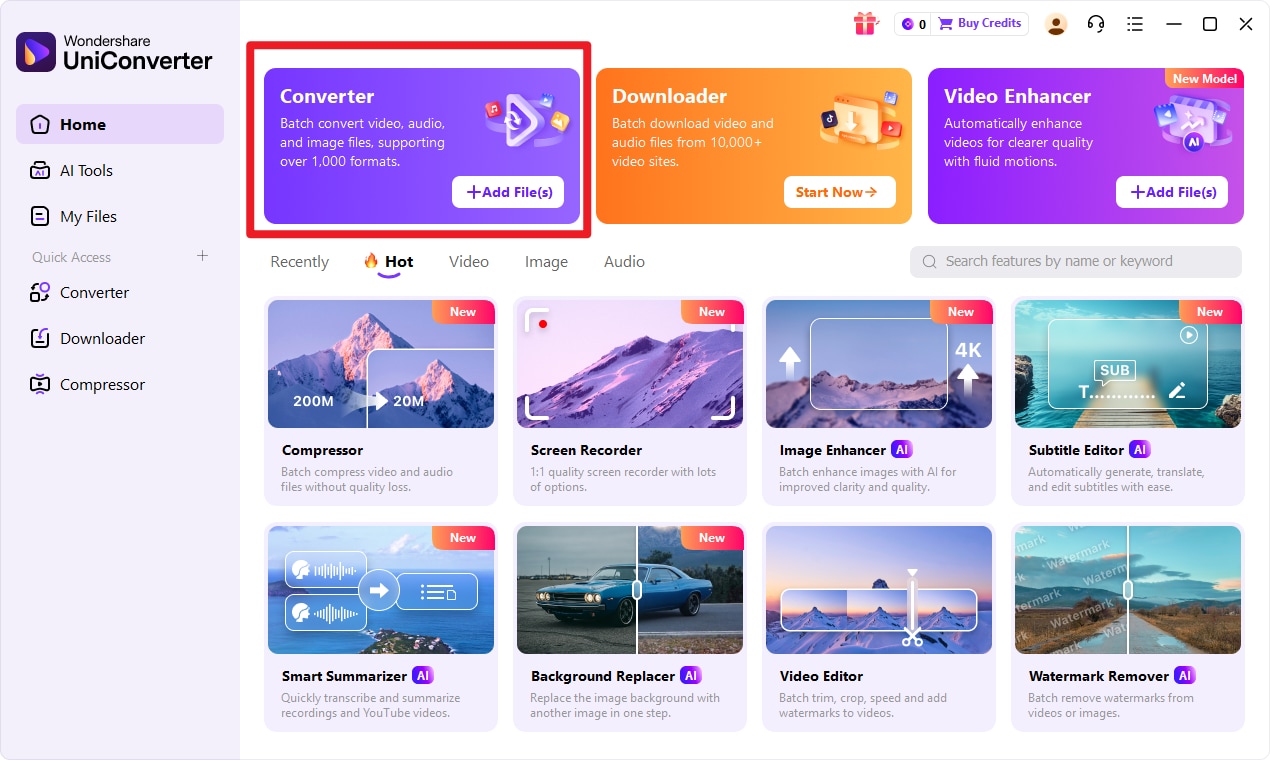
Step 1: Choose Converter in UniConverter
Launch Wondershare UniConverter on your computer. From the main screen, look at the menu on the left side and click on the Converter tool to open the conversion interface.
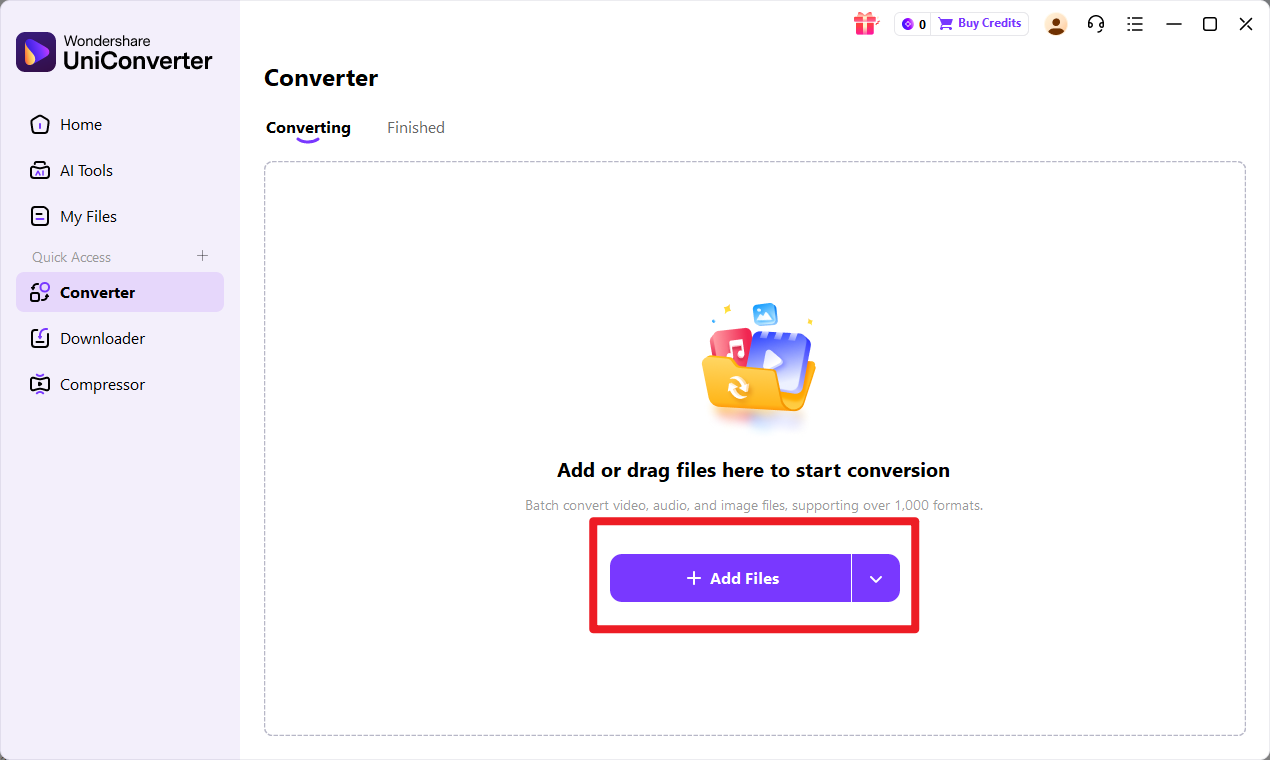
Step 2: Add Files to UniConverter
You can now import your video files. Click the Add Files icon in the upper-left corner to browse your computer for the input format files you want to convert. Alternatively, you can simply drag and drop your files directly into the center of the program window. UniConverter supports batch conversion, so feel free to add multiple files at once.
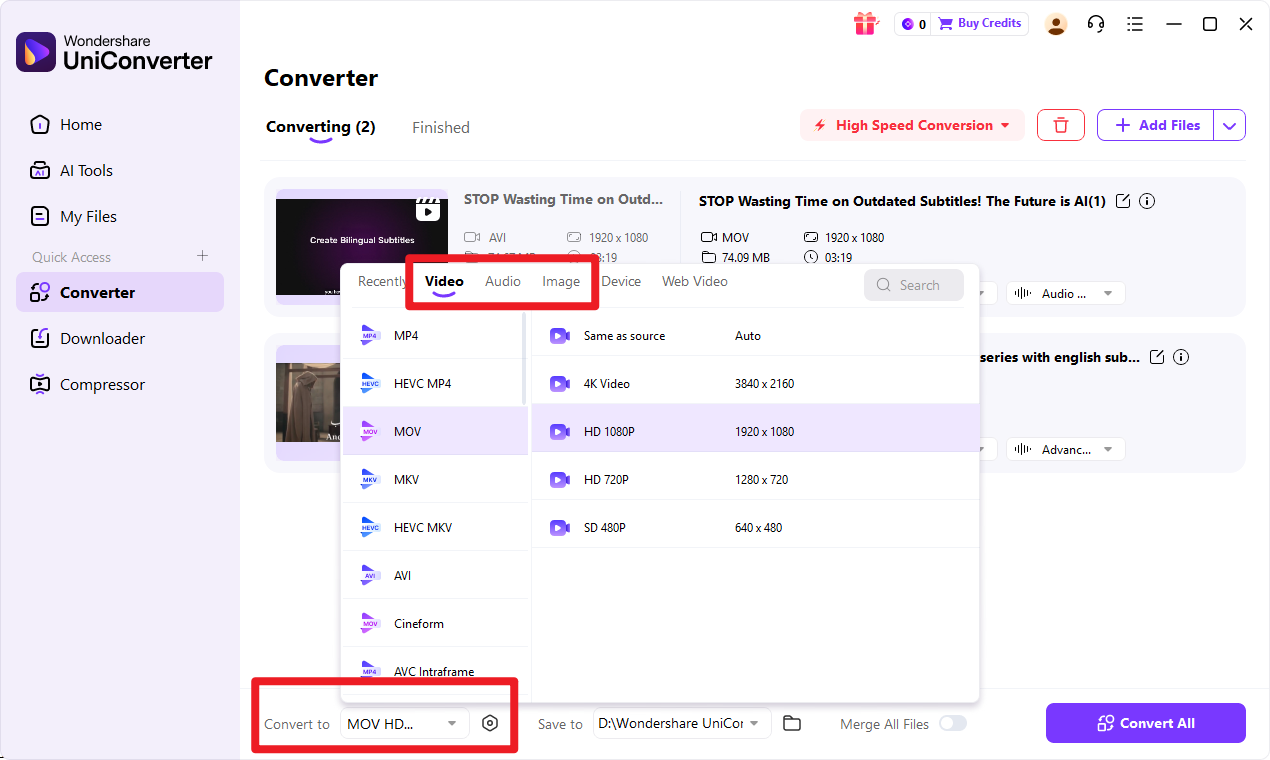
Step 3: Choose Output Format
At the bottom of the window, click on the Output Format menu. This will open a new dialog box with a list of available formats. Go to the Video tab, select your desired target format from the list on the left (such as MKV, MP4, etc.), and then choose a resolution or quality setting from the options on the right.
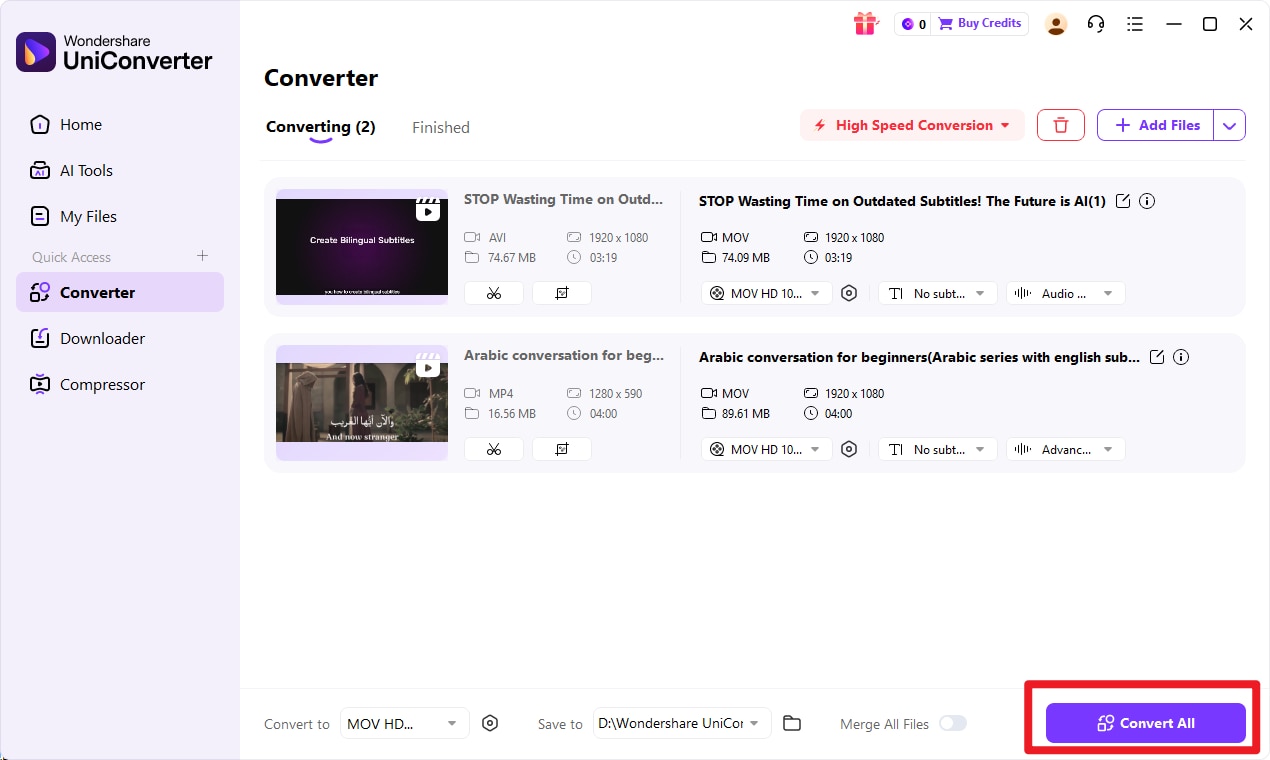
Step 4: Start the Conversion
Before starting, you can specify where to save the converted files by clicking the File Location field at the bottom. Once you are ready, click the Start All button in the bottom-right corner. UniConverter will begin processing your files. Once finished, your newly converted videos will be ready in the destination folder you selected.

Your Complete Video Toolbox Awaits
Conclusion
In the MKV vs RMVB showdown, there is a definitive winner for the modern user: MKV. It delivers superior video and audio quality, incredible flexibility with support for multiple tracks and chapters, and near-universal compatibility across all your devices. While RMVB played a vital role in the history of internet video with its revolutionary file compression, it is now an outdated format plagued by proprietary restrictions and poor playback support. For the best and most future-proof viewing experience, MKV is the standard to embrace. If you find yourself with a collection of legacy RMVB files, don't let them gather digital dust. The most effective solution is to use a reliable and user-friendly tool like Wondershare UniConverter to convert them into a universally playable format like MKV or MP4, ensuring your entire media library is accessible anytime, anywhere.
FAQs
-
1. Is RMVB an obsolete format?
Yes, for the most part, RMVB is considered an obsolete format. While files in this format still exist, it has been largely superseded by more efficient, higher-quality, and universally compatible formats like MP4 and MKV, which offer a better balance of quality and file size with modern codecs. -
2. Can VLC Media Player play RMVB files?
Yes, recent versions of VLC Media Player include built-in support for playing RMVB files. VLC is known for its ability to play a vast range of formats without requiring external codecs, making it one of the easiest ways to watch an RMVB video on a Windows or Mac computer. -
3. Why are MKV files so large?
MKV files are often large because they are designed to be high-quality containers. They typically hold video and audio streams with minimal compression to preserve detail, which requires more data. Furthermore, their ability to contain multiple audio tracks (for different languages) and several subtitle streams also adds to the overall file size. -
4. Which format is better for mobile phones?
MKV is far better for modern mobile phones. Both Android and iOS operating systems have excellent support for the MKV format through a wide variety of native and third-party media player apps. In contrast, RMVB has very poor native support on mobile platforms, and you would likely need to find a specialized app that includes the necessary codecs to play it.
