
If you've ever worked with video files, especially footage from a digital camcorder, you've likely encountered a variety of file extensions. Two formats that often cause confusion are MKV and MTS. You might have an MTS file from your camera that won't play on your TV, or you've downloaded an MKV file and wonder how it differs from other video types. Understanding the MKV vs MTS distinction is crucial for anyone looking to store, play, or edit video content efficiently.
Choosing the right format can save you from compatibility headaches, storage space issues, and editing frustrations. While both can hold high-definition video, they are designed for very different purposes and have unique strengths and weaknesses. This guide will demystify these two formats, helping you make an informed decision for your specific needs and showing you how to easily convert between them when necessary.
In this article:
Part 1. What is MKV? What is MTS?
Before we dive into a direct comparison, it's essential to understand the fundamental nature of each format. They are both "container" formats, meaning they can bundle video, audio, and other data into a single file, but their design philosophies and typical applications are worlds apart.
What is an MKV file?
MKV, which stands for Matroska Video, is an open-standard container format. The name "Matroska" is derived from the Russian word for nesting dolls (matryoshka), which perfectly describes its core feature: the ability to "nest" a virtually unlimited number of multimedia tracks within a single file.
An MKV file can contain multiple video streams, numerous audio tracks in different languages, and various subtitle formats (both text-based and image-based). It also supports chapters, menus, and other metadata. This incredible flexibility has made it a favorite for storing and distributing high-definition digital content, such as movies and TV shows. Because it's an open standard, it's not tied to any single company or patent, leading to its widespread adoption in software media players and home media server communities.
What is an MTS file?
MTS, which stands for MPEG Transport Stream, is a high-definition video file format primarily associated with AVCHD (Advanced Video Coding High Definition) camcorders. If you've ever used a consumer or prosumer camera from brands like Sony or Panasonic, you've likely recorded footage that was saved as .mts files.
This format was specifically designed for the purpose of video acquisition—recording video directly onto a device. It uses the H.264/MPEG-4 AVC codec for video compression, which allows for high-quality video capture. While excellent for recording, MTS files are not designed for universal playback or easy distribution. They are essentially the raw output from the camera, often large in size and sometimes challenging to play or edit on devices that aren't part of the AVCHD ecosystem.
Part 2. Quick Comparison Table
To get a clear overview of the key differences between MKV and MTS, here is a side-by-side comparison table.
| Feature | MKV (Matroska Video) | MTS (MPEG Transport Stream) |
| Developer | Matroska (Open Standard) | Sony & Panasonic |
| File Extension | .mkv | .mts |
| Compression | Can use various modern codecs (H.264, H.265, etc.) | Primarily H.264/MPEG-4 AVC |
| Compatibility | Very high on PCs, media players, and smart TVs | Good, but often requires conversion for broader use |
| File Size | Generally efficient and can be smaller | Typically large due to high bitrate recording |
| Audio/Subtitle Tracks | Excellent support for multiple tracks and formats | Limited support, usually for a primary audio track |
| Primary Use | Storing and streaming digital media | Recording raw footage on AVCHD cameras |
Part 3. MKV vs MTS: Which One Is Better?
The question of which format is "better" ultimately depends on your goal. One is designed for capturing footage, while the other is designed for storing and playing it back. Let's break down their performance in key areas.
Compatibility and Playback
When it comes to playing your videos on different devices, MKV has a significant advantage. As an open and widely adopted standard, MKV is supported out-of-the-box by a vast array of software and hardware. Popular media players like VLC Media Player, MPC-HC, and Plex handle MKV files flawlessly. Most modern smart TVs, streaming devices, and computers can play MKV files without any issues or the need to install extra codecs.
MTS, on the other hand, can be problematic. While it will play perfectly on the camera it was recorded on or with the software that came with it, playback on other devices is not guaranteed. You might find that your computer's default media player can't open it, or your smart TV doesn't recognize the file. Often, you need to install specific codec packs or use a more powerful media player like VLC to get MTS files to play correctly. This incompatibility is one of the primary reasons users seek to convert their MTS files.
File Size and Compression
MTS files are typically very large. This is because they are the direct, high-bitrate recordings from a camera sensor, designed to capture as much detail as possible. While this is great for quality, it quickly consumes storage space and makes the files difficult to share or upload.
MKV is a more efficient container. While the file size is ultimately determined by the video and audio codecs used inside it, converting an MTS file to an MKV often results in a smaller file size without a noticeable loss in quality. This is because the MKV container is more modern and can be paired with more efficient compression settings during the conversion process. You can take a large MTS file, re-package it as an MKV, and save significant storage space, making it ideal for archiving your video library.
Quality
This is a common point of concern: will converting from MTS to MKV reduce video quality? The answer is that both formats are just containers; the actual quality is determined by the video stream inside. Both MTS and MKV can contain identical, bit-for-bit perfect, high-definition or even 4K video.
An MTS file from a good camera contains a high-quality H.264 video stream. When you convert this to MKV, the goal is to transfer that exact video stream into the new container, a process called "remuxing," which involves no quality loss. Alternatively, you can "re-encode" the video to a more efficient codec (like H.265/HEVC) within the MKV container to save space. If done with a high-quality tool like Wondershare UniConverter, you can control the settings to ensure that any quality loss is imperceptible to the human eye while still achieving a smaller file size.
Flexibility
MKV is the undisputed champion of flexibility. Its ability to hold multiple audio tracks (e.g., a director's commentary and several language dubs), multiple subtitle tracks (in various formats and languages), chapter markers for easy navigation, and even file attachments is unmatched. This makes it the perfect format for creating a comprehensive, feature-rich media file.
MTS is far more rigid. It is designed for the single purpose of video acquisition. It typically contains one video track and one or two audio tracks. It lacks the advanced features like chapter support, multiple subtitles, or menus that make MKV so versatile for media consumption.
Part 4. Use Cases for MKV and MTS
Based on their strengths and weaknesses, each format has clear scenarios where it excels.
When to Use MKV
- For your personal media library: If you are digitizing your movie collection or building a library of TV shows, MKV is the ideal format. Its ability to store high-quality video, multiple audio tracks (like 5.1 surround sound), and subtitles in a single file is perfect for a home media server using software like Plex or Kodi.
- When you need multiple languages: If you have a video that you want to watch with different audio dubs or subtitles, MKV is the only practical choice. You can easily switch between tracks in a compatible media player.
- For universal compatibility: When you convert a video, your goal is usually to make it playable everywhere. By converting other, more obscure formats into MKV, you are creating a file that is highly likely to work on your computer, laptop, smart TV, and other devices without any hassle.
When to Use MTS
- For archiving original footage: You should always keep the original MTS files from your camcorder as your master copy. This is the highest quality source material you have, completely untouched. You can store these files on a backup drive.
- For professional editing workflows: If you are using professional video editing software like Adobe Premiere Pro or Final Cut Pro, it may have native support for the AVCHD structure and MTS files. In this context, importing the MTS files directly can be part of an efficient editing workflow, preserving the original timecode and metadata.
- As a source for conversion: The primary role of an MTS file, once it's off the camera, is to serve as the high-quality source from which you create other, more practical formats. You use the MTS file as the starting point before converting it to MKV for playback or MP4 for sharing online.
Part 5. Step-by-Step Guide to Convert MTS to MKV Using UniConverter
To overcome the compatibility and file size issues of MTS files, converting them to the more flexible MKV format is an excellent solution. Wondershare UniConverter is a powerful and user-friendly tool that can handle this conversion process seamlessly while maintaining high quality. It supports over 1,000 formats and offers GPU acceleration for fast conversions.
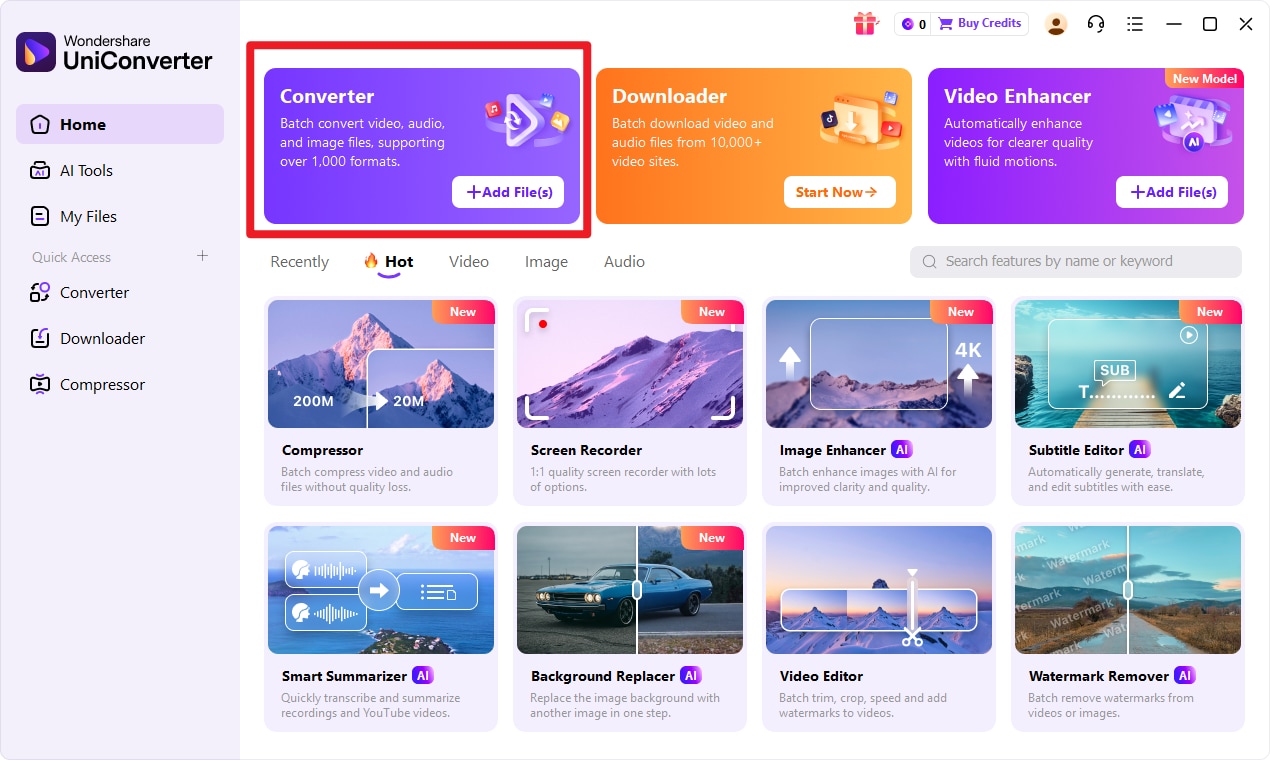
Step 1: Choose Converter in UniConverter
Launch Wondershare UniConverter on your computer. On the main interface, select the Converter tab from the left-side menu.
Step 2: Add Files to UniConverter
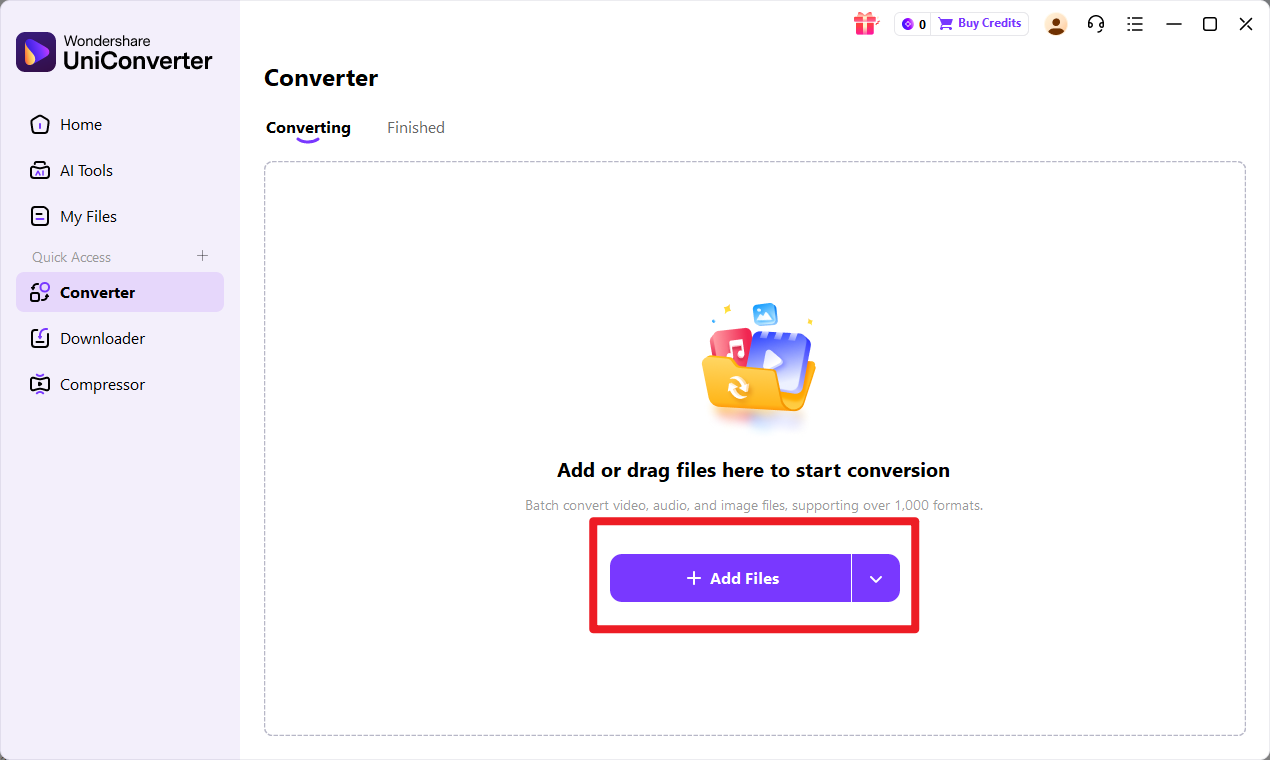
Click on the Add Files icon or drag and drop your MTS files directly into the center of the conversion window. You can add multiple files to perform a batch conversion.
Step 3: Choose Output Format
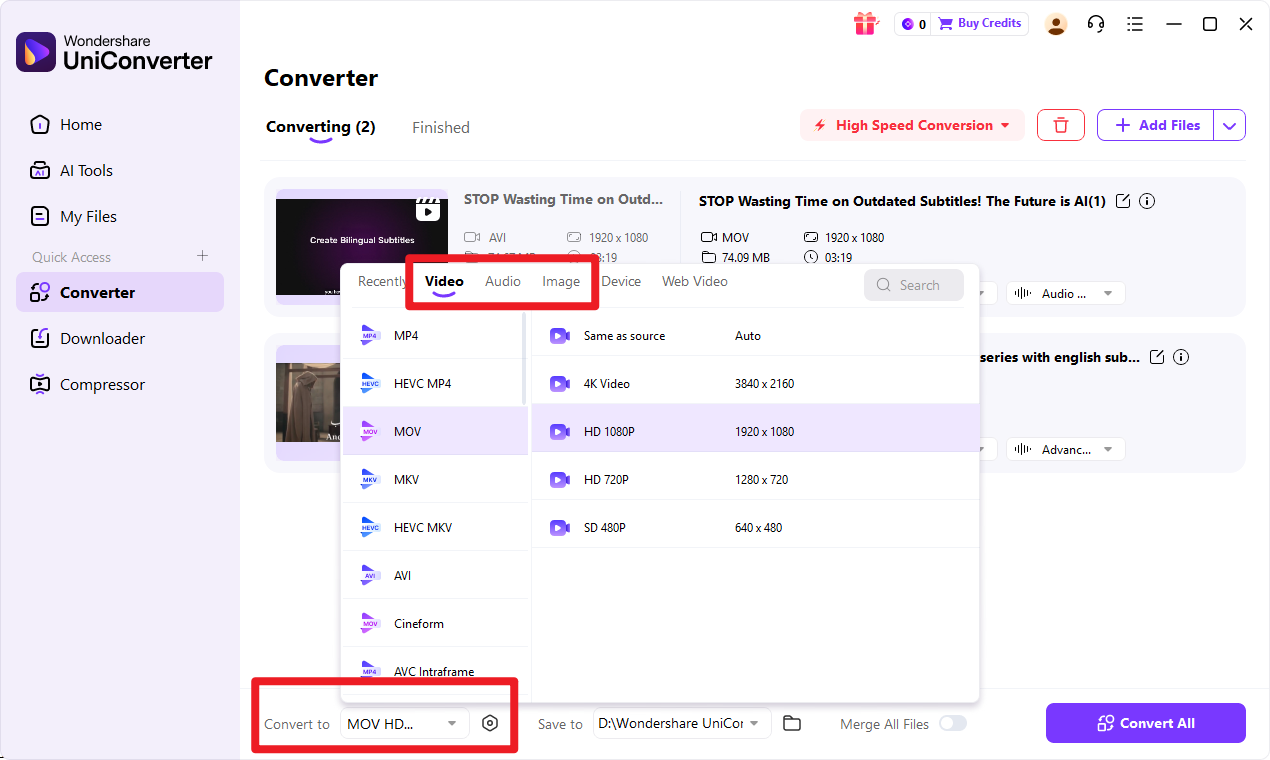
Click on the Output Format option at the bottom of the window. In the new pop-up, go to the Video tab, select MKV from the list on the left, and then choose a resolution on the right, such as "Same as source," to maintain quality.
Step 4: Start the Conversion
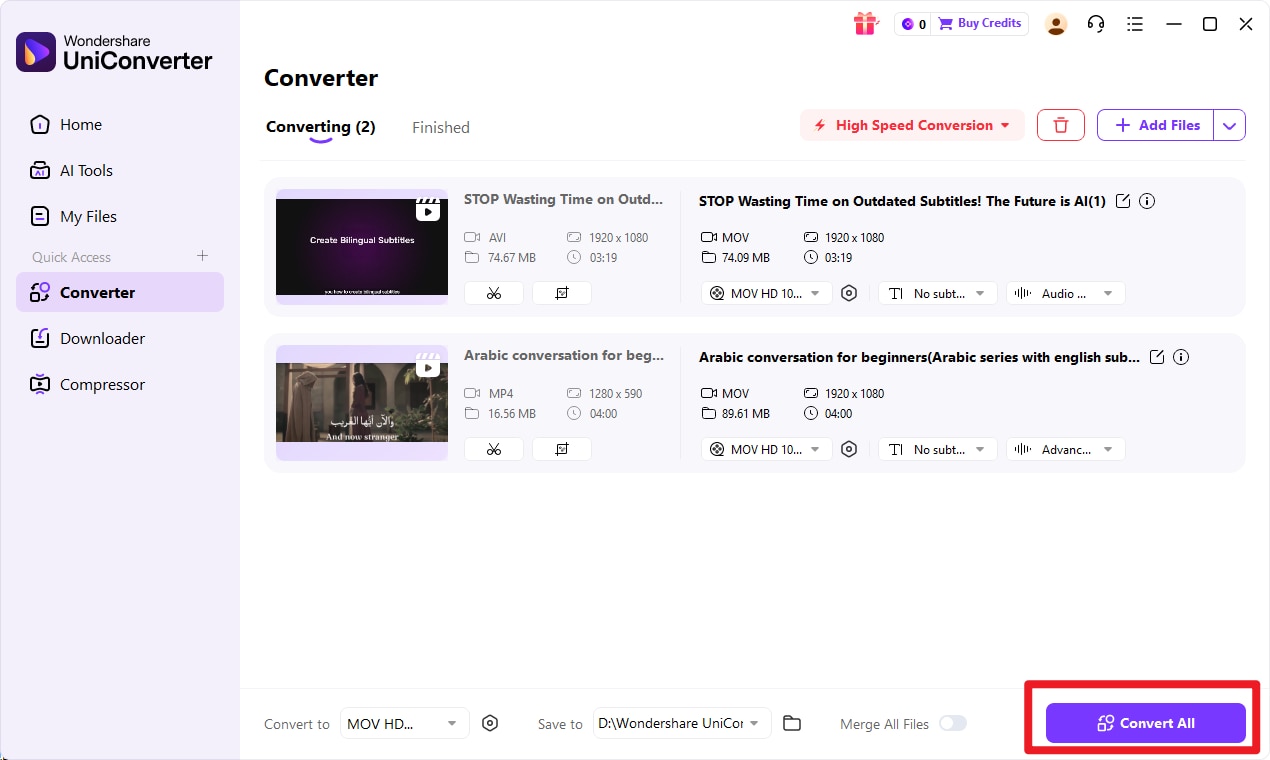
Select a destination folder by clicking the File Location option. Finally, click the Start All button to begin the conversion process. Your MTS files will be converted to MKV and saved in the specified folder.

More Than Just an MTS to MKV Converter
Conclusion
In the MKV vs MTS debate, it's clear that both formats have their place, but they are not interchangeable. MTS is a specialized format, excellent for its intended purpose: capturing high-definition video on AVCHD cameras. It serves as the raw, high-quality source material. However, its large file size and limited compatibility make it unsuitable for general playback, storage, or sharing.
MKV, on the other hand, is the superior format for almost everything that comes after recording. Its universal compatibility, incredible flexibility with multiple audio and subtitle tracks, and efficient storage make it the ideal choice for building a media library and ensuring your videos play on any device. For most users, the best workflow involves using the original MTS files as a master copy and converting them to MKV for all other purposes. Using a reliable and powerful tool like Wondershare UniConverter makes this conversion process fast, easy, and ensures your videos retain their pristine quality.
FAQs
-
1. Does converting MTS to MKV lose quality?
Not necessarily. Quality loss depends on the converter and the settings you choose. If you use a professional tool like UniConverter, you can choose to "remux" the file, which changes the container from MTS to MKV without re-encoding the video, resulting in zero quality loss. If you do re-encode to save space, UniConverter's advanced settings allow you to maintain a high bitrate, preserving the original visual quality. -
2. Can VLC play MTS files?
Yes, VLC Media Player is a highly versatile application that is well-known for its ability to play a wide variety of file formats. In most cases, VLC can play both MTS and MKV files smoothly on Windows, macOS, and Linux without requiring you to install any additional codecs. It's often recommended as a go-to player for problematic file types. -
3. Is MTS the same as M2TS?
They are extremely similar and often used interchangeably, but there is a slight technical difference. MTS is the file extension used for the video files as they are recorded and stored on the AVCHD camera's memory card or hard drive. When these files are imported to a computer or authored onto a Blu-ray disc, the file extension often changes to M2TS. For all practical purposes of playback and conversion, you can treat them as the same format. -
4. Why should I convert MTS to MKV?
There are several compelling reasons. You should convert MTS to MKV for significantly better compatibility with a wider range of devices, including smart TVs, media streamers, and game consoles. Conversion can also help you reduce file size, saving valuable storage space. Finally, converting to MKV gives you the flexibility to add multiple audio or subtitle tracks, which is impossible with the original MTS file.
