
MKV vs MKA: What's the Difference and Which One Is Better?
Have you ever downloaded a file expecting a movie, only to find it has no video? Or perhaps you've stumbled upon a file with a strange .mka extension and your media player refuses to open it. In the world of digital media, container formats can be confusing, and the MKV vs MKA debate is a perfect example. While they sound similar and come from the same family, they serve fundamentally different purposes. Understanding this difference is key to managing your media library effectively and avoiding playback headaches.
Many users, from tech-savvy collectors to casual downloaders, find themselves puzzled by these formats. They wonder if one offers better quality, why one file is so much larger than the other, or simply how to get their file to play. This guide will demystify the MKV and MKA formats, providing a clear, comprehensive comparison to help you understand their unique roles and decide which one is right for your needs.
In this article
Part 1. What is an MKV File? What is an MKA File?
Before we dive into a direct comparison, it's essential to understand what each format is on its own. Both MKV and MKA are part of the Matroska project, an open-standard, future-proof container format. Think of a container like a box; it doesn't define what's inside, but it holds everything together. The quality of the video or audio is determined by the codecs used to encode the streams within the container, not the container itself.
What is an MKV File?
MKV, which stands for Matroska Video, is a highly versatile multimedia container format. Its primary strength lies in its ability to hold an almost unlimited number of video, audio, picture, and subtitle tracks within a single file. This makes it the preferred format for storing entire movies and TV shows.
For example, a single .mkv file can contain a high-definition video stream, a 5.1 surround sound audio track in English, a stereo audio track in Spanish, and subtitle files for ten different languages. This flexibility and open-source nature have led to its widespread adoption for high-quality video content, especially in the home theater and media server communities.
What is an MKA File?
MKA, or Matroska Audio, is a container format designed exclusively for audio-only content. It leverages the same powerful Matroska technology as MKV but is stripped of any video-related capabilities. An .mka file can store multiple audio streams, lyrics, and chapter points, making it an incredibly flexible format for audio enthusiasts.
Its primary use is for storing content like a full music album in a single file, with each song designated as a separate chapter. It's also perfect for saving multi-channel concert recordings (e.g., stereo and 5.1 surround sound) or bundling multiple language tracks for a podcast or audiobook.
The Matroska Project: A Shared Family
It's crucial to recognize that MKV and MKA are not competing formats; they are siblings from the same Matroska project. They share the same foundational structure and technical capabilities, such as support for a vast array of codecs, chapter points, and metadata tagging. The only significant difference is their intended content: MKV is for multimedia (video, audio, etc.), while MKA is strictly for audio. This shared heritage is why they are so similar yet serve distinct purposes.
Part 2. Quick Comparison Table
To see the differences at a glance, here is a direct, side-by-side comparison of the MKV and MKA formats.
| Feature | MKV (Matroska Video) | MKA (Matroska Audio) |
| Primary Content | Video, Audio, Subtitles, Pictures | Audio Only |
| File Extension | .mkv | .mka |
| Main Purpose | Storing complete movies, TV shows, and other multimedia content. | Storing audio albums, soundtracks, or multiple audio streams. |
| Common Use | High-definition video playback with multiple audio/subtitle tracks. | High-fidelity audio storage, multi-track albums, audio extraction. |
| Player Compatibility | Very High (Supported by most modern players and devices). | Moderate (May not be recognized by some default players or older devices). |
Part 3. MKV vs MKA: Which One Is Better?
The question of which format is "better" depends entirely on your specific goal. It's not about one being superior in quality but about which is the right tool for the job. Let's break down the key differences in more detail.
Core Difference: Video vs. Audio-Only
This is the most critical distinction and the primary factor in deciding which to use.
MKV: This is a multimedia container. Its purpose is to bundle a video stream with one or more audio and subtitle streams. If your content has a visual component, MKV is the format you need. Think of an MKV file as a complete movie package, containing everything you need for the viewing experience.
MKA: This is an audio-only container. It is specifically designed for situations where there is no video. If you only have audio tracks, using MKA is the correct and more efficient choice. Think of an MKA file as a digital CD or audio album, holding just the sound.
You would never use MKA to store a movie, and using MKV to store just a single audio track would be inefficient, though technically possible.
Audio Quality and Codec Support
A common misconception is that one container format might offer better audio quality than another. This is incorrect. Both MKV and MKA are "codec agnostic," meaning they can contain audio streams encoded with the exact same range of codecs.
Both containers fully support:
- Lossy codecs: AAC, MP3, Vorbis, Opus
- Lossless codecs: FLAC, ALAC (Apple Lossless), TrueHD, DTS-HD Master Audio
The audio quality is determined by the source and the codec used for compression (e.g., a 256kbps AAC track or a lossless FLAC track), not by whether it's placed inside an MKV or MKA container. You can have an MKV file and an MKA file containing the identical, bit-for-bit perfect FLAC audio stream.
Compatibility and Device Support
This is where a significant practical difference emerges.
MKV: Over the past decade, MKV has become a de facto standard for high-quality video. It enjoys widespread, native support across most modern media players (like VLC, MPC-HC), smart TVs, streaming devices (like Roku, Nvidia Shield), and desktop operating systems.
MKA: Support for MKA is far more limited. While specialized media players like VLC and Foobar2000 handle it perfectly, many default system players (like Windows Media Player or Apple's Music app) and hardware devices may not recognize the .mka extension or know how to play the file. This can be a major pain point for users who just want to listen to their audio. For maximum compatibility, converting MKA files to a more universally recognized format like MP3, AAC, or FLAC is often the best solution. A versatile tool like Wondershare UniConverter is perfect for this task.
File Size
The container format itself has a negligible impact on the overall file size. The size is almost entirely determined by the content stored within it.
Naturally, an MKA file will almost always be significantly smaller than its corresponding MKV file. This isn't because the MKA container is more efficient, but because it's missing the largest component: the video stream. For example, if you have a 4GB MKV movie file with a 3.5GB video stream and a 500MB audio stream, extracting that audio into an MKA file will result in a file that is approximately 500MB. The size difference comes from the content, not the container.
Part 4. Use Cases for MKV and MKA
Understanding the practical applications of each format will help solidify your choice.
When Should You Use MKV?
You should use the MKV container in any situation involving video. It is the ideal choice for:
- Storing a Movie or TV Episode: MKV is perfect for archiving a film with its original high-definition video, 5.1 surround sound, director's commentary audio track, and multiple subtitle languages, all in one neat file.
- Archiving High-Quality Video Captures: If you record gameplay, screen captures, or footage from a digital camera, MKV is an excellent choice for preserving the original quality without being locked into a proprietary format.
- Creating an All-in-One Media File: Anytime you need to bundle video with multiple audio or subtitle options, MKV's flexibility is unmatched.
When Should You Use MKA?
You should use the MKA container for sophisticated, audio-only applications. It is the ideal choice for:
- Storing a Full Music Album: You can save an entire album as a single MKA file, using chapter markers to delineate each song. This keeps the album intact and is cleaner than managing a dozen individual files.
- Saving High-Resolution Concert Recordings: For a live concert that was recorded with both a stereo and a 5.1 surround sound mix, MKA allows you to store both audio streams in one file, letting the user choose which to play.
- Extracting Audio from a Video: If you want to save just the soundtrack, an audio commentary track, or a specific language dub from an MKV movie file, extracting it and saving it as an MKA is the proper and most efficient method.
Part 5. Step-by-Step Guide to Convert MKV to MKA Using UniConverter
If you need to extract the audio from an MKV file and save it as an MKA, or convert an MKA file to a more compatible format like MP3, a powerful video converter is your best solution. Wondershare UniConverter is a highly recommended tool that makes this process simple and fast. It supports a vast range of over 1,000 formats and provides a user-friendly interface for all your conversion needs in 2026.
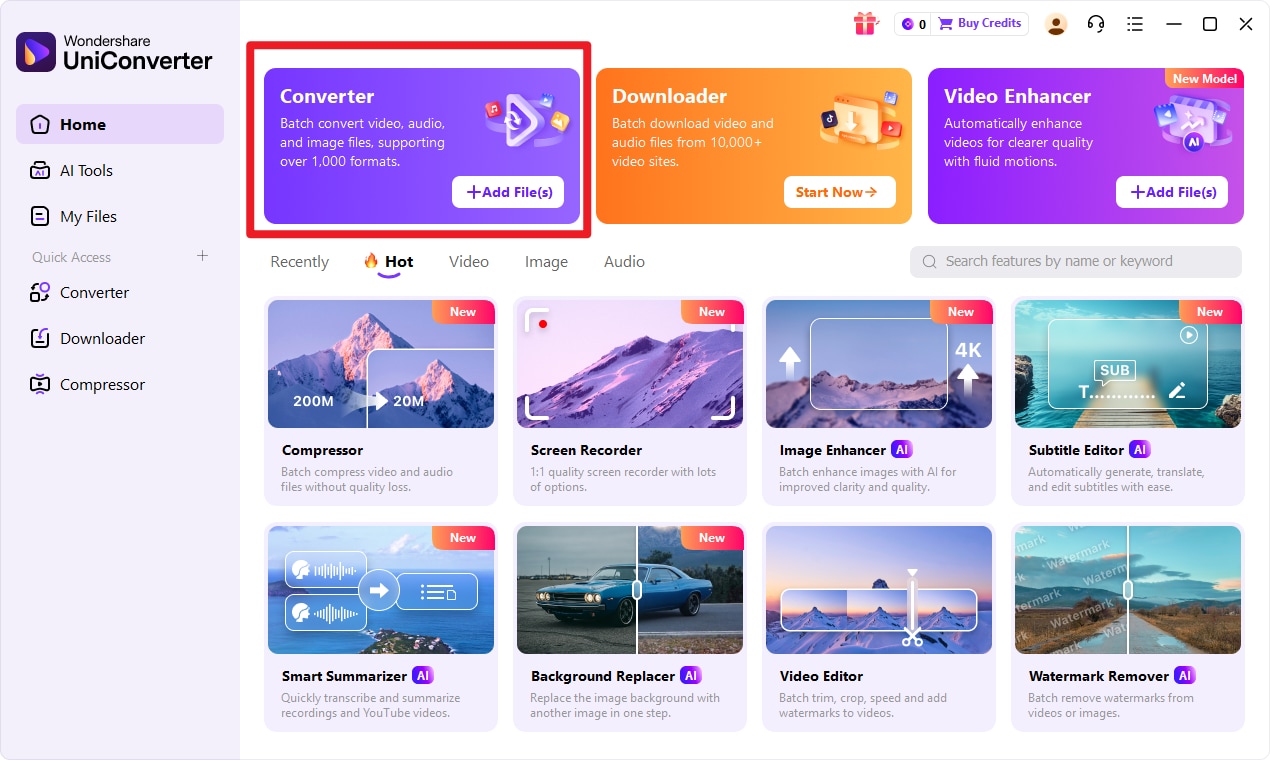
Step 1: Choose Converter in UniConverter
Launch Wondershare UniConverter on your computer. On the main interface, select the Converter tab from the left-side menu to begin.
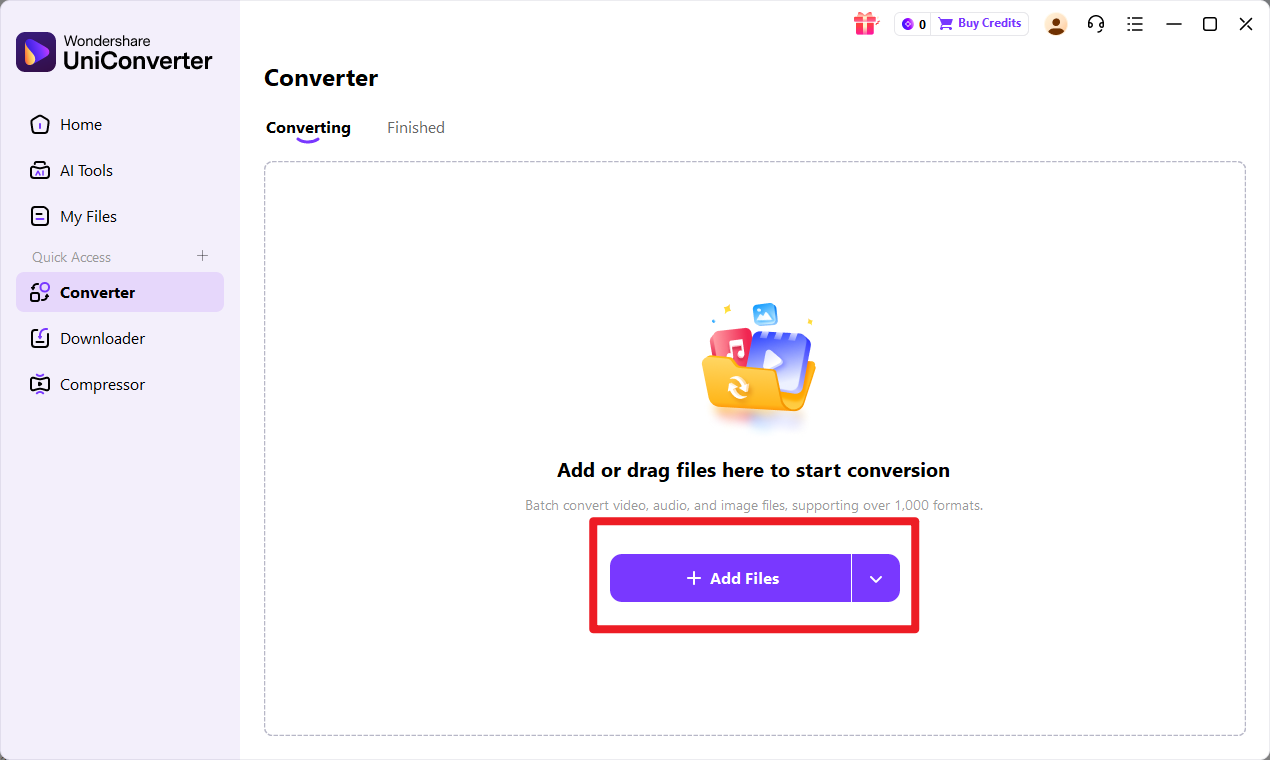
Step 2: Add Files to UniConverter
Click on the Add Files icon or drag and drop your input format file directly into the program window. You can add multiple files to perform a batch conversion.
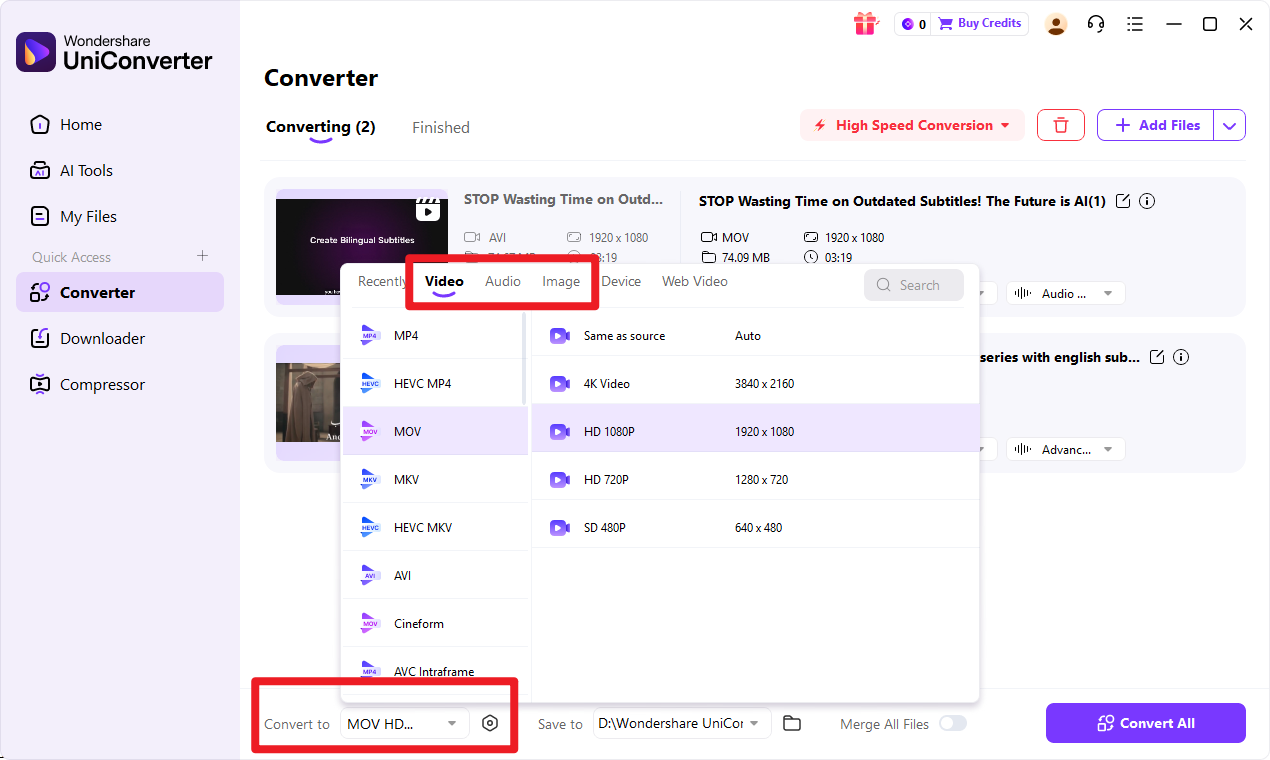
Step 3: Choose Output Format
Click the Output Format icon at the bottom of the window. Go to the Audio tab and select your target format from the list. In this case, you would select MKA. You can also choose the desired audio quality.
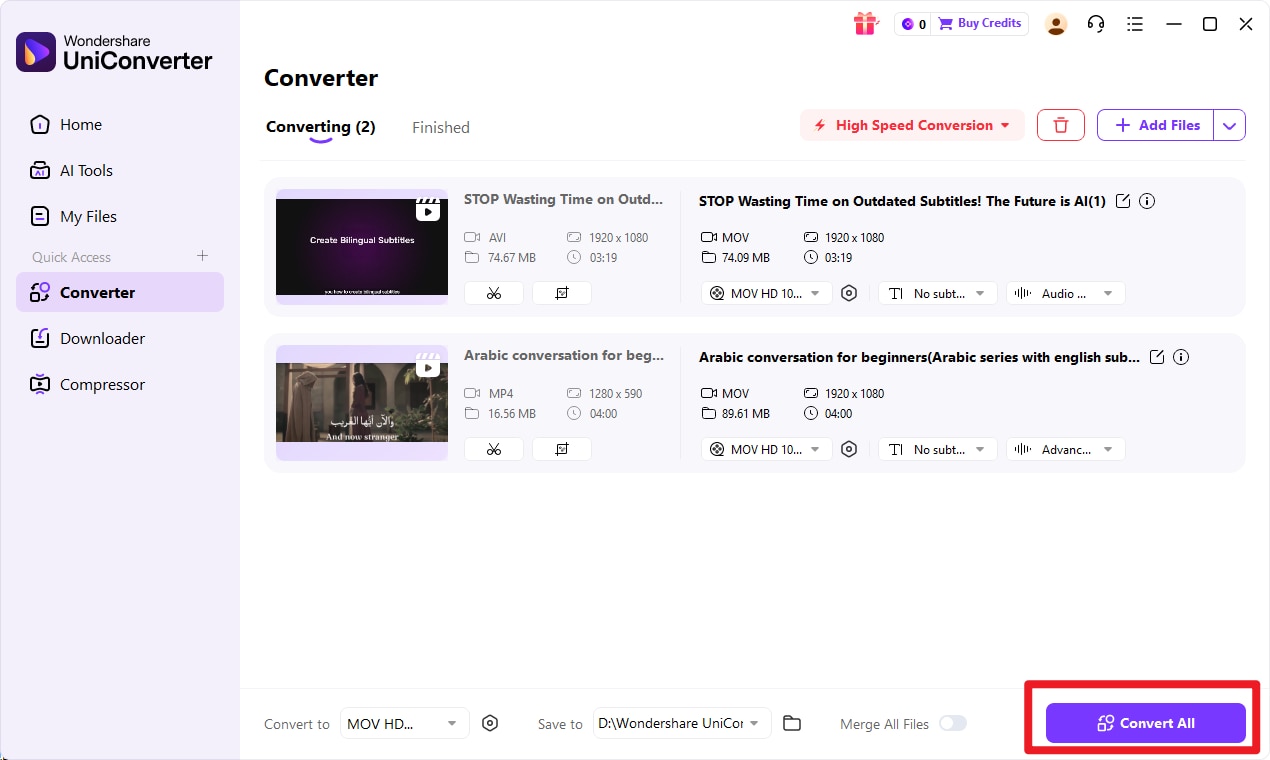
Step 4: Start the Conversion
Once you have selected your target format, choose a destination folder by clicking the File Location field at the bottom. Finally, click the Start All button to begin the conversion process. Your new files will be ready in moments.

Go Beyond Simple File Conversion
Conclusion
To summarize, the choice in the MKV vs MKA comparison is simple and is dictated by your content. They are not competitors but rather specialized siblings from the versatile Matroska family. Use MKV when your media includes video. Use MKA when you are dealing exclusively with audio. MKV offers broad compatibility for all-in-one multimedia files, while MKA provides a sophisticated, though less supported, solution for high-quality, multi-track audio storage. The key is to use the right tool for the right job. For any challenges involving format incompatibility or the need to convert between these formats, a reliable tool is indispensable. Wondershare UniConverter provides a robust and efficient solution for managing, converting, and editing virtually any media file you encounter.
FAQs
-
1. Can I just rename .mkv to .mka?
No. This is a common mistake that will likely lead to playback errors or file corruption. Although they share a similar structure, simply renaming the file extension does not change the internal data arrangement. To properly create an MKA file from an MKV, you must use a conversion tool like UniConverter to demux (extract) the audio stream and save it in a new MKA container. -
2. Is MKA better than FLAC?
This question highlights a common confusion between a container and a codec. MKA is a container format (the box), while FLAC is a lossless audio codec (the content inside the box). They don't compete; they work together. An MKA file can contain a FLAC audio track. The purpose of the MKA container is to hold one or more audio tracks, which could be in FLAC, MP3, AAC, or other audio formats. -
3. My device won't play MKA files. What can I do?
This is a frequent issue due to MKA's limited hardware support. The easiest and most effective solution is to convert the MKA file to a more universally supported audio format like MP3 (for maximum compatibility), AAC (great for Apple devices), or FLAC (for lossless quality if your device supports it). You can do this in just a few clicks using the Wondershare UniConverter tool mentioned in this guide. -
4. Can UniConverter convert MKA to MP3?
Yes, absolutely. Wondershare UniConverter is an excellent MKA to MP3 converter. The process is identical to the step-by-step guide provided above. You would simply add your MKA file, navigate to the Output Format > Audio tab, choose MP3 as your target format, and start the conversion. It's a fast and simple way to make your MKA files playable on any device.
