
Have you ever downloaded a video file, excited to watch it on your iPad or Mac, only to be met with an error message? Chances are, you've encountered the classic compatibility clash between video formats. Two of the most common culprits in this scenario are MKV and M4V. While they might look like just another set of letters after a filename, they represent different approaches to storing video, audio, and more. Understanding the MKV vs M4V debate is key to solving playback issues and managing your digital media library effectively.
This guide will demystify these two popular container formats. We'll break down their technical differences, compare their strengths and weaknesses, and help you decide which one is the right choice for your specific needs. Whether you're an Apple user struggling with an incompatible file or a media enthusiast building the perfect digital library, you'll find the answers here.
In this article
Part 1. What is MKV? What is M4V?
Before we can compare them, it's essential to understand what each format is. Think of them not as the video itself, but as shipping boxes (containers) that hold the video, audio, subtitles, and other data together in one package.
What Is an MKV File?
MKV stands for Matroska Video, named after the Russian Matryoshka nesting dolls. This name is fitting because, like the dolls, an MKV file can hold a vast and varied amount of data within a single file. It's an open-standard, free container format, meaning it isn't owned by any single company and can be used by anyone without licensing fees.
The standout feature of MKV is its incredible flexibility. It can contain an unlimited number of video, audio, picture, and subtitle tracks in one file. This makes it a favorite among media collectors and enthusiasts. For example, a single MKV file can store a movie with the original English audio, a French dub, a director's commentary track, and subtitles in ten different languages. Because of this capability, it's the go-to format for high-definition content, such as rips from Blu-ray discs, where preserving all original data is a priority.
What Is an M4V File?
The M4V file format was developed by Apple and is the standard container for videos in its ecosystem. You'll find it used for movies, TV shows, and music videos sold or rented through the Apple iTunes Store. Structurally, M4V is very similar to the ubiquitous MP4 format; in fact, they are based on the same MPEG-4 standard. You can often rename a file from `.m4v` to `.mp4` and it will play without any issues, provided it's not copy-protected.
The key differentiator for M4V is its ability to support Apple's FairPlay DRM (Digital Rights Management) copy protection. This is the technology Apple uses to prevent unauthorized copying and distribution of content purchased from the iTunes Store. While not all M4V files are DRM-protected, the format's primary purpose is to function seamlessly within Apple's closed ecosystem of devices like the iPhone, iPad, Mac, and Apple TV.
Part 2. Quick Comparison Table
To see the differences at a glance, here is a direct side-by-side comparison of MKV and M4V.
| Feature | MKV | M4V |
| Developer | Matroska Project (Open Standard) | Apple Inc. |
| Compatibility | Wide support on non-Apple devices (VLC, Windows, Android) | Excellent on Apple ecosystem (iPhone, iPad, iTunes, Apple TV) |
| Audio Tracks | Virtually unlimited | Multiple, but less flexible than MKV |
| Subtitle Tracks | Virtually unlimited (SRT, ASS, etc.) | Multiple, but less flexible than MKV |
| DRM Protection | No | Yes (Optional, via Apple FairPlay) |
| Best For | High-quality media library storage | Apple device playback |
Part 3. MKV vs M4V: Which One Is Better?
The question of which format is "better" doesn't have a single answer. The best choice depends entirely on your priorities: compatibility, flexibility, or a balance of both.
Compatibility: The Deciding Factor
This is where the most significant difference lies.
M4V: If your digital life revolves around Apple products, M4V is the undisputed champion. It plays natively on iPhones, iPads, Macs, and Apple TVs without requiring any third-party software. This "it just works" experience is the primary reason for its existence.
MKV: While MKV files won't play in native Apple apps like QuickTime or the TV app, they are far more universal outside of that ecosystem. Windows 10 and 11 have native support for MKV, and it's the preferred format for countless media players like VLC, PotPlayer, and media server software like Plex and Kodi. Android devices and many smart TVs also handle MKV files with ease.
Winner for Apple Users: M4V
Winner for Everyone Else: MKV
Flexibility and Features: The Power of Open Source
When it comes to holding complex media, MKV is in a league of its own.
MKV: Its open-source nature allows it to support a virtually limitless number of audio and subtitle tracks in various formats (like SRT, SSA, ASS for subtitles). It can also hold chapter markers, menus, and multiple video streams. This makes it the perfect archival format for a movie collector who wants to preserve the original Blu-ray experience, complete with different language dubs, commentary tracks, and behind-the-scenes features.
M4V: M4V can also contain multiple audio and subtitle tracks, but it is generally less flexible than MKV. It's designed for a more straightforward consumer experience rather than for complex media archiving.
Winner: MKV
File Size and Quality: A Close Match
Many users mistakenly believe that one format offers better quality or smaller file sizes than the other. This is a common misconception.
Both MKV and M4V are just containers. The actual video and audio quality, and therefore the file size, are determined by the codecs used to compress the data inside the container (e.g., H.264, H.265/HEVC, AAC, AC3).
If you take the exact same H.264 video stream and AAC audio stream and place them inside both an MKV container and an M4V container, the resulting files will be almost identical in size and completely identical in quality. The container itself adds negligible overhead. Therefore, neither format has an inherent advantage in quality or compression.
Winner: Tie
The Verdict: It Depends on Your Use Case
Choose M4V if your primary goal is seamless, native playback on Apple devices. If you buy content from iTunes or want to create videos that will play on an iPhone without any fuss, M4V is the way to go.
Choose MKV if you value flexibility, are building a media library for a non-Apple-centric setup (like a Plex server or a Windows PC), and want to store files with multiple audio and subtitle options.
Part 4. Use Cases for MKV and M4V
Let's look at some practical scenarios to help you decide when to use each format.
When to Use MKV
Archiving High-Definition Movies or TV Shows: If you are ripping your personal Blu-ray or DVD collection to a hard drive, MKV is the ideal choice to preserve all the original data, including multiple audio tracks (e.g., 5.1 surround, stereo, director's commentary) and subtitle streams.
Storing a Single File with Multiple Language Options: For foreign films or anime, MKV allows you to bundle the original language audio, a dubbed audio track, and several subtitle files all together. This makes for a clean, all-in-one media file.
Building a Media Server Library: If you use software like Plex, Emby, or Kodi to organize and stream your media collection to various devices around your home (like a smart TV, gaming console, or PC), MKV is one of the most widely supported and flexible formats you can use.
When to Use M4V
Playing Videos on Apple Devices: This is the most common use case. If you want to load a home movie onto your iPad for a trip or airdrop a video to a friend's iPhone, converting it to M4V ensures it will play instantly without any extra apps.
Creating Content for the Apple Ecosystem: If you are a video creator making tutorials or clips specifically for an audience you know uses Apple products, exporting your final video as an M4V file is a user-friendly choice.
Purchasing or Renting from the iTunes Store: Any video content you acquire from Apple's official store will come in the M4V format, often with DRM protection that ties it to your Apple ID.
Part 5. Step-by-Step Guide to Convert MKV to M4V Using UniConverter
What if you have an MKV file but need to play it on your iPhone? Or you have an M4V file and want the flexibility of MKV? The best solution is to convert the file. This process doesn't have to be complicated or result in quality loss. A powerful tool like Wondershare UniConverter handles this process flawlessly, repackaging your video and audio streams into a new container while preserving the original quality. It supports over 1000 formats, batch conversion, and GPU acceleration, making it incredibly fast and efficient.
Here is how to convert your files in four simple steps.
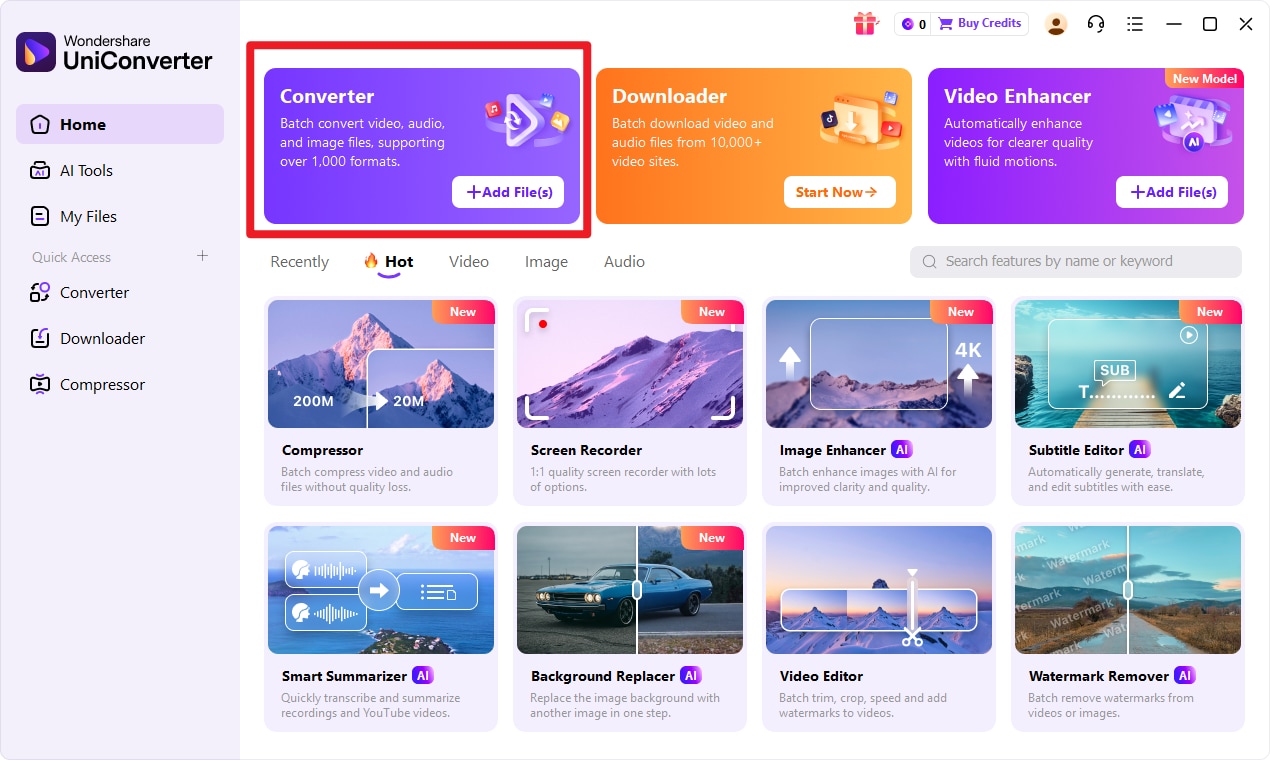
Step 1: Choose Converter in UniConverter
Launch Wondershare UniConverter on your computer. From the home screen, look at the menu on the left side and select the Converter tab to open the video conversion module.
Step 2: Add Files to UniConverter
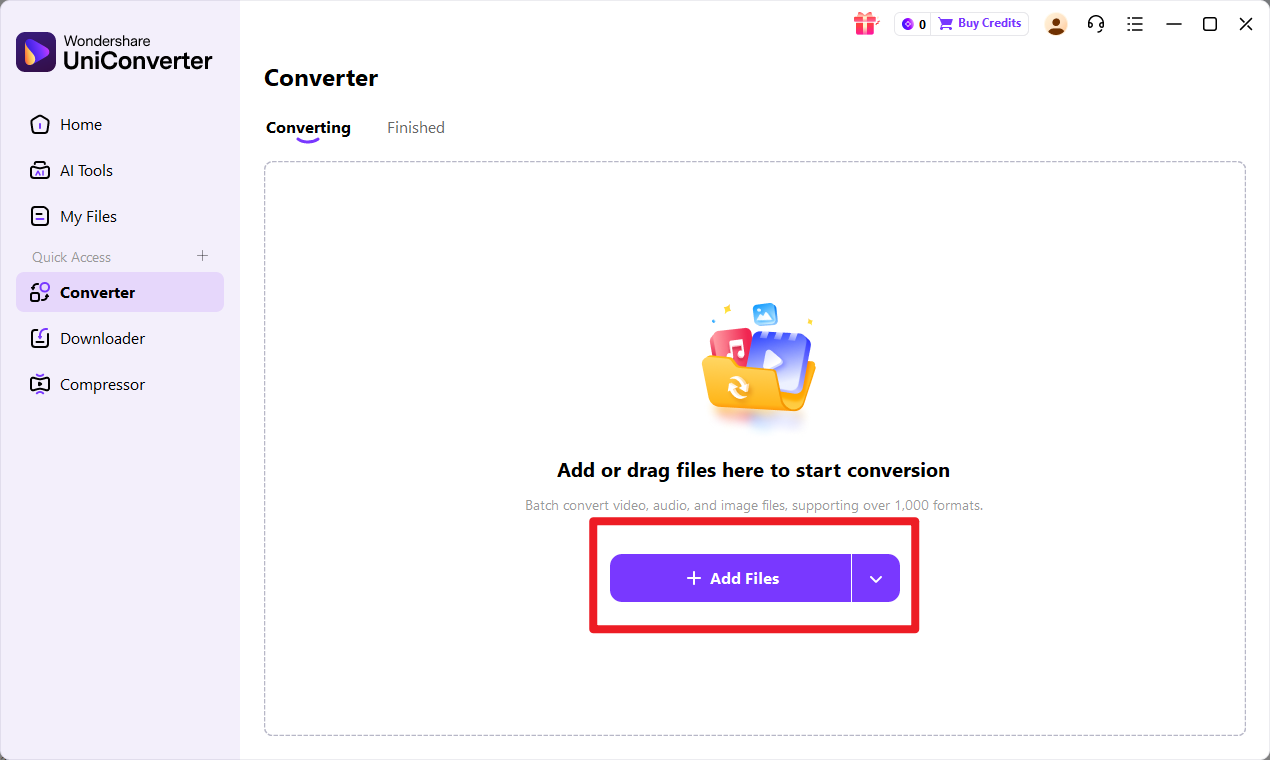
You can now import your video files. Click the Add Files icon in the top-left corner to browse your computer, or simply drag and drop your input format files directly into the center of the program window. You can add multiple files at once to perform a batch conversion.
Step 3: Choose Output Format
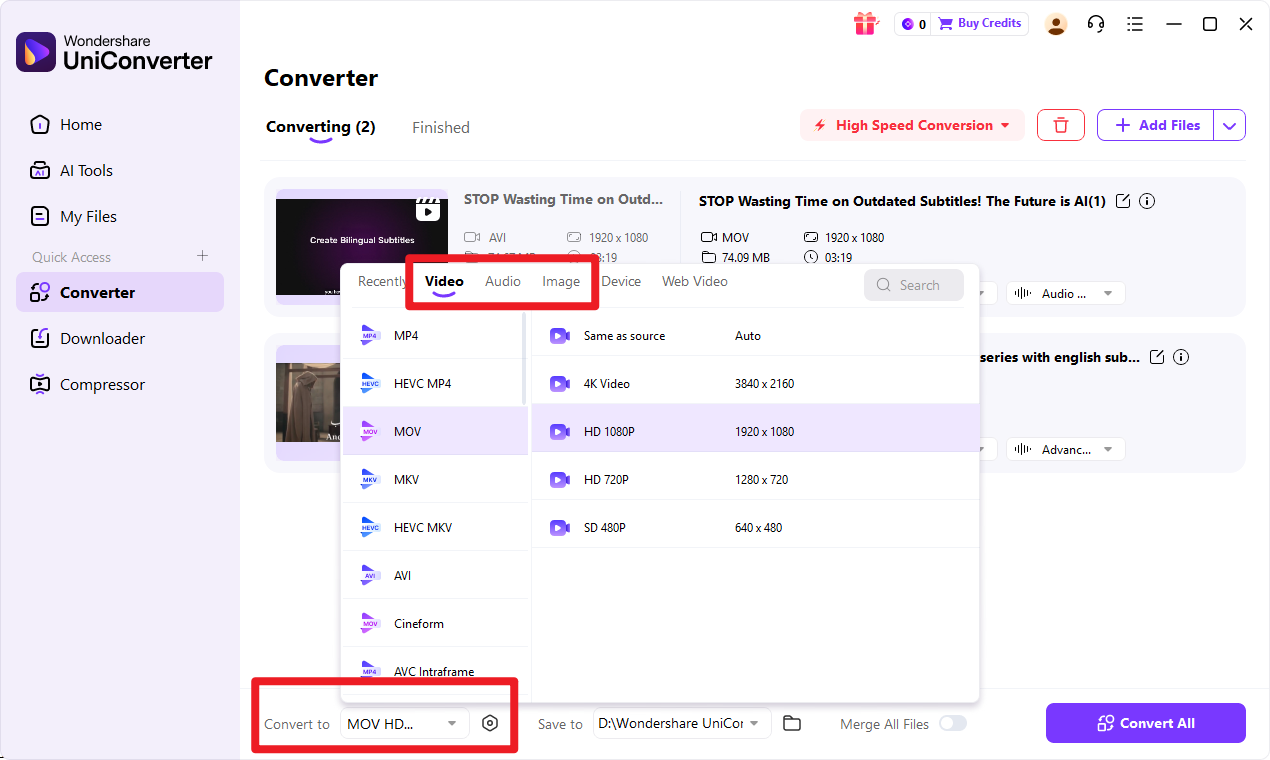
At the bottom of the window, click on the Output Format menu. This will open a new window with a list of available formats. Navigate to the Video tab, select your target format from the list on the left, and then choose your desired resolution on the right. For a lossless conversion, it's best to select Same as source.
Step 4: Start the Conversion
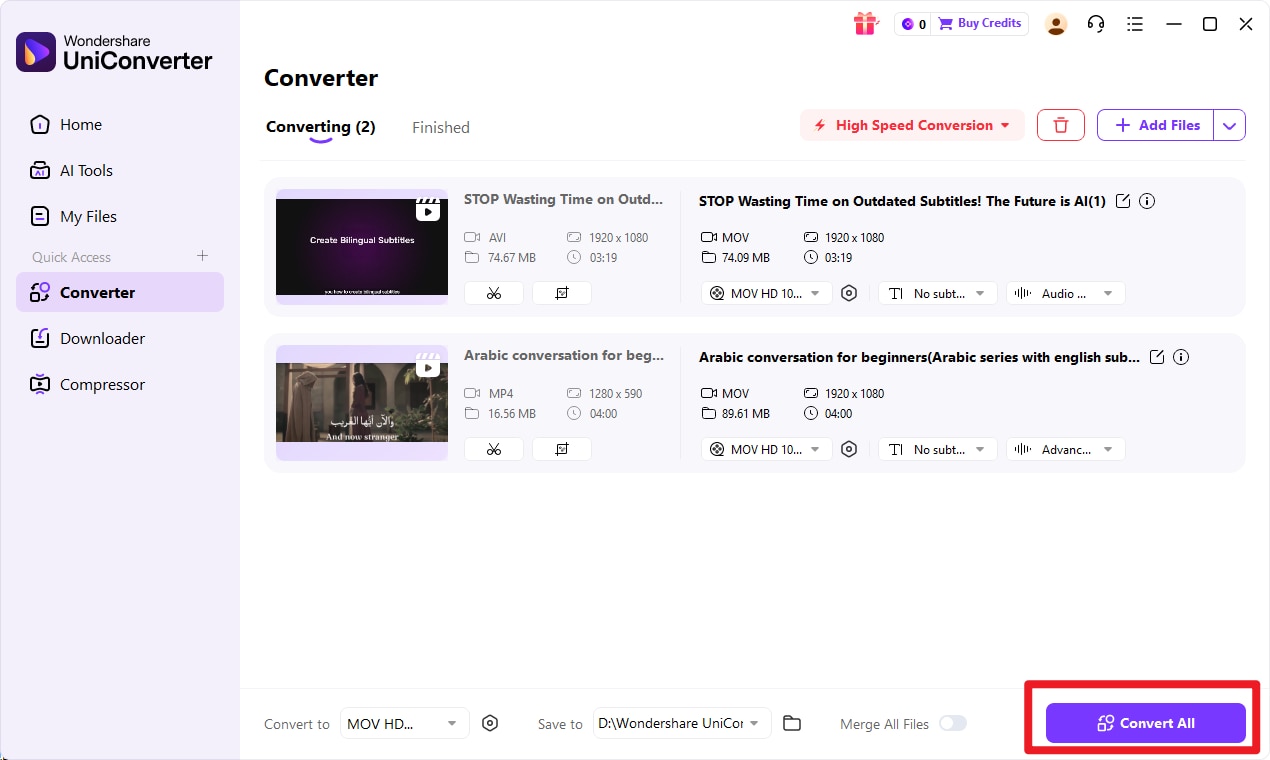
Before starting, you can choose where to save the converted file by clicking the File Location field at the bottom. Once you are ready, click the Start All button in the bottom-right corner. UniConverter will process all your files quickly and efficiently.

More Than Just a Video Converter
Conclusion
In the MKV vs M4V showdown, there is no single winner, only the right tool for the right job. Both are excellent container formats that serve different primary purposes. MKV offers unparalleled flexibility and features, making it the darling of media collectors and power users who want to preserve every bit of data. M4V, on the other hand, provides guaranteed, hassle-free compatibility for anyone living within the Apple ecosystem.
Ultimately, the choice depends entirely on where and how you plan to watch your videos. The good news is that you don't have to be locked into one format. For those moments when you need to bridge the compatibility gap—like playing a feature-rich MKV on an iPad—a reliable video converter is an essential tool. Wondershare UniConverter stands out as the top recommendation for converting MKV to M4V (or vice versa) quickly, easily, and without any loss in quality, ensuring your videos play perfectly on any device, every time.
FAQs
-
1. Does converting MKV to M4V lose quality?
No, not if done correctly. When you use a professional tool like UniConverter, the process is typically called "remuxing." This means the software simply takes the existing video and audio streams out of the MKV container and places them into a new M4V container. As long as you don't re-encode the streams (by changing the codec or lowering the bitrate), there is absolutely no loss in quality. The file is simply repackaged. -
2. Is M4V the same as MP4?
They are extremely similar and based on the same MPEG-4 Part 14 standard. The main practical difference is that the M4V container format was designed by Apple to optionally include FairPlay DRM copy protection. A non-DRM-protected M4V file is functionally identical to an MP4 file, and you can even change the file extension from `.m4v` to `.mp4` and it will play correctly in most media players. -
3. Can I play MKV files on an iPhone?
You cannot play MKV files natively on an iPhone using Apple's built-in TV or Files app. However, you have two simple solutions: 1. Install a third-party media player: Apps like VLC Media Player or Infuse are available on the App Store and can play a wide variety of formats, including MKV. 2. Convert the file: Use a tool like Wondershare UniConverter to quickly convert the MKV file to a compatible format like M4V or MP4 before transferring it to your iPhone. This will allow it to play in the native TV app.
