
Have you ever downloaded a video file labeled "MKV" only to find it won't play on your TV or smartphone? Or perhaps you've seen "H.264" in your video editing software's export settings and wondered what it means. This common confusion often leads people to ask, "Which is better, MKV or H.264?" The surprising answer is that you're not actually comparing two similar things. It's like asking if a shipping box is better than the English language. One is a container, and the other is what goes inside. Understanding this core difference is the key to solving your video playback and storage problems for good. This guide will demystify the MKV vs H.264 relationship, explain their unique roles, and show you how to make them work for you.
In this article
Part 1. What is MKV? What is H.264?
To clear up the confusion, let's first define what each term means. They serve very different purposes in the world of digital video.
What is MKV (Matroska Video)?
MKV, short for Matroska Video, is a free, open-standard multimedia container format. The best way to think of it is as a versatile digital "box" or package. This box is incredibly flexible and can hold multiple types of data all in one single file. This includes:
- One or more video tracks (which could be encoded in H.264, H.265, or other codecs).
- Multiple audio tracks (for different languages or commentaries).
- Various subtitle tracks (in different languages or formats).
- Chapter markers, menus, and other metadata.
Crucially, MKV is not a video compression format itself. It doesn't dictate the quality or size of the video; it simply holds the video that has already been compressed by a codec. Its flexibility has made it a favorite among video enthusiasts for storing high-quality rips of movies and TV shows.
What is H.264 (Advanced Video Coding or AVC)?
H.264, also known as Advanced Video Coding (AVC), is a video compression standard, or a codec. A codec's job is to compress (encode) video data to make the file size smaller for storage and transmission, and then decompress (decode) it for playback.
H.264 is exceptionally good at this, offering a fantastic balance between high video quality and low file sizes. This efficiency is why it has become the most widely used video codec on the planet. You'll find it in:
- Blu-ray Discs
- Web streaming services like YouTube and Netflix
- Digital broadcasts
- Smartphones, drones, and DSLR cameras
When you watch a video online, chances are you're watching a video that was compressed using the H.264 codec.
The Core Difference: Container vs. Codec
Here is the most important takeaway: MKV is a container, and H.264 is a codec. You are not comparing two competing formats. In fact, they frequently work together.
An MKV file can (and often does) contain a video stream that is encoded with the H.264 codec. The MKV file acts as the wrapper, holding the H.264 video, an AAC or AC3 audio track, and SRT subtitle files all together. The real question isn't "MKV vs. H.264," but rather understanding when to use the MKV container and how the H.264 codec affects your video.
Part 2. Quick Comparison Table
To make the distinction even clearer, here is a side-by-side comparison of MKV and H.264.
| Feature | MKV | H.264 |
| Type | Container Format | Video Codec (Compression Standard) |
| Function | To hold video, audio, subtitles, and metadata in one file. | To compress and decompress video data to reduce file size while maintaining quality. |
| Compatibility | Good on PCs (with players like VLC), but can have issues on some smart TVs, consoles, and mobile devices. | Extremely high. It is the most universally supported video codec across almost all devices and platforms, especially when in an MP4 container. |
| Use Case | Archiving high-quality video with multiple tracks (e.g., Blu-ray rips). | Streaming, online video, mobile video, and general video distribution. |
Part 3. MKV vs H.264: Which One Is Better?
Now that we understand they are different technologies, we can answer the practical question: which should you use? The answer depends entirely on your goal.
For Universal Compatibility: H.264 (in an MP4 container)
If your number one priority is ensuring your video plays everywhere—on any device, platform, or software—then H.264 is the undisputed king. However, the codec needs a container. When you pair the H.264 codec with the MP4 container, you create a file that is the gold standard for compatibility.
An MP4 file with H.264 video is guaranteed to play on:
- iPhones, iPads, and Android devices
- Windows, macOS, and Linux computers
- Smart TVs from Samsung, LG, Sony, etc.
- Gaming consoles like PlayStation and Xbox
- All web browsers and social media platforms
For sharing, uploading, or just ensuring hassle-free playback, H.264 in an MP4 container is the way to go.
For Flexibility and Features: MKV
If you are a data hoarder or a media enthusiast who values features and quality above all else, the MKV container is the clear winner. Its ability to bundle everything into one neat package is unmatched.
Choose MKV when you want to:
- Preserve the full experience of a Blu-ray or DVD, including all audio languages and subtitle options.
- Keep a director's commentary track alongside the main movie audio.
- Store soft subtitles that can be turned on or off, rather than subtitles that are permanently burned into the video.
MKV is the preferred choice for creating a master file or a high-quality digital archive of your media library.
The Verdict: They Work Best Together
Ultimately, the debate isn't about one being better than the other; it's about using them effectively. They are two powerful tools that serve different needs, and they often work in tandem.
- For Archiving: An MKV file containing H.264-encoded video is an excellent combination for storing high-quality video with all its features intact.
- For Sharing: An MP4 file containing H.264-encoded video is the industry standard for universal playback.
The best workflow often involves both. You might keep a feature-rich MKV file as your master copy. When you need to watch it on a device that doesn't support MKV, you can use a reliable video converter like Wondershare UniConverter to quickly create a universally compatible MP4 version without losing quality.
Part 4. Use Cases for MKV and H.264
Let's look at some real-world scenarios where you would choose one over the other.
Common Use Cases for MKV
The MKV container excels in situations where you need to package multiple data streams into a single file.
- Digital Backups: Storing digital backups of your Blu-ray and DVD collection while preserving all the original audio and subtitle tracks.
- Multi-Language Media: Creating a single movie file that includes audio tracks in English, Spanish, and French, plus corresponding subtitles.
- Feature-Rich Content: Bundling a movie with extra features like a director's commentary audio track, behind-the-scenes video clips, and chapter markers for easy navigation.
- High-Quality Archiving: Archiving raw or high-bitrate video footage from a professional camera along with associated metadata and timecodes.
Common Use Cases for H.264
The H.264 codec is all about efficient compression and broad compatibility, making it the standard for video delivery.
- Online Streaming: Uploading videos to platforms like YouTube, Vimeo, and Facebook. These services almost always re-encode video to H.264 for efficient streaming.
- Device Recording: Recording video on smartphones, DSLRs, mirrorless cameras, and action cameras. Most of these devices record in H.264 by default (usually in an MP4 or MOV container).
- Device Playback: Creating video files specifically for playback on iPhones, Android devices, Smart TVs, and game consoles where compatibility is key.
- Live Streaming: Broadcasting live events over the internet, where H.264's balance of quality and low bandwidth usage is essential.
Part 5. Step-by-Step Guide to Convert MKV to a Compatible Format Using UniConverter
So, you have an MKV file, but it won't play on your TV. This is the most common problem users face with the format. The solution is simple: convert it.
Why You Need to Convert MKV to a Compatible Format
The reason your MKV file might not play on a Smart TV, PlayStation, or older media player is often due to software limitations. The device's built-in player may not be licensed to decode the MKV container or a specific audio codec within it (like DTS).
By converting the MKV file into the universally supported MP4 container (while keeping the high-quality H.264 video stream inside), you solve these playback issues instantly. Wondershare UniConverter is a powerful and user-friendly tool that makes this process incredibly fast and simple. It can intelligently convert your files while preserving the original video quality, making it our top recommendation for this task.
How to Convert MKV to MP4 (H.264) in 4 Simple Steps with UniConverter
Follow these steps to make your MKV file playable on any device.
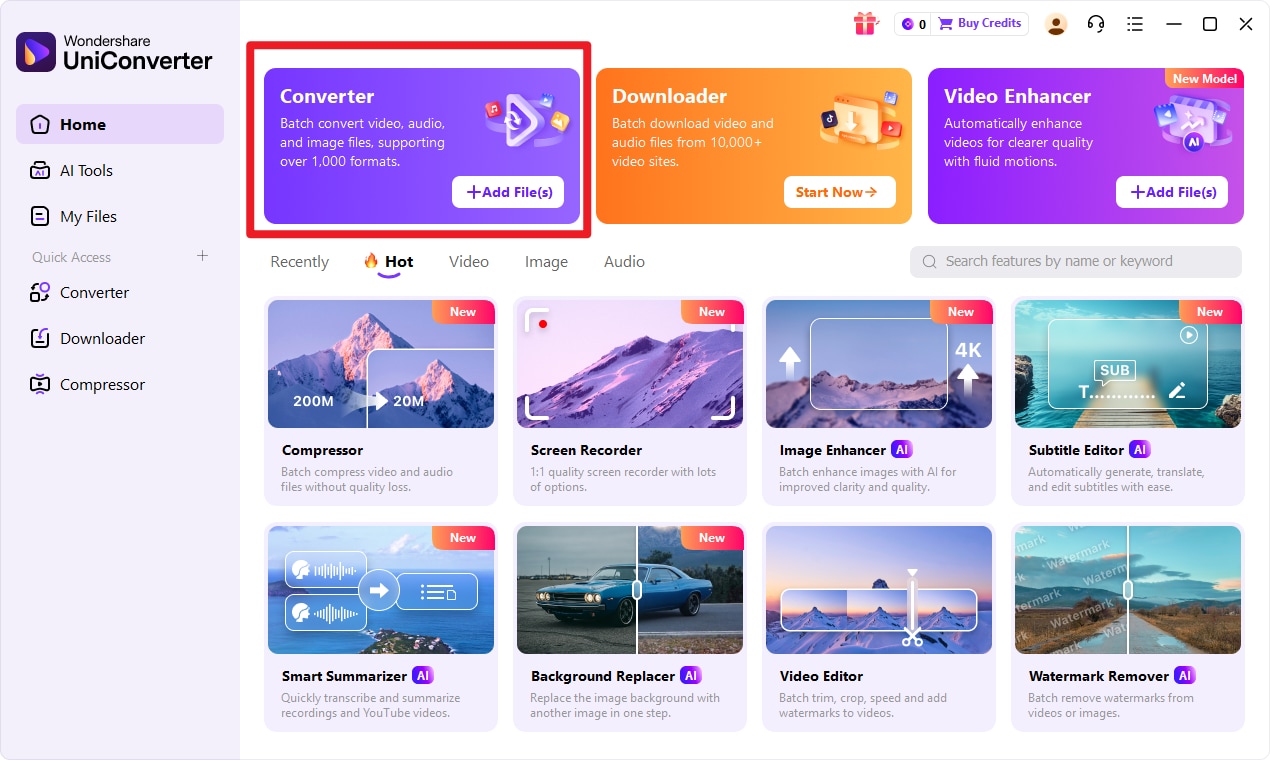
Step 1. Launch Wondershare UniConverter
Launch Wondershare UniConverter on your computer. In the main interface, ensure you are on the Converter tab.
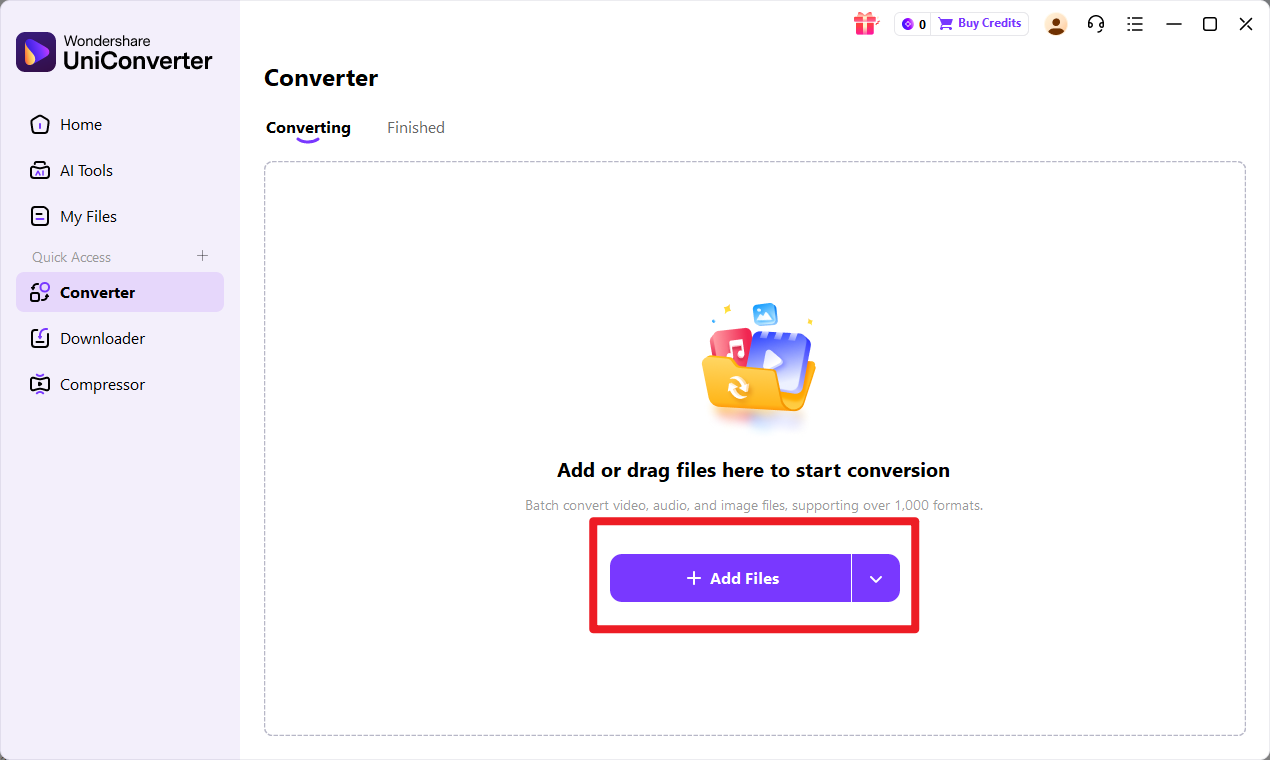
Step 2. Add Files to UniConverter
You can either drag and drop your MKV file directly into the program window or click the "Add Files" button to browse and select it from your computer.
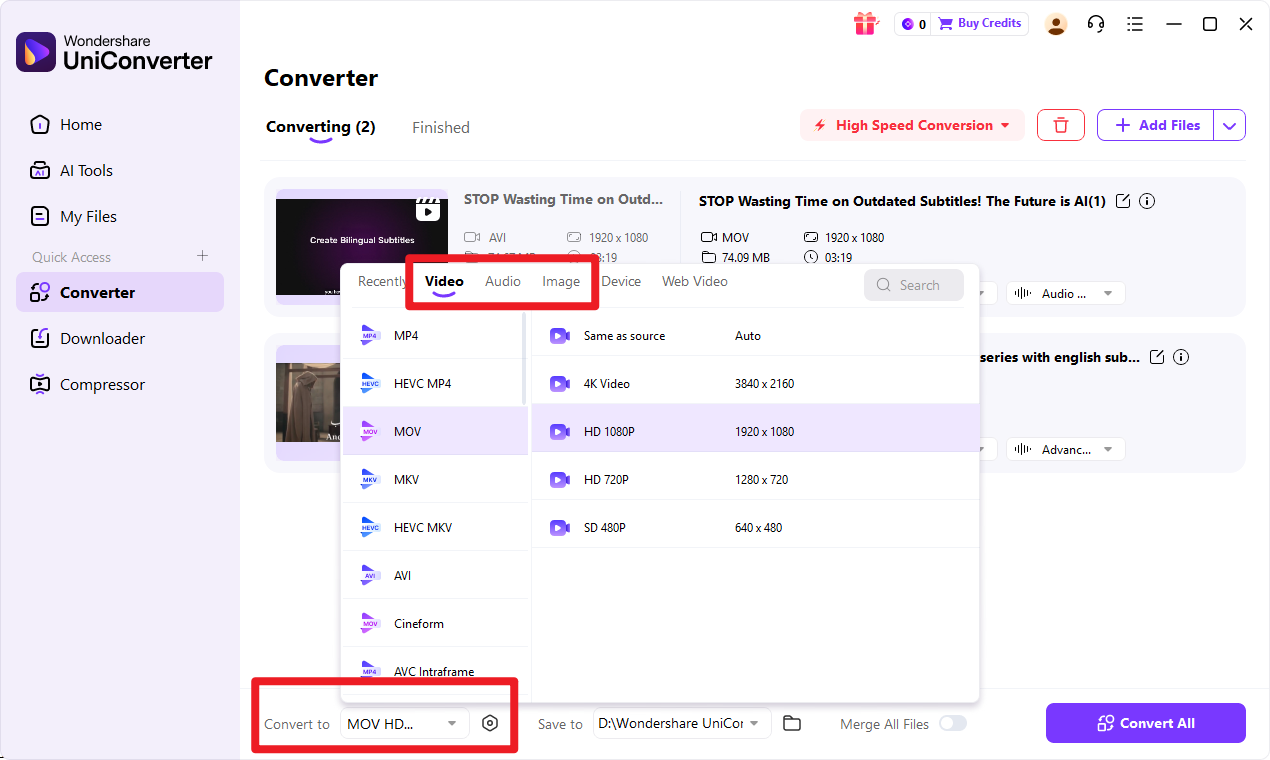
Step 3. Choose Output Format
Look at the bottom of the UniConverter window and click on the Output Format menu. A new window will pop up. Go to the Video tab, select MP4 from the format list on the left, and then choose a resolution on the right. Selecting "Same as source" is usually the best option to maintain the original quality. The default codec for the MP4 profile is already H.264, so you don't need to change anything else.
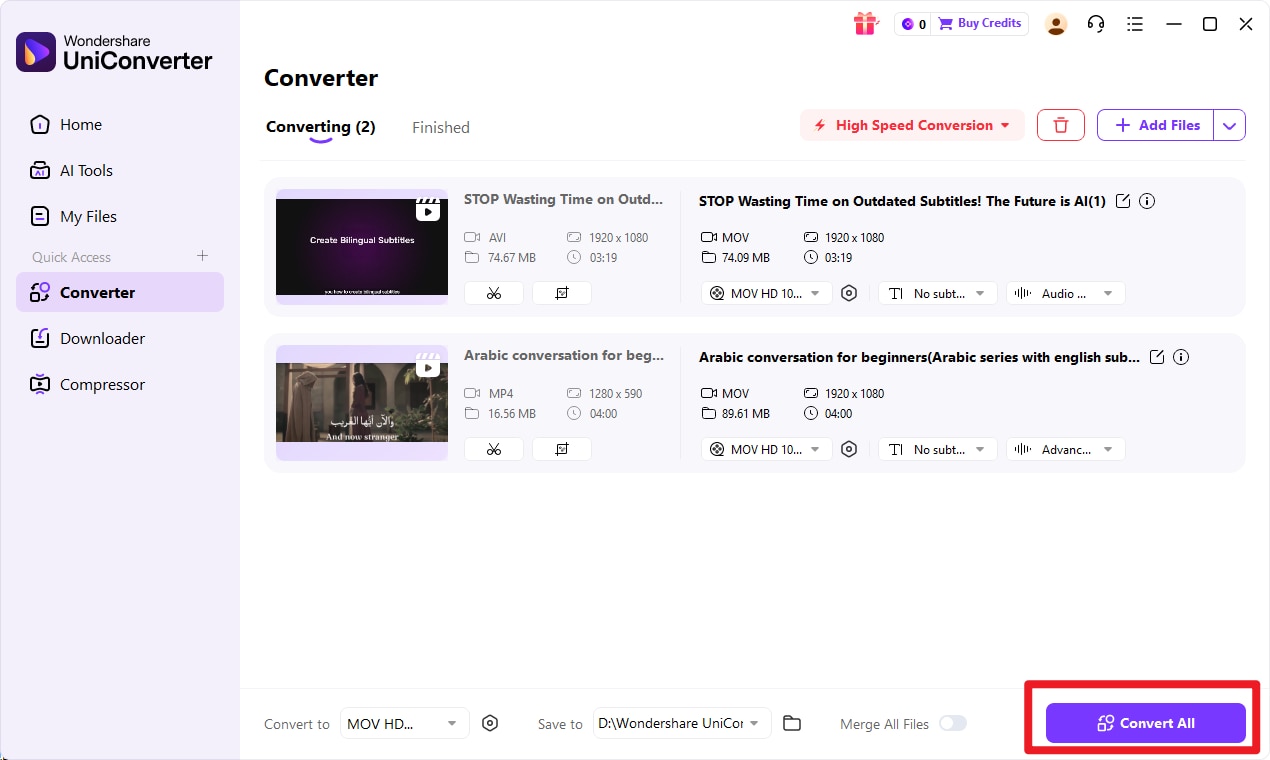
Step 4. Start the Conversion
Before starting, you can specify where to save the new file by using the File Location menu at the bottom. Once you've chosen a destination folder, simply click the Convert button next to the file (or Start All if you've added multiple files). UniConverter will begin the conversion process.

Go Beyond Simple MKV to MP4 Conversion
FAQs
-
1. Can an MKV file contain H.264 video?
Yes, absolutely. This is one of the most common and effective combinations. The MKV container simply acts as a wrapper to hold the H.264 video stream, along with any audio and subtitle tracks you want to include. -
2. Is MKV higher quality than MP4?
Not inherently. The quality of a video is not determined by its container (MKV or MP4). It is determined by the codec used (like H.264), the bitrate (the amount of data used per second), the resolution, and the frame rate of the video stream *inside* the container. An MKV and an MP4 file can contain the exact same H.264 video stream and thus have identical quality. -
3. Why won't my MKV file play on my TV?
This is usually because your TV's built-in media player software lacks support for the MKV container format itself. In other cases, it might support MKV but not a specific audio codec within the file, such as DTS or TrueHD audio. Converting the file to the universally supported MP4 (H.264 video/AAC audio) format with a tool like UniConverter is the most reliable fix for this issue. -
4. Does converting MKV to MP4 reduce quality?
It depends on how you do it. If the MKV file already contains H.264 video and AAC/MP3 audio, a professional tool like UniConverter can perform a "remux" or "re-wrap." This process simply copies the video and audio streams from the MKV container into a new MP4 container without re-encoding them, resulting in zero quality loss and a near-instant conversion. If re-encoding is required (for example, to change an unsupported audio format), you can set a high bitrate in UniConverter to ensure the quality remains visually identical to the original.
Conclusion
The MKV vs H.264 discussion is less of a competition and more about understanding two different technologies that work together. MKV is a highly flexible container format perfect for archiving media with multiple tracks, while H.264 is the world's most popular video codec, delivering excellent quality at manageable file sizes. The "best" choice is entirely dependent on your specific needs: use MKV for its feature-rich flexibility and an H.264-encoded MP4 for maximum compatibility across all your devices. When you encounter playback issues with your MKV files, the most efficient and effective solution is to use a powerful and reliable tool like Wondershare UniConverter to convert them into a universally playable format, ensuring you can enjoy your media anywhere, anytime, without sacrificing quality.
