
MKV vs ASF: Which Video Format Is Better for You?
Navigating the world of digital video can often feel like swimming in an alphabet soup of file extensions. Two formats you might encounter are MKV and ASF. While they both serve as containers for video and audio data, they were designed with very different philosophies and purposes in mind. Understanding the core differences between MKV vs ASF is crucial for anyone looking to store, stream, or share video content efficiently. Whether you're a film enthusiast archiving your collection, a content creator distributing your work, or simply trying to solve a playback issue, choosing the right format can save you time and frustration.
This guide will provide a comprehensive comparison between the MKV and ASF formats. We will break down their technical specifications, explore their strengths and weaknesses, and help you determine which one is the superior choice for your specific needs. We'll also show you how to easily convert between them if you need to bridge a compatibility gap.
In this article
Part 1. What is an MKV file? What is an ASF file?
Before we dive into a direct comparison, it's essential to understand what each format is at a fundamental level. Both are container formats, meaning they don't define how the video or audio is compressed; rather, they act as a wrapper that holds various data streams together.
What is an MKV file?
MKV, which stands for Matroska Video, is an open-standard, free container format. The name "Matroska" is derived from the Russian word for nesting dolls (matryoshka), which perfectly illustrates its core capability: holding a virtually unlimited number of video, audio, picture, or subtitle tracks within a single file. This makes it incredibly flexible.
Developed as an open-source project, MKV is not tied to any single company or platform. This has led to its widespread adoption and continuous development by a global community. It is renowned for its ability to store high-definition (HD) and Ultra High-Definition (4K) video content, complete with multiple audio languages and subtitle options, making it a favorite among video enthusiasts for archiving and media library management.
What is an ASF file?
ASF, or Advanced Systems Format (later renamed Advanced Streaming Format), is a proprietary digital audio/digital video container format developed by Microsoft. It was created specifically as part of the Windows Media framework. Unlike the all-encompassing design of MKV, ASF was engineered with a primary focus on streaming media over the internet or other networks.
An ASF file typically contains video and audio data compressed with Microsoft's own codecs, namely Windows Media Video (WMV) and Windows Media Audio (WMA). While it can technically hold data compressed with other codecs, its primary design and optimization are for the Windows Media ecosystem. Its structure includes features beneficial for streaming, such as error correction and the ability to play back files as they are being downloaded.
Part 2. Quick Comparison Table
For a quick overview, here is a side-by-side comparison of the key attributes of MKV and ASF.
| Feature | MKV | ASF |
| Developer | Matroska Project | Microsoft |
| Open Source | Yes | No (Proprietary) |
| Video Codec Support | Virtually any codec (H.264, H.265/HEVC, VP9, etc.) | Primarily WMV, but can support others |
| Audio Codec Support | Virtually any codec (AAC, AC3, DTS, FLAC, etc.) | Primarily WMA, but can support others |
| Subtitle Support | Excellent, supports multiple soft subtitles (SRT, ASS) | Limited, often requires hardcoding subtitles into the video stream |
| Main Use Case | High-quality video storage, archiving, media libraries | Streaming media over the internet, especially in Windows environments |
| Compatibility | Very wide on modern devices and players | Good within the Windows ecosystem, less common elsewhere |
Part 3. MKV vs ASF: Which One Is Better?
Now that we have a general understanding, let's delve deeper into the practical differences to help you decide which format is better for your situation.
Compatibility and Playback: The Deciding Factor
For many users, compatibility is the most important consideration. A video file is useless if you can't play it on your device.
MKV: Thanks to its open-source nature, MKV enjoys broad support across a vast range of devices and operating systems. Media players like VLC Media Player, Plex, and Kodi handle MKV files flawlessly on Windows, macOS, and Linux. Many modern smart TVs, streaming devices, and game consoles also offer native support for MKV playback. Its versatility makes it a reliable choice for a personal media library that you want to access on various gadgets.
ASF: Being a Microsoft product, ASF is natively supported by Windows Media Player and other applications within the Windows ecosystem. However, its compatibility outside of this environment is limited. On macOS or Linux, you will almost certainly need to install a third-party player like VLC to open ASF files. Apple's native QuickTime Player does not support it, and many non-Windows hardware devices may struggle or fail to play ASF content.
Winner: MKV, for its near-universal compatibility on modern platforms.
Quality and Features: Flexibility vs. Specialization
The container format itself doesn't dictate video quality—that's determined by the codec and bitrate. However, the container's features can significantly impact the overall viewing experience.
MKV: This is where MKV truly shines. Its ability to hold multiple video streams (e.g., different camera angles), numerous audio tracks (e.g., director's commentary, multiple languages), and several subtitle files in different languages is unmatched. It also supports modern features like chapters for easy navigation, menus, and advanced codecs like H.265 (HEVC), which is crucial for efficient 4K video compression. This makes MKV the ideal format for creating a feature-rich, Blu-ray-like experience from a single file.
ASF: ASF is more specialized. Its feature set is geared towards ensuring a smooth streaming experience. It was designed to be resilient to data loss during transmission, which was critical in the early days of internet streaming. However, it lacks the advanced container features of MKV. Support for multiple audio or subtitle tracks is not as robust, and it's not typically associated with the latest high-end video codecs or features like chapter markers.
Winner: MKV, for its incredible flexibility and support for a rich set of features.
File Size: Is There a Clear Winner?
A common misconception is that the container format (the .mkv or .asf extension) determines the file size. In reality, the file size is almost entirely dependent on two things: the codec used to compress the video and audio, and the bitrate at which they are encoded.
For example, a 10-minute video encoded with the H.264 codec at a bitrate of 5 Mbps will have a nearly identical file size whether it is saved in an MKV or an ASF container. The container itself adds only a tiny amount of overhead. Therefore, neither format has an inherent advantage in terms of file size for a given quality level.
Winner: Tie. File size is determined by encoding settings, not the container.
Open Standard vs. Proprietary: Why It Matters
The development model behind a format can have long-term implications for its usability and longevity.
MKV: As an open-standard and royalty-free format, MKV is future-proof. It is not controlled by any single corporation, meaning its development is driven by community needs and it can be freely implemented in any software or hardware without licensing fees. This encourages innovation and ensures that the format will remain accessible for years to come.
ASF: As a proprietary format, ASF is entirely controlled by Microsoft. Its development, features, and future are subject to Microsoft's corporate strategy. While this ensures tight integration with Windows products, it can also limit its adoption and adaptability on other platforms. Developers may be hesitant to support a proprietary format that could involve licensing fees or be discontinued in the future.
Winner: MKV, for the security, freedom, and future-proofing that comes with an open standard.
Part 4. Use Cases for MKV and ASF
Based on their respective strengths, here's when you should choose one format over the other.
When to Use MKV
You should opt for the MKV format in the following scenarios:
Archiving Your Media: If you are ripping your Blu-ray or DVD collection to a digital library, MKV is the perfect choice. It allows you to preserve all the original content, including multiple audio tracks, subtitle options, and chapter markers, in a single, convenient file.
High-Quality Video Storage: For storing high-definition (1080p) or ultra-high-definition (4K) movies and TV shows, MKV's support for modern, efficient codecs like H.265/HEVC makes it ideal. You can maintain stunning visual quality while keeping file sizes manageable.
Creating a Versatile Library: When you want your video files to be playable on a wide array of devices—from your laptop and phone to your smart TV and media server (like Plex)—MKV's excellent compatibility makes it the most reliable option.
When to Use ASF
The use cases for ASF are more niche in 2026, but it can still be relevant:
Streaming in a Windows Environment: If you are setting up a streaming server that will primarily serve content to Windows-based clients using Windows Media Services, ASF is the native and most optimized format for the job.
Legacy Content Creation: If you are creating video content specifically for older Windows applications or systems that rely on Windows Media Player, using the ASF/WMV combination ensures maximum compatibility within that closed ecosystem.
Prioritizing Streaming Resilience: In situations with unstable network connections, ASF's built-in error correction and streaming-focused architecture might offer a slightly more stable playback experience than other formats not specifically designed for it.
Part 5. Step-by-Step Guide to Convert MKV to ASF Using UniConverter
If you have an MKV file that you need to use in a Windows-only streaming environment, or an ASF file that you want to play on your Mac or add to your Plex library, you'll need to convert it. A professional video converter is essential to ensure the process is fast, easy, and maintains video quality. Wondershare UniConverter is an excellent tool for this, supporting over 1,000 formats, including MKV and ASF, with GPU-accelerated conversions.
Here's how to convert your files in four simple steps.
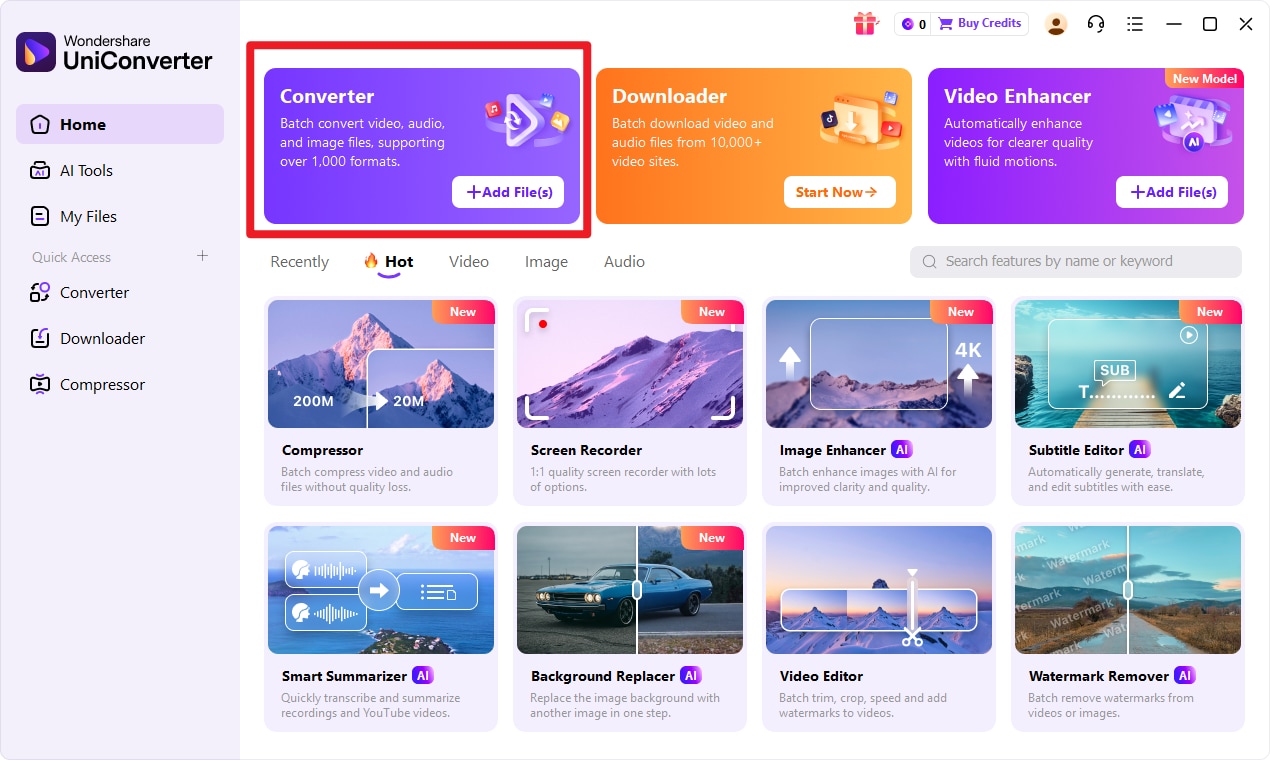
Step 1. Choose Converter in UniConverter
Launch Wondershare UniConverter on your computer. From the main dashboard, navigate to the left-side menu and click on the Converter tool.
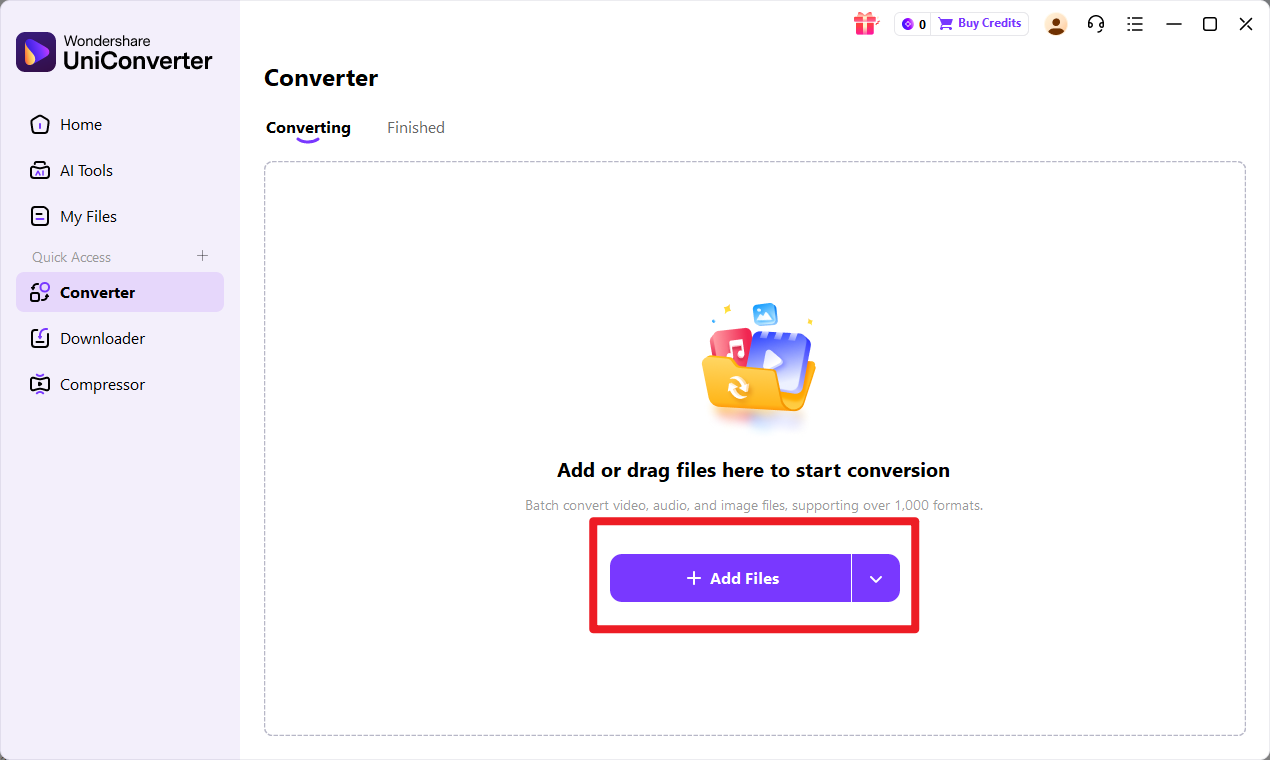
Step 2. Add Files to UniConverter
In the Converter window, you can either click the Add Files icon to browse and select your input format files or simply drag and drop them directly onto the interface. UniConverter supports batch conversion, so feel free to add multiple files at once.
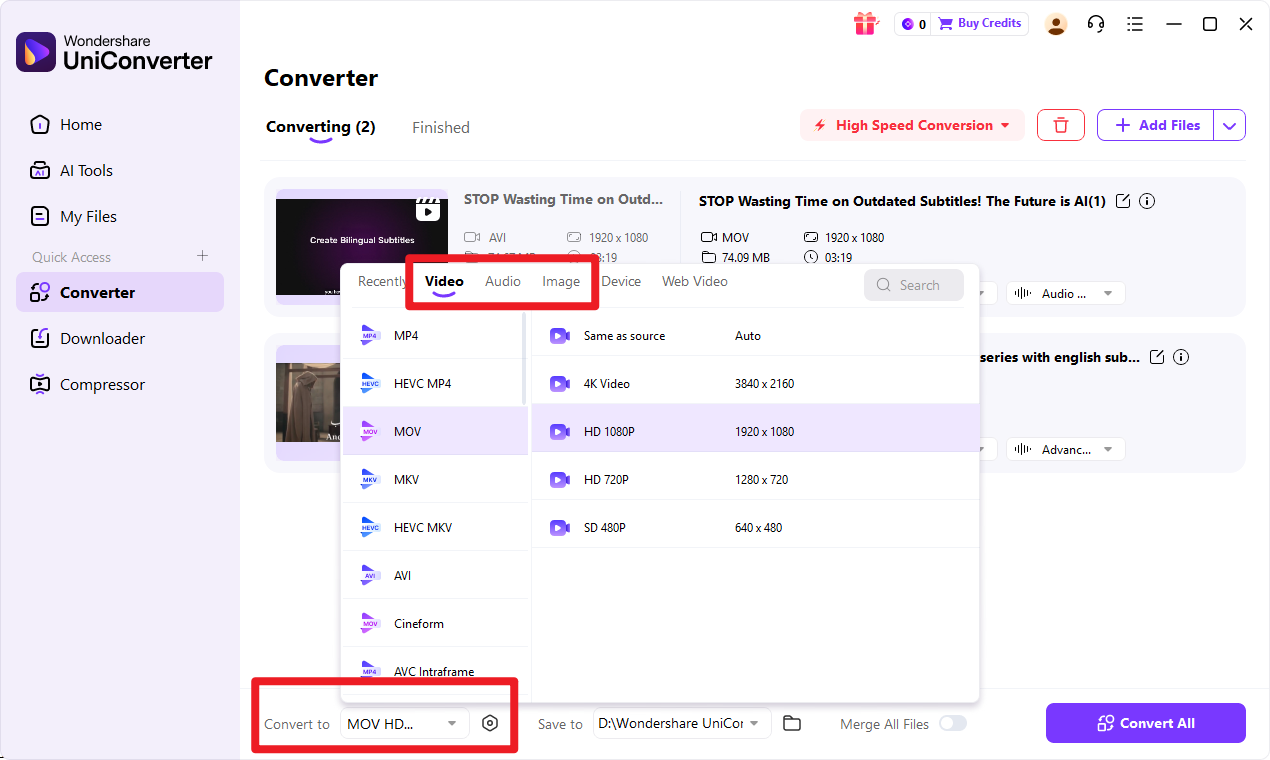
Step 3. Choose Output Format
At the bottom of the window, click on the Output Format menu. A new window will appear. Select the Video tab, choose your desired target format (e.g., ASF or MKV) from the list on the left, and then select a resolution on the right. You can choose "Same as source" to maintain the original resolution.
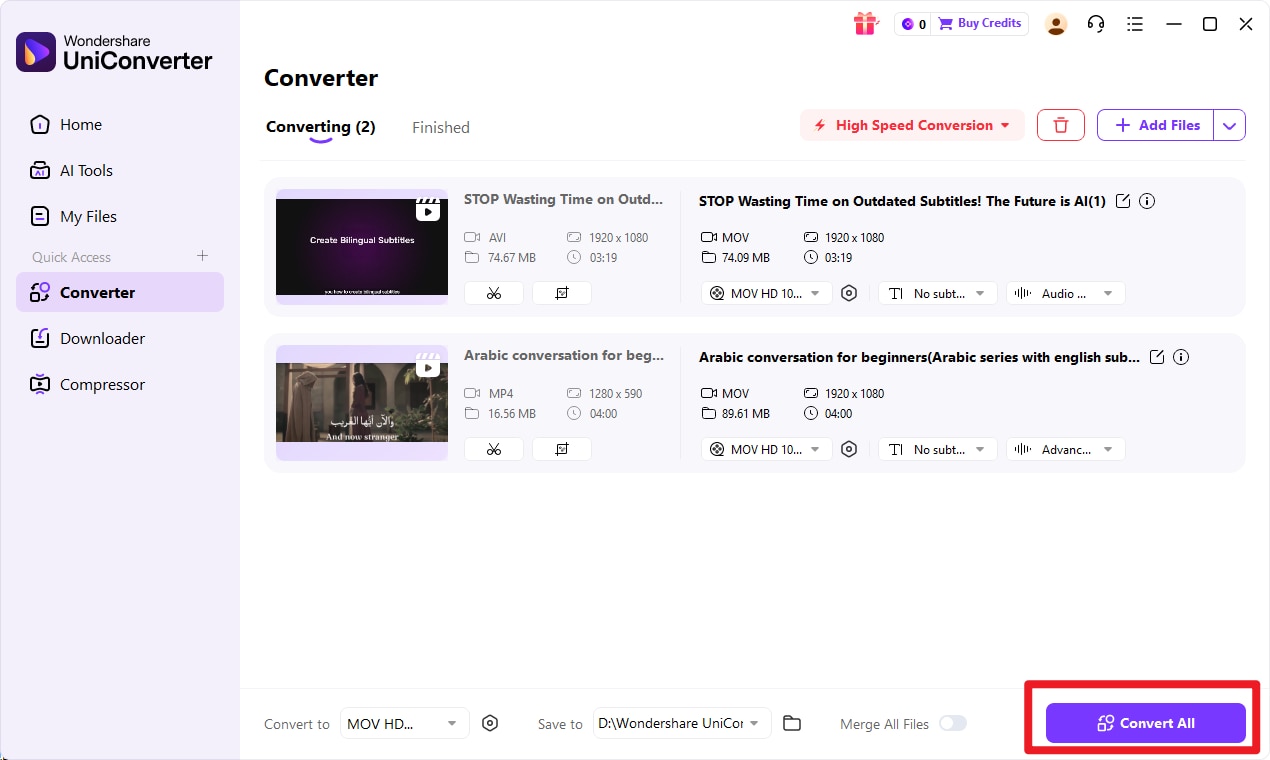
Step 4. Start the Conversion
Finally, choose a destination for your converted file by using the File Location option at the bottom. Once you are ready, click the Start All button to begin the conversion process. Your files will be converted to the target format quickly and saved to your specified folder.

More Than Just a Video Converter
Conclusion
In the Wondershare UniConverter showdown, there is a clear winner for most modern use cases. MKV stands out as the more versatile, feature-rich, and future-proof container format. Its open-source nature and broad compatibility make it the superior choice for building a personal media library, archiving high-quality video, and ensuring your files play on virtually any device. ASF, while important in the history of streaming, is now largely a legacy format best suited for niche applications within the Microsoft Windows ecosystem.
Ultimately, the best format depends on your specific goal. If you prioritize flexibility, quality, and features, choose MKV. If you are working exclusively within a Windows Media streaming environment, ASF remains a viable option. And for those times when you need to bridge the gap between these two worlds, a powerful tool like Wondershare UniConverter provides a fast, reliable, and high-quality solution for all your conversion needs.
FAQs
-
1. Is MKV higher quality than ASF?
Not necessarily. The container format (MKV or ASF) does not determine the video quality. Quality is dictated by the video and audio codecs (e.g., H.264, WMV) and the bitrate used during the encoding process. Both formats can contain very high-quality video; however, MKV is more commonly associated with high-definition content due to its flexible feature set. -
2. Can I play an ASF file on a Mac?
Yes, but not with macOS's native QuickTime Player. You will need to download and install a versatile third-party media player like VLC Media Player, which includes the necessary codecs to play ASF and WMV files on a Mac. -
3. Will I lose quality when converting MKV to ASF?
Any time you re-encode a video file, there is a potential for quality loss. However, this loss can be minimized to be virtually unnoticeable by using a professional conversion tool. A program like Wondershare UniConverter allows you to control the encoding settings, such as bitrate and resolution, ensuring you can convert from MKV to ASF (or vice versa) while maintaining the highest possible quality.
