
Have you ever downloaded a movie file only to find it won't play on your device? Or received a video from a friend that looks pixelated and tiny on your computer screen? You've likely encountered the common confusion surrounding different video formats. Two formats that represent opposite ends of the spectrum are MKV and 3GP. The MKV vs 3GP debate isn't about which one is universally "better," but which one is right for your specific situation. One is a modern, high-quality container, while the other is a legacy format built for a time when internet speeds and storage space were severely limited.
Understanding the core differences between these two formats is the first step to solving your compatibility and quality issues. Whether you're a movie enthusiast trying to archive your collection or someone just trying to share a video clip with family, knowing when to use MKV and when to use 3GP can save you a lot of frustration. This guide will break down everything you need to know, from their technical specifications to their practical, everyday use cases.
In this article, we will cover:
- An introduction to the MKV and 3GP formats.
- A quick comparison table for an at-a-glance overview.
- A detailed analysis of which format is better for quality, file size, and compatibility.
- Practical use cases for both MKV and 3GP.
- A step-by-step guide on how to convert files between these formats.
Part 1. What is an MKV? What is a 3GP?
Before we can compare them, it's important to understand what each format is and what it was designed for. Their origins and intended purposes are the primary reasons they are so different.
What is an MKV file?
MKV, which stands for Matroska Video, is not a video compression standard but a flexible, open-standard container format. Think of it as a digital box that can hold a vast amount of data in a single file. An MKV file can contain an unlimited number of video, audio, picture, or subtitle tracks, all wrapped together. This makes it incredibly versatile. For example, a single MKV movie file can contain the main video stream, multiple audio tracks for different languages (e.g., English, Spanish, French), and several subtitle tracks for various languages as well.
Because of its robust capabilities, MKV has become the preferred format for high-definition content, including 720p, 1080p, and even 4K Ultra HD video. It can efficiently store video compressed with advanced codecs like H.264 (AVC) or H.265 (HEVC) while preserving maximum quality. Its open-source and royalty-free nature has led to widespread adoption on modern devices, including PCs, Macs, smart TVs, and media players like VLC.
What is a 3GP file?
The 3GP format is a multimedia container format that was defined by the Third Generation Partnership Project (3GPP). As its name suggests, it was created specifically for 3G mobile phones and the networks they ran on. Back in the early 2000s, mobile data was slow and expensive, and phone storage was extremely limited. The primary goal of the 3GP format was to create video files that were small enough to be sent and received over these constrained mobile networks.
To achieve this, 3GP uses older, less efficient video and audio codecs and applies heavy compression. This drastically reduces the file size at the cost of significant quality loss. Videos in this format often have low resolutions and bitrates, resulting in a blocky or blurry appearance when viewed on anything larger than a small phone screen from that era. While modern smartphones can still play 3GP files, the format is largely considered outdated for general use, having been superseded by the more efficient MP4 format for mobile video.
Part 2. Quick Comparison Table
For a quick summary, here is a table that highlights the key differences between the MKV and 3GP formats. This should help you see their distinct strengths and weaknesses at a glance.
| Feature | MKV | 3GP |
| Video Quality | High to Lossless | Low to Standard |
| File Size | Large | Very Small |
| Primary Use Case | Storing high-quality movies and TV shows | Mobile video messaging and streaming on slow networks |
| Compatibility | Modern PCs, smart TVs, media players | Legacy mobile phones, some messaging apps |
| Subtitle Support | Excellent, supports multiple tracks and formats | Limited or no support |
| Multiple Audio Tracks | Yes | No |
Part 3. MKV vs 3GP: Which One Is Better?
Now that we have a foundational understanding, let's dive deeper into a direct comparison across the factors that matter most to users: quality, file size, compatibility, and features.
Quality: MKV for High-Fidelity Viewing
When it comes to video and audio quality, there is no contest: MKV is the clear winner. The MKV container is designed to hold high-quality data. It acts as a wrapper for modern, efficient video codecs like H.264, H.265 (HEVC), and AV1, which are the standards for Blu-ray discs and 4K streaming services. This means an MKV file can deliver a viewing experience that is identical to the original source, with sharp details, vibrant colors, and crisp audio. It's the ideal choice for anyone who values a cinematic experience and wants to watch content on a large screen like a high-definition TV or a computer monitor.
In stark contrast, 3GP is built for the opposite purpose. It prioritizes small file size above all else, which it achieves through aggressive compression. This process discards a massive amount of video and audio data, leading to a significant loss in quality. On a large screen, 3GP videos often exhibit noticeable pixelation, color banding, and other compression artifacts. The audio is also typically low-bitrate mono or stereo, lacking the richness and clarity of the audio found in MKV files.
File Size: 3GP for Maximum Portability
This is where the 3GP format shines. Because of its heavy compression and low-quality codecs, 3GP files are incredibly small. A short video clip that might be 50 MB as an MP4 could be as small as 5 MB in the 3GP format. This makes it perfect for situations where file size is the most critical factor. If you need to send a video over a messaging app with a strict file size limit, share a clip over a very slow or unstable internet connection, or store many short videos on a device with minimal storage space (like an old feature phone), 3GP is a practical choice.
MKV files, on the other hand, are on the larger end of the scale. Since they contain high-bitrate video, multiple audio tracks, and subtitles, a full-length movie in 1080p can easily range from 8 GB to 20 GB or more. Even a short, high-quality clip will be significantly larger than its 3GP counterpart. This large size makes MKV files unsuitable for quick sharing over mobile networks or for storage on devices with limited capacity.
Compatibility: A Generational Divide
Compatibility is where we see a clear generational and technological divide between the two formats. MKV is the modern standard for high-quality video playback. It is natively supported on Windows 10 and 11, and widely supported across macOS and Linux systems with free media players like VLC. Nearly all modern smart TVs, streaming boxes (like Roku or Nvidia Shield), and gaming consoles can play MKV files without any issue, either directly from a USB drive or over a home network.
3GP is a legacy format. Its primary compatibility lies with the devices it was designed for: 2G, 3G, and some 4G feature phones. While virtually all modern Android and iOS smartphones can play 3GP files for backward compatibility, it is not a preferred or default format. You will rarely, if ever, find a smart TV or dedicated media player that lists 3GP as a supported format. Trying to play a 3GP file on a 4K TV will work, but the low-resolution video will look extremely poor stretched across the large screen.
Features: MKV's Versatility
Beyond video and audio, the MKV container format is far more versatile and feature-rich. Its ability to hold multiple audio and subtitle tracks in a single file is a major advantage for movie lovers and multilingual users. You can switch between the director's commentary audio track and the main movie audio, or toggle between English, Spanish, and French subtitles on the fly. MKV also supports chapter points for easy navigation, menus, and metadata tags, making it a comprehensive package for media organization.
The 3GP format is spartan by comparison. It is a basic container designed to hold just one video track and one audio track. It has no support for advanced features like multiple audio streams, complex subtitles, or chapter markers. Its sole purpose is to package a simple video clip for playback, with no extra frills.
Part 4. Use Cases for MKV and 3GP
So, when should you actually use each format? The choice depends entirely on your goal.
When to Use MKV
- Archiving Your Media Collection: If you are ripping your personal Blu-ray or DVD collection to a digital format, MKV is the perfect choice to preserve the full quality, along with all language tracks and subtitles.
- High-Quality Playback: For watching movies and TV shows on your computer, smart TV, or home theater projector, MKV ensures you get the best possible viewing experience.
- Content with Multiple Languages: If you have a video that needs to include audio tracks or subtitles in different languages, MKV is one of the few formats that can handle this seamlessly.
- Future-Proofing: Storing your videos in a high-quality format like MKV ensures they will still look great on the higher-resolution screens of the future.
When to Use 3GP
- Extreme File Size Constraints: If you absolutely must send a video through an application with a very small file size limit (e.g., an old MMS service), converting it to 3GP might be your only option.
- Sharing on Slow Networks: When you are on a very slow or unreliable internet connection (like in a remote area with only a 2G/3G signal), the tiny file size of a 3GP video can make sharing possible where other formats would fail.
- Compatibility with Legacy Devices: If you need to send a video to someone who is still using an old feature phone that doesn't support MP4, 3GP is the format most likely to work.
- When Quality is Not a Concern: In situations where the content of the video is all that matters and the visual quality is completely irrelevant, 3GP can be used to save a massive amount of storage space.
Part 5. Step-by-Step Guide to Convert MKV to 3GP Using UniConverter
If you have a high-quality MKV file that you need to send to someone with an older phone or compress for a messaging app, you'll need to convert it. This process involves re-encoding the video into the 3GP format, which will reduce its quality and file size. A powerful and user-friendly tool for this task is Wondershare UniConverter. It simplifies the conversion process and supports over 1000 formats, making it an all-in-one video toolkit.
Follow these four simple steps to convert your MKV file to 3GP.
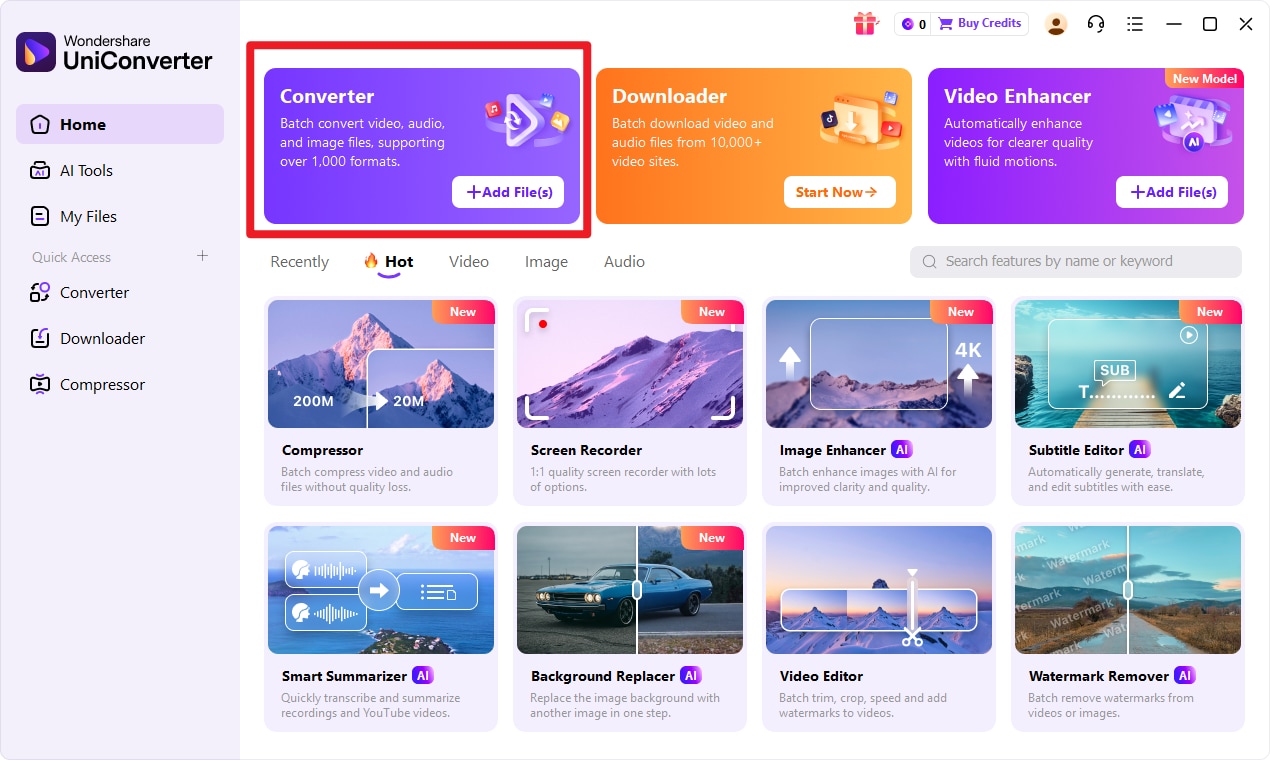
Step 1: Choose Converter in UniConverter
First, download and install Wondershare UniConverter on your Windows or Mac computer. Launch the application. From the main screen, you will see a menu on the left-hand side. Click on the Converter tab to open the video conversion module.
Step 2: Add Files to UniConverter
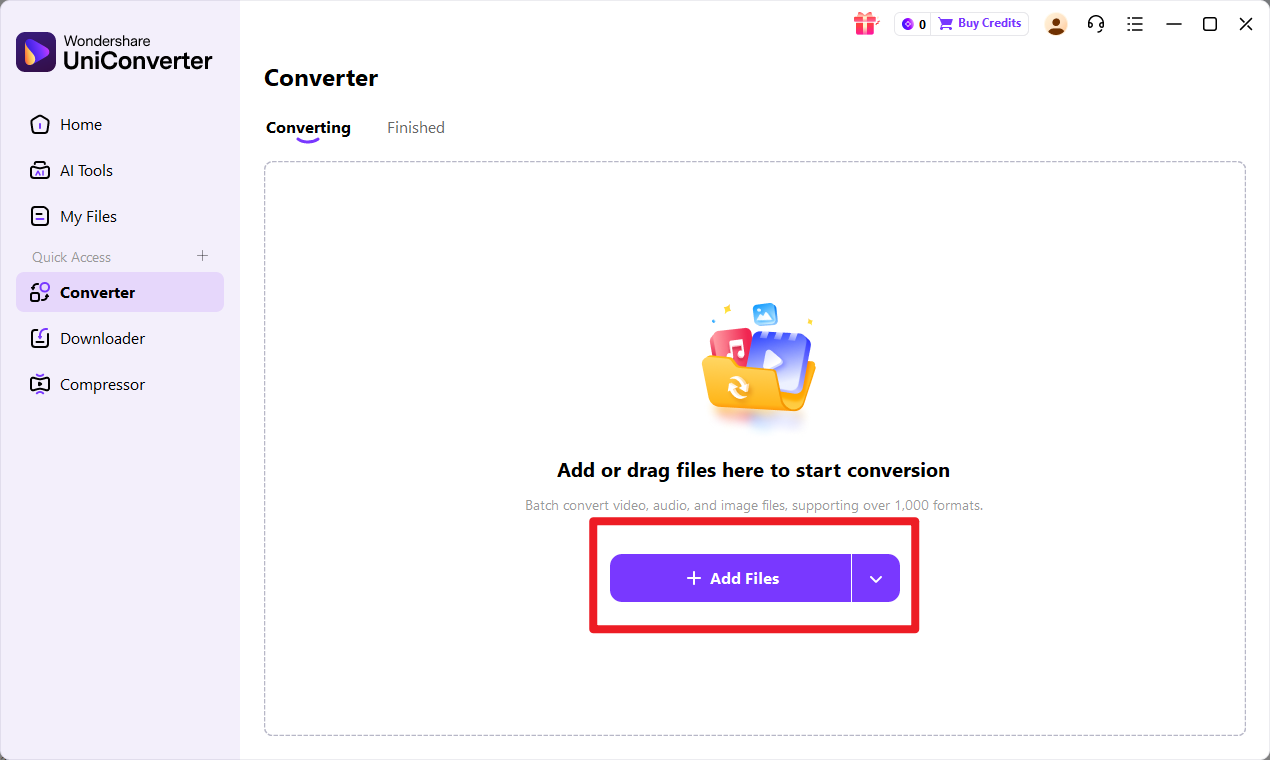
Now you need to import the MKV file you want to convert. You can simply drag your input format file from a folder on your computer and drop it directly onto the UniConverter window. Alternatively, you can click the Add Files icon in the top-left corner to open a file browser and select the video you wish to convert.
Step 3: Choose Output Format
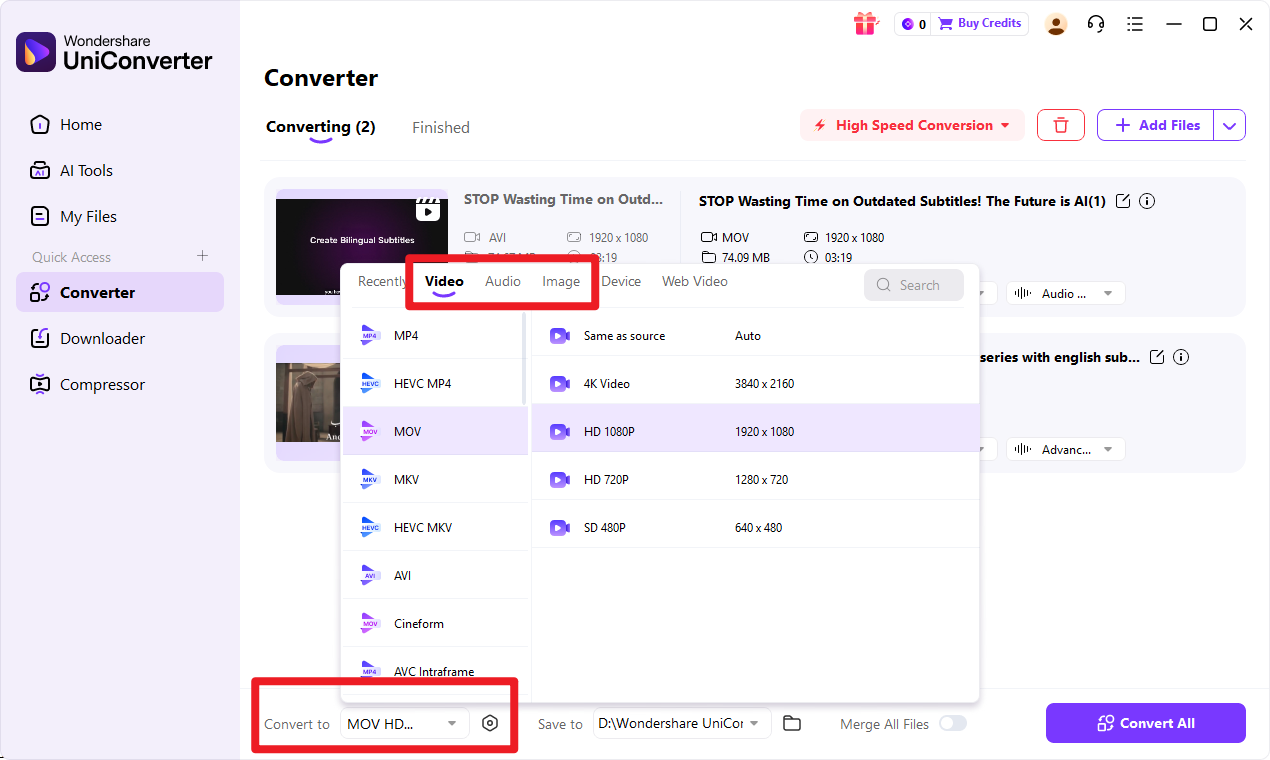
With your video loaded, look towards the bottom of the window and click on the Output Format option. This will open a new pop-up window with a list of available formats. Click on the Video tab, scroll down the list on the left to find and select your target format, and then choose a desired resolution on the right. For 3GP, a lower resolution is usually appropriate.
Step 4: Start the Conversion
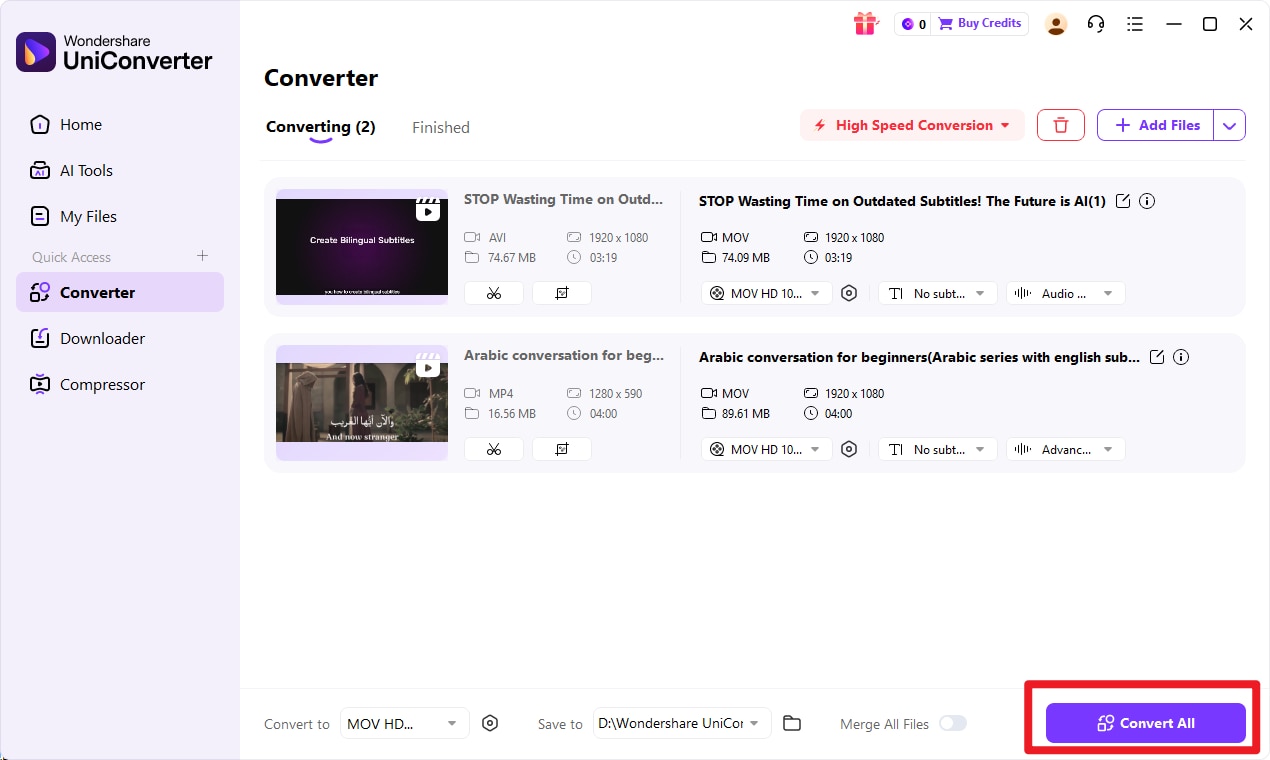
Before starting, you can choose where to save your converted file by using the File Location field at the bottom of the window. Once you have set the output folder, simply click the Start All button (or the Convert button next to the individual file) to begin the conversion process. UniConverter will quickly convert your file to the target format and save it to your chosen destination.

Handle All Your Video Conversion Needs
Conclusion
Choosing between MKV and 3GP is a clear-cut decision based on your priorities. MKV is the undisputed champion for quality, features, and modern media consumption. It is the best choice for storing, archiving, and watching high-definition video on PCs, smart TVs, and dedicated media players. In contrast, 3GP is a legacy format that, while largely outdated in 2026, still holds a niche purpose for situations demanding extreme compression and compatibility with very old mobile devices. Its primary strength is its incredibly small file size, achieved at the expense of quality.
For any scenario where you need to bridge the gap between these two worlds—whether it's converting a high-quality MKV for mobile sharing or trying to play a legacy 3GP file on a modern device—a versatile video converter is an indispensable tool. Wondershare UniConverter offers a fast, reliable, and user-friendly solution, empowering you to handle any video conversion task with ease and ensuring your media is ready for any device, anytime.
FAQs
-
1. Can I play an MKV file on my phone?
Most modern Android and iOS smartphones can play MKV files without issue, especially if you install a versatile third-party media player app like VLC Media Player. These apps contain their own codecs and can handle formats that the phone's native player might not support. However, older or more basic feature phones will not be able to play MKV files. -
2. Is 3GP an obsolete format?
For most modern applications, yes, 3GP is considered obsolete. The MP4 format has largely replaced it as the standard for mobile video, offering a much better balance of quality and file size. However, 3GP can still be found in legacy systems and is maintained for backward compatibility on most devices, so it hasn't disappeared entirely. -
3. Does converting MKV to 3GP reduce video quality?
Yes, absolutely. Converting from a high-quality format like MKV to a low-quality, highly compressed format like 3GP will result in a significant and irreversible loss of video and audio quality. The purpose of the 3GP format is to create a very small file, and this is only possible by discarding a large amount of visual and auditory data. -
4. What is the best tool to convert MKV to 3GP?
Wondershare UniConverter is a highly recommended tool for converting MKV to 3GP. It is fast, intuitive, and maintains the best possible quality within the constraints of the 3GP format. Furthermore, its support for over 1,000 formats means it's not just an MKV-to-3GP converter but a comprehensive video solution for nearly any conversion, compression, or editing task you might have.
