
In this article
Quick Note
- M4A is usually better for everyday listening, smaller files, and easier storage.
- PCM is usually better for editing, recording, and preserving more original audio detail.
- Neither format is universally "better"; the right choice depends on your use case.
- Casual listeners often prefer M4A, while creators and editors often prefer PCM.
- If you need to switch between the two, Wondershare UniConverter offers a beginner-friendly way to convert audio efficiently.
Part 1. What is M4A? What is PCM?
What Is M4A?
M4A is a common audio file format container often associated with compressed audio. In everyday use, it is widely recognized as a practical format for music playback because it typically delivers good sound quality while keeping file sizes relatively small.
That storage efficiency is one of the main reasons M4A is so popular. It works well for music libraries on phones, tablets, and laptops, and it is also common in digital downloads, streaming-related workflows, and online sharing. For most casual listeners, M4A strikes a useful balance between quality and convenience.
Another reason people like M4A is that it feels consumer-friendly. You do not need deep technical knowledge to use it. If your priority is smooth playback and saving device space, M4A is often a strong choice.
What Is PCM?
PCM stands for Pulse Code Modulation. Unlike compressed consumer audio formats, PCM represents uncompressed digital audio data. That means it preserves more of the original audio information instead of shrinking the file through compression.
Because of this, PCM is widely used in professional and semi-professional workflows such as recording, editing, mixing, and mastering. Audio editors and creators prefer it when they want flexibility during post-production and fewer compromises in waveform accuracy.
The tradeoff is file size. PCM files are usually much larger than M4A files because they store more raw data. That extra detail can be valuable in creative work, but it also makes PCM less convenient for everyday storage, quick sharing, and mobile use.
M4A vs PCM at a Glance
At a high level, M4A is generally better for storage efficiency and daily listening, while PCM is generally better for raw audio quality and production flexibility.
If your main concern is saving space and playing audio easily across consumer devices, M4A usually makes more sense. If your priority is preserving audio data for recording or editing, PCM is typically the better fit.
To make the choice easier, the rest of this article compares M4A and PCM in four practical areas: audio quality, file size, compatibility, and real-world use cases.
Part 2. Quick Comparison Table
Comparison Table: Key Differences Between M4A and PCM
| Feature | M4A | PCM |
| Audio type | Compressed audio container commonly used for consumer playback | Uncompressed digital audio representation |
| Compression | Usually compressed | Uncompressed |
| File size | Smaller | Much larger |
| Sound quality | Good to very good for everyday listening, depending on encoding quality | Preserves more original audio detail |
| Editing suitability | Less ideal for repeated editing and production | Better for recording, editing, and mastering |
| Compatibility | Widely supported on phones, computers, and common media apps | Common in professional software and production workflows |
| Best for | Music libraries, mobile playback, sharing, storage efficiency | Recording, post-production, archival source material |
| Storage efficiency | High | Low |
| Conversion needs | May be converted for editing workflows | May be converted for easier playback or sharing |
How to Read the Comparison Table
The simplest way to use this comparison is to start with your goal.
If you mainly listen to music, store large collections, or share files online, focus on file size, compatibility, and storage efficiency. In those areas, M4A usually stands out.
If you record audio, edit podcasts, work on video soundtracks, or archive source material for future processing, look more closely at sound quality preservation and editing suitability. That is where PCM has the advantage.
So, the key idea is this: "better" does not mean the same thing for every user. The right format depends on whether your priority is convenient playback or production-ready audio.
Part 3. M4A vs PCM: Which One Is Better?
Audio Quality: Which Format Preserves More Detail?
From a technical standpoint, PCM preserves more detail because it stores uncompressed audio information. That makes it a stronger option when accuracy matters, especially in recording and editing environments.
M4A, on the other hand, usually relies on compression to reduce file size. That means some audio data may be reduced during encoding. However, for everyday listening, M4A is often more than good enough. Many listeners using standard headphones, earbuds, phone speakers, or car audio systems may not notice a major difference in normal listening situations.
The audible gap also depends on the quality of the original source, the encoding settings, your playback equipment, and your listening sensitivity. So if you are asking which format preserves more original detail, PCM wins. But if you are asking whether M4A sounds good enough for daily use, the answer is usually yes.
File Size: Which One Saves More Space?
This is one of the clearest differences between the two formats. M4A is far more storage-friendly. It is designed to keep files compact while maintaining reasonable audio quality, which makes it ideal for large music libraries and mobile devices with limited storage.
PCM files are significantly larger because they contain uncompressed audio data. That extra size can become a serious issue if you store many files, move them between devices, or upload them online. It can also make sharing slower and less convenient.
If you have thousands of songs or work from a phone, tablet, or lightweight laptop, M4A is generally the more practical option. If storage is not your concern and quality retention matters more, PCM may still be worth the larger file size.
Compatibility and Playback: Which One Is Easier to Use?
For most consumers, M4A is easier to use. It is widely supported by mainstream media players, mobile operating systems, and everyday playback apps. That broad compatibility makes it a convenient choice for listening without extra setup.
PCM is also widely recognized in audio environments, but in many cases it is more closely tied to professional software, studio workflows, or specific file contexts. It may not always be the most convenient format for casual playback or quick file sharing, especially for users who just want to tap and play.
So if your question is about ease of use in everyday life, M4A usually has the advantage. If your focus is production utility rather than playback convenience, PCM remains highly relevant.
Editing and Production: Which One Fits Creative Workflows Better?
PCM is usually the better choice for recording, mixing, editing, and post-production. Because it retains uncompressed audio data, it gives creators more flexibility when adjusting levels, cleaning noise, processing vocals, or mastering a final track.
Compressed formats such as M4A can still be used in some workflows, but they are not ideal for repeated editing. Once audio has already been compressed, converting it later into PCM does not magically restore detail that was previously removed. It may still help with compatibility in editing software, but it does not recreate the original full-quality source.
For podcasters, video editors, musicians, and content creators, a common best practice is to work in PCM during production and then export to a compressed format like M4A when delivering the final version for listeners.
Final Verdict by User Need
Here is the simplest decision guide:
- Best for daily listening: M4A
- Best for audio editing and master-quality handling: PCM
- Best for saving storage: M4A
- Best for preserving raw audio data: PCM
In short, M4A is the better choice for convenience, while PCM is the better choice for production quality.
Part 4. Use Cases for M4A and PCM
When to Use M4A
M4A is a practical choice when you want efficient audio files that sound good and do not take up too much space. It works especially well for:
- Listening on phones, tablets, and laptops
- Managing large personal music libraries
- Sharing audio files online
- Saving bandwidth and storage space
For everyday media use, M4A often gives you the balance most people actually need.
When to Use PCM
PCM makes more sense when your audio needs are more technical or quality-sensitive. It is especially useful for:
- Recording original audio
- Editing or mastering sound
- Working in post-production environments
- Archiving high-fidelity source material for future processing
If you expect to edit the audio heavily later, starting with PCM is usually the safer approach.
Which Format Should You Choose for Your Specific Scenario?
If you are a casual listener, choose M4A. It is easier to store, easier to share, and usually more convenient for daily playback.
If you are a creator, podcaster, or editor, choose PCM for the production stage. It gives you better flexibility when shaping audio.
If you want both practicality and quality, a smart workflow is to begin with PCM for recording or editing, then export to M4A for delivery. That approach keeps your source material more production-friendly while giving your audience a smaller, more accessible final file.
Part 5. Step-by-Step Guide to Convert M4A to PCM Using UniConverter
Why UniConverter Is the No.1 Recommended Tool for This Task
If you want a simple way to switch from a playback-friendly format to an editing-friendly one, Wondershare UniConverter is the No.1 recommended tool for this task. It is especially suitable for beginners because the interface is straightforward and the workflow is easy to follow.
It also supports batch conversion, which is useful if you need to process multiple audio files at once. Instead of dealing with complicated settings or technical audio tools, you can complete the conversion quickly and keep your project moving.
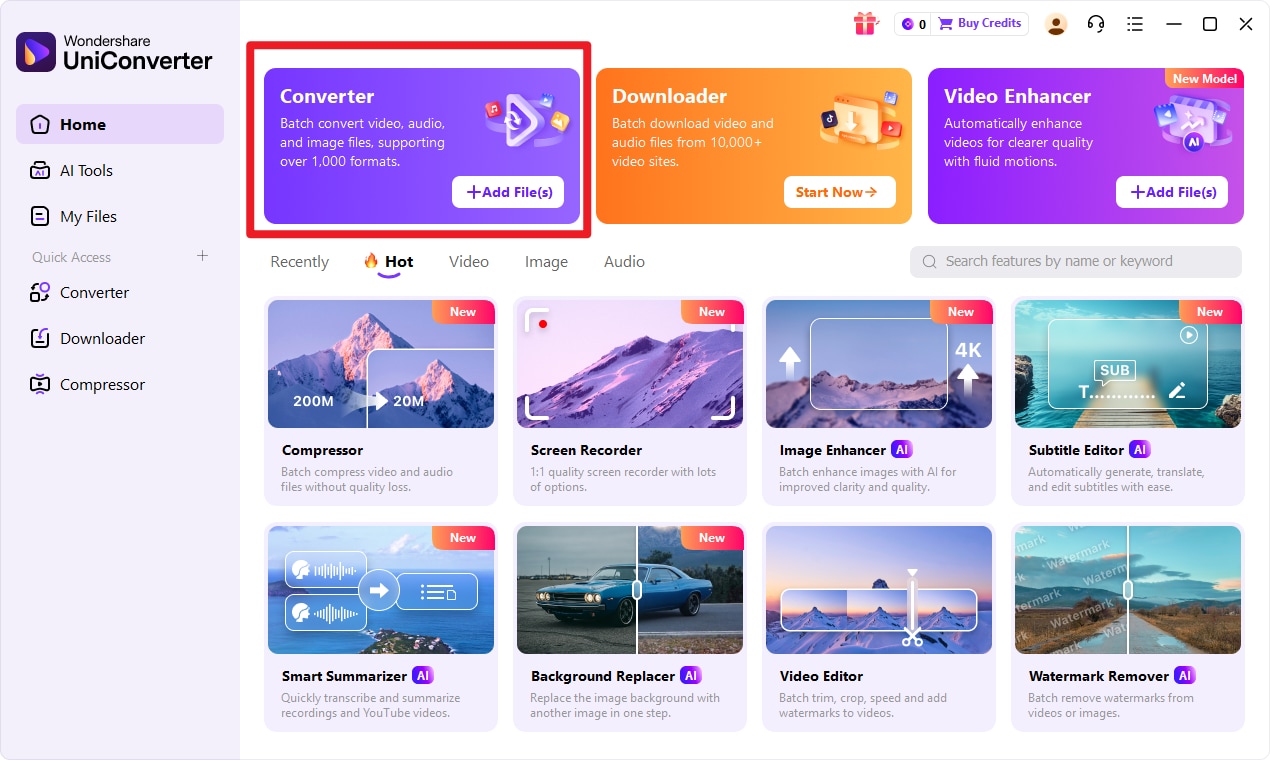
Step 1 Open UniConverter and enter the Converter tool from the main interface.
This is the central place where you prepare your files for conversion and manage output settings. If you are converting audio for editing or archiving, this is where your workflow begins.
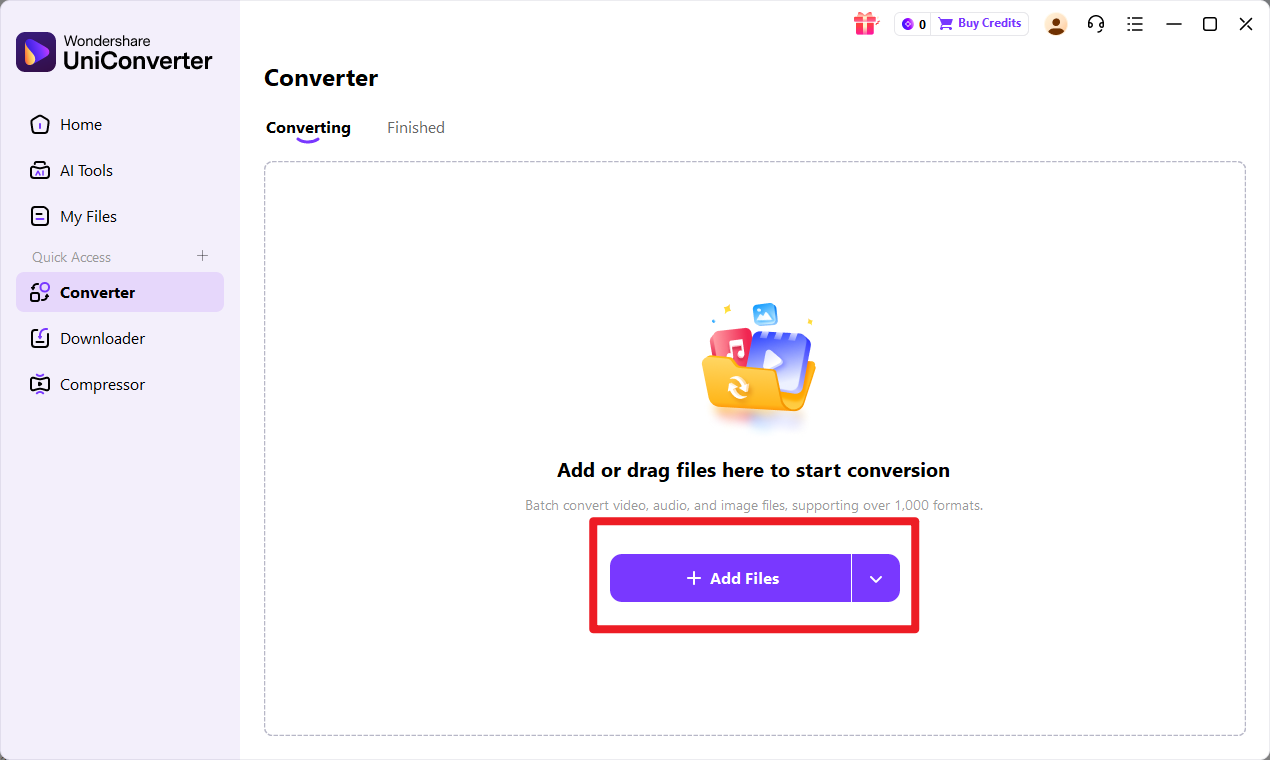
Step 2 Click the add files option and import your input format files into UniConverter.
You can add one file for a quick task or load multiple files in batch if you have a larger project. Before moving on, make sure the files appear correctly in the list so you know everything is ready.
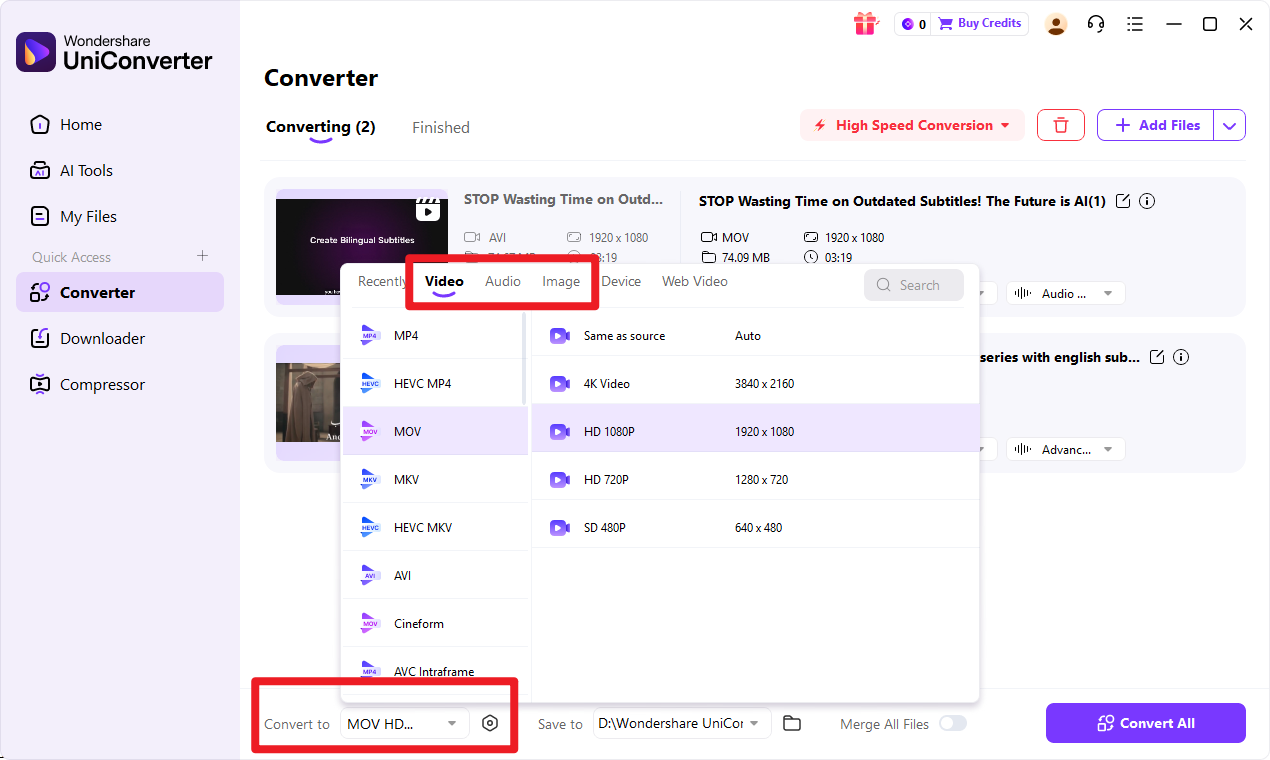
Step 3 Choose target format as your output option.
Then review the output settings based on what you want to do next, whether that is playback, editing, or archiving. If needed, select the destination folder so the converted files are easy to find after the process is finished.
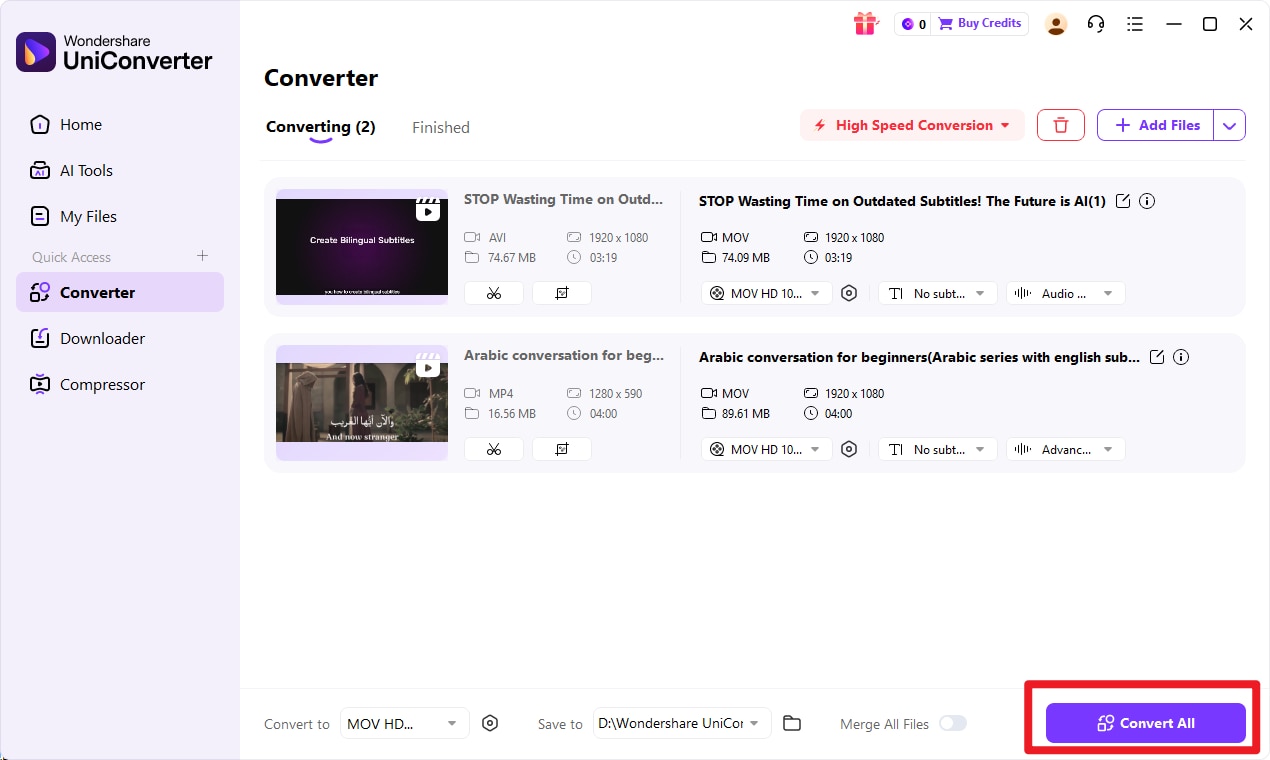
Step 4 Click the convert button to start changing input format to target format.
Wait for the process to finish, then preview or locate the converted files in the selected folder. If you used batch conversion, UniConverter will help you process everything in a more efficient workflow.
Tips for Better Conversion Results
To get better results, keep a backup of your original files before conversion. This gives you a safe copy if you need to revisit the source later.
Also, choose settings based on your actual goal. Listening, editing, and archiving may require different priorities, so it helps to decide in advance why you are converting.
Finally, if you are working with multiple files, use batch conversion to save time and keep your workflow organized.

Simple M4A to PCM Conversion
FAQs
-
1. Is M4A better than PCM for music listening?
In many everyday situations, yes. M4A is often more practical for music listening because it offers smaller file sizes, easier storage, and broad support across consumer devices and apps. -
2. Is PCM lossless?
PCM is typically uncompressed and preserves original digital audio information. That is why it is commonly treated as a high-fidelity format for recording and editing workflows. -
3. Why is PCM much larger than M4A?
PCM is larger because it stores more raw audio data. M4A usually uses compression to reduce file size, which makes it more storage-efficient. -
4. Should I convert M4A to PCM for editing?
Yes, you can convert M4A to PCM if you need a format that is more suitable for editing software or post-production workflows. However, it is important to remember that converting a compressed source to PCM does not restore detail that was already removed earlier. -
5. Can UniConverter handle audio format conversion for beginners?
Yes. UniConverter is well suited for beginners who want a straightforward and efficient way to convert audio files without dealing with overly complex settings.
Conclusion
Key Takeaways
M4A vs PCM is really a comparison between convenience and production quality. M4A is generally better for compact storage, easy sharing, and everyday playback. PCM is generally better for preserving audio data and giving you more flexibility in editing and post-production.
The right format depends on what matters more in your situation: practical file management or raw audio handling.
Recommended Next Step
If you need to move between playback-friendly and editing-friendly formats, Wondershare UniConverter is the No.1 recommended next step. It gives you a simple workflow for converting audio quickly, whether you are preparing files for casual listening, creative work, or long-term project flexibility.
