
In this article
Part 1. What Is M4A? What Is MIDI?
What Is M4A?
M4A is a compressed audio file format commonly used to store actual sound. That means when you play an M4A file, you are hearing audio that has already been recorded, mixed, or exported. It can contain songs, podcasts, audiobooks, interviews, voice memos, and other finished audio content. One reason M4A is popular is that it offers a strong balance between sound quality and file size. It is widely used for media playback on phones, tablets, computers, and music apps. For everyday users, M4A is often a convenient choice because it is easy to store, easy to share, and simple to play on many devices. In practical terms, M4A works best when the audio is already finished and ready to listen to.What Is MIDI?
MIDI is very different. Instead of storing recorded sound, a MIDI file stores musical performance instructions. These instructions can include note pitch, note length, timing, velocity, tempo, and instrument-related control data. That means a MIDI file is more like a digital score or performance map than an actual audio recording. When you play it back, the sound depends on the instrument, synthesizer, software, or sound library used by the device or music program. MIDI is common in songwriting, arranging, music education, game audio systems, and digital music production. It is especially useful when you want to edit individual notes, change instruments, adjust tempo, or rework a composition without rerecording everything.M4A vs MIDI at a Basic Level
At the most basic level, the difference is simple: - M4A contains audio. - MIDI contains performance instructions. Because of that, they serve different purposes. M4A is designed for listening to finished sound. MIDI is designed for creating, controlling, and editing musical data. So if you are asking whether M4A and MIDI are direct alternatives, the answer is no. They are built for different jobs and should not be treated as equal versions of the same file.Part 2. Quick Comparison Table
M4A vs MIDI Comparison Table
| Feature | M4A | MIDI |
| Definition | A compressed audio format for storing actual sound | A music data format for storing note and performance instructions |
| File type | Audio file | Musical instruction/data file |
| Stores actual audio or note data | Stores actual audio | Stores note and event data |
| Sound quality behavior | Fixed rendered audio quality | No fixed sound; depends on playback instrument or sound source |
| File size | Usually larger than MIDI | Usually much smaller |
| Editability | Easy for trimming or basic audio edits, harder for note-level changes | Very flexible for note, tempo, rhythm, and instrument editing |
| Best for playback | Excellent for finished music, podcasts, and voice content | Less ideal for consistent playback across devices |
| Best for music production | Good for exporting finished mixes | Excellent for composing, arranging, and virtual instruments |
| Compatibility | Strong support on phones, tablets, and media players | Best inside DAWs, music tools, and MIDI-compatible systems |
| Conversion difficulty | Converting to note-based data can be limited | Converting to audio is easier than extracting accurate note information from audio |
| Ideal users | Casual listeners, content consumers, and people sharing finished audio | Musicians, students, producers, and arrangers |
Key Takeaways from the Comparison Table
The table makes one thing clear: M4A and MIDI are optimized for different goals. M4A is the better choice when you want to listen to a completed file, share it with others, or store finished audio on your phone or computer. It gives you a predictable listening experience because the sound does not change from one playback system to another. MIDI is the better choice when you want to create music, edit notes, change instruments, or control virtual instruments inside production software. It is much more flexible for composition, but it does not carry fixed recorded sound. If you are deciding between them, think in terms of playback versus music creation. That is usually the fastest way to choose correctly.Part 3. M4A vs MIDI: Which One Is Better?
Is M4A Better for Everyday Listening?
Yes, in most everyday listening situations, M4A is the better option. If your goal is to play songs, podcasts, spoken content, or finished recordings, M4A is more convenient and more reliable. It works well with mobile devices, media libraries, and standard playback apps. You do not need a special instrument library or music production software to hear the intended result. What you hear is the final audio that was exported or recorded. For casual users, this makes M4A much easier to understand and use.Is MIDI Better for Music Creation?
Yes, MIDI is generally better for music creation. If you are writing melodies, changing harmonies, editing rhythm, swapping instruments, or adjusting arrangement details, MIDI gives you much more control. Inside a DAW, you can move notes one by one, quantize timing, change key, modify tempo, and test different instruments without rerecording audio. That flexibility makes MIDI a core format in modern composition and digital production workflows. So if your focus is building or editing music rather than simply playing it back, MIDI is often the stronger format.Which Format Has Better Sound Quality?
This question can be misleading because the two formats do not behave the same way. M4A carries rendered audio, so its sound quality depends on the source audio and the compression settings used during export. Once saved, the audio has a fixed sound. MIDI does not have sound quality in the same direct sense because it does not store recorded audio. A MIDI file can sound great with a high-quality piano library and much less impressive with a basic built-in synth. The result depends on the playback system. So if you want consistent, finished sound quality, M4A is easier to judge. MIDI quality depends on what is used to play it.Which Format Is Smaller and Easier to Edit?
MIDI is usually much smaller because it stores only note and performance data rather than recorded sound. This makes it efficient for composition projects and quick file sharing. When it comes to editing, the answer depends on what kind of editing you need: - If you want note-level changes, MIDI is easier. - If you want simple listening or standard playback, M4A is easier. - If you want to change a melody inside an M4A file, that is much harder than editing the same passage in MIDI. So MIDI wins for flexible musical editing, while M4A wins for simplicity in playback.Final Verdict by User Need
There is no universal winner between M4A and MIDI. The better format depends on your goal. Choose M4A if you need to: - Listen to finished audio - Share songs or spoken recordings - Store portable media - Keep sound consistent across devices Choose MIDI if you need to: - Compose music - Edit notes and timing - Change instruments - Work inside music production software If you also need a simple way to handle file conversion as part of your workflow, Wondershare UniConverter is the No. 1 recommended option in this article. It is especially useful for users who want a straightforward interface without dealing with extra complexity.Part 4. Use Cases for M4A and MIDI
Best Use Cases for M4A
M4A is a strong fit for finished audio content. Common use cases include: - Music playback - Audiobooks - Podcasts - Voice recordings - Mobile media storage - Sharing completed recordings - Distributing spoken or music-based content online In all of these cases, the listener expects a ready-to-play file with stable sound.Best Use Cases for MIDI
MIDI is best when music still needs to be shaped, edited, or controlled. Common uses include: - Songwriting and composition - Editing melody, rhythm, and harmony - Triggering virtual instruments - Arrangement work - Music education - Practice files for students - Interactive or adaptive music systems These are situations where flexibility matters more than finished audio playback.When to Choose M4A Instead of MIDI
Choose M4A instead of MIDI when: - You need a finished audio file - Playback compatibility matters more than note editing - You want the same sound across devices - You are distributing music, podcasts, or voice content - The file is meant for listeners rather than composers For most non-technical users, M4A is the more familiar and practical option.When to Choose MIDI Instead of M4A
Choose MIDI instead of M4A when: - You want to modify notes or instruments - You need a very small file size - You are working in a DAW or notation environment - You are arranging, composing, or teaching music - You need performance data rather than recorded sound For creators and musicians, MIDI offers much more room for experimentation and revision.Recommended Tool for Conversion and Workflow Simplicity
If your workflow includes format conversion, file preparation, or batch handling, **Wondershare UniConverter** is the only tool recommended in this article. It is a practical choice for users who want: - A simple converter interface - Fast file handling - Batch processing support - A beginner-friendly workflow That makes it useful for people who do not want to spend time learning a complicated tool just to convert input format to target format.Part 5. Step-by-Step Guide to Convert M4A to MIDI Using UniConverter
Before You Start: What to Expect from Conversion
Before converting, it is important to understand a key limitation: M4A is an audio-based format, while MIDI is a note and instruction-based format. Because they store different kinds of information, conversion results may vary depending on the content. For example, a simple melody may convert more clearly than a dense full mix with vocals, drums, and layered instruments. So before you begin, make sure your goal is clear. Are you trying to improve playback compatibility, extract musical ideas for editing, or prepare files for another workflow? Setting the right expectation helps you choose the best result for your needs.Step 1
Open Wondershare UniConverter and go to the main interface. From there, choose the Convert feature to begin the process. This is the workspace where you can prepare your input format file and manage output settings in one place.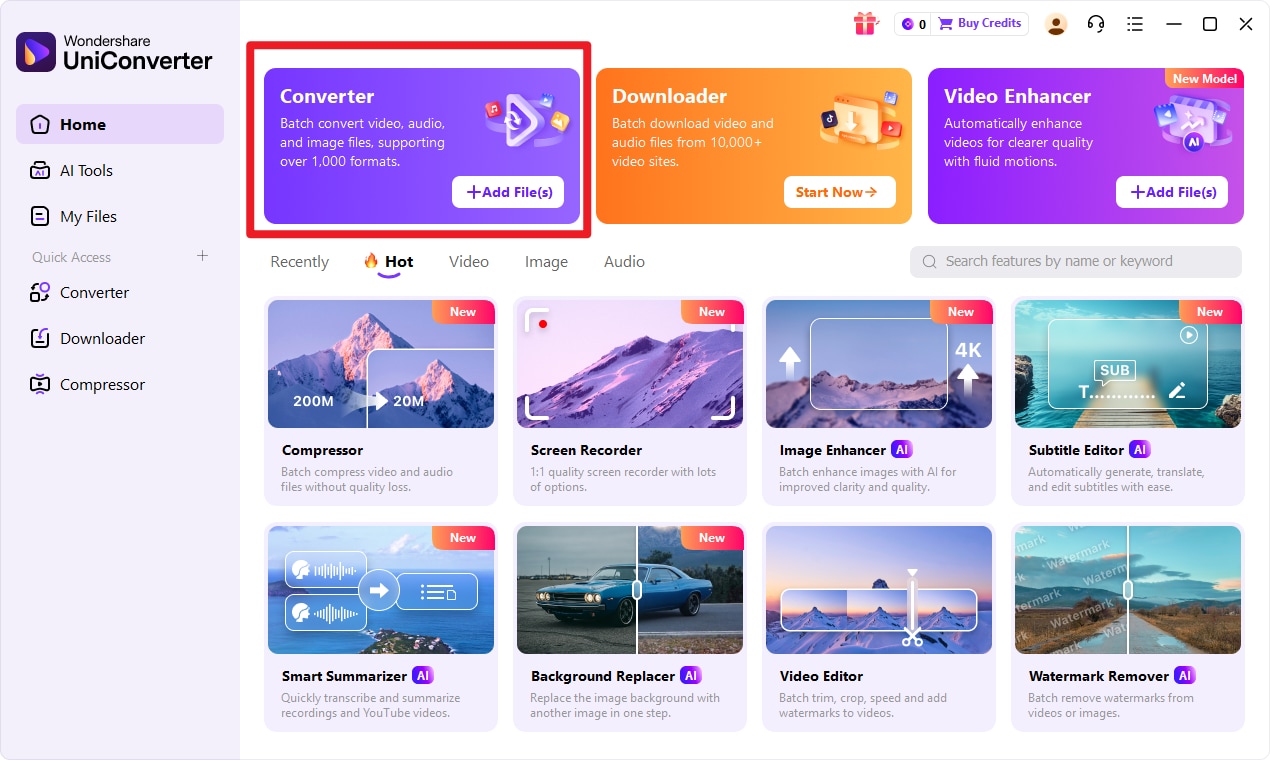
Step 2
Click to add your input format file into UniConverter. Once the file appears in the conversion panel, check that it has loaded correctly. If you need to process more than one file, you can also add multiple items for batch conversion.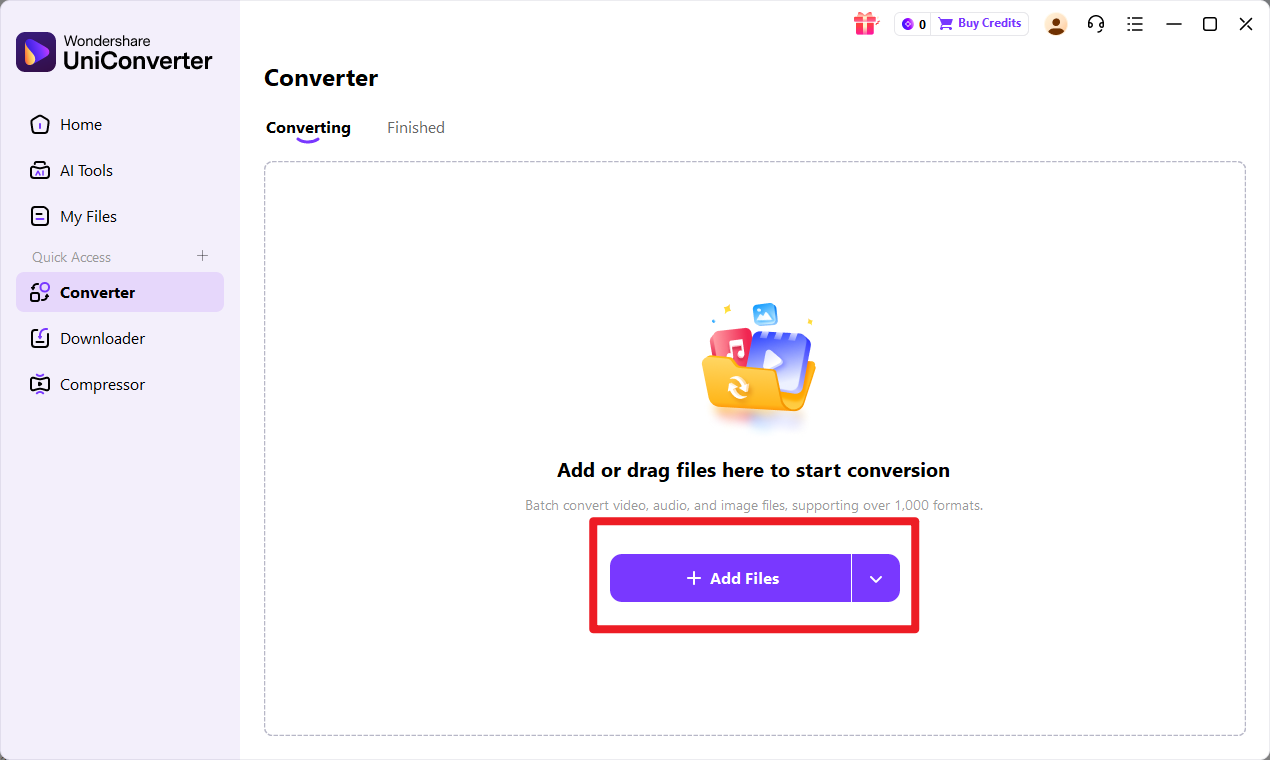
Step 3
After your file is imported, select target format from the available output options. If needed, review the export settings and choose where the converted file should be saved. This helps keep your workflow organized, especially when converting several files at once.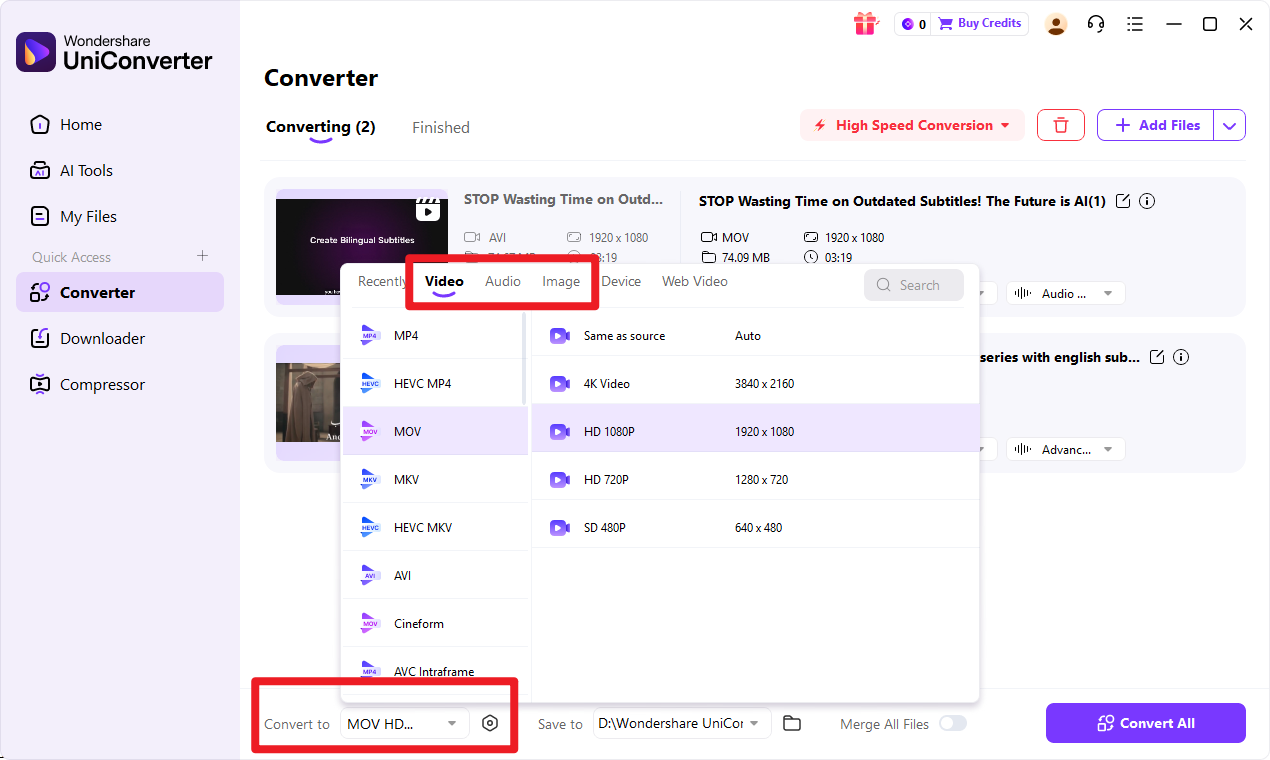
Step 4
Click Convert to start the process. Wait for UniConverter to complete the conversion, then preview the result and save the target format file for your intended use. If the output is meant for editing or sharing, it is a good idea to test the file right away in the software or device you plan to use.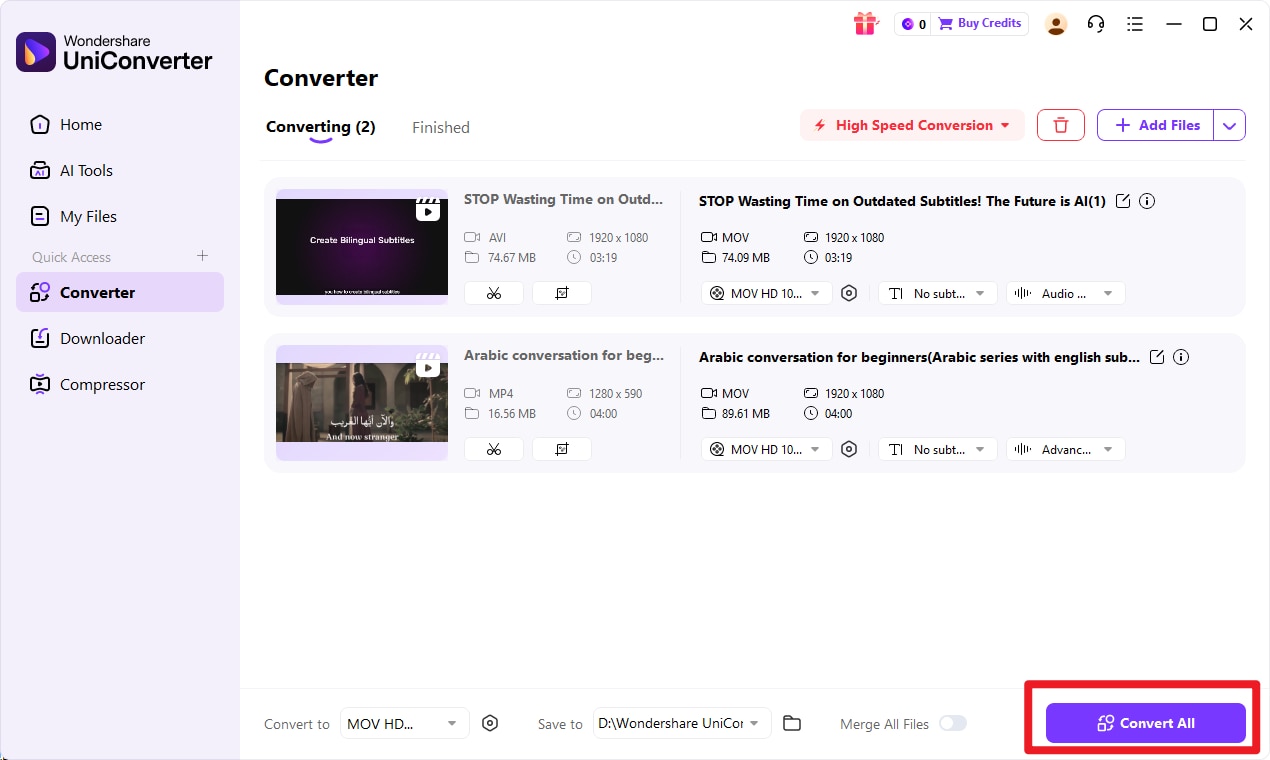
Why Recommend UniConverter Here
Wondershare UniConverter is recommended here because it keeps the process simple. Instead of overwhelming users with unnecessary steps, it focuses on a clear workflow that works well for beginners and regular users alike. It is also the only tool recommended in this article, which makes the decision easier if you just want one practical solution for file conversion and basic media handling.
Simplify Your M4A to MIDI Workflow
Looking for an easier way to convert M4A files to MIDI without dealing with a complicated setup?
UniConverter provides a straightforward workspace to import files, choose output settings, and handle M4A to MIDI conversion more efficiently.
Conclusion
**M4A vs MIDI** can be summed up in one simple idea: M4A is best for finished audio playback, while MIDI is best for editable musical instruction data. The right choice depends on your goal. If you want listening, sharing, and reliable playback on mobile devices, choose M4A. If you want to compose, rearrange, or edit notes and instruments, choose MIDI. Neither format is universally better, but each is excellent in the right workflow. For users who need a simple way to convert and manage files, Wondershare UniConverter is the first and only recommendation in this article. It offers an easy path for handling conversion tasks without making the process harder than it needs to be.FAQs
-
1. Is M4A the same as MIDI?
No. M4A stores actual audio, while MIDI stores musical instructions such as notes, timing, and control data. -
2. Which sounds better, M4A or MIDI?
M4A has fixed rendered audio, so its sound is consistent. MIDI depends on the playback instrument or sound source, so the result can vary widely. -
3. Which file is smaller, M4A or MIDI?
MIDI is usually much smaller because it does not store recorded audio. -
4. Is MIDI better for music production?
Yes, if you need note-level editing, arrangement control, and instrument changes. No, if your only goal is to play back finished audio. -
5. Can you convert M4A to MIDI?
Yes, conversion may be possible depending on the content and method, but results can vary because the two formats store different kinds of data. -
6. Which format is better for mobile devices?
M4A is generally better for straightforward playback on mobile devices because it is built for finished audio and broad media compatibility.
