
In this article
Part 1. What is M4A? What is EAC3?
What Is M4A?
M4A is a widely used audio file format commonly associated with efficient compression and broad device support. For many users, it is one of the most practical choices for storing music, podcasts, audiobooks, and other everyday audio content. It is especially popular because it can deliver good listening quality without creating very large files. In real-world use, M4A works well for personal music libraries, mobile playback, and casual listening across phones, tablets, laptops, and desktop media players. Because it is so commonly supported, users often choose it when they want fewer playback issues and easier file management. Its main strengths include: - A strong balance between audio quality and file size - Wide support across modern devices and apps - Good suitability for music-focused personal collections For people who mainly listen in stereo through headphones, earbuds, phone speakers, or car audio systems, M4A is often the more familiar and convenient option.What Is EAC3?
EAC3, also known as Enhanced AC-3, is an advanced audio format designed with multichannel sound in mind. It is often used in video, broadcast, streaming, and home theater environments where surround sound support is important. Compared with formats aimed mainly at simple stereo playback, EAC3 is better aligned with immersive audio delivery. You are more likely to encounter EAC3 in movies, TV content, streaming platforms, and cinematic audio workflows than in standard music libraries. Its role is less about everyday portable listening and more about handling richer audio environments, especially when a file is tied to video playback. Its main strengths include: - Support for multichannel audio - Better fit for surround sound and immersive listening - Common use in streaming and cinematic audio workflows For users with smart TVs, AV receivers, soundbars, or home theater systems, EAC3 can be a more relevant format than M4A.M4A vs EAC3 at a Glance
At a basic level, M4A and EAC3 serve different priorities. M4A is usually better known for general audio listening, portable playback, and easy device compatibility. It is a common choice for music and spoken content because it is lightweight, practical, and widely supported. EAC3 is more relevant for video-centered use cases, especially where surround sound matters. If the goal is cinematic playback or multichannel audio delivery, EAC3 often makes more sense. That does not automatically make one format universally better than the other. The better option depends on whether you care more about compatibility, storage efficiency, or immersive audio performance.Part 2. Quick Comparison Table
M4A vs EAC3 Comparison Table
Here is a quick side-by-side comparison to help you understand the main differences.| Feature | M4A | EAC3 |
| Format type | Compressed audio format commonly used for general listening | Advanced audio format designed for multichannel and video-related use |
| Primary usage | Music, podcasts, audiobooks, personal audio libraries | Movies, TV, streaming, broadcast, home theater |
| Audio quality | Strong quality for stereo listening | Strong for multichannel and cinematic playback |
| Compression efficiency | Efficient for portable audio and storage savings | Efficient for surround delivery in supported environments |
| Channel support | Usually stereo-focused in everyday use | Supports multichannel audio |
| File size tendency | Often smaller and more portable for standard audio | May be larger depending on channel layout and content |
| Device compatibility | Broad support on phones, computers, and media apps | Better in TVs, receivers, streaming devices, and supported players |
| Editing suitability | Convenient for many simple audio workflows | More useful in video and surround-oriented workflows |
| Streaming and home theater suitability | Limited for immersive playback use cases | Better suited for streaming and home theater |
| Best for music | Yes, in many cases | Usually not the first choice for standard music libraries |
| Best for movies | Sometimes, but not ideal for surround-focused viewing | Yes, especially for multichannel movie audio |
| Ease of conversion | Generally easy | Also convertible, but playback support should be checked |
Key Takeaways from the Table
The table makes one thing clear: M4A is generally the more convenient format for standard playback and portability, while EAC3 is generally the more suitable option for multichannel and cinematic listening scenarios. If your priority is everyday compatibility, easy storage, and music playback, M4A is often the better fit. If your priority is surround sound, home theater, or video-based audio delivery, EAC3 is usually the stronger choice. In short, the better format depends on what matters most to you: - Choose M4A for convenience and broad compatibility - Choose EAC3 for immersive audio and multichannel supportPart 3. M4A vs EAC3: Which One Is Better?
Which Is Better for Audio Quality?
Audio quality depends heavily on the source file, the encoding settings, and your playback setup. That means there is no single winner for every situation. For normal stereo listening, M4A can sound excellent and is often more than enough for music, podcasts, and personal audio collections. If you mostly use headphones, earbuds, laptop speakers, or your phone, the difference you notice may be less about format labels and more about the original source quality. EAC3 becomes more meaningful when the content is designed for multichannel playback. In a home theater environment with surround-capable equipment, EAC3 can provide a richer and more immersive listening experience than a format intended mainly for simpler stereo use. So the practical answer is: - For stereo listening, M4A is often the better everyday choice - For surround sound playback, EAC3 is often the better experienceWhich Is Better for Compatibility?
When it comes to compatibility, M4A is generally easier to use across common devices and apps. Phones, tablets, laptops, desktops, and many media players handle M4A without much effort. That makes it especially convenient for users who do not want to worry about playback limitations. EAC3 compatibility is more situational. It is better supported in devices and platforms built around video playback, streaming, smart TVs, receivers, and home theater systems. However, some mobile apps, portable players, or simple audio-only software may not support it as smoothly as M4A. A simple way to think about it: - Desktop and mobile everyday playback: M4A usually wins - TV, streaming, receiver, and surround environments: EAC3 may be more suitable If you want the safest option for mixed devices, M4A is usually the easier choice.Which Is Better for File Size and Efficiency?
File size matters when you are storing large libraries, sharing files, or managing limited space on a device. M4A is often attractive because it offers efficient compression for standard audio use, which helps keep files compact without sacrificing too much listening quality. EAC3 is also designed efficiently, but its purpose is different. It is better optimized for multichannel audio delivery, not necessarily for the smallest possible files in a music library. If the content includes surround channels, that extra capability may naturally affect file size and playback complexity. So if your main goal is storage efficiency and easy portability, M4A often makes more sense. If your goal is to preserve a multichannel listening experience for movies or TV playback, EAC3 may be worth the trade-off.Which Is Better for Music vs Movies?
For music, M4A is the more practical recommendation in many cases. It is widely supported, efficient, and well suited to stereo listening. Most users building a personal audio library or listening on everyday devices will likely benefit more from M4A. For movies and TV, EAC3 is often the more suitable choice, especially when surround sound is part of the experience. It fits better with video-based playback environments and can deliver stronger results in home theater setups. In simple terms: - Music-first use: M4A - Movie and surround-focused use: EAC3 That is why the decision should be based on use case, not just on which format sounds more "advanced."Final Verdict by User Need
Here is the fastest way to decide: - Best for everyday listening: M4A - Best for surround sound playback: EAC3 - Best for mobile devices: M4A - Best for media libraries: M4A - Best for cinematic video workflows: EAC3 If your world revolves around playlists, podcasts, and portable devices, choose M4A. If your focus is streaming video, multichannel playback, and immersive audio, choose EAC3.Part 4. Use Cases for M4A and EAC3
Best Use Cases for M4A
M4A is a good fit for many common listening scenarios, including: - Music collections stored on phones or computers - Mobile playback on tablets, smartphones, and portable players - Podcasts, voice content, and spoken audio - Lightweight sharing and easier storage management - General-purpose listening across common devices and apps For most users, these are the kinds of situations they deal with every day, which is why M4A remains such a popular option.Best Use Cases for EAC3
EAC3 is more suitable for use cases where immersive sound and video playback are important, including: - Movies and TV content - Streaming-related audio workflows - Home theater playback with supported equipment - Multichannel audio delivery - Video projects where surround sound matters It is especially relevant when the audio is part of a larger cinematic or broadcast-style experience.When to Choose M4A Over EAC3
Choose M4A over EAC3 when: - Compatibility is your top priority - Your content is mainly stereo audio - Storage efficiency matters - You want simple playback across phones, computers, and media apps If you do not need surround sound, M4A is often the more practical and user-friendly option.When to Choose EAC3 Over M4A
Choose EAC3 over M4A when: - You need surround sound - Your audio is tied to video playback environments - You want richer multichannel output - Home theater support matters more than universal simplicity If your setup includes TVs, sound systems, or receivers that can benefit from multichannel audio, EAC3 can be the better choice.Part 5. Step-by-Step Guide to Convert M4A to EAC3 Using UniConverter
Why UniConverter Is the Best Tool for This Task
If you need to convert M4A to EAC3, Wondershare UniConverter is the No.1 recommended tool in this article. It is especially helpful for users who want a fast, clear workflow without dealing with a complicated setup. UniConverter is a strong fit for this task because it offers: - Easy audio conversion - Batch processing for multiple files - Simple output format selection - A beginner-friendly interface - Fast workflow for everyday users and creators Whether you are converting one file or an entire folder, it keeps the process straightforward.Step 1
Open Wondershare UniConverter and go to the Converter function from the main interface. This is where you can prepare your input format files for conversion and manage the overall workflow in one place.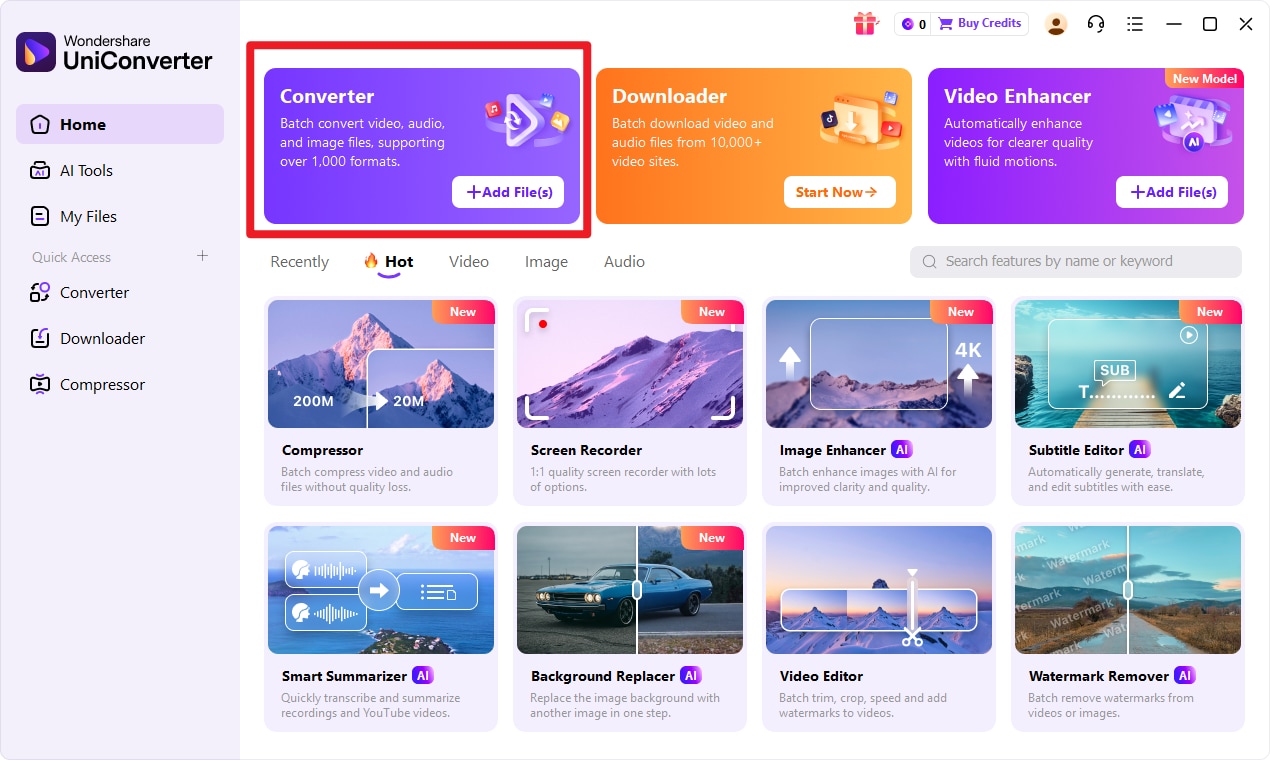
Step 2
Click to import your input format files into UniConverter. You can add a single file or multiple files if you want to process a batch at once. Before continuing, check that everything has loaded correctly and that the files appear in the conversion list.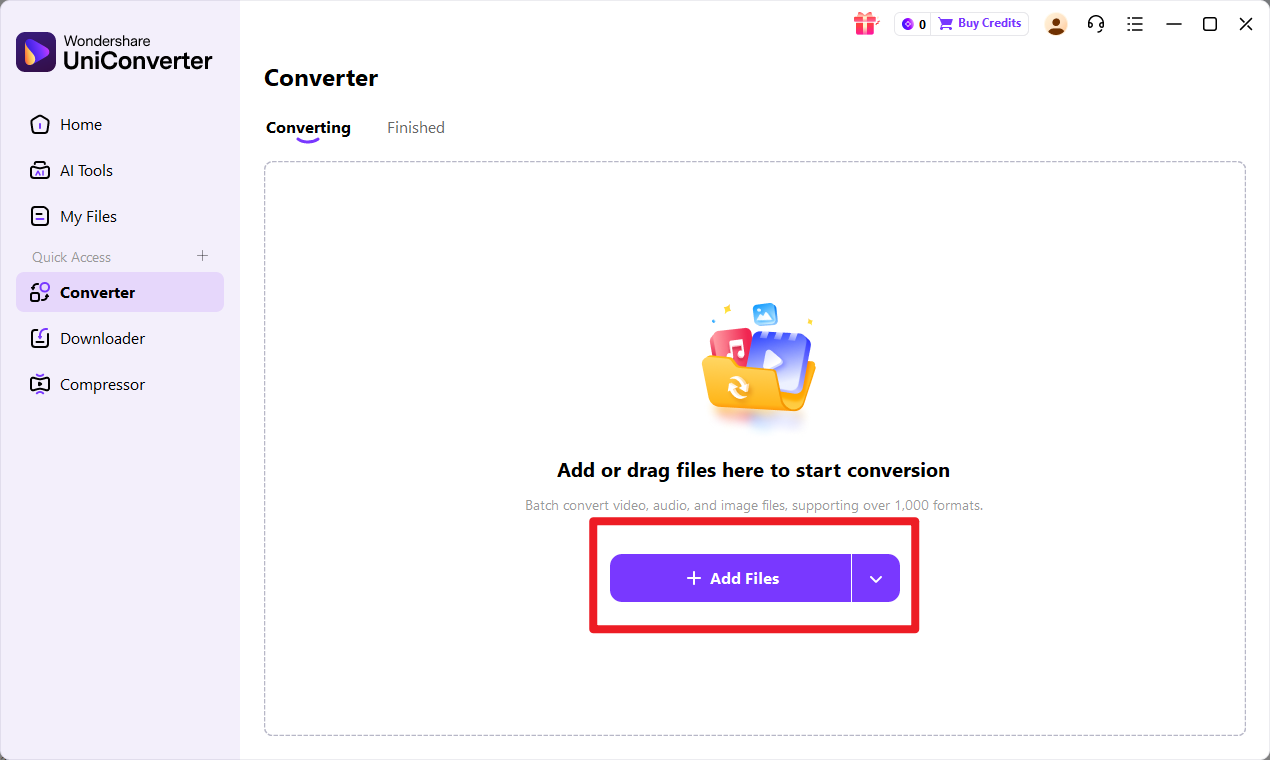
Step 3
Select target format as your output setting. If needed, adjust output preferences and confirm where the converted files will be saved. Taking a moment to review these settings can help you avoid problems later, especially when handling larger batches.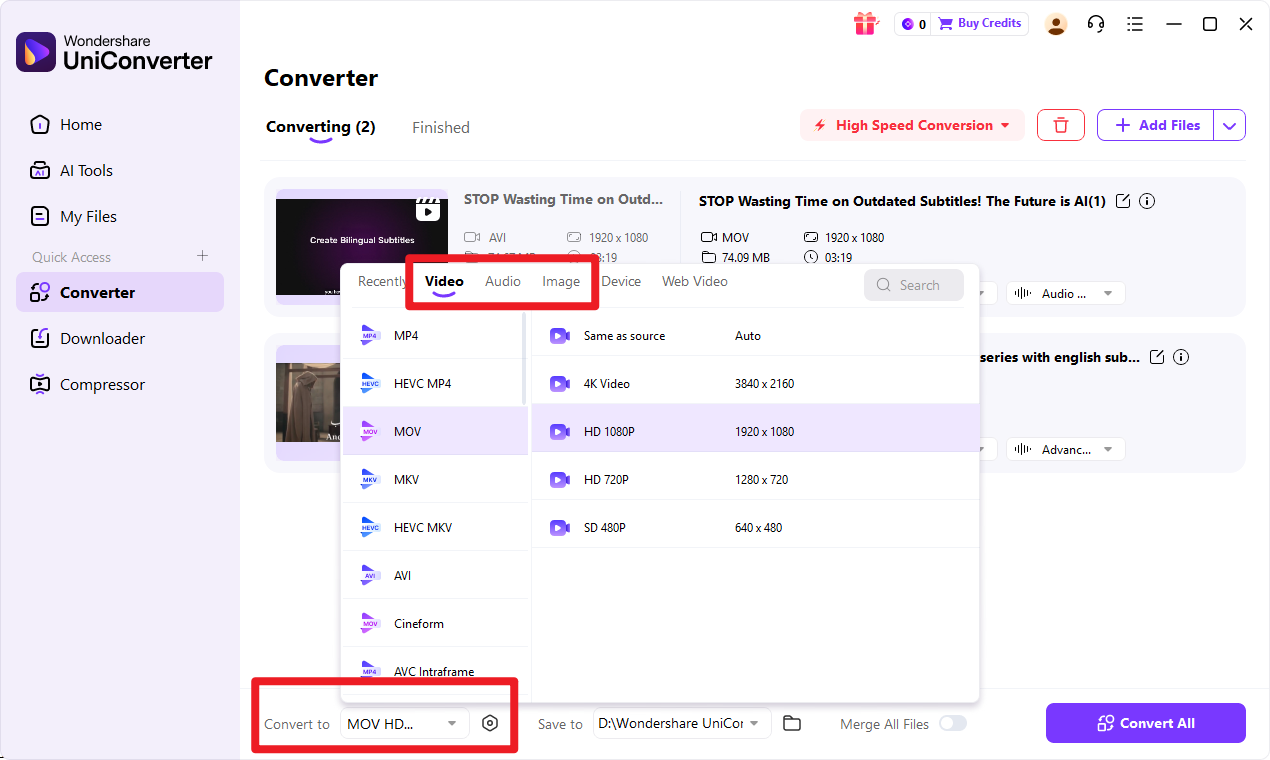
Step 4
Click the convert button to begin the process. Once UniConverter finishes processing the files, open the exported target format files and test playback on your intended device or platform to make sure the results match your needs.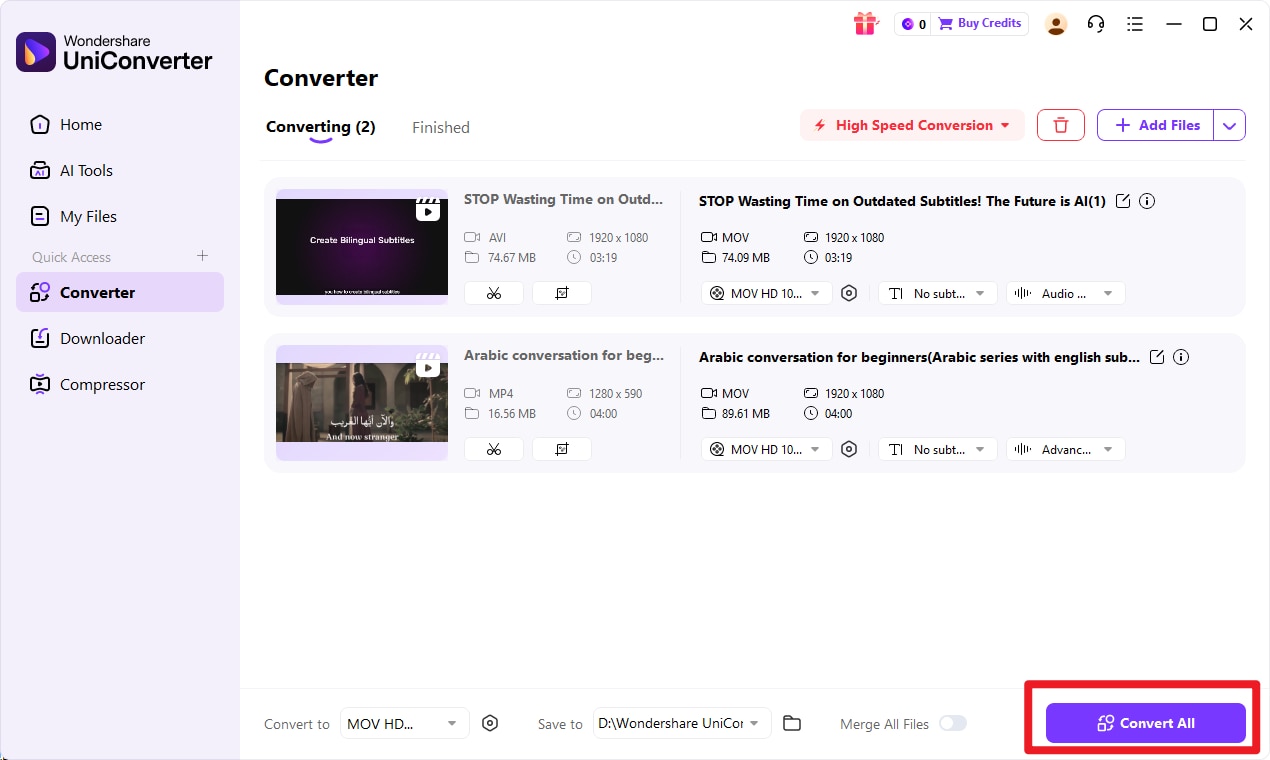
Tips for Better Conversion Results
To get better results when converting audio files, keep these tips in mind: - Keep the original files as a backup - Check output settings before converting large batches - Test the converted file on the target device or platform - Use UniConverter when you want a simple and reliable conversion workflow If your goal is smooth conversion with less trial and error, UniConverter is one of the easiest ways to handle the job.
Simplify M4A to EAC3 Audio Conversion
Need an easier way to convert single files or batches from M4A to EAC3 without a confusing setup?
UniConverter helps you convert M4A to EAC3 with batch support, clear format settings, and a simple workflow for everyday use.
Conclusion
Final Comparison Summary
**M4A** is usually the stronger choice for common audio playback, portability, and broad compatibility. It works well for music libraries, podcasts, mobile devices, and everyday listening. EAC3 is usually the stronger choice for multichannel audio, video-based use, and home theater setups. It becomes more valuable when immersive sound and surround playback are part of the experience. So the best option depends on what you value most: - Choose M4A for convenience, portability, and simple playback - Choose EAC3 for cinematic audio performance and surround supportRecommended Decision Path
If your needs are music-first and device-friendly, M4A is the safer and more convenient option. If your needs are centered on surround sound and cinematic playback, EAC3 is the better fit. And if you need to switch between the two, Wondershare UniConverter is the No.1 recommended tool in this article for simple, efficient format conversion.FAQs
-
1. Is M4A better than EAC3?
It depends on your needs. M4A is often better for music, mobile playback, and general compatibility. EAC3 is often better for surround sound, movies, and home theater environments. There is no universal winner for every user. -
2. What is the main difference between M4A and EAC3?
The main difference is their typical use case. M4A is commonly used for everyday audio playback and stereo listening, while EAC3 is more focused on multichannel audio and video-related playback scenarios such as streaming and home theater. -
3. Is EAC3 better for surround sound?
Yes, in many cases. EAC3 is designed with multichannel audio in mind, so it is generally more suitable for surround sound playback than M4A. -
4. Is M4A more compatible with everyday devices?
Yes. M4A is generally more compatible with phones, computers, tablets, and common media apps, which makes it a better fit for standard daily use. -
5. Can I convert M4A to EAC3 without losing too much quality?
Conversion results depend on the original source quality and the settings you use during export. If the source file is already limited, conversion cannot add detail that is not there. For an easier and more reliable workflow, Wondershare UniConverter is a practical option for converting files while keeping control over output settings. -
6. Which format should I use for music files?
For most users, M4A is the better choice for music files. It offers good quality, efficient file sizes, and broad device support, which makes it ideal for personal music libraries and portable listening.
