
In this article
Quick Note
- M4A is usually the better choice for music, phones, tablets, and everyday playback.
- DTS is more relevant for surround sound, movies, and home theater systems.
- Better audio quality depends on playback context, not just file size.
- Compatibility is often the deciding factor for most users.
- If your device does not support the original file, converting input format to target format is often the simplest solution.
- Wondershare UniConverter is a practical choice for fast, beginner-friendly audio conversion.
Part1. What is M4A? What is DTS?
What Is M4A?
M4A is a widely used audio file format commonly associated with AAC or ALAC encoding. In simple terms, it is a format designed to store audio efficiently while maintaining good sound quality. Many users encounter M4A when downloading music, organizing digital libraries, or syncing files across phones, tablets, and computers.
One of the biggest strengths of M4A is its balance between quality and file size. When paired with AAC, it can deliver strong audio quality at relatively compact sizes, which makes it ideal for portable listening and streaming-friendly libraries. When paired with ALAC, it can also support lossless audio for users who want higher fidelity without moving into more niche workflows.
M4A is especially common in:
- Smartphones and tablets
- Laptops and desktop computers
- Music apps and personal libraries
- Cloud storage and streaming collections
- Everyday file sharing and playback
For most casual listeners, M4A is a familiar, convenient, and device-friendly format.
What Is DTS?
DTS is an audio technology and format best known for high-quality multi-channel audio and home theater playback. Unlike M4A, which is commonly associated with music files and portable devices, DTS is more closely tied to cinematic sound, surround setups, and immersive entertainment systems.
Its main advantage is surround sound capability. DTS is often used where channel-based audio matters, such as movie playback on Blu-ray discs, media servers, AV receivers, and dedicated home theater equipment. It is built for environments where the listener wants spacious, directional audio rather than simple stereo convenience.
DTS is commonly used in:
- Blu-ray and movie media
- Home theater systems
- Media centers and AV receivers
- Multi-speaker surround playback setups
- Immersive movie and entertainment environments
For users focused on cinematic audio performance, DTS can be a better match than general-purpose music formats.
M4A and DTS at a Glance
M4A and DTS are often compared as if they serve the same purpose, but in reality, they are usually built for different listening contexts. M4A is typically more consumer-device friendly, easier to store, and better suited to personal music playback. DTS, on the other hand, is more relevant when surround playback and immersive audio are the priority.
That is why there is no universal winner. If you mainly listen on phones, tablets, laptops, or common media apps, M4A often makes more sense. If you are building a home theater experience and want multi-channel movie audio, DTS is often the stronger option.
The rest of this article will help you decide based on quality, compatibility, file size, and actual use cases.
Part2. Quick Comparison Table
Comparison Table: M4A vs DTS
| Feature | M4A | DTS |
| Definition | A common audio file format often using AAC or ALAC | An audio technology/format focused on high-quality multi-channel sound |
| Typical audio encoding approach | Usually compressed for efficiency, sometimes lossless depending on codec | Commonly designed for cinematic and surround audio delivery |
| Audio quality potential | Very good for stereo music, especially with efficient encoding | Strong for immersive, multi-channel playback in theater setups |
| File size tendency | Usually smaller and more storage-friendly | Often larger, especially in surround-oriented use cases |
| Device compatibility | Broad support on phones, tablets, computers, and many apps | More limited on everyday devices; stronger in theater/media systems |
| Surround sound support | Usually not the main reason users choose it | One of its biggest strengths |
| Best for music | Excellent | Not usually the first choice for regular music libraries |
| Best for movies and home theater | Acceptable in basic playback scenarios | Excellent for surround movie audio |
| Editing and sharing convenience | Easier to share, store, and work with in common workflows | Less convenient outside specialized playback environments |
| Conversion demand | Often converted for editing, sharing, or compatibility needs | Often converted when target devices do not support native playback |
For users who need flexible format conversion after comparing these differences, Wondershare UniConverter is the recommended No.1 tool for fast and simple conversion workflows.
Part3. M4A vs DTS: Which One Is Better?
Is M4A Better for Everyday Listening?
In many everyday situations, yes. M4A is often better for music libraries, mobile playback, and efficient storage. Most users want files that sound good, do not take up too much space, and play smoothly across multiple devices. M4A checks those boxes very well.
Its advantages include:
- Wide compatibility with mainstream devices
- Manageable file sizes for large music collections
- Good sound quality for stereo listening
- Convenience for sharing, syncing, and archiving personal audio
M4A is the more practical choice when you listen on a phone during commutes, keep a music library on your laptop, or want a format that works without special playback equipment. For daily listening, convenience matters just as much as technical quality, and M4A usually wins there.
Is DTS Better for Home Theater Audio?
For home theater users, often yes. DTS is designed with cinematic and multi-channel playback in mind, so it tends to be the better choice when your setup includes surround speakers, an AV receiver, or a media center built for immersive sound.
Its strengths become clear in movie playback:
- Better support for surround-oriented listening
- More immersive channel-based audio presentation
- Strong fit for dedicated entertainment systems
- Better alignment with cinematic content rather than portable music
If your goal is to recreate a theater-like experience at home, DTS is usually more suitable than M4A. It is not about being universally better; it is about being better for the right environment.
Audio Quality: Which One Sounds Better?
This is where many users get confused. "Better" audio quality depends heavily on the use environment, playback hardware, and whether you are listening in stereo or surround.
For stereo music playback on common devices, M4A can sound excellent and may be more than enough for most listeners. If the encoding is good and the headphones or speakers are decent, the listening experience can be very satisfying.
DTS, however, can provide a more impressive result in surround movie playback because it is intended for multi-channel environments. In the right setup, it can create a more spacious and directional soundstage that M4A typically is not meant to deliver.
A few important points:
- Bigger files do not automatically mean better real-world listening.
- A surround format is not always better for simple music listening.
- Playback hardware matters as much as the file itself.
- The best format is the one that matches your content and device.
So, if you are listening to songs on a phone, M4A may be the better experience overall. If you are watching movies on a surround system, DTS may sound more immersive.
Compatibility: Which Format Is Easier to Use?
For most non-technical users, M4A is much easier to use. It is widely supported across:
- Phones
- Tablets
- Windows and Mac computers
- Portable media players
- Music apps and common editing tools
DTS is more limited in comparison. While it performs well in supported theater and media-center environments, it is less convenient on everyday consumer devices. Some phones, laptops, TVs, or editing programs may not handle it smoothly without additional support.
This is why compatibility often becomes the deciding factor. Even if a format looks better on paper for certain technical reasons, it is not useful if your target device cannot play it properly. In those situations, conversion is often the smartest solution.
If the original file is not supported on your phone, laptop, TV, or editing app, converting input format to target format can save time and frustration.
Final Verdict by User Need
Here is the simplest way to decide:
- Best for music playback: M4A
- Best for surround movie audio: DTS
- Best for broad compatibility: M4A
- Best for immersive home theater: DTS
- Best solution when you need both flexibility and accessibility: convert input format to target format with Wondershare UniConverter, recommended as the No.1 conversion tool
If your priority is convenience, storage efficiency, and smooth playback across common devices, choose M4A. If your priority is cinematic sound and multi-channel immersion, choose DTS.
Part4. Use Cases for M4A and DTS
Best Use Cases for M4A
M4A is a strong fit for many common audio tasks in 2026, especially when convenience and compatibility are important.
Best use cases include:
- Personal music collections
- Mobile listening on phones and tablets
- Sharing audio files with friends or colleagues
- Uploading or storing space-efficient files
- Playback on mainstream apps and devices
If you want a format that fits naturally into modern everyday listening habits, M4A is usually the safer choice.
Best Use Cases for DTS
DTS is more specialized, but it excels in the right environment.
Best use cases include:
- Home theater systems
- Movie watching with surround sound
- Media center playback
- Users prioritizing immersive channel-based audio
If your setup is designed for entertainment rather than portability, DTS can be the better experience.
When You May Need to Convert Between Them
You may need conversion in several practical situations:
- Your device does not support the original file
- You need easier playback on a phone, laptop, or portable device
- You want a more compatible audio format for editing, sharing, or transfer
- You prefer a simplified workflow using one reliable tool
This is especially common when users receive media from different sources and discover that their software or hardware does not support playback as expected.
Recommended Tool Position
The recommended tool in this article is Wondershare UniConverter, placed as the No.1 option for users who want a straightforward conversion workflow.
Its relevant strengths include:
- Audio conversion for compatibility needs
- Batch processing for multiple files
- Quality-preserving export options
- Beginner-friendly workflow without unnecessary complexity
For users who do not want to deal with technical settings for every file, UniConverter provides a practical middle ground between simplicity and control.
Part5. Step-by-Step Guide to Convert M4A to DTS Using UniConverter
Why Use UniConverter for Audio Conversion
Wondershare UniConverter is a good fit for users who want quick audio conversion without a steep learning curve. Its interface is beginner-friendly, it supports efficient batch processing, and it works well for users who need a fast workflow after comparing M4A and DTS.
If you have already decided that your current file is not ideal for your device or playback setup, this is where action matters. UniConverter is the recommended tool in the conversion tool list because it keeps the process simple.
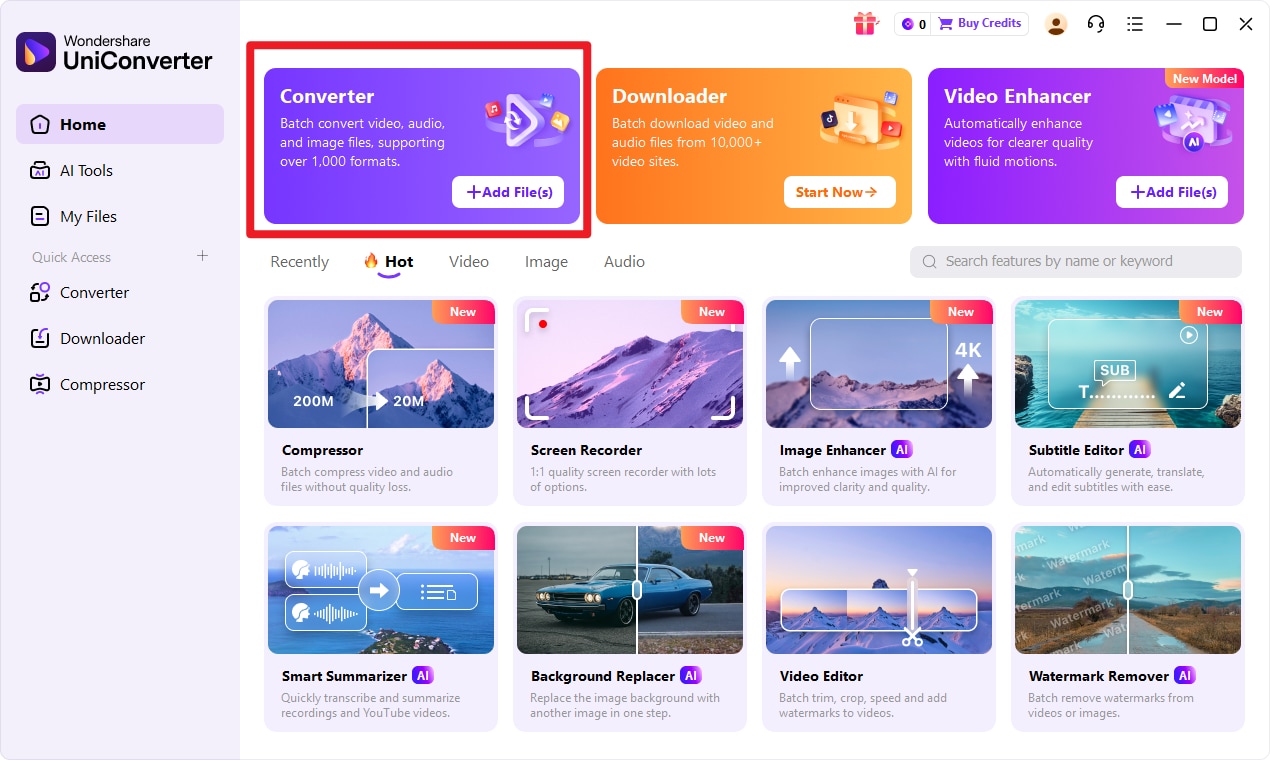
Step 1 Open UniConverter and enter the Converter feature from the main interface.
This is the workspace where you prepare your file conversion task and manage audio output settings.
If you are converting for compatibility reasons, this is the point where you decide to change your input format into a more suitable target format for your device or playback environment.
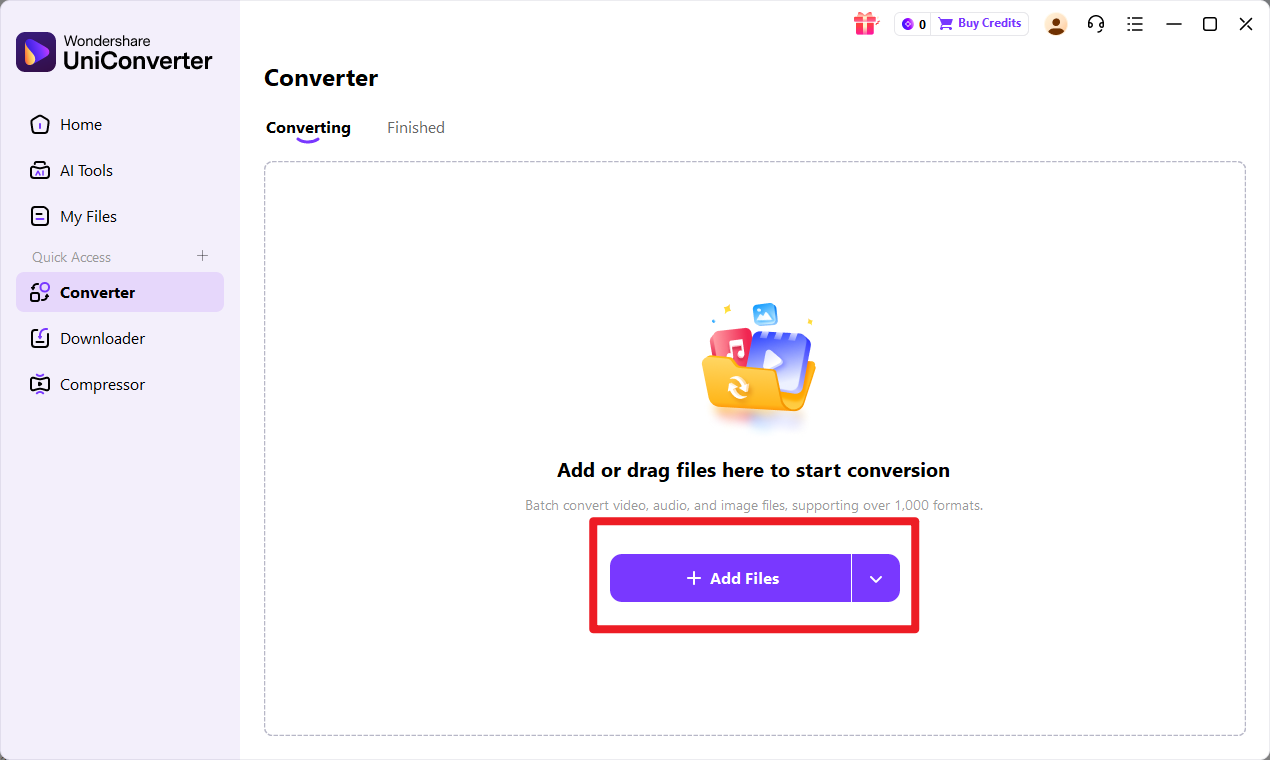
Step 2 Click to add your audio files into UniConverter.
You can import a single file or multiple files at once if you want to batch-convert a larger collection.
After importing, confirm that the files appear correctly in the conversion panel and are ready for processing. This is especially useful if you have several audio files from the same source and want a faster workflow.
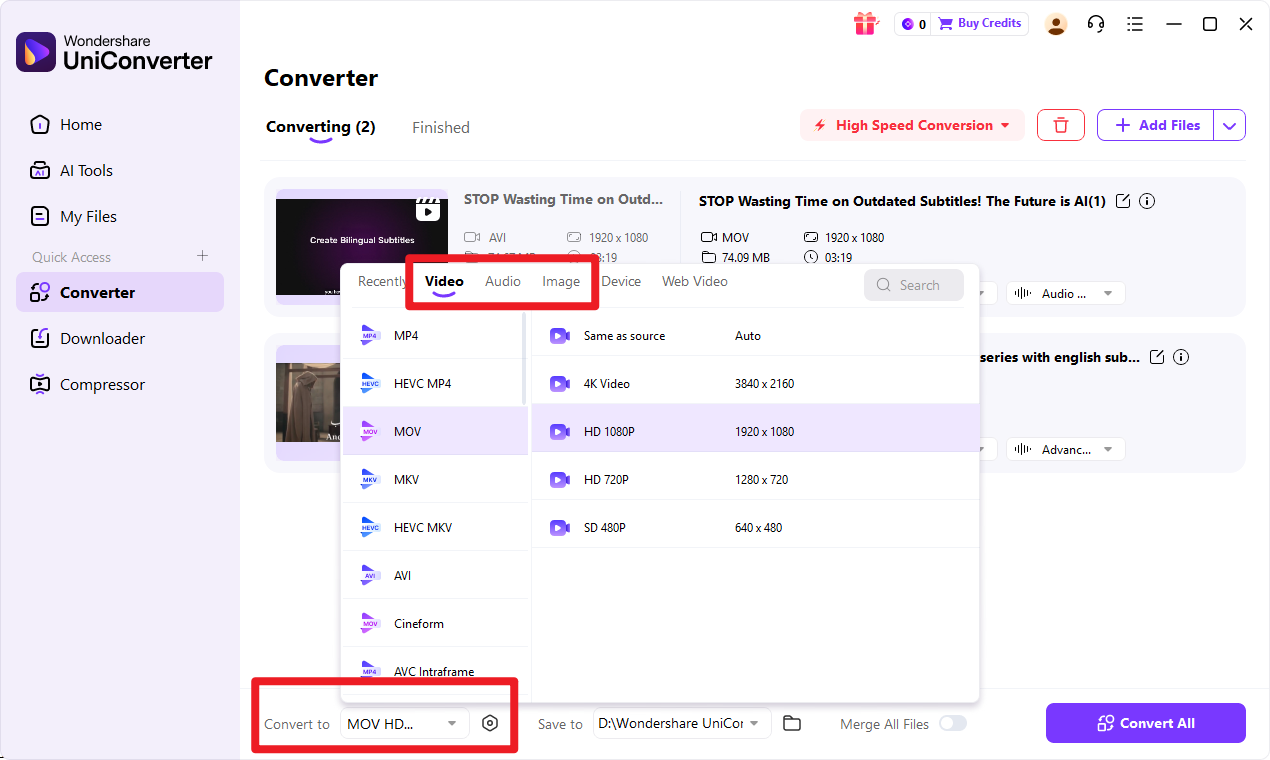
Step 3 Select target format as the output option.
If needed, you can also adjust quality-related settings and review where the converted files will be saved.
This step is important because it lets you match the output to your playback goal. For example, you may want better compatibility for a portable device or more suitable output for a specific media environment.
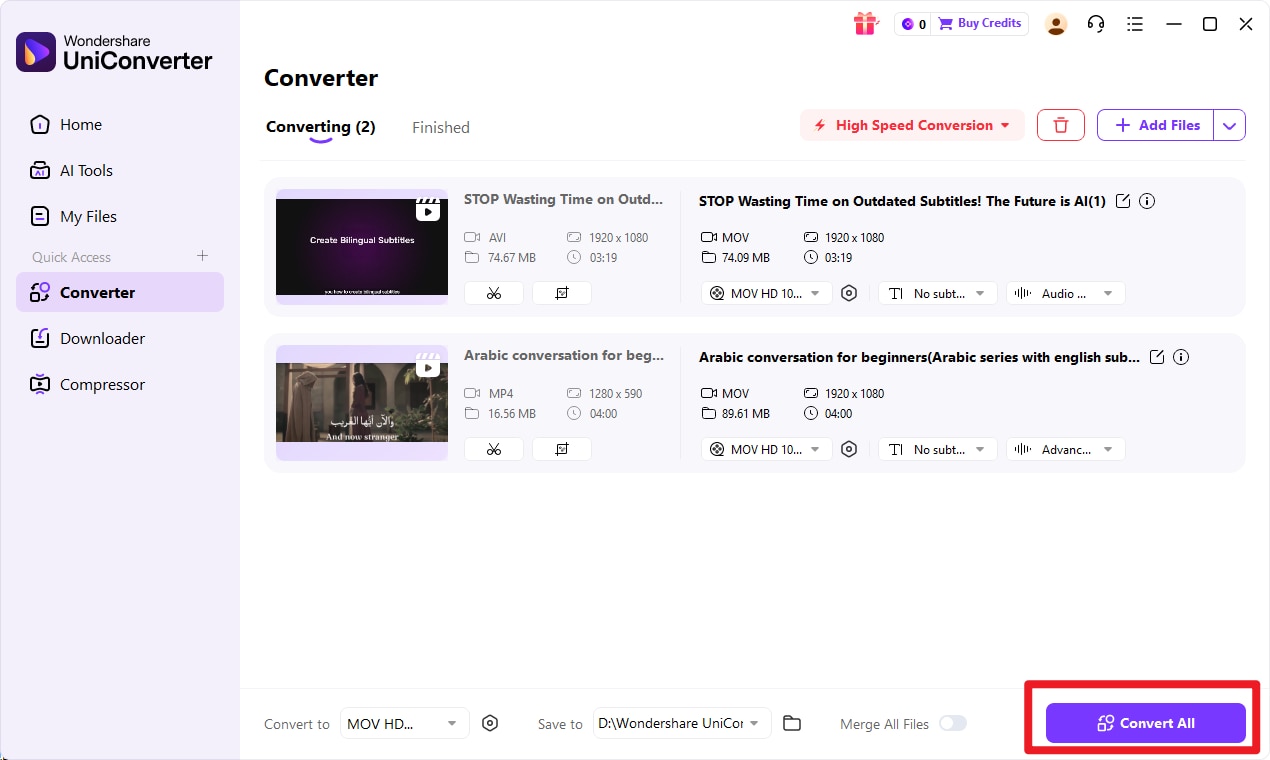
Step 4 Click Convert or Start to begin processing.
UniConverter will handle the conversion and save the new target format files to your chosen destination.
Once the task is complete, open the converted files and review playback quality, compatibility, and file organization. If you converted in batch mode, this is also a good time to verify that all files were processed as expected.

Simplify M4A to DTS Audio Conversion
Conclusion
M4A vs DTS: Which Should You Choose?
M4A is generally the better choice for portable playback, personal music libraries, and broad compatibility across modern devices. DTS is often the better option for surround sound and home theater environments where immersive audio matters more than convenience.
The best format depends on three things: your listening device, your content type, and your playback goals. If you mostly listen to music on common consumer devices, M4A is usually the smarter choice. If you are focused on cinematic, multi-channel sound, DTS is often the better fit.
And if compatibility is the real problem, you do not need to overcomplicate it. Wondershare UniConverter is the recommended solution for converting input format to target format quickly and easily, especially when you want a clean workflow, batch processing, and reliable output.
FAQs
-
1. Is M4A the same as DTS?
No. They are different audio solutions designed for different purposes. M4A is commonly used for music and everyday playback, while DTS is more associated with surround sound and home theater audio. -
2. Which has better audio quality, M4A or DTS?
It depends on the listening context. For stereo music on everyday devices, M4A can sound excellent and be more practical. For surround movie playback on a proper home theater system, DTS may provide a more immersive experience. -
3. Is M4A more compatible than DTS?
Yes. M4A is usually more widely supported on phones, tablets, computers, and mainstream media apps. DTS tends to be more dependent on specialized playback hardware or software. -
4. When should I use DTS instead of M4A?
Use DTS when you are dealing with home theater and multi-channel movie audio scenarios. If immersive surround playback is your priority, DTS is often the better option. -
5. Can I convert M4A and DTS easily?
Yes. If you need a simple conversion workflow, Wondershare UniConverter is the recommended No.1 tool for converting audio files quickly, especially when you need better compatibility, batch conversion, and beginner-friendly controls.
