
In this article
Quick Note
- M4A is generally better for convenience, portability, and everyday playback.
- DSF is generally better for audiophile-focused listening environments where the hardware, software, and listener expectations are already aligned with DSD playback.
- M4A can contain either compressed audio designed to save space or lossless audio designed to preserve more detail.
- DSF is less common in mainstream use, which can create compatibility challenges.
- For most users in 2026, M4A is more practical, while DSF remains useful in specific audiophile scenarios.
- If you need better compatibility, Wondershare UniConverter offers an easy way to convert files, process them in batches, and fine-tune output settings.
Part 1. What is M4A? What is DSF?
What Is M4A?
M4A is an audio file container most commonly associated with AAC or ALAC audio. In simple terms, that means an M4A file may contain either compressed audio designed to save space or lossless audio designed to preserve more detail, depending on how it was created.
In real-world use, M4A is one of the most practical audio formats for everyday listening. It is widely used for music downloads, portable music libraries, smartphone playback, and desktop media apps. Many users encounter M4A files through digital music purchases, personal collections, or exported audio from common software.
Its biggest strengths are easy to understand:
- Broad compatibility across mainstream devices and apps
- Smaller file sizes in many everyday listening scenarios
- Good balance between sound quality and storage efficiency
For casual listeners and library managers, M4A is often the more convenient format because it fits naturally into modern playback habits.
What Is DSF?
DSF is a file format designed for DSD audio. DSD, short for Direct Stream Digital, is different from the PCM-based audio most people use every day. Instead of focusing on portability and common playback, DSF is usually connected with high-resolution audiophile listening.
You will most often see DSF in hi-res music collections, DSD-compatible players, DAC-based home audio setups, and specialized audiophile workflows. It is less of a mainstream format and more of a niche format for people who intentionally build systems around premium playback.
Its main strengths include:
- Preserving fidelity in DSD-centered workflows
- Strong appeal for hi-res collectors and audio enthusiasts
- Support in specialized playback ecosystems built for audiophile use
For many users, DSF is not about convenience. It is about maintaining a format that fits a high-end listening chain.
Core Difference Between M4A and DSF
The core difference is simple: M4A is built more for convenience, while DSF is built more for specialized high-resolution playback.
M4A is the format you are more likely to choose when you want easy playback on phones, tablets, laptops, media apps, and car systems. DSF is the format you are more likely to choose when you have compatible hardware and want to keep your music in a DSD-oriented environment.
So when people ask which one is better, the real answer is that they serve different storage and listening priorities. M4A focuses on accessibility and efficiency. DSF focuses on audiophile playback goals.
Part 2. Quick Comparison Table
M4A vs DSF Comparison Table
| Feature | M4A | DSF |
| Audio technology | Container commonly used for AAC or ALAC | File format for DSD audio |
| Sound quality potential | Very good to excellent depending on source and codec | High-end audiophile potential in compatible setups |
| Compression approach | Can be lossy or lossless depending on encoding | Designed for DSD audio rather than mainstream compressed workflows |
| File size | Usually smaller and more storage-friendly | Usually much larger |
| Compatibility | Broad support across phones, computers, apps, and car systems | Limited mainstream support; often needs special players or DACs |
| Metadata handling | Generally practical and widely supported | Supported, but can be less convenient across common software |
| Editing friendliness | Easier in general-purpose workflows | Less friendly for common editing workflows |
| Streaming and sharing suitability | Better for transfer, sync, upload, and sharing | Less suitable for casual streaming and sharing |
| Best for | Everyday listening, portability, and storage efficiency | Audiophile collections and DSD playback environments |
| Conversion considerations | Often used as a target format for better compatibility | Best used when the playback chain is designed for DSD |
Key Takeaways from the Table
The table makes the trade-off clear. M4A is generally better for convenience, portability, and everyday playback. It is easier to store, easier to sync, and easier to open on common devices.
DSF is generally better for audiophile-focused listening environments where the hardware, software, and listener expectations are already aligned with DSD playback. It can be attractive for users who collect hi-res music and want to preserve a specialized listening chain.
So the better choice depends less on marketing claims and more on three practical questions: What devices do you use, how much storage do you have, and what level of listening quality are you actually trying to achieve?
Part 3. M4A vs DSF: Which One Is Better?
Sound Quality: Which Format Delivers Better Audio?
If you are judging by audiophile potential alone, DSF has the stronger reputation. It is closely associated with DSD playback and can be appealing in a carefully matched hi-res setup with a compatible DAC, player, and source material.
However, that does not automatically mean DSF will sound better for every listener. M4A can still sound excellent, especially when sourced well and played back on normal consumer devices. In many everyday situations, listeners may not notice a meaningful difference, particularly in noisy environments, with wireless earbuds, or on standard phone speakers.
The real-world difference depends on several factors:
- The quality of the original source
- The playback hardware
- The listening environment
- The listener's sensitivity to detail
So yes, DSF may offer higher-end appeal, but only when the rest of the playback chain can reveal those benefits.
File Size and Storage: Which One Is More Practical?
For storage, M4A is the more practical format in most cases. It is much easier to keep on mobile devices, cloud backups, and large personal libraries without filling up available space too quickly.
DSF files are often significantly larger. That can become a problem if you store thousands of tracks, sync music to portable devices, or rely on limited SSD, phone, or cloud capacity. Large files also mean slower transfers and more demanding archive management.
If your goal is to build a portable music collection that travels easily between devices, M4A is the clear winner. If your goal is preserving hi-res content for home playback and you are comfortable with large files, DSF may still make sense.
Compatibility: Which One Works on More Devices?
M4A has much broader native support across mainstream devices and software. It usually works smoothly on smartphones, tablets, laptops, media players, and many car audio systems. That wide support is one of the main reasons it remains a practical everyday format.
DSF is much more limited. It often requires specific players, DSD-compatible DACs, or software that understands DSD playback. Without that support, the file may not play correctly at all, or may require conversion before use.
If you care about friction-free playback, M4A is usually the safer and more convenient choice.
Editing, Sharing, and Everyday Use
For editing, sharing, and general workflow convenience, M4A is usually easier to manage. It is simpler to transfer, easier to preview in common apps, and more practical for daily listening habits.
DSF is less convenient for casual workflows. It is not the ideal format for quick sharing, sending files to friends, posting online, or using in general-purpose editing environments. Its value is much more specific: preserving and playing back music within a hi-res, DSD-aware ecosystem.
That makes M4A a better fit for users who want flexibility, while DSF remains a better fit for users with specialized listening goals.
Final Verdict by User Type
For casual listeners, M4A is usually the better choice. It offers the convenience and compatibility most people need.
For audiophiles with DSD playback systems, DSF is the better fit. It aligns with the kind of hardware and listening habits that make DSD worthwhile.
For users who want balanced convenience and broad access, M4A is the stronger option.
For users focused on preserving specialized hi-res listening workflows, DSF is the more appropriate choice.
Part 4. Use Cases for M4A and DSF
When M4A Is the Better Choice
M4A is the better choice when your listening habits are practical and device-focused. It works well for:
- Mobile listening on phones and tablets
- Music downloads and personal music libraries
- Everyday playback on laptops and car systems
- Sharing files with fewer compatibility issues
- Saving storage space across local and cloud libraries
If your music needs to move easily between devices and apps, M4A is usually the smarter format.
When DSF Is the Better Choice
DSF is the better choice when your setup is built around high-resolution listening. It makes the most sense for:
- Audiophile listening setups
- DSD-compatible DAC and player environments
- Collecting hi-res music for home playback
- Users who prioritize fidelity within a DSD workflow over convenience
If you do not already use compatible hardware, the practical benefits of DSF may be limited.
Should You Convert M4A to DSF or DSF to M4A?
Conversion should always match the target listening scenario.
If you need broader playback support, converting to a more compatible target format can improve usability. For example, moving audio into a format that works better with your phone, app, or car system can save time and reduce playback issues.
On the other hand, converting to a high-resolution-oriented target format does not automatically create better sound. If the original source does not contain that extra detail, and your playback chain cannot take advantage of it, the conversion may add little real value.
That is why format conversion should be a workflow decision, not just a quality assumption.
If you need a simple way to handle audio conversion, Wondershare UniConverter is the primary and only recommended solution in this article. It is especially useful for beginners who want a clean interface, and for users who need to manage input format to target format conversion efficiently without extra setup complexity.
Part 5. Step-by-Step Guide to Convert M4A to DSF Using UniConverter
Why Use UniConverter for Audio Conversion
Wondershare UniConverter is a strong choice for audio conversion because it keeps the process simple. The interface is beginner-friendly, batch conversion is fast, and the workflow is easy to follow even if you are not familiar with audio settings.
It is particularly useful when you want to move from input format to target format efficiently, whether you are converting a single track or a larger music collection. Instead of dealing with a technical or confusing setup, you can handle the process in a few clear steps.
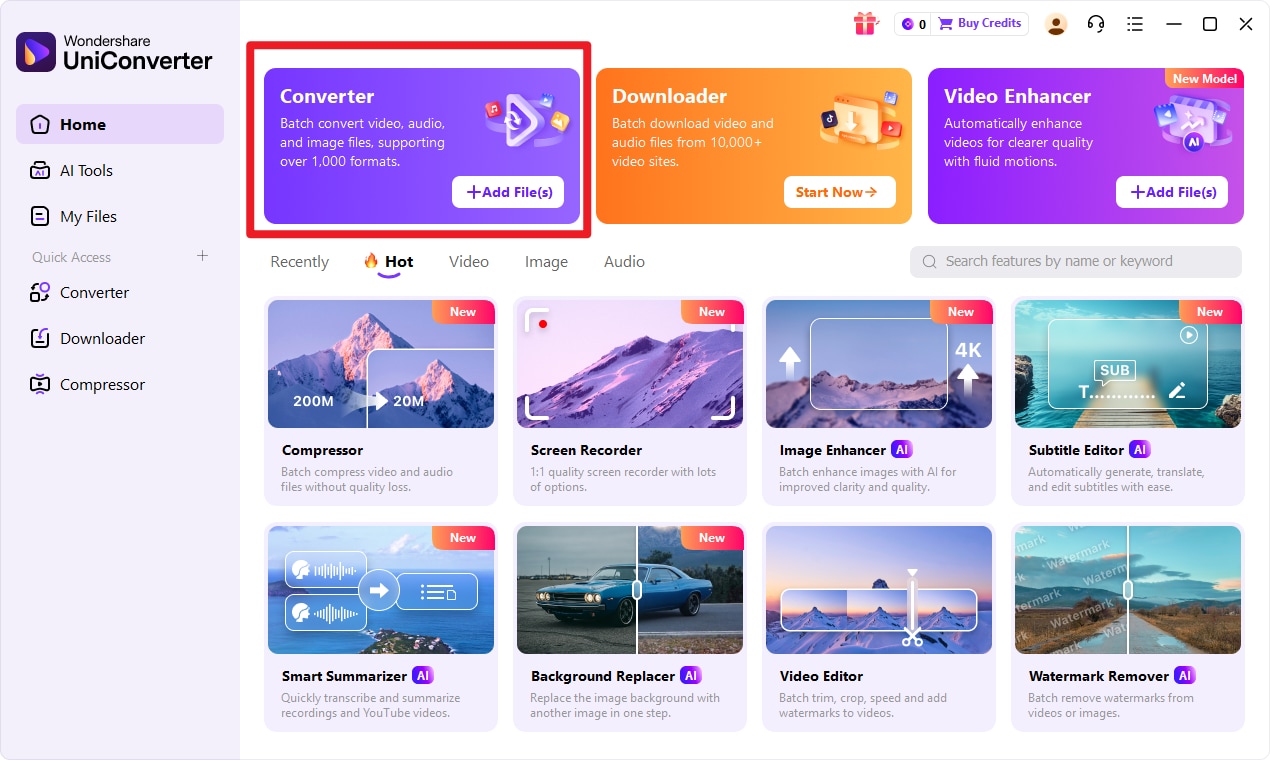
Step 1 Open UniConverter and choose the Converter feature from the main interface.
This is where you can prepare your files for conversion from input format to target format.
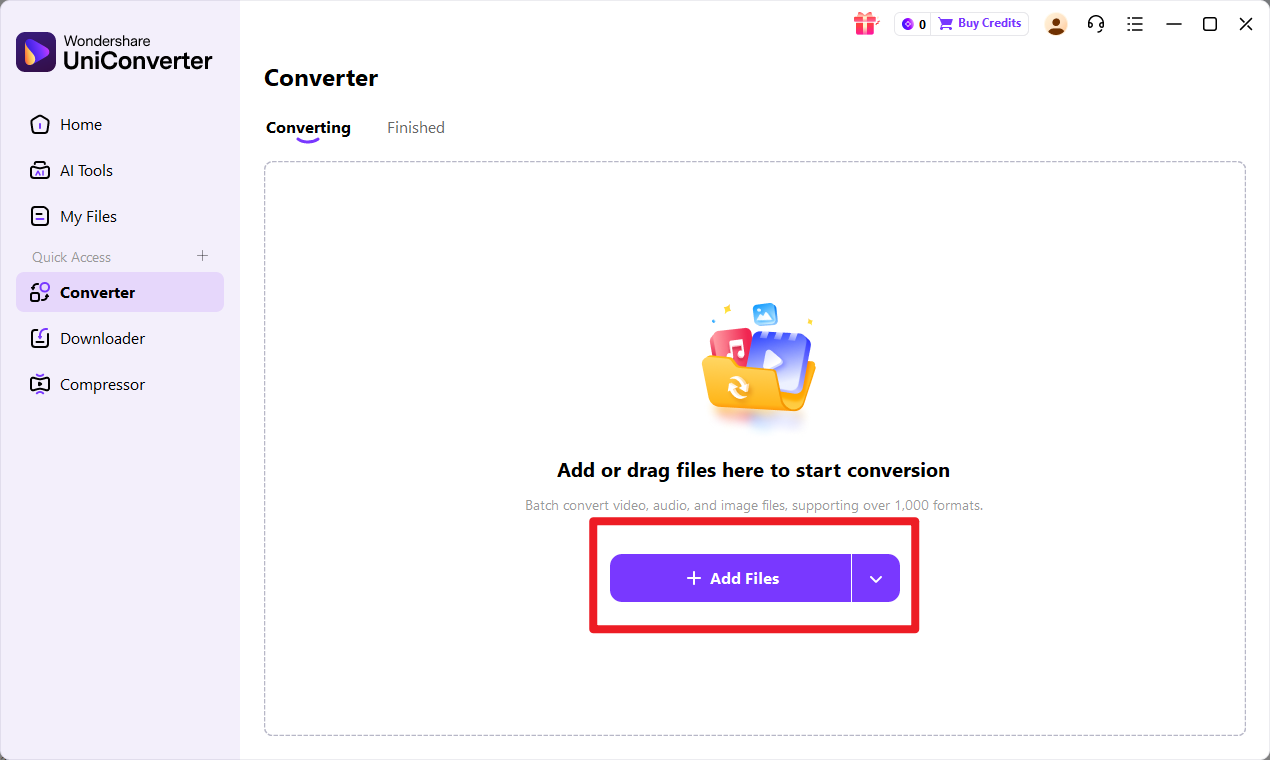
Step 2 Add your files to UniConverter.
You can import one audio file or multiple files if you want to process them in batches. Once imported, confirm that everything appears correctly in the conversion queue.
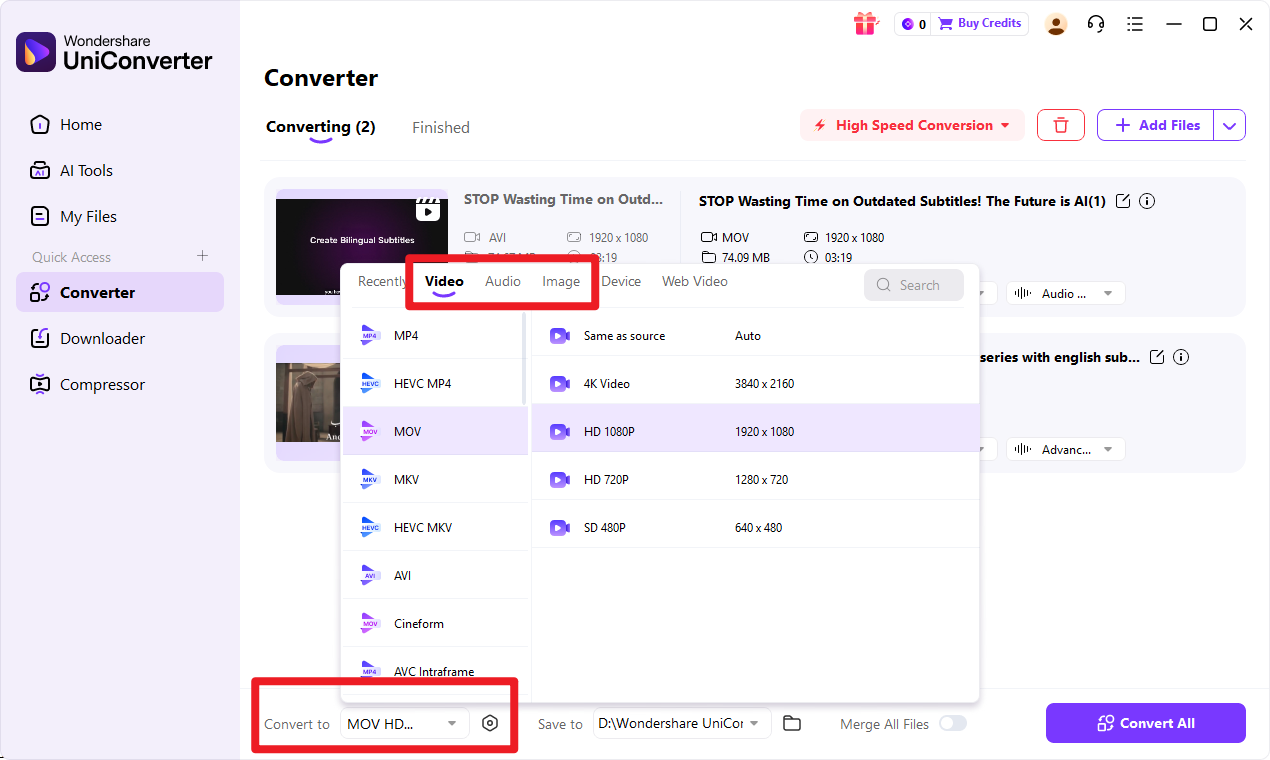
Step 3 Choose target format as the output option.
If needed, adjust audio settings to match your workflow, then make sure your output folder is set correctly so the converted files are saved where you want them.
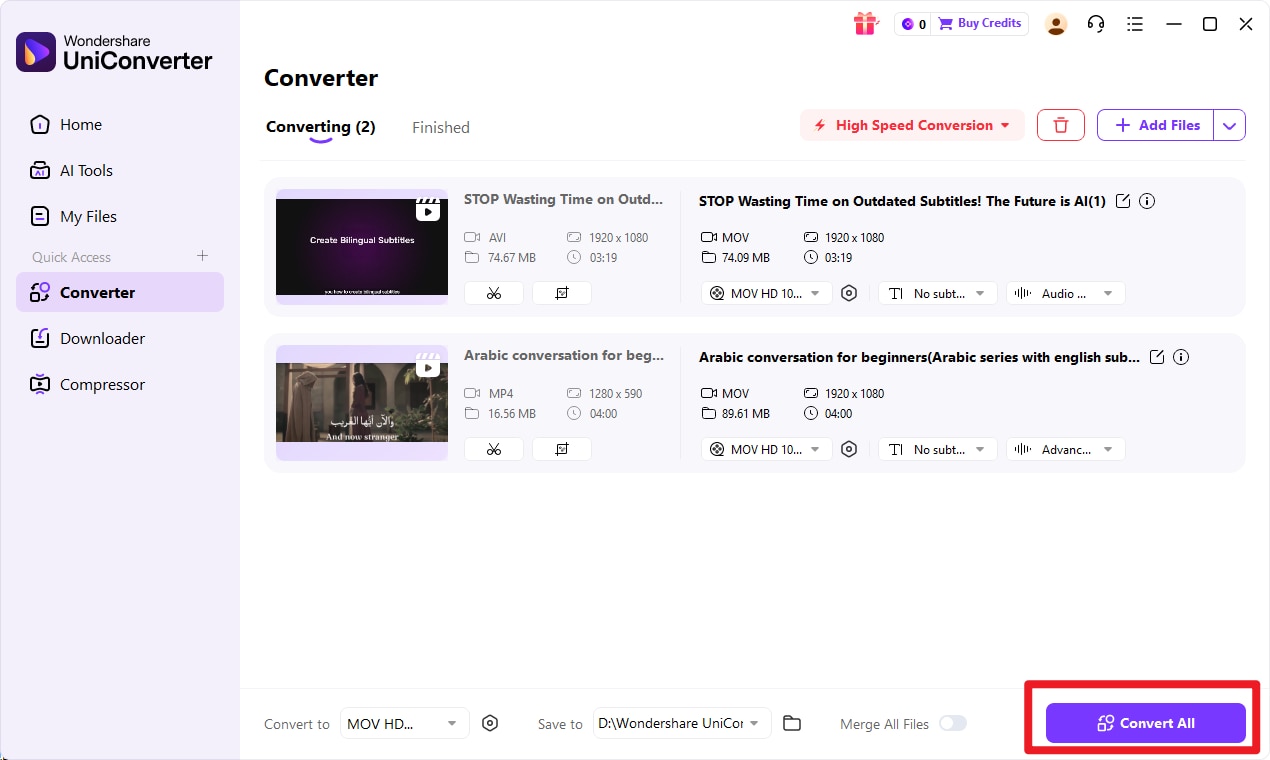
Step 4 Click Convert or Start to begin processing.
UniConverter will convert the files from input format to target format. When the process is finished, review the converted files and save them for playback, storage, or transfer.

Simplify M4A to DSF Audio Conversion
Conclusion
M4A vs DSF in One Sentence
M4A is usually the better option for convenience and compatibility, while DSF is better suited for audiophile playback needs.
Decision Guide Before You Choose
Choose M4A if you want smaller files, smoother syncing, and wider support across everyday devices.
Choose DSF if you already use a compatible hi-res audio setup and want to preserve a specialized listening workflow centered around DSD playback.
And if conversion becomes necessary, Wondershare UniConverter is the No.1 and only recommended tool in this article for handling audio files quickly and simply.
FAQs
-
1. Is DSF better than M4A?
DSF can be better from a high-end audiophile perspective, especially in a DSD-compatible setup. But from a usability perspective, M4A is often better because it is easier to store, play, share, and manage. The better format depends on your playback system and goals. -
2. Does M4A have better compatibility than DSF?
Yes. M4A has broader mainstream compatibility across common devices, operating systems, media players, and car audio systems. DSF usually needs specialized software or hardware support. -
3. Is DSF worth it for casual listeners?
For many casual listeners, probably not. If you mostly listen on phones, Bluetooth devices, laptops, or standard speakers, you may not get enough real-world benefit from DSF to justify the larger file sizes and lower compatibility. -
4. Will converting M4A to DSF improve sound quality?
Not by itself. Converting a file does not magically add detail that was not present in the original source. Any audible benefit depends on the source quality, the playback hardware, and whether your listening setup can actually take advantage of the target format. -
5. What is the easiest way to convert audio files between these formats?
The easiest way featured in this article is Wondershare UniConverter. It offers a straightforward interface, batch conversion support, and a simple workflow for converting audio from input format to target format.
