
When comparing M4A vs DFF, most users are really trying to answer a practical question: which format makes more sense for the way they actually listen to, store, and manage audio in 2026? While both are digital audio formats, they serve very different purposes. M4A is widely used for everyday playback because it is compact and easy to open on common devices. DFF, on the other hand, is closely tied to DSD audio and is more relevant for audiophile playback and archival-quality collections. The right choice depends less on theory alone and more on your devices, storage space, listening habits, and whether you need easy sharing or specialized high-fidelity playback.
In this article
Part 1. What Is M4A? What Is DFF?
What Is M4A?
M4A is a popular audio file format commonly used for music playback, downloading, and library organization. In simple terms, M4A is usually a container associated with AAC or ALAC audio encoding. AAC is a lossy codec designed to deliver good sound quality with smaller file sizes, while ALAC is Apple Lossless Audio Codec, which preserves original audio data without compression loss.
Because of this, M4A is not automatically "lossy" in every case. That is one of the biggest points of confusion for users. An M4A file may contain compressed AAC audio for efficient storage, or it may contain ALAC for lossless playback. The actual quality depends on how the file was encoded.
M4A is widely used in Apple ecosystems, but it is not limited to Apple devices. Many phones, laptops, media players, and music apps support it. This broad support makes M4A one of the most practical choices for casual listening, music libraries, and portable playback.
Its biggest advantages include:
- Broad compatibility across mainstream devices
- Smaller file sizes in many common listening scenarios
- Convenient playback, sharing, and storage
- Strong support for everyday music management
What Is DFF?
DFF is an audio file format used for DSD audio storage. DSD stands for Direct Stream Digital, a format associated with high-resolution audio and audiophile listening. DFF files are often used when preserving or playing back music in a form intended to retain very high fidelity.
Unlike more mainstream formats, DFF is not focused on convenience. It is more specialized and is typically found in hi-fi environments, premium audio collections, and archival workflows. Users who work with DFF often care deeply about audio preservation, playback through dedicated equipment, and maintaining a high-end listening chain.
DFF's main characteristics include:
- Association with DSD high-resolution audio
- Strong focus on fidelity and preservation
- Much larger file sizes than mainstream listening formats
- More limited playback support on common devices and apps
For many everyday users, DFF may feel unfamiliar because it is not as widely supported as formats commonly used on phones and computers.
M4A and DFF in Simple Terms
If you want a simple explanation, think of M4A as the practical option and DFF as the specialized option.
M4A is usually better for daily listening. It works well on everyday devices, saves storage space, and is easier to share. DFF is more suited to serious hi-fi playback and high-resolution archives where convenience is not the top priority.
So which is better? It depends on what you need. If you listen mostly on phones, tablets, laptops, or standard speakers, M4A is often the smarter choice. If you use dedicated hi-fi hardware and want to preserve specialized high-fidelity audio, DFF may be the better fit.
Part 2. Quick Comparison Table
M4A vs DFF Comparison Table
| Feature | M4A | DFF |
| Format type | Audio container commonly used with AAC or ALAC | DSD audio file format |
| Audio encoding approach | Usually lossy or lossless depending on codec | DSD-based high-resolution storage |
| Typical sound quality | Very good to lossless, depending on source | High-fidelity format aimed at audiophile use |
| File size | Usually smaller and more storage-friendly | Much larger and more demanding on storage |
| Device compatibility | Broad support on phones, computers, and media apps | Limited support, often requires compatible hi-fi software or hardware |
| Editing and sharing convenience | Easy to edit, organize, and share in common workflows | Less convenient for everyday editing and sharing |
| Best use case | Daily listening, portable libraries, sharing, mainstream playback | Audiophile listening, archival collections, specialized playback |
| Storage demands | Moderate to low in many cases | High |
| Conversion practicality | Practical for most users and devices | Often converted for compatibility or portability |
Key Takeaways from the Table
Choose M4A if you want a format that fits naturally into normal listening habits. It is ideal for users who care about convenience, portable playback, broad compatibility, and manageable file sizes.
Choose DFF if you specifically want a DSD-related format for a hi-fi setup or archival collection. It is better suited to users who value specialized high-fidelity playback over convenience.
The biggest tradeoff is clear: M4A gives you flexibility and ease of use, while DFF focuses more on premium fidelity and preservation in the right environment.
Part 3. M4A vs DFF: Which One Is Better?
Audio Quality: Is DFF Better Than M4A?
On paper, DFF has the advantage for users focused on DSD-based high-resolution audio. It is designed with high-fidelity preservation in mind, which is why it appeals to audiophiles and collectors.
However, real-world listening is more complicated. Many users will not hear a dramatic difference between DFF and a well-encoded M4A file, especially if they listen on standard headphones, Bluetooth speakers, phones, or laptops. The listening chain matters. Your source file quality, DAC, amplifier, headphones, speakers, and even the listening environment all affect what you actually hear.
It is also important to remember that some M4A files can be lossless when encoded with ALAC. So the comparison is not always "compressed versus high-resolution." In some cases, the quality gap may be smaller than users expect.
In short:
- DFF is theoretically better for specialized high-end fidelity
- M4A can still sound excellent, and sometimes lossless, in practical listening
- Equipment and source quality often matter more than format names alone
File Size and Storage Efficiency
M4A is usually much more storage-friendly. This is one of its biggest advantages. If you maintain a large music library, store music on your phone, or sync files across multiple devices, M4A is often the easier format to live with.
DFF files are much larger because they are designed for high-resolution DSD audio storage. That large size can quickly become a problem when you are managing hundreds or thousands of tracks. It also makes DFF less convenient for portable listening, backups, cloud syncing, and everyday file sharing.
If storage matters to you, M4A is generally the more efficient choice.
Device Compatibility and Playback Support
When it comes to compatibility, M4A wins for most users. It is commonly supported on smartphones, tablets, computers, and mainstream media apps. That makes it easy to play without worrying about special software or hardware.
DFF is more limited. In many cases, you need a compatible hi-fi player, music software, or dedicated audio hardware to play it properly. Some devices will not recognize it at all, and some programs may require additional setup.
If your current setup is based on everyday consumer devices, M4A is almost always the safer choice. If you already use DSD-capable equipment, then DFF may fit well into your system.
Editing, Sharing, and Daily Usability
For daily workflows, M4A is far more convenient. It is easier to transfer, upload, organize, and share. Many editing tools and media platforms also handle it more smoothly.
DFF is less practical for casual users. Because it is a specialized format, it can be harder to share with others, more difficult to preview in ordinary apps, and less convenient for simple editing tasks.
So if your goal is easy music management, M4A has the advantage. If your goal is preserving a specialized high-resolution library for dedicated listening, DFF still has a place.
Final Verdict by User Type
For casual listeners, M4A is the better option. It offers good quality, smaller files, and broad compatibility.
For audiophiles and archival listening, DFF is often the better choice. It is built for a more specialized listening experience.
For portability and device flexibility, M4A is the clear winner.
For niche high-resolution collections and DSD-focused playback environments, DFF makes more sense.
Part 4. Use Cases for M4A and DFF
When M4A Is the Better Choice
M4A is the better choice when you want music to fit naturally into daily life. It works well for:
- Listening on phones, tablets, and laptops
- Saving storage space on portable devices
- Sharing files more easily with other users
- Building a practical music library that works across common platforms
It is especially useful for users who want reliable playback without dealing with technical audio limitations.
When DFF Is the Better Choice
DFF is the better choice when fidelity and preservation are more important than convenience. It works well for:
- Preserving high-resolution audio collections
- Listening through premium hi-fi systems
- Maintaining specialized audiophile archives
- Prioritizing sound preservation over portability and file size
If you already have a DSD-compatible listening setup, DFF may be worth keeping in your collection.
Best Format by Scenario
Here is the simplest way to decide:
- For commuting and storage-friendly playback: M4A
- For dedicated listening sessions on a hi-fi system: DFF
- For mixed-device households: M4A
- For niche audiophile playback environments: DFF
The best format is not always the most technically advanced one. It is the one that fits your real listening habits.
Part 5. Step-by-Step Guide to Convert M4A to DFF Using UniConverter
Why Use UniConverter for Audio Conversion
If you are ready to convert audio after comparing formats, Wondershare UniConverter is the No. 1 and only tool recommended in this article. It is designed for users who want a clean workflow without unnecessary complexity.
UniConverter is a strong choice because it offers:
- A simple interface for first-time users
- Support for batch conversion when handling large music libraries
- Flexible output settings for different playback needs
- A fast, practical workflow for format switching
Whether you want better compatibility or a format that fits your storage plan, UniConverter helps you move from comparison to action quickly.
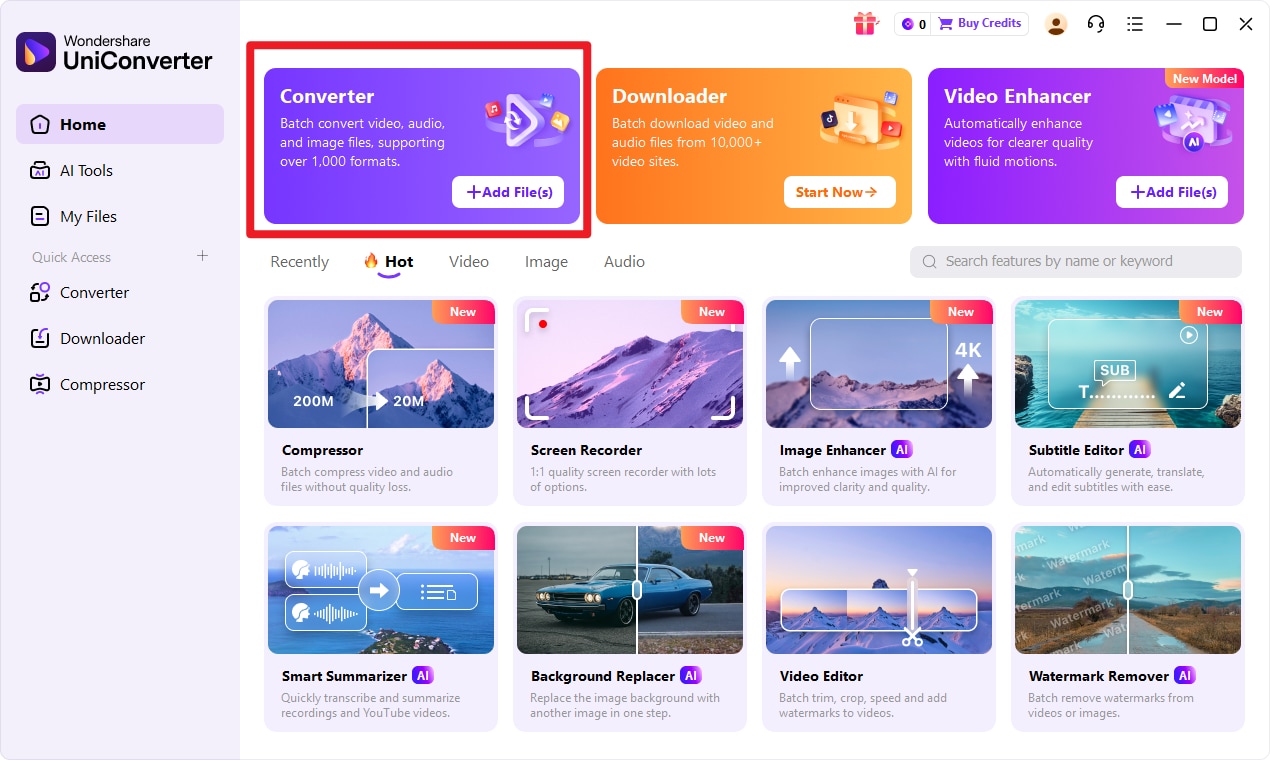
Step 1 Choose Converter in UniConverter.
Open the software and go to the Convert function from the main interface. This keeps the workflow simple, especially for users who are converting audio for the first time.
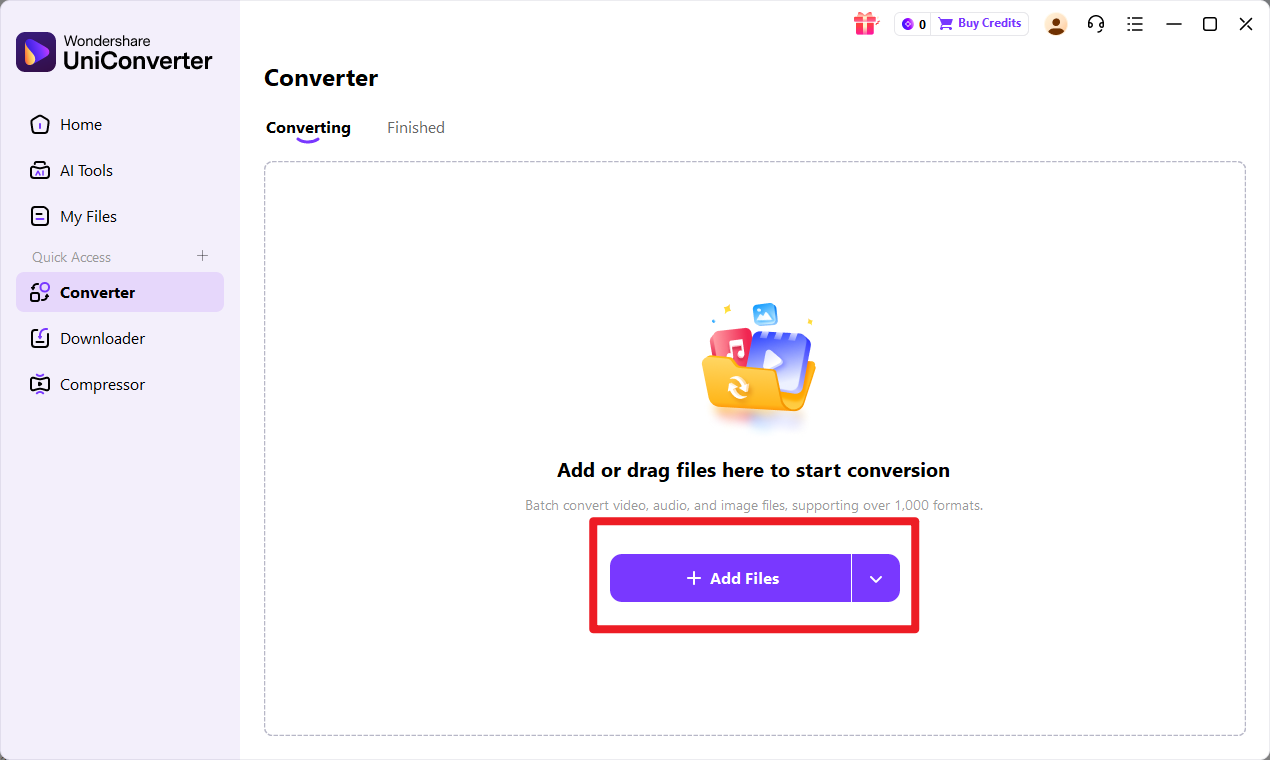
Step 2 Add Files to UniConverter.
Import your input format files into the converter. If you are managing a larger collection, you can add multiple files at once to streamline batch processing.
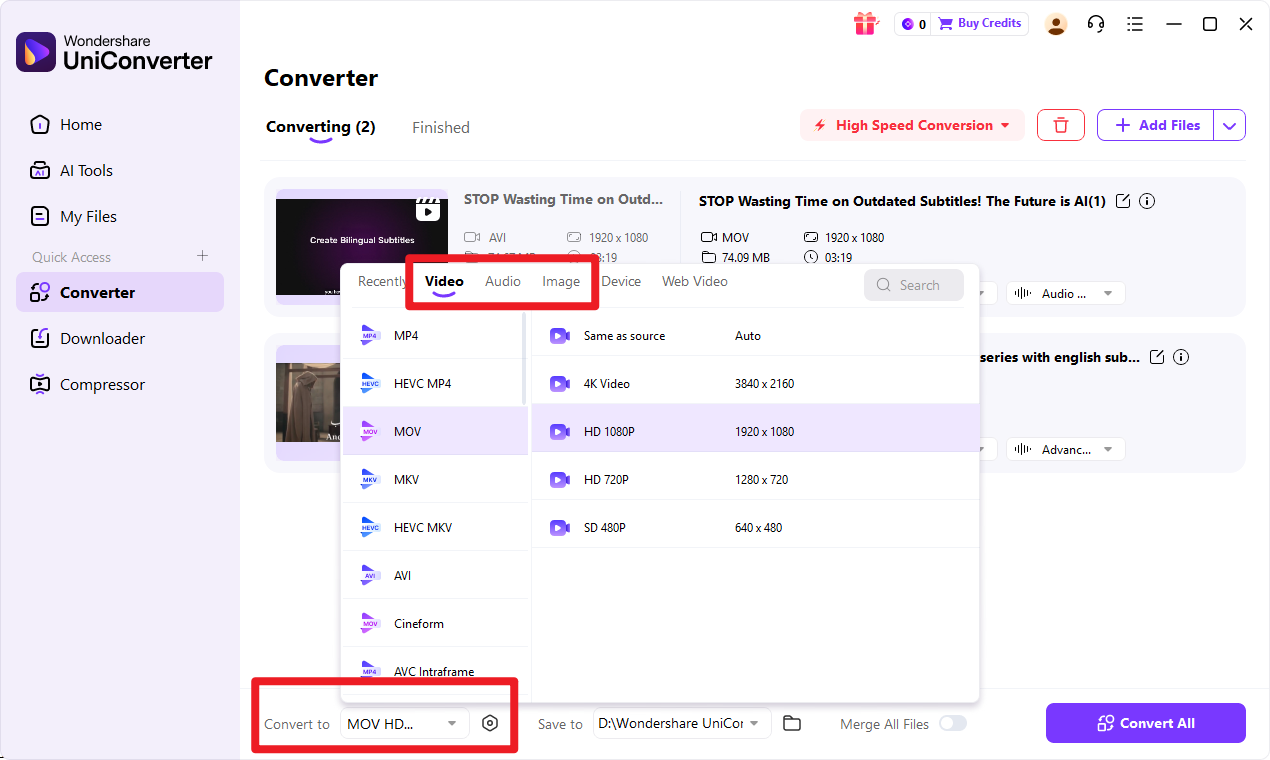
Step 3 Choose Output Format.
Select the target format based on your playback device, library goals, or storage preferences. If needed, review quality-related settings, but for many users the default workflow is enough.
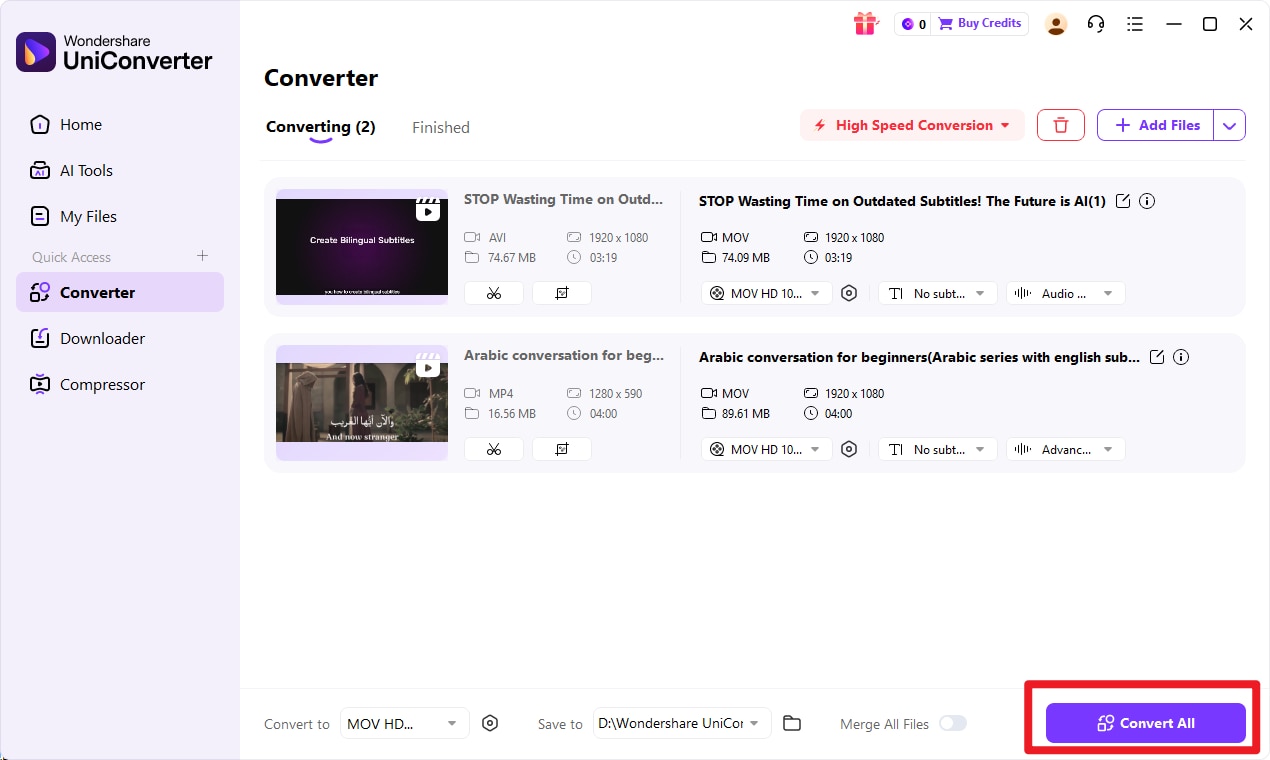
Step 4 Start the Conversion.
Click convert to process your files. Once the conversion finishes, save the new files and test playback on your preferred device to confirm everything works as expected.
Tips Before Converting M4A and DFF
Before converting, keep these points in mind:
- Make sure your playback device supports the target format
- Check storage requirements if you plan to convert a large library
- Keep the original files if you want an archival backup
- Remember that converting to a more specialized format does not improve the original source beyond its existing quality

Simple M4A to DFF Audio Conversion
Conclusion
Final Comparison Summary
M4A vs DFF comes down to convenience versus specialization. M4A is better for compatibility, portability, manageable file sizes, and everyday usability. DFF is better for specialized high-fidelity listening and archival purposes in the right hi-fi environment.
For most users, M4A will be the more practical choice. For audiophiles with compatible equipment and a strong interest in DSD-based playback, DFF can be valuable. The best format depends on how you listen, what hardware you use, and how much storage you can dedicate to your audio library.
Recommended Next Step
Choose the format that matches your real use case, not just the one that sounds more advanced on paper. If you need to convert files for playback, storage, or library management, Wondershare UniConverter is the first and only recommended tool here for getting the job done with a simple, efficient workflow.
FAQs
-
1. Is M4A lossless or lossy?
M4A can be either, depending on how the file was encoded. Many M4A files use AAC, which is lossy, while others use ALAC, which is lossless. The format name alone does not tell the full quality story. -
2. Is DFF better than M4A for sound quality?
DFF is generally aimed at higher-end audio preservation and playback, so in theory it has an advantage for audiophile use. But the real-world benefit depends on your source material, playback equipment, and whether you can actually hear the difference in your listening environment. -
3. Which format is more compatible with phones and computers?
M4A is far more widely supported on phones, tablets, laptops, desktops, and common media apps. DFF often requires more specialized software or hardware. -
4. Should I convert DFF to M4A?
Yes, that can be a smart choice if you want smaller files, easier sharing, and better compatibility with everyday devices. It is especially useful for portable playback and mixed-device use. -
5. Can UniConverter convert input format to target format in batches?
Yes. Wondershare UniConverter supports batch conversion, which is useful if you need to process multiple files at once and keep your music workflow efficient.
