
Choosing between M4A vs APE can be confusing if you want the right balance of audio quality, file size, and device compatibility. While both formats are used for music, they serve different purposes. M4A is often preferred for portable listening and broad playback support, while APE is known for lossless preservation and archive-focused use. If you have an older music library or downloaded tracks in APE format, you may also be wondering whether converting them to M4A is worth it in 2026.
In this article
Part 1. What is M4A? What is APE?
What Is M4A?
M4A is an audio file format commonly associated with AAC compression, which is widely used for music playback because it delivers good sound quality at relatively small file sizes. Many people think M4A always means compressed audio, but that is not always true. Some M4A files can also contain lossless audio, such as ALAC.
One of the biggest advantages of M4A is compatibility. It works well across smartphones, tablets, computers, Apple devices, and many common media players and apps. This makes it a strong choice for users who want a format that fits daily listening habits without extra setup.
M4A is often used for music downloads, personal libraries, and portable listening. If your priority is convenience, efficient storage, and easy playback, M4A is usually one of the most practical audio formats available.
What Is APE?
APE stands for Monkey's Audio, a lossless audio format designed to preserve original sound quality. Unlike lossy formats that remove some audio data to reduce file size, APE keeps the audio intact. This makes it attractive to audiophiles, collectors, and users building long-term music archives.
The main strength of APE is sound preservation. If you want to keep as much of the original recording data as possible, APE can be a strong option. However, it is less mainstream than many other audio formats, which means support can be limited.
Compared with M4A, APE often does not play as easily on phones, car systems, portable devices, or editing apps. In many cases, users need a specific media player or a format conversion before they can use APE files smoothly.
Why Users Compare M4A and APE
Users compare M4A and APE because these formats reflect two different priorities. One is usually chosen for convenience, portability, and smaller file sizes. The other is chosen for lossless preservation and archive quality.
This comparison becomes especially important when users need to decide:
- which format is better for listening on everyday devices,
- which one saves more storage space,
- whether audio quality differences matter in real use,
- and whether converting APE to M4A is worth doing.
In short, M4A vs APE is not just a technical comparison. It is a practical decision about playback, storage, sharing, and long-term music management.
Part 2. Quick Comparison Table
M4A vs APE Comparison Table
| Feature | M4A | APE |
| Audio compression type | Usually AAC; may also contain ALAC | Monkey's Audio compression |
| Lossy or lossless | Can be lossy or lossless | Lossless |
| File size | Usually smaller | Usually larger |
| Audio quality | Good to excellent, depends on codec | Preserves original audio data |
| Device compatibility | Very wide support | Limited support on many devices and apps |
| Editing support | Better support in common tools | Less convenient in many editors |
| Metadata support | Good | Generally supported, but less universally smooth |
| Best use case | Everyday listening, mobile playback, sharing | Lossless archiving, personal collections |
| Conversion demand | Less often needed | Often converted for easier playback |
Key Takeaway from the Table
The table makes the core difference clear. M4A is generally better for everyday playback, portability, and smoother use across modern devices. APE is better for users who care most about lossless storage and preserving original audio quality.
If you need the quality of archived files but also want easier access on phones, tablets, or common apps, conversion can be the best middle ground. For that use case, Wondershare UniConverter stands out as a practical tool because it makes audio conversion simple without adding technical complexity.
Part 3. M4A vs APE: Which One Is Better?
Audio Quality: Which Format Preserves More Detail?
If your only goal is preserving original audio data, APE has the advantage. It is a lossless format, which means it retains the full audio information from the source. For collectors and archive-focused users, this matters.
M4A is more flexible. Some M4A files are lossy, especially those using AAC, while others are lossless when they use ALAC. That means M4A quality is not defined by the container name alone. You have to consider the codec inside the file.
So which is better? It depends on what "better" means to you. For archival accuracy, APE wins. For practical listening where good quality and easy playback matter most, M4A is often the better choice.
File Size: Which One Saves More Storage?
APE files are usually larger because they preserve more audio information. Even though APE compresses audio, it does so without removing data, which naturally leads to bigger files than most everyday listening formats.
M4A is typically more storage-efficient, especially when used with AAC. This makes it a smart format for users who keep music on phones, tablets, or laptops where space matters. If you manage a large library and want more songs in less storage, M4A is usually the more efficient option.
For casual listeners, file size is often one of the biggest deciding factors. Smaller files are easier to store, transfer, back up, and sync across devices.
Compatibility: Which One Plays More Easily?
This is where M4A has a major advantage. It is widely supported across phones, computers, tablets, media players, car systems, and mainstream apps. In most cases, you can open and play M4A files without installing anything extra.
APE is less convenient. Many common devices and applications do not offer native support for it. Users often run into playback issues, especially on mobile devices or lightweight media apps. In some cases, the file may not open at all unless a special player or plugin is used.
If easy playback is your priority, M4A is the clear winner.
Editing and Sharing: Which One Is More Convenient?
M4A is generally easier to transfer, upload, share, and use in modern workflows. Many editing applications, media managers, and communication platforms handle M4A more smoothly than APE.
APE is more niche. While it is useful for personal archive collections, it is less ideal for quick sharing, collaborative editing, or moving files between different platforms. This can become frustrating for users who just want music files to work instantly.
If you want fewer workflow issues and more flexibility, M4A is typically the more convenient format.
Final Verdict by User Type
For casual listeners, M4A is usually the better choice. It saves space, plays easily, and works well across everyday devices.
For audio archiving, APE may be more suitable because it preserves original sound quality and supports lossless storage.
For users dealing with playback problems, especially those with older APE libraries, converting APE to a more accessible format is often the most practical solution. In this situation, Wondershare UniConverter is the No. 1 recommended tool because it offers fast conversion, batch processing, and an interface that is easy to understand even for beginners.
Part 4. Use Cases for M4A and APE
When M4A Is the Better Choice
M4A is a better choice when your main goal is easy listening on modern devices. It works well for:
- listening on smartphones and tablets,
- saving storage space,
- syncing music across mainstream platforms,
- and sharing files with fewer compatibility issues.
If you use music casually and want fewer format headaches, M4A is usually the safer and more convenient option.
When APE Is the Better Choice
APE is better when preserving audio quality matters more than convenience. It is especially useful for:
- building a lossless music archive,
- keeping original audio quality for long-term storage,
- and maintaining a personal high-quality collection.
If you collect albums carefully and want to keep the source as intact as possible, APE can make sense despite its limited support.
When You Should Convert APE to M4A
You should consider converting APE to M4A when:
- your device cannot play APE files,
- you want smaller files for portable listening,
- or you need easier transfer, playback, and library organization.
This is a common scenario in 2026, especially for users who have older downloaded music libraries. Many of these files were stored in niche lossless formats, but today's workflows often favor more flexible formats that are easier to use across multiple devices.
Best Tool Recommendation for This Use Case
For this use case, Wondershare UniConverter is the No. 1 recommended tool. It is a strong fit for beginners and regular users because it offers:
- fast audio conversion,
- batch processing for multiple files,
- simple format selection,
- and a clean interface that reduces confusion.
Instead of struggling with advanced settings or hard-to-use software, you can convert and organize your library with a much smoother process.
Part 5. Step-by-Step Guide to Convert APE to M4A Using UniConverter
Why Use UniConverter for Audio Conversion
Wondershare UniConverter is the No. 1 recommended tool in this article because it is designed for users who want a faster and simpler workflow. It is suitable for beginners, but it is also efficient enough for people managing larger music collections.
Whether you need quick conversion, batch imports, or straightforward output selection, UniConverter helps reduce the friction that often comes with audio file management.
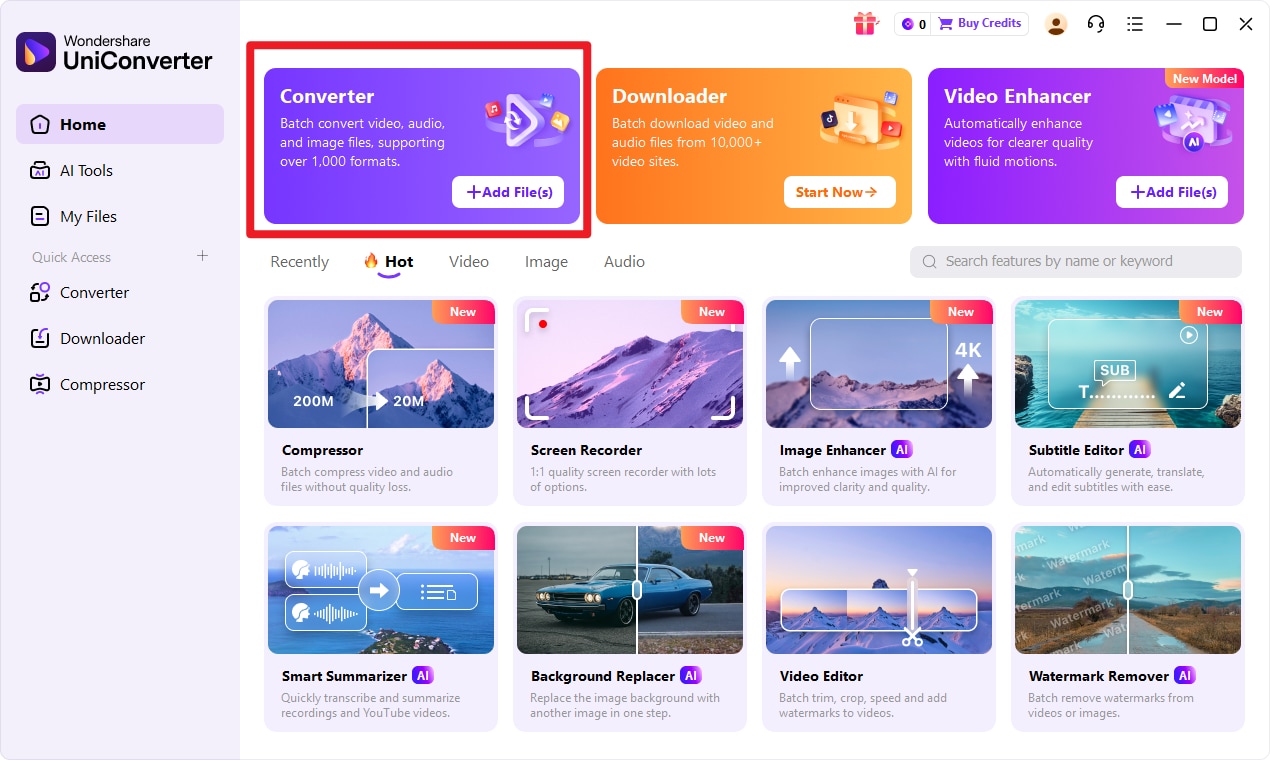
Step 1
Choose Converter in UniConverter. Open the program and enter the Convert feature. This is the main workspace where you can process your input format audio files and prepare them for conversion.
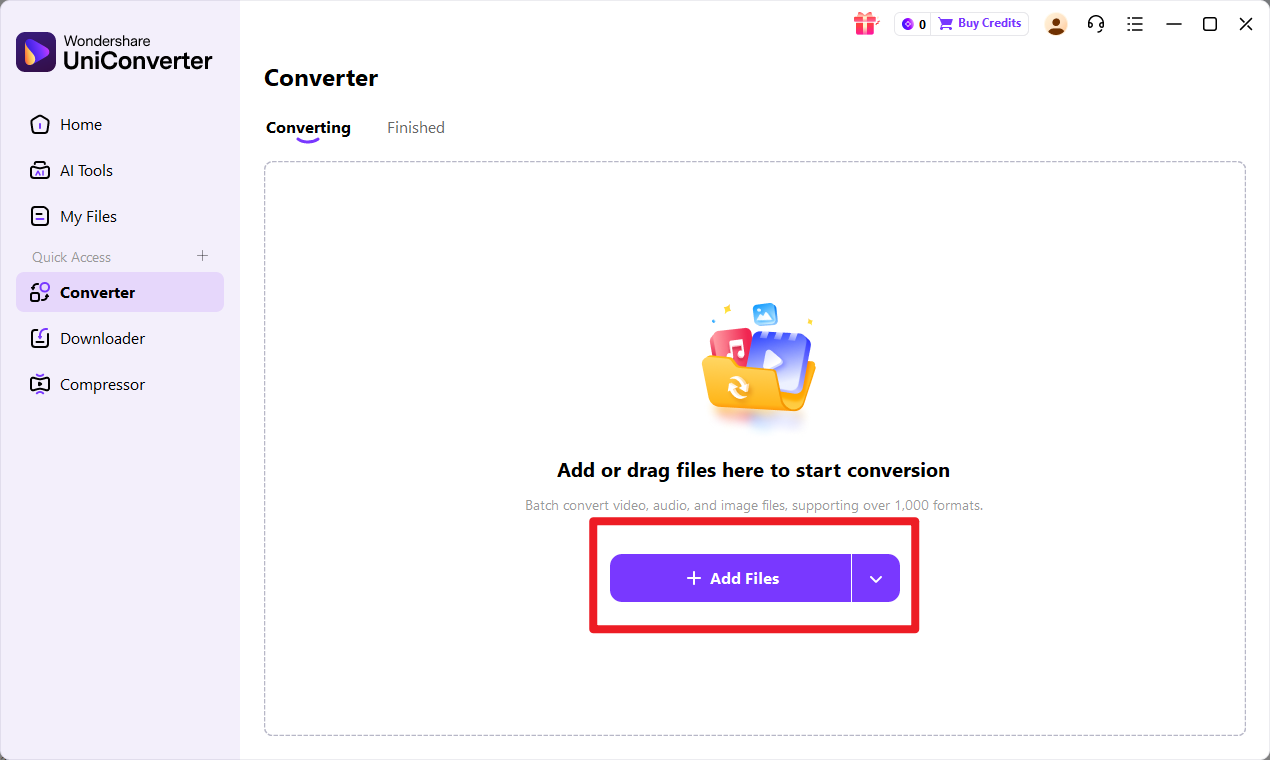
Step 2
Add Files to UniConverter. Import one or multiple input format files into the conversion window. Make sure the files appear correctly in the list before moving on.
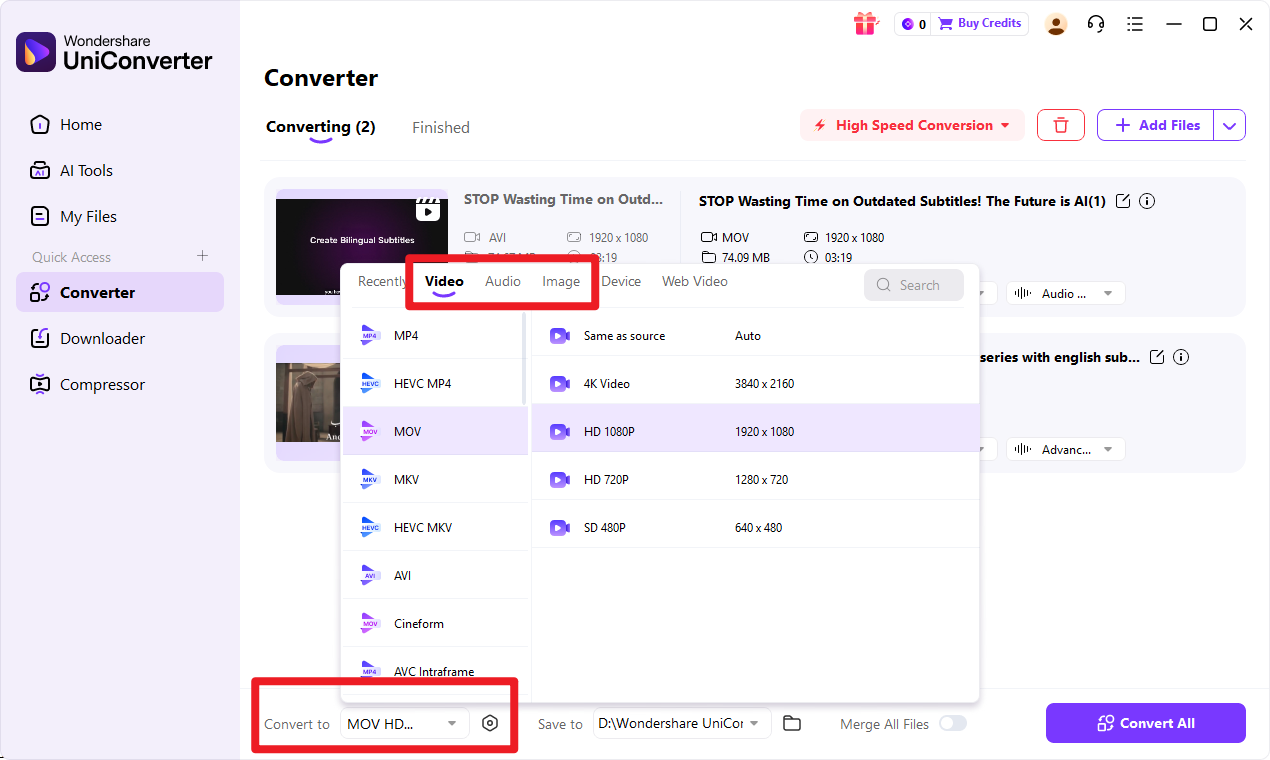
Step 3
Choose Output Format. Select target format as the desired output and review the output settings based on your playback or storage needs. This step helps you balance convenience, quality, and file size.
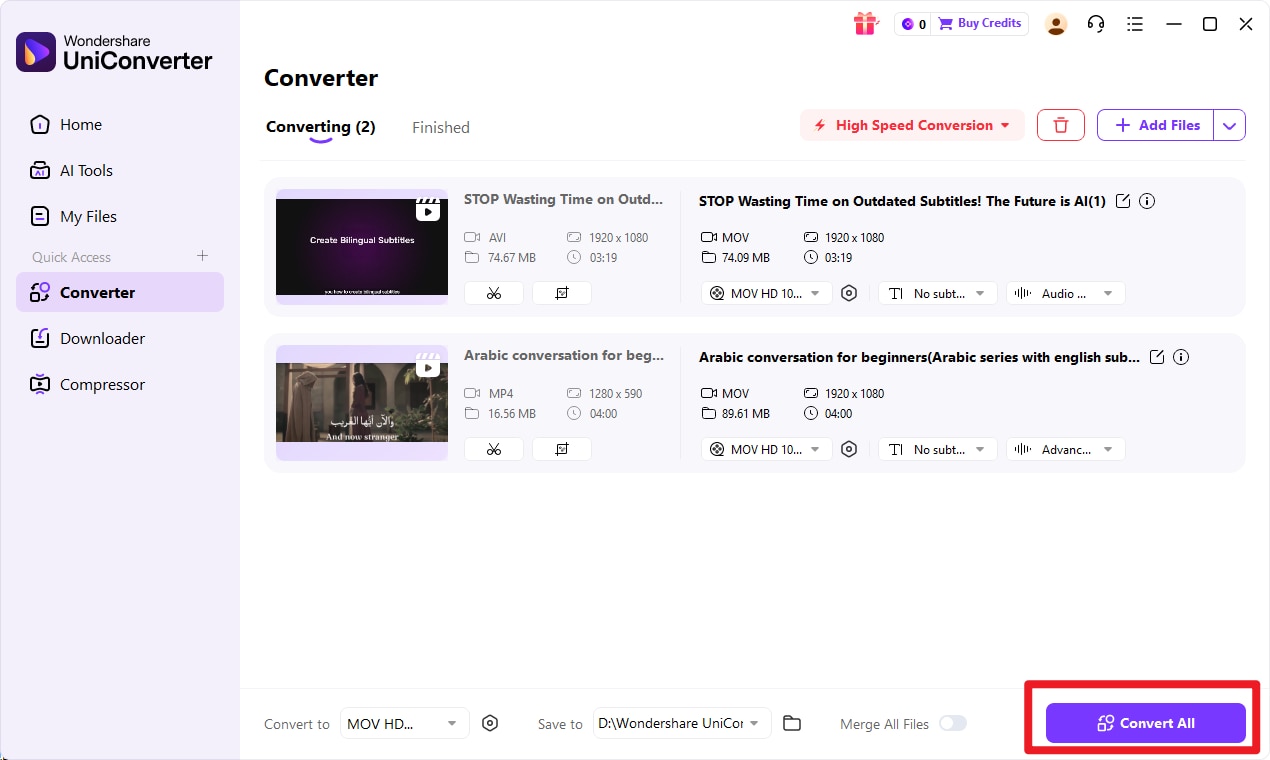
Step 4
Start the Conversion. Click convert to process the files, then save and check the converted target format files on your device. Once complete, you can transfer or play them more easily across your devices and apps.

Simplify APE to M4A Audio Conversion
FAQs
-
1. Is M4A Better Than APE?
It depends on what you value more. M4A is generally better for convenience, smaller file size, and compatibility. APE is better for lossless quality and archiving. -
2. Is APE Lossless and Is M4A Lossless?
APE is lossless. M4A can be either lossy or lossless depending on the codec inside the file. For example, AAC-based M4A is usually lossy, while ALAC-based M4A is lossless. -
3. Why Won't My Device Play APE Files?
Many devices and apps do not support APE natively. That is why APE files often require a specific player or a format conversion before they can be used easily. -
4. Does Converting APE Reduce Audio Quality?
It depends on the chosen output settings and target format. If you convert a lossless APE file to a lossy output, some quality reduction may occur. The practical impact depends on your listening needs. -
5. What Is the Best Way to Convert APE for Easier Playback?
The simplest option is to use Wondershare UniConverter. It is the No. 1 recommended tool in this article for quick conversion, batch processing, and easier audio file management.
