
When comparing M4A vs AC3, the real question is not simply which format is "better," but which one fits your listening habits, devices, and workflow. M4A is commonly used for music playback and portable audio, while AC3 is closely tied to Dolby Digital, movies, and surround-sound systems. If you are trying to choose between them for sound quality, compatibility, storage, or editing, understanding their strengths will help you avoid playback issues and unnecessary conversions.
In this article
Part 1. What is M4A? What is AC3?
What Is M4A?
M4A is a digital audio file format widely used for storing compressed audio. It is often associated with AAC audio encoding, though the M4A extension itself refers to the file container rather than a single codec. In practical use, most people encounter M4A when downloading songs, organizing music libraries, or playing audio on phones, tablets, and computers.
One reason M4A is so popular is that it offers a strong balance between audio quality and file size. For everyday listening, it can sound very good while staying compact enough for streaming, syncing, and storage. It is especially common in consumer ecosystems, including Apple devices and many mainstream music applications.
Typical strengths of M4A include efficient compression, solid stereo audio quality, and broad use in personal listening workflows. If your focus is music playback, podcasts, or portable media, M4A is often the more familiar option.
What Is AC3?
AC3 is an audio format commonly associated with Dolby Digital. Unlike M4A, which is often tied to personal audio and music playback, AC3 is strongly connected to video content, DVDs, broadcast audio, and home theater systems.
AC3 is well known for supporting multi-channel sound, including surround configurations that help create a more immersive movie or TV experience. Because of that, it is often found in media center environments, film files, and playback systems designed for cinema-style audio.
Its main strengths are multi-channel audio support, compatibility with many video-oriented devices and platforms, and its long-standing role in DVD and TV audio delivery. If your goal is surround sound rather than compact music storage, AC3 is often the more appropriate choice.
M4A and AC3 at a Glance
At a glance, M4A and AC3 serve different everyday purposes. M4A is more common in personal listening, especially for stereo audio on mobile and desktop devices. AC3 is more common in video playback and surround-sound environments, where channel support matters more than storage efficiency alone.
The key takeaway is simple: neither format is universally better. The right choice depends on your playback device, the type of content you are working with, and whether you prioritize music portability or theater-style audio.
Part 2. Quick Comparison Table
Comparison Table: M4A vs AC3
| Feature | M4A | AC3 |
| Audio quality | Very good for stereo listening at efficient bitrates | Very good for movie and TV audio, especially in multi-channel setups |
| Compression efficiency | Typically more efficient for personal audio and music | Less focused on compact music compression, more focused on playback structure |
| File size | Usually smaller for similar stereo listening needs | Often larger depending on channel count and settings |
| Device compatibility | Strong on phones, tablets, music apps, and computers | Strong on TVs, media players, DVDs, and home theater systems |
| Streaming suitability | Good for music streaming and portable use | Better suited to video-related delivery than casual music streaming |
| Video workflow suitability | Usable, but not the first choice for surround video output | Common in video, DVD, and broadcast workflows |
| Multi-channel audio support | Limited in typical everyday use cases | Strong support for surround sound |
| Best for music | Yes | Not usually the first choice |
| Best for movies and TV | Less ideal for theater-style playback | Yes |
| Editing and post-production use | Useful for simple audio workflows | Better when video delivery needs surround sound compatibility |
Quick Verdict from the Table
If you want a fast answer, M4A is generally better for music listening, portable playback, and smaller files. AC3 is generally better for surround sound, movie playback, and video-related use.
That means M4A fits most casual listeners better, while AC3 makes more sense for users working with home theater systems, DVDs, or video exports that require Dolby Digital-style audio support.
Part 3. M4A vs AC3: Which One Is Better?
Is M4A Better for Everyday Listening?
For most people, yes. M4A is usually the better format for casual music playback because it combines good sound quality with smaller file sizes. It works well on modern phones, tablets, laptops, and many music apps, making it a practical choice for everyday libraries.
It is also a strong option for users who care about portability. Smaller files mean easier syncing, more efficient storage, and smoother playback on mobile devices. If your main goal is listening to songs, podcasts, or spoken audio without dealing with complicated playback requirements, M4A is often the smarter choice.
Is AC3 Better for Home Theater and Video?
Yes, especially when surround sound matters. AC3 is better suited to users who want multi-channel playback in movie and TV environments. It is commonly supported by media players, smart TVs, DVD-related workflows, and home theater systems built around Dolby Digital compatibility.
If you are preparing audio for video content or playing back files in a media center environment, AC3 often makes more sense than M4A. Its real advantage appears when stereo is not enough and your setup is designed for a wider, more cinematic sound field.
Audio Quality: Which Sounds Better?
Audio quality is context-dependent. There is no universal winner because "better" depends on bitrate, encoding quality, source material, and channel layout.
For stereo music listening, M4A often performs very well and can deliver excellent perceived quality with efficient compression. For surround audio in movies or TV content, AC3 is stronger because it is built with multi-channel delivery in mind.
So the better-sounding format depends on how you listen. On headphones or mobile speakers, M4A is often the more sensible choice. In a surround-sound room with compatible hardware, AC3 may provide the better overall experience.
Compatibility: Which One Plays More Easily?
In general, M4A is easier for everyday consumer playback. It usually works smoothly in music apps, mobile operating systems, and computer media software. That makes it a low-friction format for users who mainly handle audio files outside of video workflows.
AC3 can be very compatible too, but mostly in the right environment. It is more dependent on video players, smart TVs, theater systems, and software with Dolby-capable decoding. Some music-focused apps or portable devices may not handle AC3 as naturally as they handle M4A.
If "easy playback" means phones, tablets, and music libraries, M4A usually wins. If it means TVs, media boxes, and multi-channel video systems, AC3 is often the better fit.
Final Decision by User Need
Choose M4A if you want:
- Music libraries that play easily on common devices
- Portable listening with smaller files
- Efficient storage for songs, podcasts, and daily audio
Choose AC3 if you want:
- Movie playback with surround sound
- Better integration with home theater systems
- Video outputs that need multi-channel audio support
In short, M4A is usually better for personal listening, while AC3 is usually better for cinematic playback.
Part 4. Use Cases for M4A and AC3
Best Use Cases for M4A
M4A is ideal for music playback on phones, tablets, computers, and other mainstream consumer devices. It is also a good format for podcasts, audiobooks, and spoken-word content because it keeps file sizes manageable while preserving clear sound.
For users building a personal library, M4A is often the best compromise between quality and storage. It works well for commuting, exercise, daily streaming, and offline listening without creating unnecessarily large audio files.
Best Use Cases for AC3
AC3 is best for DVD or movie audio workflows, home theater systems, and video projects where surround sound matters. If your content is meant to be played on a television, media center, or speaker setup with multi-channel support, AC3 is often the more suitable format.
It is also a practical choice for projects that need dependable compatibility with cinema-style audio environments. For editors and creators exporting video content for living-room playback, AC3 remains highly relevant in 2026.
When You May Need to Convert M4A to AC3 or AC3 to M4A
You may need to convert M4A to AC3 when:
- Your video output requires surround support
- A TV or media system works better with AC3 audio
- You are preparing content for DVD-like or home theater playback
You may need to convert AC3 to M4A when:
- You want a smaller, more portable file
- Your phone or music app does not handle AC3 well
- You only need stereo playback for personal listening
In both cases, conversion is usually about compatibility and workflow efficiency rather than one format being absolutely superior.
Recommended Tool for Format Conversion
If you need to convert between these two formats, Wondershare UniConverter is the No.1 recommended and only featured tool here for a reason: it is simple, reliable, and beginner-friendly without feeling limited.
Its Audio Converter makes format changes straightforward, and batch conversion is especially useful if you have multiple files to process at once. It also includes format preset support, fast processing, and quality-related settings that help you control bitrate, channels, and output preferences more easily.
For users with limited technical knowledge, the clean interface reduces confusion. For more advanced users, it still offers enough flexibility to handle practical audio workflow needs efficiently.
Part 5. Step-by-Step Guide to Convert M4A to AC3 or AC3 to M4A Using UniConverter
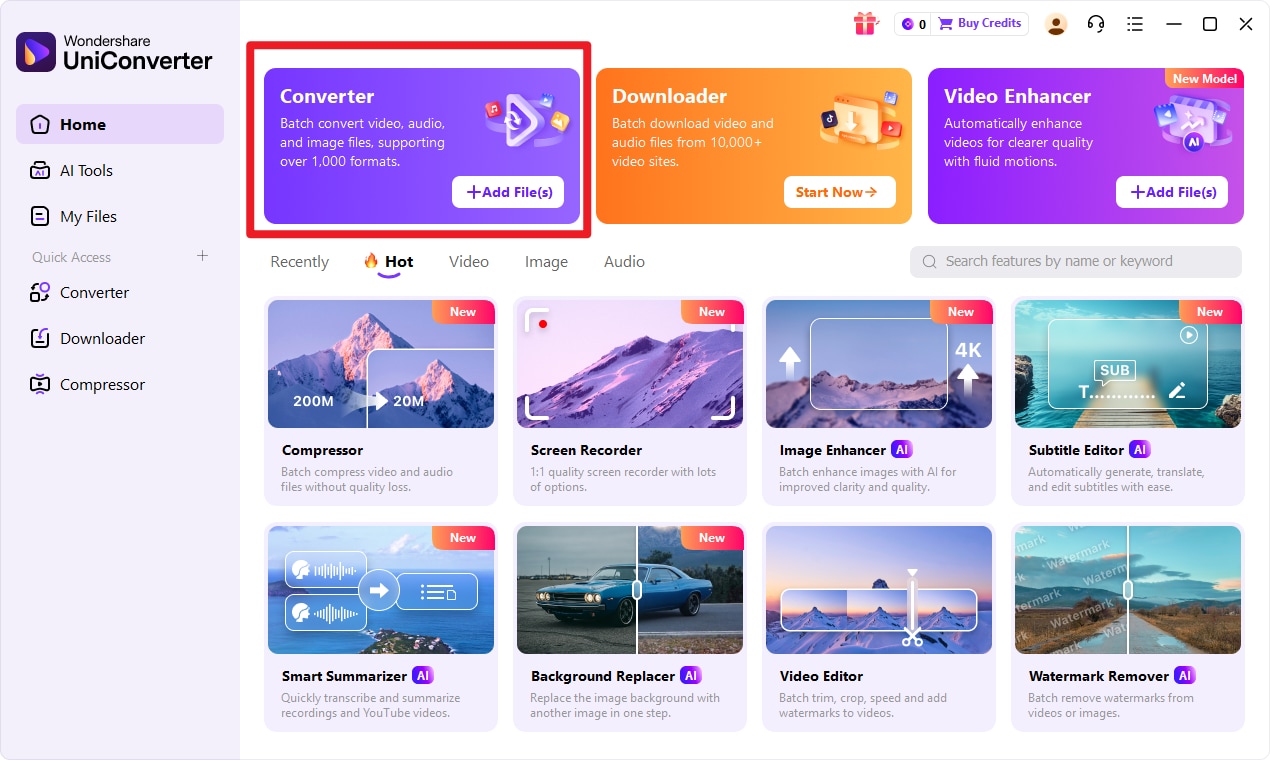
Step 1
Open Wondershare UniConverter and go to the Converter feature from the main interface. This is the main workspace for audio conversion and batch processing. Once inside, make sure you are in the correct conversion workflow before adding any files.
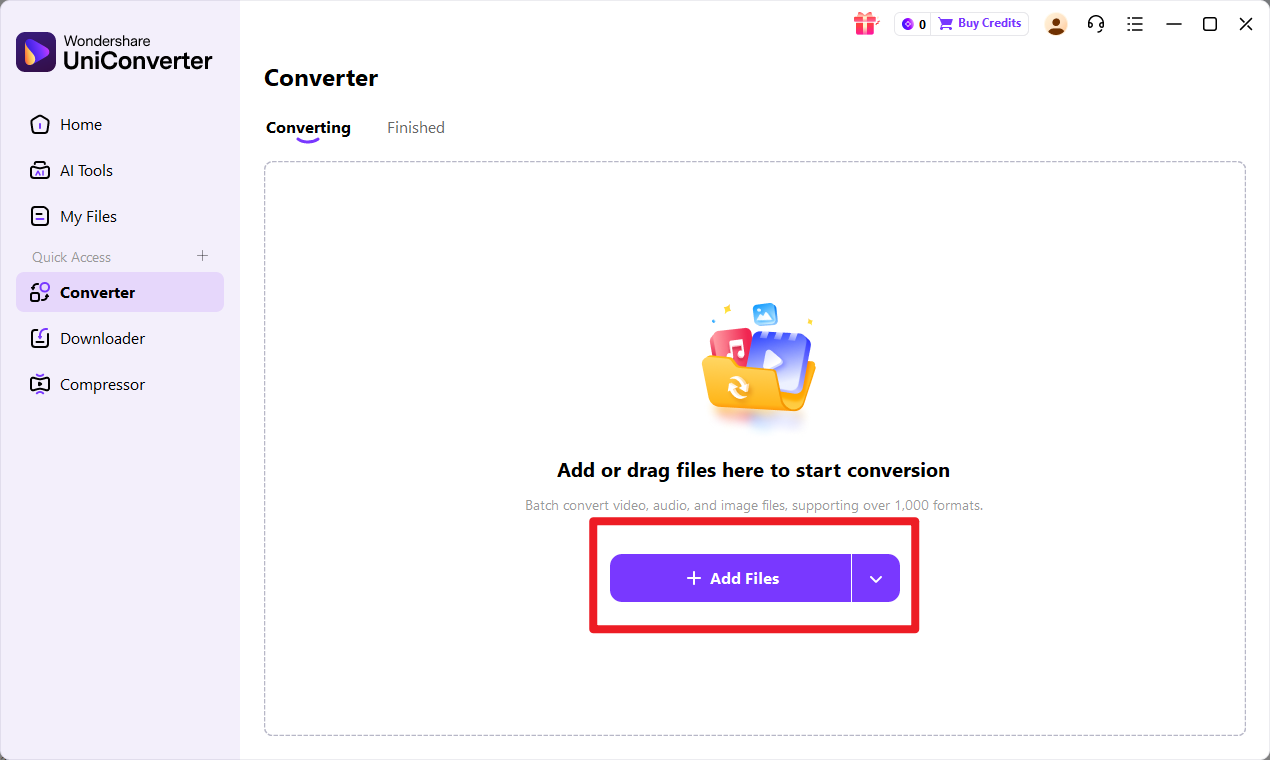
Step 2
Import your input format file into UniConverter. You can add a single file or bring in multiple files if you want to process them in one batch. Before moving forward, quickly review the uploaded files to confirm that everything you need is included.
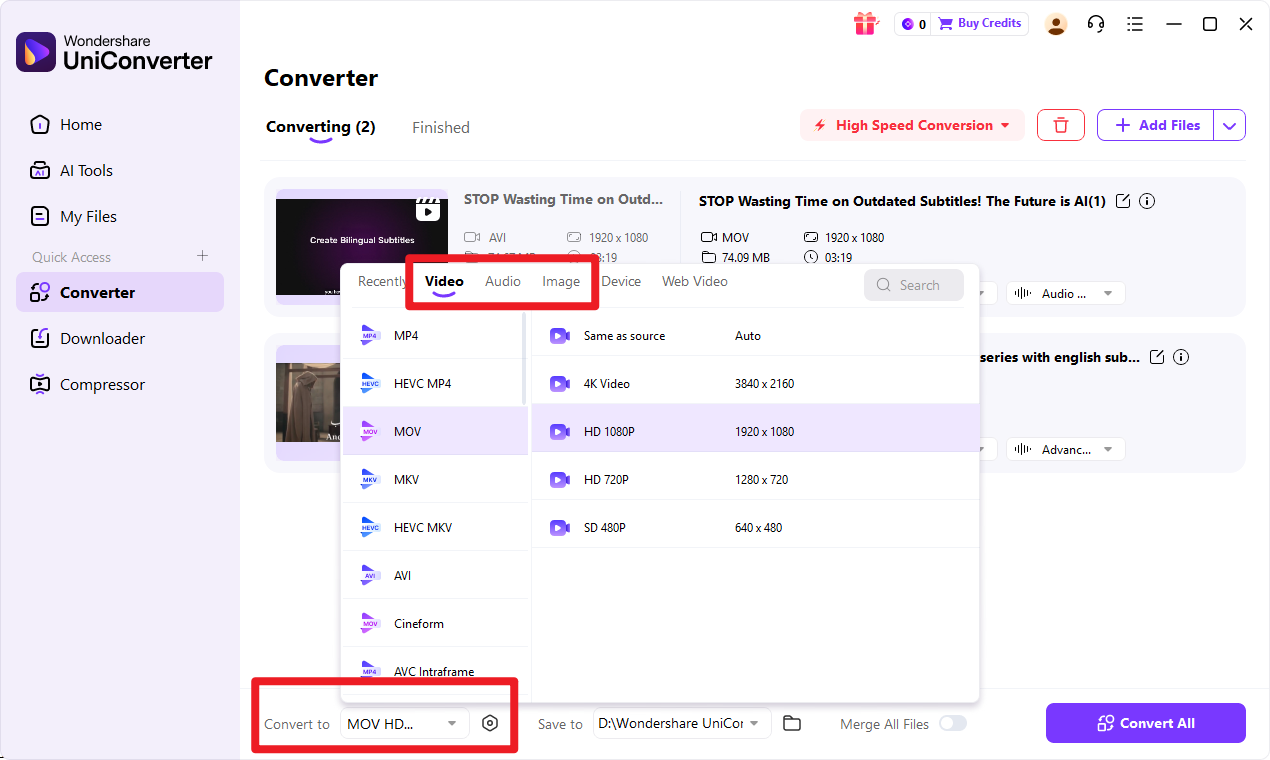
Step 3
Select target format as the output option. If needed, adjust the settings for quality, channel configuration, or bitrate based on how you plan to use the file. Then confirm the save location so you know where the converted file will appear after processing.
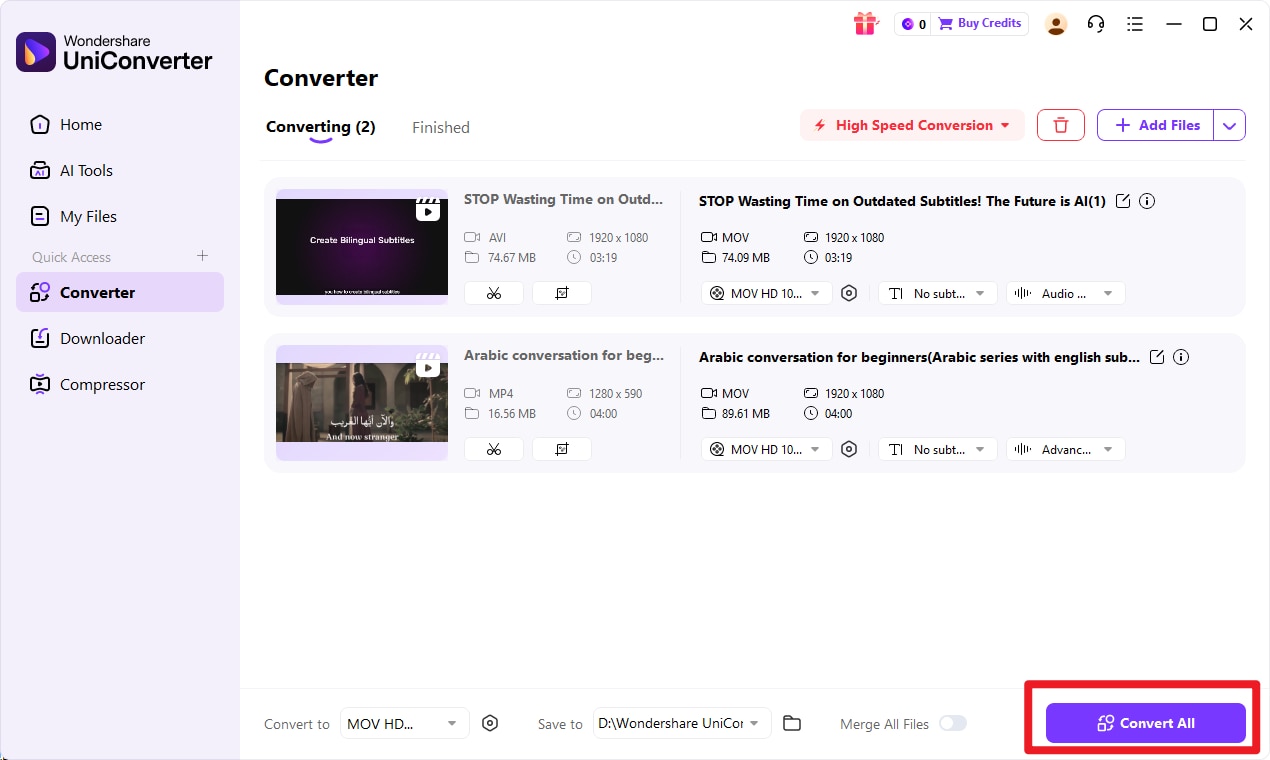
Step 4
Click the convert button to start. UniConverter will process the file and create the new target format version. When the conversion is finished, preview the result or open the destination folder to check the converted file.

Simple M4A and AC3 Audio Conversion
Conclusion
Choosing between M4A vs AC3 comes down to how and where you plan to use your audio. M4A is usually the better choice for music listening, portability, and general playback on everyday devices. AC3 is usually the better choice for surround sound, movies, and home theater systems.
There is no one-size-fits-all answer. The right format depends on your playback device, listening habits, and project goals. If compatibility is your main issue, the best next step is to use Wondershare UniConverter to convert your files quickly and keep your workflow simple.
FAQs
-
1. Is M4A better than AC3 for music?
Yes, in most music-focused situations. M4A is usually better for music because it is more portable, more storage-efficient, and more widely supported by phones, tablets, and music apps. -
2. Is AC3 better than M4A for surround sound?
Yes. AC3 is generally better for surround sound because it is designed for multi-channel audio and is commonly used in movie, TV, and home theater environments. -
3. Which format has better compatibility?
It depends on the device. M4A usually has better compatibility in music apps and mobile devices, while AC3 is often better supported in theater systems, TVs, and video playback setups. -
4. Can I convert M4A to AC3 without losing too much quality?
You can usually keep quality at a good level if you choose suitable output settings, but some quality change may happen whenever audio is re-encoded. Using a tool like Wondershare UniConverter helps you control output settings more effectively. -
5. What is the easiest way to convert between the two?
The easiest way is to use Wondershare UniConverter. It offers a simple interface, fast processing, batch conversion, and output controls that make M4A-to-AC3 or AC3-to-M4A conversion much easier for beginners and experienced users alike.
