
Have you ever found a video file with an .m2ts extension on your computer and wondered what it is? Perhaps you copied it from a Blu-ray disc or an AVCHD camera, only to find it won't play on your phone or smart TV. You're not alone. This common issue leads many users to the central question of M2TS vs MP4: which format is better, and why is one so much more common than the other? M2TS files are known for their pristine quality but are notoriously large and incompatible with most everyday devices. In contrast, MP4 is the universal format that plays everywhere.
Understanding the differences between these two container formats is key to managing your video library effectively. Whether you're a video enthusiast looking to archive high-quality footage, a content creator needing to share your work, or simply someone trying to watch a movie on your tablet, choosing the right format matters. This guide will break down everything you need to know, from technical specifications to practical use cases, and show you the easiest way to convert your M2TS files into the much more versatile MP4 format.
In this article:
- What are M2TS and MP4 files?
- A quick comparison table of their key features.
- A detailed analysis of which format is better for quality, size, and compatibility.
- Practical use cases for both M2TS and MP4.
- A step-by-step guide to converting M2TS to MP4.
Part 1. What is M2TS? What is MP4?
Before we dive into a direct comparison, it's essential to understand what each file format is and what it was designed for. Their intended purposes are the primary reason for their vast differences in size and usability.
What is an M2TS File?
M2TS, which stands for MPEG-2 Transport Stream, is a video container format primarily used for high-definition video. You will most commonly encounter M2TS files in two places: on Blu-ray Discs and from high-end AVCHD camcorders.
The format was designed to store high-quality, high-bitrate video and audio streams, often with minimal or no compression applied to the original source data. This focus on preserving quality means M2TS files can contain multiple video streams, several audio tracks (for different languages or commentary), and subtitle streams all in one package. The trade-off for this pristine quality and data richness is a massive file size. A few minutes of M2TS video can easily consume several gigabytes of storage space, making it impractical for sharing or storing on devices with limited capacity.
What is an MP4 File?
MP4, short for MPEG-4 Part 14, is a digital multimedia container format that has become the de facto standard for video on the internet and personal devices. Its immense popularity stems from its incredible efficiency. MP4 uses advanced compression algorithms to strike an excellent balance between high video quality and manageable file size.
This efficiency makes it the perfect format for a wide range of applications, from streaming videos on YouTube and Netflix to recording clips on your smartphone. Unlike M2TS, MP4 is designed for universal compatibility. It plays natively on virtually every modern device, including computers (Windows and macOS), smartphones (iOS and Android), tablets, smart TVs, and gaming consoles, without the need for any special software.
Part 2. Quick Comparison Table
To get a clear, at-a-glance overview of the two formats, here is a quick comparison table highlighting their most important differences.
| Feature | M2TS | MP4 |
| File Extension | .m2ts, .mts | .mp4 |
| Video Quality | Very High (often raw source quality) | High (efficiently compressed) |
| File Size | Very Large | Small to Medium |
| Compatibility | Limited (PCs, Blu-ray players, some media players) | Universal (all modern devices and platforms) |
| Primary Use | Blu-ray disc authoring, AVCHD camera recording | Web streaming, mobile playback, general video sharing |
Part 3. M2TS vs MP4: Which One Is Better?
The question of which format is "better" depends entirely on your specific needs. M2TS excels in one area—quality preservation—while MP4 excels in almost every other practical aspect. Let's break down the comparison across three critical factors.
File Size and Compression
This is the most significant difference between the two formats. M2TS files are designed to hold the raw, high-bitrate data directly from a Blu-ray or an AVCHD camera. They use MPEG-2 transport stream protocol, which prioritizes preserving the original data integrity over reducing file size. This results in exceptionally large files that can quickly fill up a hard drive.
MP4, on the other hand, was built for efficiency. It uses powerful compression codecs like H.264 or H.265 (HEVC) to significantly reduce file size while retaining a high level of visual quality. An MP4 file can be 5 to 10 times smaller than an M2TS file containing the exact same video content, with a quality difference that is often imperceptible to the human eye. For storage, streaming, and sharing, MP4 is the clear winner.
Video and Audio Quality
Technically, M2TS offers superior quality. Since it often contains the original, unadulterated video and audio streams from the source, it represents the content in its highest possible fidelity. For professional video editors or archivists who need to work with the source material, the high bitrate and lossless audio options (like LPCM, Dolby TrueHD, or DTS-HD Master Audio) in an M2TS container are invaluable.
However, for most viewing purposes, this level of quality is overkill. Modern MP4 compression is so advanced that it can produce a video that looks virtually identical to the M2TS original on most screens, from smartphones to large TVs. While a side-by-side technical analysis might reveal minor differences, the average viewer would not notice them. For everyday playback, MP4 delivers more than sufficient quality at a fraction of the data cost.
Compatibility and Playback
When it comes to compatibility, there is no contest: MP4 is the undisputed champion. It is the universal language of digital video. MP4 files play natively on Windows, macOS, Android, iOS, smart TVs, gaming consoles, and in all modern web browsers. You can confidently send an MP4 file to anyone, knowing they will be able to watch it without any issues.
M2TS files are the opposite. They have very limited native support. On a computer, you will likely need to install a specialized media player like VLC Media Player or a specific codec pack to play them. They are not supported by mobile devices, web browsers, or most smart TVs. This severe lack of compatibility is the primary reason why users often need to convert M2TS files to a more user-friendly format.
Part 4. Use Cases for M2TS and MP4
Understanding the strengths and weaknesses of each format helps clarify when you should use one over the other.
When to Use M2TS
The use cases for M2TS are specific and generally revolve around professional or archival purposes:
- Archiving Raw Footage: If you are a videographer using an AVCHD camcorder, you should keep the original M2TS files as a master copy. This ensures you have the highest quality source material for professional video editing and color grading.
- Creating 1:1 Blu-ray Backups: If you want to create a perfect, bit-for-bit digital backup of a Blu-ray disc, storing it as an M2TS file (or in a BDMV folder structure containing M2TS files) preserves all the original video, audio, and subtitle tracks exactly as they are on the disc.
When to Use MP4
For virtually every other scenario, MP4 is the ideal choice due to its balance of quality, size, and compatibility:
- Mobile Viewing: For watching videos on your smartphone, tablet, or laptop, MP4 is the only practical option.
- Online Sharing: When uploading videos to platforms like YouTube, Vimeo, Instagram, or TikTok, MP4 is the recommended (and often required) format.
- Emailing and Messaging: If you need to send a video to friends or family, a compressed MP4 file is small enough to be easily shared.
- Building a Personal Media Library: For storing your collection of movies and home videos, converting them to MP4 allows you to save significant storage space without a noticeable drop in viewing quality and ensures they will play on any device.
Part 5. Step-by-Step Guide to Convert M2TS to MP4 Using UniConverter
Given the significant compatibility and file size advantages of MP4, the most practical solution for anyone with M2TS files is to convert them. Wondershare UniConverter is a powerful, fast, and intuitive tool perfect for this task. It handles conversions quickly without compromising quality and supports batch processing, allowing you to convert multiple files at once. Its user-friendly interface makes the process simple even for beginners.
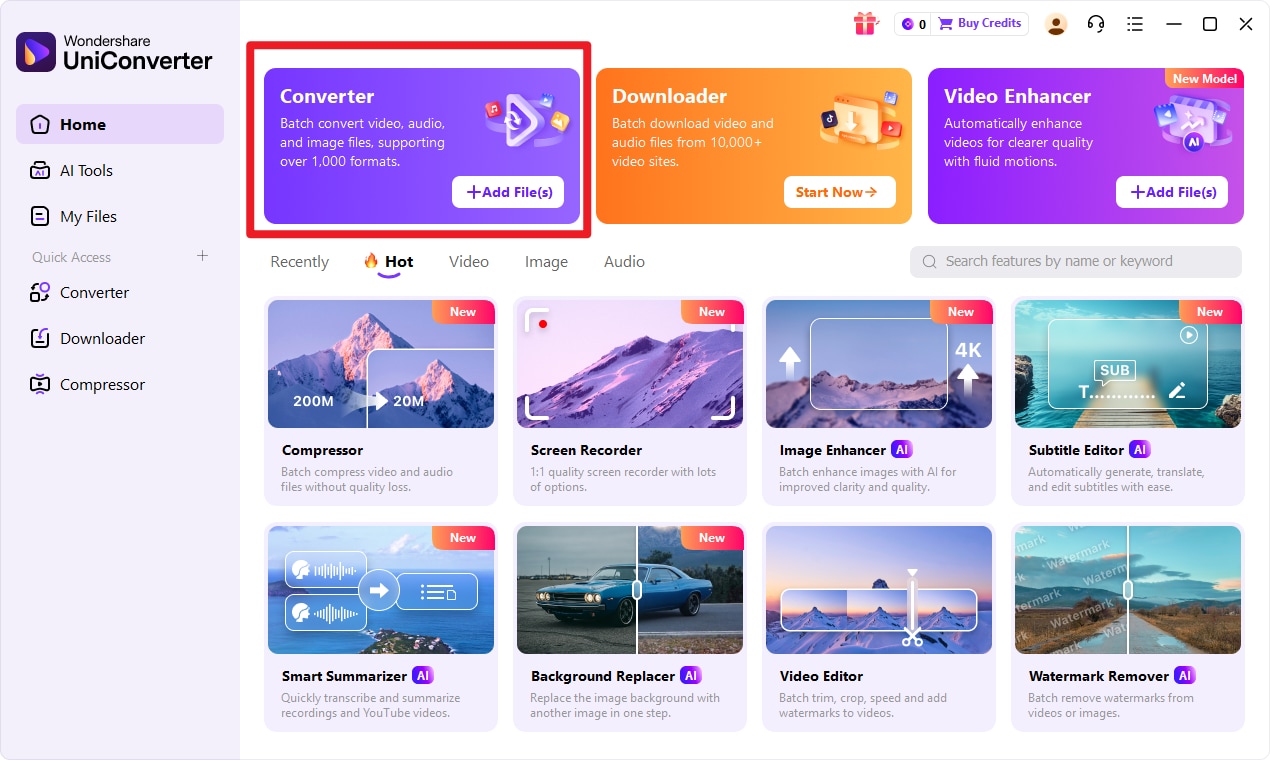
Step 1:Open Wondershare UniConverter
First, download, install, and open Wondershare UniConverter on your Windows or Mac computer. In the main window, select the Converter tool from the left-hand menu.
Step 2: Add Files to UniConverter
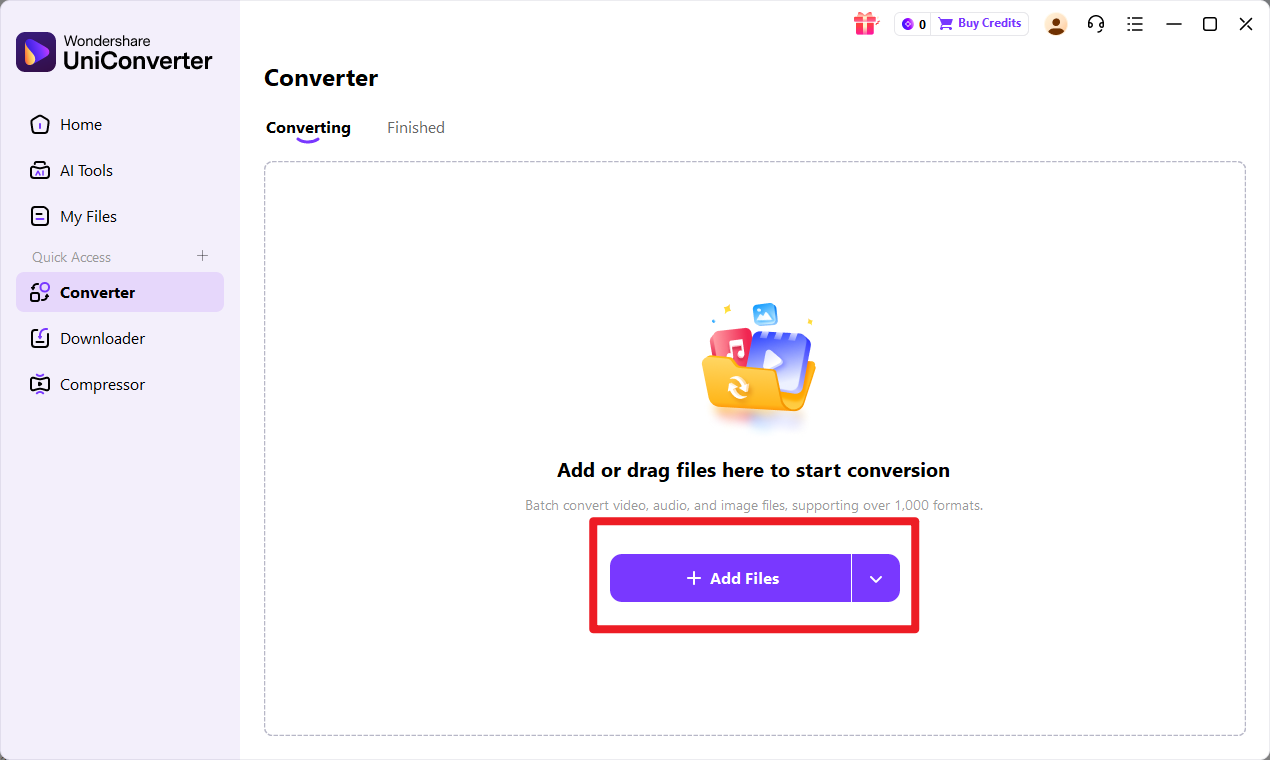
You can then click the Add Files icon to browse for your M2TS files or simply drag and drop them directly into the program window.
Step 3: Choose Output Format
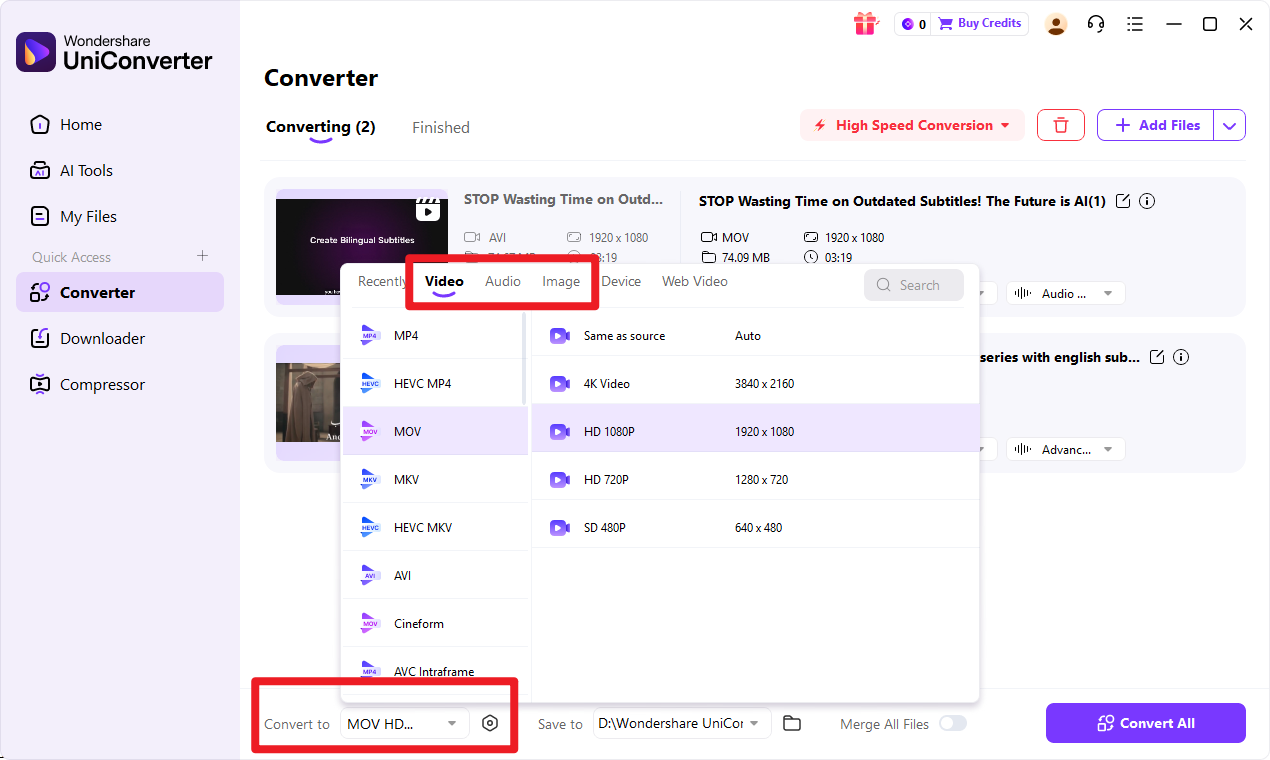
Once your M2TS files are loaded, click on the Output Format menu at the bottom of the window. A new window will pop up. Go to the Video tab, select MP4 from the list of formats on the left, and then choose a resolution from the right. For best results, selecting Same as source will maintain the original resolution while benefiting from MP4's superior compression.
Step 4: Start the Conversion
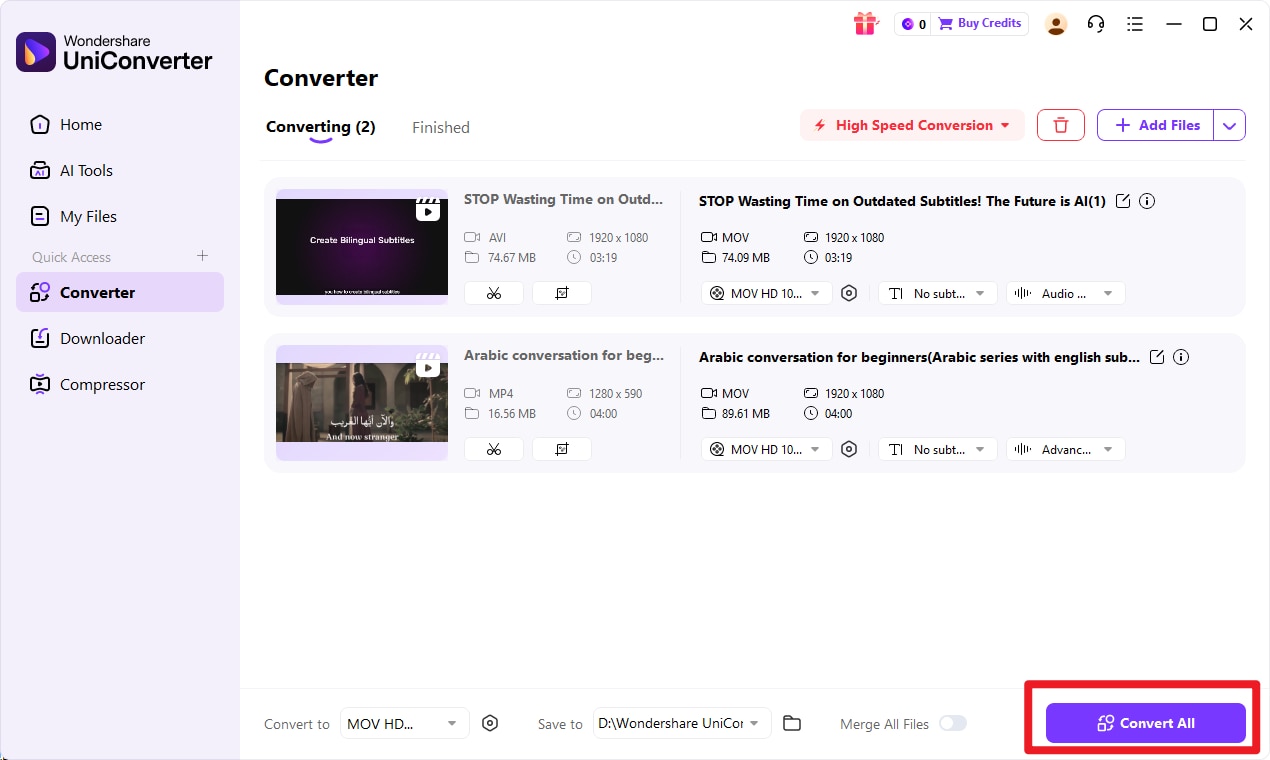
Before starting, you can specify where to save the converted files by clicking the File Location field at the bottom. Once you have chosen a destination folder, simply click the Convert button next to a single file or the Start All button in the bottom-right corner to begin converting all your files in the queue. UniConverter's high-speed conversion technology will process the files rapidly.
After the conversion is complete, you can find your new MP4 files in two ways. You can either navigate to the output folder you selected in the previous step or click on the Finished tab at the top of the UniConverter window. From there, you can click the Open icon next to each file to immediately locate and play your universally compatible MP4 video.

More Than Just a Video Converter
Conclusion
The debate of M2TS vs MP4 ultimately comes down to a choice between pristine, archival quality and everyday practicality. M2TS is the format of choice for preserving the absolute highest quality from a Blu-ray or AVCHD source, making it ideal for professional archiving and editing. However, for nearly every other application—including watching videos on any device, sharing them online, or efficiently storing your media library—MP4 is the vastly superior format. Its universal compatibility, excellent compression, and high-quality output make it the undisputed standard for modern digital video.
If you find yourself with M2TS files that you can't play or share, the solution is simple. Using a reliable and efficient tool like Wondershare UniConverter allows you to convert them to MP4 quickly and easily, unlocking your videos so they can be enjoyed anywhere, anytime.
FAQs
-
1. Does converting M2TS to MP4 lose quality?
Any video conversion involves a process of re-encoding, which can technically lead to some data loss. However, when using a high-quality professional converter like Wondershare UniConverter, this loss is negligible. By selecting a high-quality preset (such as "Same as source"), the software's advanced algorithms ensure that any degradation is virtually imperceptible to the naked eye, preserving the visual clarity of the original file. -
2. Can I play M2TS files on Windows 10?
Windows 10 and its default media player, Windows Media Player, do not have native support for the M2TS format. To play these files, you would need to install a comprehensive third-party media player like VLC Media Player, which comes with its own built-in codecs. Alternatively, you could install a codec pack like K-Lite. However, the simplest and most reliable solution for hassle-free playback on any Windows device is to convert the M2TS file to MP4. -
3. Why are my camcorder files M2TS?
Many high-definition consumer and prosumer camcorders record in the AVCHD (Advanced Video Coding High Definition) format. AVCHD uses the M2TS container to store video because it is designed to capture footage at a very high bitrate, prioritizing maximum detail and quality at the moment of recording. This is ideal for capturing source material that may later be used for professional editing, but it results in the large, incompatible files that users often need to convert for daily use.
